



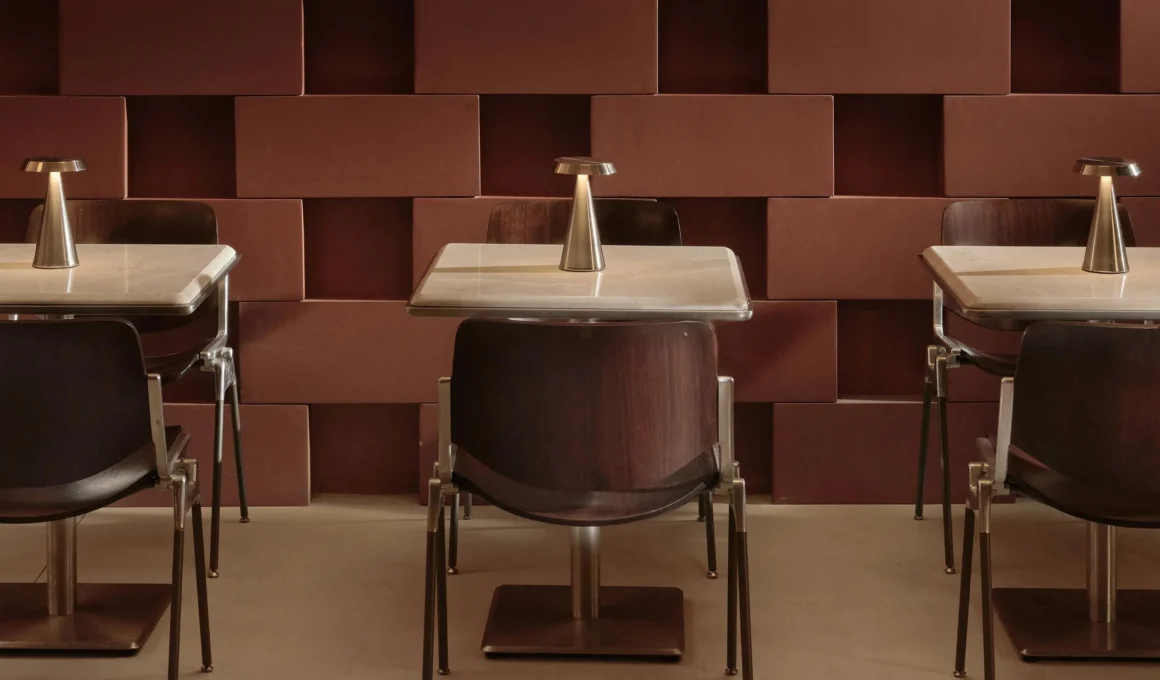
Reimagining the industrial grain of Tersane Istanbul, URBANJOBS has transformed a constrained, elongated footprint into AINEN, a multifaceted burger bar in Fatih, Türkiye, that prioritizes vertical rhythm and atmospheric flexibility over traditional hospitality tropes.
A departure from the literal. The project at AINEN begins by rejecting the predictable aesthetics of the food-and-beverage industry. Rather than anchoring the narrative to the kitchen, the design team opted for a spatial framework where the culinary program acts as a sophisticated background. This approach allows the venue to transcend its primary function, evolving from a daytime eatery into a high-energy social hub as the sun sets over the Golden Horn.
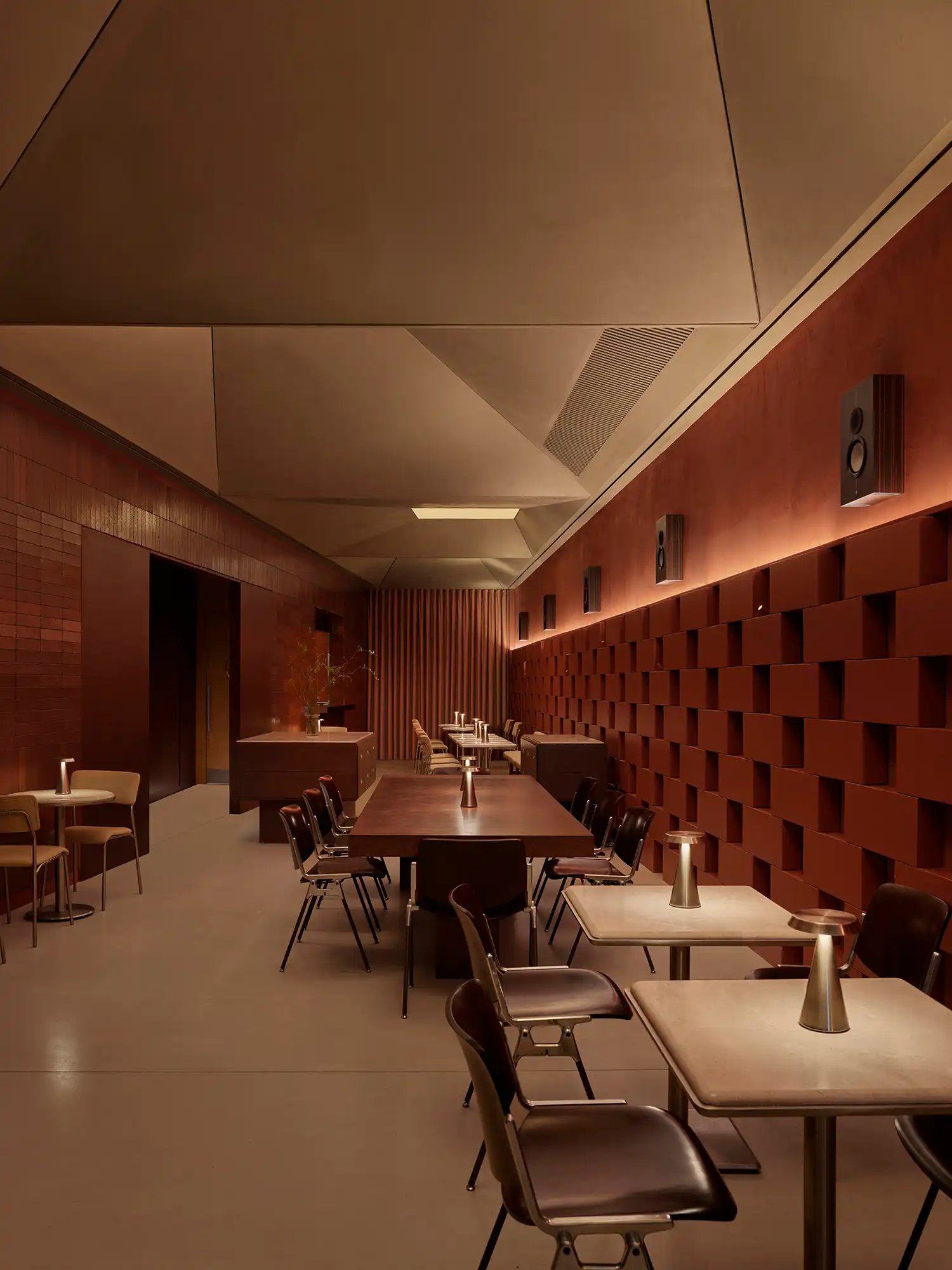
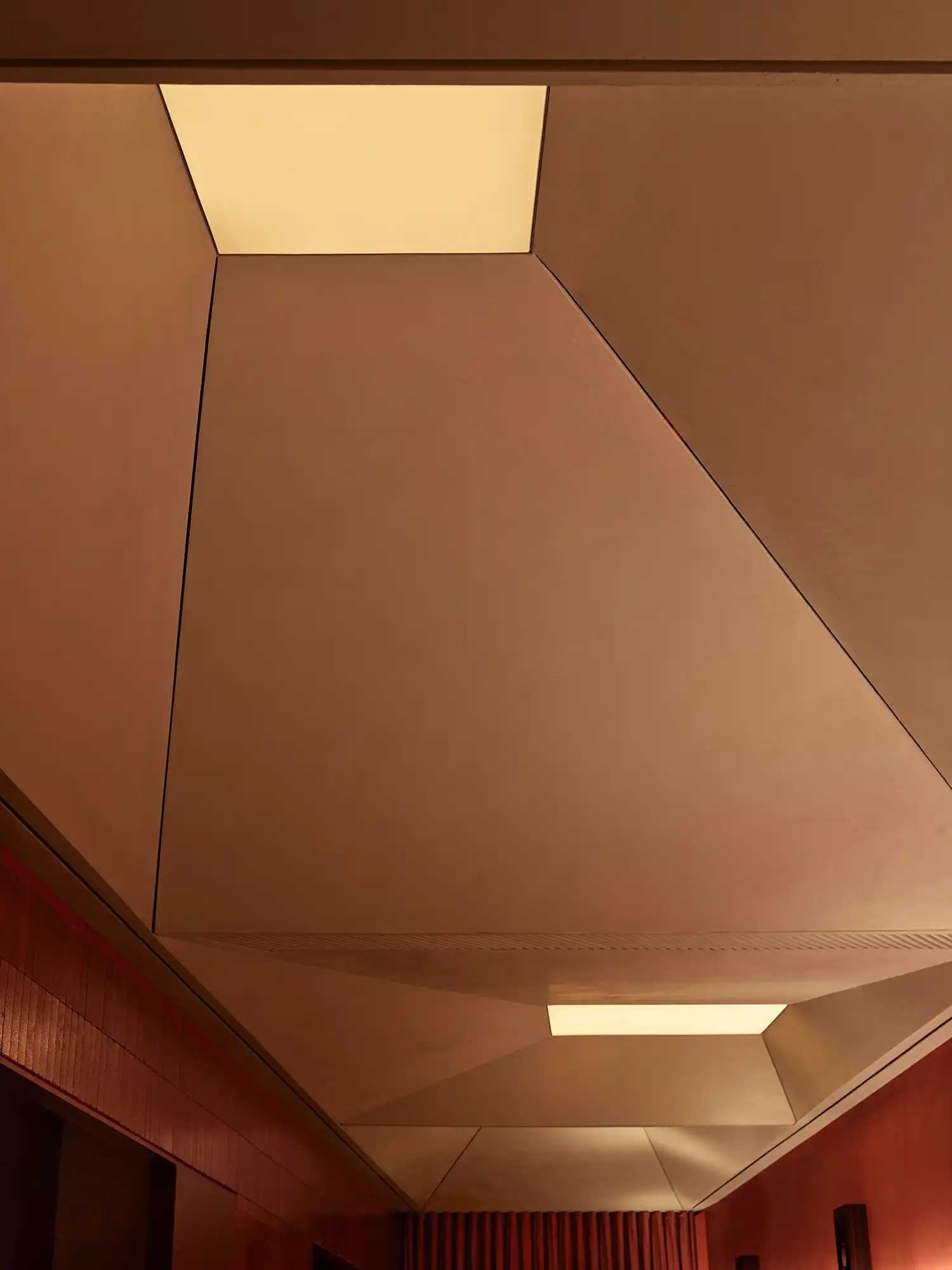
Activating the vertical plane. Faced with a narrow, corridor-like volume that threatened to feel restrictive, the intervention shifts focus from the horizontal to the vertical. The ceiling geometry serves as the primary protagonist, a three-dimensional installation that introduces a sense of movement and direction. By manipulating the overhead scale, the studio breaks the monotony of the long floor plan, creating a rhythmic sequence that guides the eye and defines the interior’s character without the need for physical partitions.
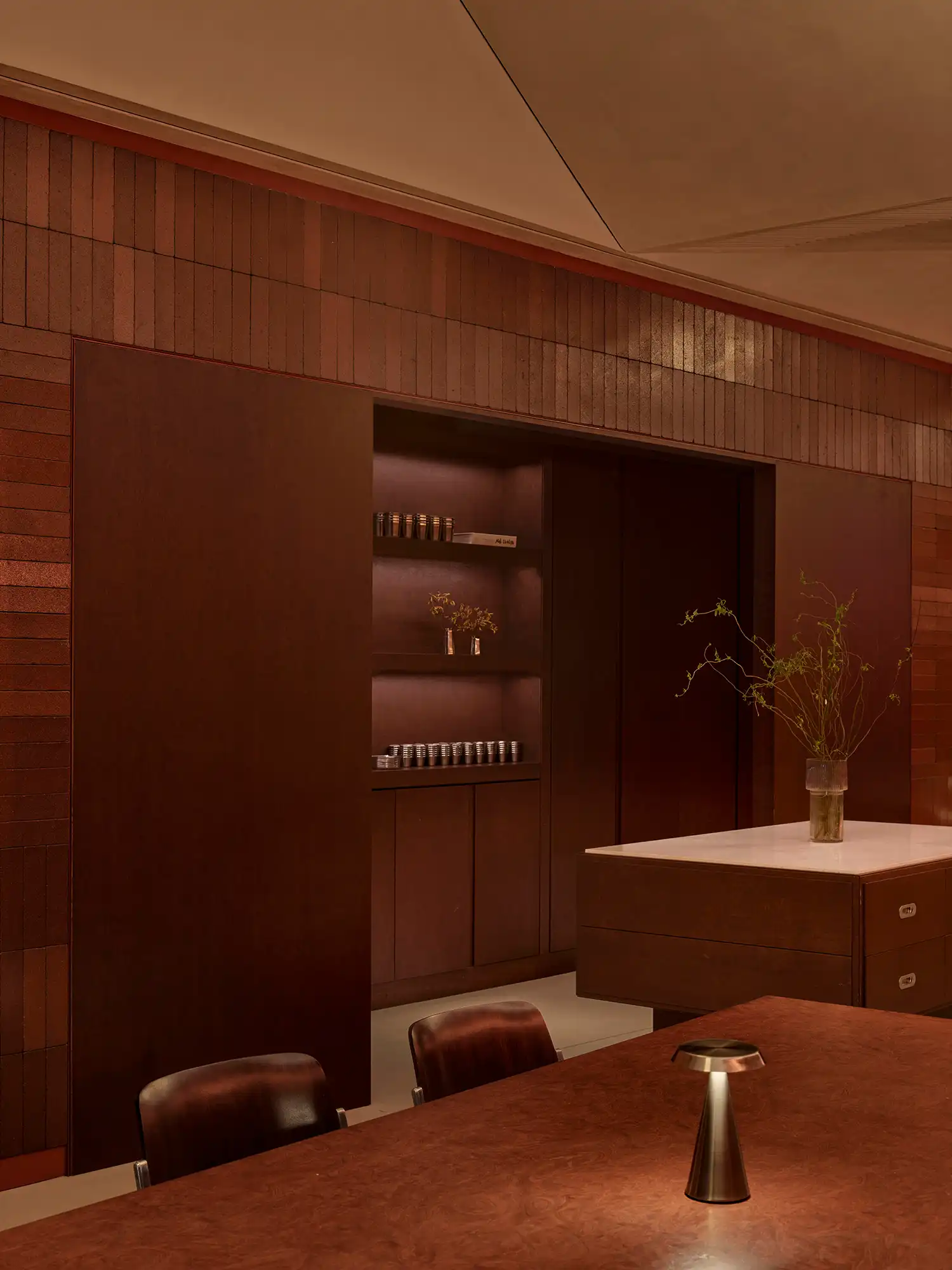
The multifunctional core. At the heart of the layout, a central axis manages the flow of the open-kitchen and bar areas. This circulation path is anchored by a versatile island—a “servant” element that encapsulates the project’s hybrid nature. During daylight hours, it facilitates seamless service; by night, it recalibrates to house a DJ setup. This functional pivot allows the atmosphere to shift from a structured dining environment to a fluid, event-driven experience.
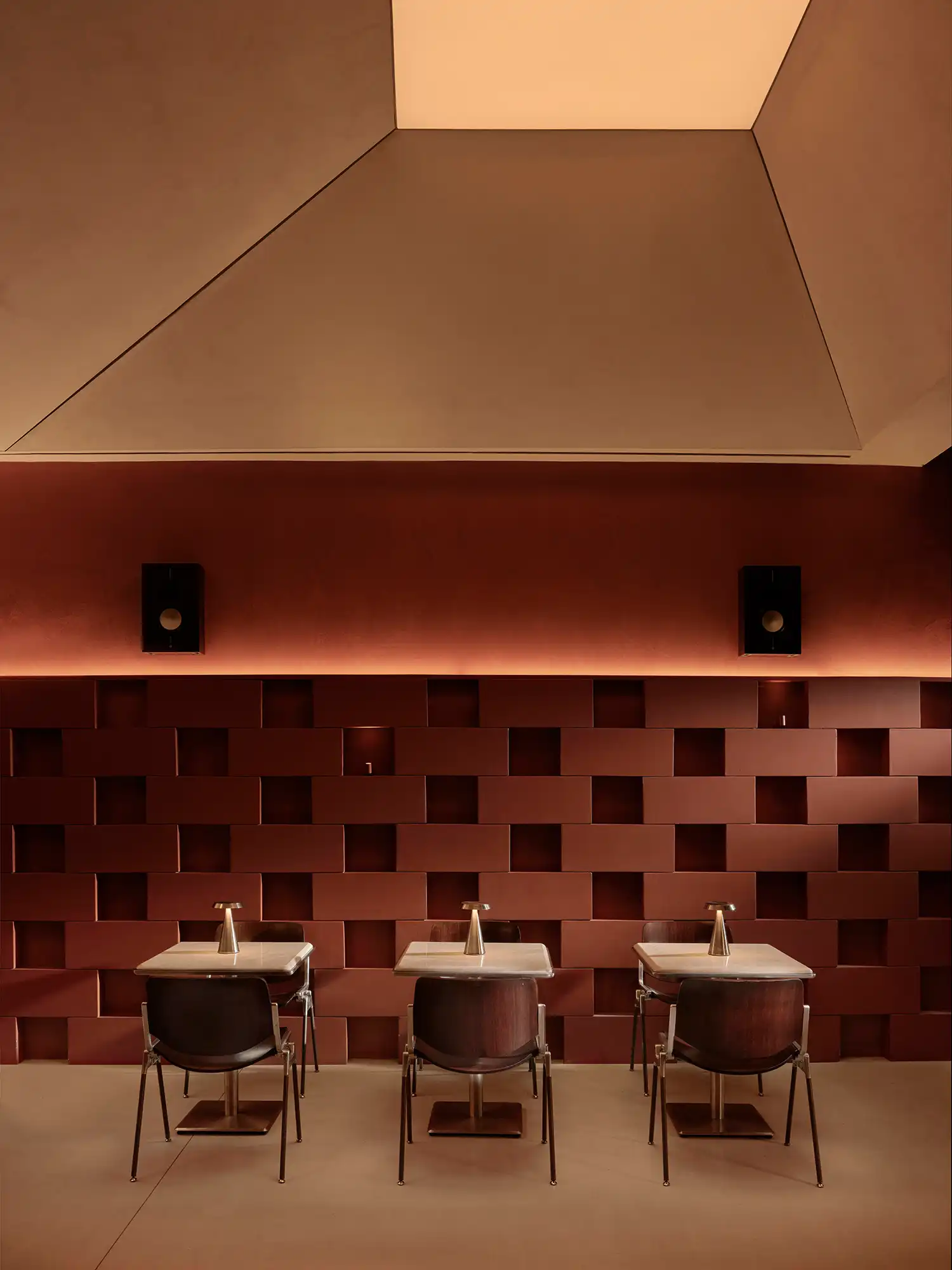
Modular interior dynamics. Flexibility is not merely a feature at AINEN; it is the core principle. The use of movable furniture ensures the floor plan remains entirely reconfigurable, adapting to varying crowd densities and event types. This rejection of a static layout positions the venue as an evolving organism, capable of reinventing its internal landscape to suit the immediate needs of the users.
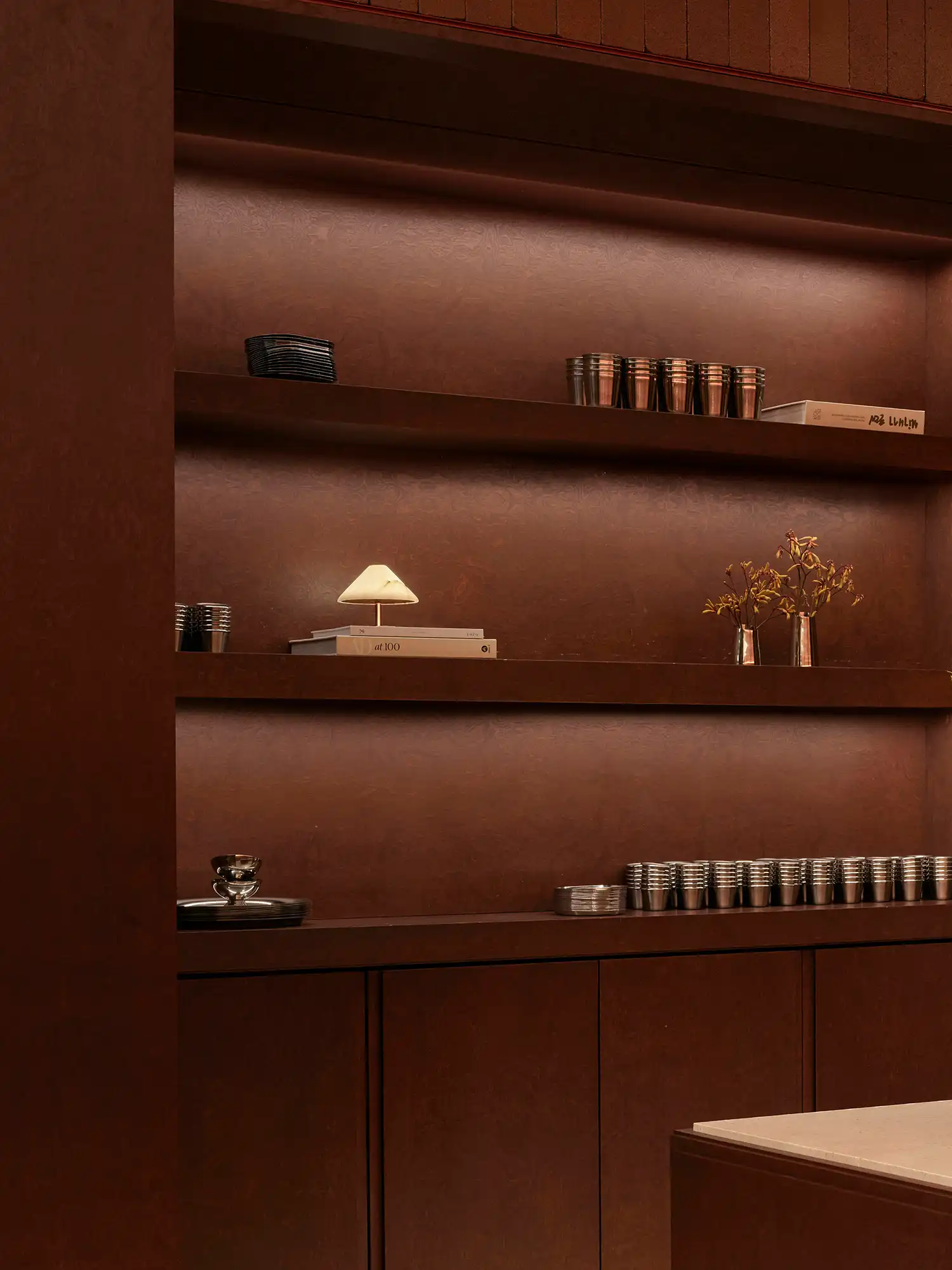
Atmospheric lighting design. The lighting strategy eschews the harshness of conventional spots in favor of a layered, integrated system. Developed in tandem with the faceted ceiling, the light functions as a spatial instrument, receding to create intimate pockets of shadow or intensifying to energize the room. This dialogue between surface and illumination ensures that the perception of the volume changes throughout the day, reinforcing the project’s focus on sensory experience.
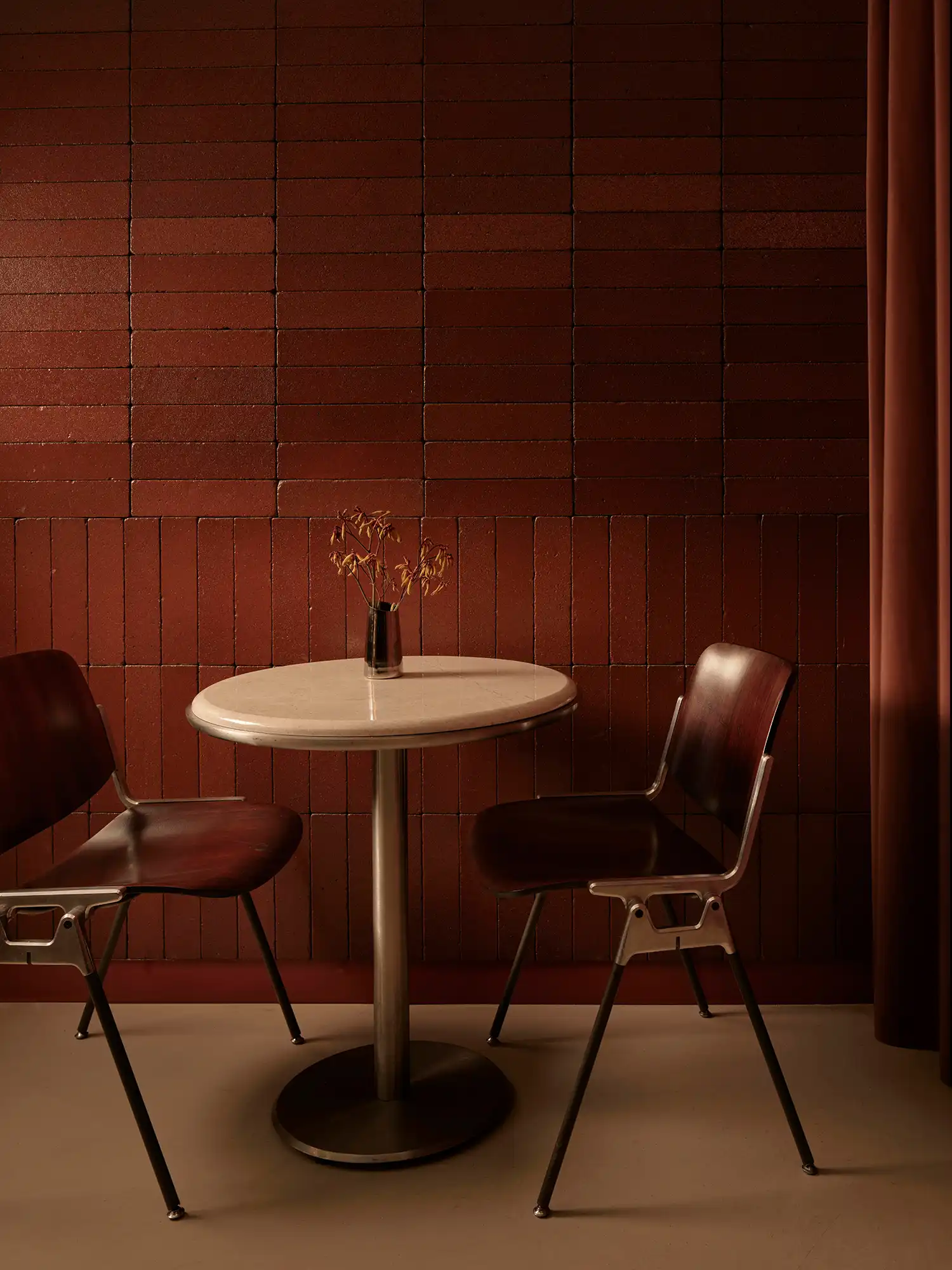
Materiality and heritage. In selecting finishes, the designers avoided direct mimicry of the historic shipyard setting. Instead, they sought a subtle conversation between past and present. The inclusion of dark-stained wooden chairs—designed by Giancarlo Piretti for Cassina—introduces a timeless material quality. These pieces are intended to age gracefully, their developing patina providing a tactile link to the industrial spirit of Tersane Istanbul while maintaining a sharp, contemporary edge.
Broadening the burger bar typology. AINEN represents a shift toward more analytical, high-concept environments within the casual dining sector. This trend of elevating the “burger joint” into a sophisticated interior experience can be seen in other recent global examples, such as the bold colour-blocking at Flipnfry Berlin, where vibrant hues define the spatial identity. Similarly, the Pluto Smash Burger interior in Wroclaw showcases how minimalist, graphic interventions can redefine the consumer experience. For AINEN, the success lies in its ability to remain context-aware while asserting a distinct, modern identity that values movement and change over architectural permanence.