

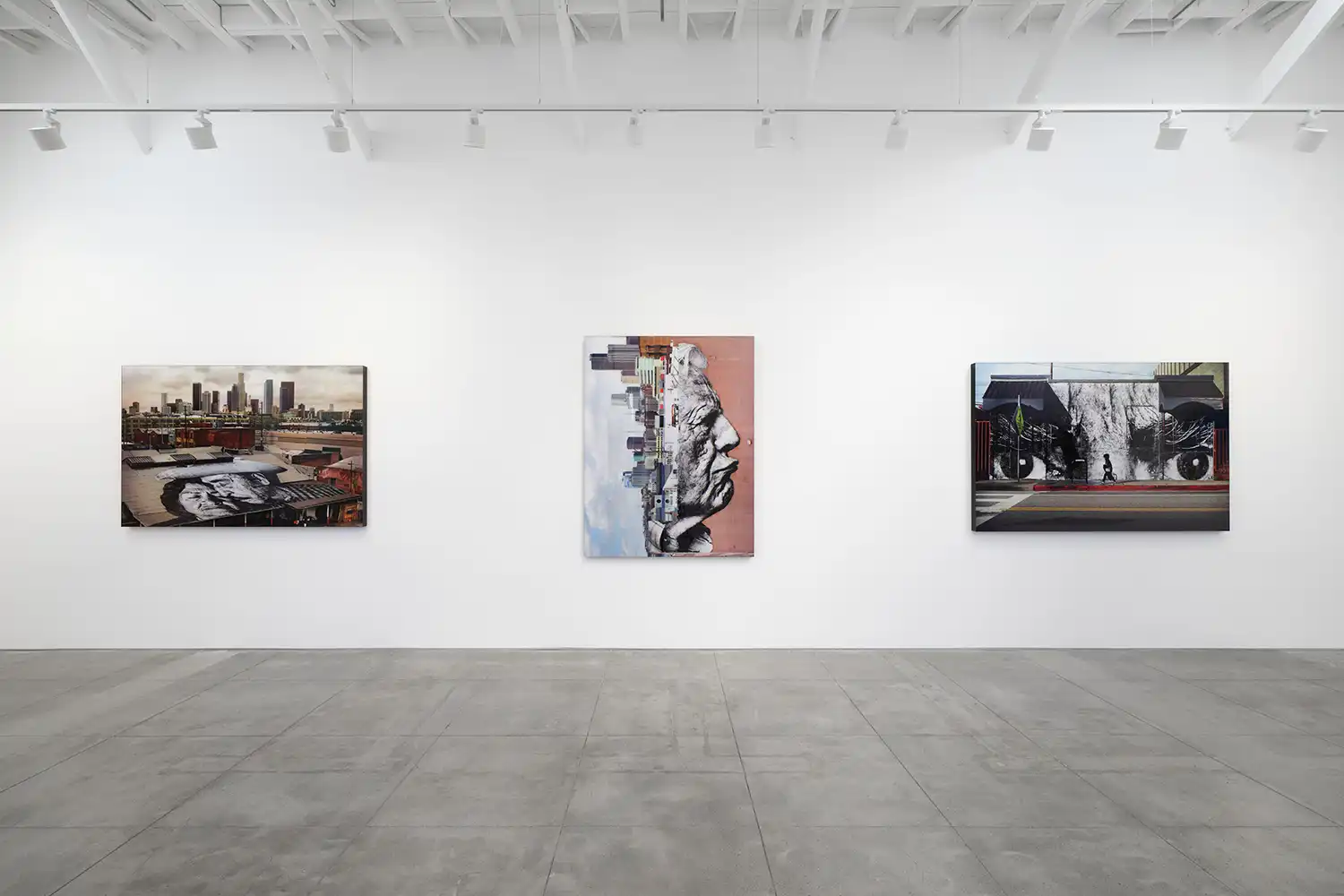
Artist JR’s inaugural solo exhibition at Perrotin Los Angeles, Horizons, , open until April 25, 2026, serves as a profound retrospective of his decade-long engagement with the Californian landscape, transforming the gallery into a spatial dialogue between the viewer and the state’s most contested boundaries. Spanning from the urban density of San Francisco to the stark reality of the U.S.–Mexico border and the secluded yards of the Tehachapi correctional facility, the exhibition captures JR’s unique ability to collapse distance through monumental portraiture and communal intervention. By reframing the horizon not as a static line of separation but as a shared social space, the show underscores a career-long commitment to visibility and the human stories embedded within the built environment.
The conceptual vision of Horizons centers on the fluidity of perspective. In JR’s world, the horizon is a receding boundary that invites encounter rather than signaling an end. By utilizing anamorphosis and large-scale wheat-pasting, the artist distorts the viewer’s spatial understanding, forcing a physical and mental recalibration. This technique, which he previously used to “crack open” historic landmarks—as seen in his dramatic optical illusion at the Palazzo Strozzi—is here applied to the social fabric of California. The exhibition argues that visibility is a deliberate act of participatory art, where the act of looking becomes an act of empathy.
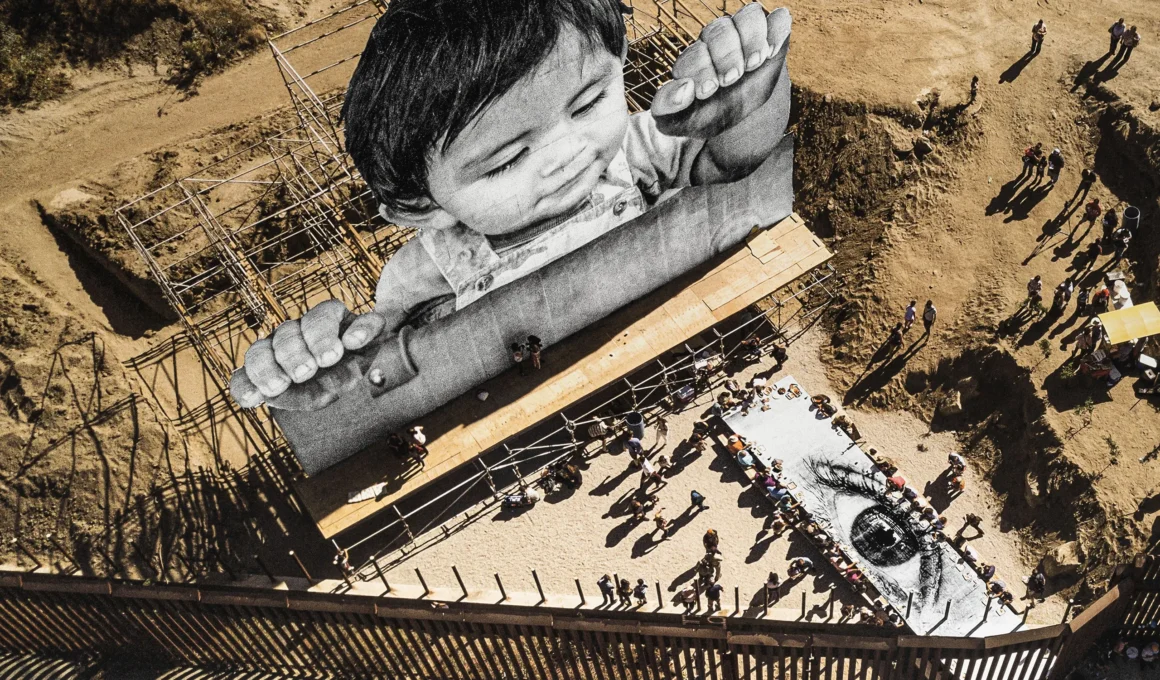
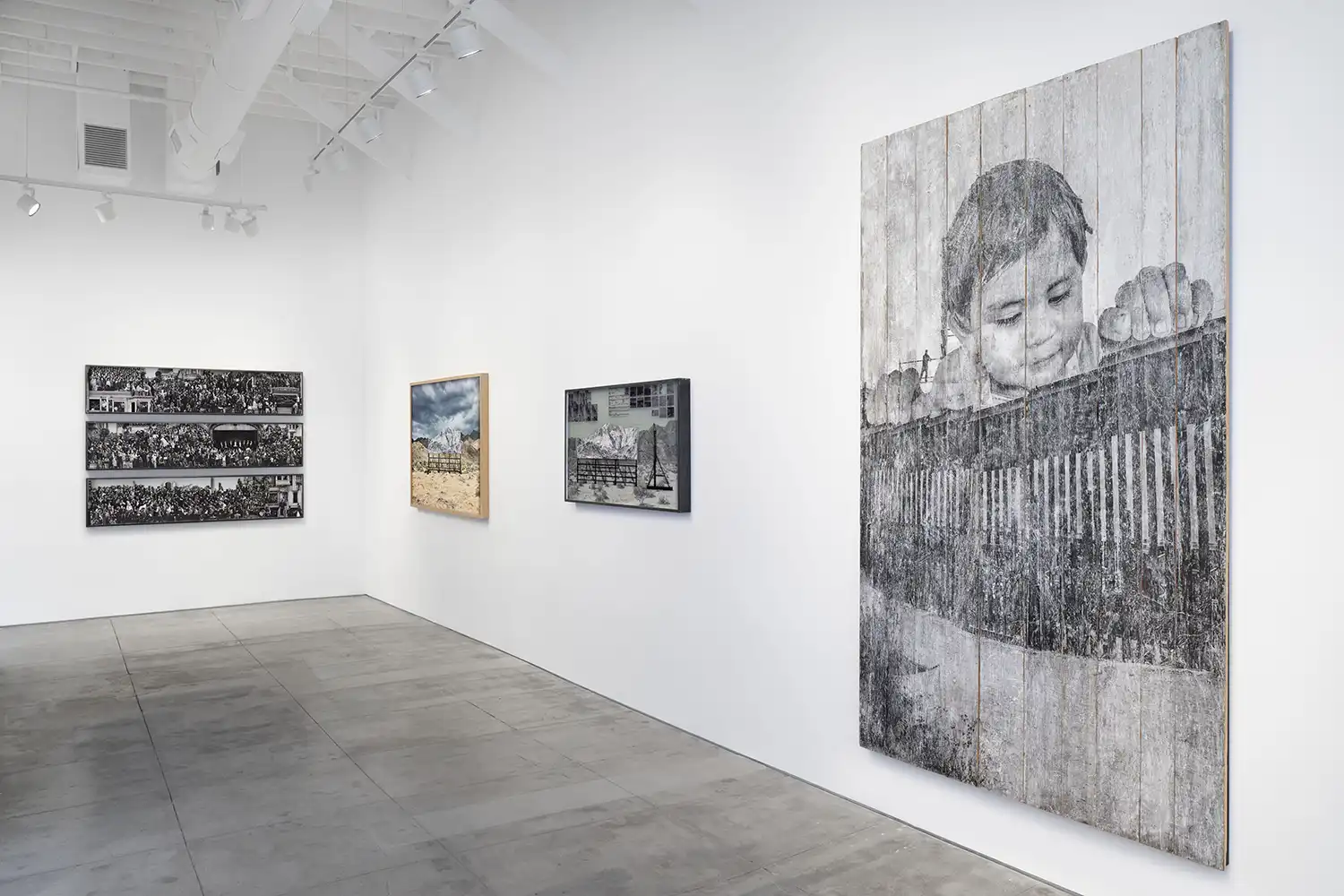
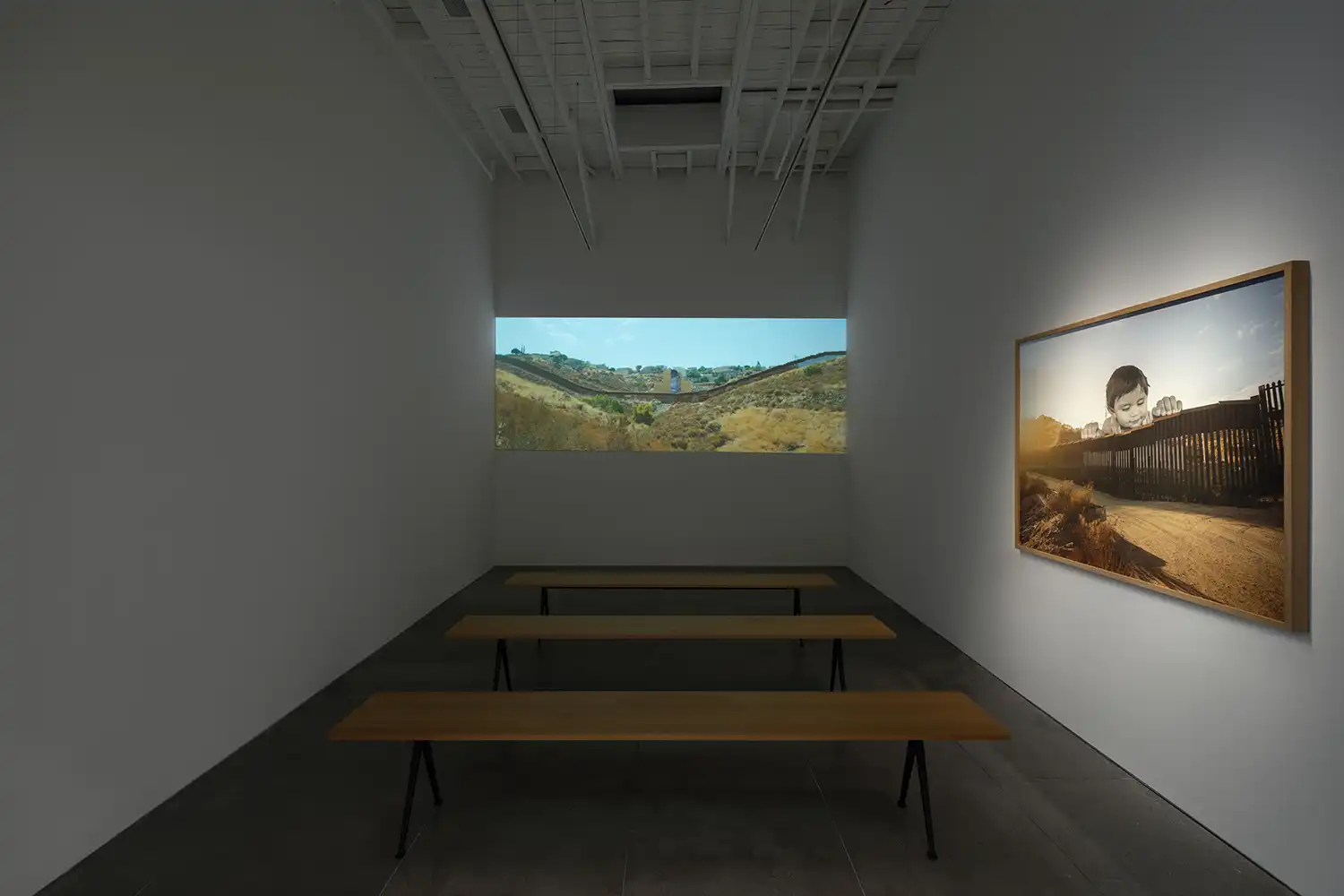
A sensory experience of the exhibition begins with the Kikito series, which documents the 2017 installation at the Tecate border. The image of a toddler peering over the steel slats of the border wall is a study in scale and vulnerability. In the gallery, the juxtaposition of the child’s soft features against the rigid, rusted infrastructure of the barrier highlights the absurdity of geopolitical divisions. It is a reminder that while walls are physical, their power resides in how they dictate our field of vision. The grain of the paper and the monumental scale create an immersive environment where the viewer feels the weight of the barrier and the lightness of the child’s curiosity.
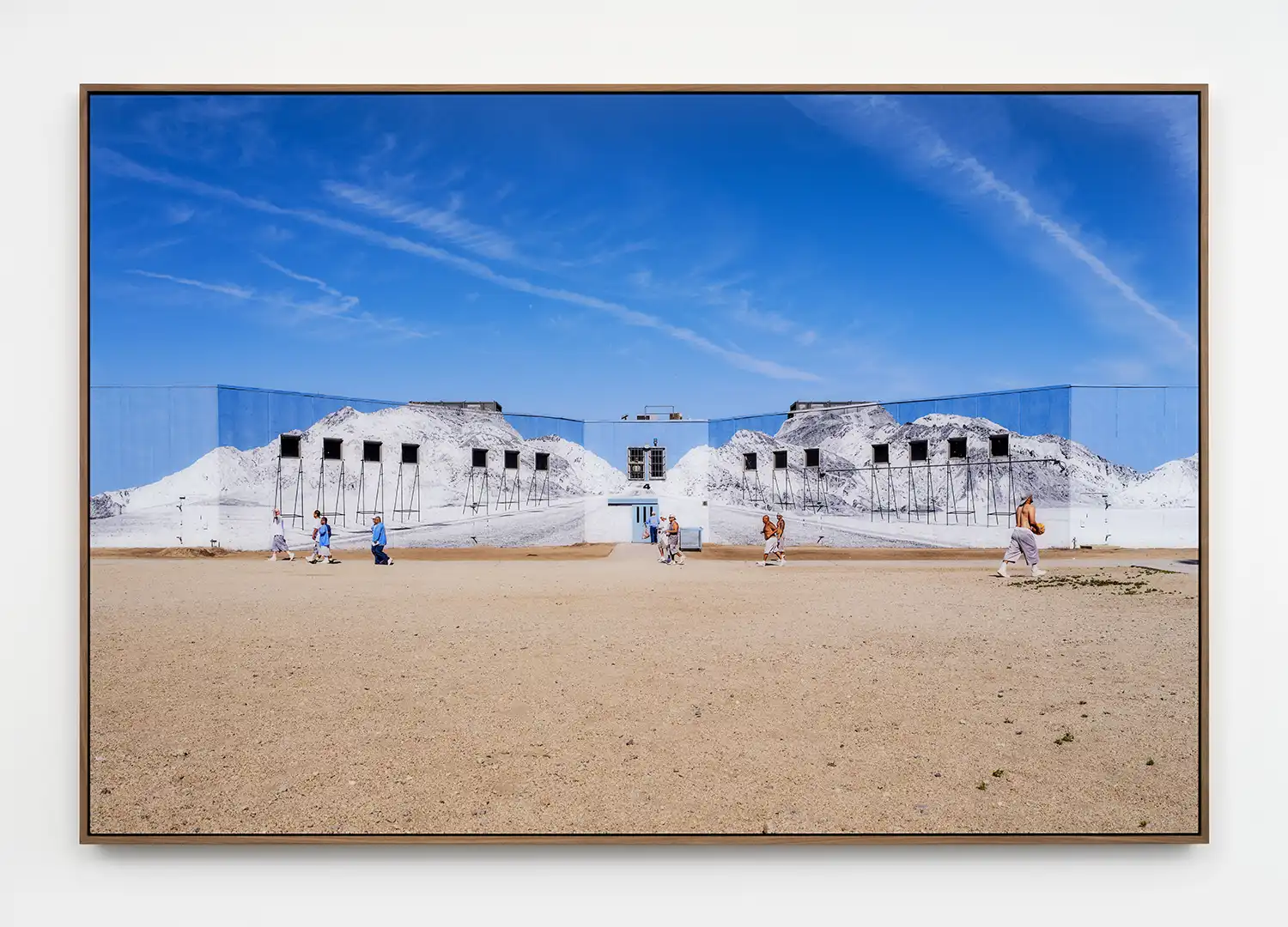
Technical details of JR’s process are further revealed through the Tehachapi project. Here, the artist collaborated with incarcerated individuals at the California Correctional Institution to create a trompe l’œil road leading out of the prison yard. This piece, The Road, Anamorphosis, #1, is more than a visual trick; it is a collaborative labor involving guards, inmates, and victims of crime. The exhibition showcases how these temporary installations function as “social bridges,” using the geometry of the prison’s housing units to project a sense of forward movement and possibility in a space defined by confinement.
The contextual impact of JR’s work often culminates in the ritual of the shared meal. The exhibition highlights the Picnic across the border, where a long table featuring the eyes of a “Dreamer” stretched across the boundary line. This event, captured via drone, turned a site of surveillance into a site of celebration. This theme of communal gathering is a constant in his practice, much like his previous processional performance in Australia, which focused on environmental and social narratives. In Los Angeles, this translates into a temporary reorganization of how we experience “forbidden” or “restricted” zones.
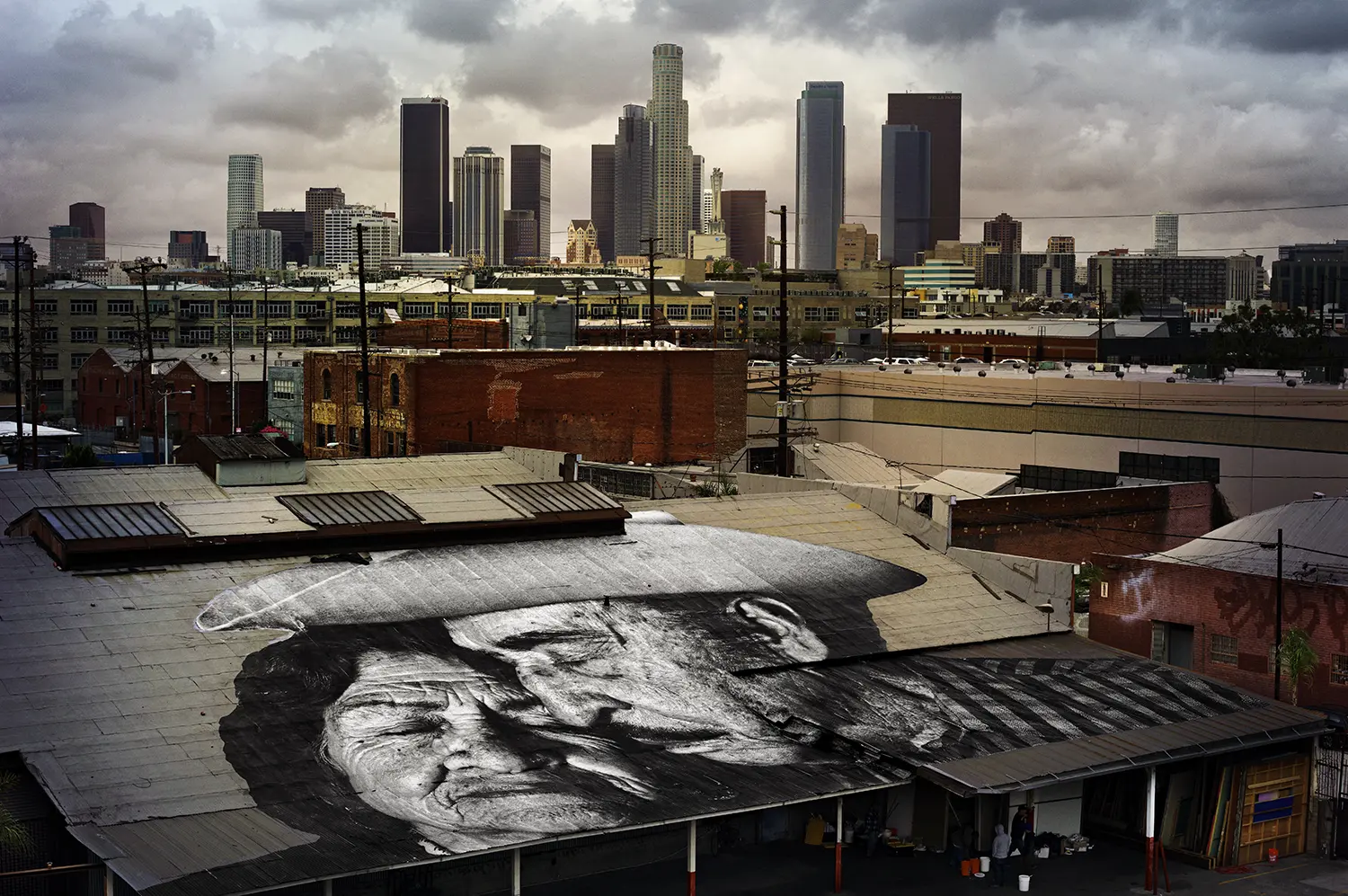
Urban narratives are explored through The Wrinkles of the City and The Chronicles of San Francisco. In the former, the weathered faces of LA’s elderly residents are superimposed onto the city’s skyscrapers and industrial walls, making the aging process of the citizens synonymous with the aging of the urban fabric. In the latter, a massive digital mural collages over 1,200 residents, inspired by the muralist traditions of Diego Rivera. These works treat the city as a living organism, where the streetscape serves as a canvas for a collective identity that is often overlooked in the rush of metropolitan life.
Materiality and memory intersect in the way JR uses the ephemeral nature of paper and paste. Unlike traditional monuments, these works are designed to weather and fade, echoing the transient nature of the communities they represent. This echoes his past exploration of history and hidden depths, such as his immersive project at the Great Pyramid of Giza, where he invited the public to uncover the “secrets” of the past. In Horizons, the memory of the installation survives through high-resolution documentation and the stories of those who participated in its creation.
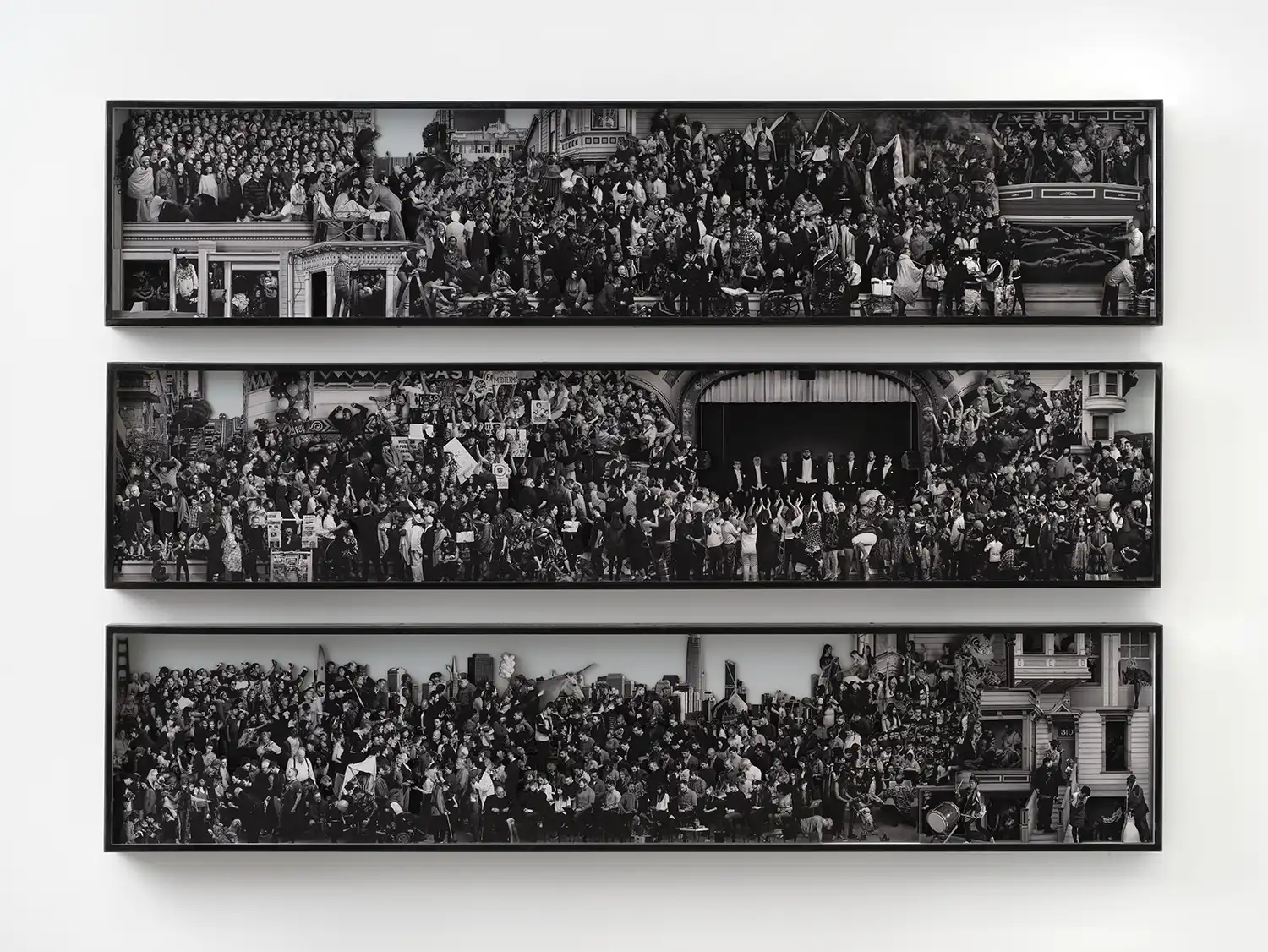
Social landscapes are redefined throughout the gallery, moving from the individual portrait to the collective mural. The exhibition includes audio components where participants from the San Francisco project share their personal histories, adding a layer of sonic texture to the visual experience. This multi-sensory approach ensures that the “people behind the pixels” are heard as well as seen, transforming the gallery into a repository of Californian life. It challenges the viewer to look beyond the aesthetic impact of the scale and engage with the granular details of the human condition.
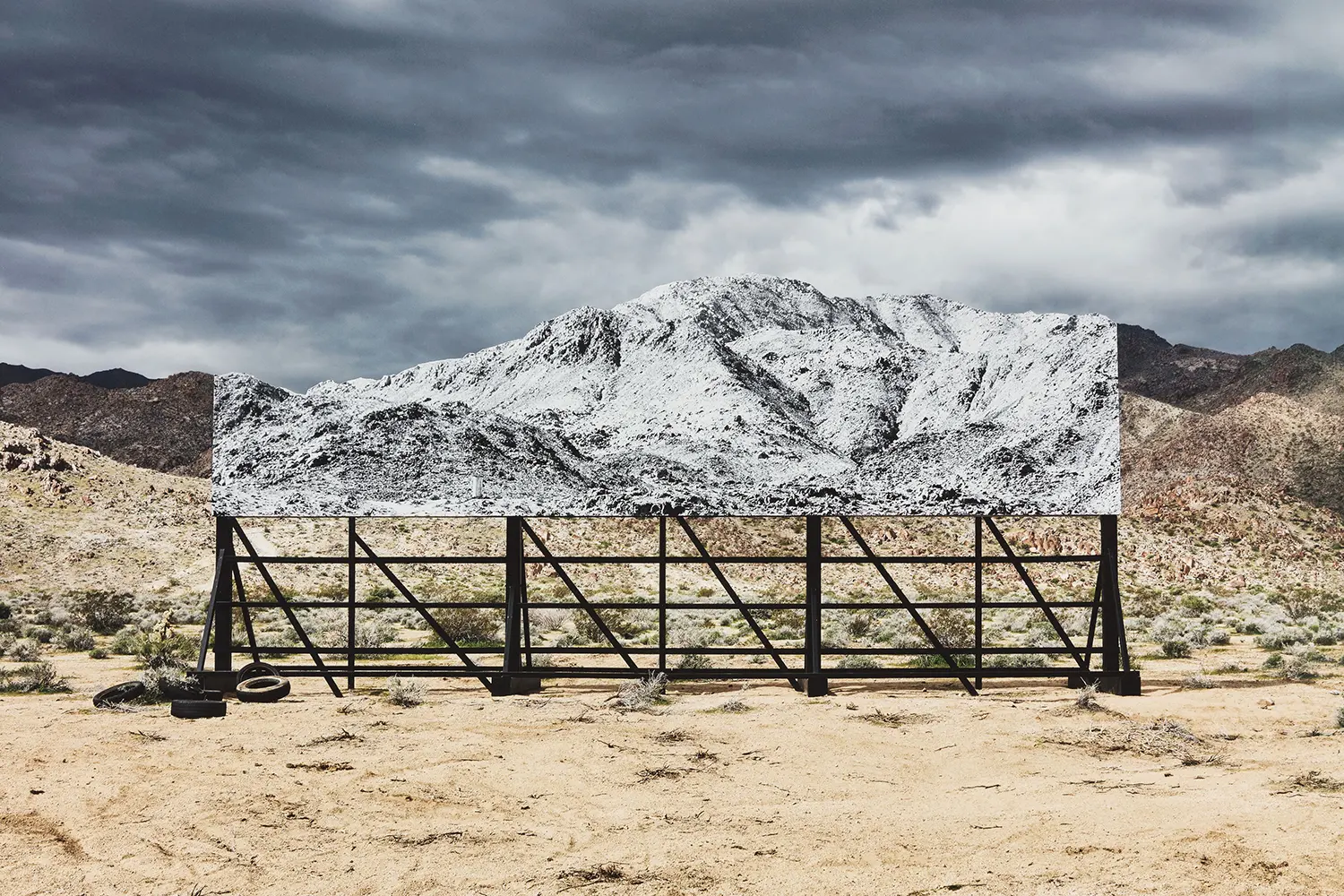
49 3/16 x 70 7/8 x 2 3/4 inches. Photographer: Paul Salveson. © JR Courtesy of the artist and Perrotin.
The exhibition at Perrotin Los Angeles serves as a testament to the power of artistic intervention in the public sphere. By bringing the faraway close and making the invisible present, JR offers a way to navigate the complexities of our contemporary world. As we stand before these massive images, the horizon shifts from a point of closure to a space of infinite potential. It is an invitation to imagine a future where the structures that divide us are replaced by the perspectives that unite us, proving that the most durable part of any project is the connection it fosters between strangers.