



Studio 163 Architects has reimagined Balmore House, an end-of-terrace residence situated on a challenging triangular plot between Highgate and Hampstead Heath in London, through a deep retrofit and Portland Stone extension that prioritizes material continuity and environmental performance.
A rhythmic response to urban geometry defines the primary challenge of the site. Positioned adjacent to a public footpath with an unconventional footprint, the project required a sensitive balance between outward security and internal transparency. Rather than fighting the constraints of the wedge-shaped land, the intervention embraces them, using the building’s massing to carve out a series of private, light-filled volumes that feel sheltered from the city’s pace while remaining deeply connected to the surrounding greenery.
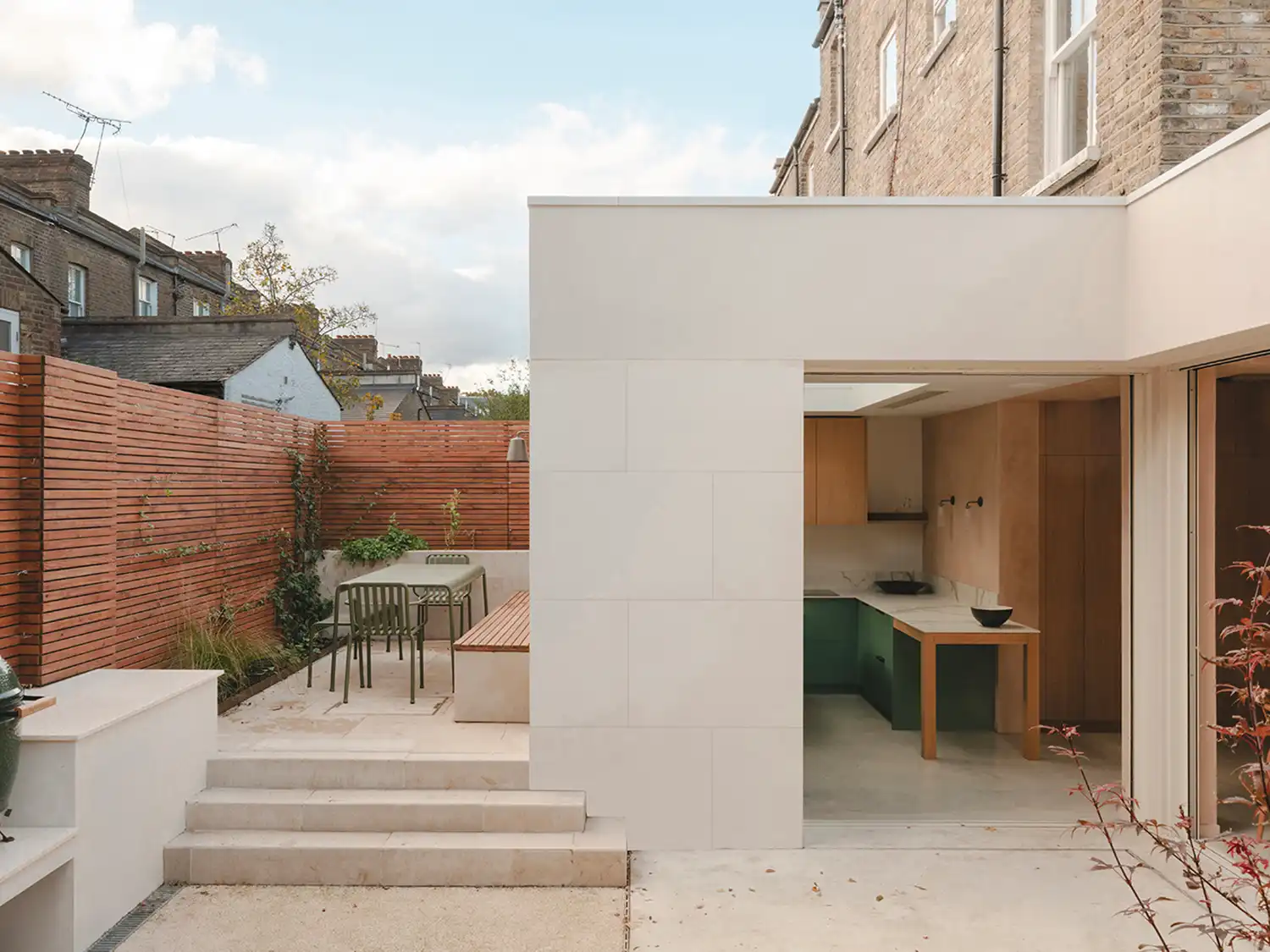
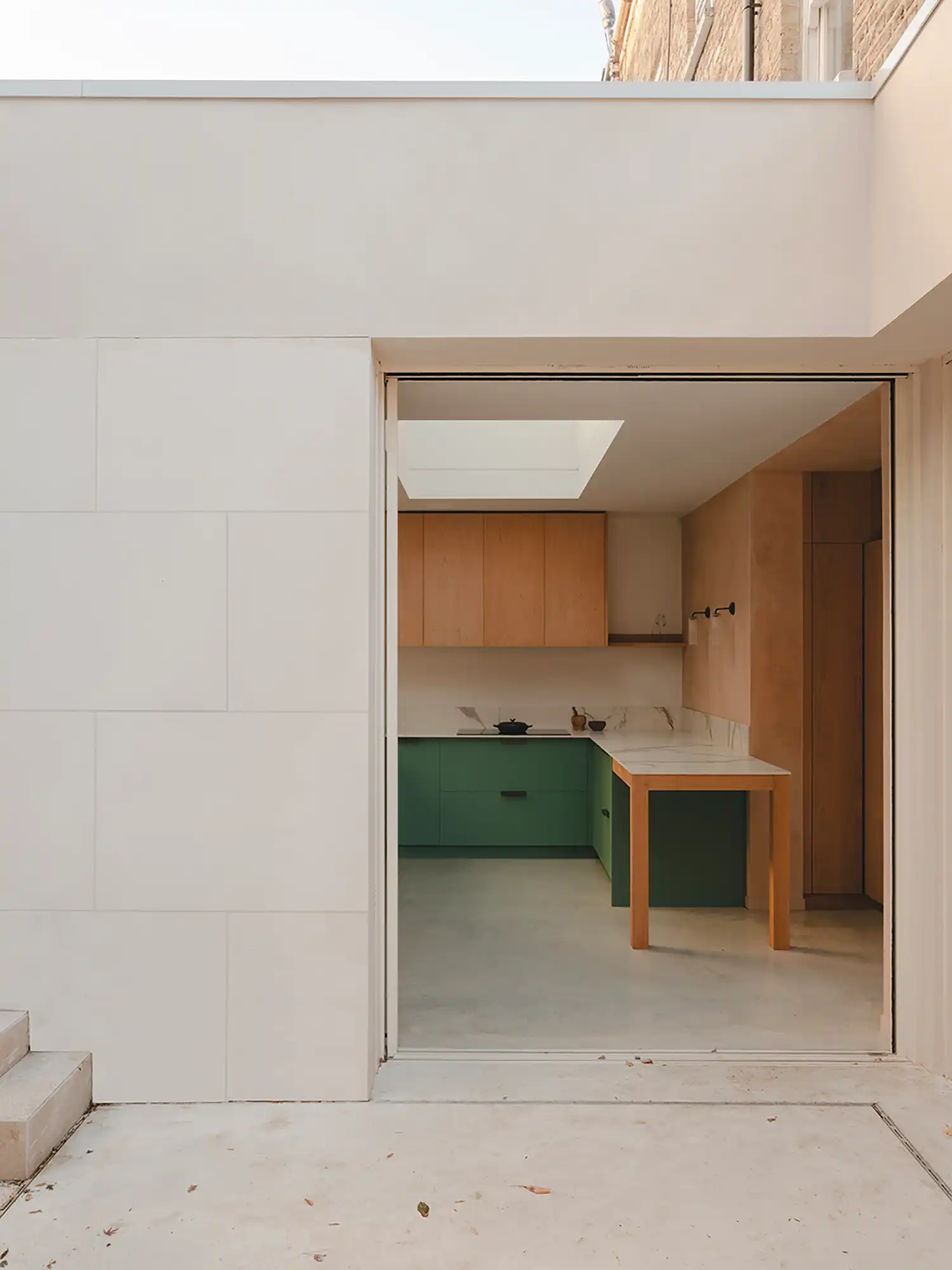
The tactile presence of Portland Stone anchors the new ground-level additions. Chosen for its creamy, calm tonality and its provenance in Dorset, the material offers a low embodied carbon profile that aligns with contemporary ecological standards. By wrapping the rear and side extensions in this historic British stone, the architects have lent the structure a sense of permanence and civic weight, contrasting beautifully with the existing brickwork while providing a monolithic backdrop for the play of shadows throughout the day.
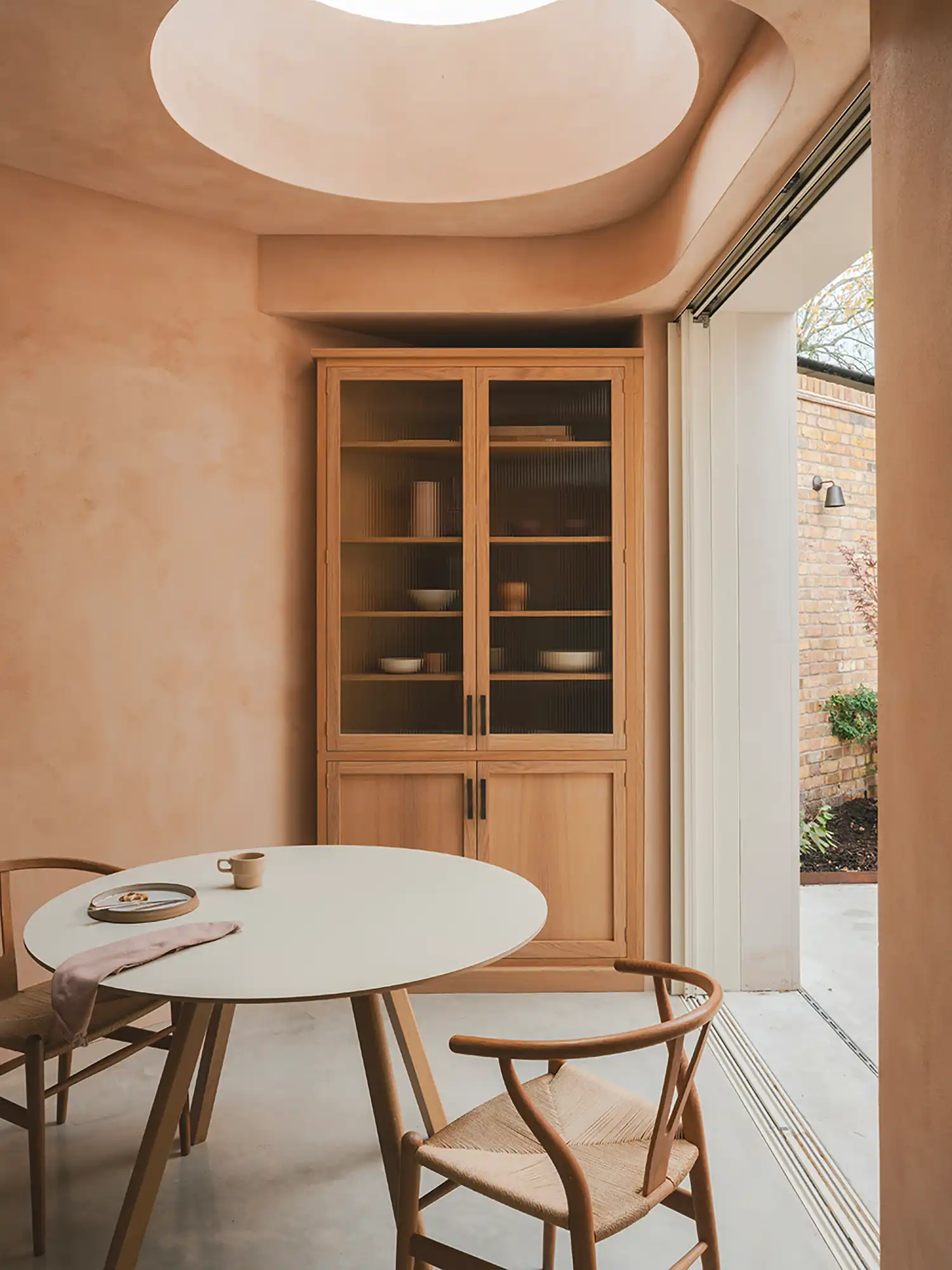
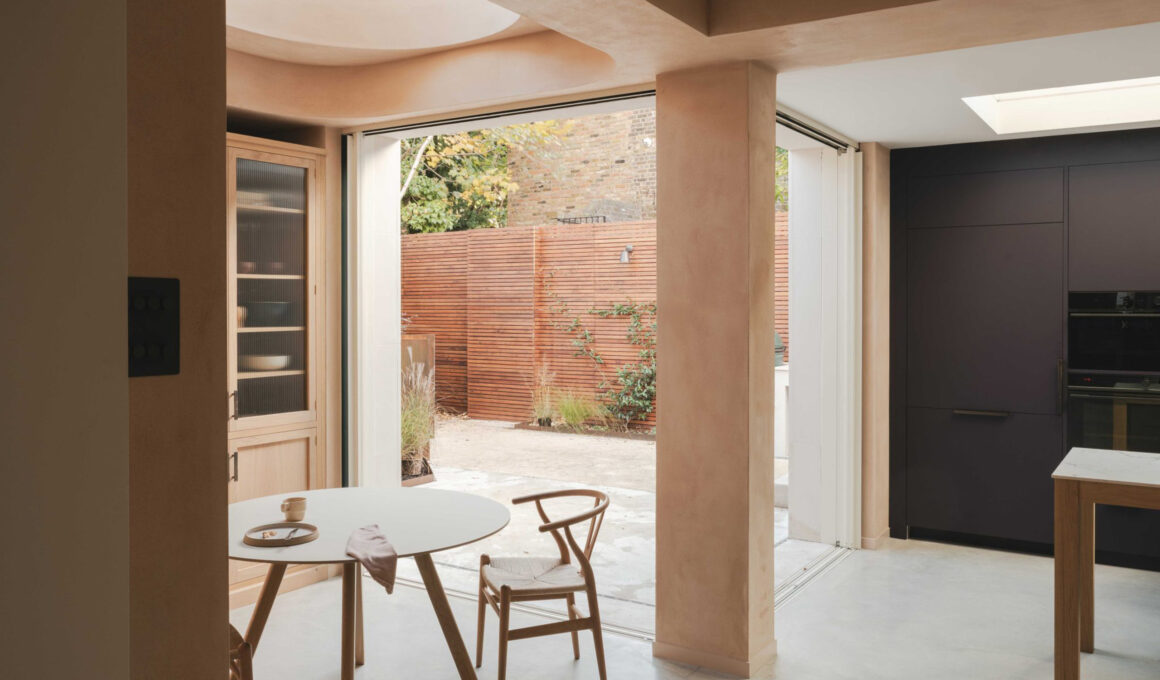
Natural textures and soft geometry define the interior experience, specifically within the new dining area. Here, a singular circular opening breaks the traditional orthogonal layout, drawing the eye upward and flooding the heart of the home with zenithal light. The walls are finished in a natural clay plaster, a breathable material that lends a soft, matte depth to the surfaces. This choice creates a sensory environment where the air feels tempered and the acoustics are hushed, moving away from the clinical feel of standard gypsum finishes.
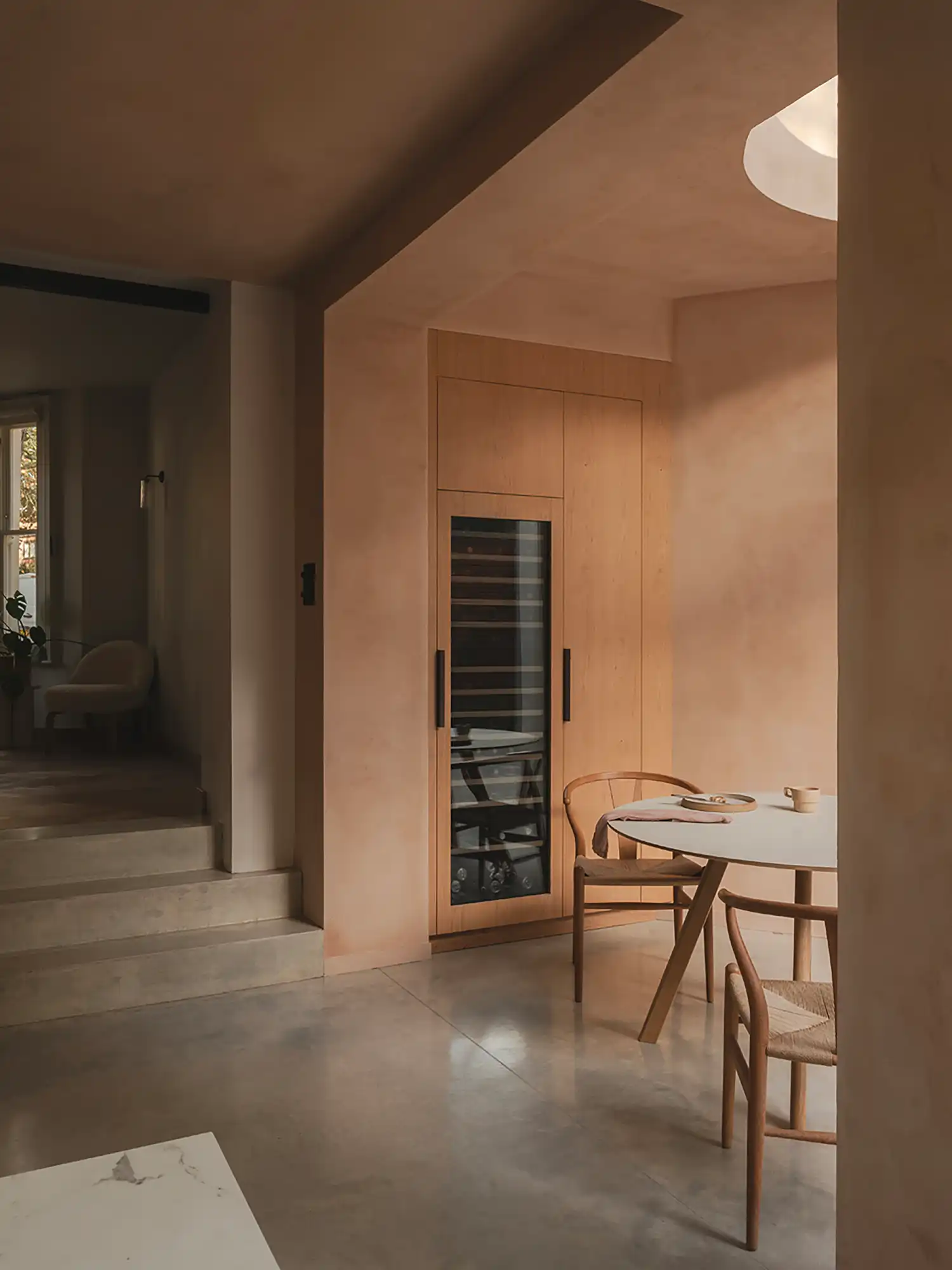
Technical precision meets invisible comfort through a rigorous deep retrofit strategy. The integration of an air source heat pump allows the home to operate without traditional radiators, relying instead on integrated climate systems that free up wall space for art and bespoke furniture. This shift toward sustainable infrastructure ensures that the Victorian-era bones of the property meet 21st-century performance standards, providing efficient heating and cooling without compromising the aesthetic integrity of the minimalist rooms.
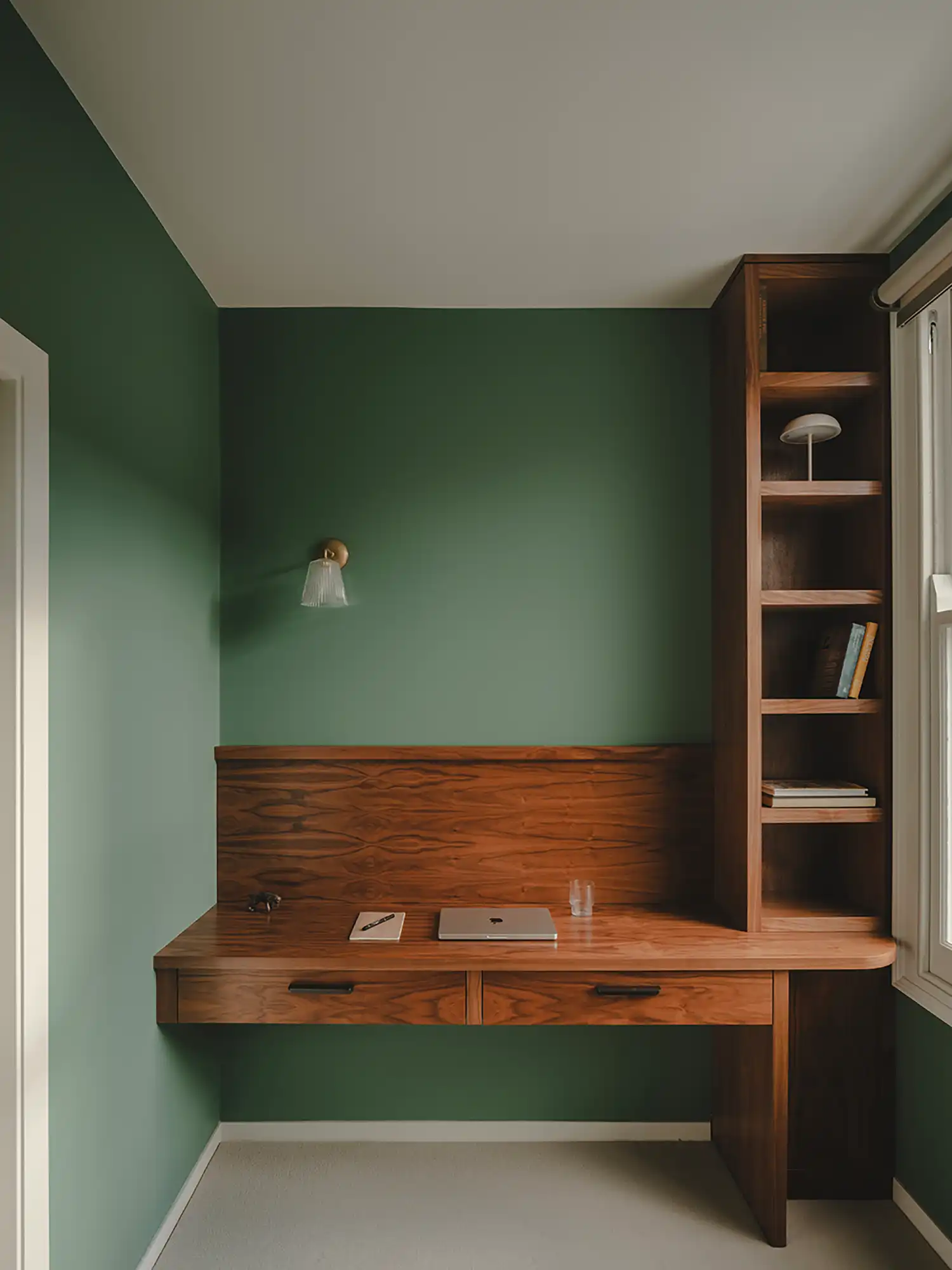
Bespoke joinery as a spatial tool allowed the studio to maximize every corner of the irregular floor plan. From integrated storage solutions to precisely fitted kitchen elements, every piece of millwork was designed to the clients’ specific requirements, ensuring that the transition between the original house and the new extension feels seamless. This level of detail extends to the selection of all internal finishes, where a palette of timber and stone creates a cohesive narrative that flows from the threshold to the most private quarters.
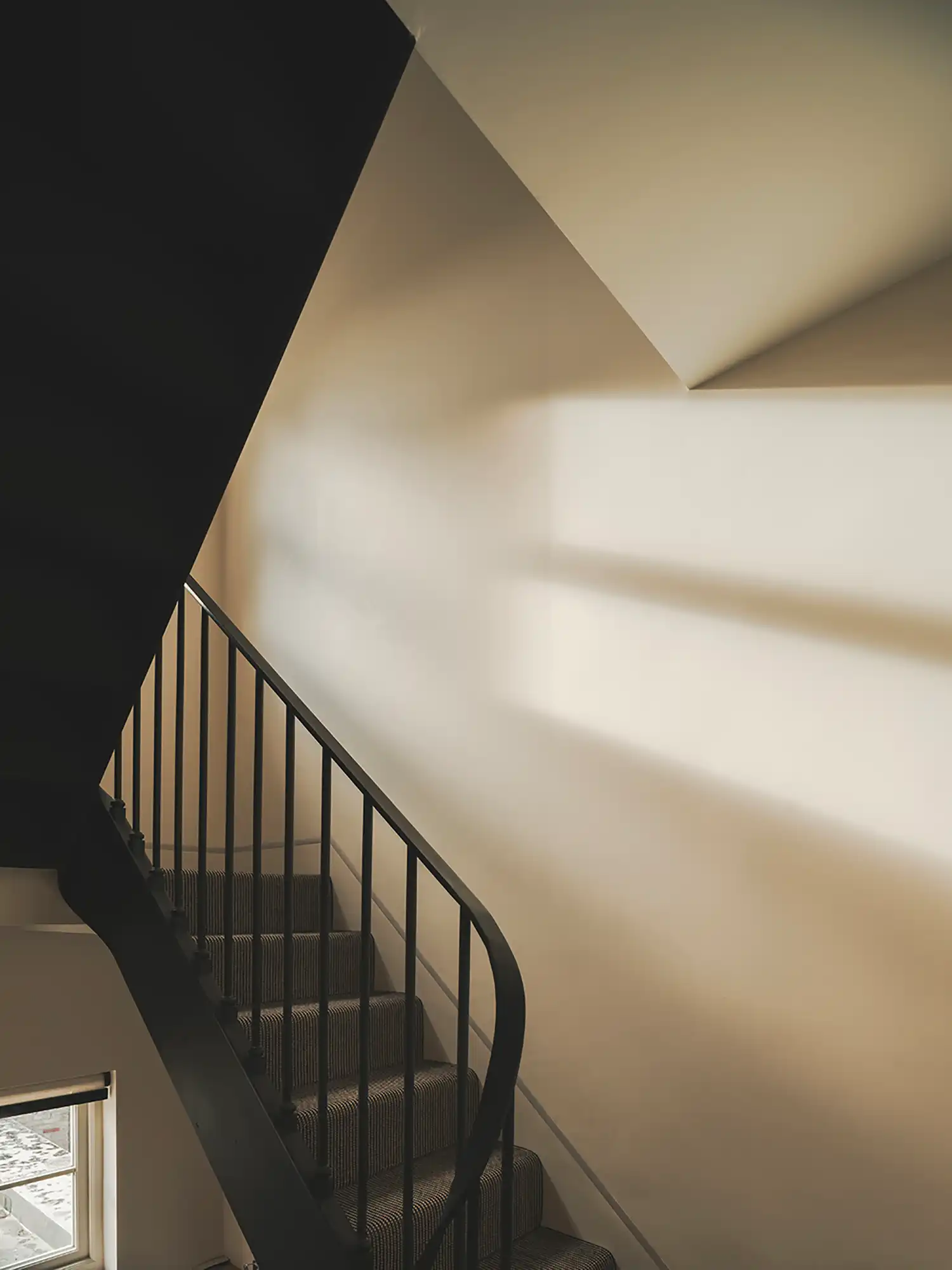
The sensory transition from street to hearth is marked by a deliberate sequence of views. As one moves through the house, the “oddly shaped” nature of the plot disappears, replaced by a feeling of expansive volume. Large glass apertures are positioned to frame specific vignettes of the garden and the sky, blurring the boundary between the interior and the external landscape. It is a home that understands the value of silence and the luxury of well-tempered light within a dense urban fabric.
A sustainable evolution of the London terrace is reflective of a wider shift in how we approach our existing building stock. Rather than seeking new ground, projects like Balmore House prove the immense value in the Don’t Move, Improve movement, where thoughtful residential extensions in London transform overlooked sites into high-performance living spaces. By choosing to de-carbonize and expand existing structures, homeowners and architects are proving that the most sophisticated way forward is often found within the walls we already have.