

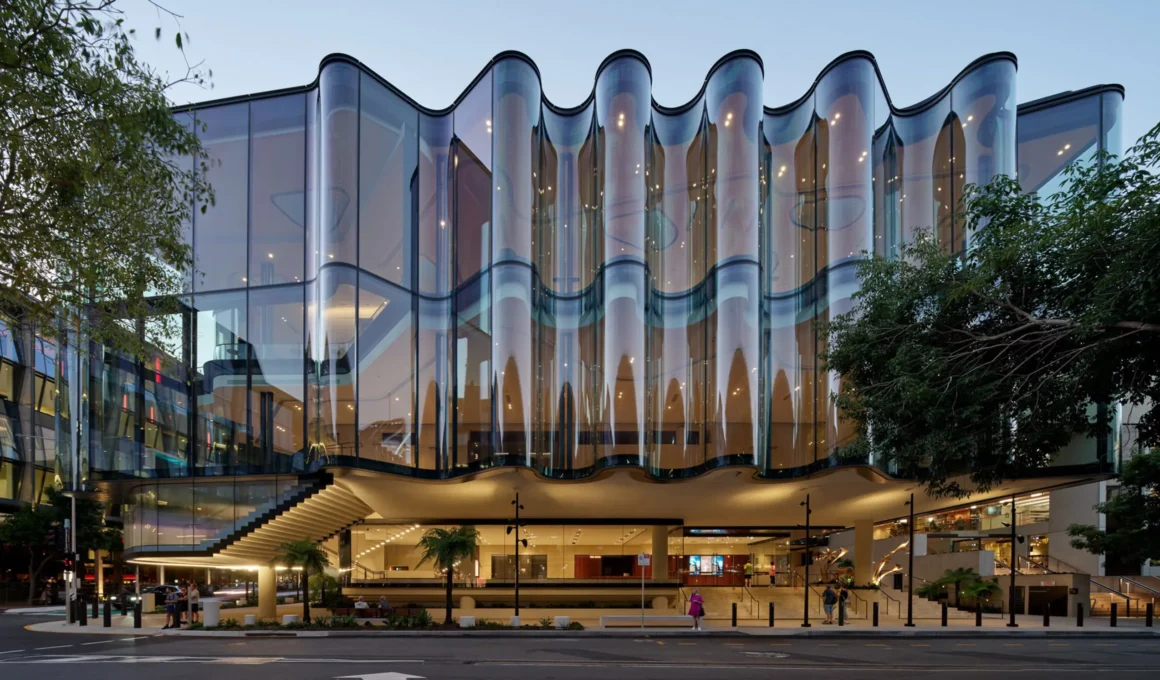
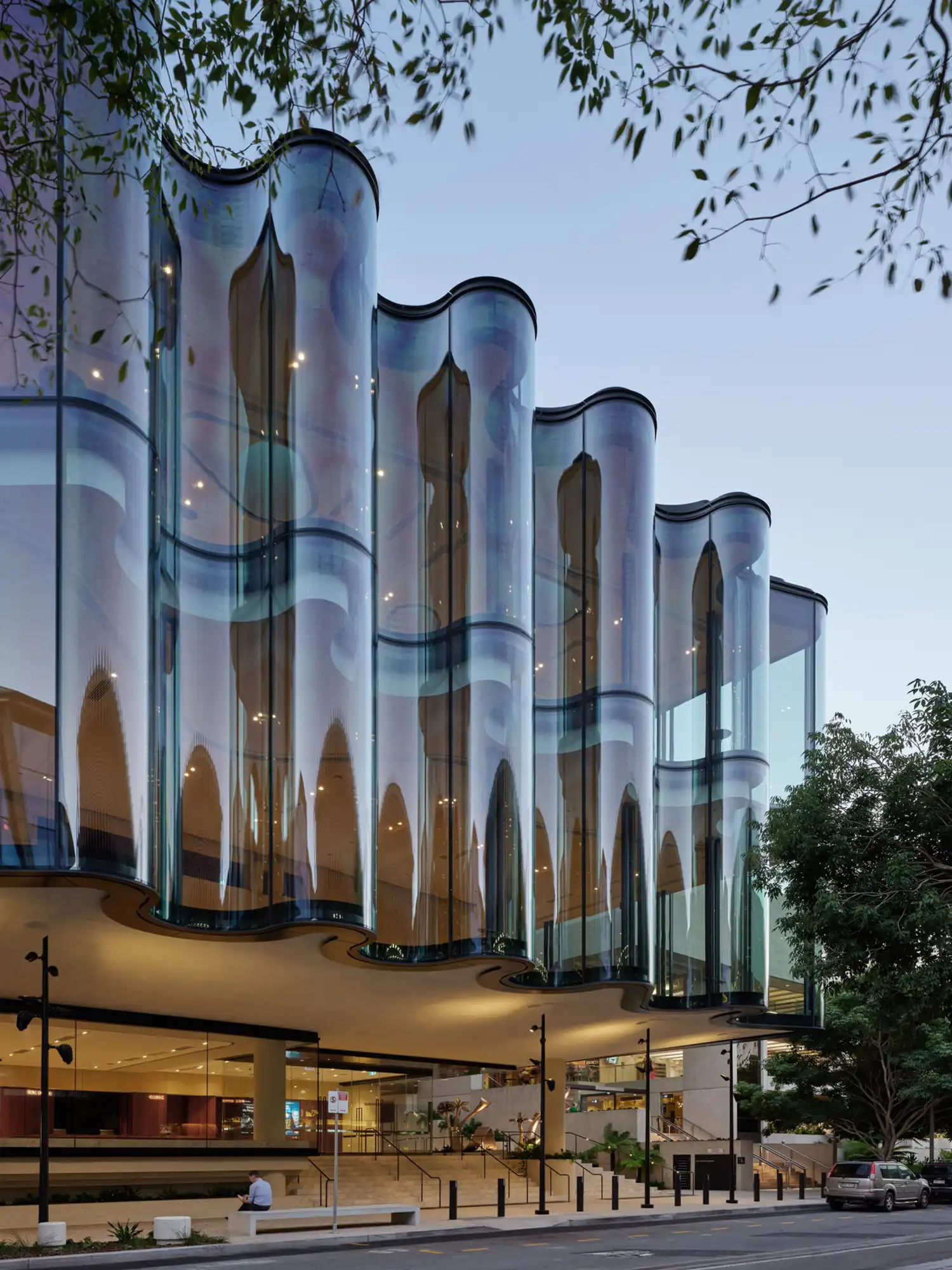
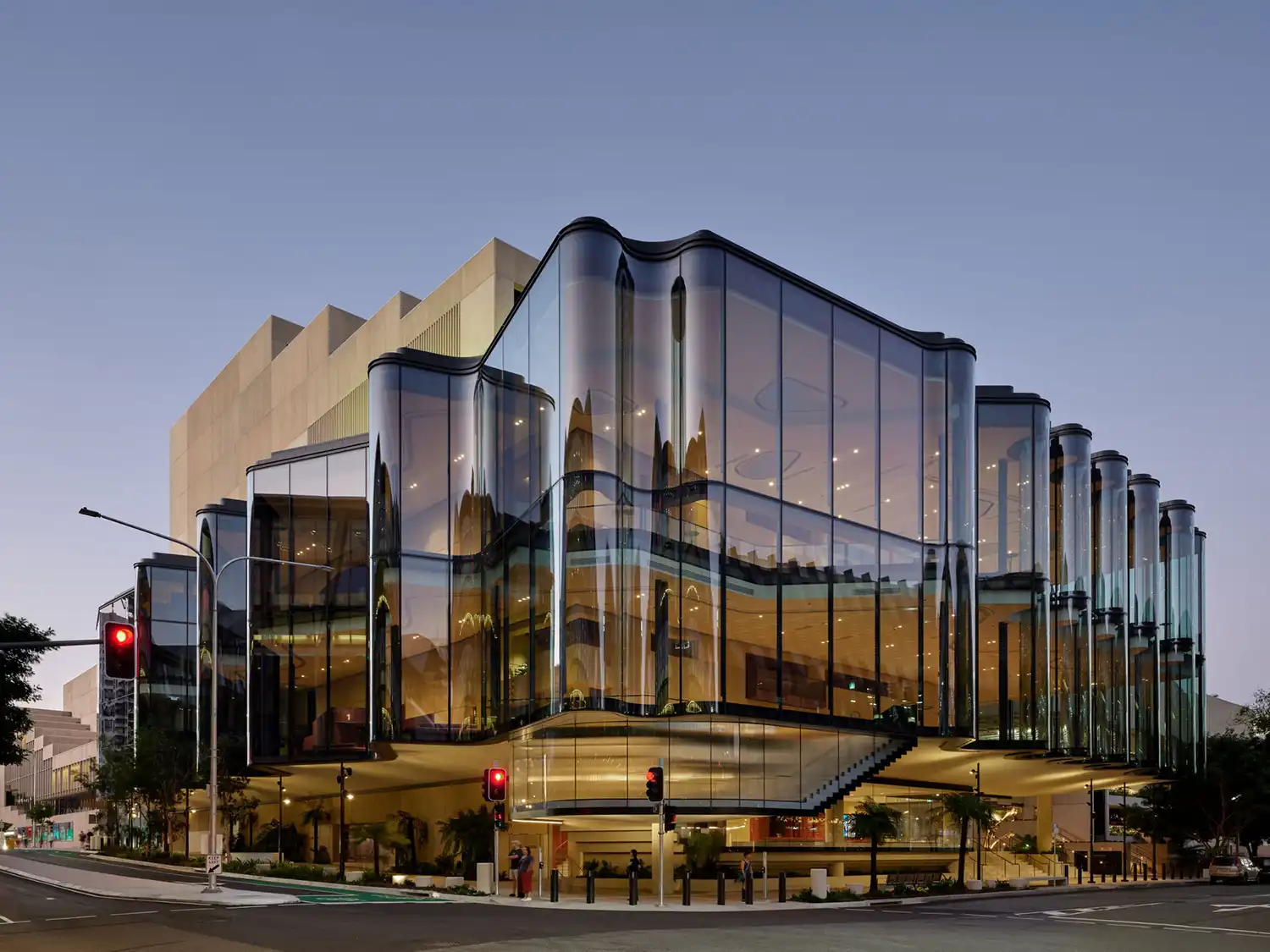
Designed as a collaborative masterstroke by Blight Rayner and Snøhetta, the Glasshouse Theatre at the Queensland Performing Arts Centre (QPAC) in Brisbane emerges as a luminous addition to the South Bank, defined by a rippling glass façade that mirrors the poetic movements of the Brisbane River.
A visionary dialogue with the river. The conceptual heart of the project draws profound inspiration from the First Nations narratives of the region. Guided by a prose-poem by Aboriginal Elder Aunty Lilla Watson, the architects translated the imagery of river ripples and underwater life into a dynamic glass exterior. This undulating skin does more than provide shelter; it serves as a translucent veil that bridges the gap between the quiet intensity of the performance and the bustling civic life of Meanjin Country.
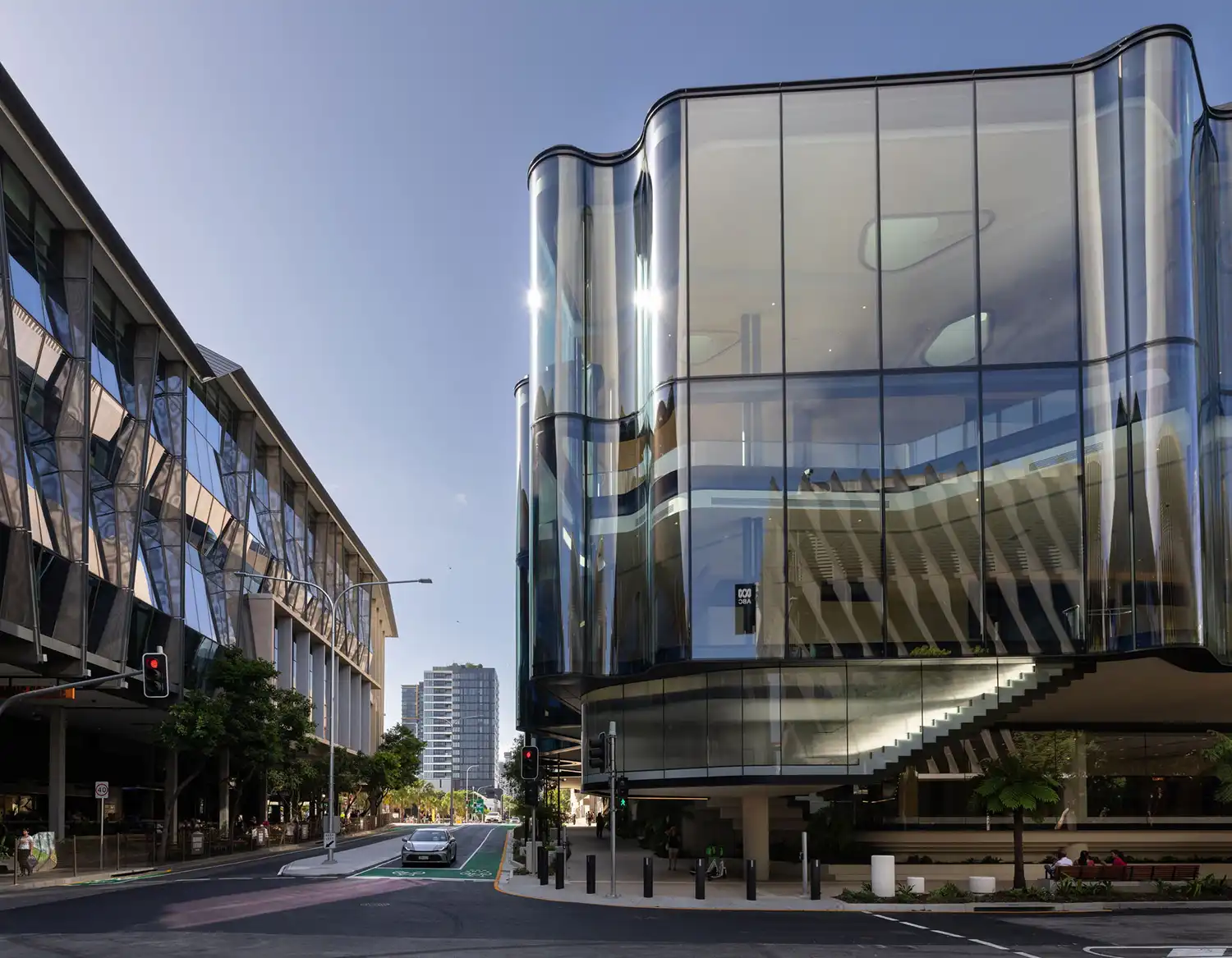
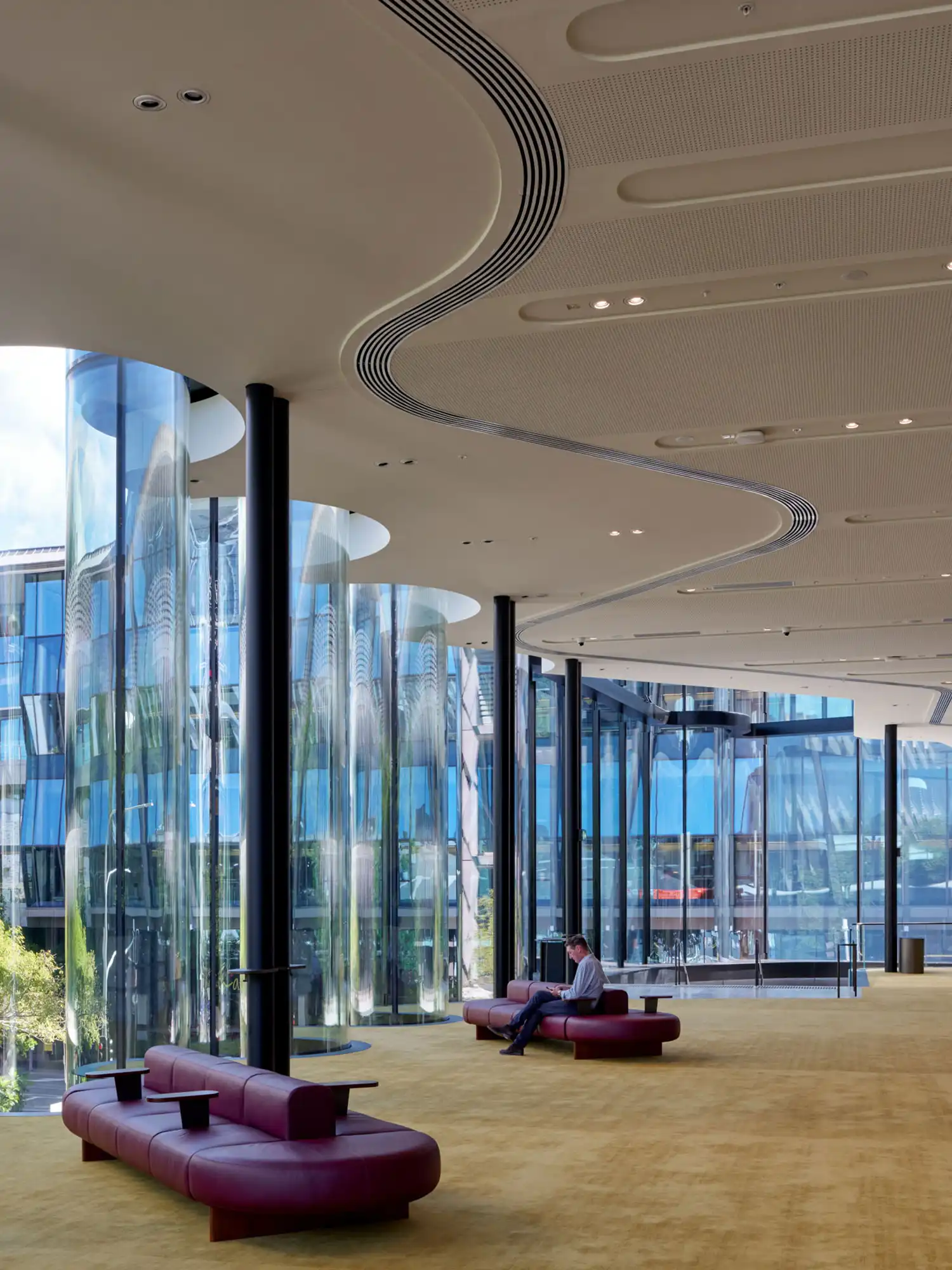
Transparency as a civic gesture. By extending the building with a six-metre cantilever over the former Playhouse Green, the design team maximized the venue’s footprint while maintaining a sense of weightlessness. The highly transparent edge of the foyer ensures that the theatre’s primary mass remains respectfully aligned with the heritage-listed Robin Gibson original. As dusk falls, the foyers transform into a stage of their own—a “public theatre” where the movement of patrons creates a blurred, cinematic spectacle visible to passersby on the street.
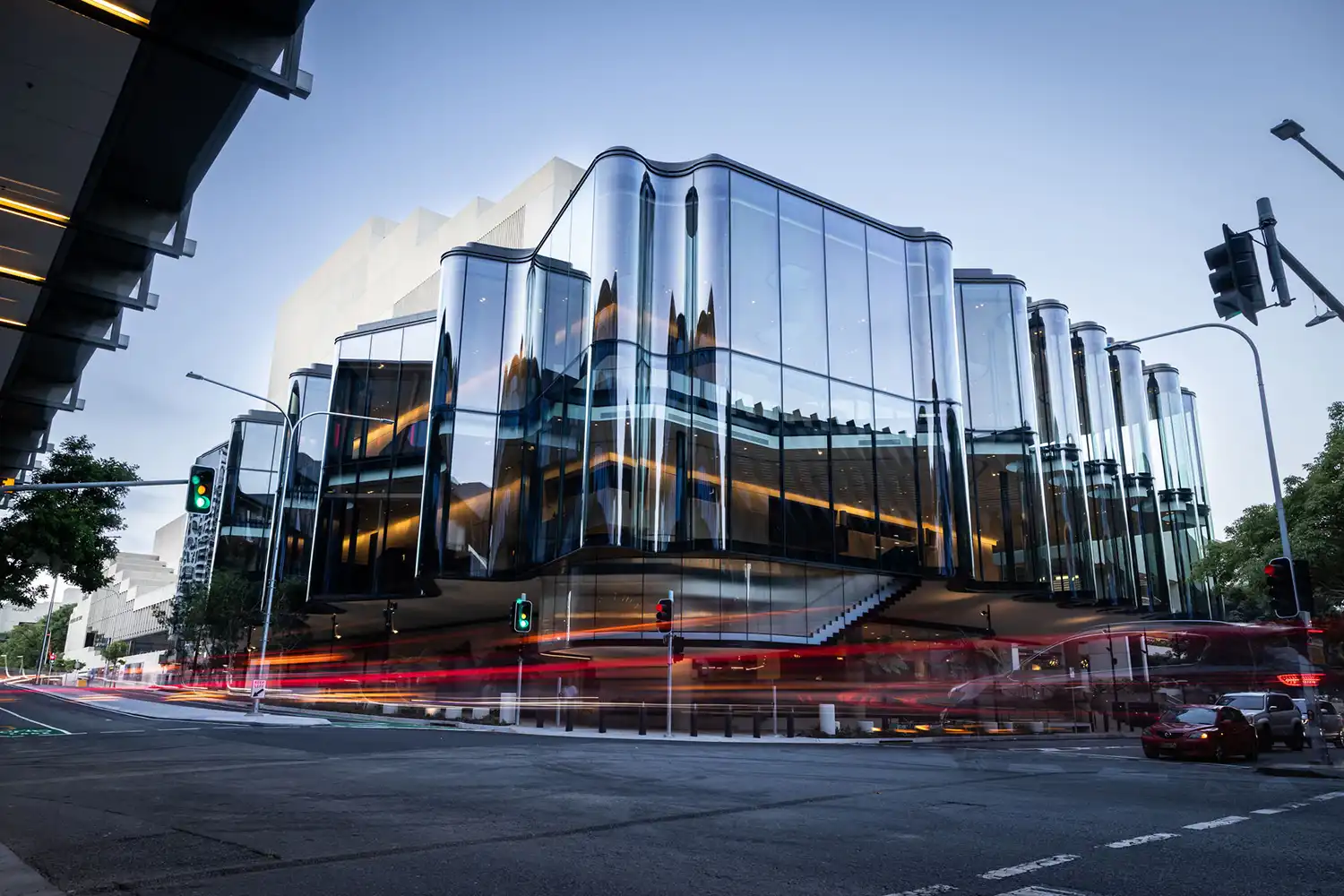
Precision in the thermal envelope. To manage the intense Queensland sun, the wavy glass walls are a feat of advanced engineering. Fabricated in four layers with an internal air gap, the façade optimizes thermal performance without sacrificing clarity. Specific facets of the glass are embedded with a black ceramic inlay, acting as integrated louvres that block solar penetration and minimize glare. This technical rigor ensures that the soaring, light-filled volumes remain comfortable and energy-efficient year-round.
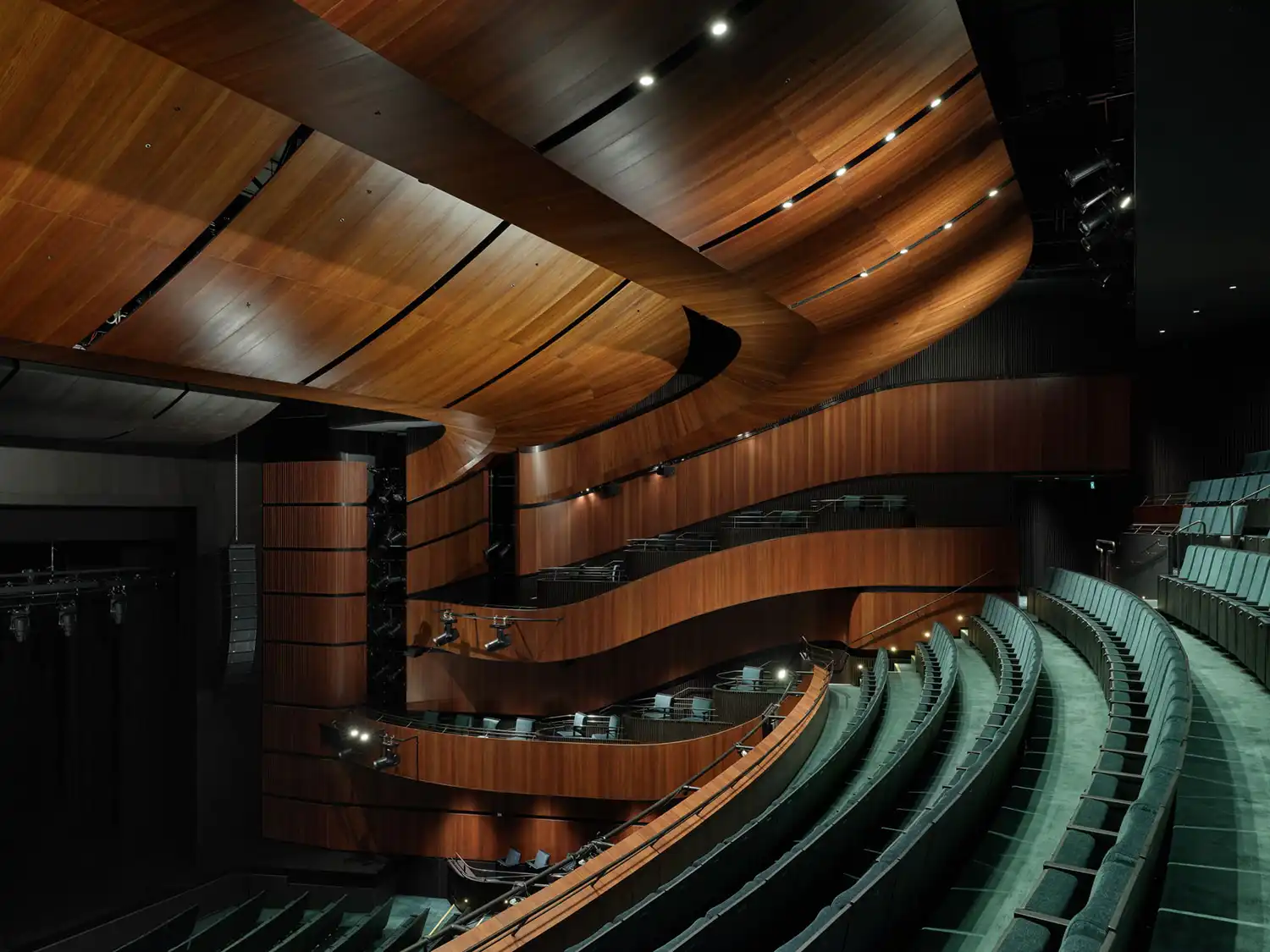
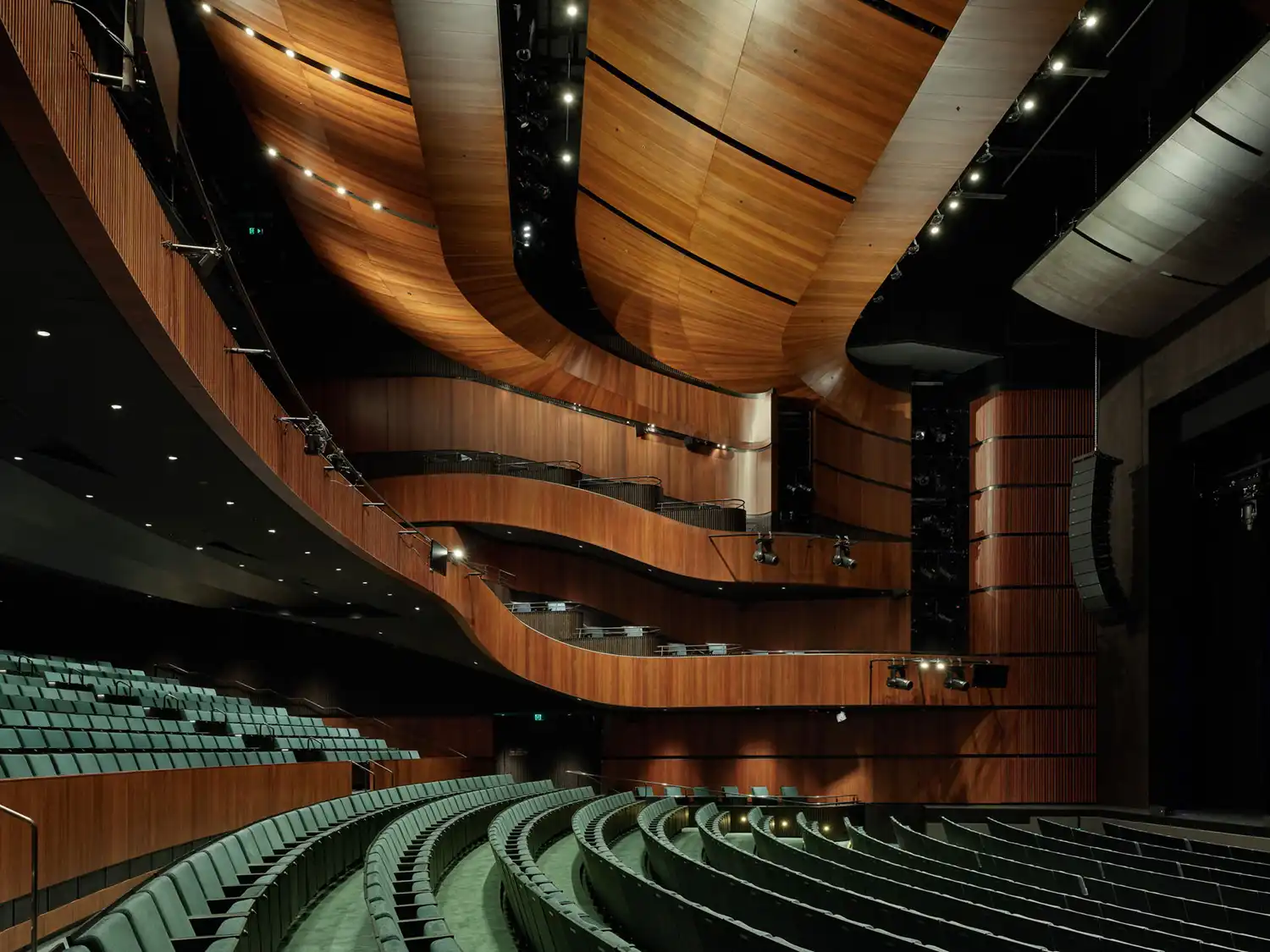
A sanctuary of acoustic intimacy. Inside the 1,500-seat auditorium, the atmosphere shifts from the airy lightness of the glass exterior to a deep, grounded warmth. Clad in dark grey ironbark with rainforest green carpets, the space feels like a protective cocoon. Every element is calibrated to function like a finely tuned musical instrument. The distance from the stage to the furthest seat is a mere 28 metres, fostering a rare level of connection between the performers and the audience that belies the venue’s significant capacity.
First Nations narratives embedded in the structure. The project goes beyond surface-level aesthetics to integrate deep cultural stories into its physical form. Seven skylights in the roof, inspired by the research of Elder Aunty Colleen Wall, represent the seven watersheds of Queensland. This celestial connection is paired with Floriate, a sculpture by Torres Strait Islander artist Brian Robinson, which features seven flowering plants indigenous to the state, grounding the cultural infrastructure in its specific botanical and spiritual landscape.
Unprecedented technical flexibility. Beneath the surface, the Glasshouse Theatre is equipped for the most demanding global productions, from symphony and opera to large-scale musicals. The orchestra pit features three independent floor sections, allowing for four distinct configurations—double the industry standard. This versatility is matched by a fully automated 24-metre-high fly tower, providing a world-class platform for international talent and Australian exclusives.
A catalyst for the 2032 Olympic horizon. As Brisbane prepares for its role as a global host city, the completion of this venue solidifies the Queensland Cultural Precinct as one of the most significant hubs in the Southern Hemisphere. By adding capacity for an additional 300,000 visitors annually, the project reinforces the city’s reputation as a premier cultural tourism destination, ensuring that the arts remain a central pillar of the region’s rapid urban evolution.
A legacy of bold innovation. The Glasshouse Theatre joins a prestigious portfolio of works by Snøhetta that redefine how large-scale structures interact with their environment. The studio continues to push boundaries with the upcoming Shanghai Grand Opera House, featuring its iconic spiral rooftop, and the recently completed Riyadh Metro Station, which utilizes a periscopic canopy to bring natural light deep underground. Each project reinforces a commitment to creating spaces that are as technically proficient as they are socially resonant.