



Located in a dense pocket of London, United Kingdom, the London Solar House by NYC-based Archi-Tectonics reimagines the traditional urban terrace as a 2,250-square-foot prototype for high-density living, blending a restored foundational core with a futuristic, solar-integrated vertical extension.
A heritage-driven conceptual vision guides the intervention, rooted in the modernist pursuit of ergonomic, frugal housing. However, where early 20th-century pioneers sought the “minimum” for comfortable living, Archi-Tectonics opts for a philosophy of compact richness. The project functions as a four-dimensional interplay of volumes, weaving together the masonry of a previous era with a faceted zinc-and-glass envelope that pushes the boundaries of the existing footprint.
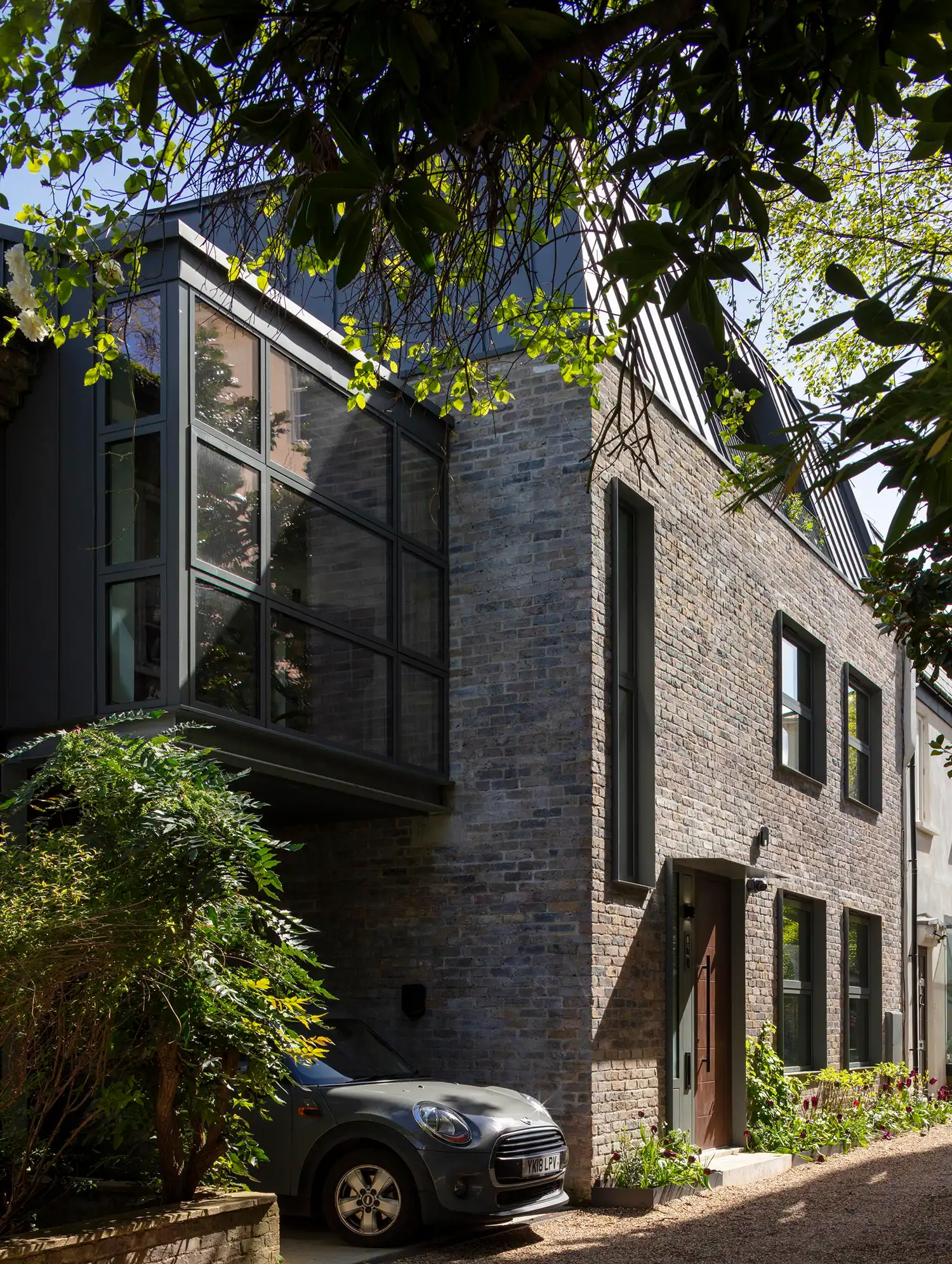
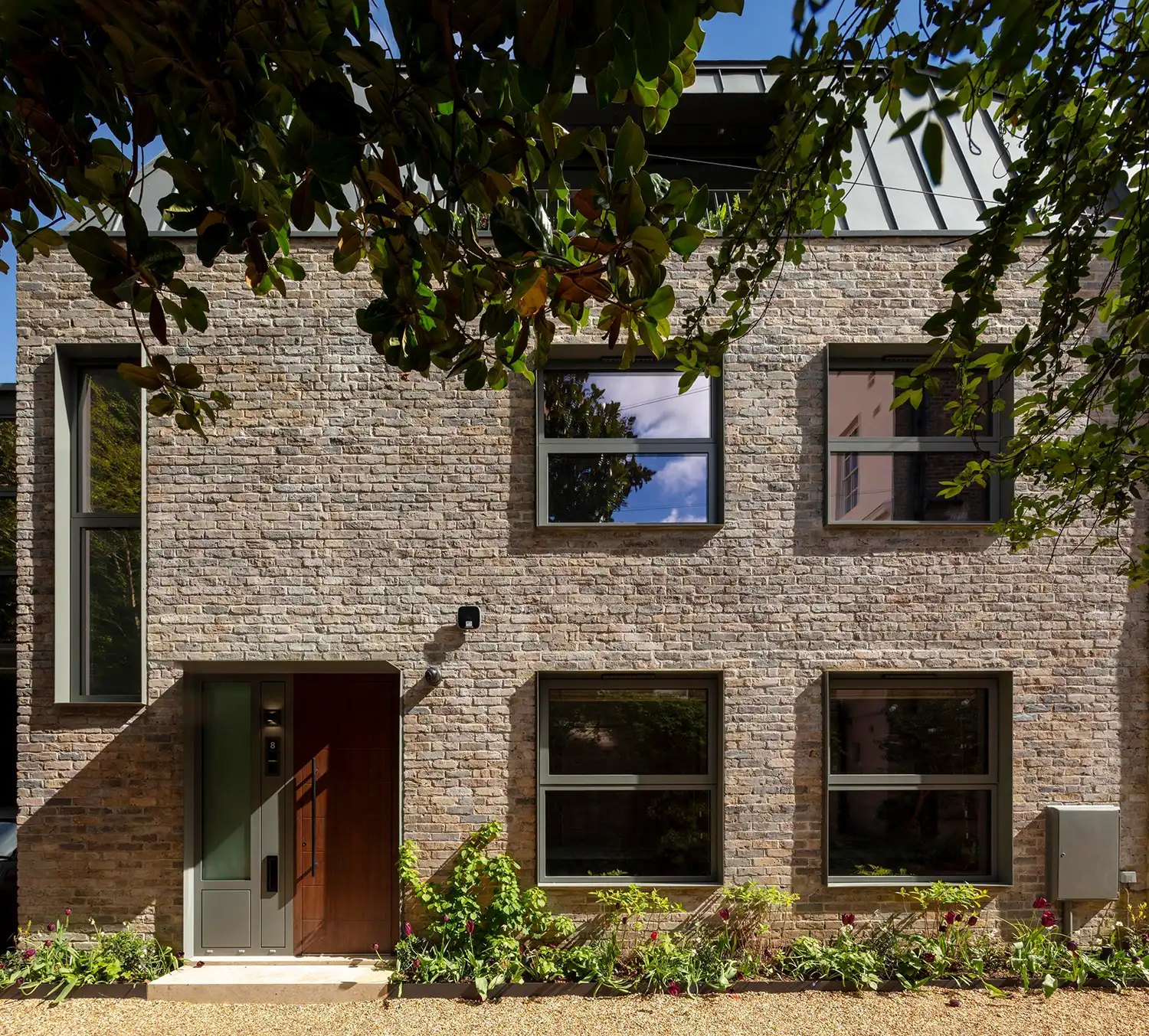
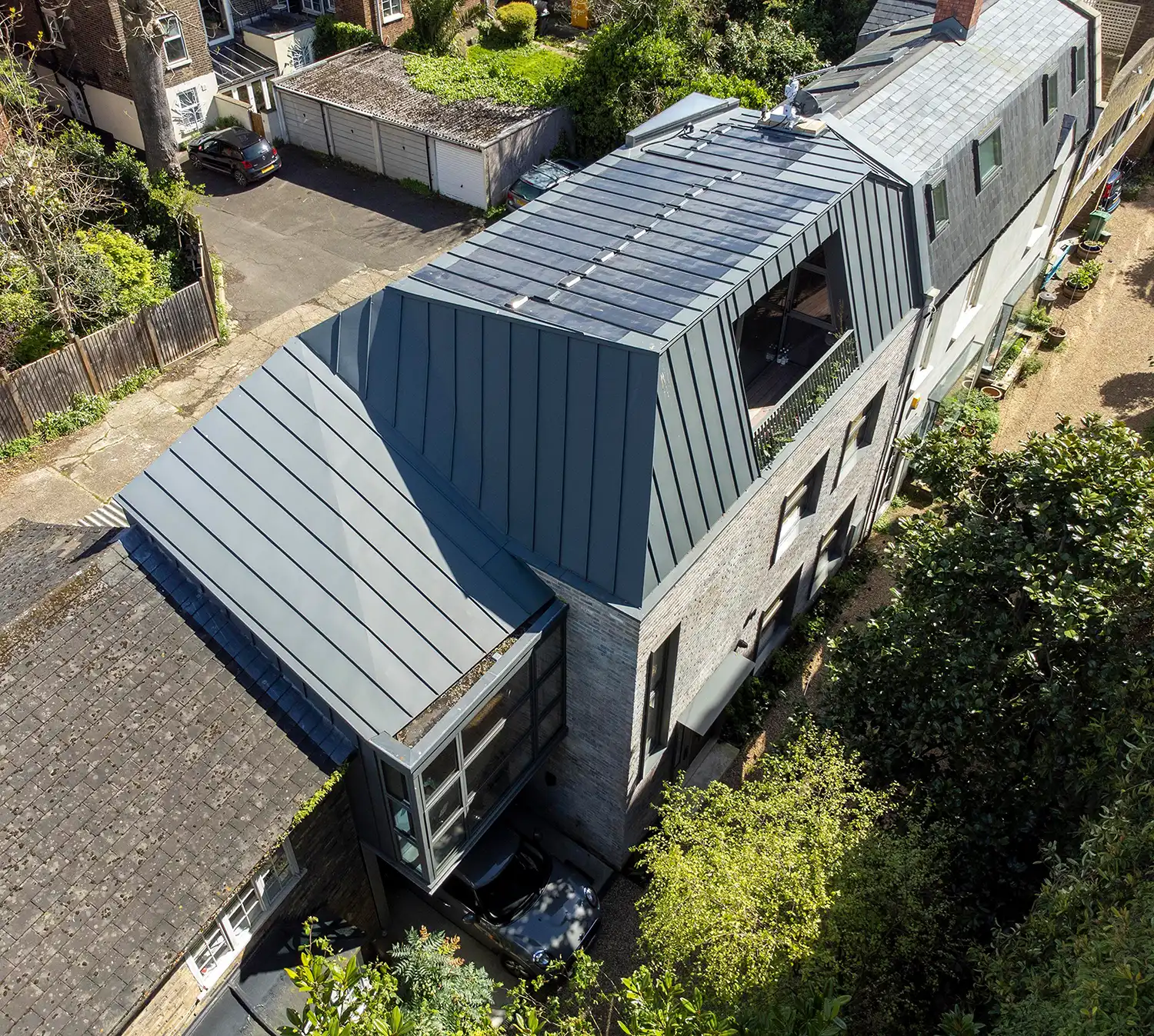
The structural metamorphosis begins with the original building edges, which were preserved to act as a stoic, opaque base. From this core, a multi-faceted roof extension emerges, enveloping an additional story through a series of hovering projections. This “otherness” in form is not arbitrary; the volumetric extrusions were meticulously guided by the house’s proximity to adjacent structures and the surrounding greenery, ensuring the new renovations respect the neighborhood’s scale while asserting a bold contemporary identity.
Sensory spatial intersections define the interior experience, where the intersection of the folded envelope and the interior program creates unexpected atmospheric moments. A pyramidal skylight crowns the kitchen, while a strategic glass slit in the living area exposes a once-hidden rear yard. Perhaps most striking is the fully glazed window that frames a panoramic view of the streetscape through the limbs of an old-growth tree, pulling the outside environment into the hearth of the home.
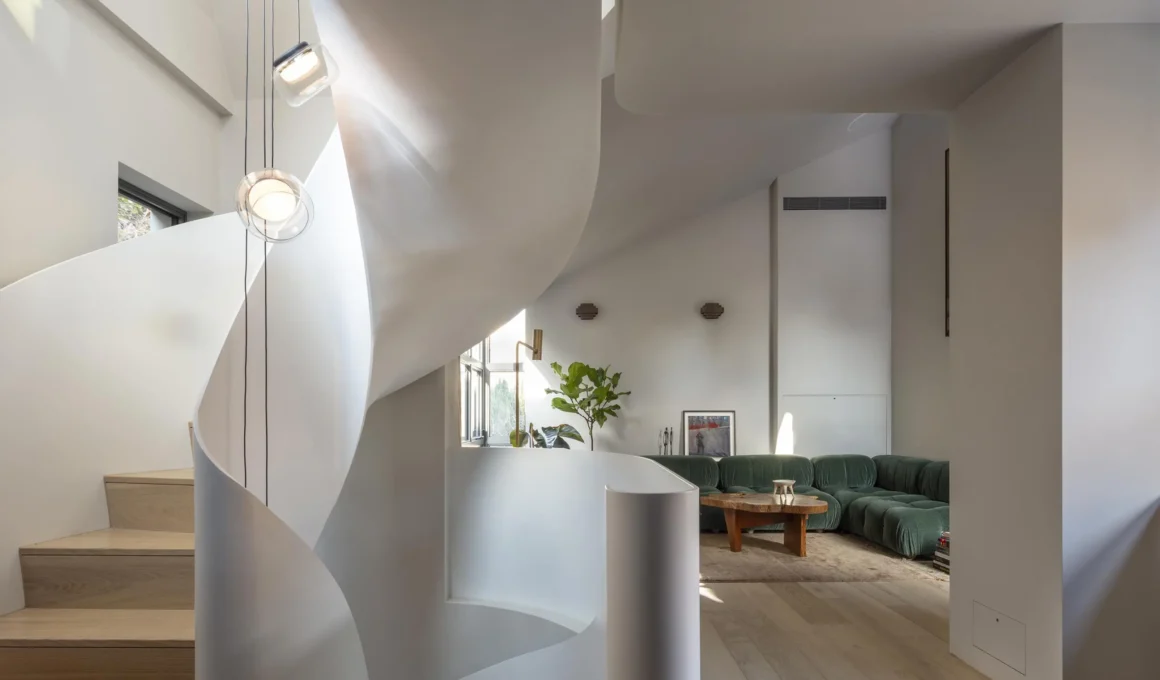
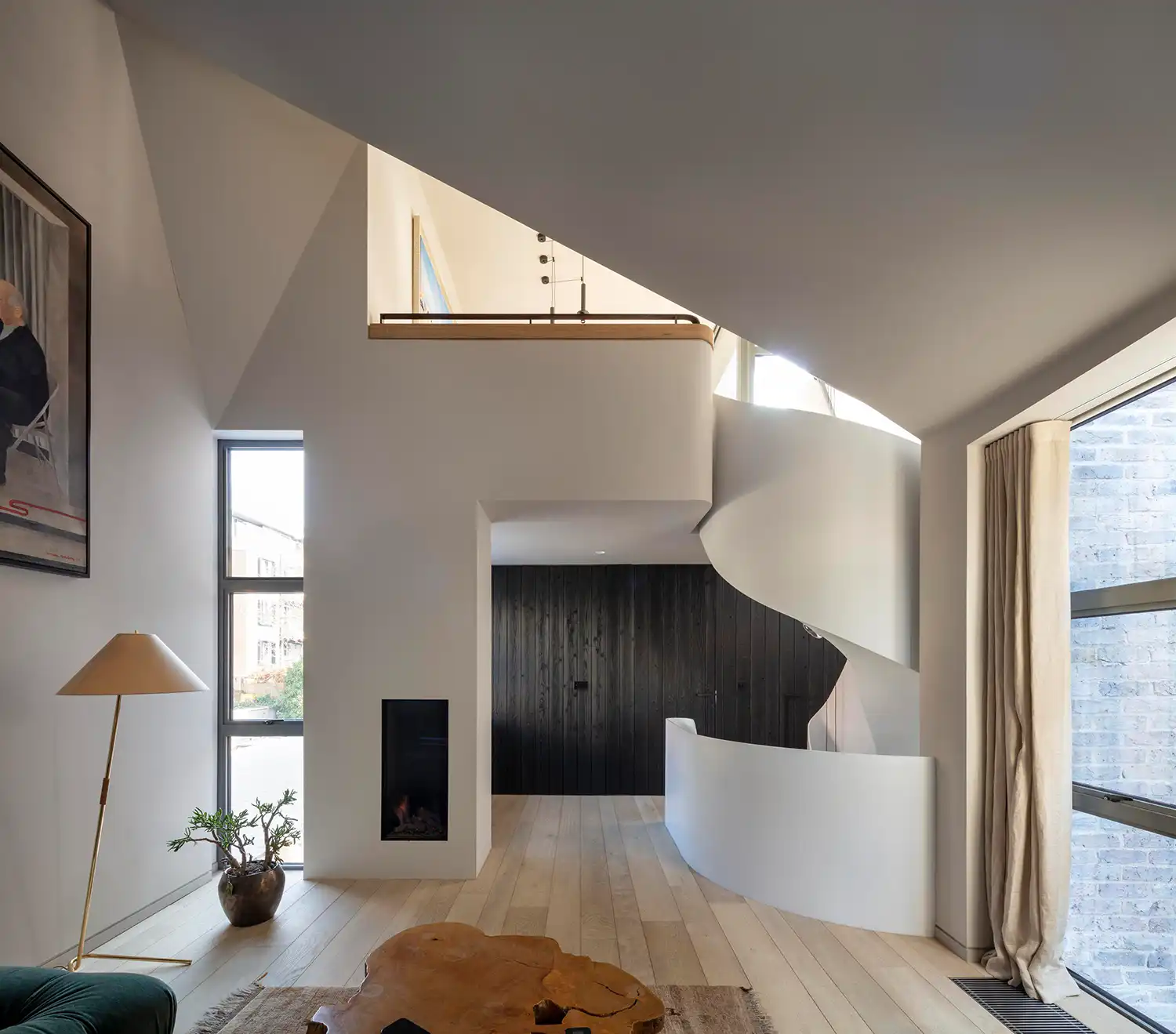
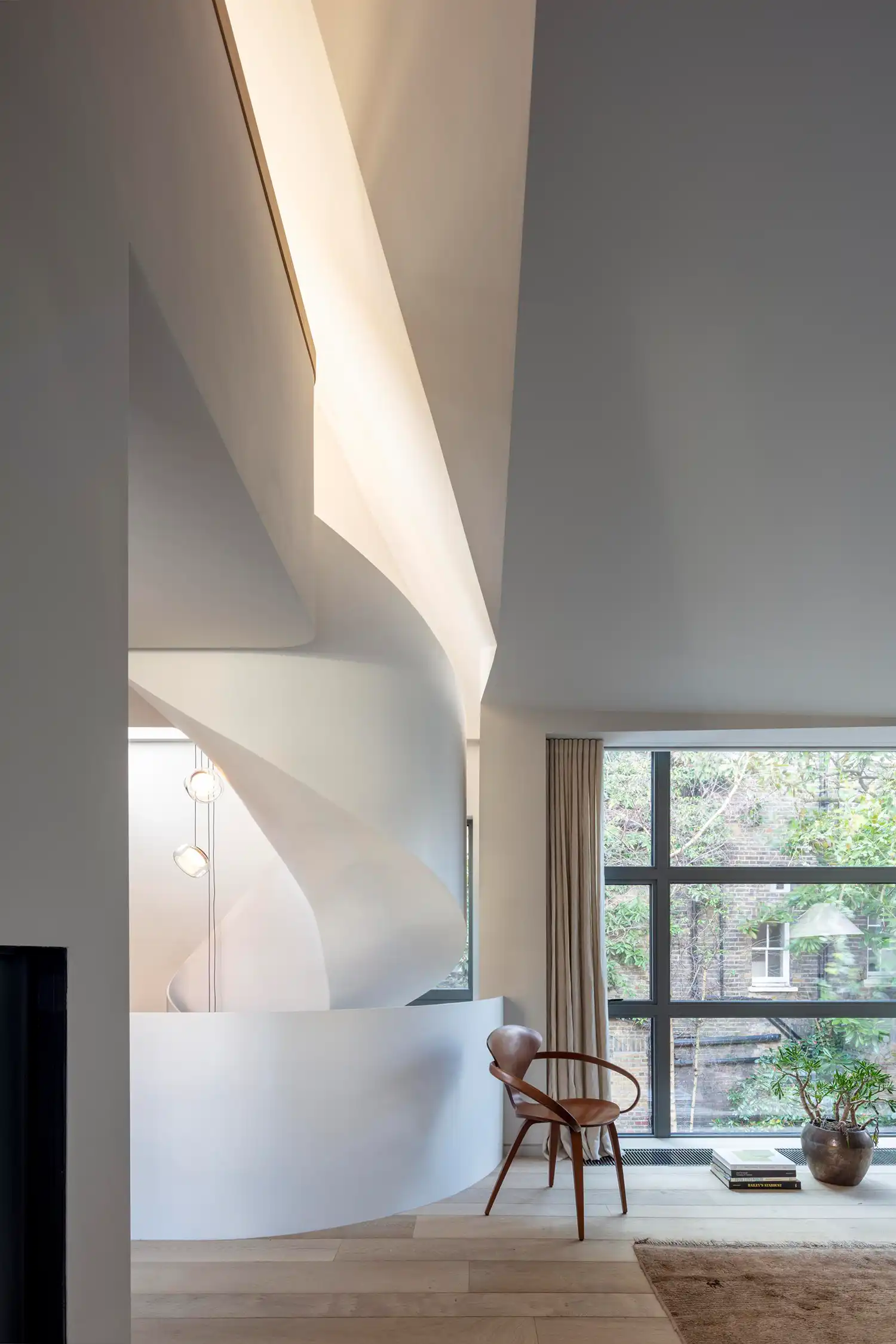
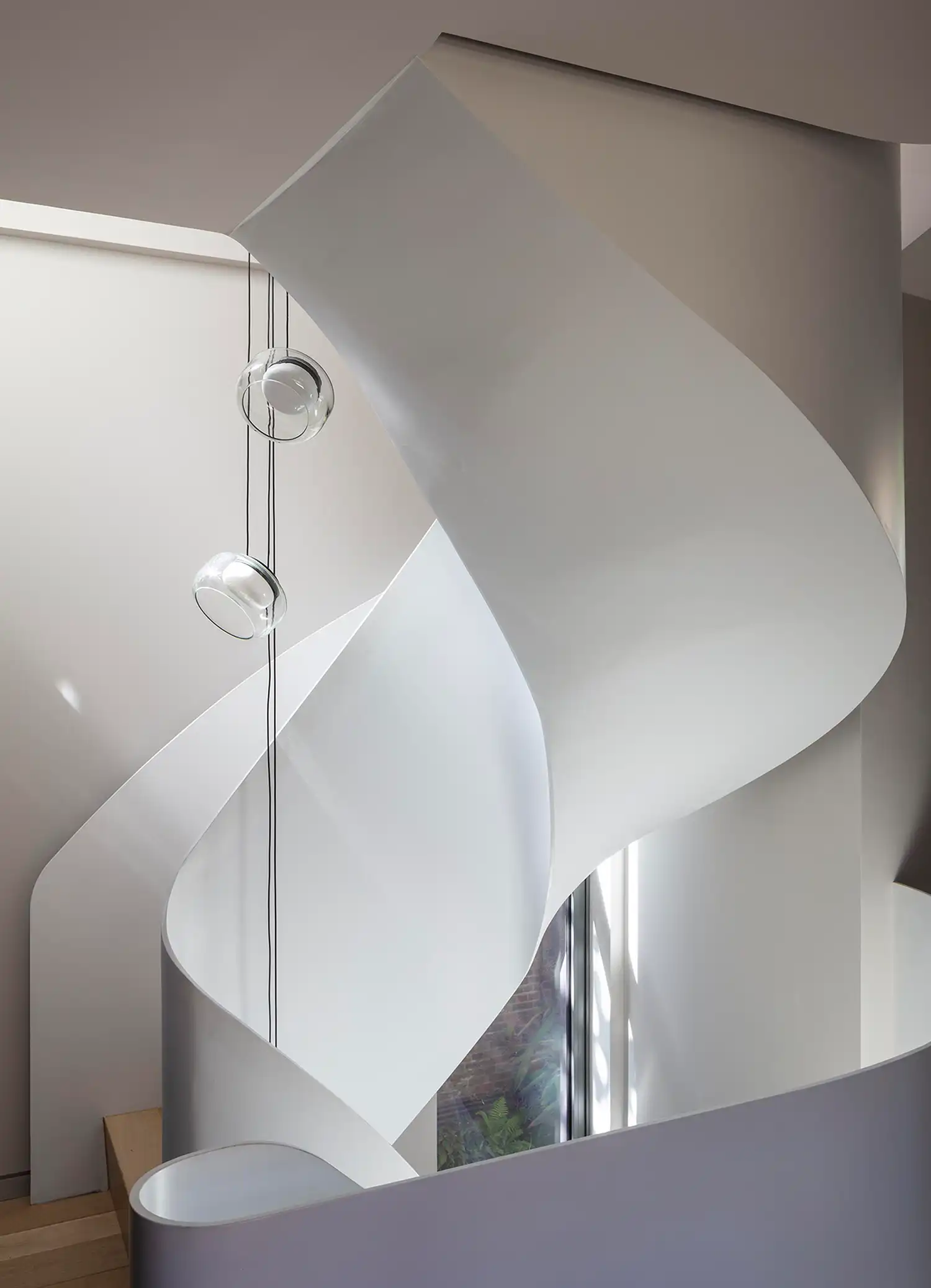
The sculptural heart of the home is a solid-steel helix staircase that winds through the center of the vertical plan. This organic, fluid geometry connects the entrance level to the double-height living space and the sun-drenched dining area above. Acting as a visual vortex, the stair demonstrates how high-performance living spaces can prioritize aesthetic intensity without sacrificing efficiency, moving beyond simple problem-solving toward a more emotive form of urban daylighting design.
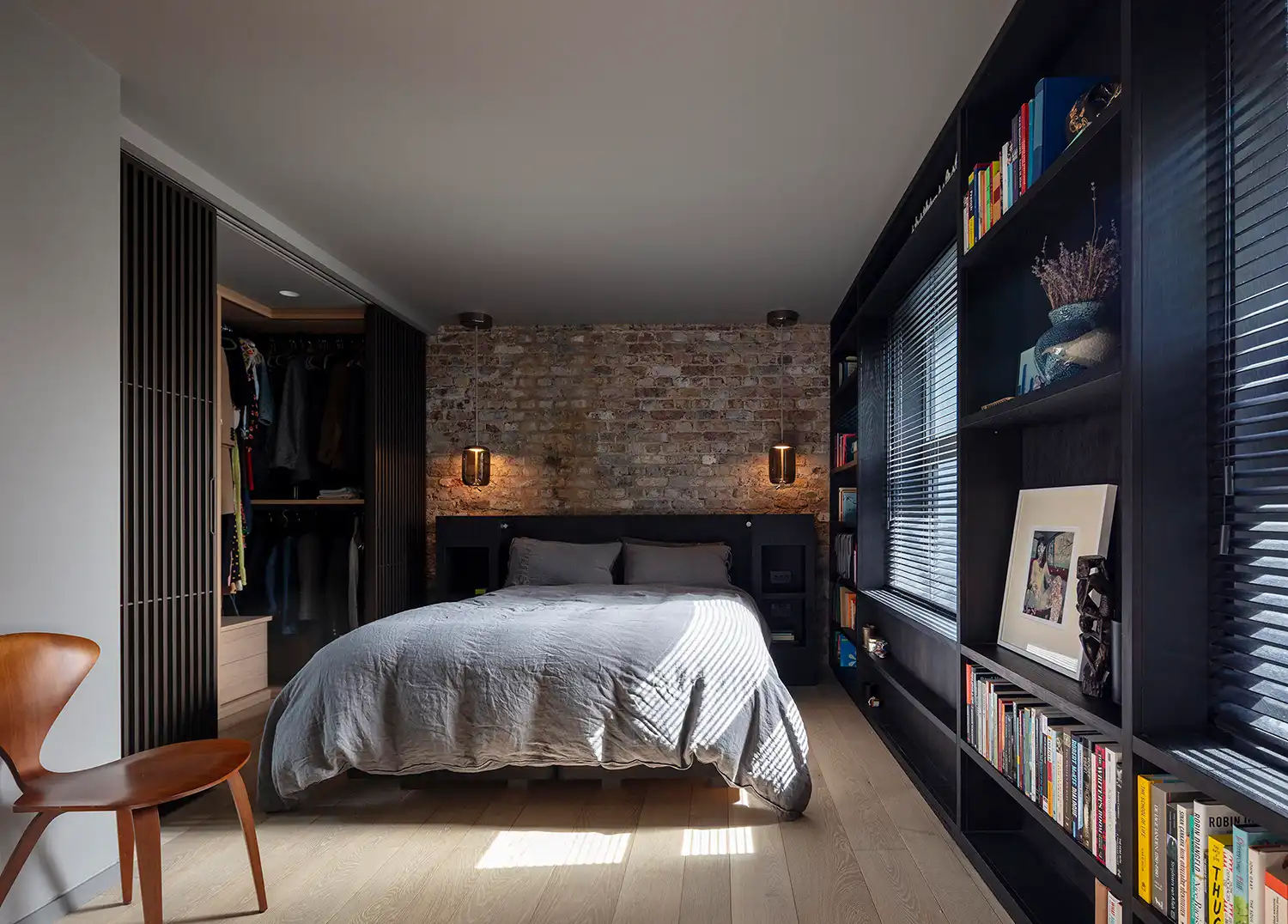
Material richness and tactile depth offer a deliberate departure from the clinical minimalism often associated with small-scale dwellings. The interiors are characterized by high-contrast black raw wood cladding, textured stone, and brass mosaics. Softly glowing light coves and precious glass pendants illuminate organically shaped furniture and natural wool rugs, creating a sophisticated environment that feels expansive despite its tight urban constraints.
Sustainable energy autonomy is seamlessly woven into the skin of the building. The roof is lined with fully integrated PV panels, generating enough baseline electricity to power heat pumps, hot water systems, and lighting. Supported by a 13kW Tesla battery capable of charging an electric vehicle, the house functions almost entirely off-the-grid. This technical rigour reinforces the studio’s ongoing exploration of sustainable housing models for dense metropolitan environments.
The terrace as an outdoor respite provides a vital connection to the elements. Located at the roof level, this space extends the kitchen and dining areas toward the sky, nestled among the surrounding foliage and the jagged London roofscape. It serves as a reminder that even in the most crowded cities, thoughtful geometry can carve out private moments of transition between the domestic interior and the urban wild.
A sustainable evolution of the London terrace reflects a necessary shift in how we handle our aging building stock. The London Solar House exemplifies the potential of the “Don’t Move, Improve” philosophy, proving that the most sophisticated path toward de-carbonization is often found by expanding and retrofitting the walls we already have. By transforming an overlooked site into a high-performance vessel for modern life, Archi-Tectonics demonstrates that density, when paired with technical intelligence, is the key to a more resilient urban future.