




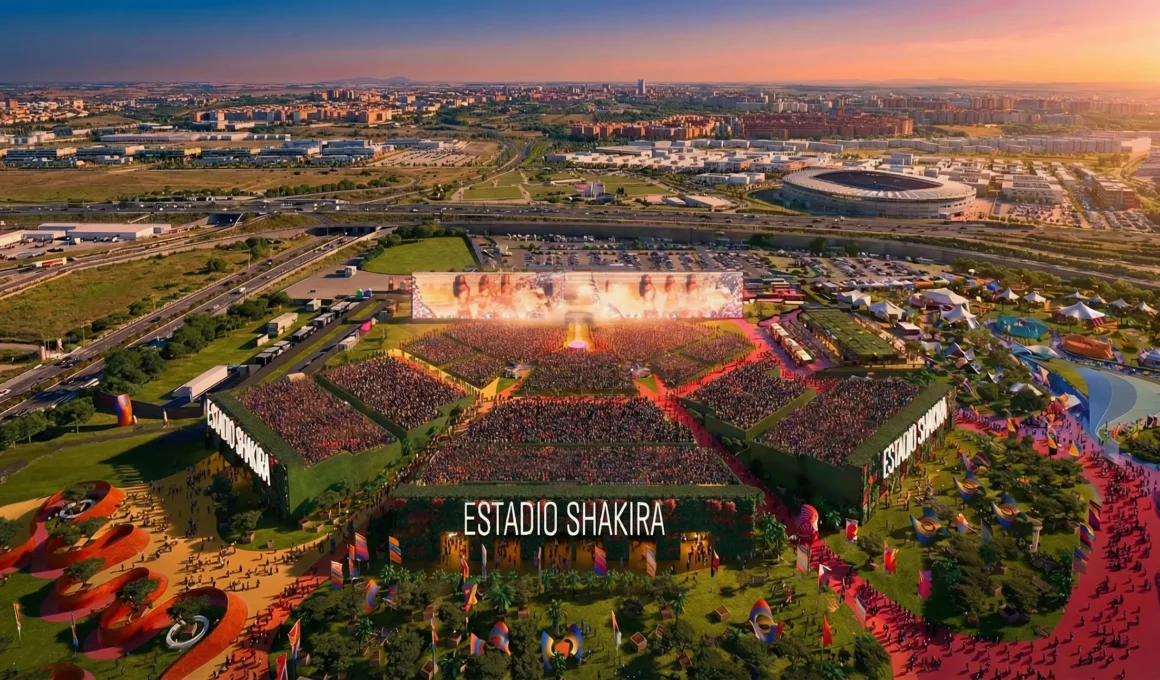
Bjarke Ingels Group (BIG) has unveiled the Shakira Stadium in Madrid’s Macondo Park, a 50,000-capacity temporary venue designed for the Las Mujeres Ya No Lloran World Tour that redefines the relationship between large-scale performance and public space.
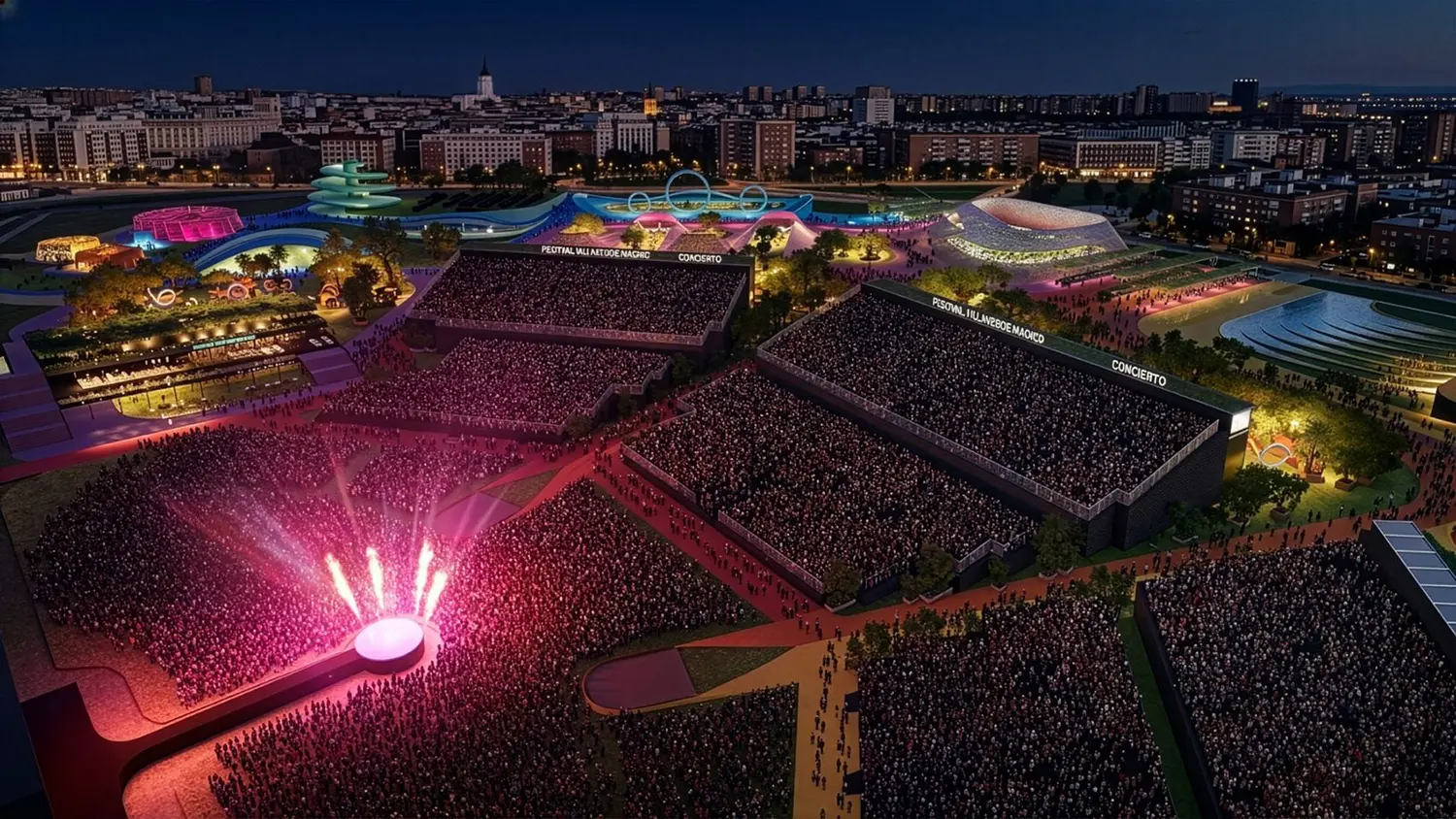
A departure from the static arena. Rather than adhering to the rigid, often isolated typology of traditional sports infrastructure, the project functions as a living landscape that integrates the intensity of a global concert tour with the fluidity of a public park. Spanning a 21-hectare site, the intervention seeks to eliminate the “dead time” typically associated with event venues, ensuring the grounds remain a vibrant social hub before the first note is played and long after the final encore.
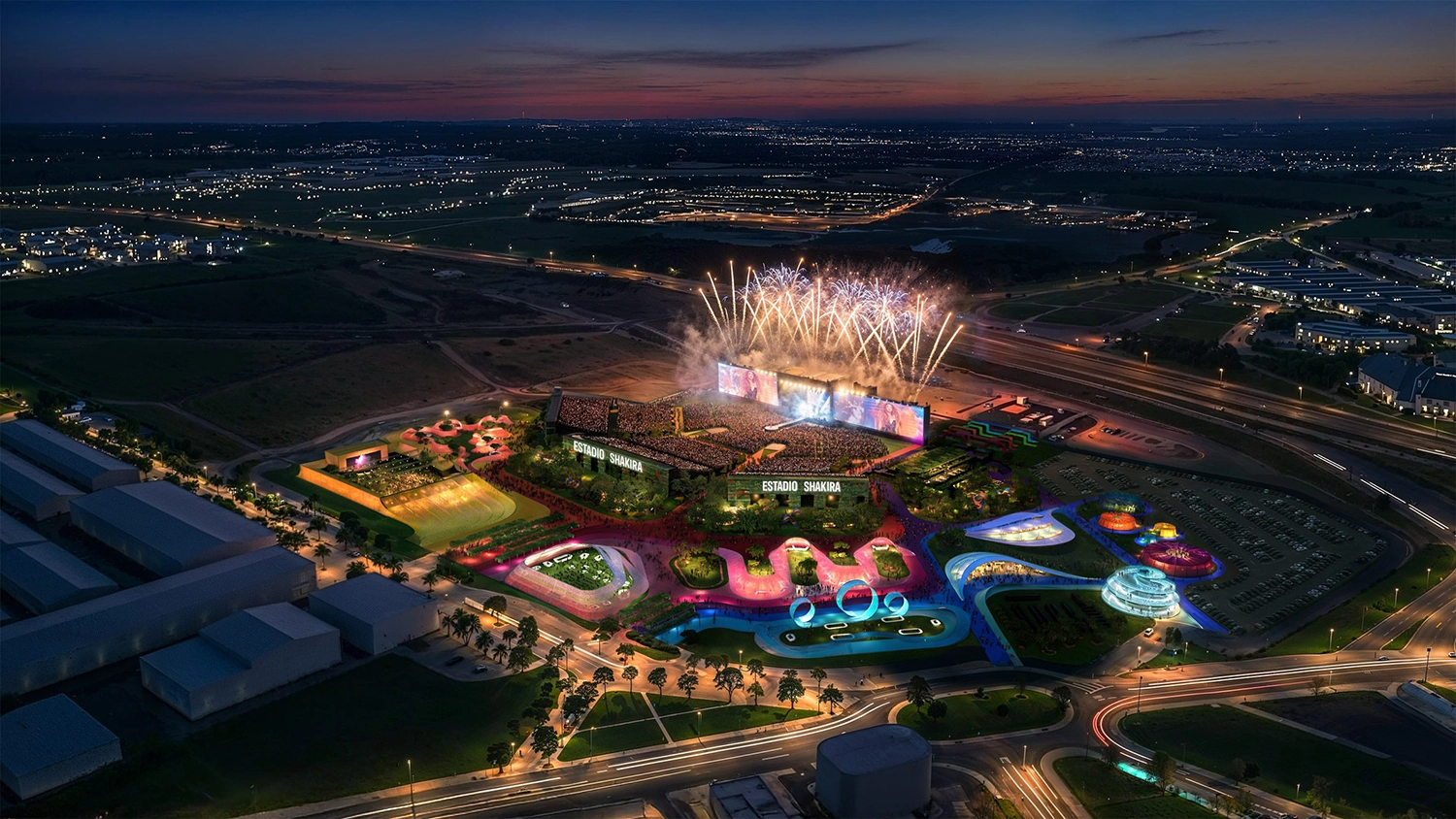
Curvilinear connectivity and recycled materiality. The circulation through Macondo Park is defined by winding, organic paths that reject linear movement in favor of discovery. Overhead, canopies made from recycled fabrics provide shade and visual continuity, fanning out across the site like rhythmic waves. These textile elements do more than offer protection from the Spanish sun; they introduce a tactile, soft-edged quality to the temporary infrastructure, echoing the movement and energy of the performance itself.
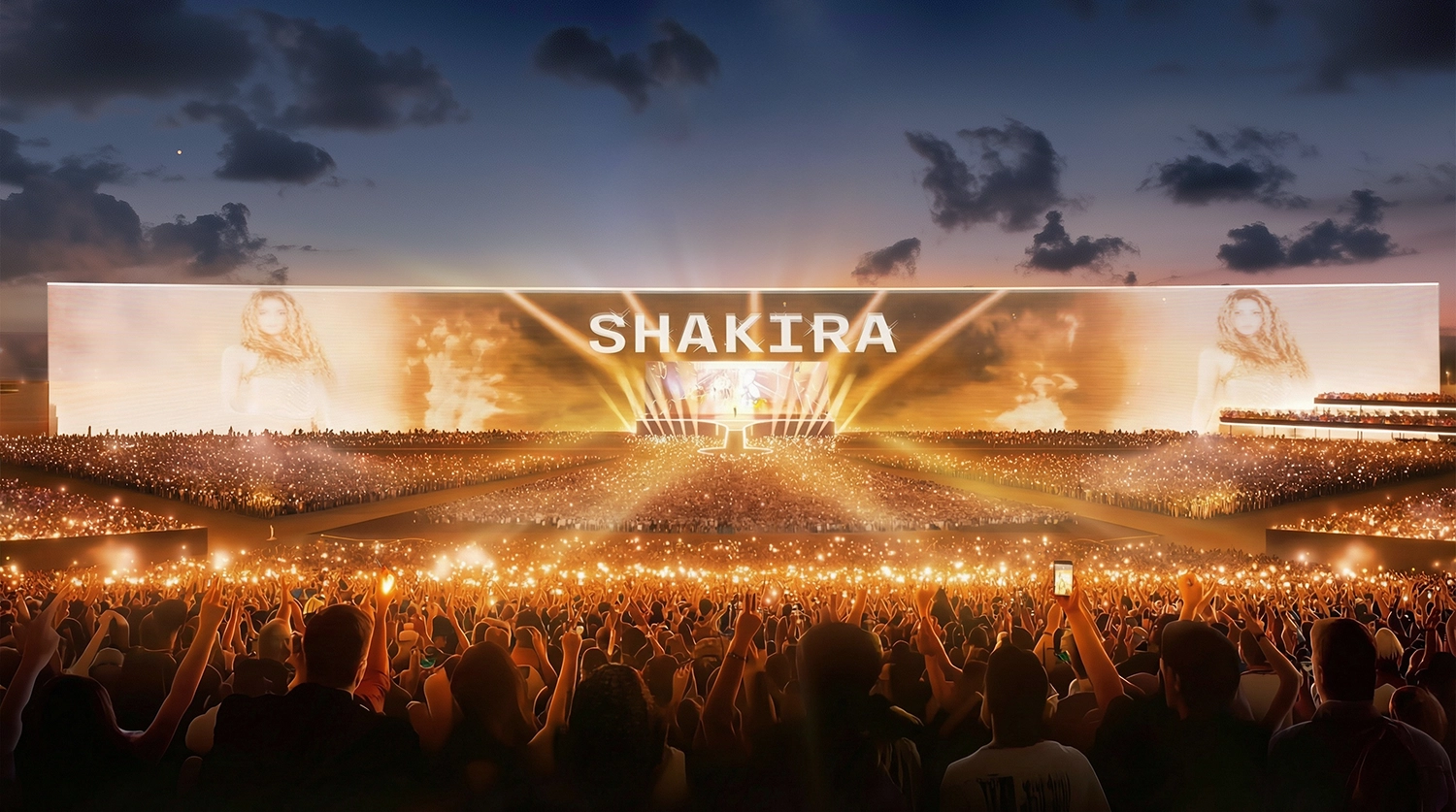
The stage as a spatial anchor. At the heart of the site, the performance area is dominated by a massive LED screen that serves as a digital horizon for the tiered seating fanning out in three strategic blocks. This configuration ensures that the visual choreography of the show is accessible to every spectator, while the open-air nature of the stadium allows the surrounding park to bleed into the event space, blurring the boundary between the “show” and the city.
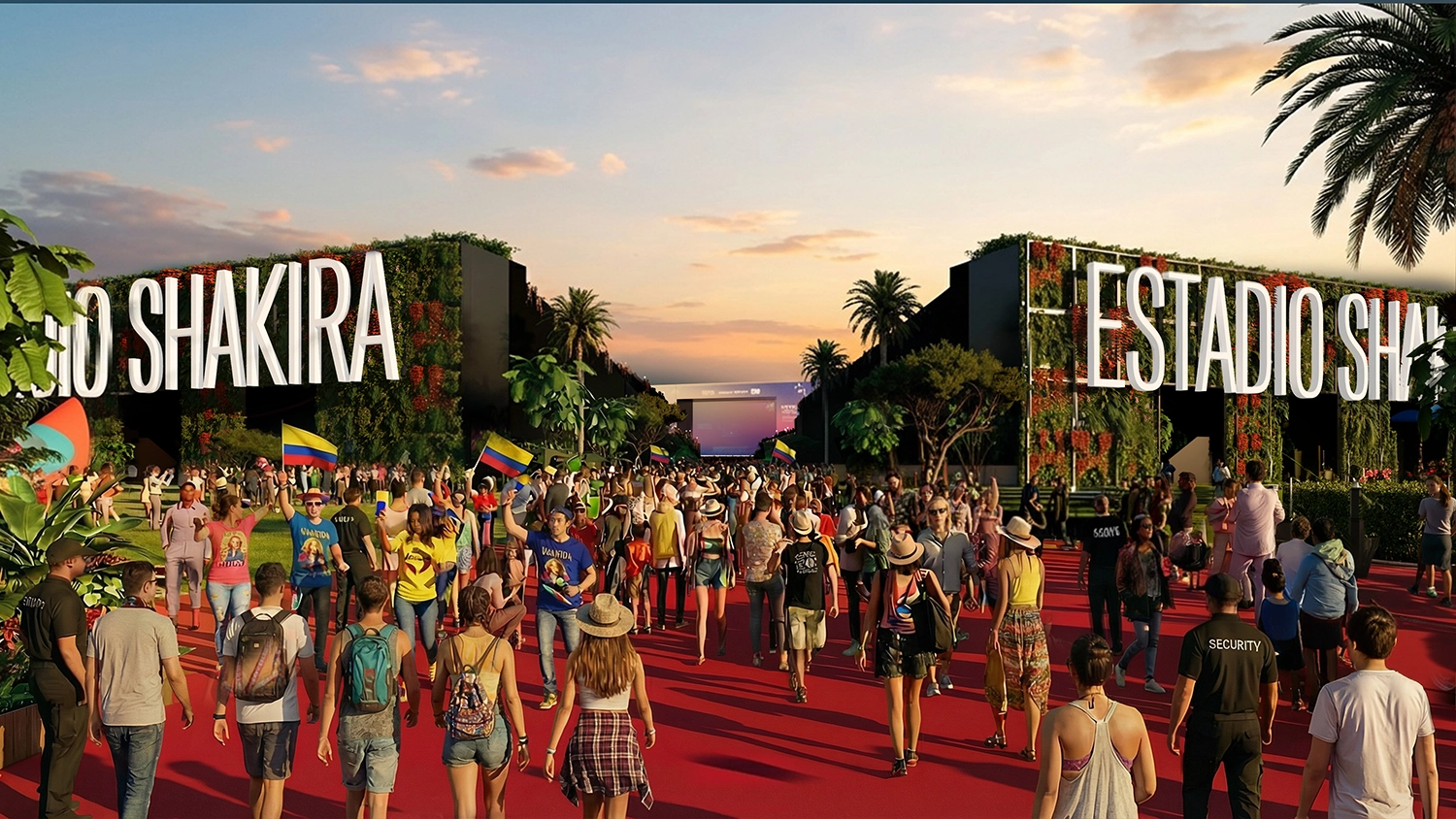
Green islands and cultural topography. To ground the project in the artist’s heritage and the local context, the studio implemented a series of botanical islands. These pockets of greenery are inspired by the diverse ecosystems of Spain and Latin America, creating a multisensory environment where the scent of native flora mixes with the urban atmosphere of Madrid. These islands act as natural buffers and gathering points, extending the stage’s vitality into the deeper reaches of the park.
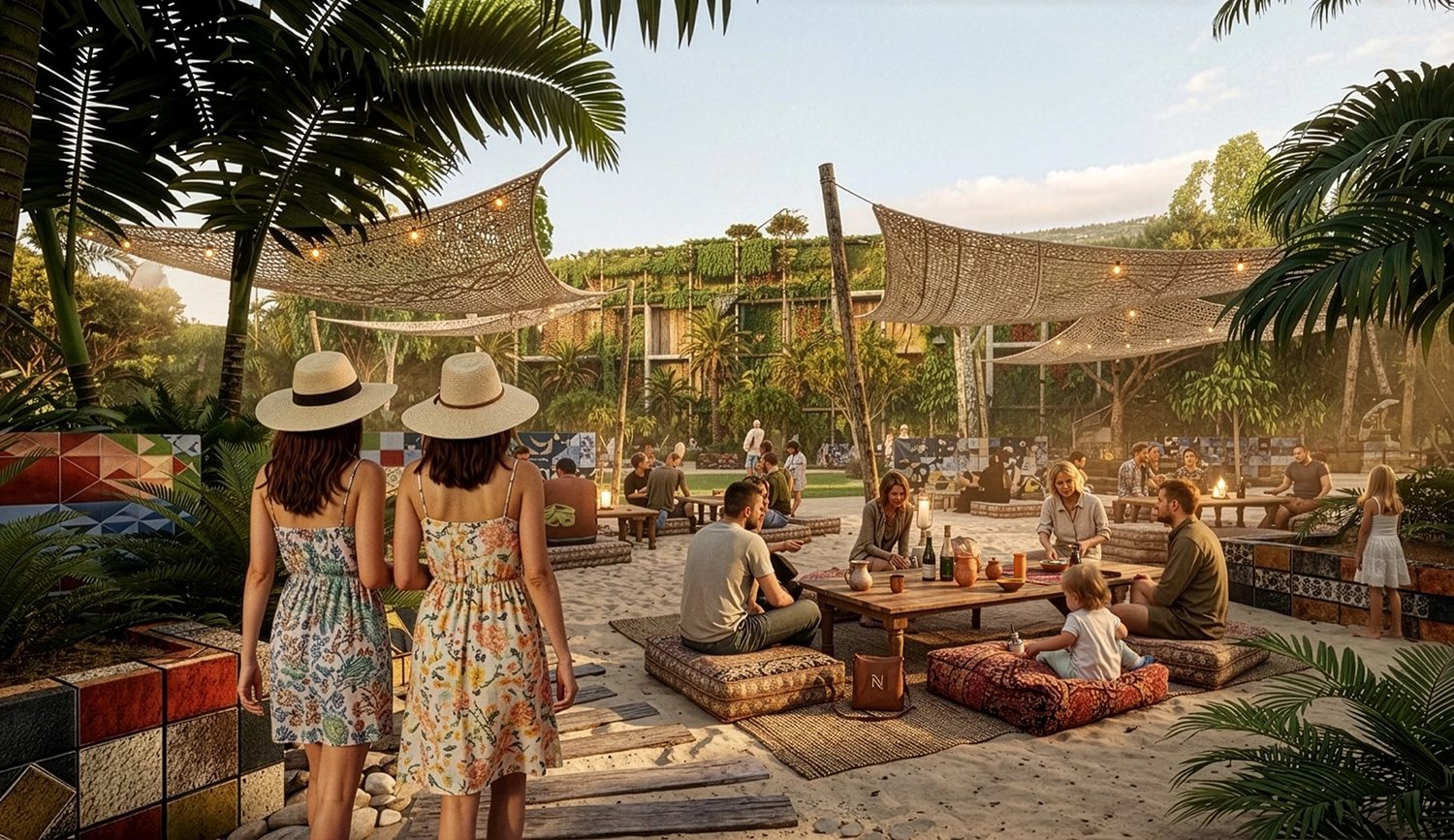
An ecosystem of micro-experiences. Beyond the central stage, the site is populated with artisan markets, culinary zones, and dedicated areas for children, transforming the concert into a day-long cultural festival. By prioritizing these smaller, human-scale interactions, the project addresses the spatial needs of a diverse crowd of 50,000, providing moments of respite and engagement that are often lost in the scale of a typical stadium tour.
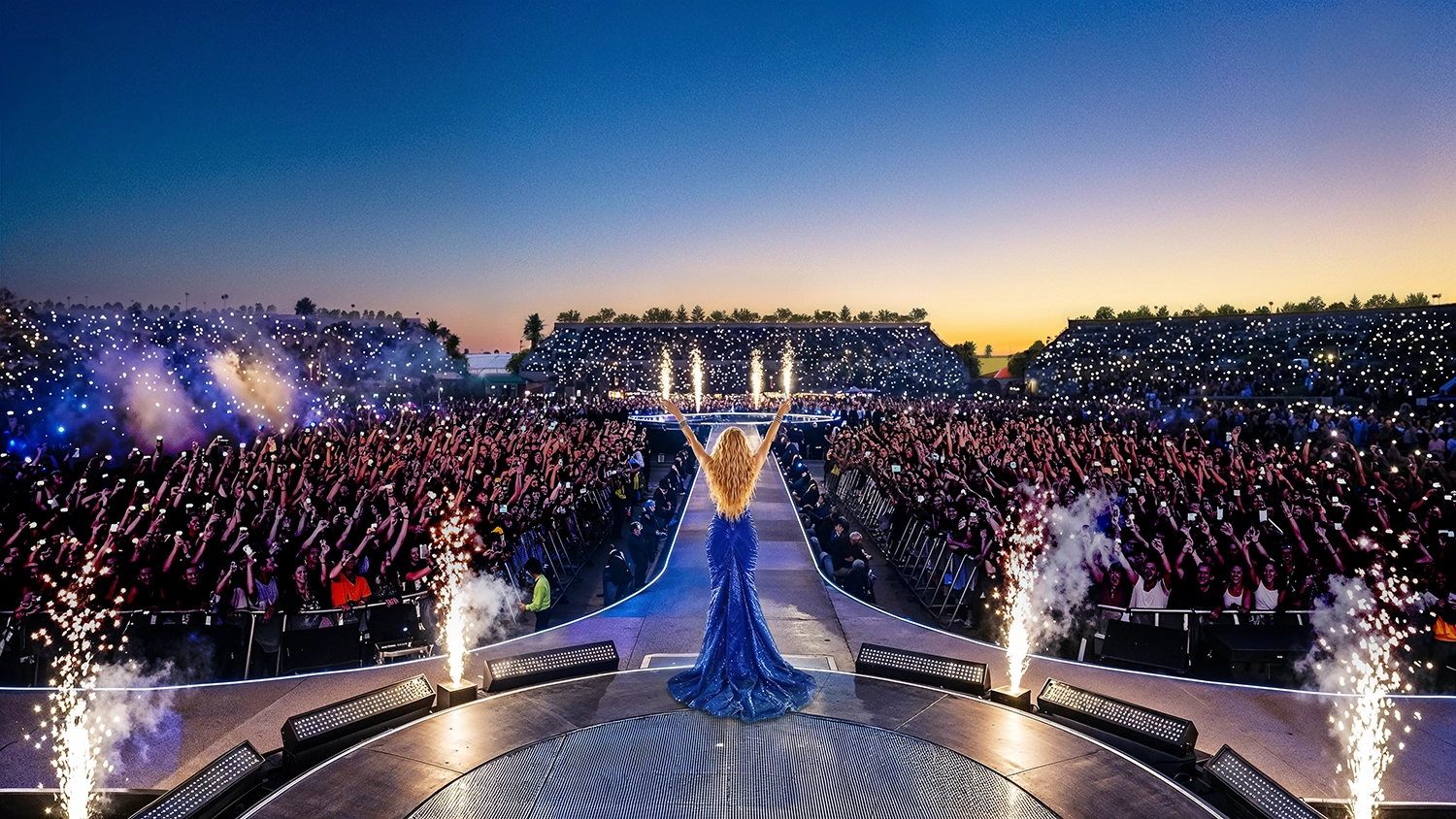
Identity expressed through form. The use of color and texture throughout the venue serves as an immersive expression of contemporary Latin identity. This is not achieved through cliché, but through the sophisticated application of vibrant textiles and lush landscaping that reflect a modern, globalized culture. The result is a venue that feels specific to its occupant, creating a bespoke bridge between the artist’s Colombian roots and the Spanish capital.
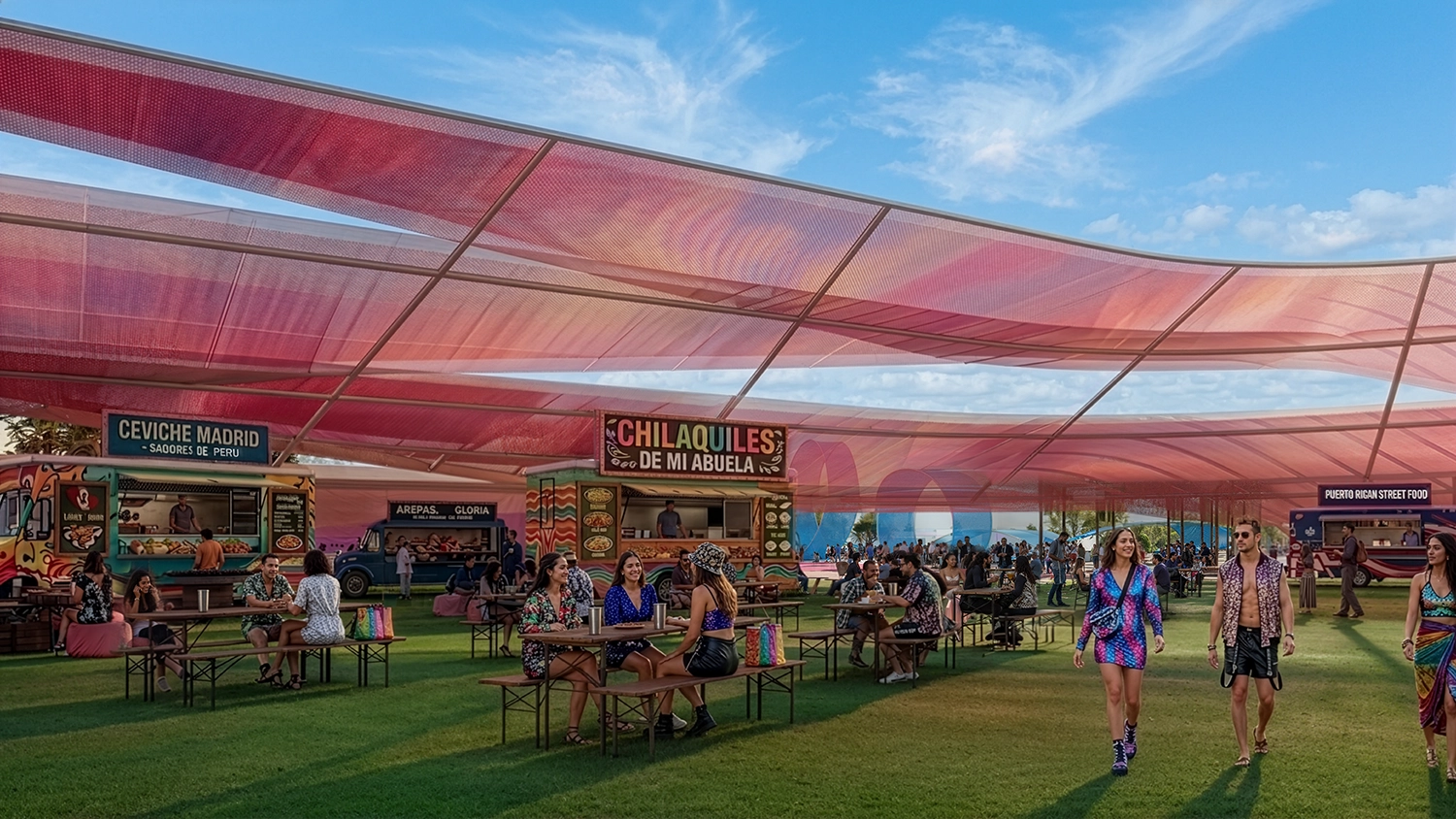
Temporary structures with permanent impact. While the stadium is designed as a pop-up for the September performances, its layout offers a blueprint for how modular event spaces can better serve urban environments. By treating the venue as an extension of the park rather than a fenced-off monolith, the project demonstrates a more sustainable approach to tour logistics, where the infrastructure gives back to the public realm through enhanced accessibility and shared amenities.
A celebration of human connection. The true success of the Macondo Park intervention lies in its ability to foster a sense of community within a high-capacity setting. The synergy between experimental architecture and world-class entertainment creates a space where music becomes the catalyst for a broader social experience. In Madrid, the Las Mujeres Ya No Lloran World Tour finds a home that is as much a cultural village as it is a performance venue, marking a significant evolution in the design of global tour landscapes.