



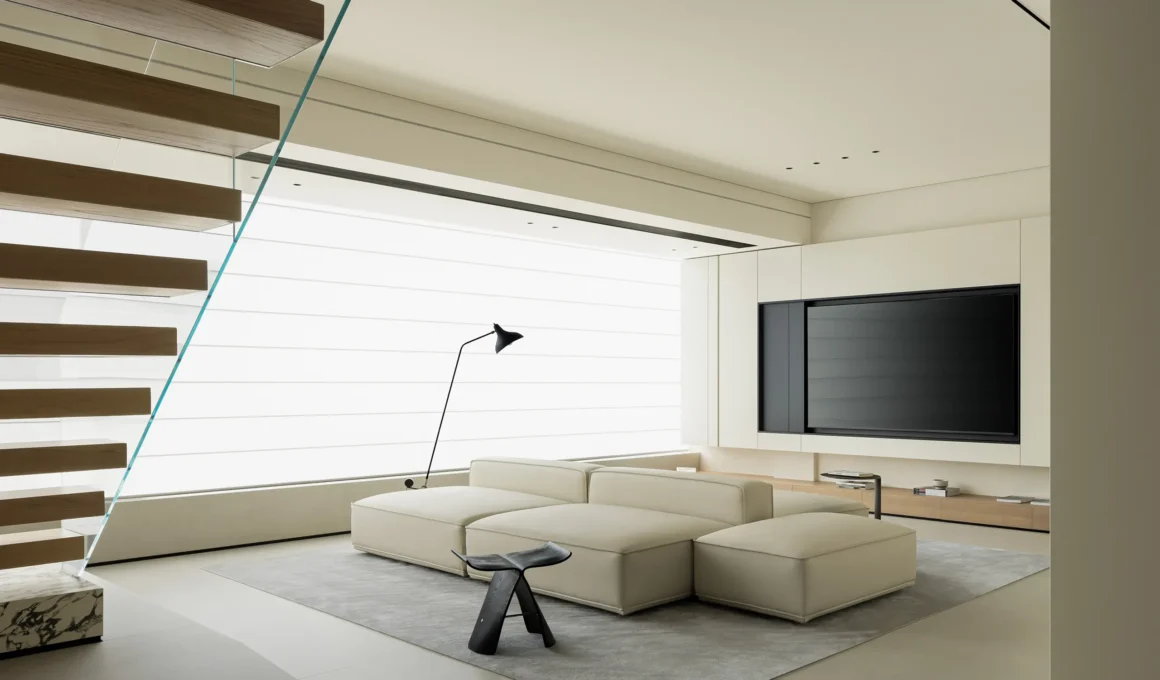
Taizhou Benmo Space Design reimagines the traditional domestic hierarchy in Linhai, China, through “Simplicity · Boundlessness,” a residential project that dissolves rigid functional boundaries to foster a minimalist environment rooted in fluid family interaction and sustainable materiality.
The conceptual vision of this dwelling is centered on the erasure of physical and psychological walls. In a departure from standard residential layouts that segment life into isolated boxes, the studio employs a strategy of Openness + Flexible Separation. By treating the home as a singular, breathing organism rather than a series of rooms, the design invites residents to shed the complexities of the outside world. The result is a space where the transitions between cooking, dining, and resting are dictated by movement and conversation rather than drywall.
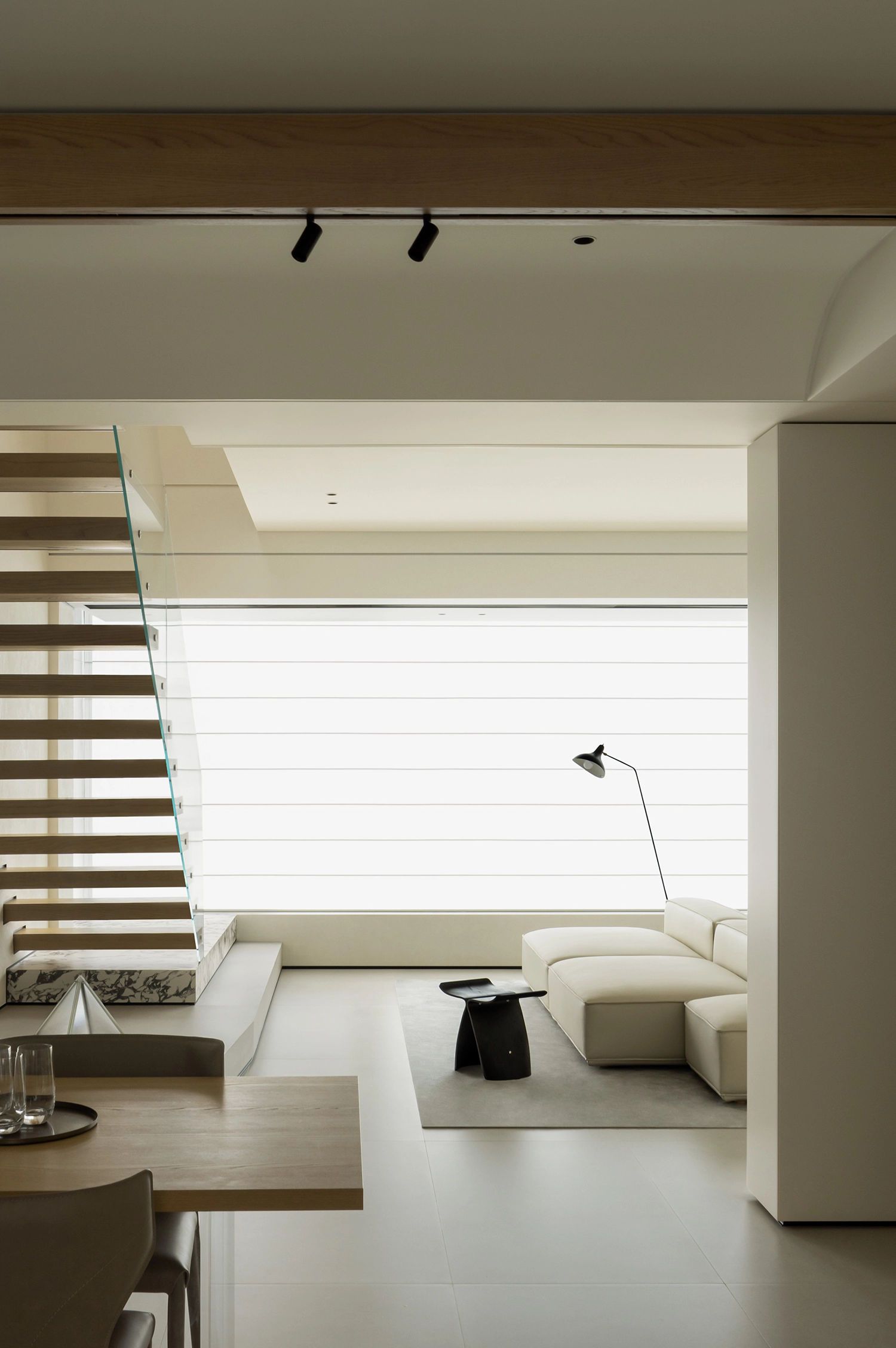
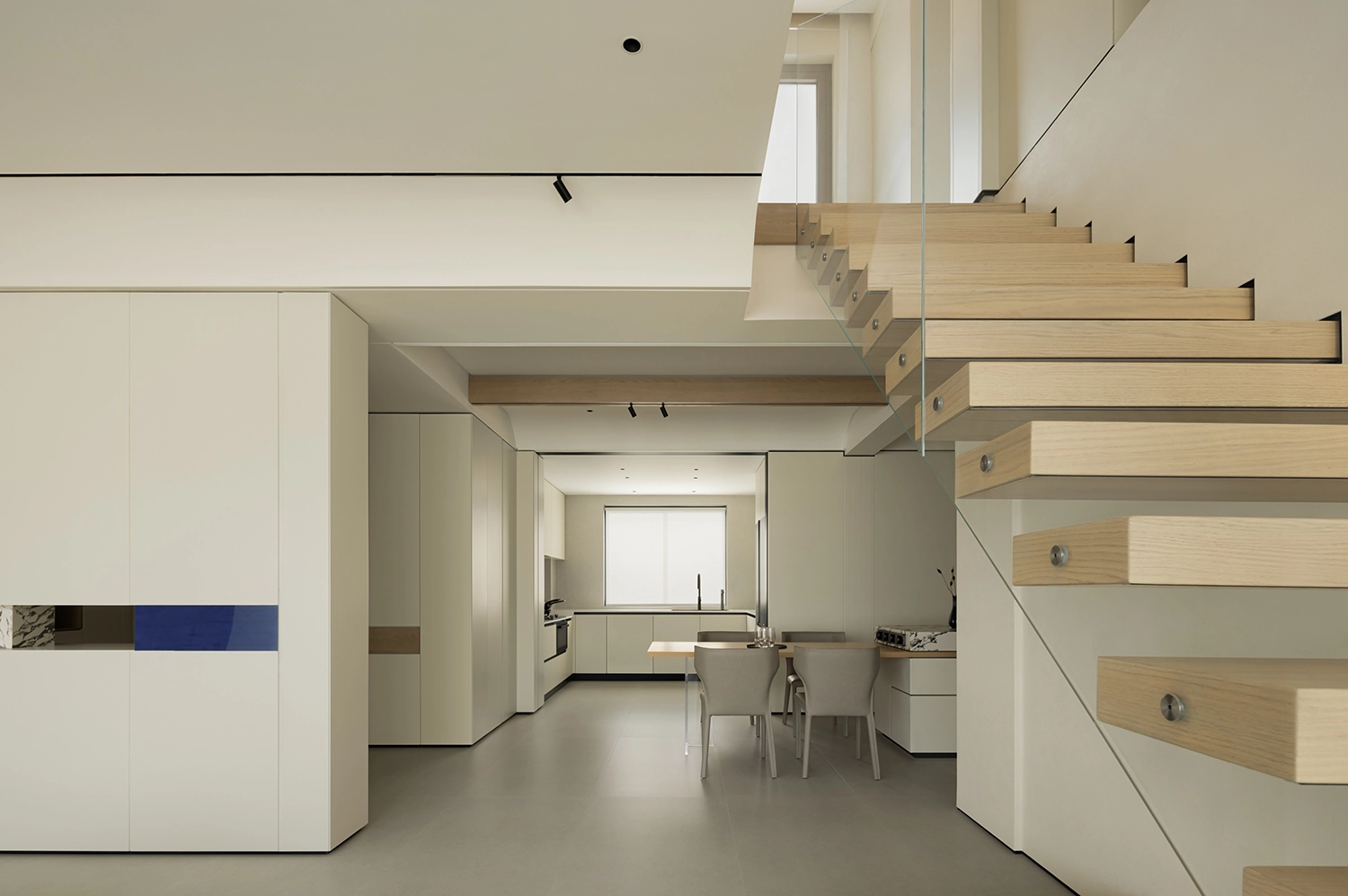
A core interactive zone serves as the heart of the first floor, merging the kitchen, dining, and living areas with the vertical circulation of the staircase. This LDK + Staircase configuration ensures that the bond of family flows uninterrupted; a parent cooking can engage with a child reading on the steps or a guest lounging in the living area. This intentional lack of rigid partitions restructures the traditional spatial order, turning a private house into an organic, interactive living community that prioritizes human connection over formal division.
The floating staircase acts as the primary vertical link, embodying the project’s namesake boundlessness. Featuring ultra-clear tempered glass guardrails and reclaimed solid wood treads, the structure appears to hover, weakening physical barriers and strengthening the visual dialogue between levels. It is a light, transparent intervention that reduces the material consumption typically associated with solid stairwells, contributing to a lower-carbon footprint while innovating the internal landscape.
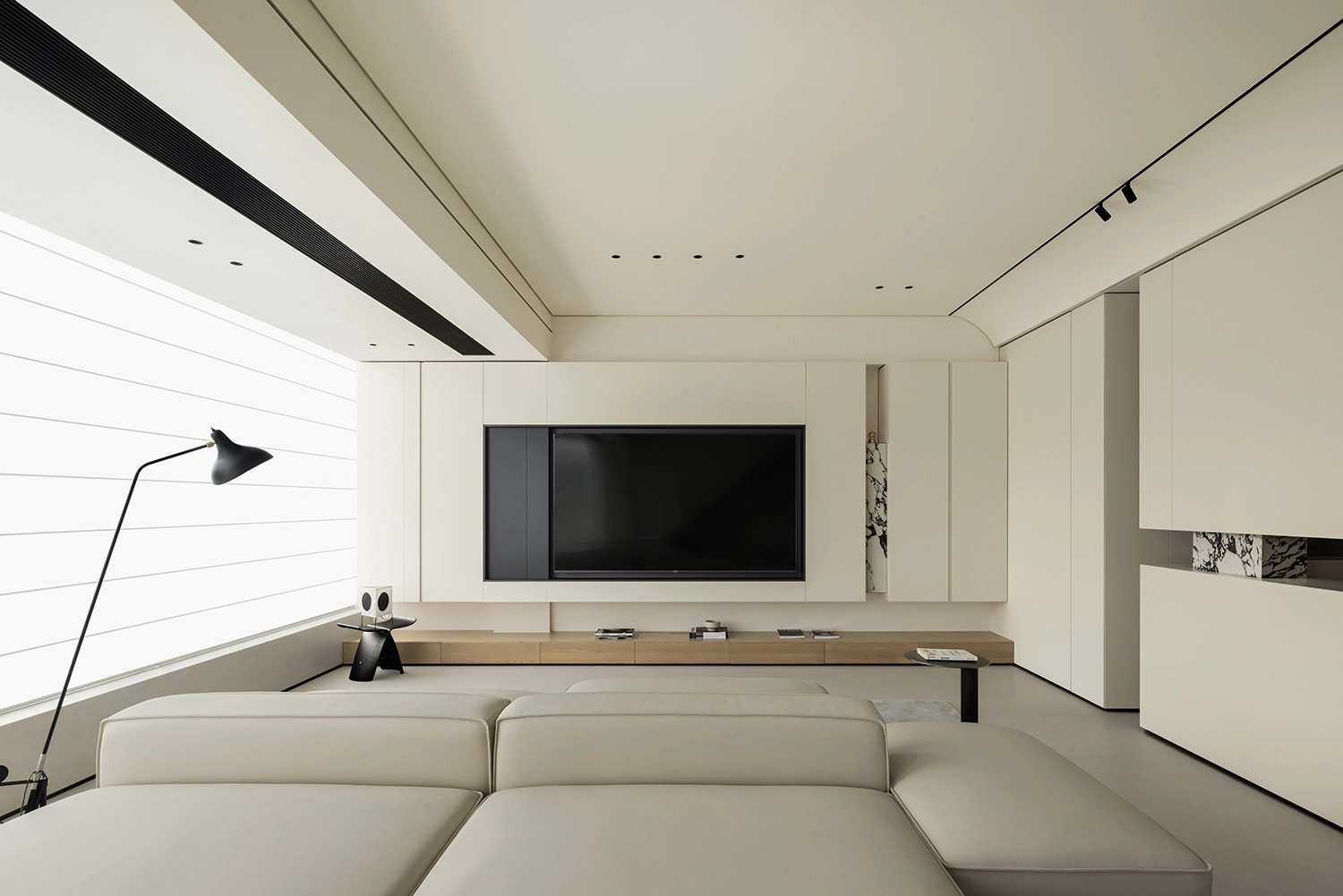
Material innovation plays a critical role in grounding the ethereal nature of the layout. The floors are largely paved in earth-tone matte ceramic tiles, chosen for their wear resistance and seamless splicing to minimize waste and maintenance. Complementing this, the walls are finished in low-VOC light beige artistic paint, creating a soft, tactile atmosphere that prioritizes residential health. The integration of reclaimed wood beams adds a layer of natural warmth, practicing a philosophy of resource conservation that feels both modern and timeless.
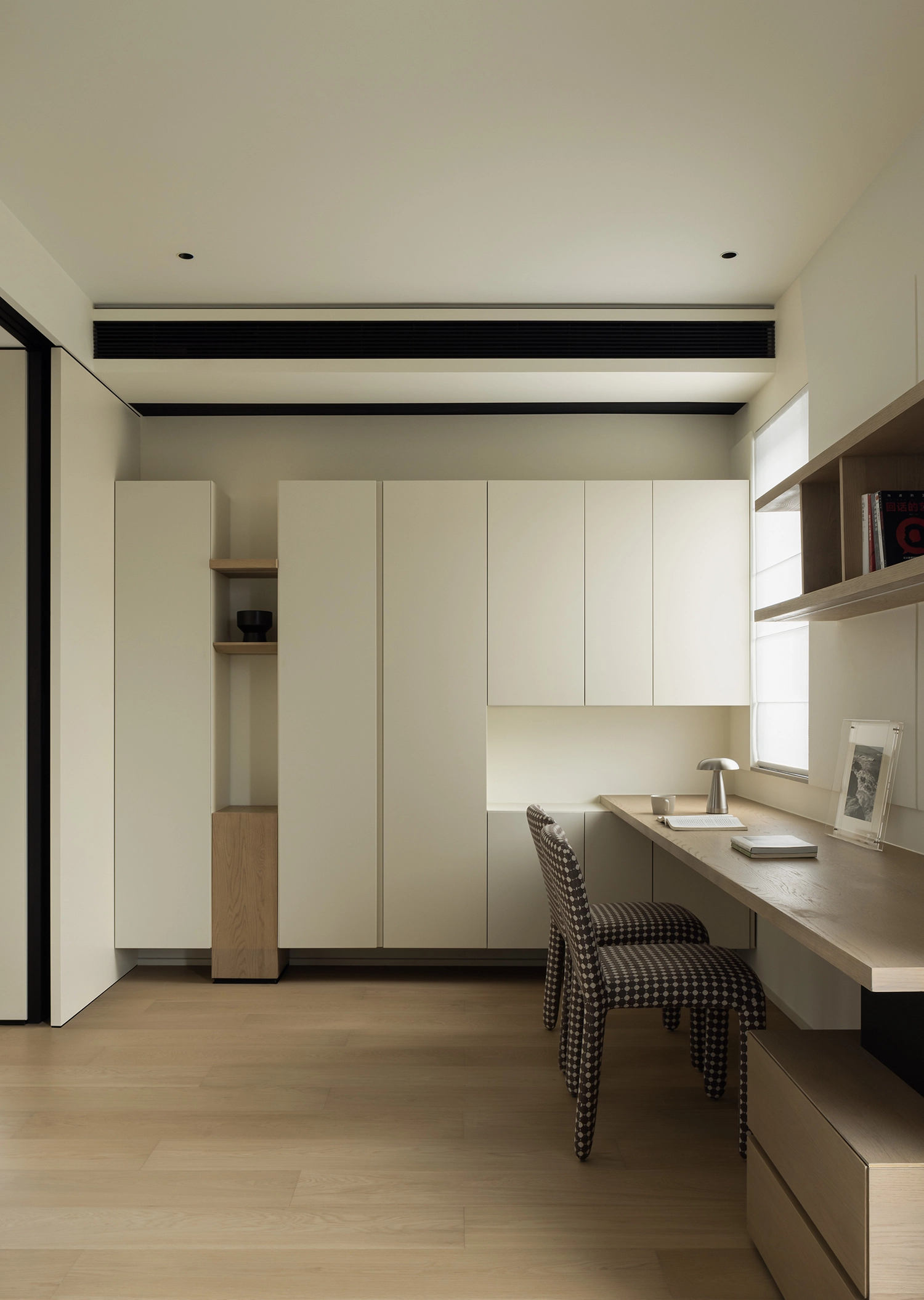
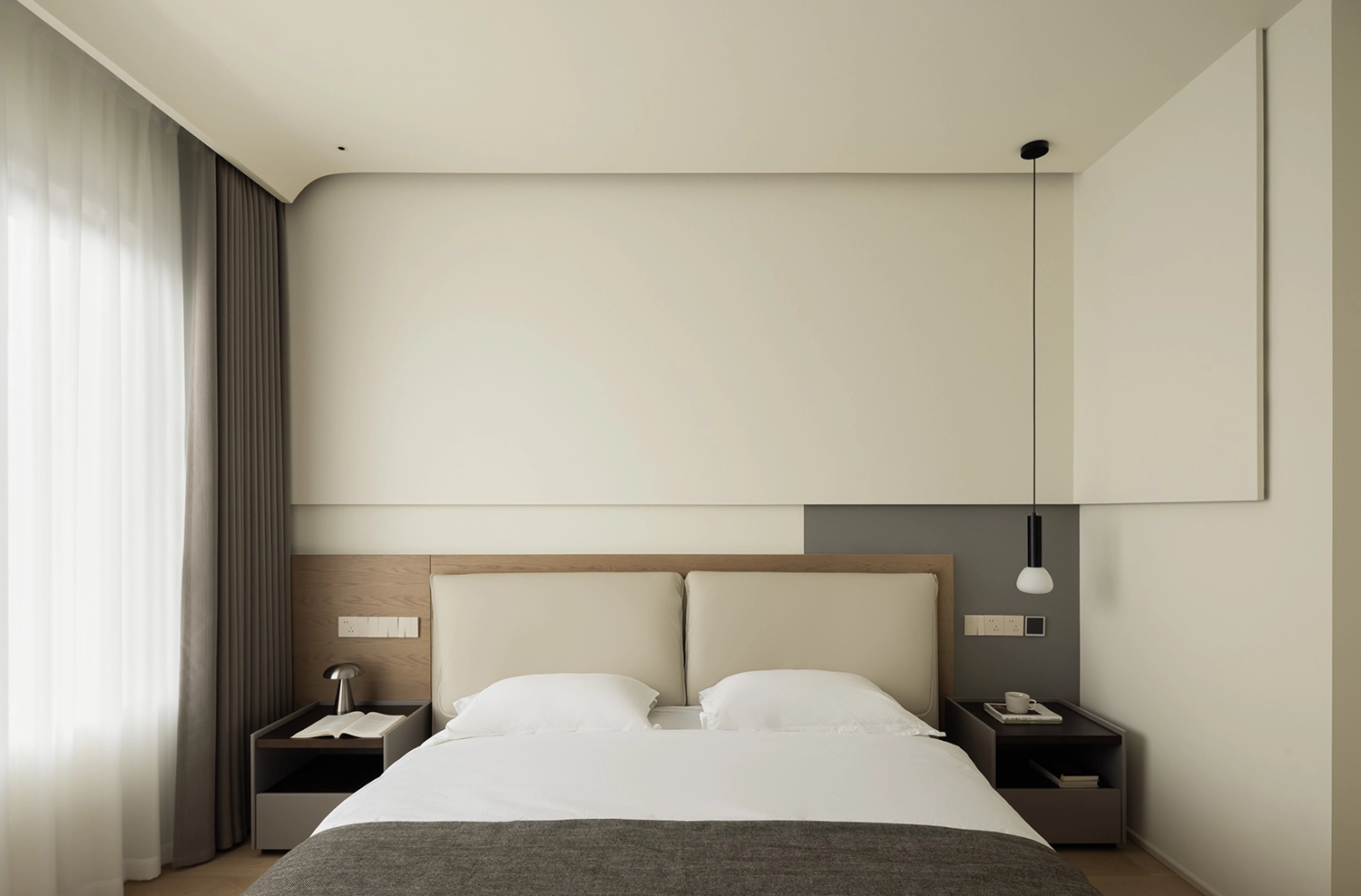
The sensory experience of the upper floor transitions into a more private, yet equally flexible, realm. Bedrooms and study areas utilize variations in cabinetry and material textures to define boundaries without severing the visual continuity of the home. In the sleeping quarters, curved bed heads and soft, recessed lighting layouts create a gentle transition into repose. Every surface is designed to be touched, and every light source is intended to soothe, making the environment a literal carrier of daily happiness.
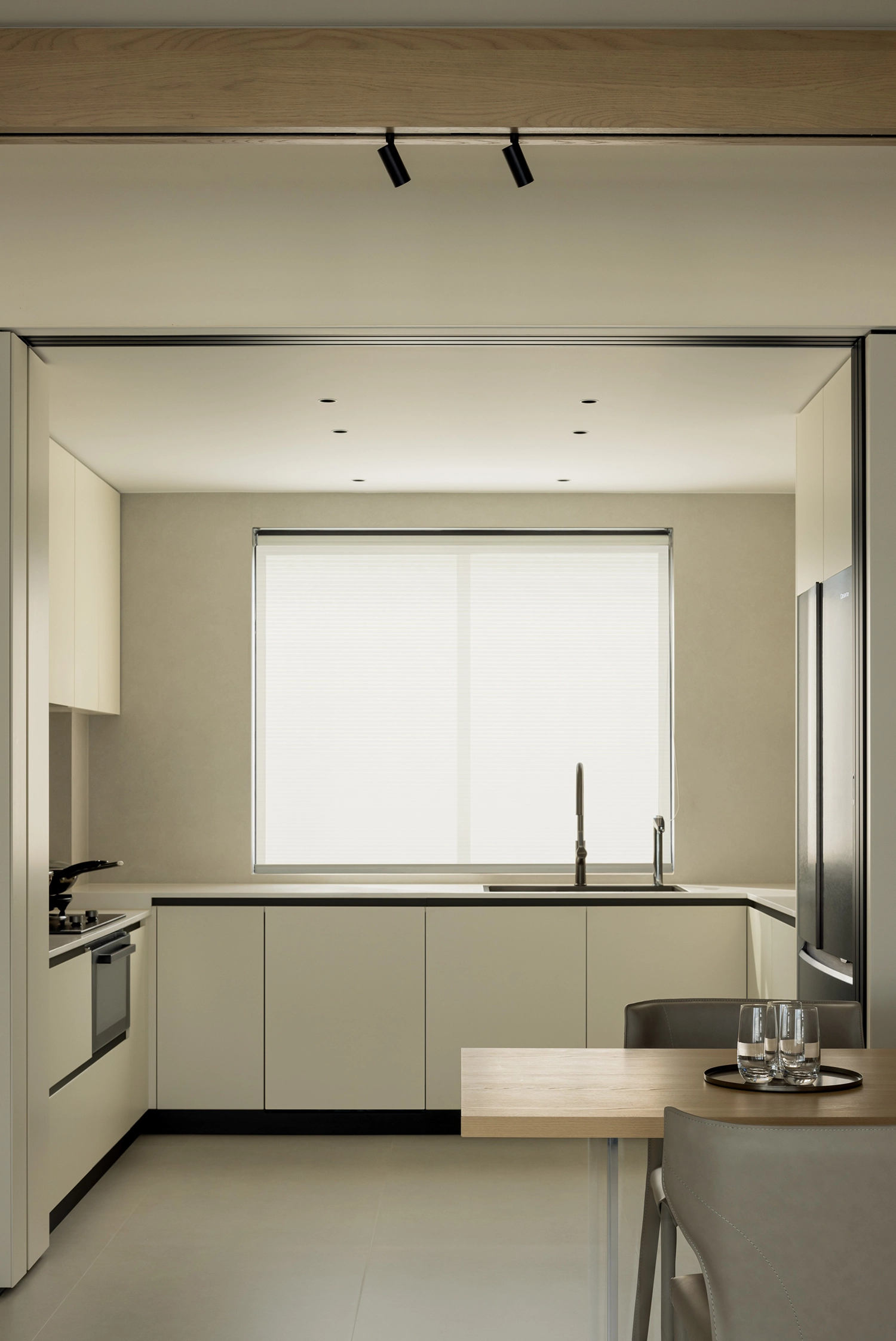
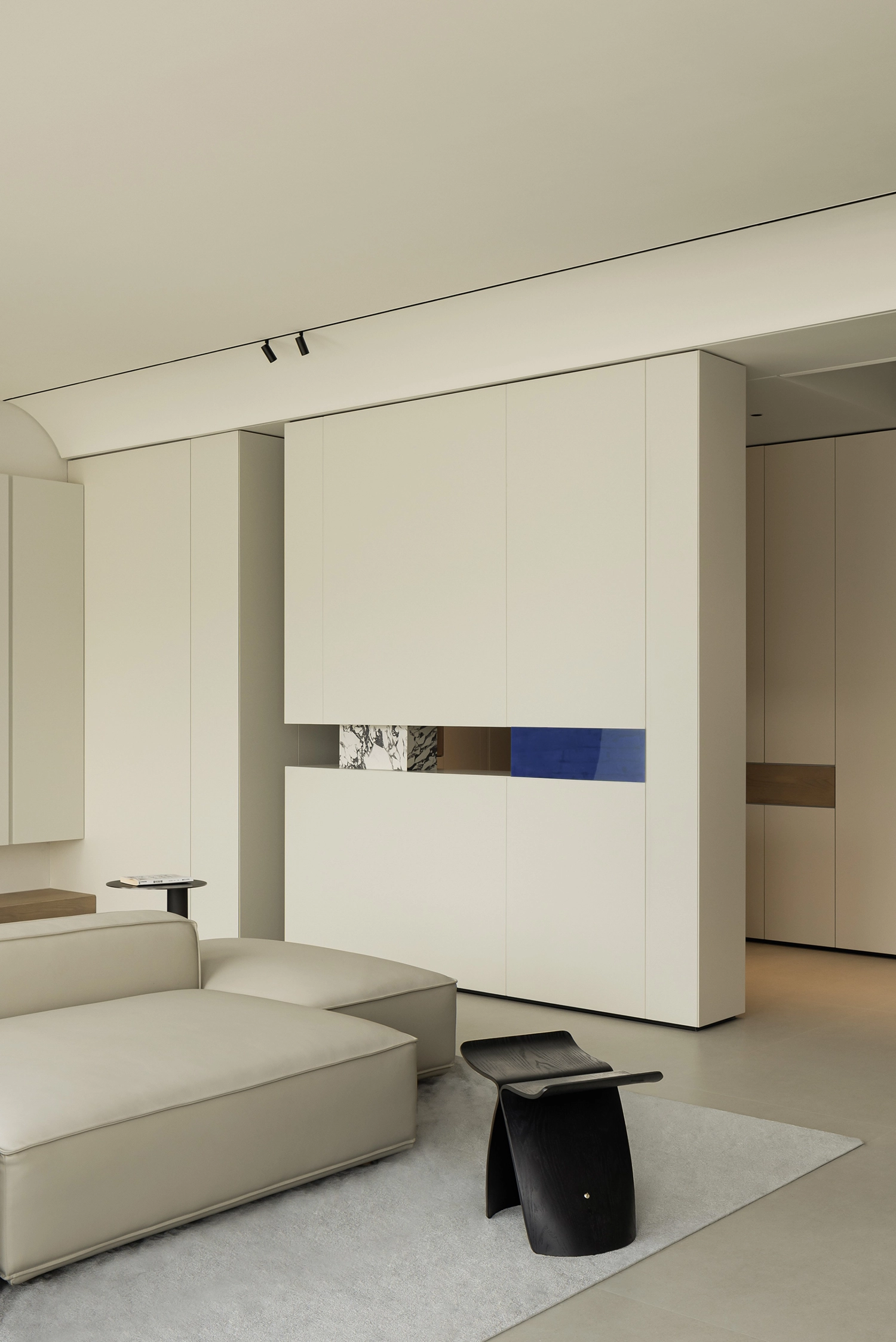
Forward-looking adaptability is embedded into the cabinetry through a handleless, invisible design that eliminates visual clutter and physical hazards. These elastic interfaces allow the home to evolve alongside the family. For instance, the study’s storage is designed to eventually serve a children’s play area, while the space beneath the staircase is pre-wired to serve as a smart home central hub. By anticipating future technological upgrades and shifts in family structure, the studio ensures the project remains relevant for decades to come.
A certain clinical precision permeates the aesthetic, occasionally echoing the eerie, hyper-organized interiors seen in the Apple TV+ series Severance. Much like the Lumon Industries offices, there is a fascination here with the “invisible” and the “seamless.” However, while Severance uses spatial order to alienate, Taizhou Benmo Space Design Co. uses it to liberate. The minimalism here isn’t about restriction; it is about providing a clean slate where the messiness of human life can be framed by neat, intentional forms.
Reflecting on the evolution of contemporary living, this project sits alongside a growing movement of singular spatial analyses. Whether it is the atmospheric density in Madrid, the sculptural boldness of Marseille, the vaulted heritage of Valencia, or the functionalist rigor in Prague, we are seeing a global shift toward homes that act as mirrors of the self. The takeaway for the modern inhabitant is clear: a home should not be a static museum of possessions, but a flexible stage for the soul. The true luxury of the future is not more square footage, but the freedom of a boundless horizon within our own four walls.