




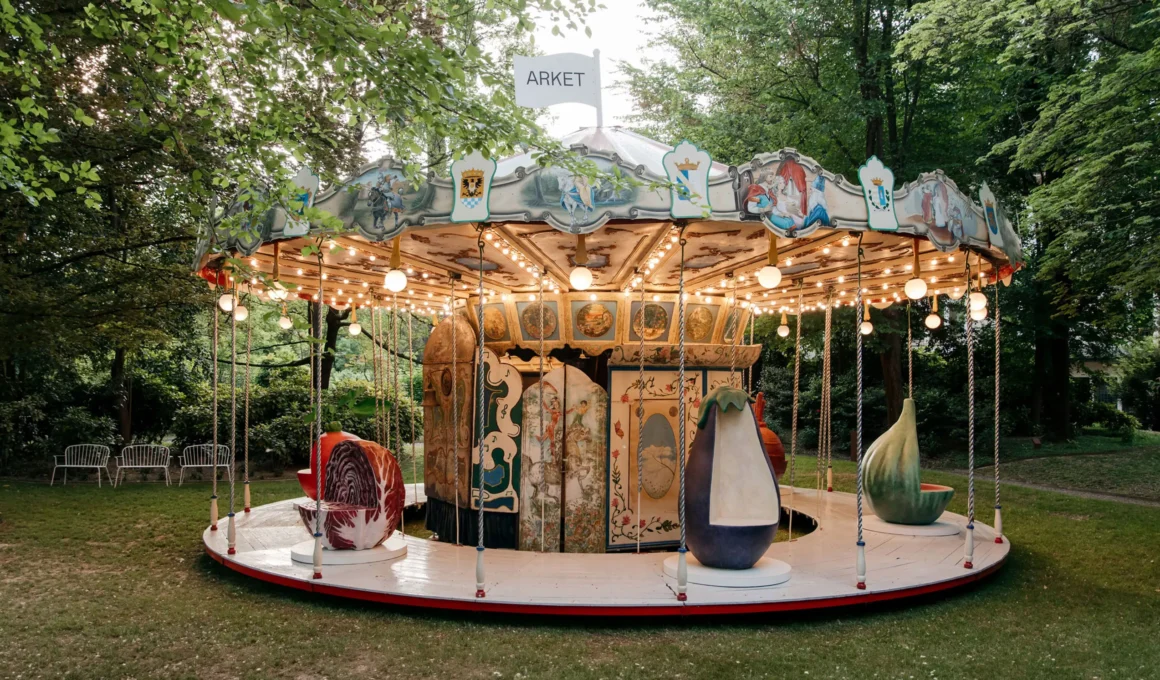
Laila Gohar and fashion brand ARKET have reimagined a late 18th-century German carousel for Milan Design Week 2026, replacing traditional fairground animals with oversized, sculptural fruits and vegetables to mark the debut of Gohar’s first ready-to-wear collection within the Giardino delle Arti.
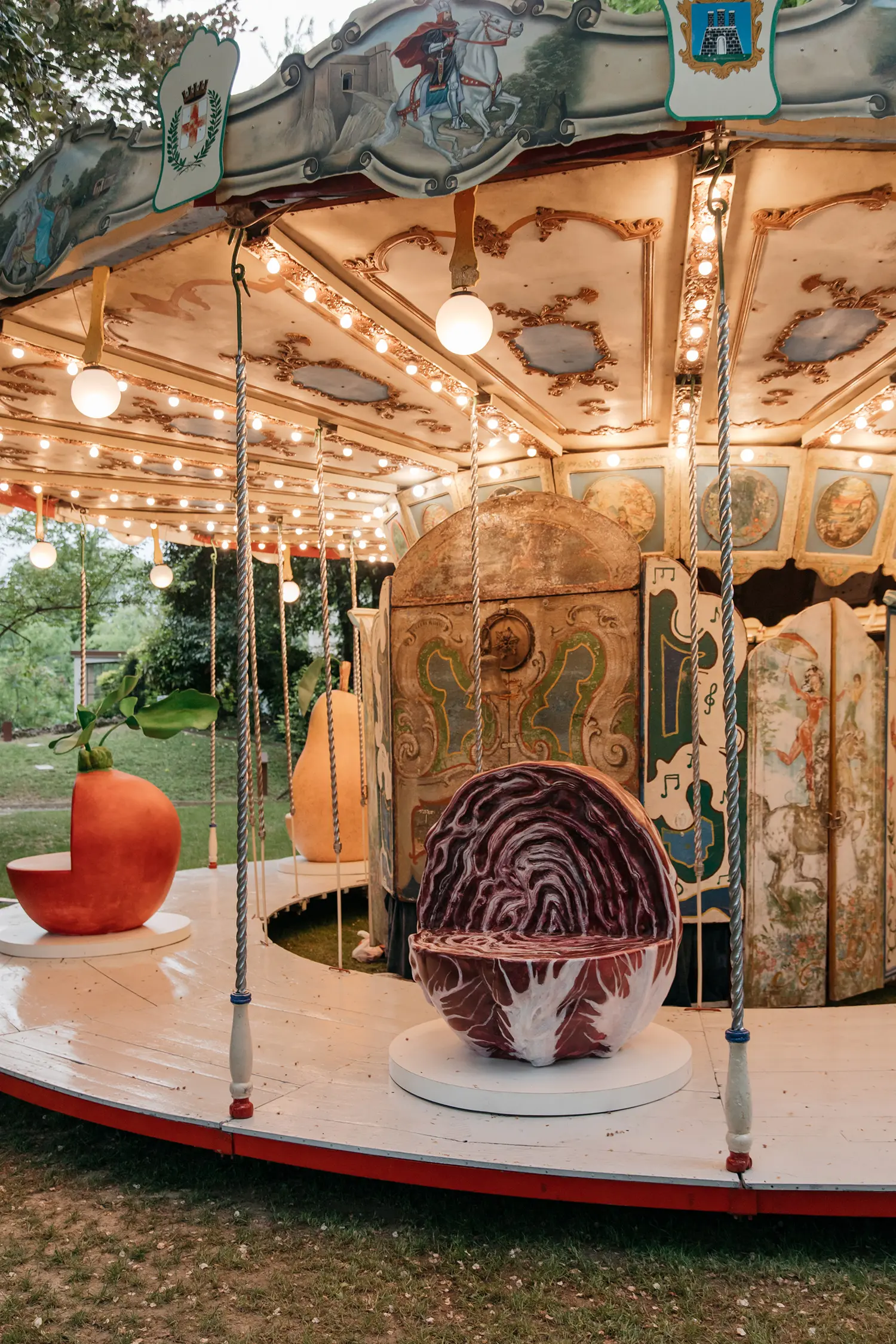
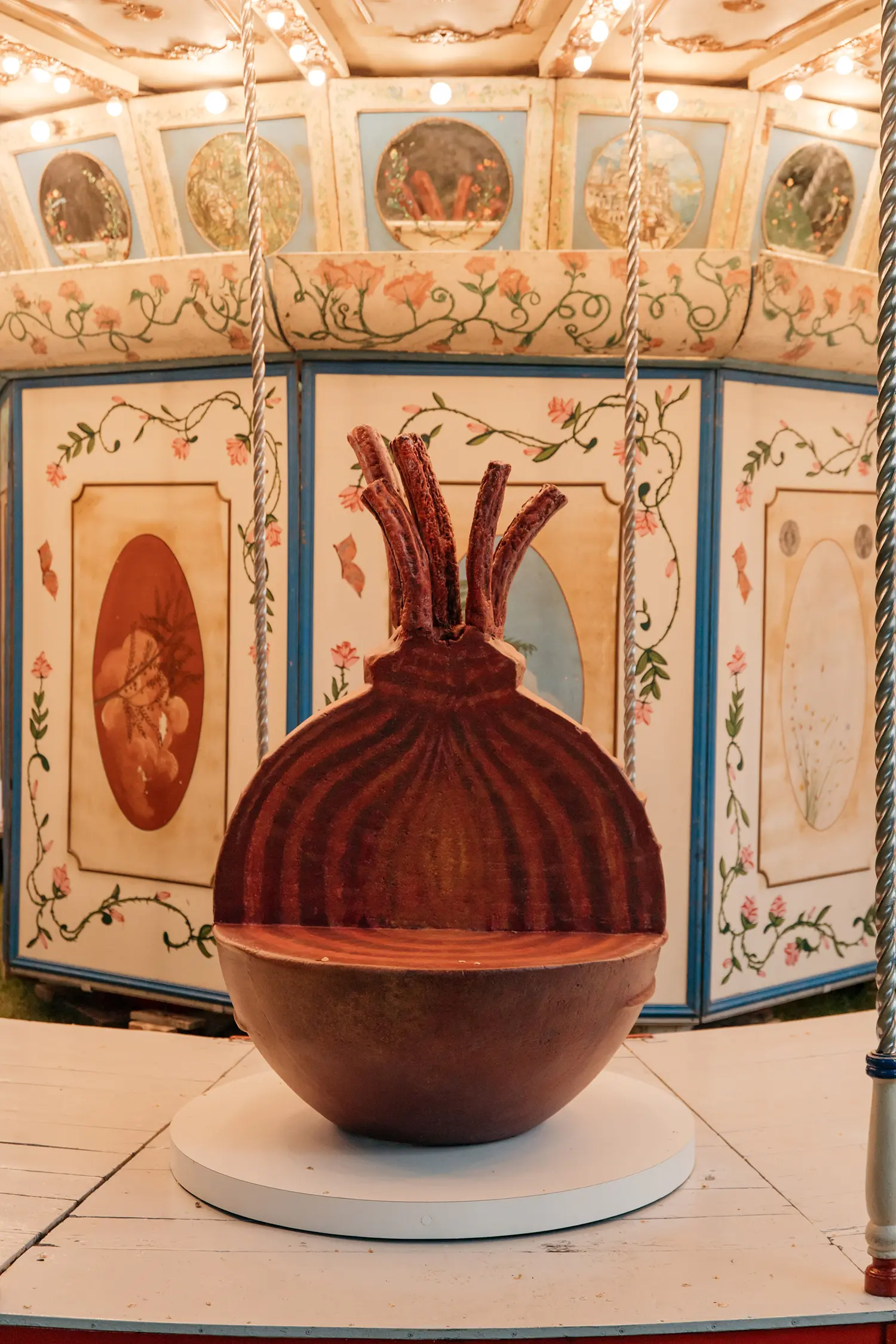
A conceptual shift in public space defines Gohar’s latest intervention, which transforms the historic Giardino delle Arti into a stage for communal interaction. The installation utilizes an original antique carousel from the late 1700s, maintaining its festive fairground lights and intricate floral illustrations while subverting its core purpose. By stripping away the expected horses and carriages, the project invites visitors to sit upon a giant, velvety pear, a vibrant radish, or a glossy aubergine, effectively turning a relic of the past into a contemporary public installation.
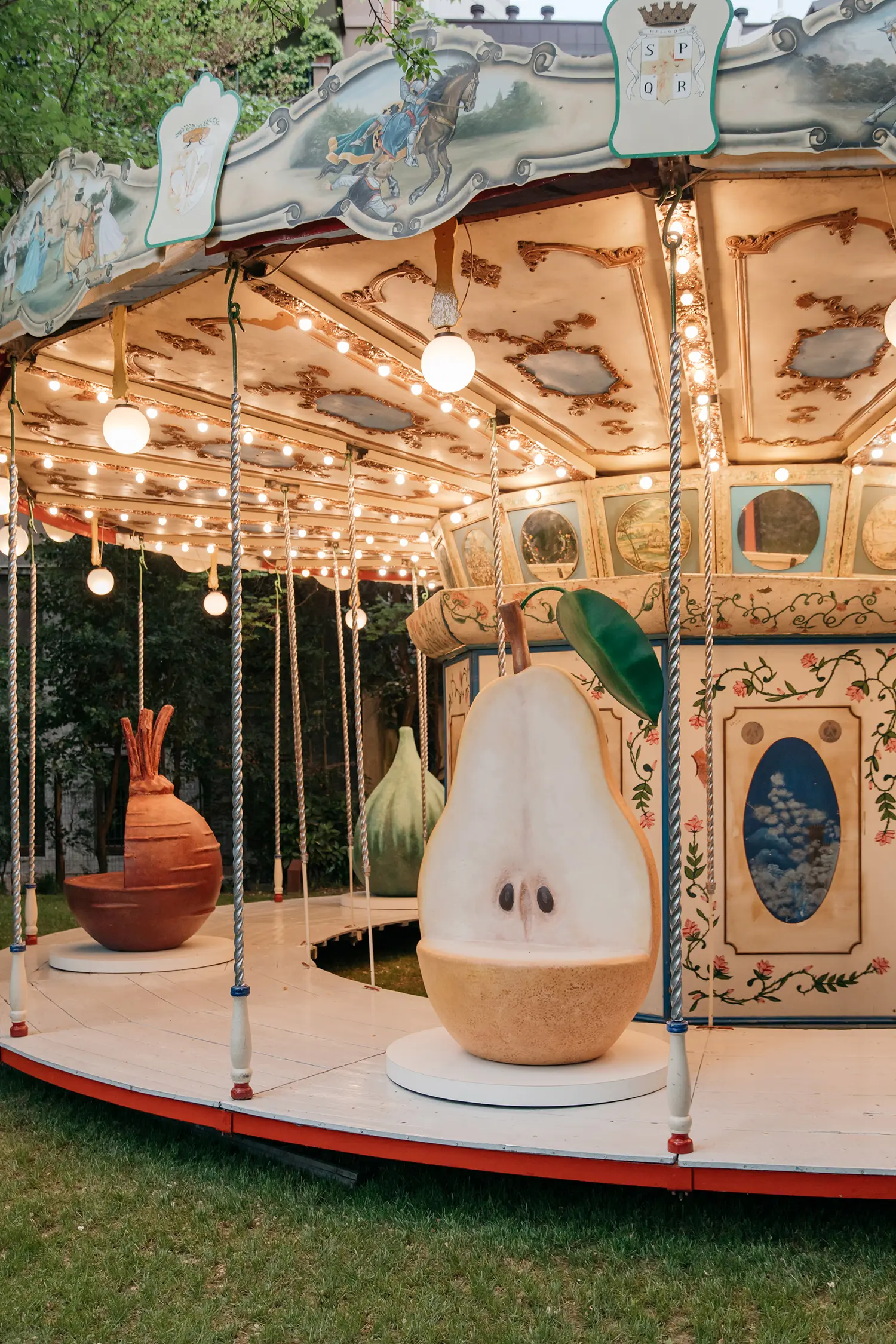
The sensory experience of the carousel is one of rhythmic nostalgia blended with modern absurdity. As the mechanism rotates, the oversized fruits create a continuous loop of motion, their exaggerated scales challenging the viewer’s perception of the everyday. There is a tactile invitation here; rather than being a static sculpture to be admired from behind a rope, the piece demands physical engagement. The soft mechanical hum of the reworked fairground ride grounds the surrealist visuals in a tangible, earthy reality.
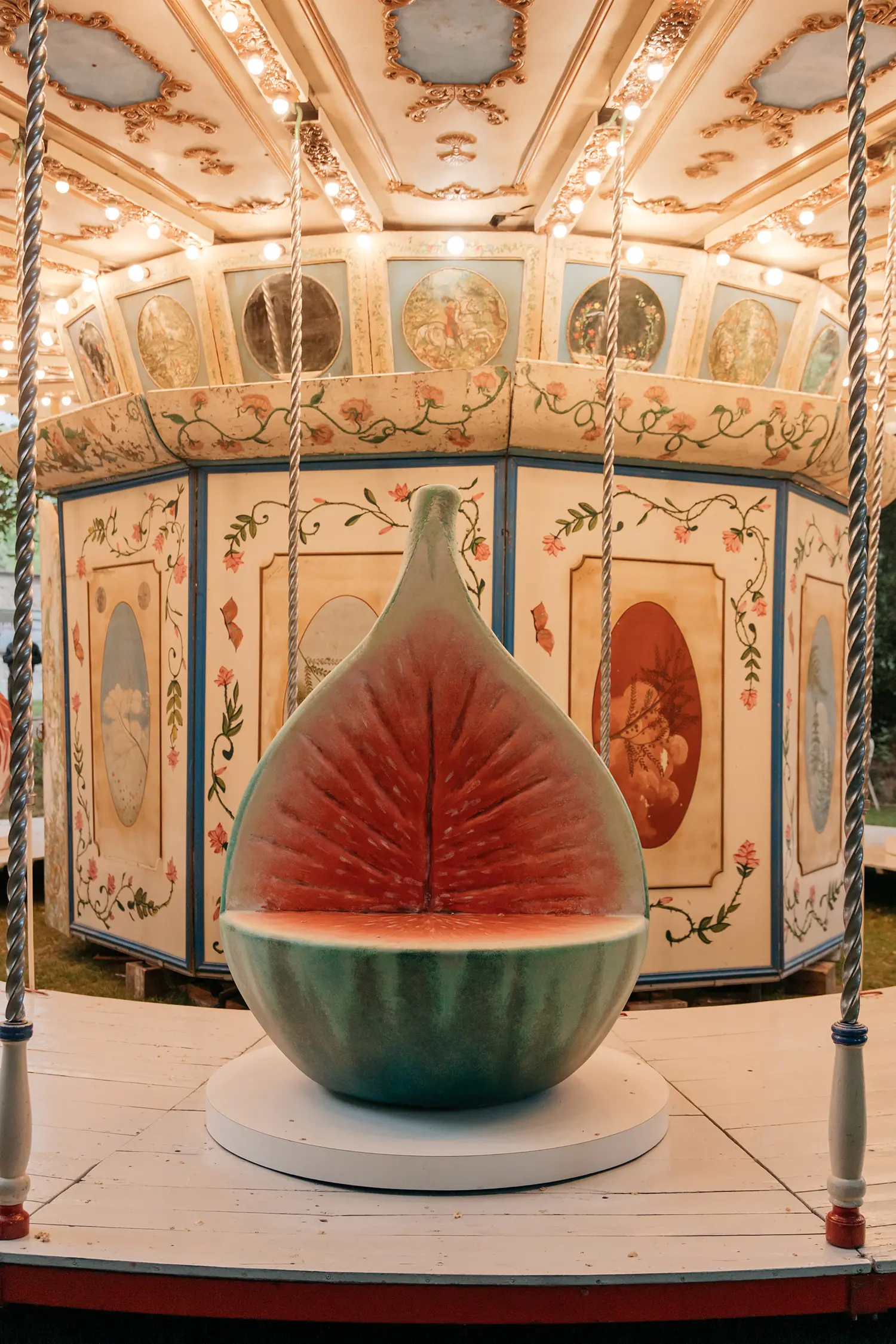
Technical precision meets playful form in the way these organic shapes have been integrated into the ancient structure. Each piece of produce is treated as a seat, designed to be inclusive and open, mirroring Gohar’s philosophy that beauty should be accessible. The interactive stage set functions as a bridge between the artist’s well-known surreal food sculptures and her new venture into garments, utilizing the carousel as a kinetic metaphor for the cycle of seasons and harvests that inform her work.
Translating form into fashion, the collaboration marks Gohar’s first full entry into the world of clothing with a 27-piece collection for Spring/Summer 2026. The garments, much like the installation, find a balance between utility and whimsy. Practical silhouettes are interrupted by hand-applied beading and embroidered monograms, moving from heavy compact cotton to the ethereal transparency of silk organza. It is a collection that treats workwear—such as the apron and the work jacket—with the same reverence as an evening piece.
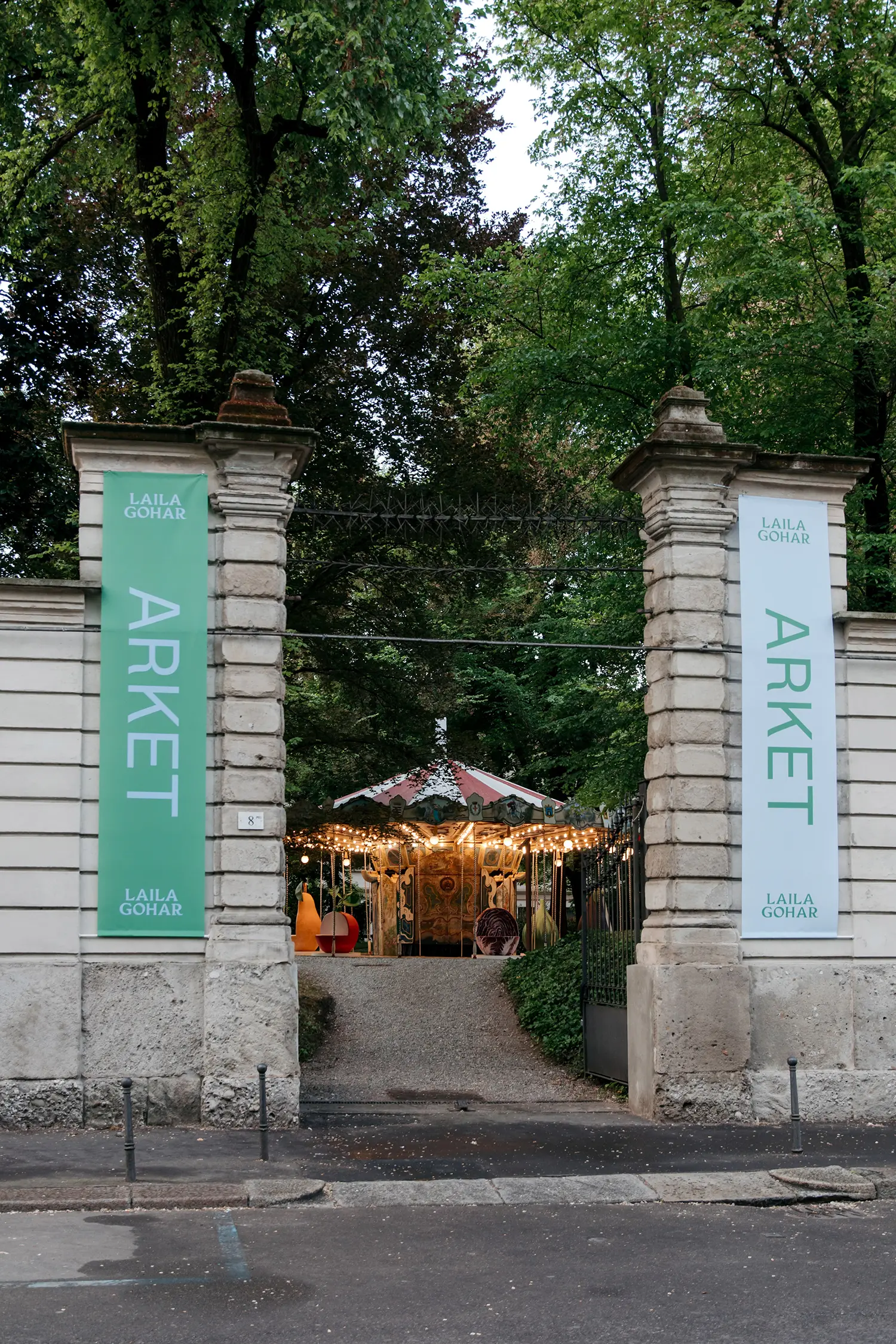
Contextual impact and public participation are at the core of this Milanese intervention. By placing the carousel in a public garden, ARKET and Gohar create a compact environment where the boundary between the viewer and the art is porous. A temporary café and programmed ticket draws further weave the installation into the fabric of the city’s design week, ensuring that the project is not just a showcase for a clothing brand, but a genuine contribution to the urban social landscape.

Gohar’s evolving narrative continues to expand her signature universe, moving from the plate to the home and now to the body. Following her previous successes—such as the giant bed installation for Marimekko and her kitchenware for Hay—this project reinforces her ability to find everyday beauty in the most mundane objects. By enlarging a fig or a radish to the size of a human, she forces a re-evaluation of the shapes that nourish us, elevating them to the status of icons.
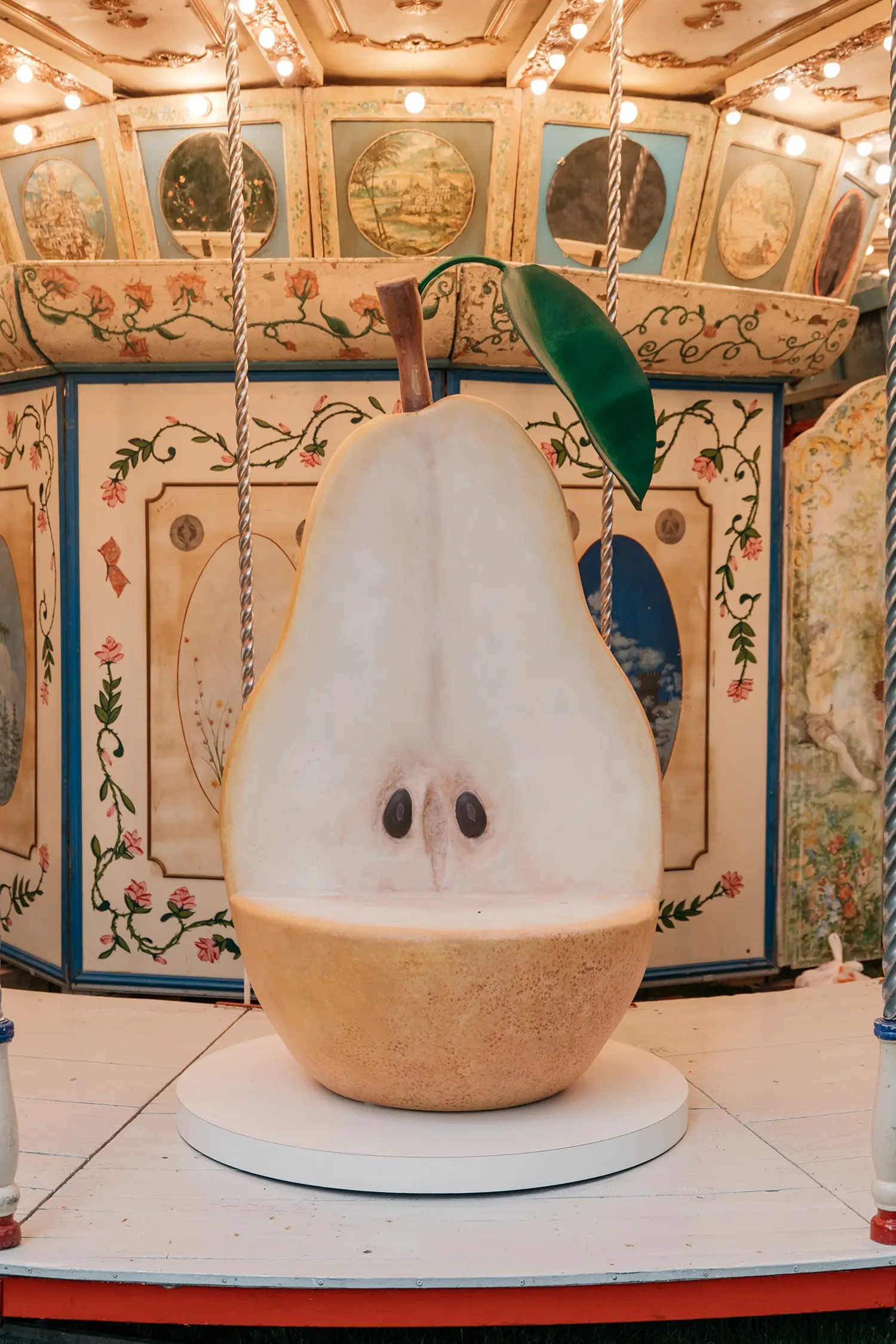
A dialogue of repetition and scale is what lingers long after the ride stops. The carousel acts as a mechanical slowing-down of time, a rare occurrence during the frenetic pace of Milan Design Week 2026. Through this repetition, the familiar becomes strange, and the strange becomes inviting. It is a testament to how theatrical language can be used to foster a sense of shared experience, using the universal language of food and play to connect a global audience.
The landscape of Milanese installations this year is characterized by such immersive, sensory journeys that prioritize the human connection to space. While Gohar explores the intersection of food and fashion, other notable interventions include Sara Ricciardi’s exploration of joy at the Pinacoteca di Brera and the innovative material research presented at Dropcity. Together, these works define a season where the city itself becomes a living gallery of radical imagination and physical participation.
The Carousel by Laila Gohar – ARKET | Where: Giardino delle Arti, Via Aldo Palazzeschi, Milan – When: April 20 – 24, 2026 | 10 AM – 8 PM