



Located along the Qinhuai River at the historic entrance of Wuyi Lane in Nanjing, Dayi Design has reimagined a traditional complex into the Red Lobster restaurant, a project that utilizes a “hovering” structural philosophy to bridge the gap between Eastern Jin Dynasty heritage and contemporary commercial vitality.
A dialogue across eras defines the conceptual heart of the site. Situated on the former grounds of the Wang and Xie families, the area is thick with the weight of ancient prosperity. Rather than treating this history as a static museum piece, the intervention introduces a narrative where the distant atmosphere of the past and the “cyber national style” of the future overlap. The result is a space where historical connotations are not erased but given room to breathe through a series of thoughtful, modern subtractions.
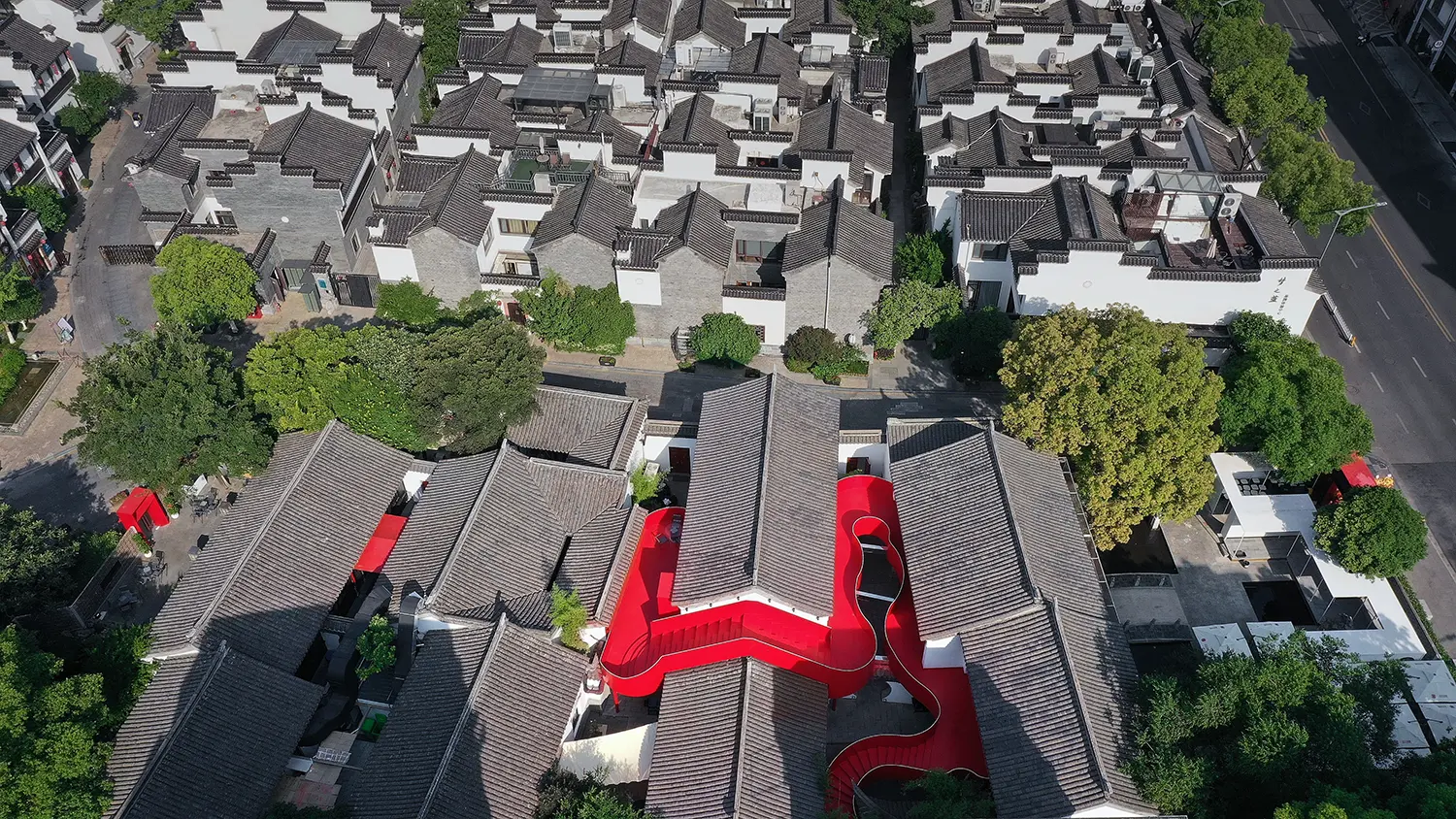
The principle of hovering serves as the primary technical solution to the challenge of conservation. To protect the integrity of the original timber and stone, Dayi Design ensured that all new functional additions, particularly the circulation paths, avoid direct adhesion to the historic fabric. By treating the new elements as independent insertions, the studio maintains a respectful distance from the ancient walls, ensuring the inheritance and sustainable use of the structures while introducing a bold, contemporary aesthetic.
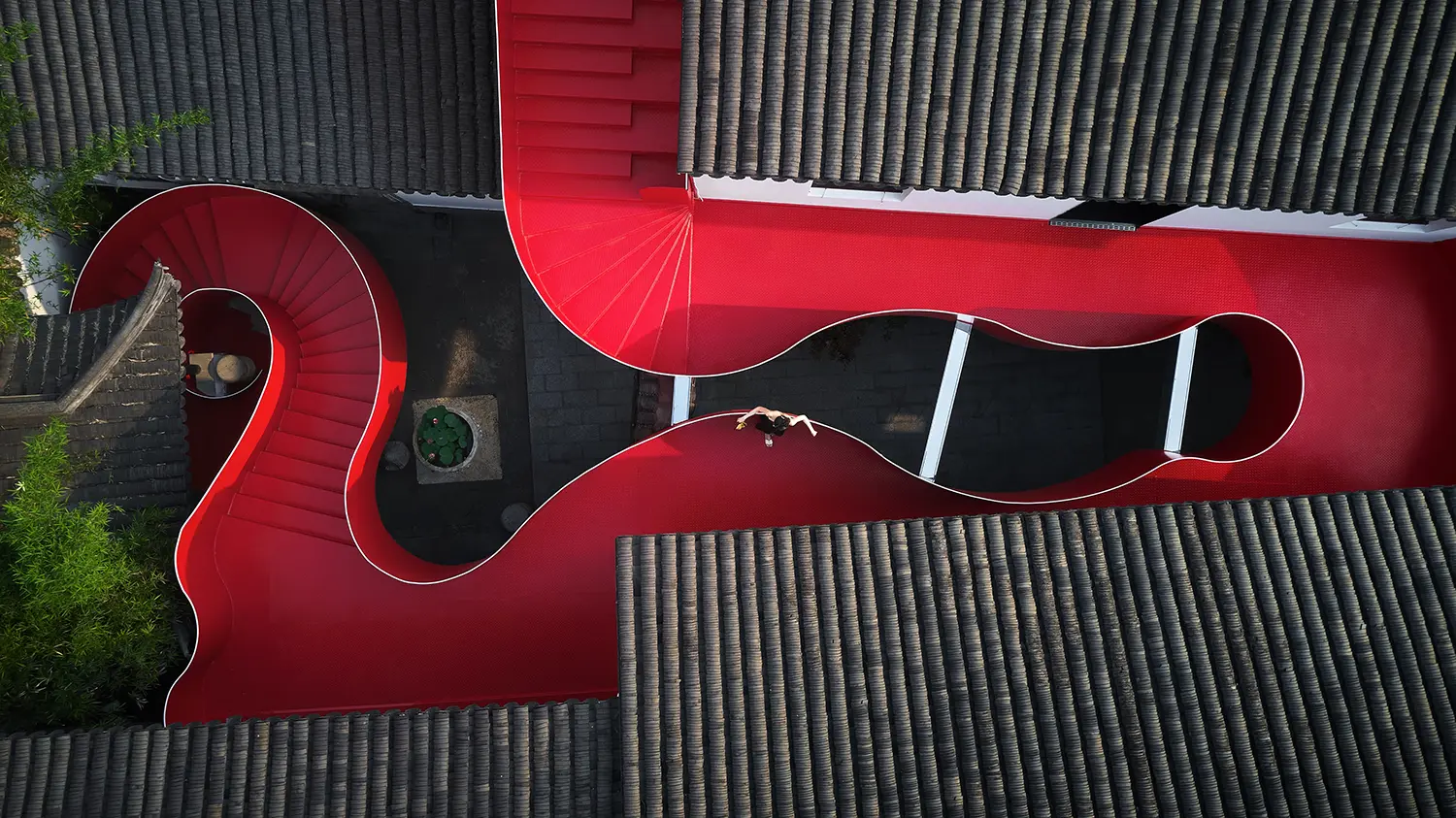
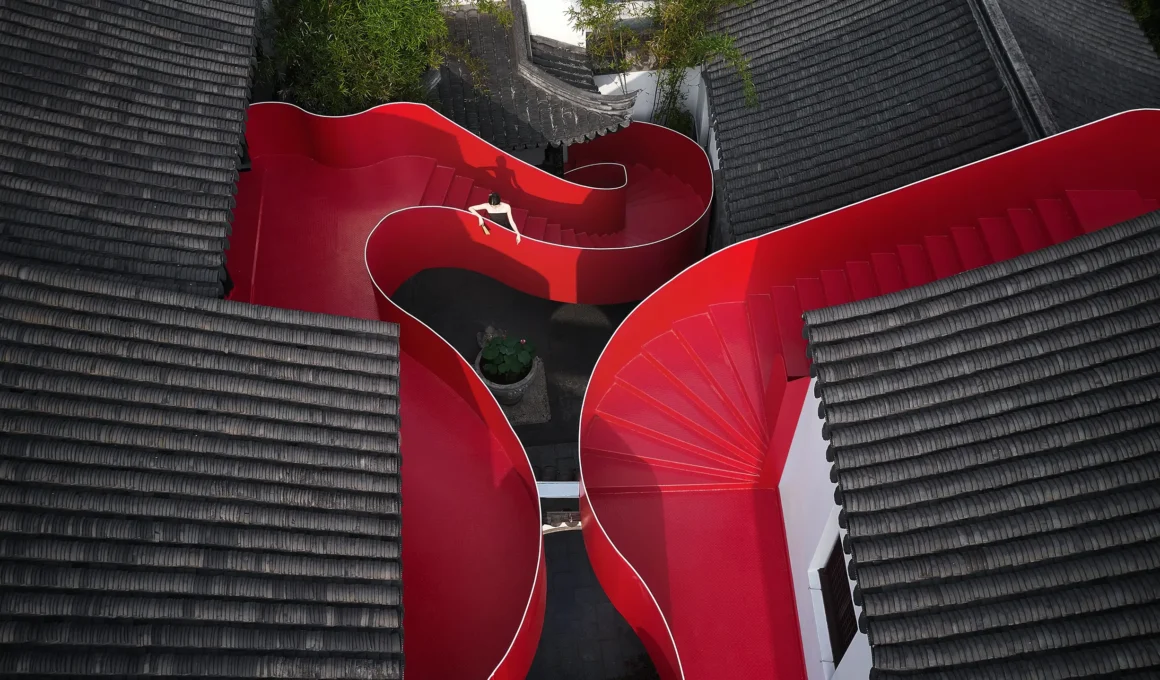
A scarlet artery winds through the monochromatic landscape of black, white, and gray traditional rooflines. This streamlined steel staircase, finished in a vibrant Chinese red, acts as a visual conductor that links several “isolated islands” of buildings into a cohesive whole. The fluid, dragon-like form is not merely a bold aesthetic choice; it is a literal manifestation of the “Red Lobster” brand, translating a sensory taste experience into a permanent, physical landmark that draws visitors upward through the site.

Material fusion and reuse underscore the project’s commitment to environmental and cultural sustainability. During the construction process, the studio opted for a reductive approach, utilizing local materials to minimize the carbon footprint. Original doors were removed and resealed with glass to serve as interior screens, while Taihu Lake stones found on-site were collected and rearranged to form functional shelters. This circular approach to construction ensures that the texture of the old city south remains palpable in every corner.

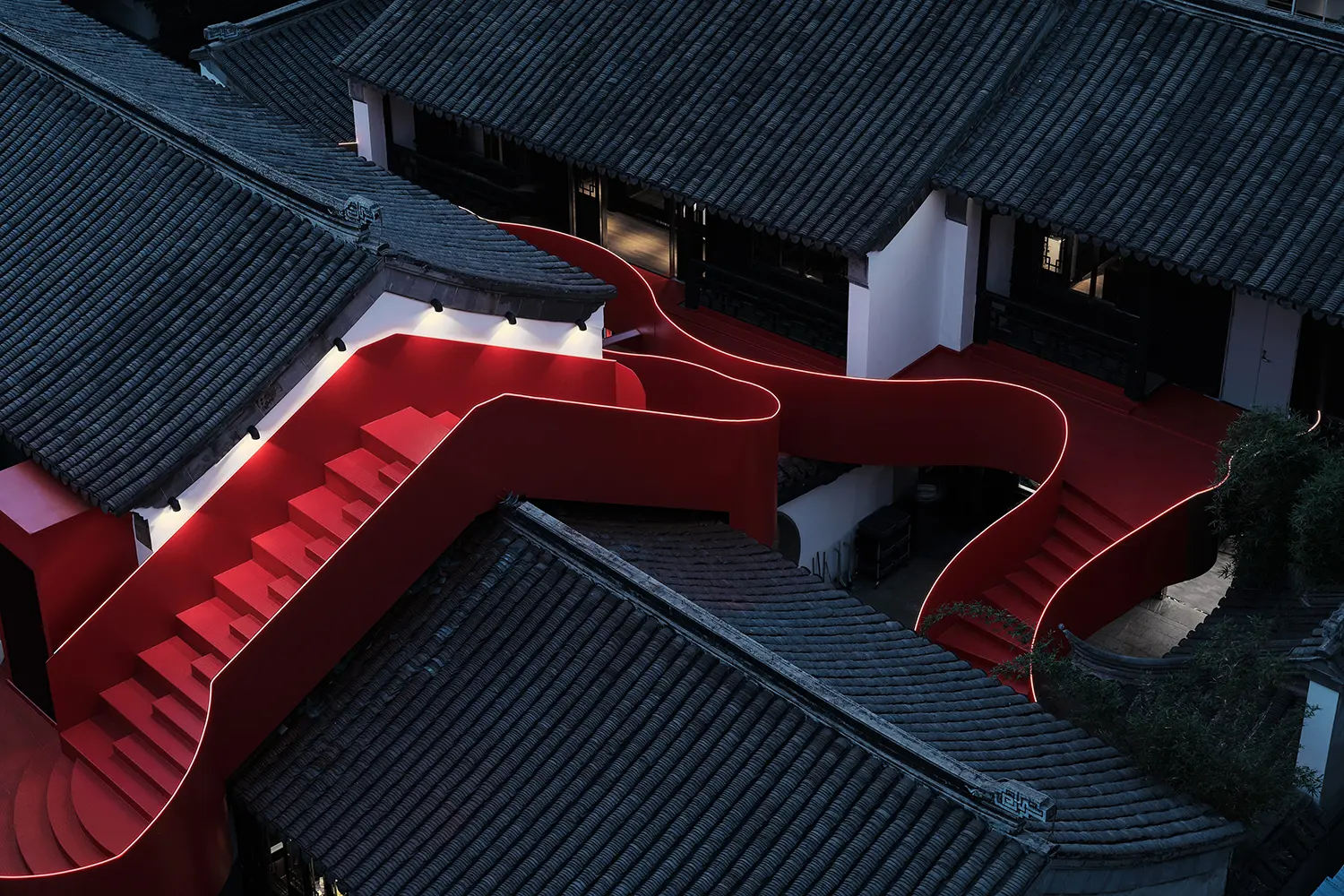
Form serves function with rigorous precision in the execution of the “cloud ladder.” Beyond its role as a social-media-friendly “check-in” spot, the red staircase provides a vital second fire escape—a notorious challenge in the preservation of ancient wooden buildings. Its physical presence creates a covered walkway on the ground floor, protecting staff and patrons from the elements during Nanjing’s rainy seasons, while the upper platforms unlock previously inaccessible views of the nearby Dabao’en Temple.
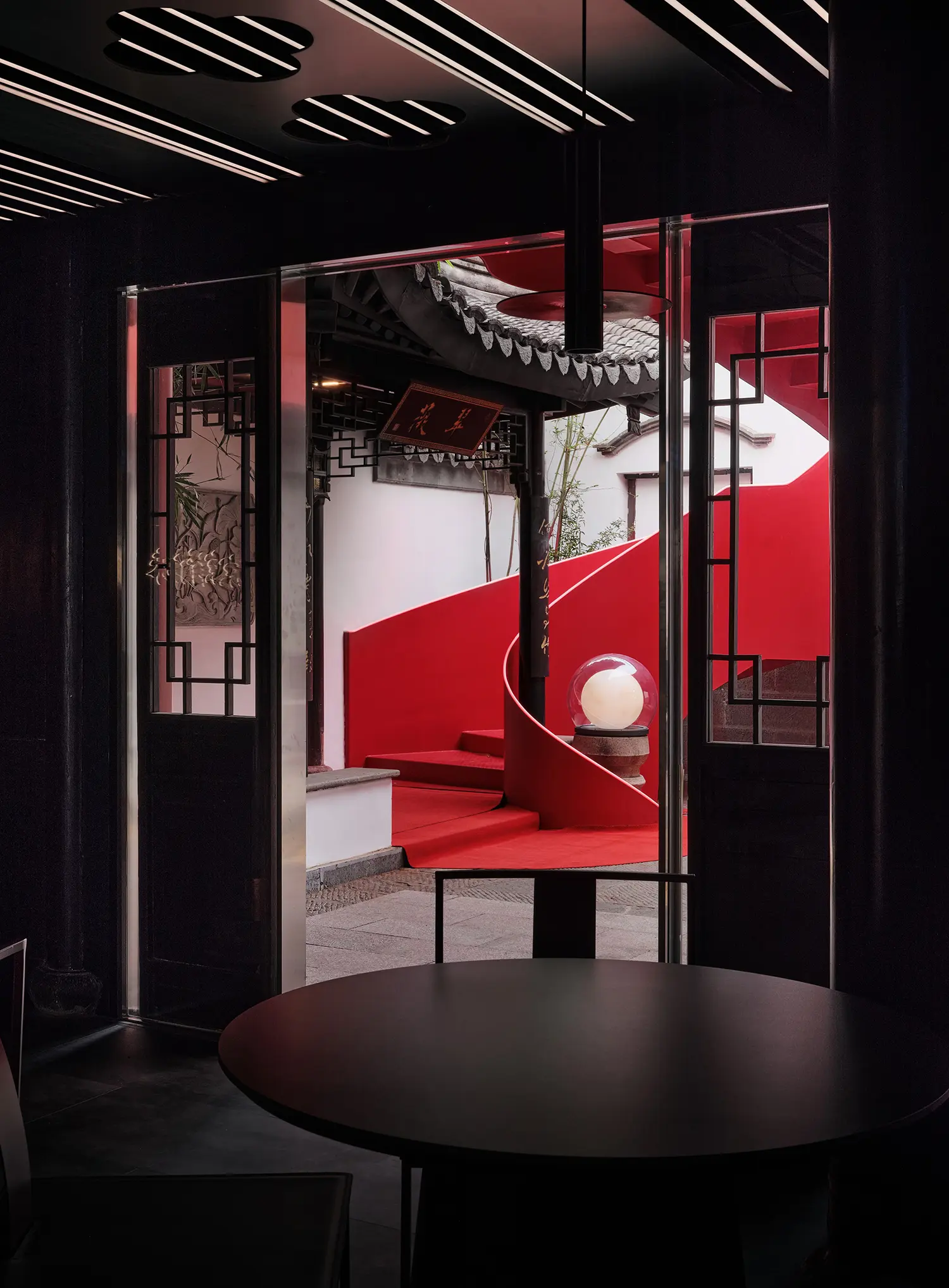
The sensory experience of the restaurant is one of intentional contrast. Patrons move from the quiet, shadowed elegance of the traditional courtyards into the bright, metallic precision of the new pavilions. The use of glass and metal to recreate classical pavilion shapes creates a “cyber” interpretation of the garden atmosphere, where the reflection of the Qinhuai River in the windows meets the sharp, industrial lines of the steel stairs. It is a space that feels both ancient and cinematic.

Spatial fluidity is achieved by treating the vertical circulation as a piece of landscape. As guests ascend the four-story structure, the transition between the interior dining rooms and the exterior walkways mirrors the wandering experience of a classic Chinese garden, albeit one updated for the 21st century. The staircase doesn’t just connect floors; it curates a journey, offering glimpses of traditional tiled eaves against a backdrop of modern Nanjing, forcing a constant re-evaluation of the city’s timeline.
A vision for the future of historic preservation emerges from this intersection of “heritage and fireworks,” joining a global movement of bold hospitality environments that use color and geometry to redefine cultural identity. Much like the chromatic intensity of YOD Group’s Rosso in Ukraine or the pigment-driven narrative of Plutarco’s MYO in Madrid, Dayi Design demonstrates that the most effective way to honor the past is to make it useful, vibrant, and daringly visible within the contemporary urban fabric.