



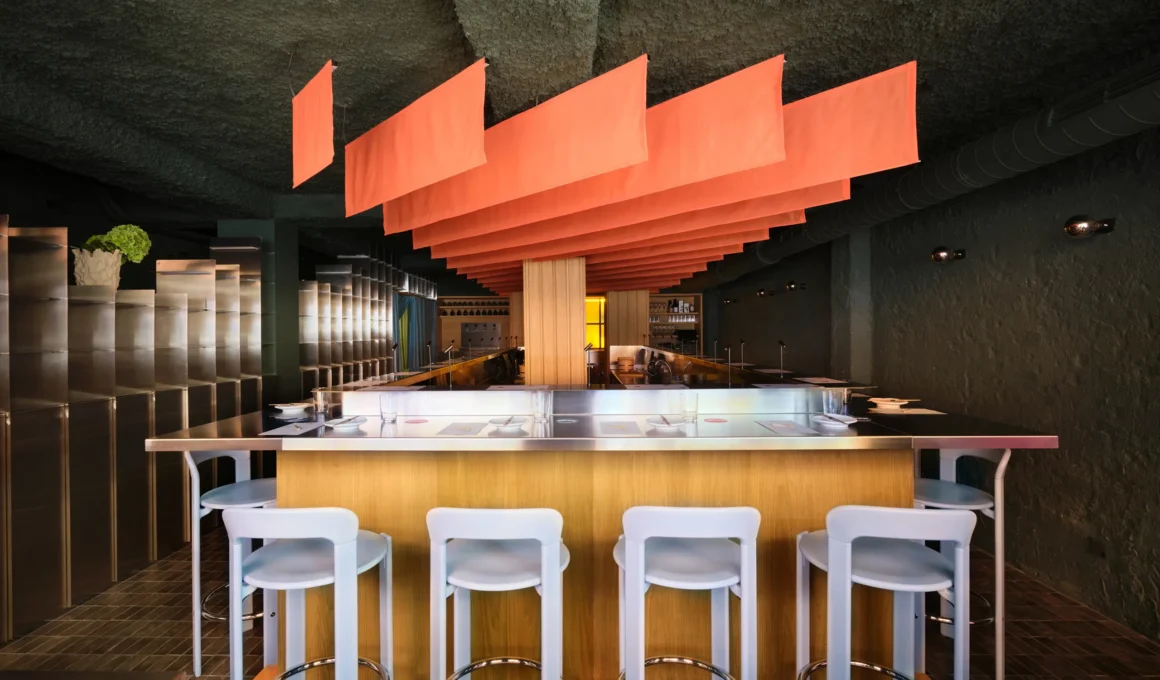
Plutarco’s latest intervention in Madrid’s dining scene, MYO, reimagines the traditional Japanese culinary stage through a high-contrast materiality centered around a monolithic green-stained oak bar and a perpetual, retro-illuminated sunset that bathes the industrial shell in warmth.
The central protagonist of the space is undeniably the bar, a sculptural element elevated on oak pilotis that anchors the room with intentional weight. Clad in wood stained to a deep, organic green, the structure serves as a tactile reference to the seaweed hues of nori. This choice of color establishes an immediate dialogue between the physical environment and the gastronomic craft taking place atop its stainless steel surface.

Atmospheric tension is achieved through the clever use of lighting, most notably the “continuous sunset” that crowns the bar. By utilizing retro-illuminated fabrics in a gradient of amber and ochre, the studio creates an eternal golden hour. This warm glow doesn’t just illuminate the patrons; it effectively softens the industrial edges of the surrounding room, transforming the utilitarian into something ethereal.

Material alchemy plays a vital role in how the space feels under different lighting conditions. While stainless steel is often perceived as a clinical or cold material, at MYO it acts as a canvas for reflection. When the evening lights are activated, the steel surfaces capture the warm tones of the artificial sunset, dissolving the boundaries between the metallic fixtures and the glowing atmosphere.

A raw backdrop ensures that the focal point remains undisputed. The studio opted to leave the technical installations exposed, painting the peripheral walls and ceilings in a dark, muted green. This “blurring” of the surroundings creates a sense of depth, allowing the secondary elements of the room to recede into the shadows so that the illuminated central island can shine with greater intensity.

Sensory precision extends to the way the food is presented. Integrated spotlights are positioned to frame each dish as it is served, creating a high-contrast visual experience where the vibrant colors of the cuisine pop against the reflective steel. This theatrical approach to lighting treats the bar not just as furniture, but as a stage for a choreographed performance.

The industrial aesthetic is further reinforced by the presence of exposed pipes and raw textures, which provide a gritty, urban counterpoint to the refined woodwork of the bar. It is this balance between the “brut” nature of the shell and the sophisticated materiality of the furniture that defines the project’s character, offering a contemporary take on Madrid’s evolving interior landscape.

Contextual dialogues in the city’s hospitality sector show a fascinating shift toward these bold, narrative-driven spaces. In Madrid and beyond, we are seeing a diverse spectrum of conceptual approaches; while MYO leans into industrial warmth, projects like the Taberna Convento explore a more traditional, grounded vernacular. Meanwhile, the exuberant, nature-inspired textures of Superchulo Canalejas and the avant-garde, metallic explorations seen in Isern Serra’s Relleno in Barcelona demonstrate a shared desire to move away from the generic. Each of these venues contributes to a broader conversation where the environment is as carefully curated as the menu itself.