



Designed by French architect Jessica Mille, the newly unveiled Matsuri Marseille restaurant on Rue Paradis is an immersive spatial capsule that masterfully merges the retro-futuristic allure of 1970s design with the precise, high-fidelity aesthetic of Japanese culinary and audiophile culture.
The transition from the public sphere of Marseille’s Rue Paradis into the interior volume establishes an immediate, calculated shift in sensory perception. In continuity with the design language explored at Matsuri Shinkansen on Rue du Bac in Paris, Jessica Mille structures this new Marseille outpost around a rigorous logic of modular repetition. This threshold acts as a physical decompression chamber, shedding the chaotic scale of the streetscape in favor of an introverted, highly controlled vessel designed specifically to prioritize gastronomic intimacy and visual harmony.
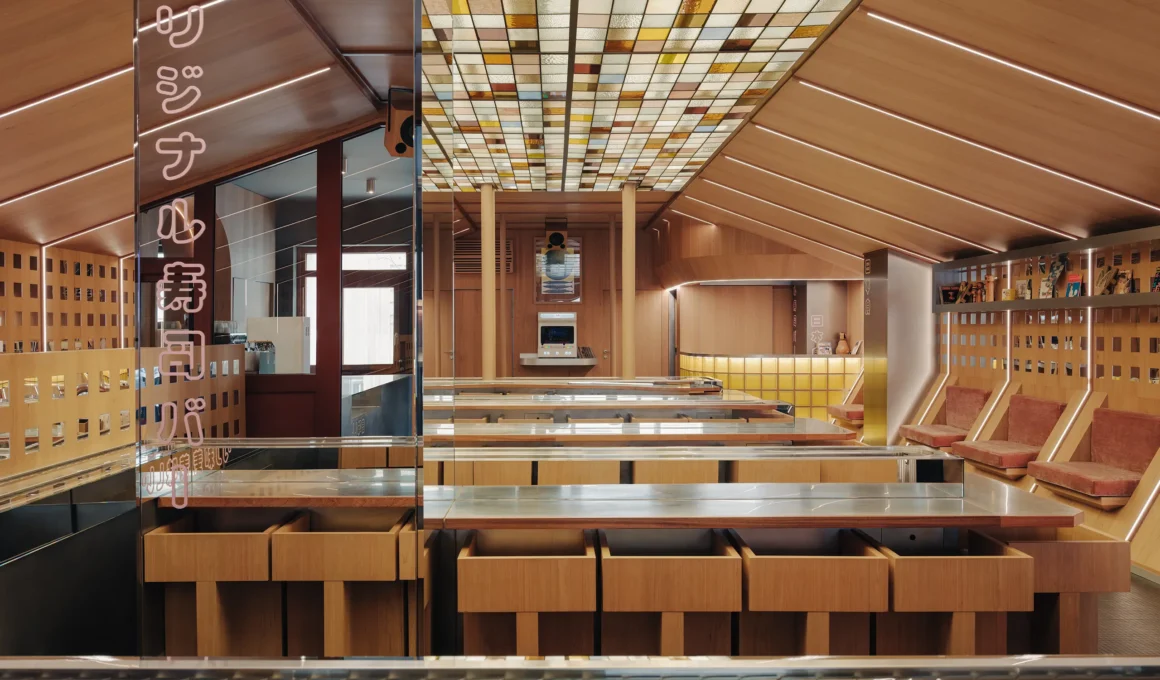
The ground floor volume is meticulously organized through a succession of custom-engineered octagonal portals that define the spatial experience. This structural choice functions as a rhythmic sequence, guiding guests deeper into the space through a continuous, almost ritualistic passage. Each frame acts as a physical and visual compressor, systematically narrowing the field of view to create an atmosphere of deliberate isolation. By manipulating the geometry of these transitions, the modern interior design establishes a gradual distancing from reality, preparing the mind and senses for a focused dining experience.
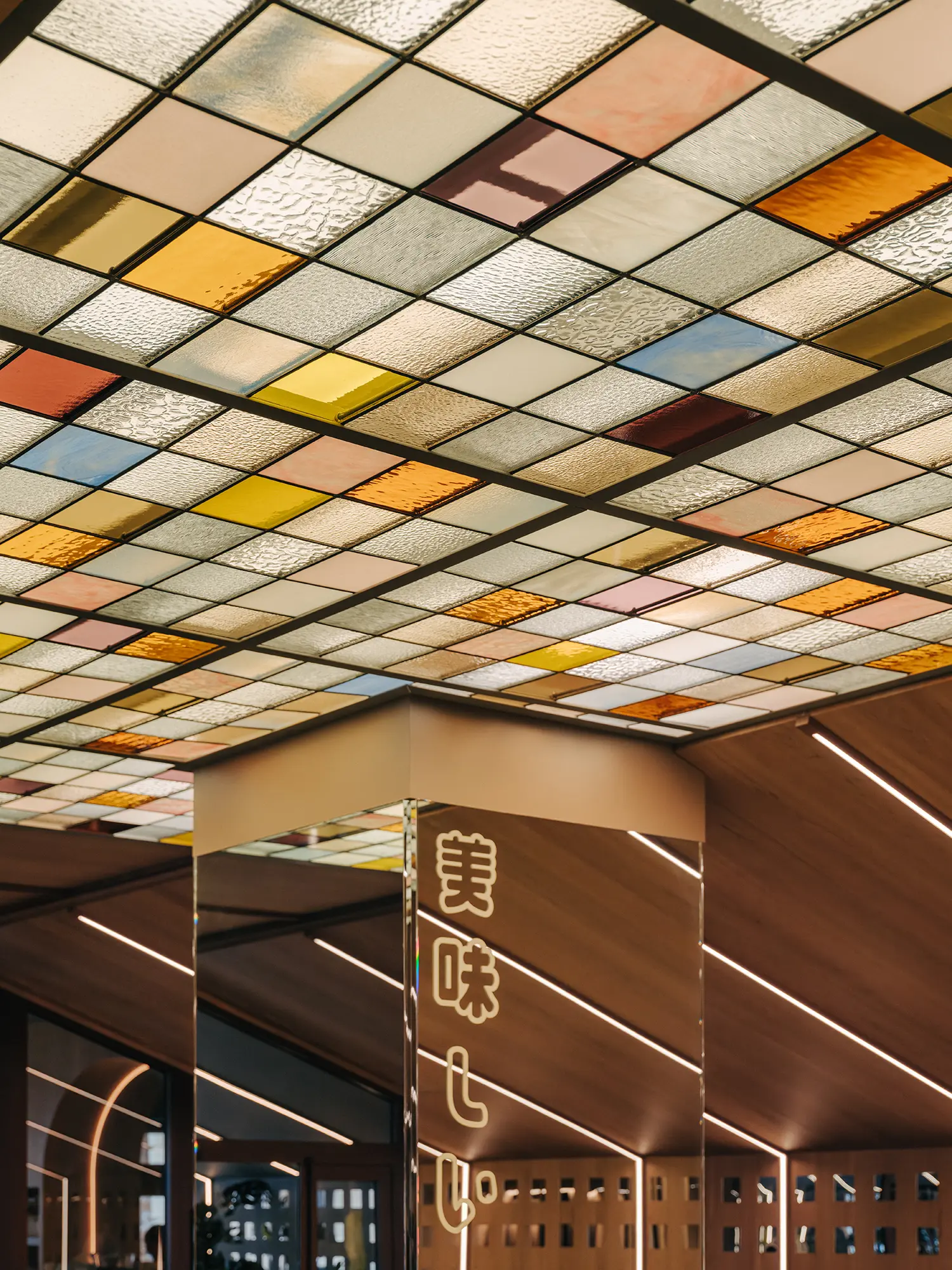
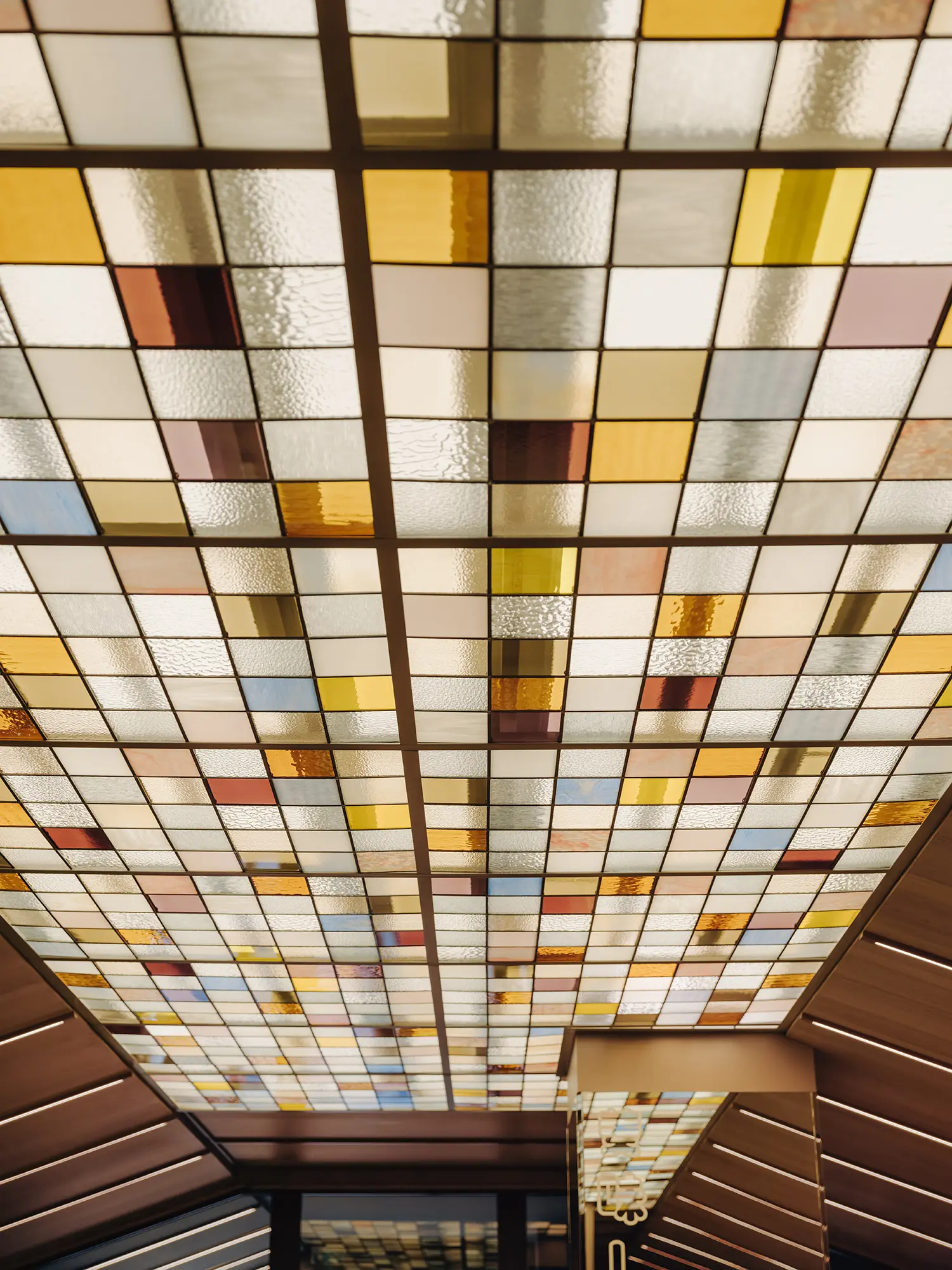
Overhead, the geometric repetition of the layout finds its visual anchor in a stunning custom stained-glass ceiling that dominates the room. Crafted by master artisan Bryce Bianconi of Studio Vitrail Bianconi, the pastel-toned glass panels filter the light, casting a soft, diffuse zenithal glow throughout the interior. Rather than relying on harsh, direct illumination, this suspended atmospheric light sources from above, softening the hard lines of the structure and establishing a dreamy, floating sensation. This carefully calibrated lighting scheme enhances the spatial transition, making the entire room feel like an inhabited capsule insulated from time.
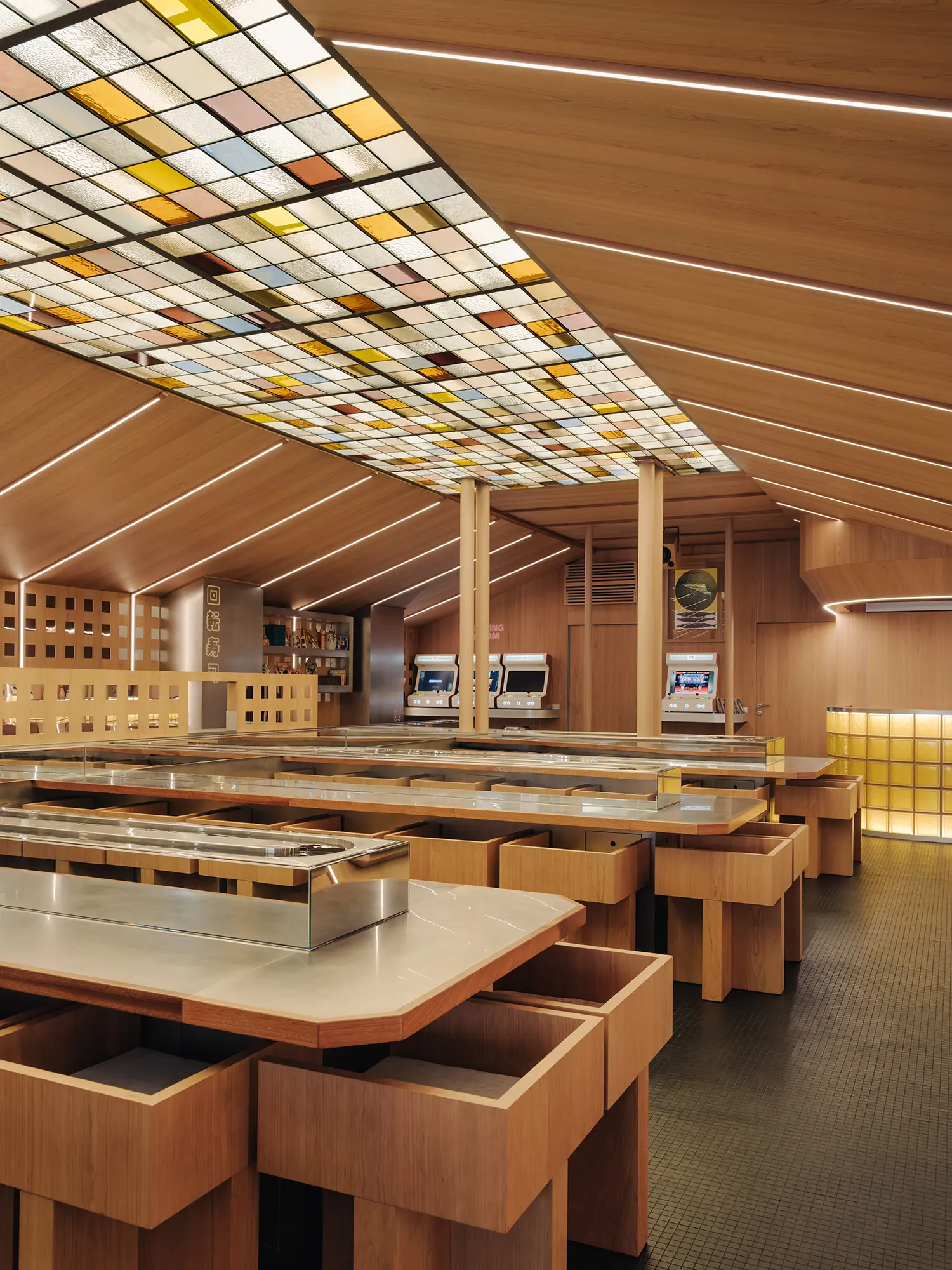
At the heart of this spatial machinery, the contemporary spatial layout centers around the steady, hypnotic movement of the kaiten—the iconic Japanese conveyor belt system. Rather than treating this mechanical element as a mere functional tool for food delivery, the design elevates the conveyor belt into a kinetic art installation. The stainless steel tracks wind through the custom timber counters, acting as a dynamic line that contrasts with the static, warm oak surroundings. During the day, the gentle glide of the culinary plates under the warm ceiling glow dictates the internal pulse of the room, turning the act of dining into a silent, shared choreography.
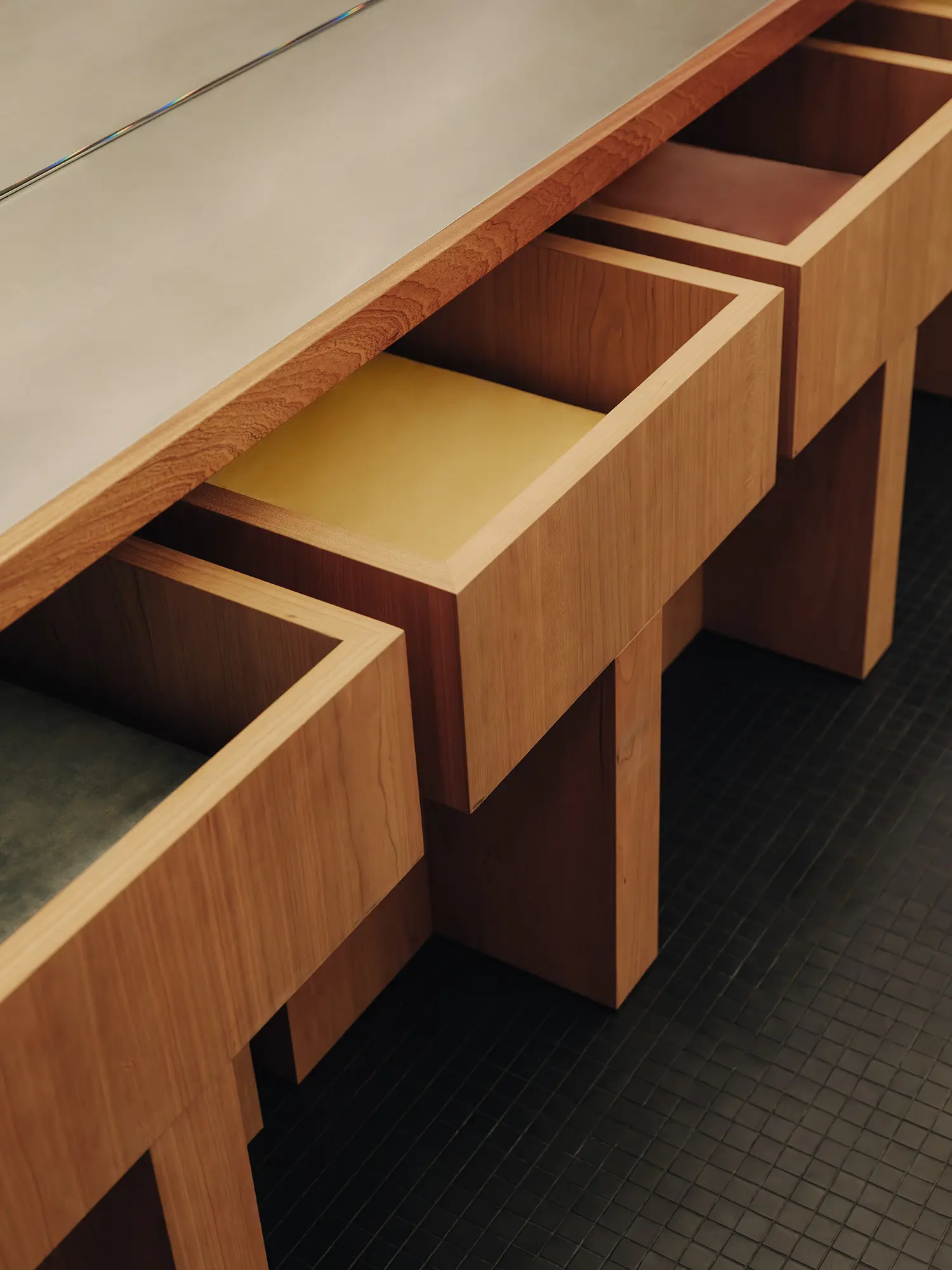
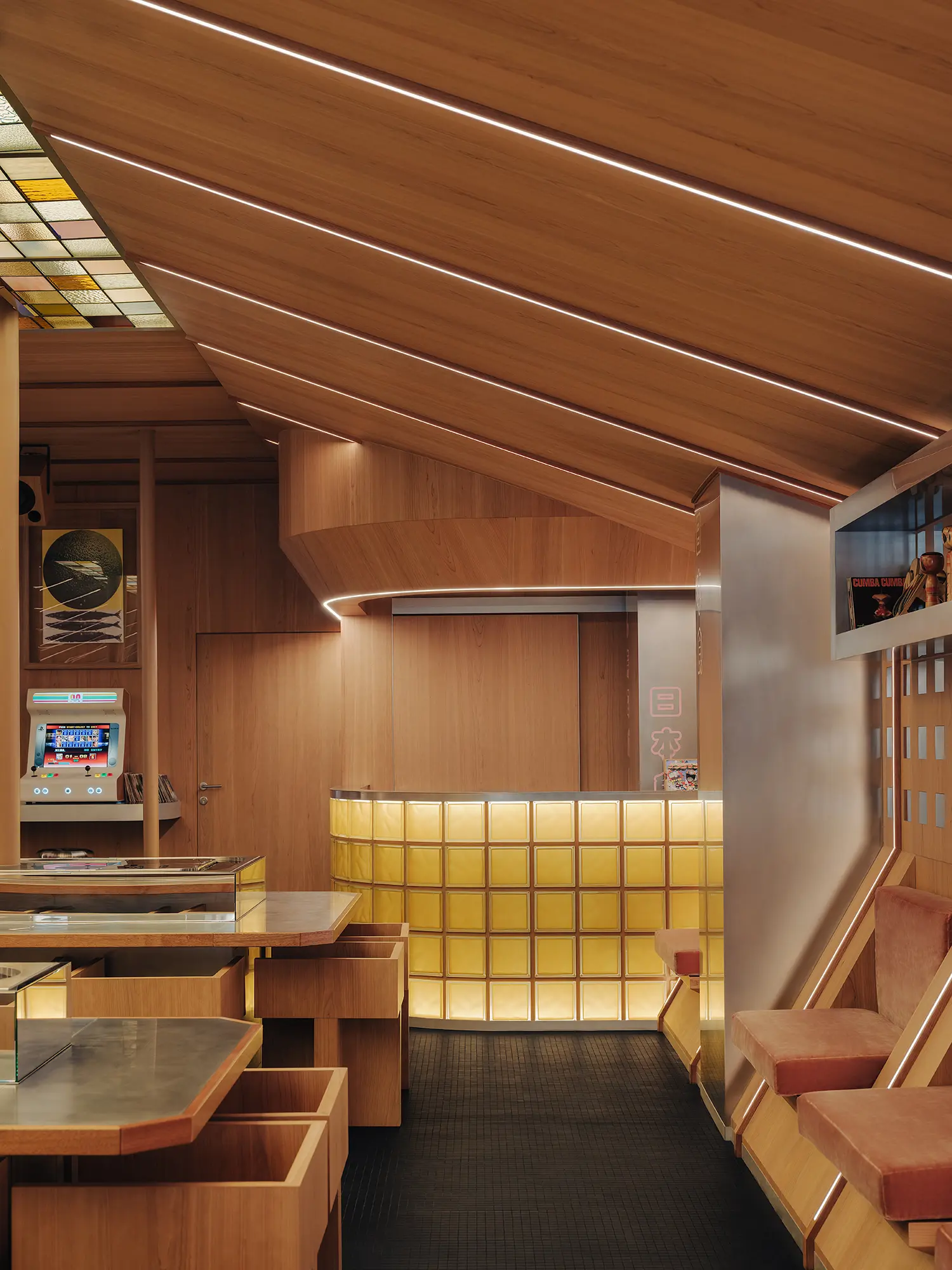
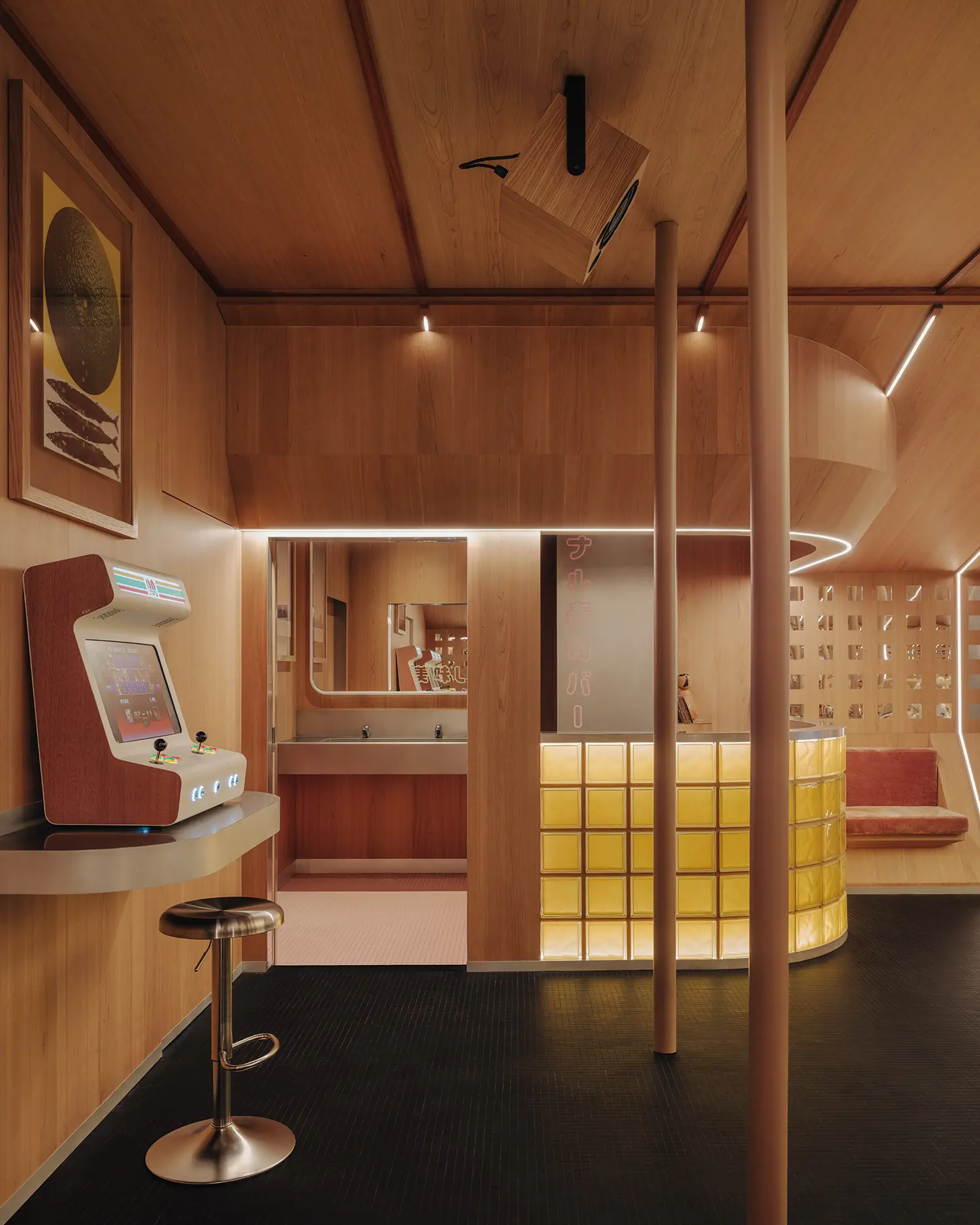
The custom-designed furniture further extends this rigorous geometry, ensuring that no element is left to chance. Brutalist and incredibly precise, each seat, table, and panel belongs to a unified aesthetic language where light, object, and structural surfaces merge into a single entity. Rich tactile details and clean joints elevate the craft, from the bespoke wooden storage slots and warm oak paneling to the glowing yellow glass block counter that anchors the back of the room. It is a radical environment where meticulous construction techniques are intentionally deployed as a creative tool in service of a vibrant, pop-inspired retro-futuristic interior, complete with vintage arcade consoles, Japanese neon graphics integrated into the mirrored pillars, and a unique private karaoke room.
Beyond the structural boundaries of the room, the venue naturally supports a programmatic dualism where the steady daytime pace seamlessly transitions into a vibrant hospitality design experience in the evening. As the night progresses, the focus shifts toward curated music and DJ sets, where the acoustics of the octagonal portals help to isolate and enrich the sound. This sensory duality ensures that the venue operates not merely as a place of consumption, but as a cultural destination where gastronomic pleasure, auditory curation, and visual precision are deeply intertwined.
This project exemplifies a broader spatial evolution within the global design landscape, characterized by the systematic dismantling of traditional, monofunctional typologies. Contemporary hospitality increasingly rejects rigid categorization, favoring instead a programmatic fluidity where culinary craft, auditory precision, and material culture converge. This trend is highly evident in the Supaform-designed EJE Belgrade listening bar, which functions as a multidisciplinary hybrid blending a boutique guest house, dining spaces, and a gallery-like design salon. By integrating these diverse layers into a singular, uncompromising aesthetic framework, spaces like Matsuri Marseille illustrate how the future of hospitality design lies in the synthesis of complex sensory layers, offering highly articulated physical touchpoints in an increasingly digital world.