


Maximale’s Casa ST in Madrid reinterprets the traditional townhouse typology through a vertical sequence of light-filled patios and a restrained material palette that challenges standard domestic archeology in the Spanish capital.
A departure from convention, the project emerges as a sophisticated exploration of urban living, moving away from the rigid compartmentalization often found in Madrid’s residential fabric. Maximale approached the site not as a series of closed boxes, but as a fluid framework where spatial relationships are constantly redefined. By questioning typical housing standards, the studio has crafted a residence that prioritizes the quality of volume and natural light over mere square footage, creating a sense of openness that feels rare within the city’s dense perimeter.
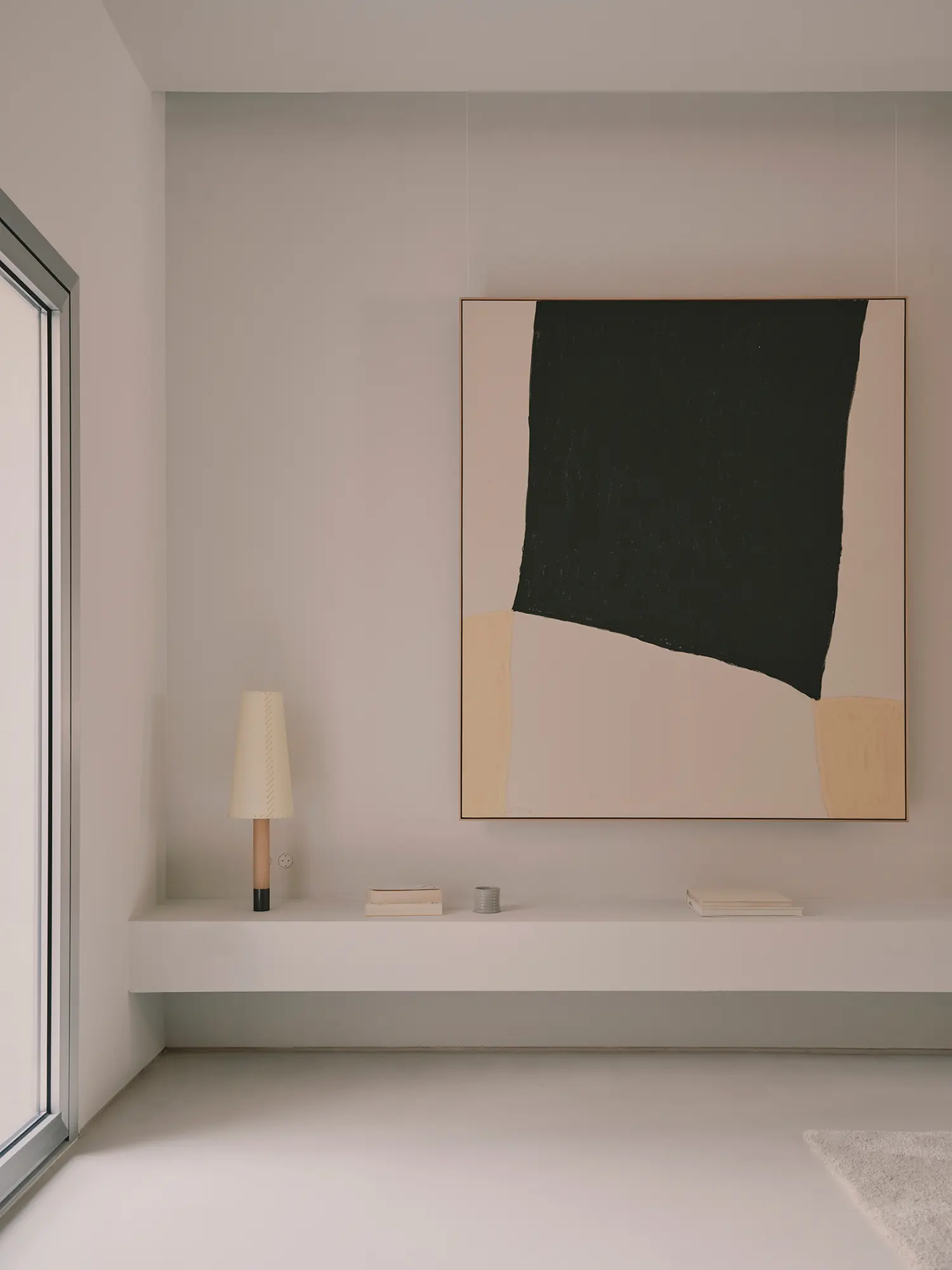
The conceptual vision centers on a careful balance between continuity and transformation. Rather than relying on decorative gestures, the narrative of the house is told through a neutral palette of raw textures and muted tones. This restraint allows the architecture to function as a canvas for the changing patterns of Spanish sunlight, emphasizing the geometric structure while focusing the occupant’s attention on the tactile quality of the surfaces.
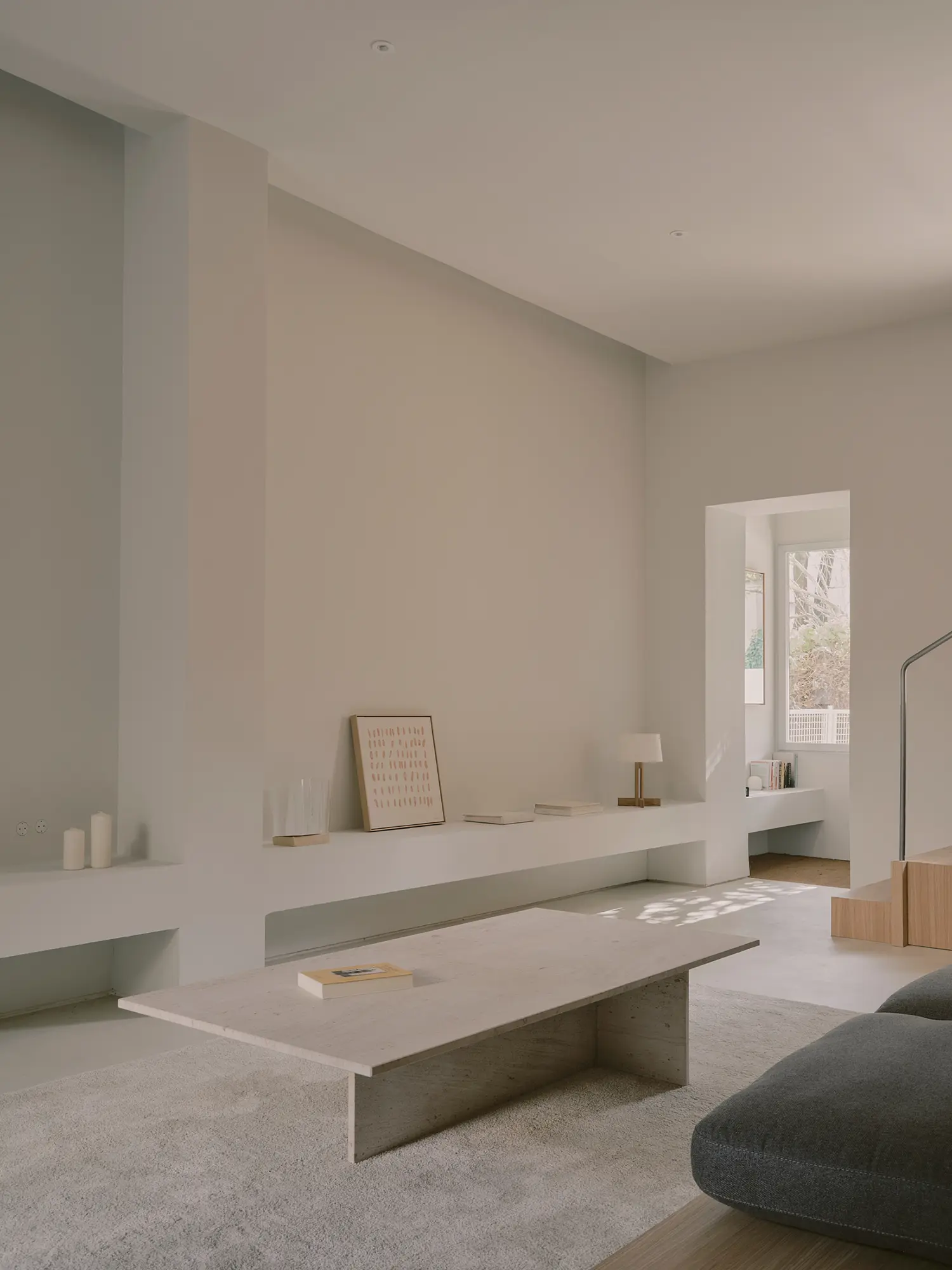
Intermediate spaces reactivated. In a move that elevates the dwelling beyond its footprint, the design team utilized a sequence of patios and terraces to act as the primary lungs of the home. These are not merely residual outdoor areas; they are active components of the daily experience. By strategically placing these voids throughout the vertical organization, the project ensures that natural ventilation and daylight penetrate deep into the lower levels, blurring the distinction between the conditioned interior and the open sky.
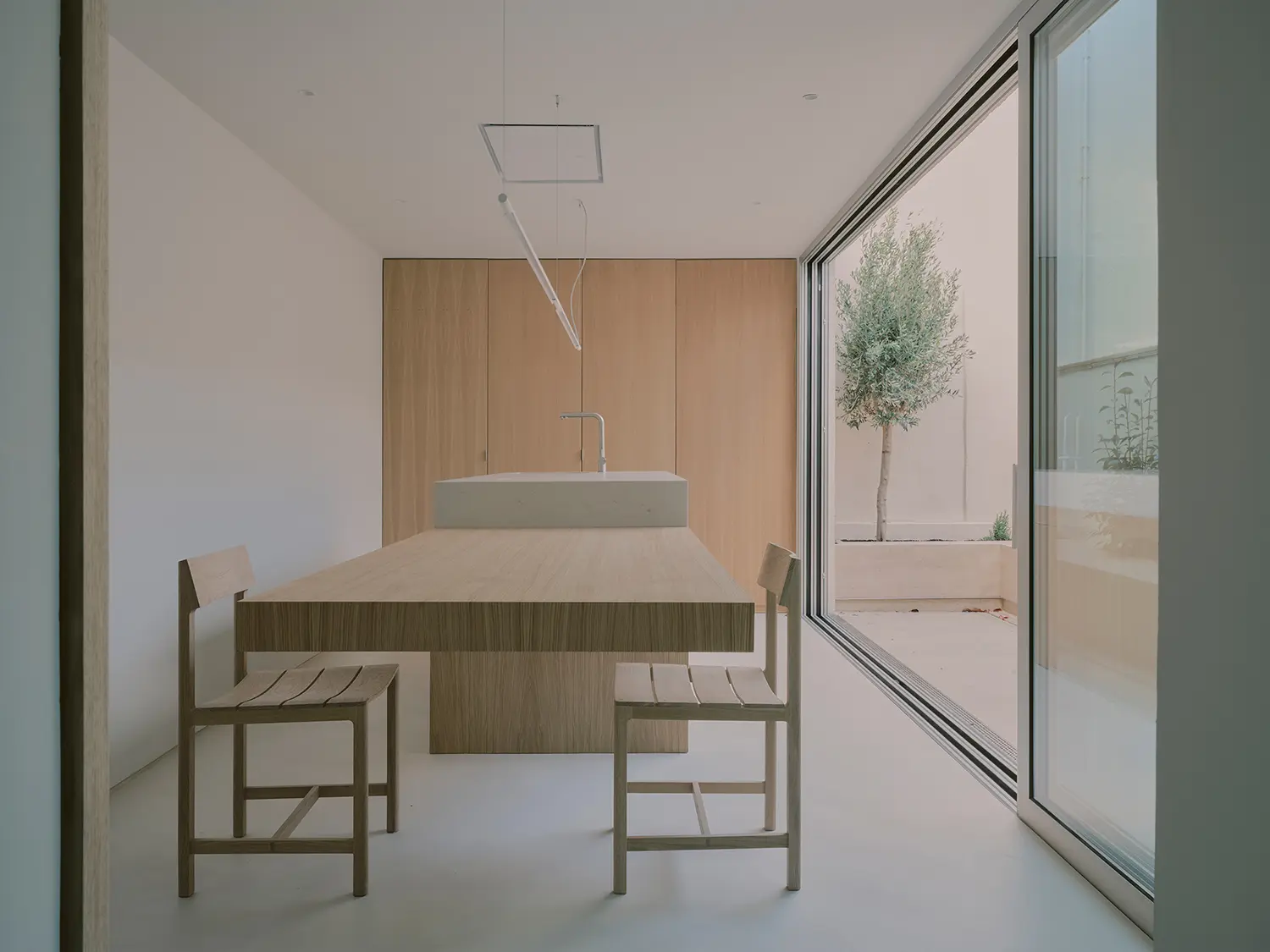
Social and spatial core. The heart of this domestic ecosystem is the kitchen, which serves as a mediator between the indoor living areas and the exterior courtyard. By dissolving conventional boundaries, this central hub encourages a lifestyle that is both interconnected and flexible. The transition from the preparation of a meal to an al-fresco evening feels effortless, reflecting a contemporary understanding of how a modern family inhabits a contemporary home.
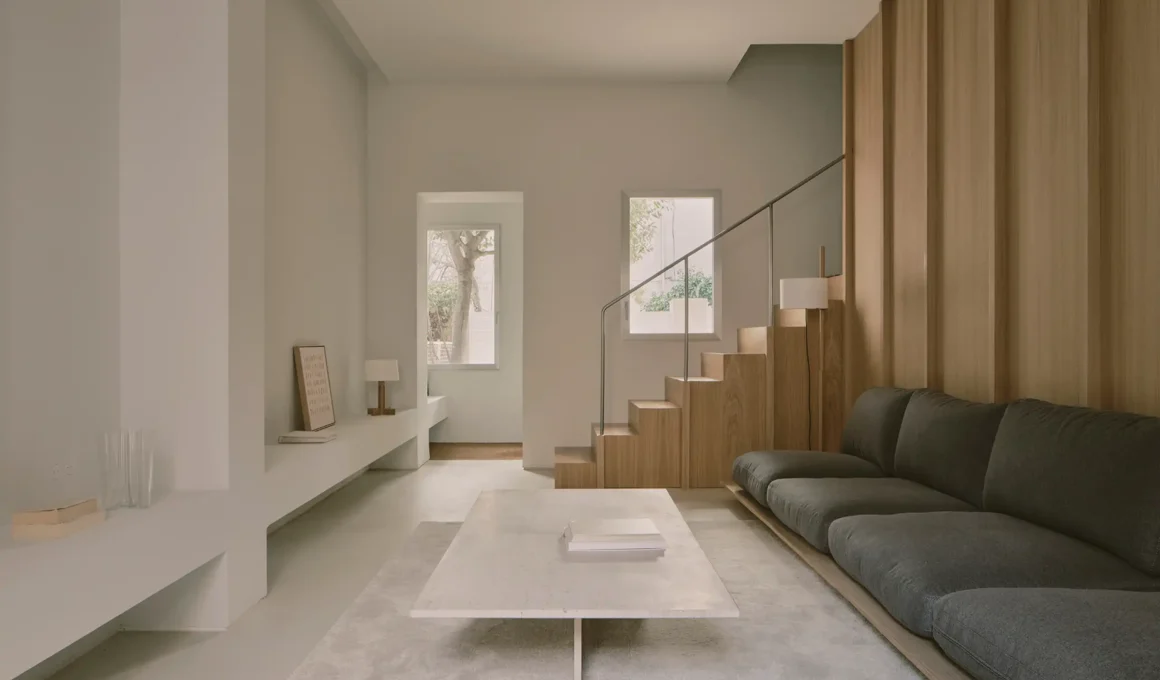
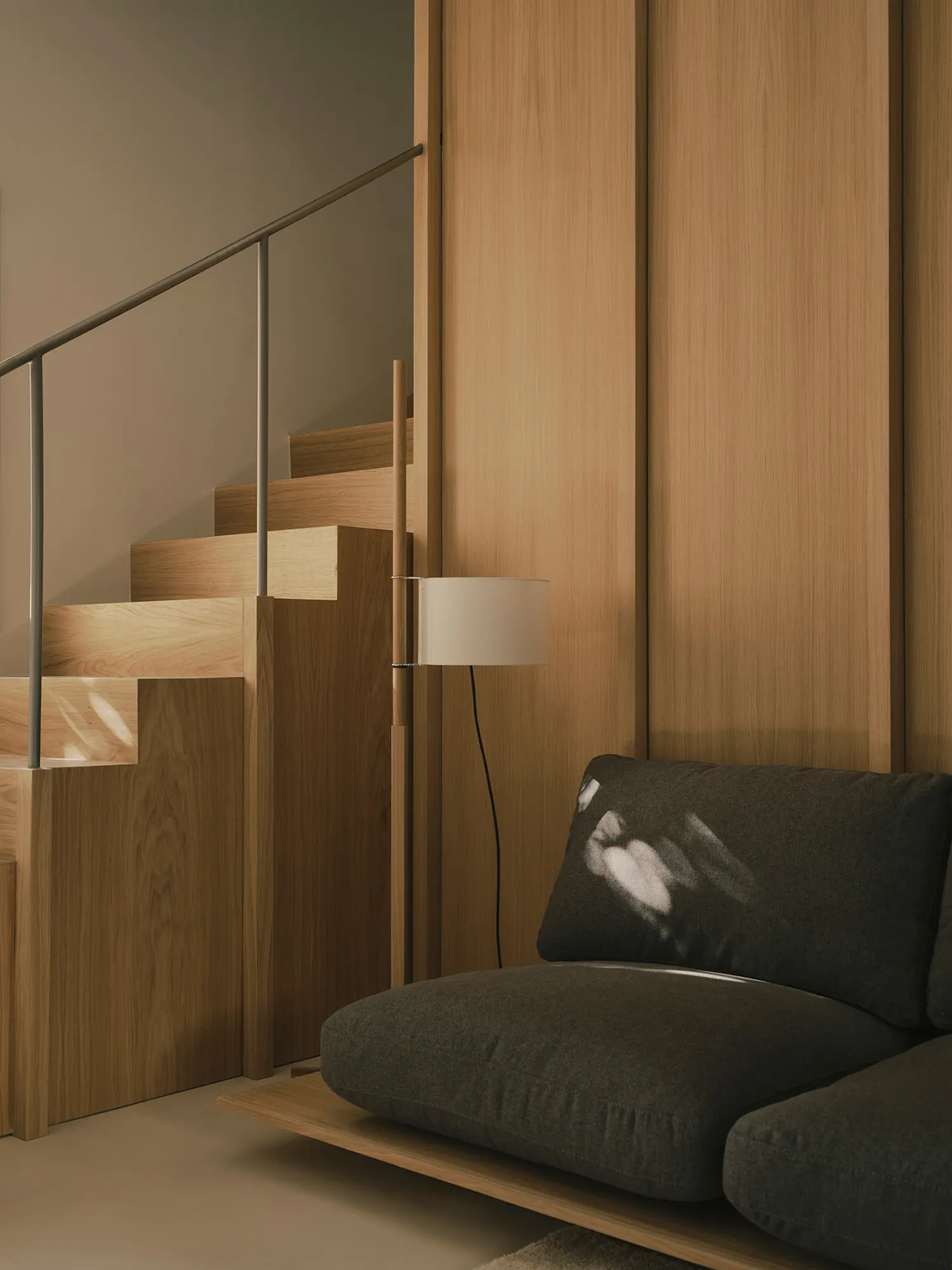
Rigor meets comfort. As one moves to the upper floors, the architectural lines become increasingly precise, defined by a measured sense of order. However, this structural discipline is softened by the strategic integration of natural wood. Oak paneling and custom furniture introduce a necessary warmth, providing a sensory contrast to the cooler tones of the perimeter walls. This dialogue between the clinical and the organic ensures that the home remains a place of rest without losing its intellectual clarity.
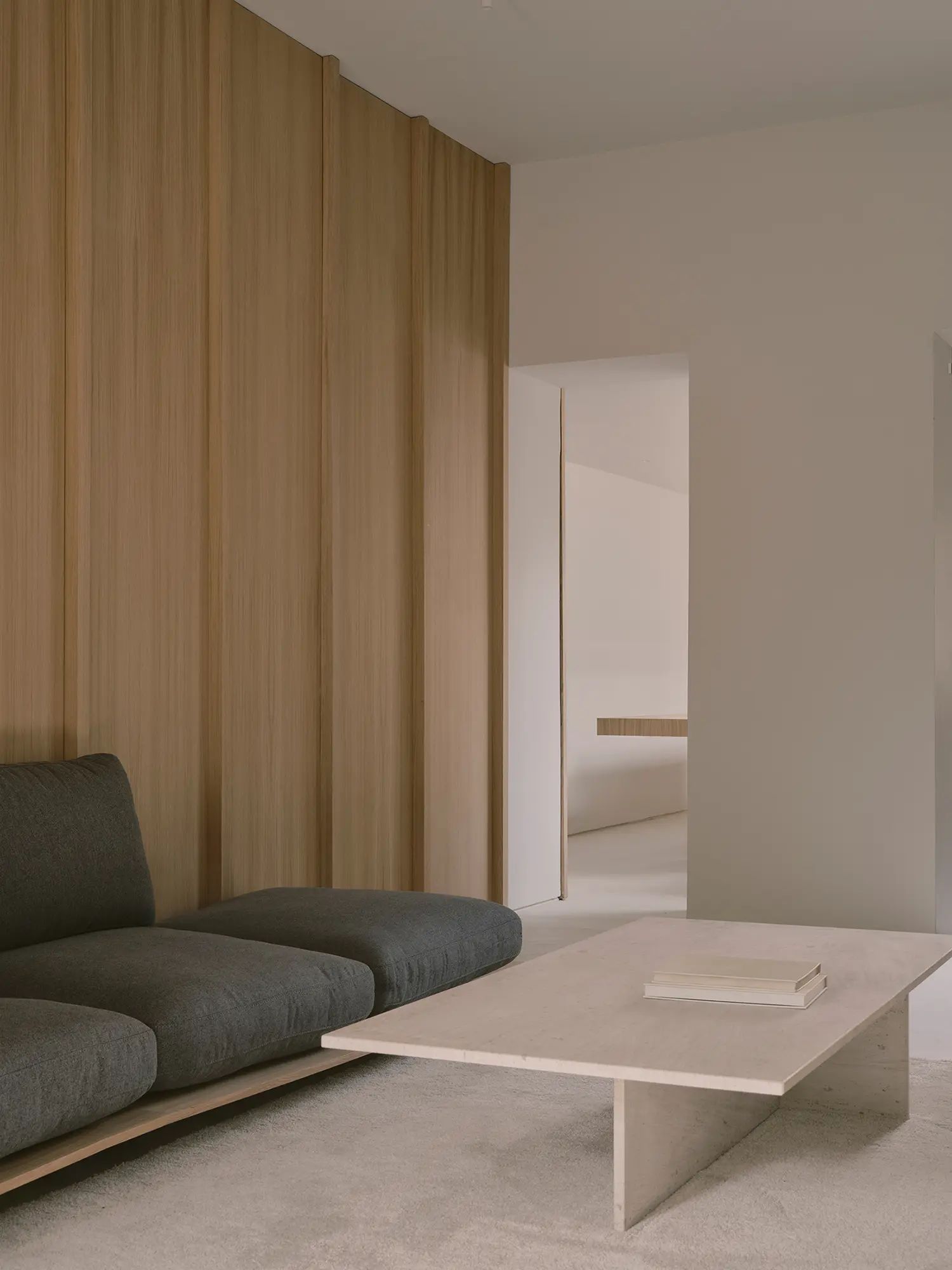
Technical material honesty. Every material choice in Casa ST is intentional, selected for its ability to age gracefully and contribute to an atmosphere of understated luxury. The textures are intended to be felt as much as seen—the grain of the timber, the smoothness of the stone, and the subtle variations in the plaster work together to create a cohesive environment. It is a technical exercise in minimalism where nothing is superfluous, and every joint and shadow gap is considered.
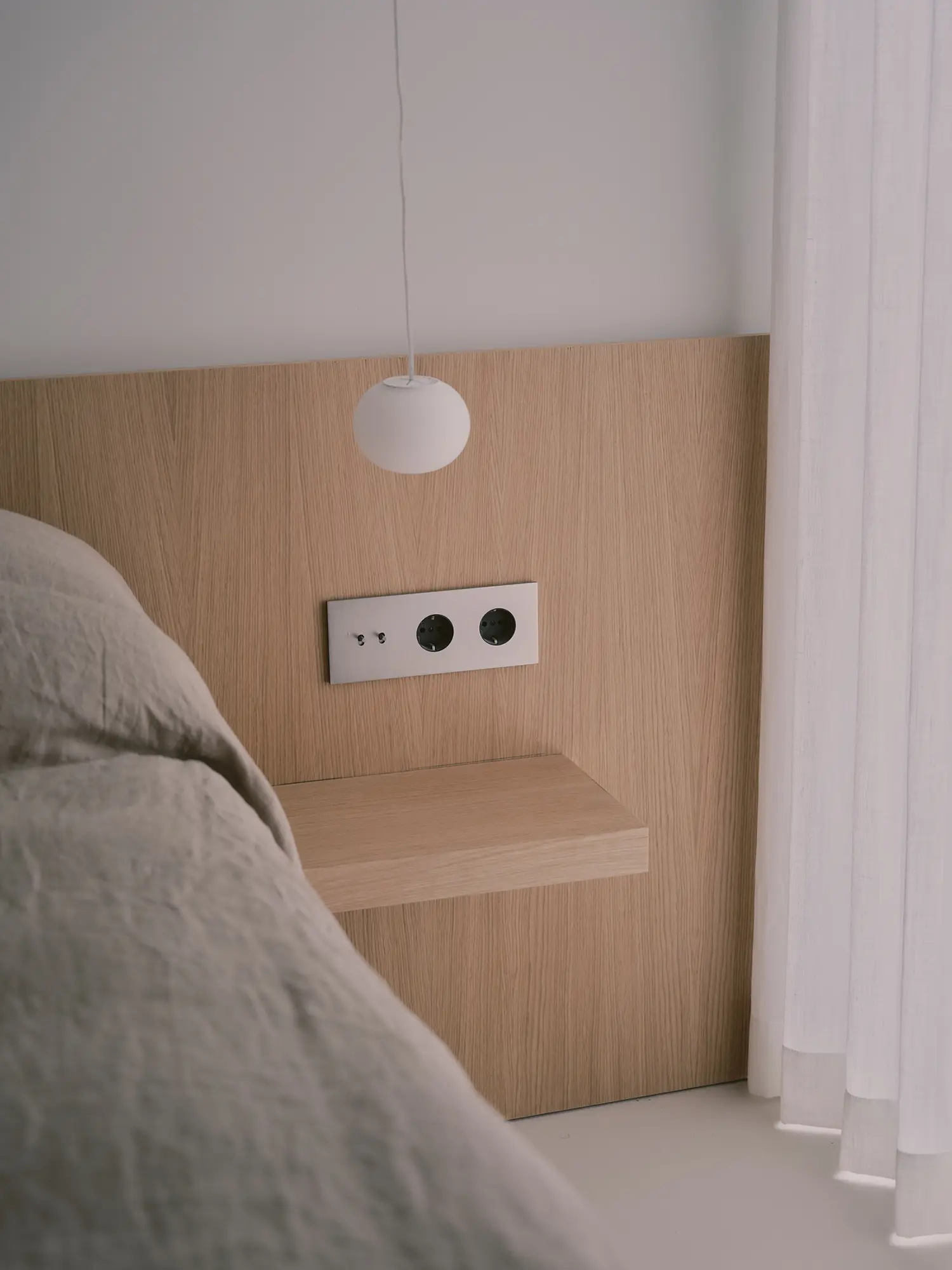
Urban domesticity redefined. The project stands as a framework for exploring new forms of modern living within the constraints of a metropolitan environment. It proves that a townhouse can be more than a stack of floors; it can be a complex, layered experience that embraces the outdoors and facilitates social interaction. The result is a residence that feels expansive and liberated from the traditional limitations of its typology.
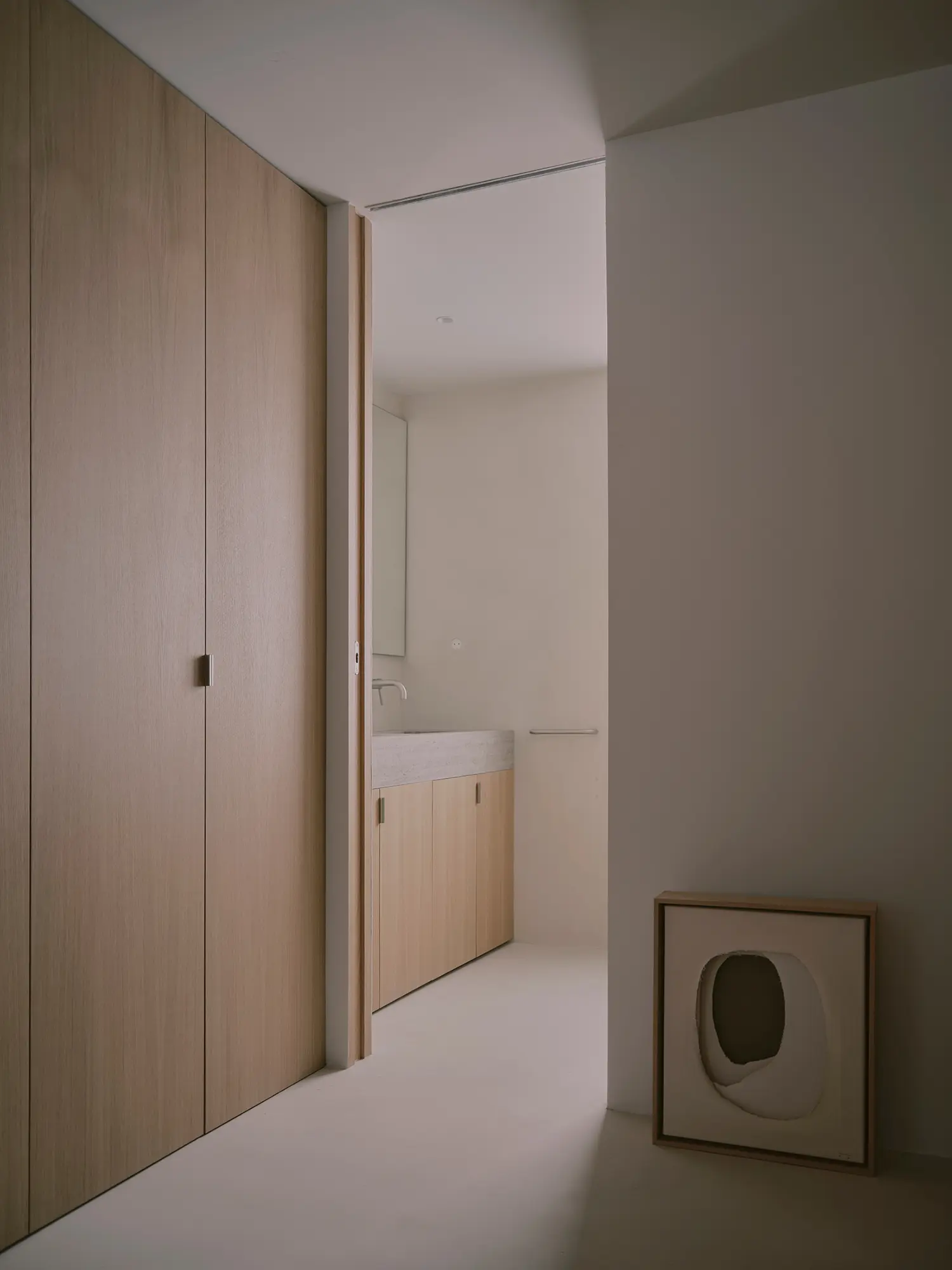
A evolving Madrid vernacular. Casa ST joins a growing movement of sophisticated interventions in the city that seek to modernize the Spanish residential landscape. We have seen this dialogue between historical context and contemporary innovation before in projects like the Casa Charca Verde by AceboXAlonso, with its kinetic pool renovation, or the PDLL70 House by Plutarco, which revitalized a modernist villa. These works collectively signal a shift in how the capital’s private spaces are being reimagined, prioritizing material integrity and spatial fluidity over traditional ornamentation.