



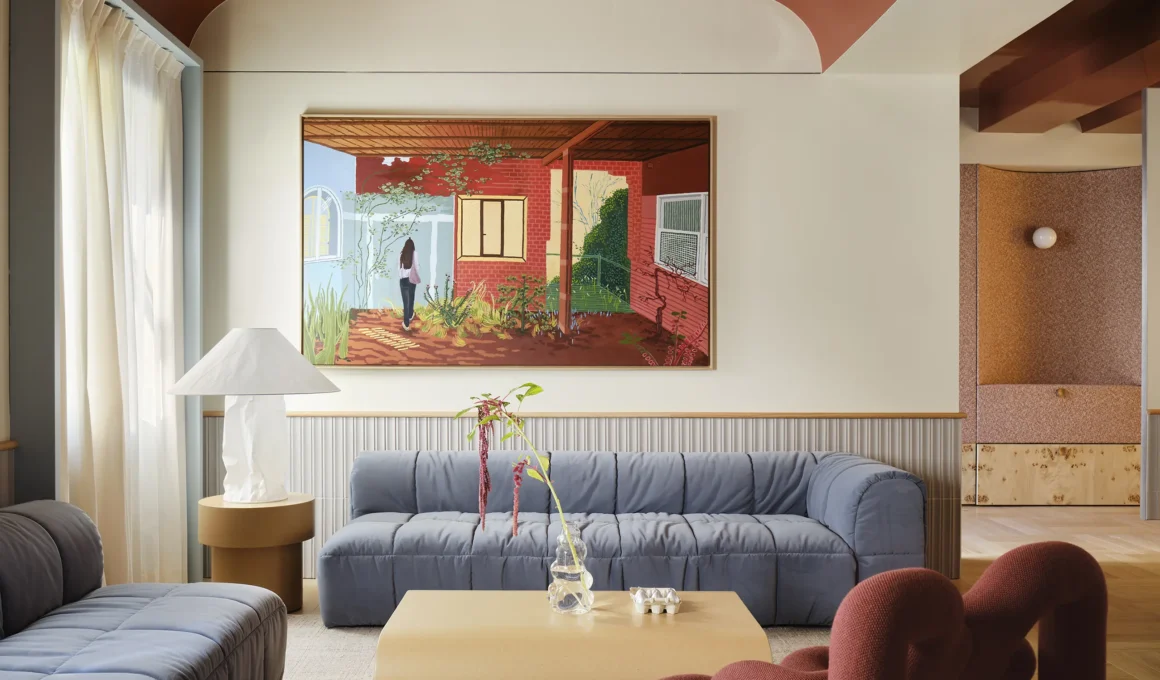
PDLL70 House emerges as a vivid reimagining of a 1934 modernist villa, where Madrid-based studio Plutarco has transformed a derelict ruin into a residence that balances historical research with a bold, contemporary exploration of material and light.
A dialogue with 1930s modernism serves as the conceptual backbone of the renovation. Faced with a structure in a deplorable state—where floors had been haphazardly built halfway up windows—the designers chose to view the ruin as a blank canvas. By researching international villa archetypes from the year of the house’s birth, Plutarco established a rhythmic connection to the era’s soul. The result is not a period restoration but a creative synthesis where vaulted ceilings and high-gloss finishes celebrate a light-filled optimism.
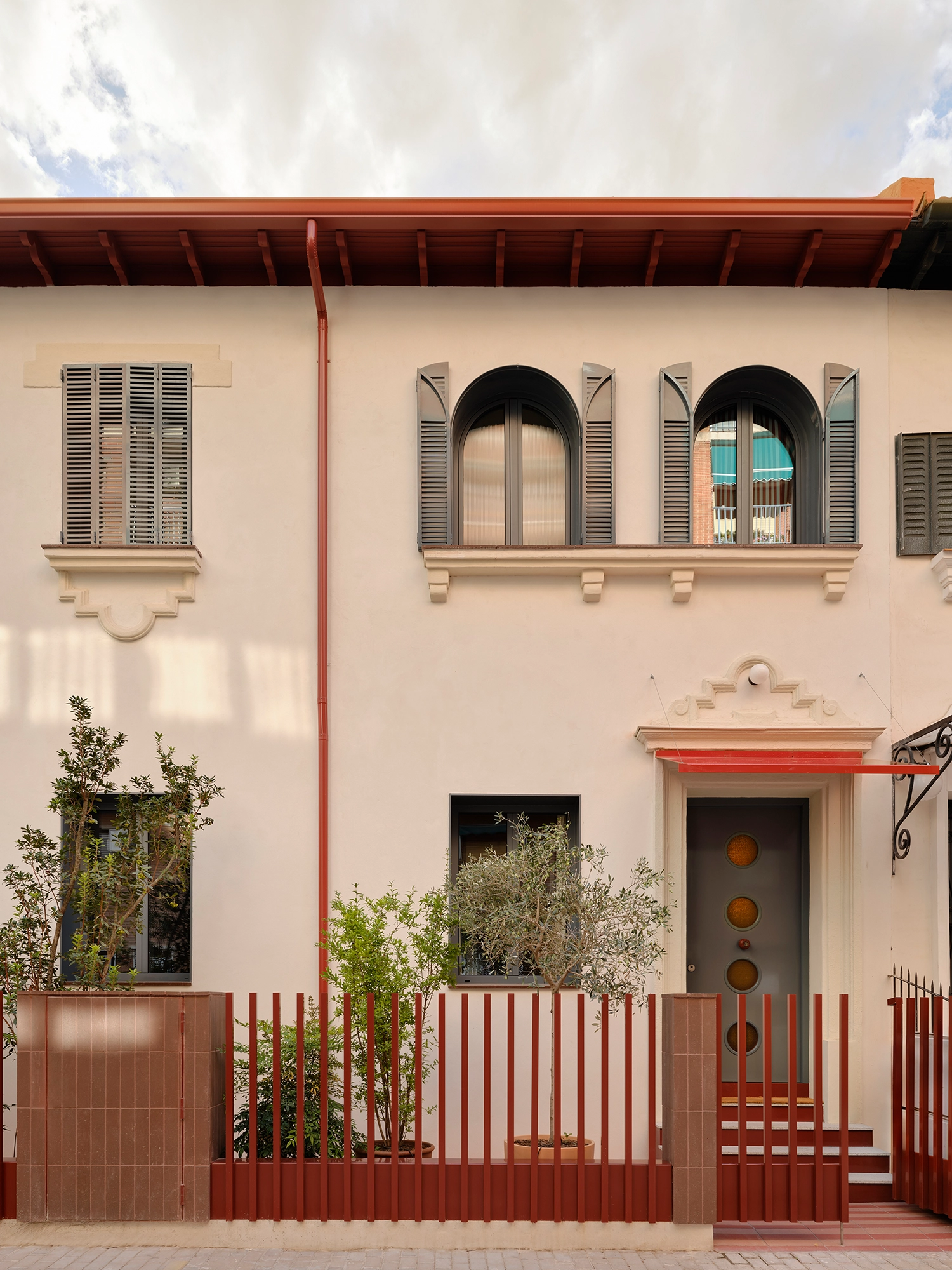
The luxury of spatial fluidity is immediately apparent in the layout, which capitalizes on an unusual urban condition: the house opens onto both a private street and a sprawling interior courtyard. This dual orientation provides a rare sense of seclusion within the Spanish capital. The living areas are positioned to embrace this quietude, utilizing a narrative of interconnected rooms that allows for social spontaneity. The transition between the dining and lounge areas is seamless, encouraging a domestic lifestyle where conversation flows as easily as the visual sightlines.
Architectural citations and artisanal craftsmanship elevate the dining room into a space of intellectual depth. The vaulted ceilings, adorned with meticulous mouldings, nod to Robert Mallet-Stevens’ Villa Cavrois, while the rich interplay of marbles on the staircase evokes the sophisticated entrances of Piero Portaluppi’s Milanese villas. Amidst these historical echoes, the studio introduced their own “Escote” chairs—named for their distinctive silhouette—designed specifically for long, post-dinner conversations, proving that comfort is as much a functional requirement as a formal one.
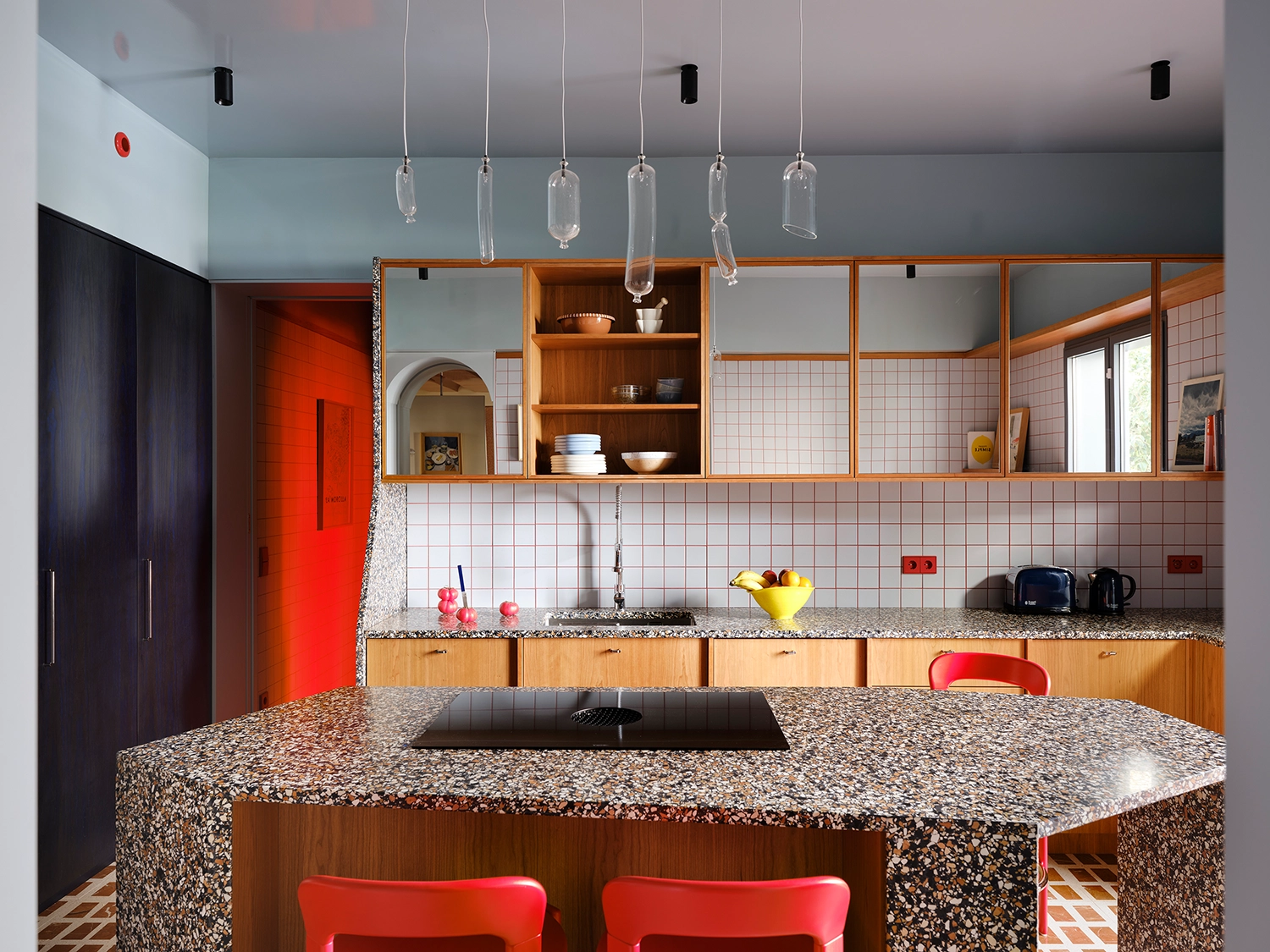
Material alchemy defines the kitchen, where the palette departs from predictable wood choices. Instead of standard oak, Plutarco experimented with reddish cherry wood and dark blue-stained pine, a contemporary Danish material that challenges traditional aesthetics. This is paired with a custom-made terrazzo island and blue tiles finished with contrasting red grouting. This “Unexpected Red” serves as a recurring punctuation mark throughout the home, adding a sharp, rhythmic vitality to the otherwise serene, sky-blue atmosphere of the common areas.
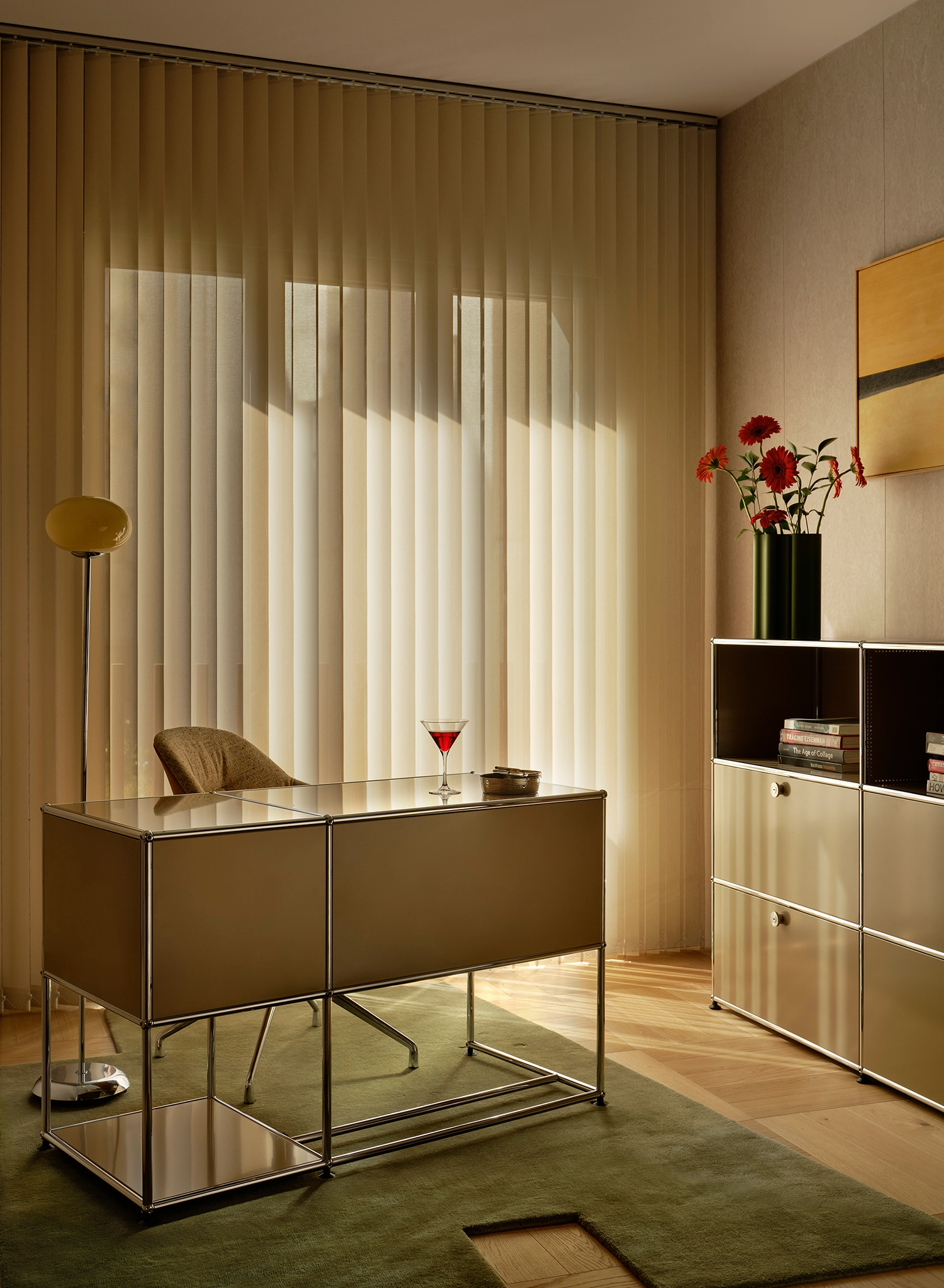
Sensory versatility through kinetic elements transforms the atmosphere of the main living space. A movable screen, finished in tile on one side and mirror on the other, allows the inhabitants to toggle between a textured architectural backdrop and a reflective surface that doubles the perceived space. Hidden behind this mechanism is a vibrant piece by artist Xevi Sola, adding a layer of contemporary art that surprises the viewer. The furniture further anchors the room’s human-centric focus, particularly the deep, oversized STV sofa designed for communal film nights.
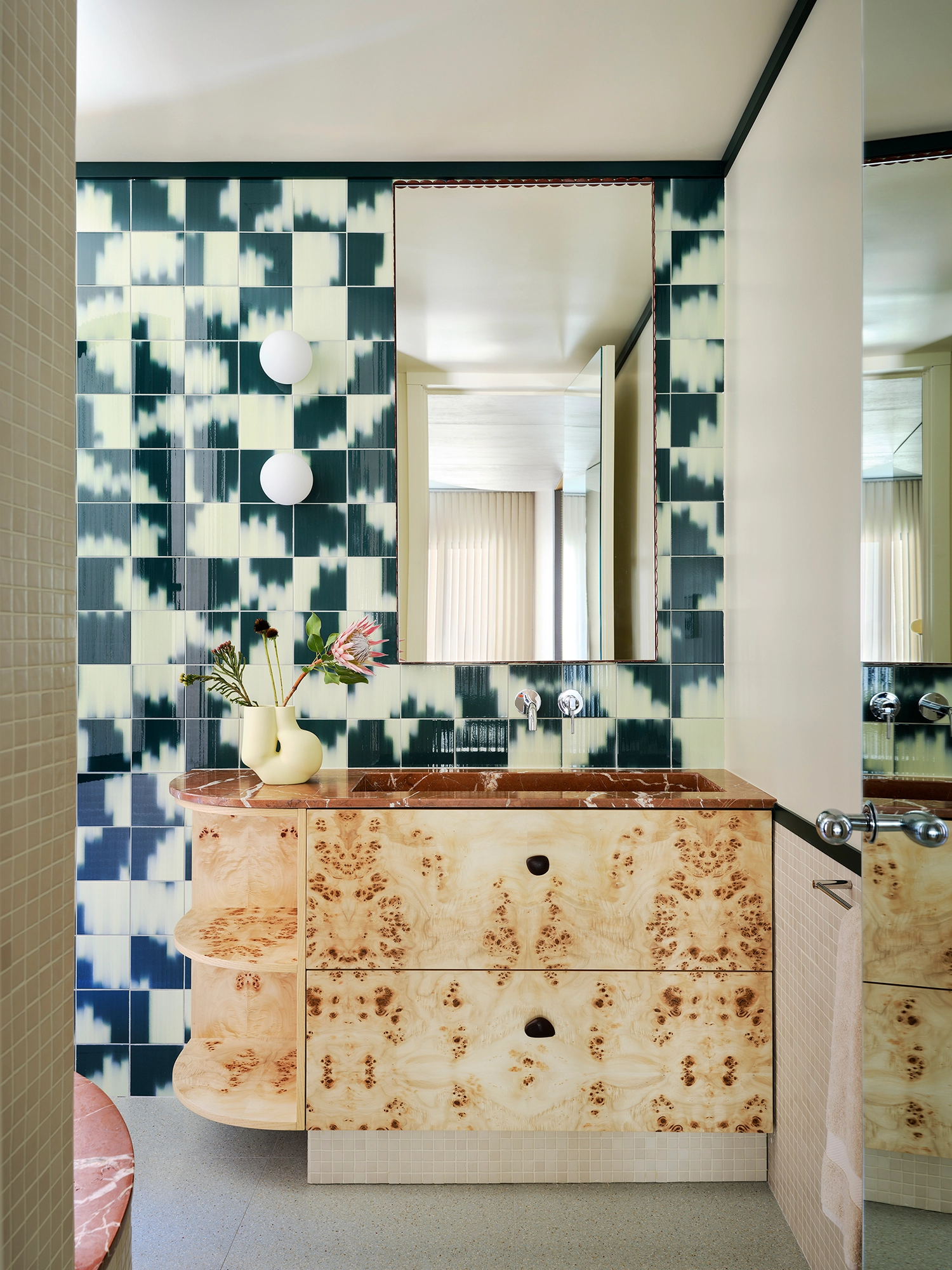
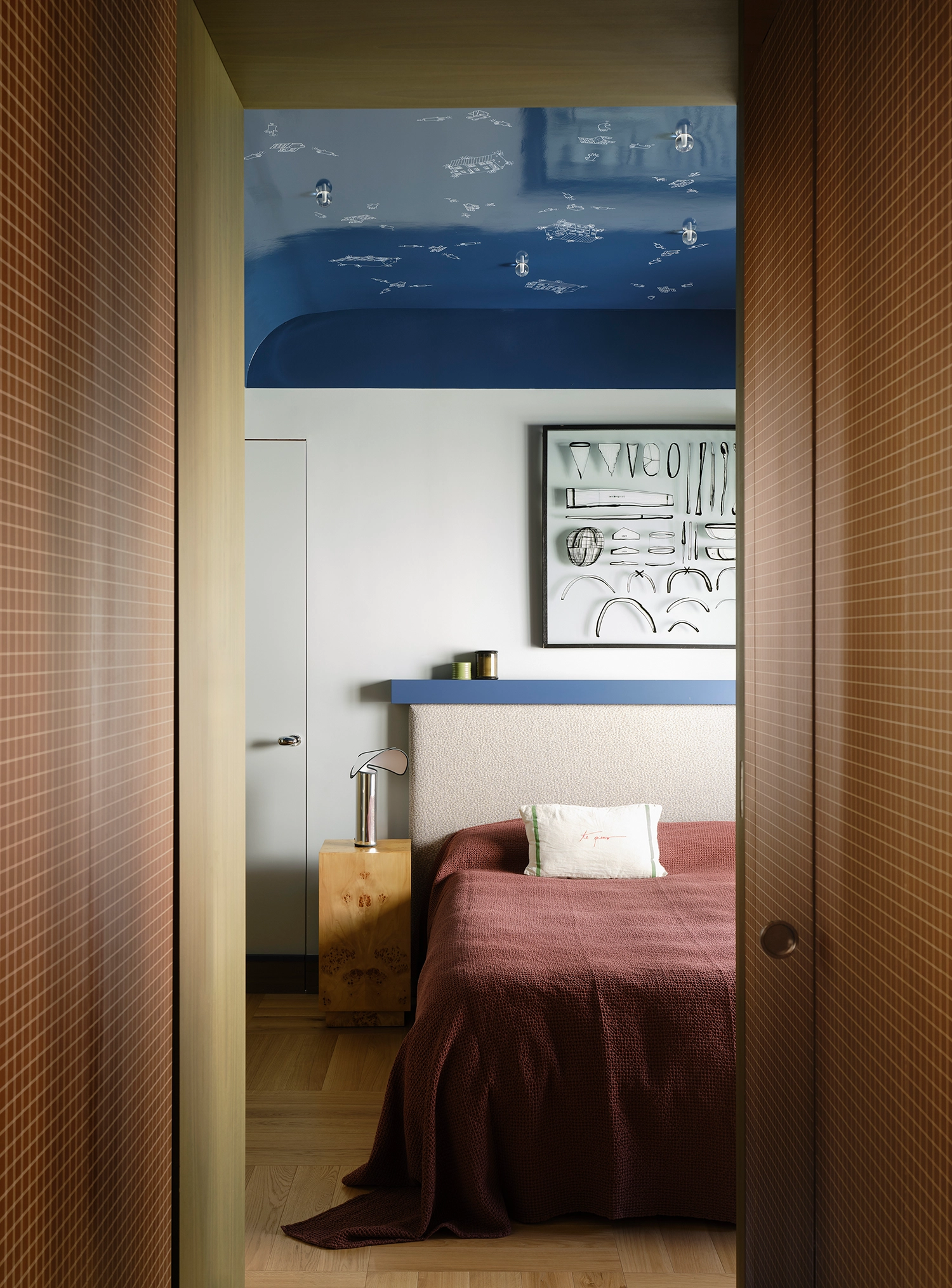
The private quarters as a celestial retreat occupy the upper floor, where the design language shifts toward intimacy and soft geometry. In the master bedroom, a midnight blue vaulted ceiling creates a protective, nocturnal embrace, featuring hand-painted constellations and integrated bulbs that mimic a starry sky. The transition to the bathroom is softened by curved glass blocks and green-stained wood, avoiding aggressive angles in favor of a circulatory flow that feels organic and temple-like.
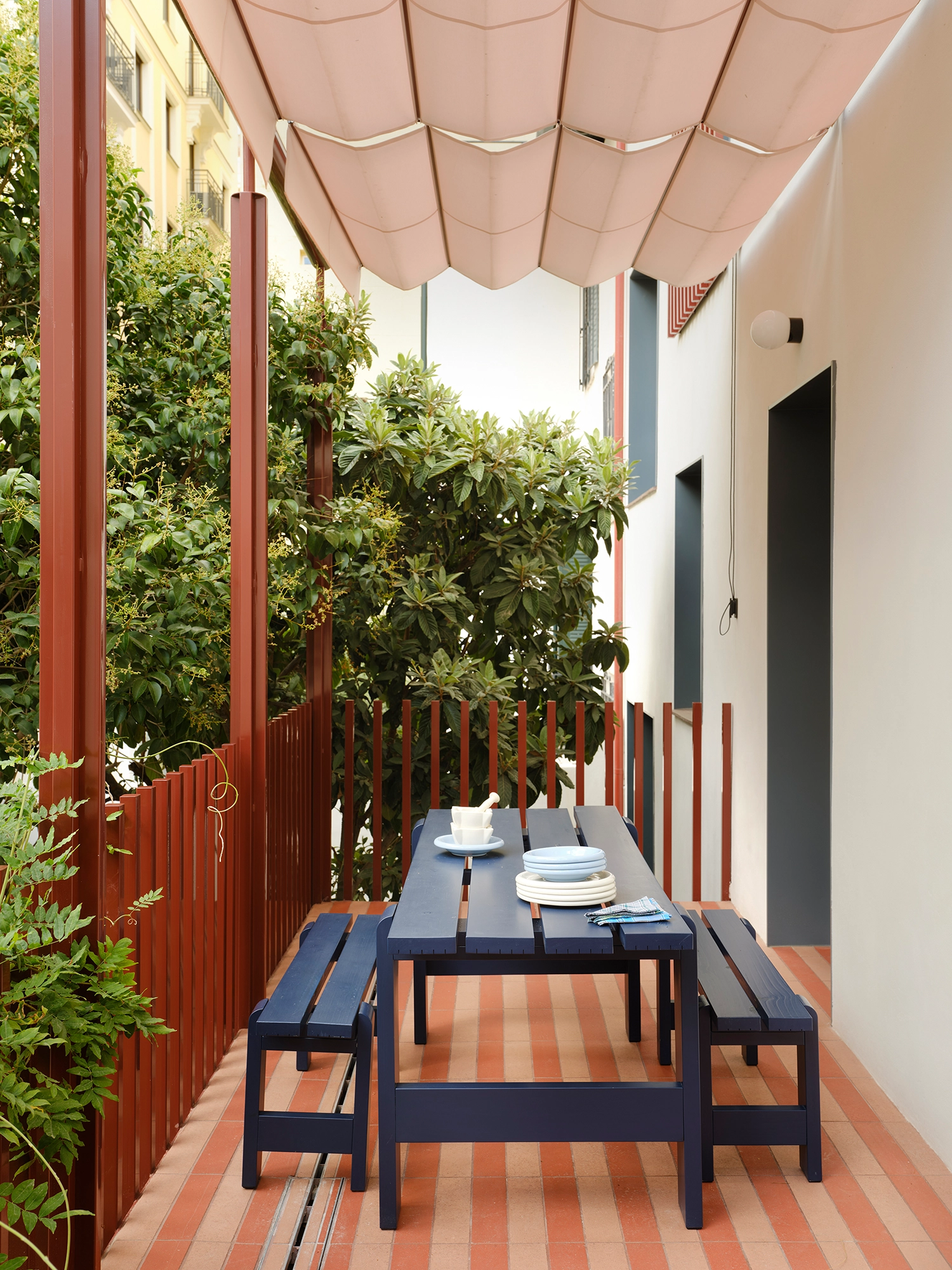
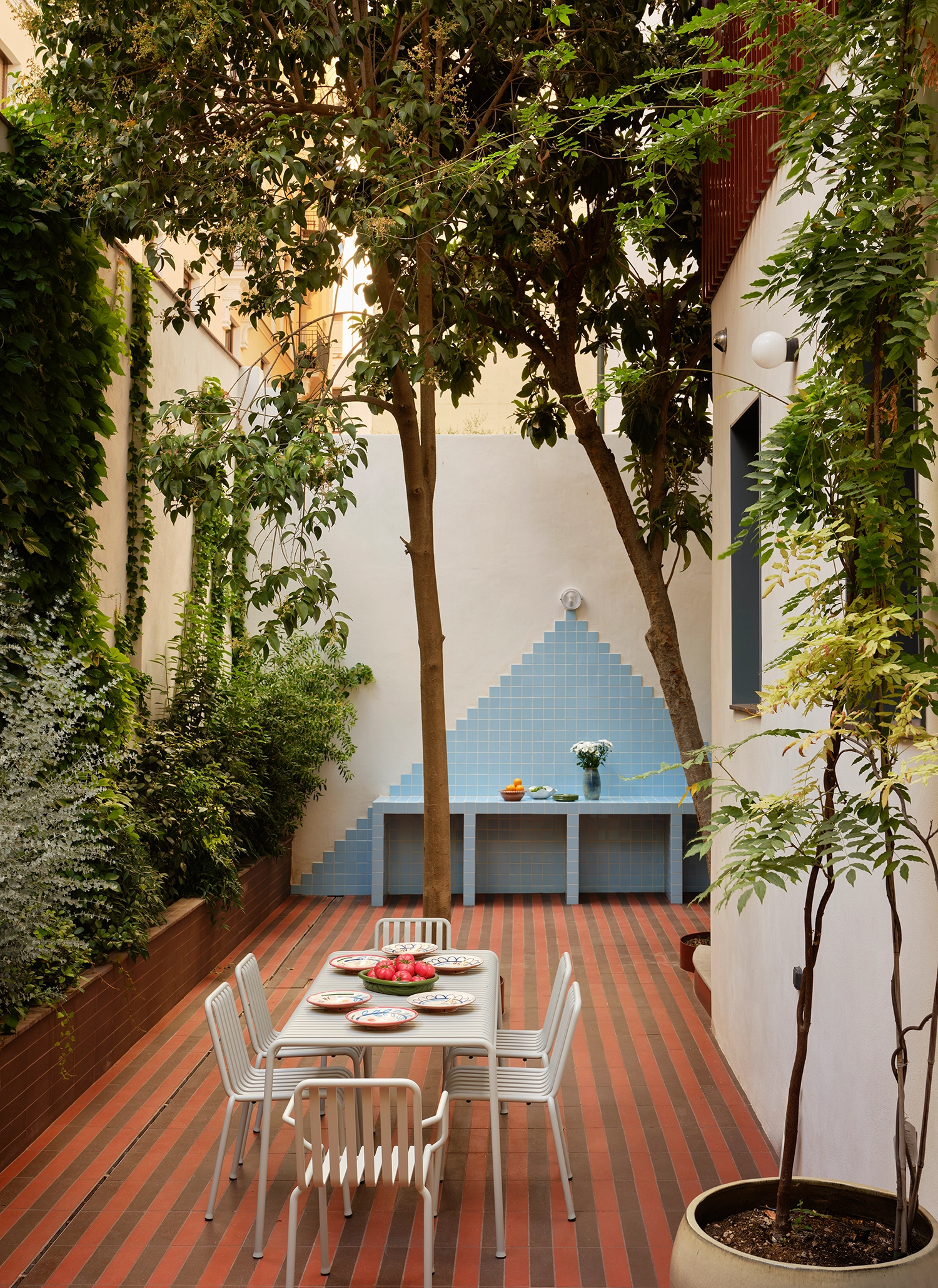
A climatic oasis in the urban garden provides a final, refreshing layer to the project. The outdoor space is a celebration of “recreational socialising,” featuring a green-tiled swimming pool and a striped tile floor that feels decidedly Mediterranean. By planting Virginia creeper along the boundary walls, the studio has ensured the house will continue to evolve; the foliage will turn a fiery red in autumn and provide a lush, natural cooling screen in the summer. This commitment to seasonal change reflects a home that is alive, breathing alongside its occupants.
Madrid’s refusal to surrender to globalized monotony is perhaps the most significant takeaway from PDLL70 House. While the world tilts toward standardized minimalism, projects like this demonstrate a fierce commitment to unique architectural identity. This bold character is echoed across the city, from the kinetic interventions of Casa Charca Verdeto the warm wood-centric textures of Casa Eme. Whether it is the atmospheric mastery of Corrigan Estudio or the vibrant spatial organization of Midori Arquitectura, Madrid’s current scene proves that true innovation lies in the courage to be specific, local, and unapologetically expressive.