



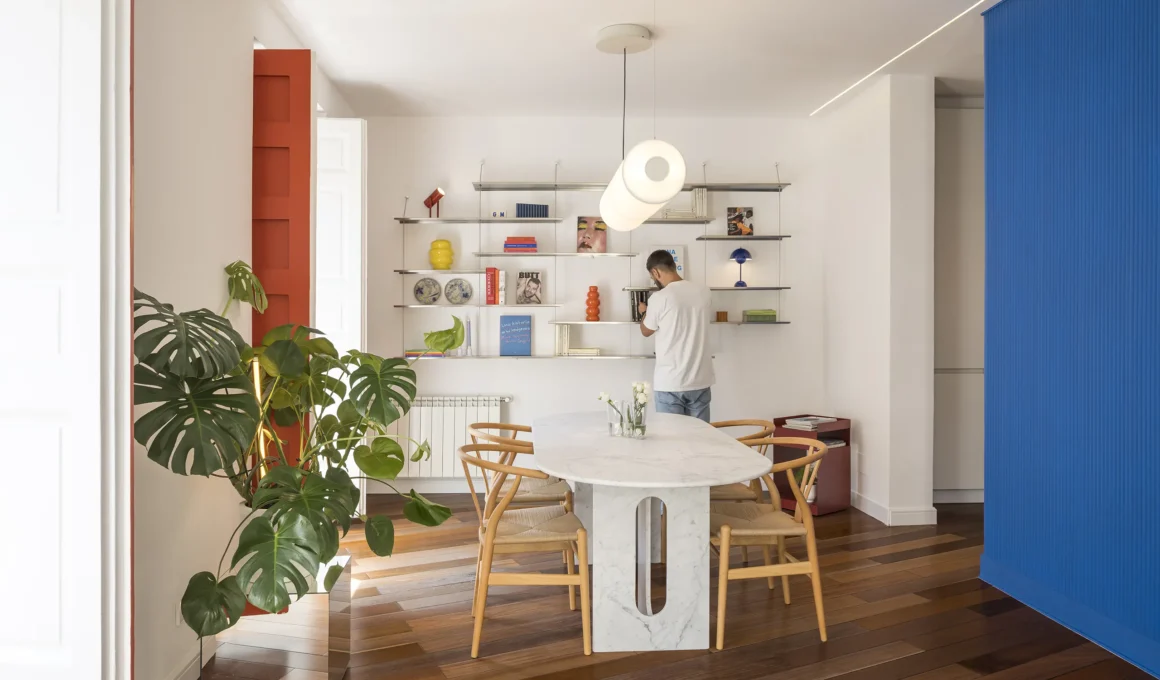
In the dense labyrinth of streets that defines central Madrid, Spain, where the Baroque geometry of the 17th century meets the frenetic pulse of a modern capital, casa EME emerges as a quiet revolution of preservation. Designed by the local studio gon architects, the project draws inspiration from Augusto Monterroso’s famous one-line micro-story: “When he woke up, the dinosaur was still there.” For the owner, Manuel, the “dinosaur” was the apartment itself—a space that felt strangely familiar, as if his future domestic life was already etched into its irregular, bow-tie-shaped floor plan.
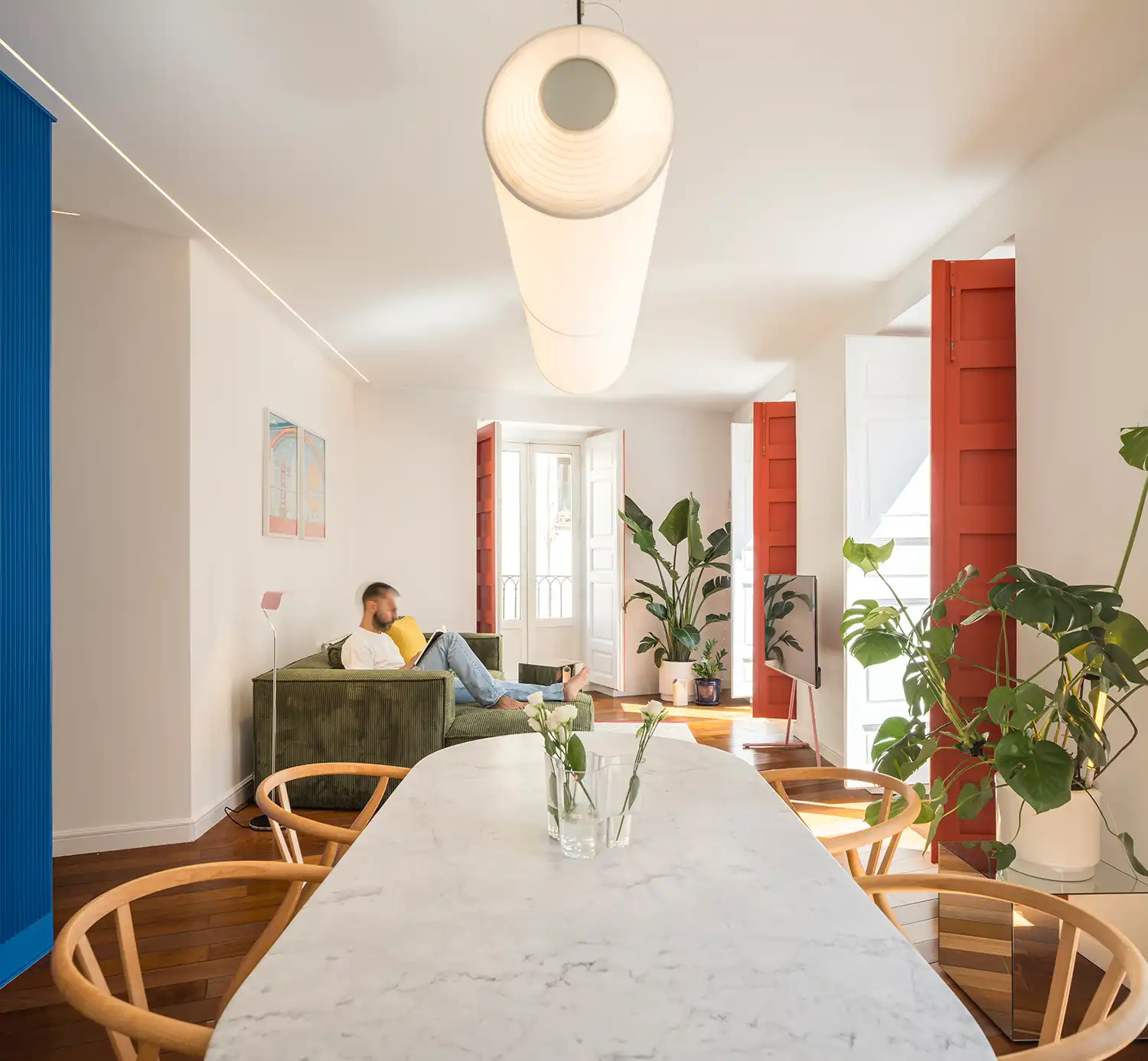
A sensory anchor in the Madrid de los Austrias. The apartment sits as a domestic watchtower overlooking the historic skyline of the Madrid de los Austrias, with views stretching toward the Plaza Mayor and the Collegiate Church of San Isidro el Real. This connection to the urban fabric is not merely visual; the five large windows of the living room act as frames for a city deeply rooted in traditional identity, bringing the stone and history of Madrid directly into the living space.
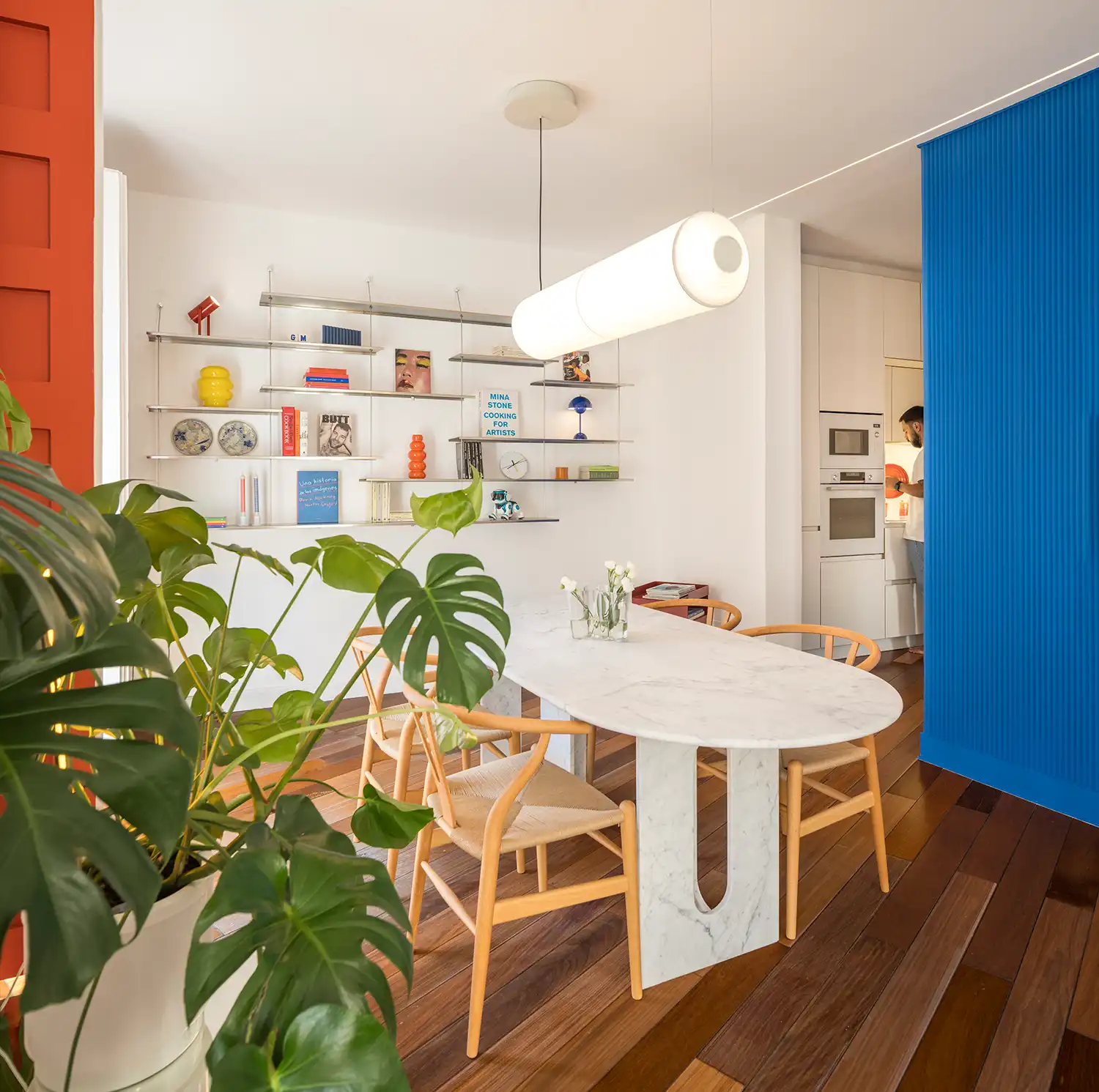
The legacy of the IPE wood floor. Before the intervention, the 108-square-meter space was a fragmented puzzle of five rooms and six balconies, unified only by a continuous, multi-toned floor of solid tropical IPE wood. While the original layout lacked a clear spatial logic, the flooring acted as a “material memory.” Gon architects chose to treat this weathered wood not as a surface to be replaced, but as a foundational element that dictates the rhythm of the new home.
Reconfiguring the domestic topography. To resolve the previous lack of coherence, the studio implemented a “game of sliding pieces,” shifting functions across the plan to eliminate redundant corridors. This approach to maximizing efficiency in complex urban footprints is a signature of the firm, reminiscent of their work on this modern Madrid attic renovation, where spatial constraints are transformed into opportunities for fluid movement.
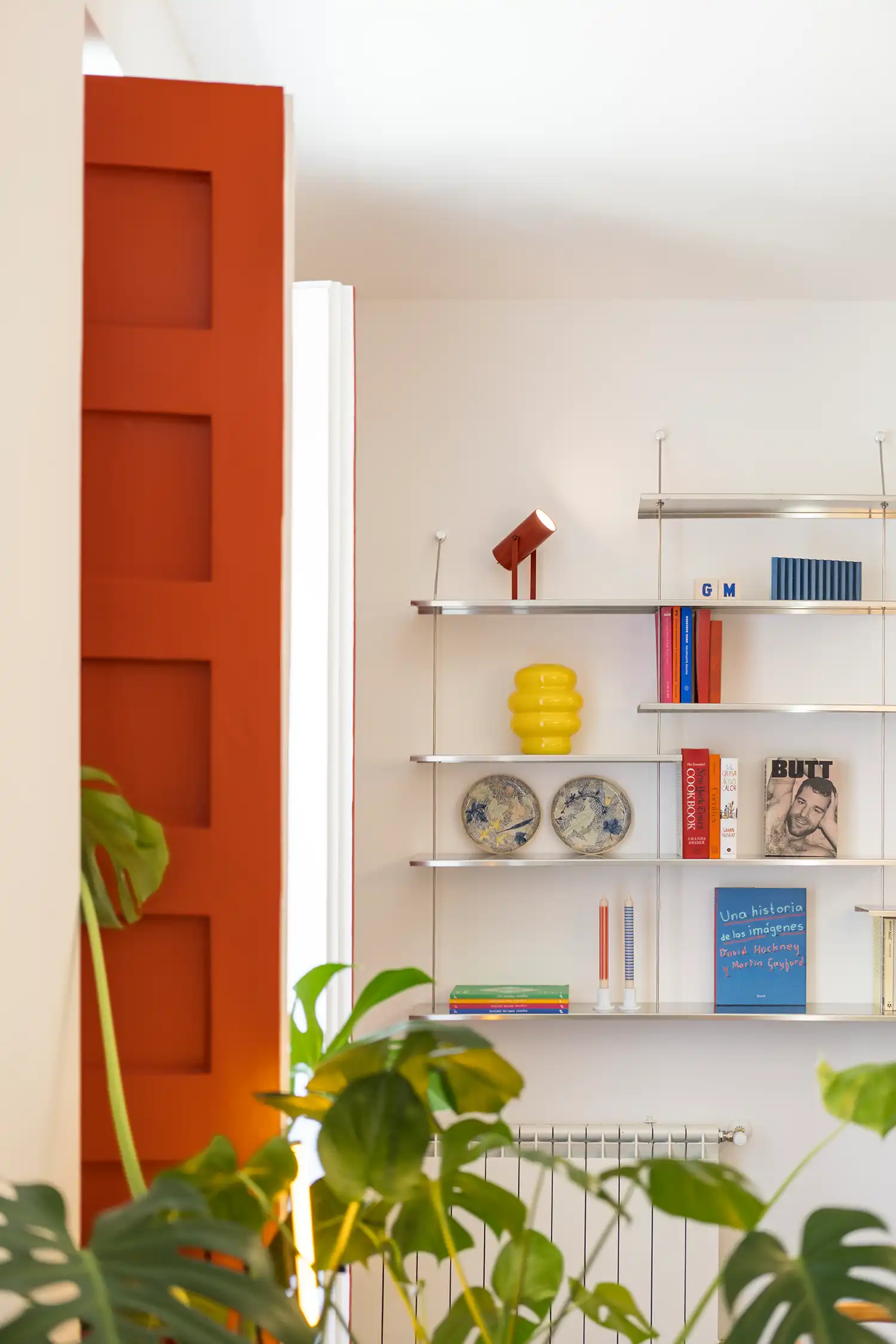
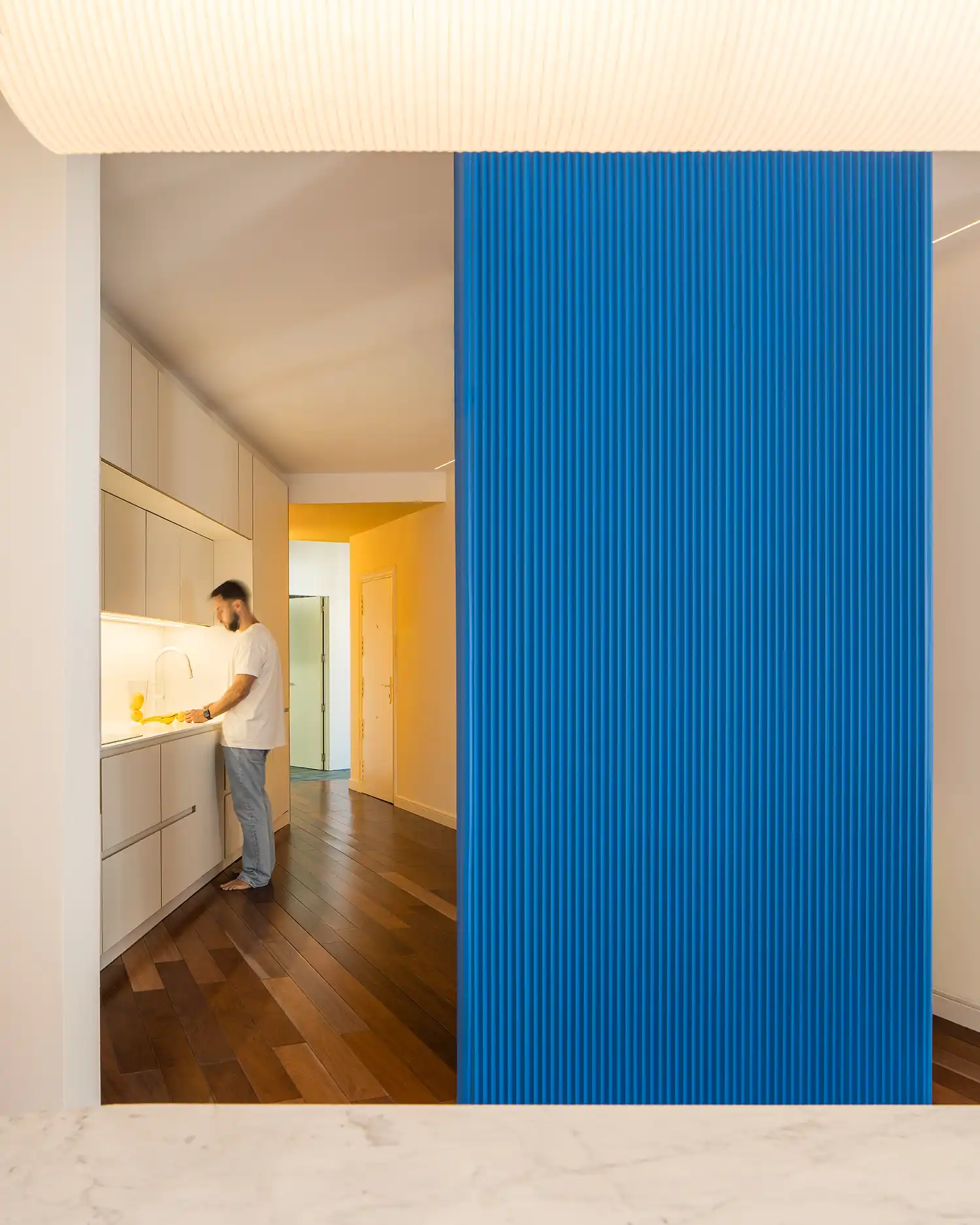
The kitchen as a social hearth. At the core of the residence lies the kitchen, reimagined as a vibrant social engine. No longer hidden at the back of the house, it serves as the primary meeting point for Manuel and his guests. This central hub is where the domestic ritual of cooking—specifically Manuel’s specialty beef ragu lasagna—becomes the spatial anchor of the entire renovation, turning a utility area into a stage for hospitality.
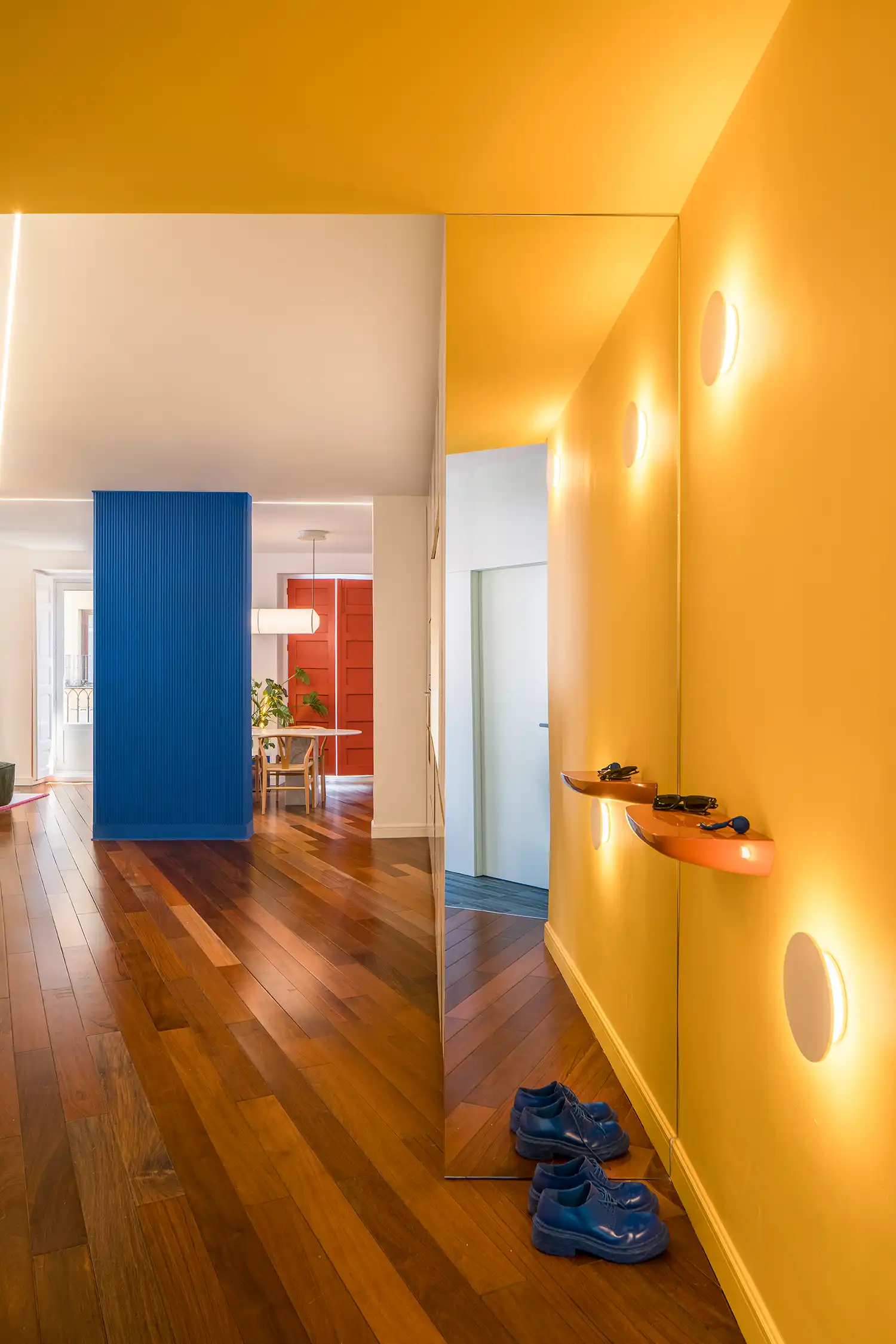
Chromatic thresholds and sensory transitions. The transition to this public heart is marked by a deliberate compression of space at the entrance—painted a bold yellow to signal the shift from the city to the interior. This strategic use of color to define functional zones reflects the bold aesthetic seen in other vibrant Madrid apartment interiors by the same architects, where chromatic intensity replaces physical partitions.
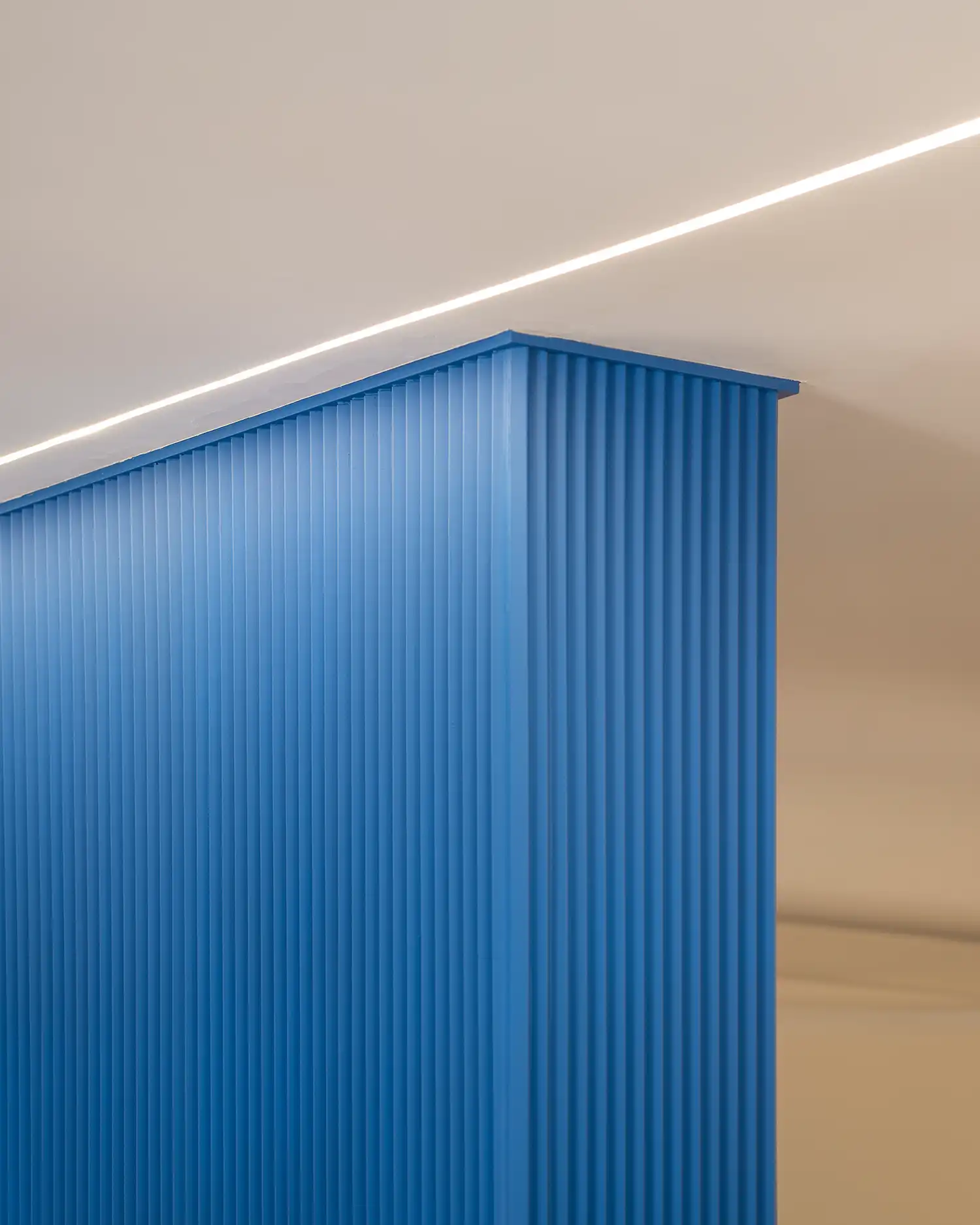
A landscape of scattered objects. Within the living and dining areas, the architecture recedes to allow a “landscape of objects” to take center stage. An electric-blue column, finished with a zigzag texture, provides both a visual anchor and improved acoustic performance, echoing the home’s irregular geometry. Furniture—from the sofa to the shelving—floats freely, encouraging an open-ended way of living that adapts to the user’s daily rhythm.
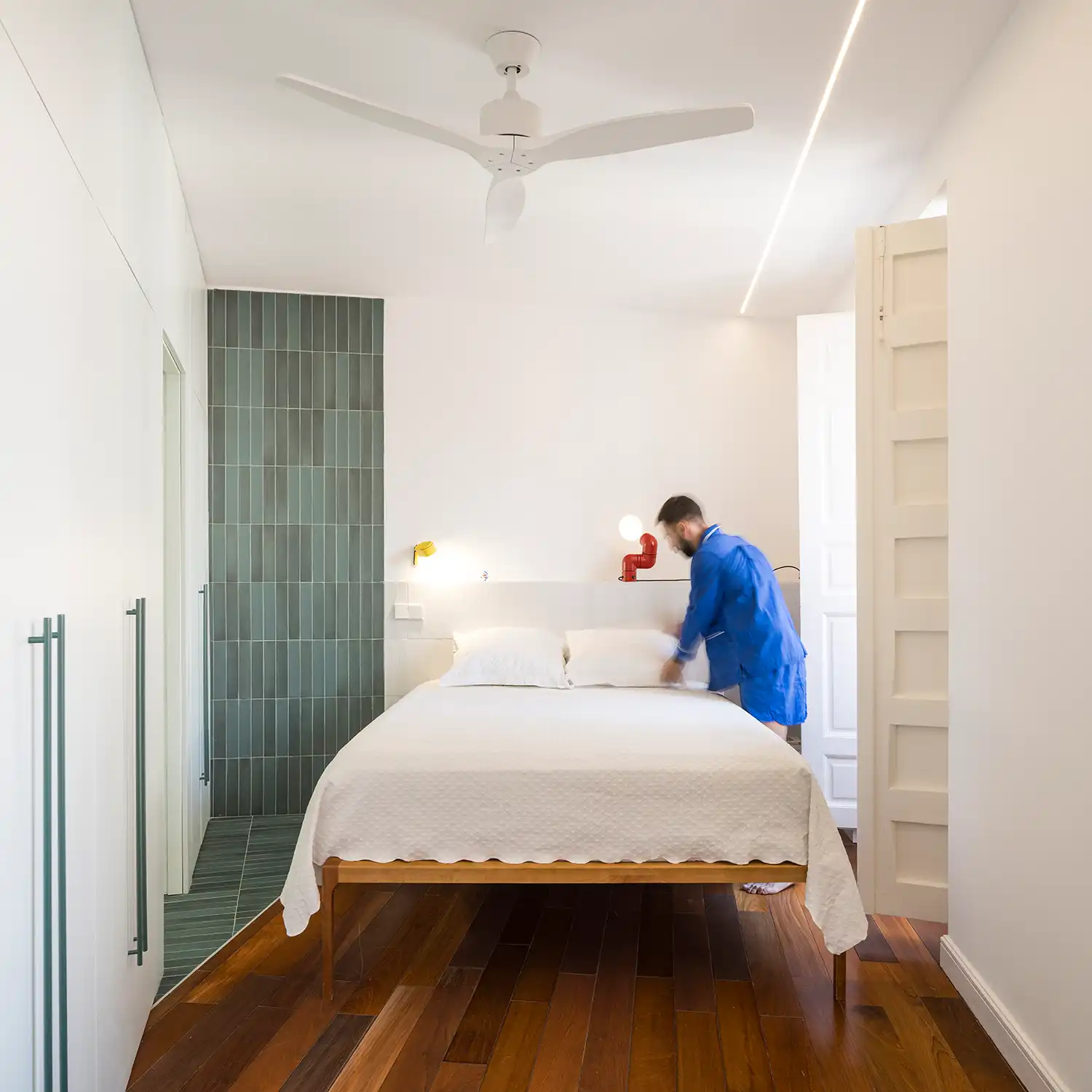
Private sanctuaries and green horizons. In the private quarters, the bedroom was liberated from its isolation and linked to the bathroom via a “cloud-green” pass-through volume. This interior space evokes an outdoor landscape through the use of greens in varying tones, creating a refreshing contrast to the warmth of the wooden floors. This philosophy of adaptable domesticity is a recurring theme in the studio’s portfolio, notably in projects like Casa Flix, which similarly challenges rigid hierarchies.
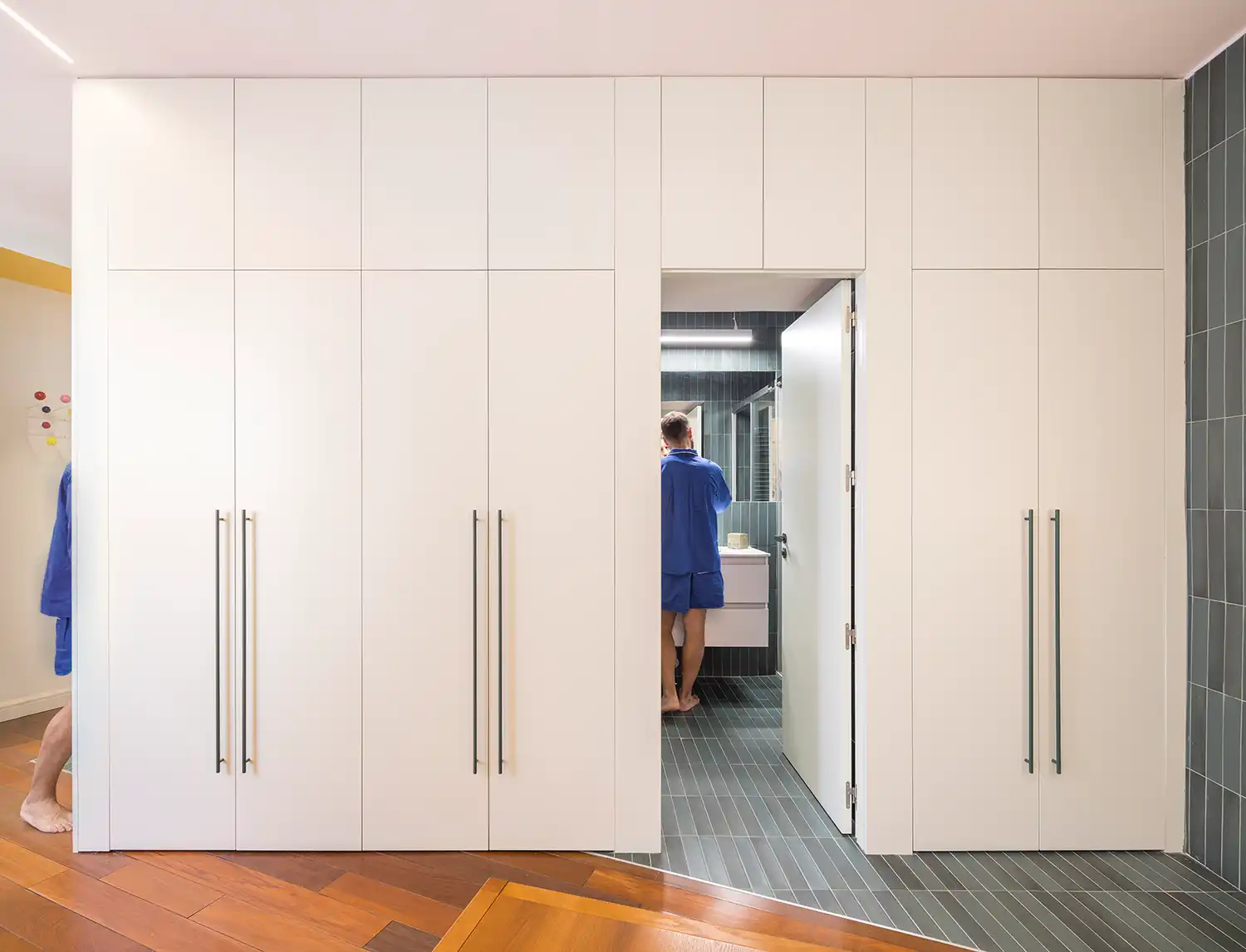
Material archaeology and the ceramic trace. One of the most poetic details of casa EME is the preservation of the “ceramic trace.” Instead of concealing where the old bathroom once stood, the architects left a footprint in the floor, emphasizing the passage of time and the memory embedded in the house. This dialogue between the original IPE wood and new materials like resin and metal constructs a hidden layer of domestic information that speaks to both history and modernity.
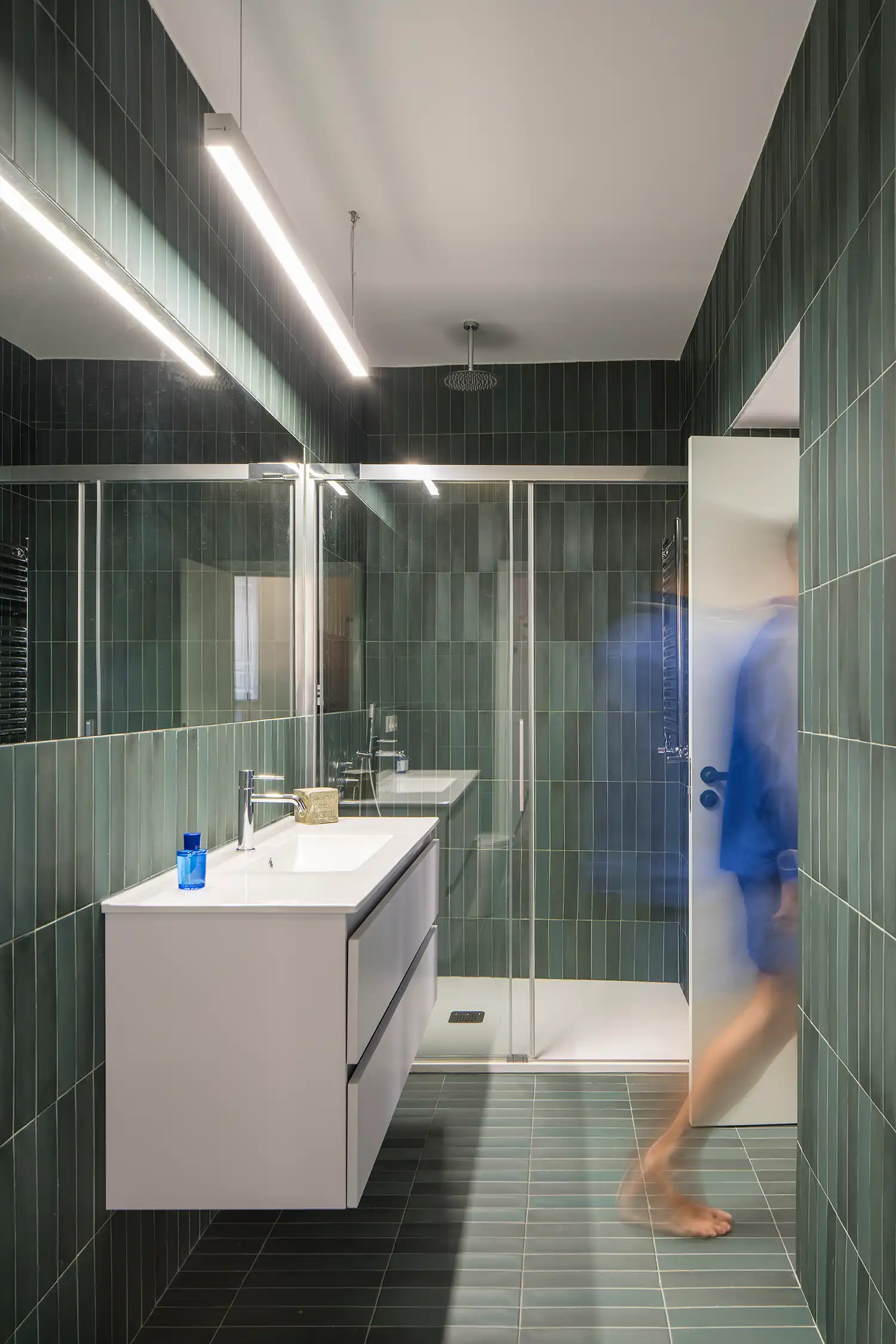
A celebration of intentional preservation. The final result is a sophisticated layering of textures that invites tactile exploration. By preserving the original floor with its “imperfect stability,” gon architects have created a space that feels deeply rooted in time. Much like their Ciel Apartment, casa EME demonstrates that the most powerful interventions are often those that listen to the existing soul of the building, proving that the most radical act is simply to awaken what was already there.