




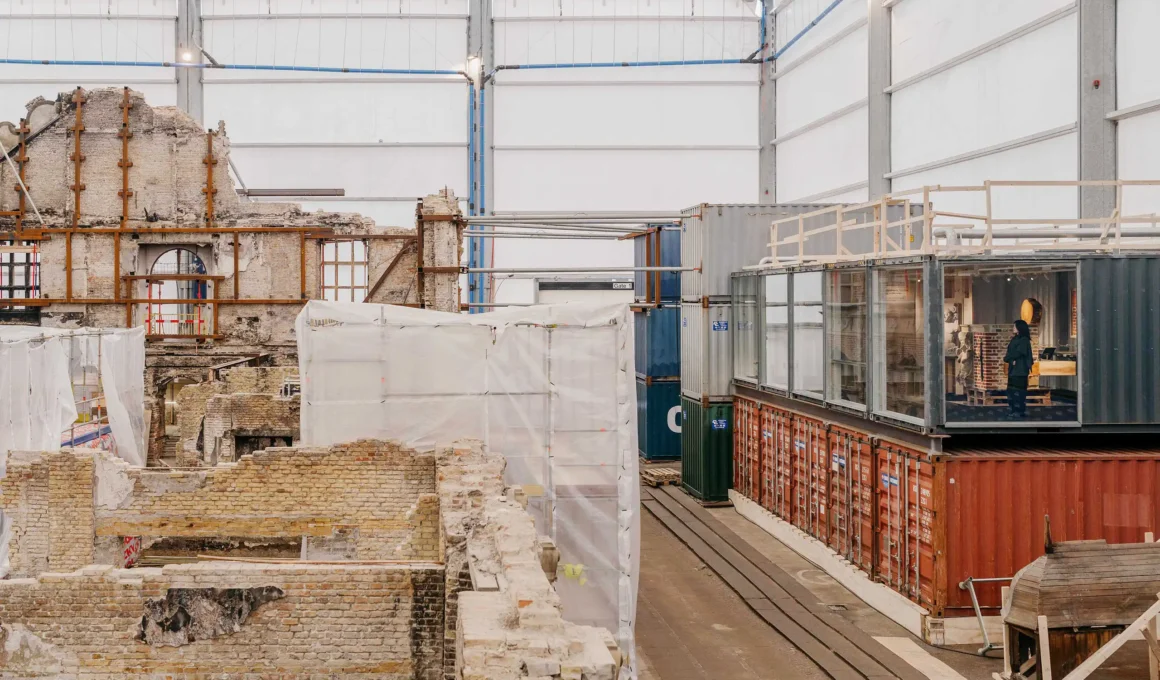
Within the fire-scarred perimeter of Copenhagen, JAC Studios has unveiled an immersive live exhibition that transforms the reconstruction of the historic stock exchange into a transparent public narrative, bridging seventeenth-century craftsmanship with a rigorous, contemporary industrial language.
A Living Archive of Reconstruction. Following the devastating fire that claimed the spire of the Old Stock Exchange, Dansk Erhverv has made the radical decision to invite the public into the active construction site. Unlike traditional museums that distance the visitor from the subject, this exhibition functions as a living archive. It allows an intimate view of the restoration process, where the building itself serves as the primary artifact. The project avoids the static nature of a retrospective, focusing instead on the kinetic energy of rebuilding and the specialists—from coppersmiths to sandstone sculptors—who are breathing life back into the masonry.
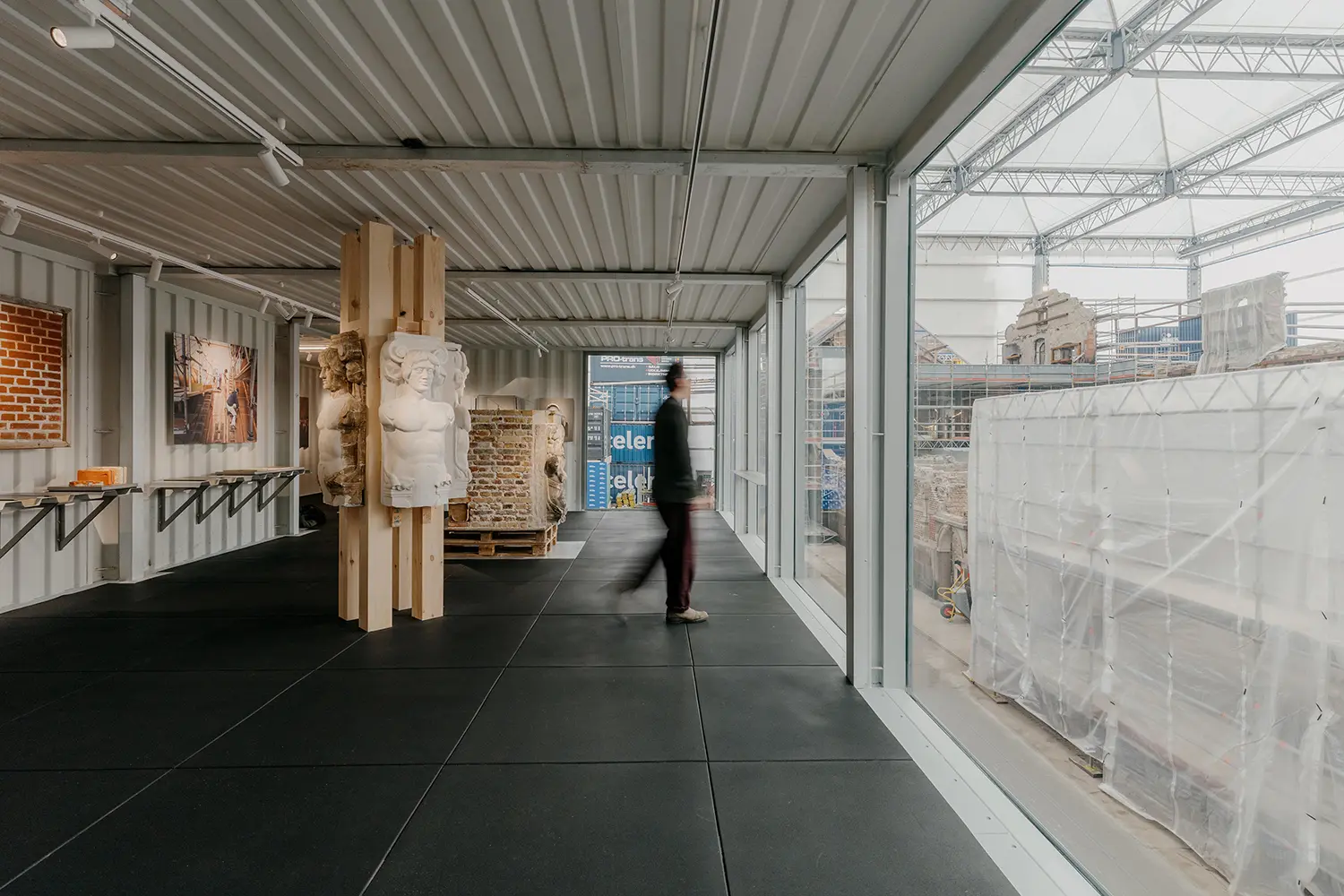
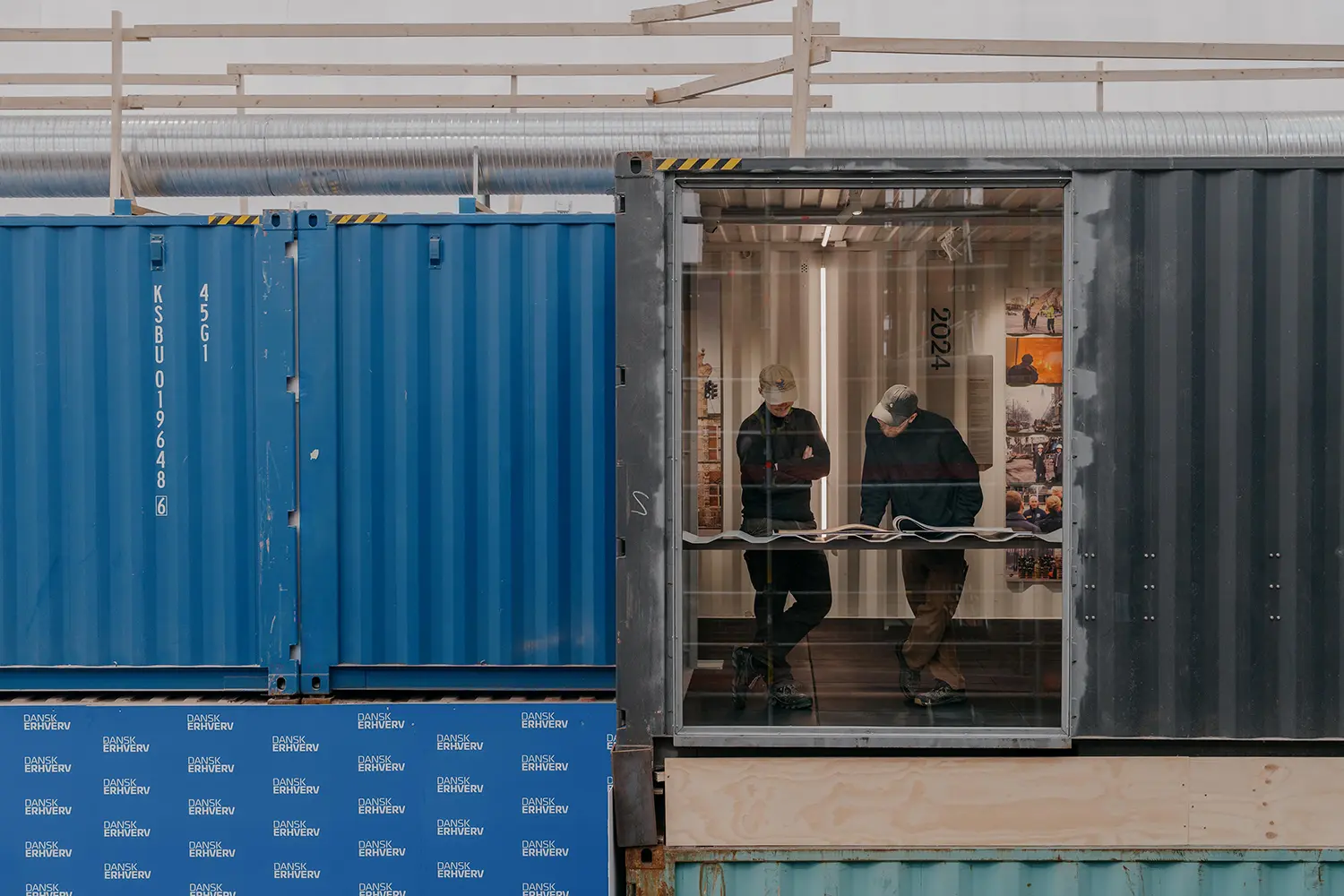
Industrial Framework and Spatial Strategy. The exhibition architecture is composed of 15 interconnected shipping containers elevated to the first-floor level. This modular approach provides a panoramic vantage point over the site, allowing visitors to witness the urban renewal in real-time. By utilizing these industrial vessels, JAC Studios creates a dialogue between the temporary nature of the construction phase and the permanent weight of the historic monument. The containers have been meticulously modified, with large apertures framing specific views of the scaffolding and the surviving façade, turning the act of rebuilding into a staged performance.
The Aesthetics of the Container. This strategic use of shipping containers to define a high-concept space recalls the recent Maison Margiela exhibition designed by OMA/AMO, where industrial modularity was used to dissect luxury and craft. Here, the aesthetic is equally rigorous but driven by the raw reality of the site. The steel cutouts from the container walls are not discarded; they remain exposed, serving as the very surfaces that support architectural models and technical drawings. This circularity in the exhibition’s own construction mirrors the broader philosophy of the Børsen project: that nothing of value should be wasted.
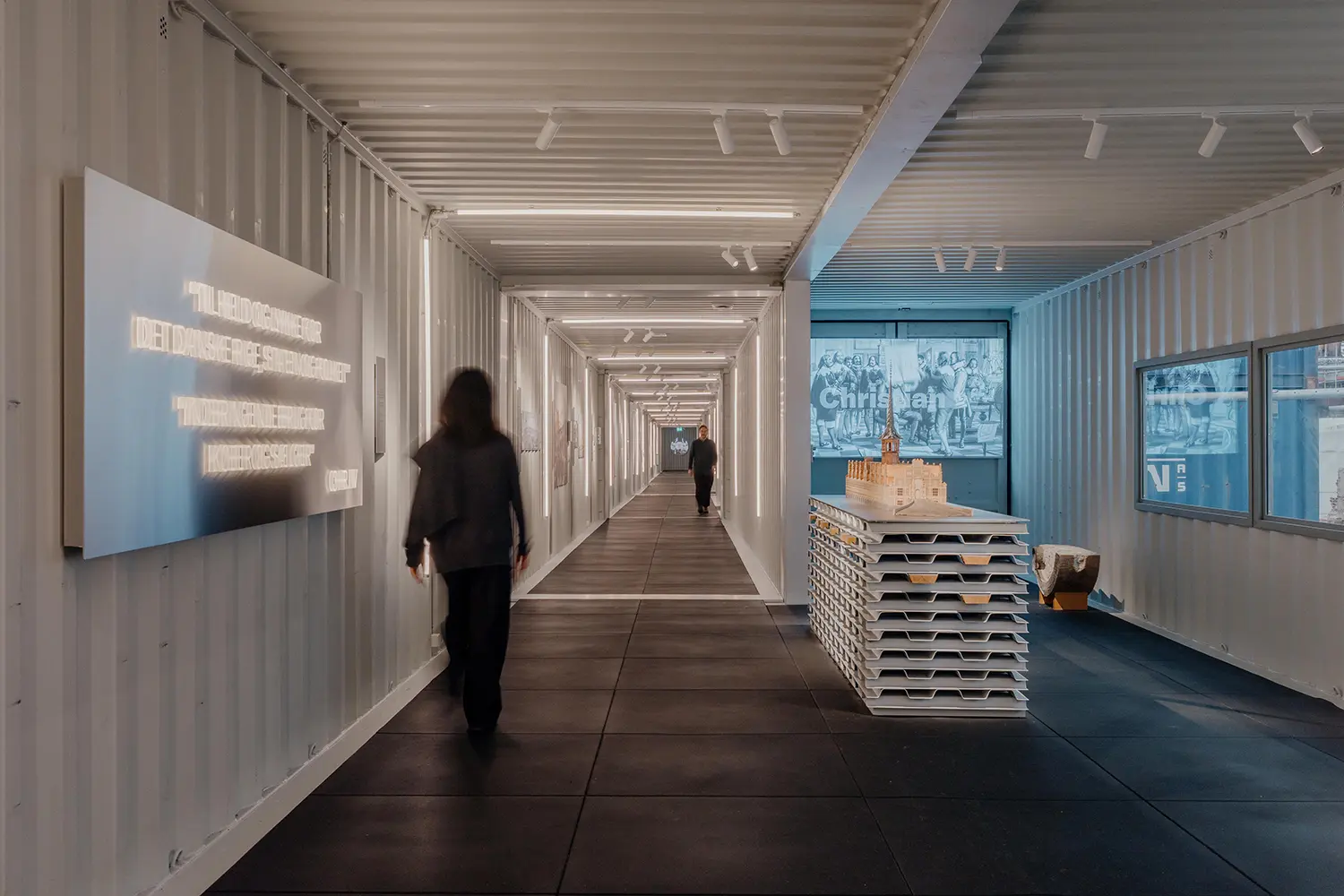
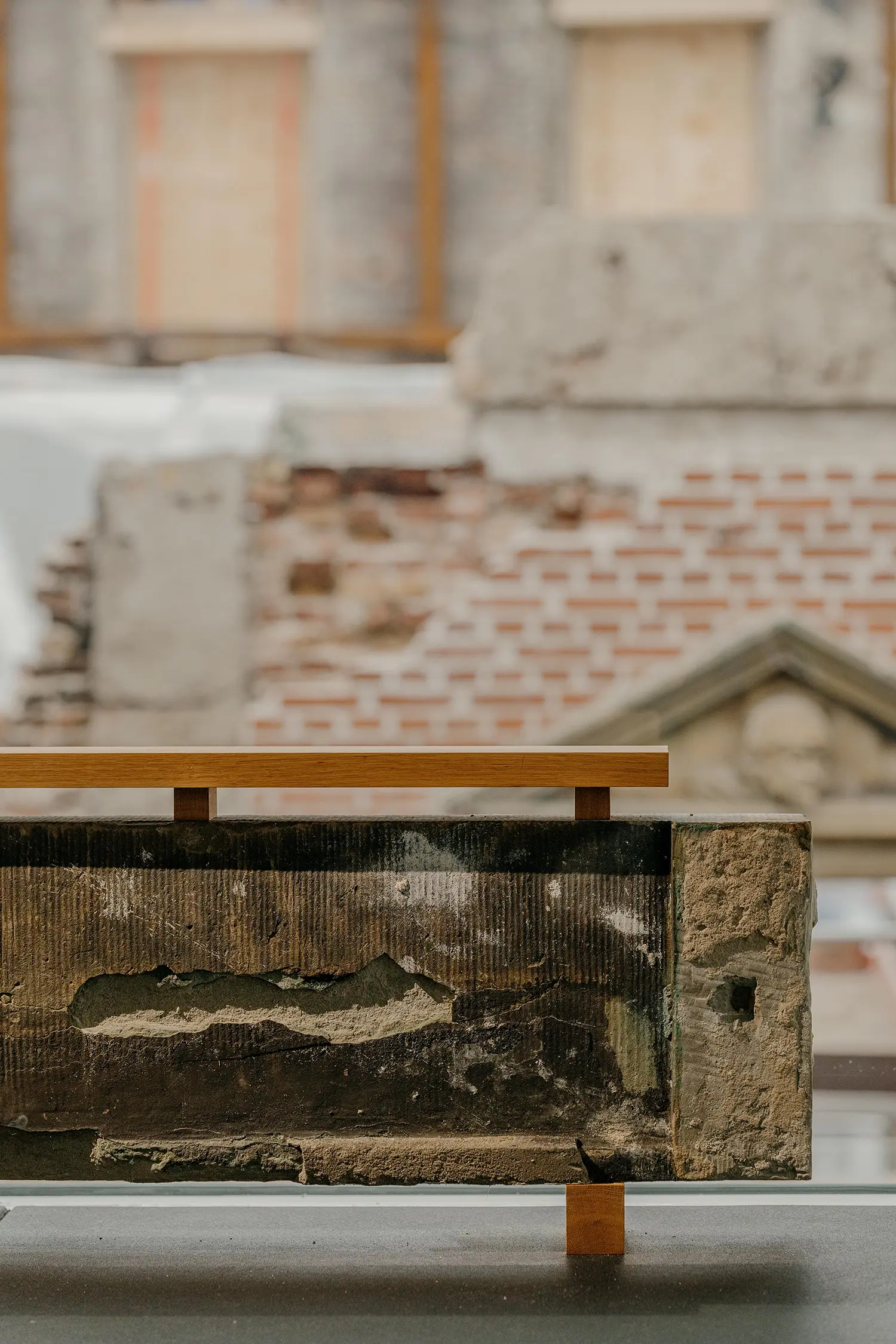
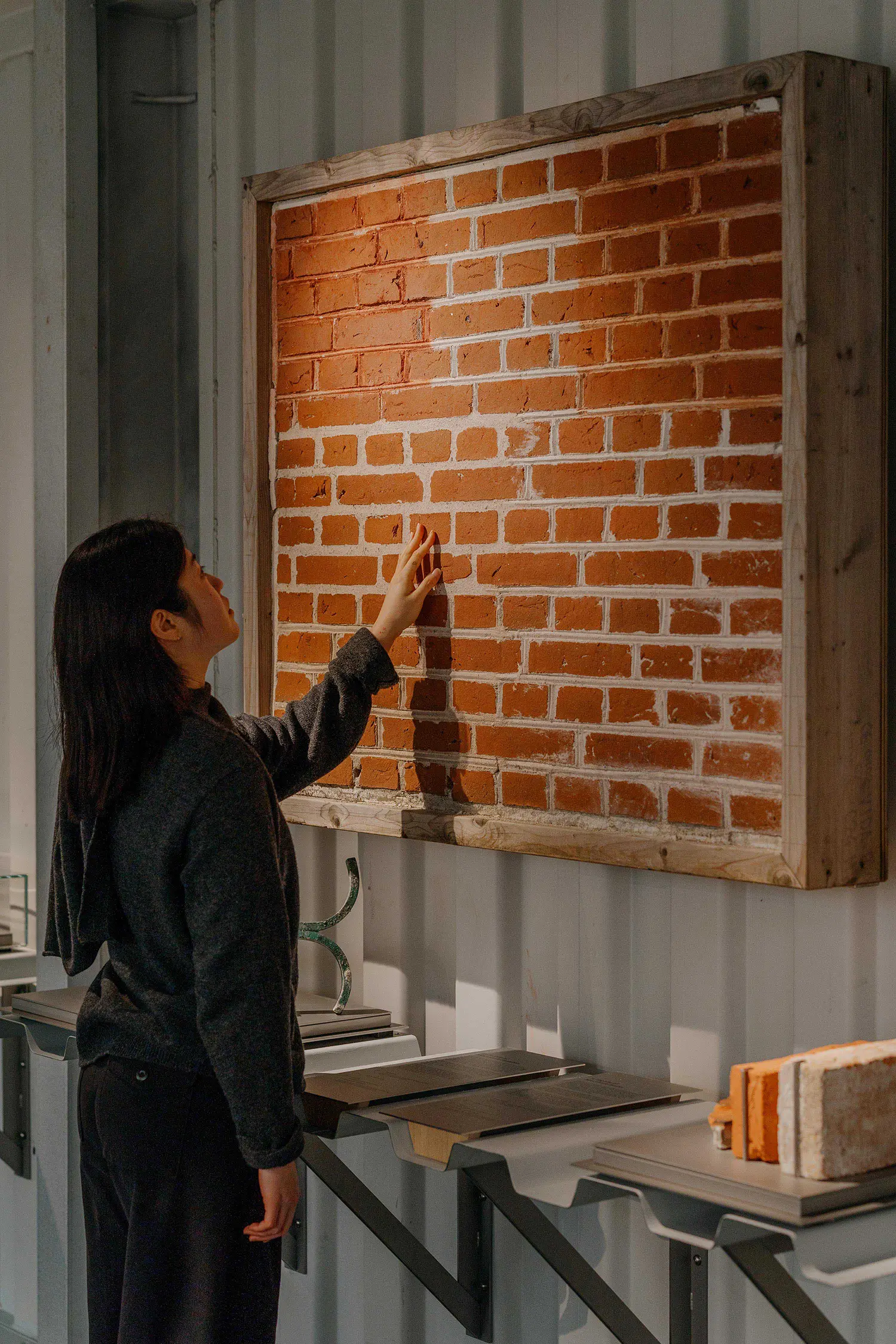
Materiality and Sensory Interaction. The interior of the exhibition is a tactile study of historical materiality. Visitors are encouraged to touch the 40 percent of original bricks that were salvaged and cleaned for reuse, feeling the grit and history in the clay. Bespoke furniture pieces incorporate fragments of charred sandstone recovered from the debris, combined with solid oak elements that reference the building’s original warmth. These seating areas allow for a physical encounter with the cultural heritage, making the tragedy of the fire and the hope of the restoration tangible.
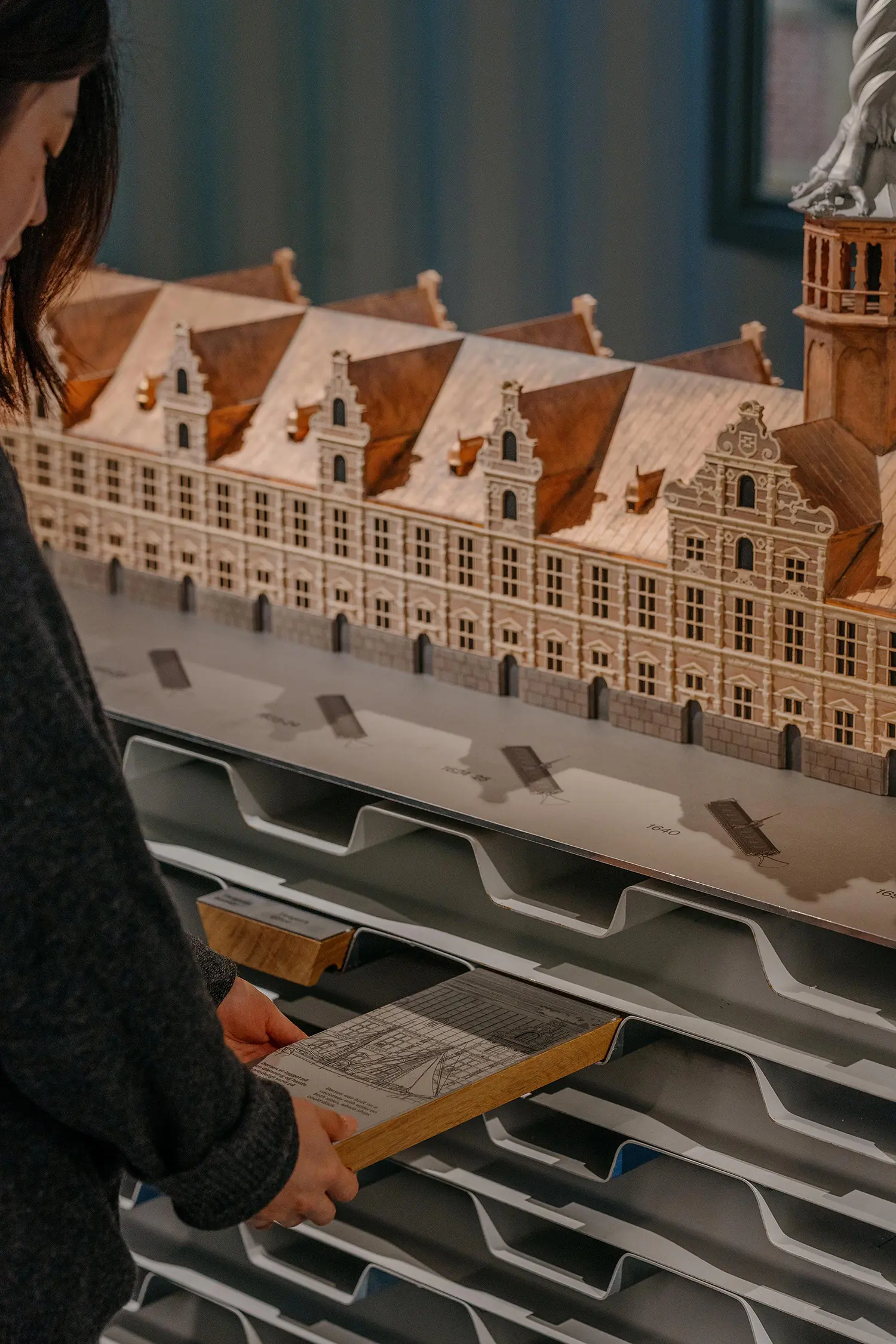
Narrative Embedded in Steel. Inside the containers, the storytelling is remarkably tactile. A 1:70 scale model of Børsen sits atop corrugated steel plates, which have been fitted with solid timber drawers. This design choice forces a deliberate interaction; visitors must pull out these drawers to discover archival blueprints and hidden narratives. It is a slow revelation of the building’s soul, moving away from digital screens in favor of a heavy, physical engagement with the architectural history of Copenhagen.
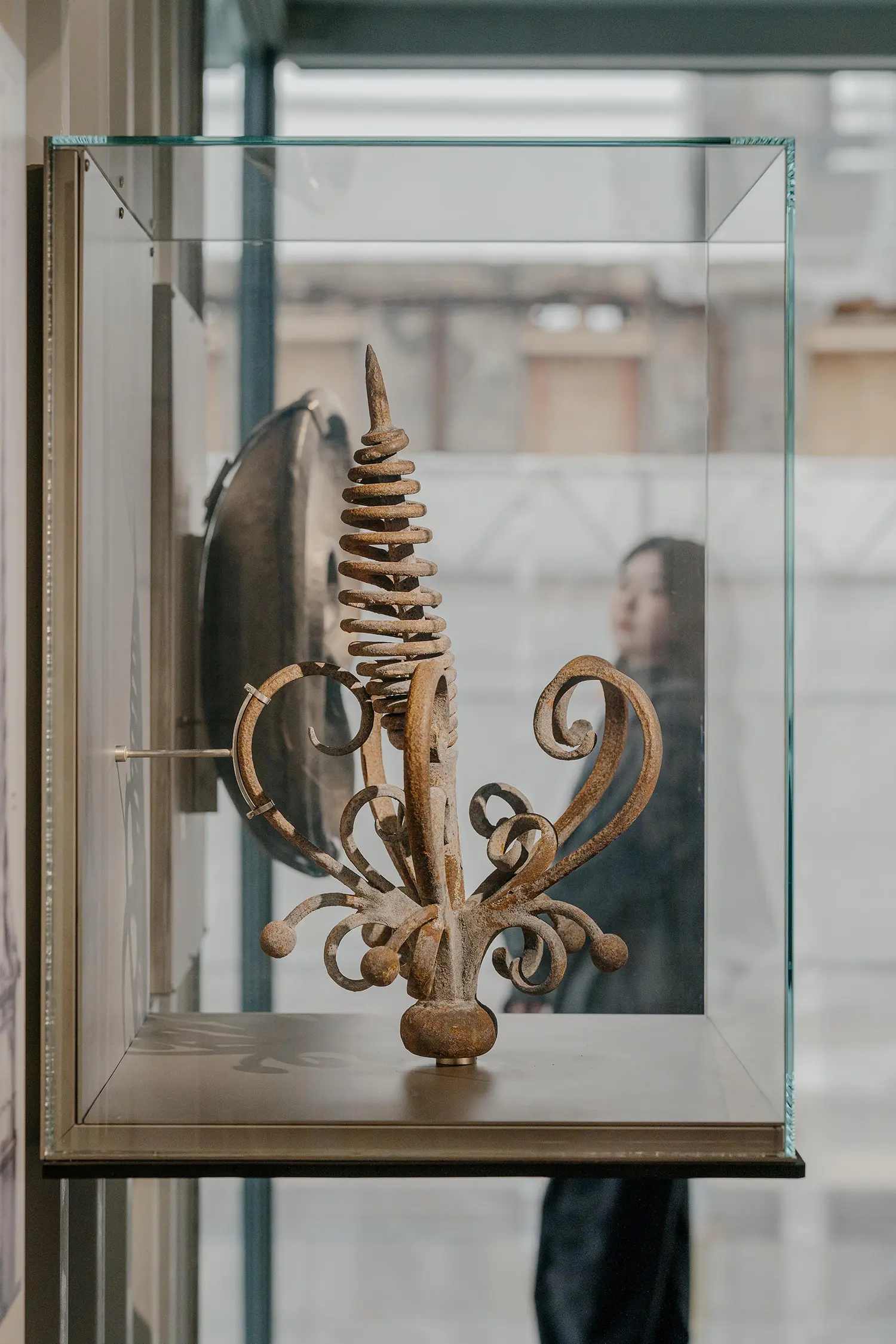
The Dragon’s Ear and Recovered Totems. Among the most moving elements on display is a salvaged ear from one of the iconic spiraling dragons that once adorned the spire. These objects, temporarily housed in the exhibition before their eventual reintegration into the building, serve as powerful symbols of resilience. The exhibition documents these fragments not just as debris, but as vital components of a jigsaw puzzle that the city is currently solving. The presence of these iron fittings and architectural fragments within the containers creates a sense of profound continuity.
Craftsmanship as Public Spectacle. The exhibition places a spotlight on the human element, highlighting the sandstone sculptors and coppersmiths whose artisanal expertise is central to the reconstruction. By showcasing the tools and the specific types of copper and timber required for the restoration, JAC Studios demystifies the technical complexity of the work. This visibility transforms the craftsmen from invisible laborers into the protagonists of the building’s next chapter, emphasizing the continuity of human skill across centuries.
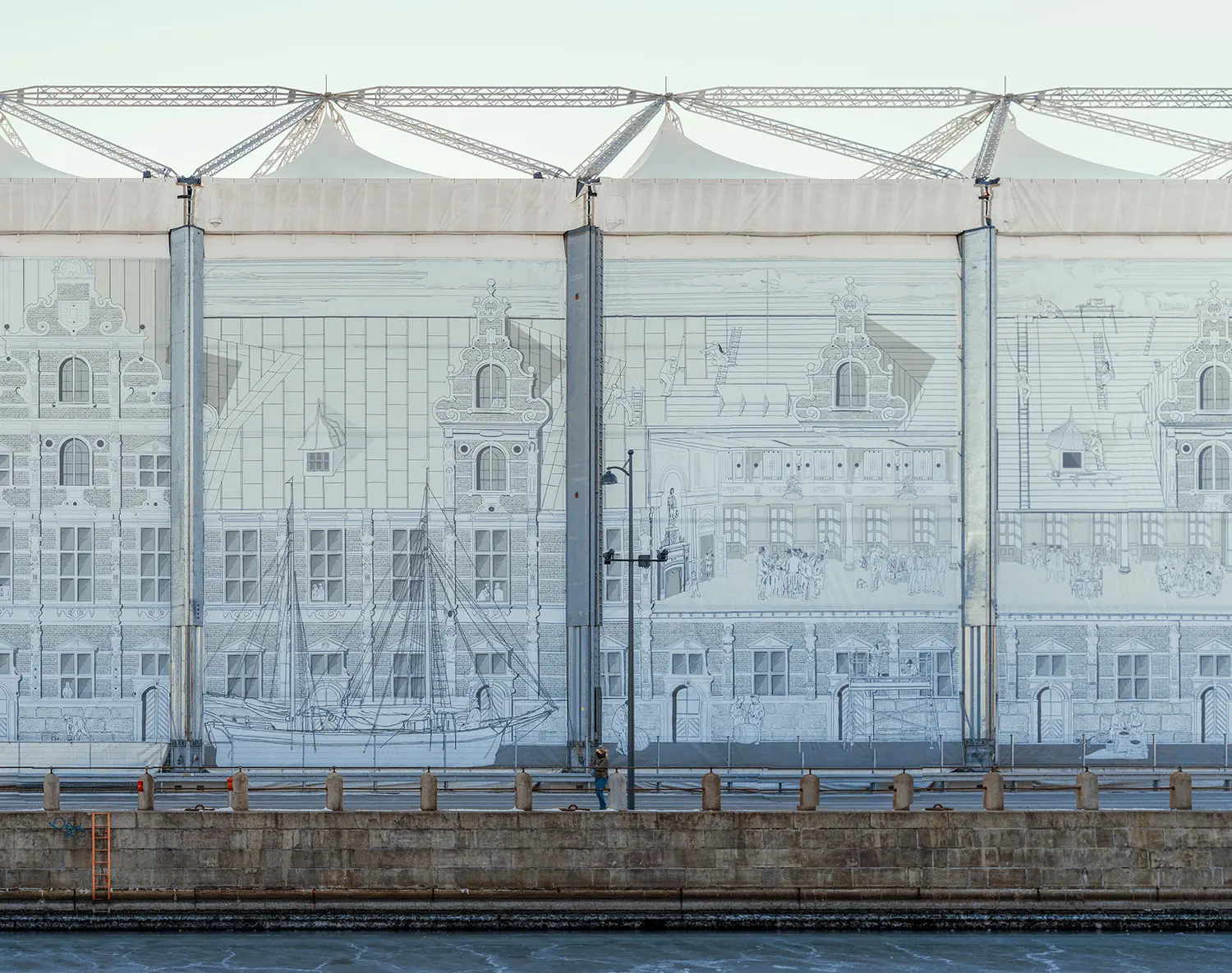
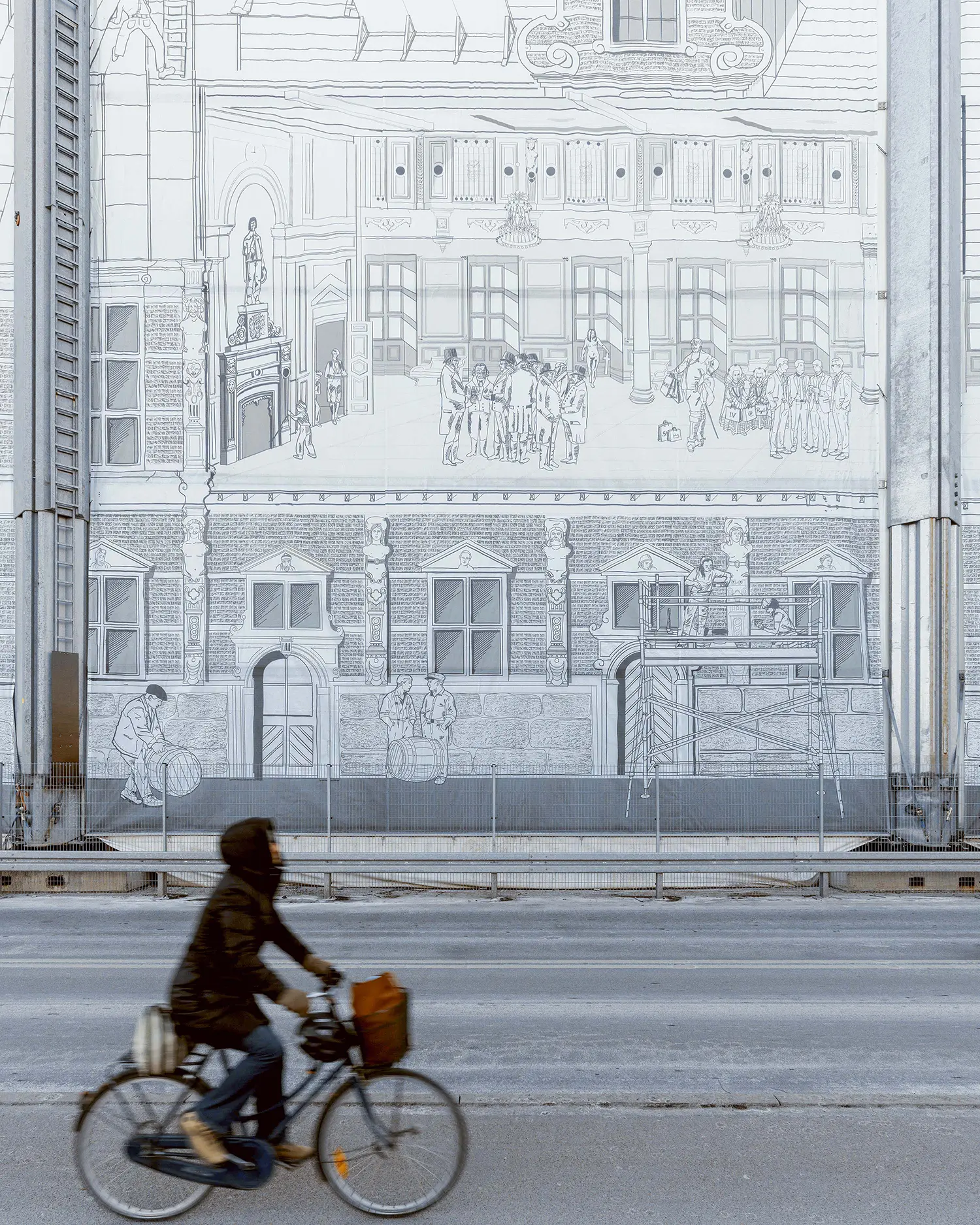
The Hand-Drawn Façade. Encapsulating the entire 130-meter site is a hand-drawn cover that acts as a section through Børsen’s timeline. This graphic skin incorporates textures taken directly from the building through brick frottages, creating a layered collage of the artisans, events, and materials that have defined the structure since the 1600s. It serves as a public-facing manifesto, signaling that the reconstruction is not just a technical necessity but a collective cultural effort.
A Dialogue of Proportions. Every insertion within the containers—from the graphic elements to the display objects—is mapped precisely to the industrial dimensions of the steel shells. This creates a rhythmic, curated experience where the temporary architecture supports the weight of the historical narrative. Solid timber elements and fragmented sandstone are proportioned to match the original stonework, ensuring that even the smallest furniture piece speaks the same formal language as the seventeenth-century stock exchange.
A Future Formed by Fragments. By the time the visitors exit the elevated containers, the reconstruction of Børsen is no longer an abstract concept or a tragic headline. It is understood as a meticulous, human-led orchestration of heritage conservation and innovative exhibition design. JAC Studios has managed to create a space that respects the gravity of the past while utilizing a raw, contemporary language to explain how a city heals. The project demonstrates that the process of building is often as significant as the finished structure itself, offering a rare moment of transparency in the evolution of an urban icon.