


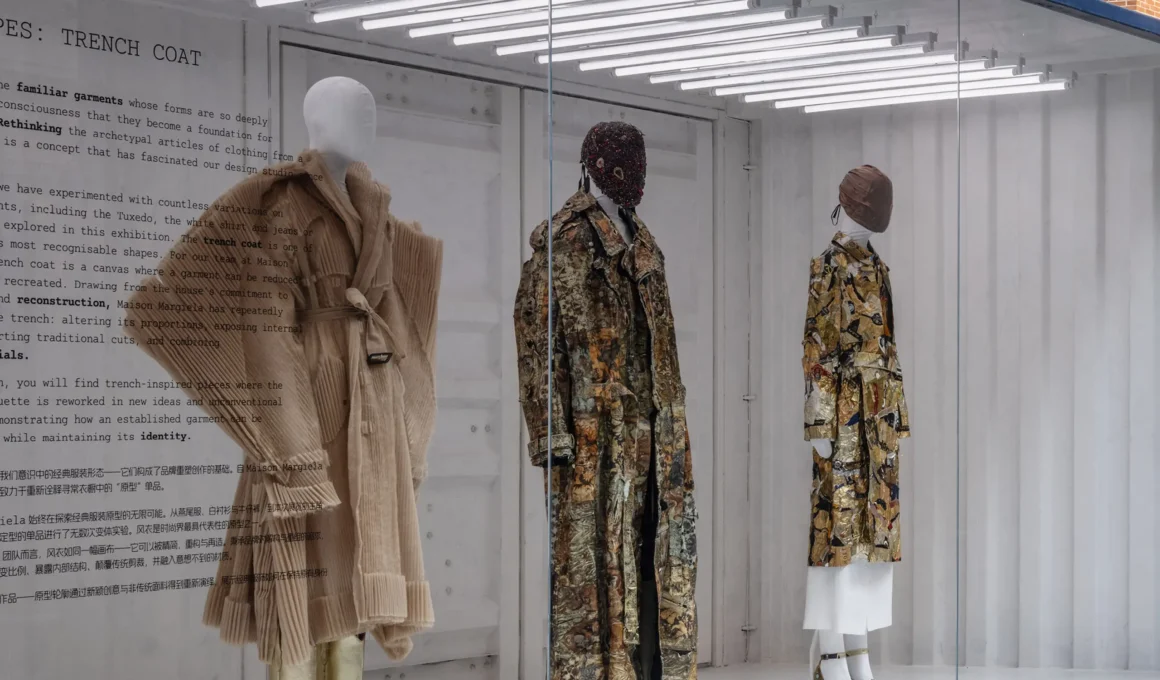
OMA / AMO initiates its first collaboration with Maison Margiela through “Folders,” a multi-city exhibition series unfolding across Shanghai, Beijing, Chengdu, and Shenzhen that deconstructs the house’s radical codes within unconventional urban and cultural settings.
A distributed narrative strategy redefines the traditional retrospective by scattering the house’s identity across the Chinese landscape. Rather than a singular monolith, the project operates like a physical file system, where each city hosts a “folder” dedicated to a specific pillar of the Margiela ethos. By utilizing a street, a traditional theater, an art gallery, and even a badminton court, OMA / AMO moves away from the sterile “white cube” and instead embeds these fashion archives into the raw, living fabric of the city, creating a dialogue between high-concept garment construction and the spontaneity of daily life.
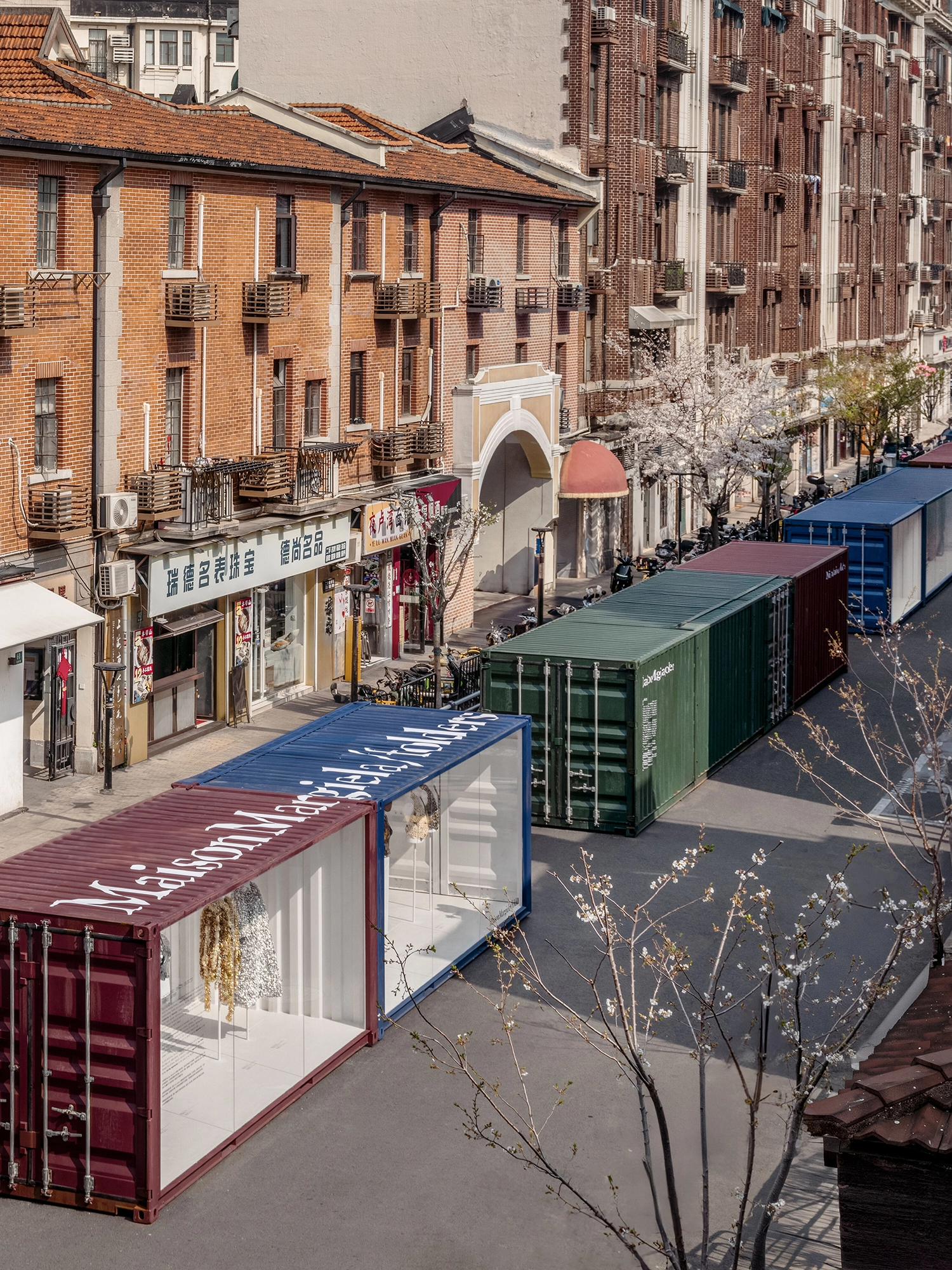
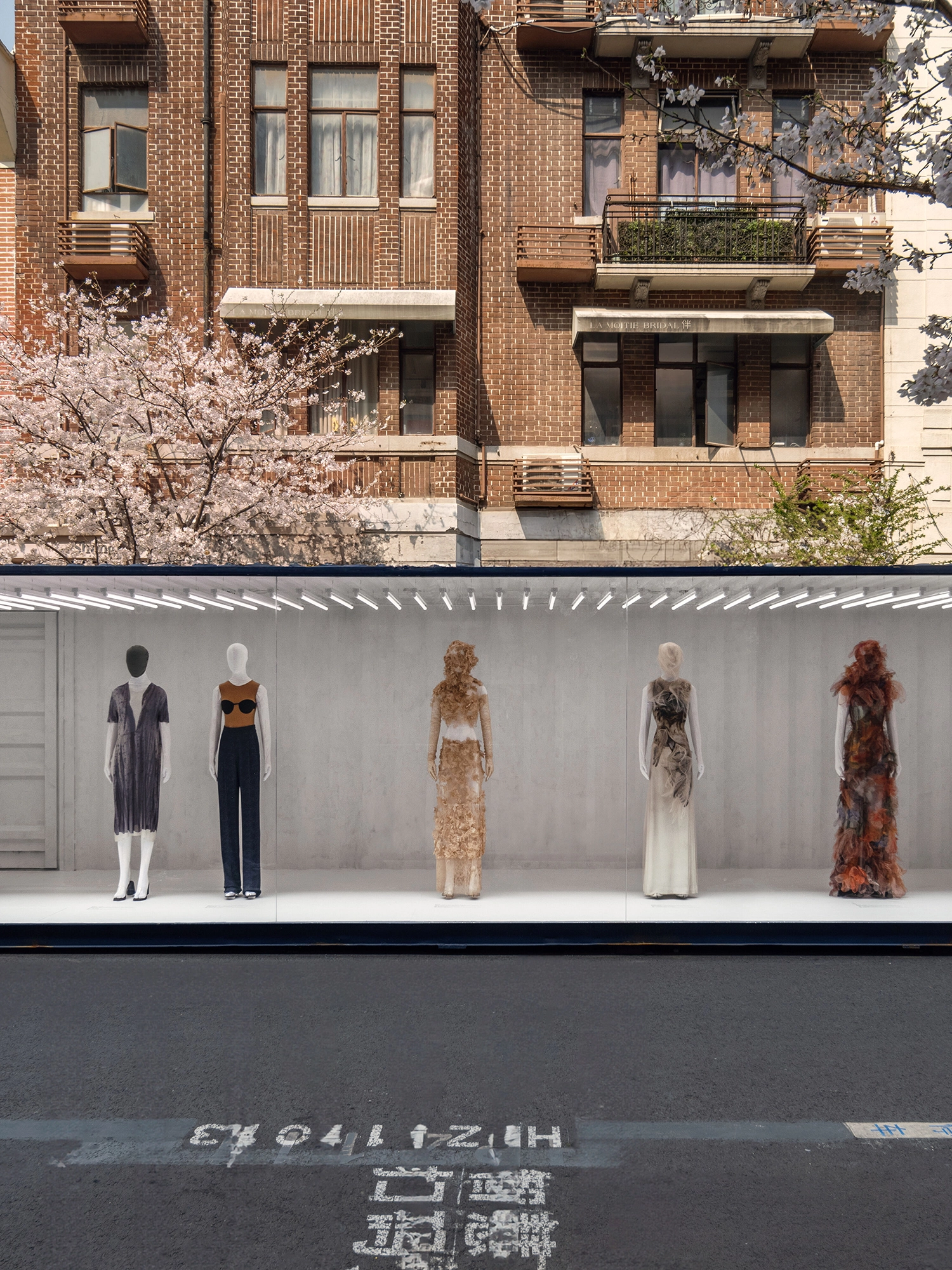
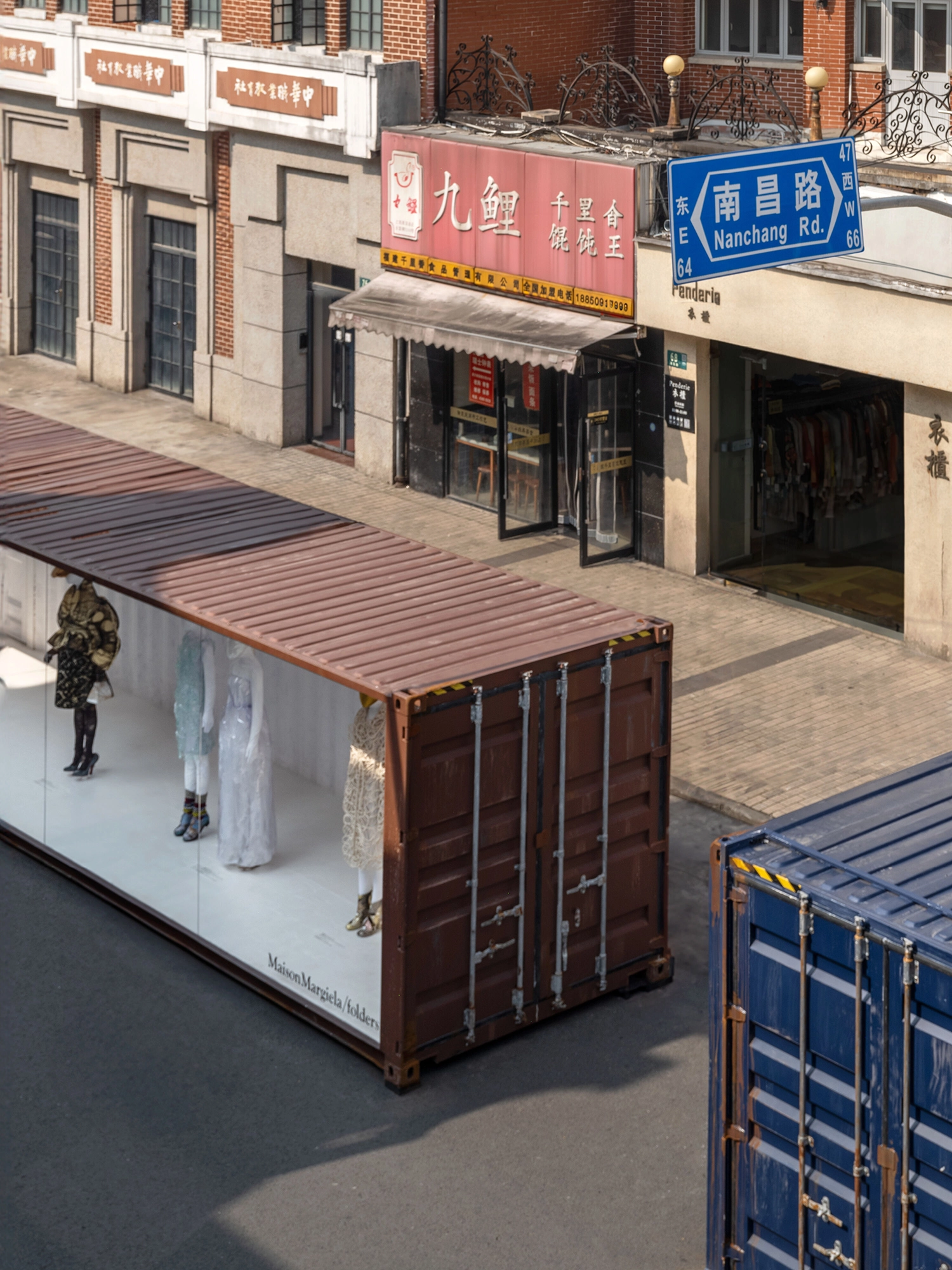
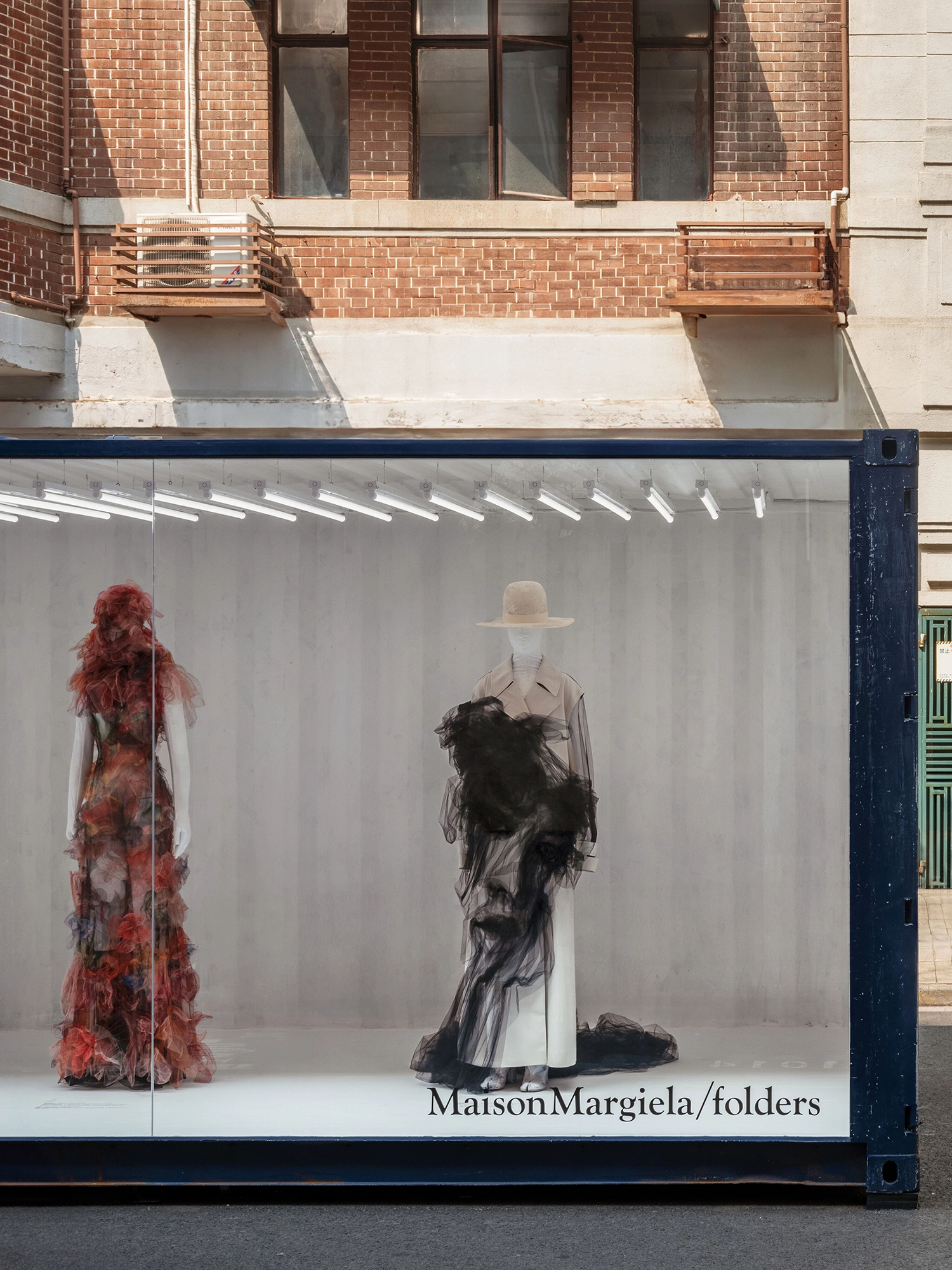
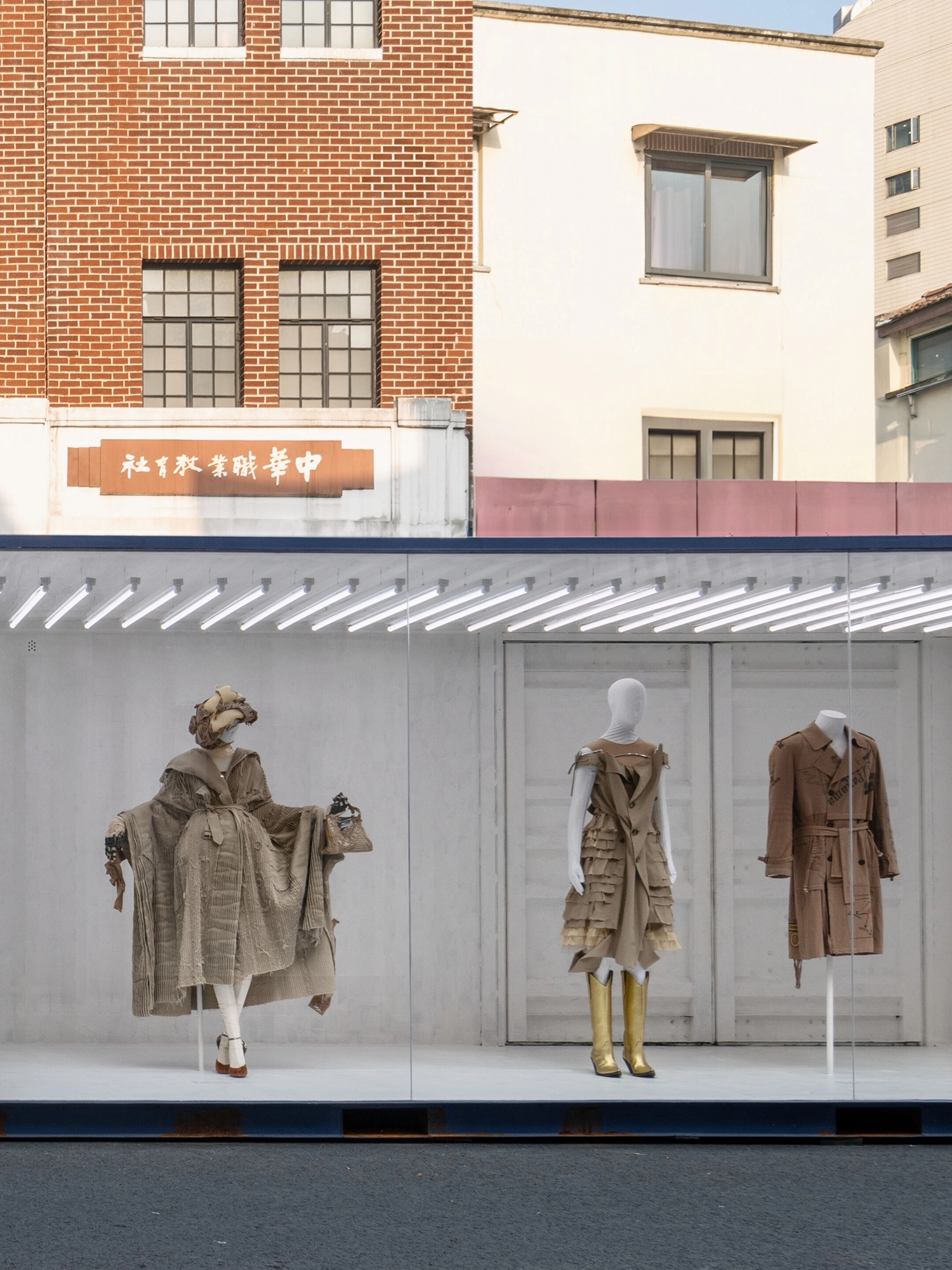
The sensory exploration begins in Shanghai with “Artisanal: Our Creative Laboratory,” where 58 couture looks spanning nearly four decades are staged within an industrial framework of shipping containers. This choice of scenography evokes the gritty, unfinished aesthetic central to the house while nodding to global trade and movement. Visitors navigate a labyrinth of metal and fabric, experiencing the evolution of the Artisanal collections not as static objects, but as a continuous lineage of experimentation. The clashing textures of rusted corrugated steel against delicate tulle and hand-stitched silk emphasize the maison’s preoccupation with the “work in progress.”
In Beijing and Chengdu, the focus shifts toward the psychological and the personal. At a traditional theater in the capital, “Anonymity: Our History of Masks” assembles 48 headpieces that have defined the brand’s cult of invisibility. The theatrical backdrop heightens the tension between the public spectacle and the private self, exploring how the concept of anonymity serves as a tool for creative liberation. Meanwhile, in Chengdu, the “Tabi: Collectors Exhibition” gathers the private archives of nine individuals, transforming the famous split-toe shoe into a vessel for personal history and communal obsession, effectively turning the consumer experience into a curated museum study.
The technical materiality of the brand is most palpable in Shenzhen’s “Bianchetto: Atelier Experience.” Set within a badminton court, this activation invites the public into the “atelier” to witness the Bianchetto overpaint technique firsthand. The space becomes a living workshop where the act of white-washing—a signature Margiela gesture used to unify disparate objects—is performed in real-time. This immersive installation strips away the gloss of the industry, focusing instead on the tactile, messy reality of the making process, where the smell of paint and the sound of brushes replace the hushed tones of a typical gallery.
Digital integration serves as the invisible thread connecting these physical sites. By releasing supplementary materials via a public Dropbox folder, the collaborators acknowledge the ephemeral nature of information in the digital age. This “internal” access mirrors the house’s history of transparency and subversion, allowing the exhibition scenography to extend beyond physical borders. The folder system functions as both a metaphor and a literal organizational tool, inviting a global audience to download the brand’s DNA while local visitors interact with its physical manifestations on the ground in China.
The intersection of culture and brand identity has long been a fertile ground for AMO, whose recent work continues to push the boundaries of how luxury narratives are performed in public spaces. This collaboration with Margiela follows a sophisticated trajectory of spatial storytelling, reminiscent of the Visionary Journeys for Louis Vuitton in Seoul and Osaka, where the firm translated heritage into immersive environments. Whether through the dreamlike sequences of Dior’s Seoul exhibition or the towering sculptural installations at Louis Vuitton’s NYC flagship, OMA / AMO consistently treats the experiential landscape as a site for rigorous analytical inquiry and bold spatial experimentation.