


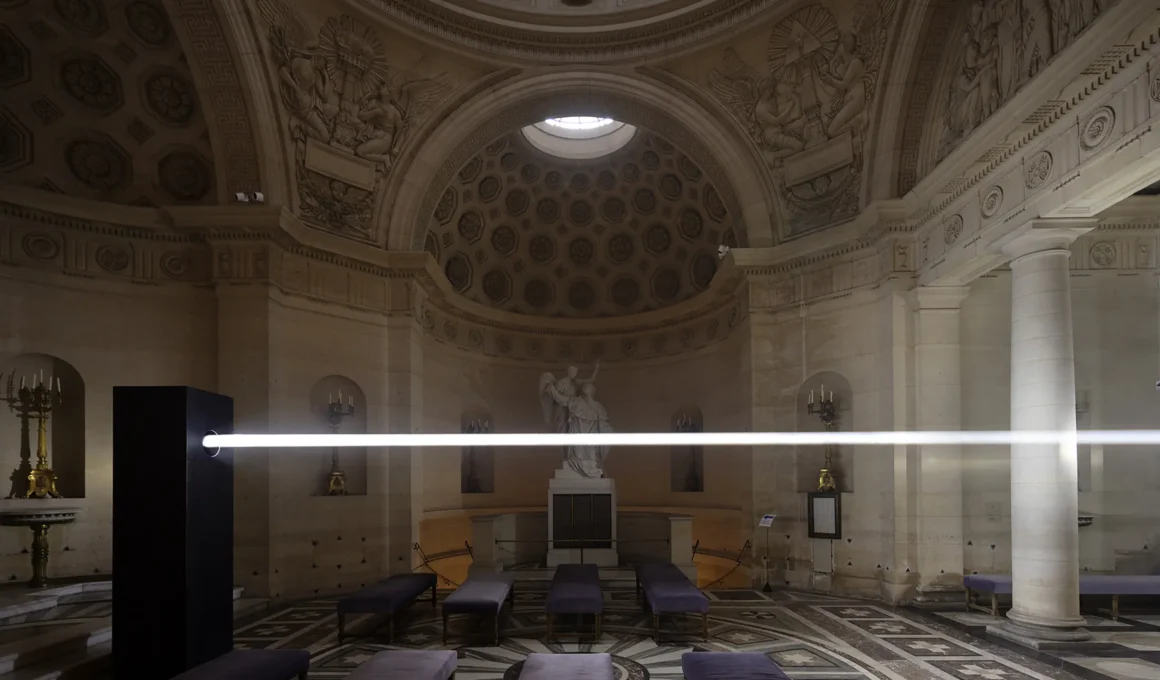
A beam of white light that retracts when the chapel closes is not an effect — it is an argument about what architecture does to perception. Emilio Ferro‘s Threshold, commissioned by the City of Paris and presented at the Chapelle Expiatoire during Nuit Blanche on 6 June 2026, uses the building’s own operational logic — the opening and closing of its doors — as the primary compositional variable. The installation does not impose itself on the monument. It makes the monument’s behavior visible.
The premise is architectural before it is artistic. A powerful beam of white light emerges from a metal structure and extends through the chapel’s interior, producing a luminous volume that reads as almost tangible despite being entirely immaterial. When the doors open, the beam extends outward toward the surrounding garden; when the space closes, the light retracts and settles onto the interior surfaces. The chapel becomes the instrument. Ferro becomes the composer. The distinction between container and content — one of the oldest and most productive tensions in site-specific light installation — dissolves at the threshold itself.
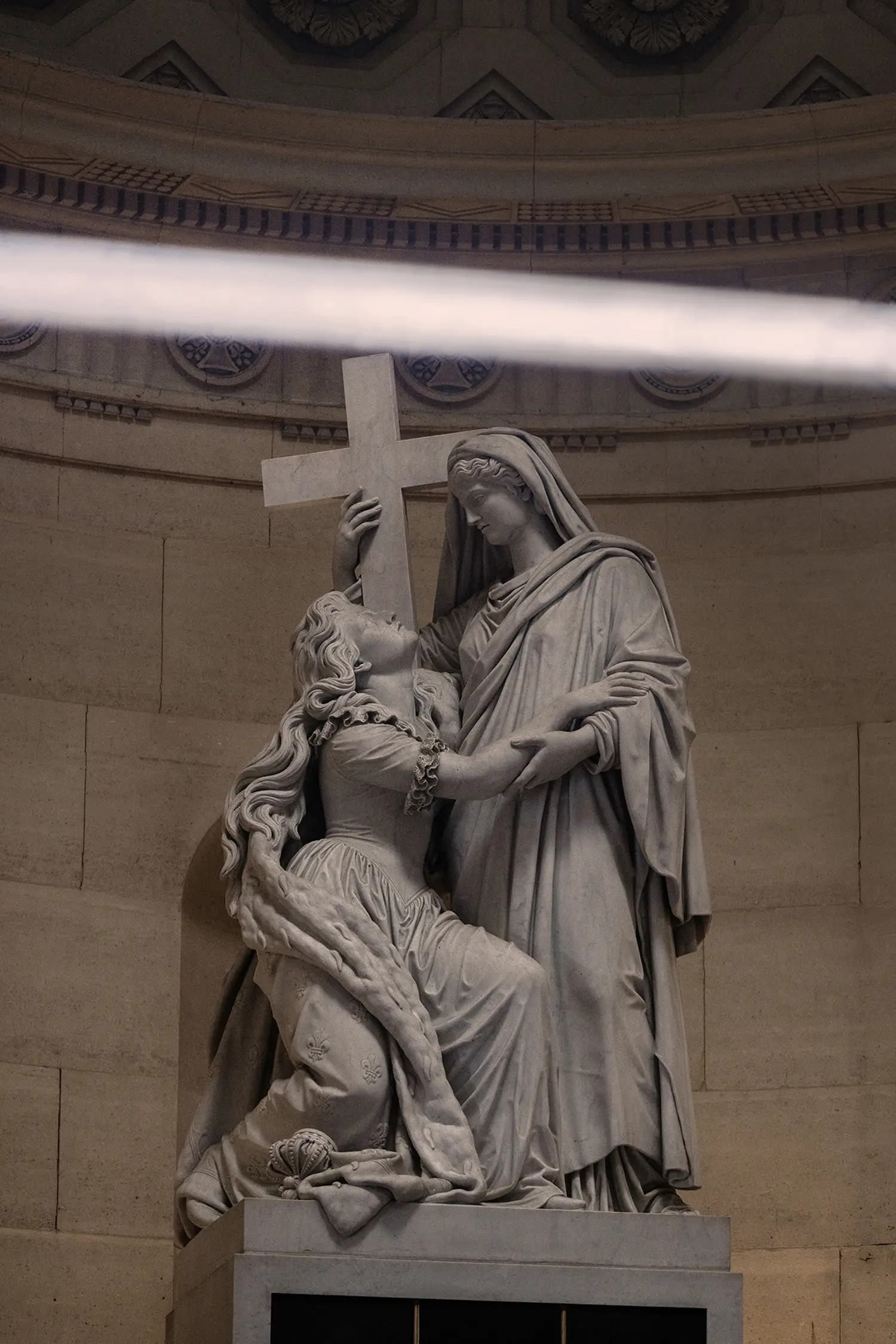
The choice of the Chapelle Expiatoire is not incidental. Built in the early nineteenth century on the site where Louis XVI and Marie Antoinette were first buried, the chapel carries a particular charge around presence and absence, visibility and concealment. A light that advances when the space opens and retreats when it closes is, in this context, more than a formal device — it operates as a spatial metaphor that the building’s own history keeps loading with meaning. Ferro has previously demonstrated a similar intelligence in reading historically weighted sites: his Liminal Journey in Gstaad established the same perceptual territory between the material and the immaterial, in a landscape context equally resistant to superficial intervention.
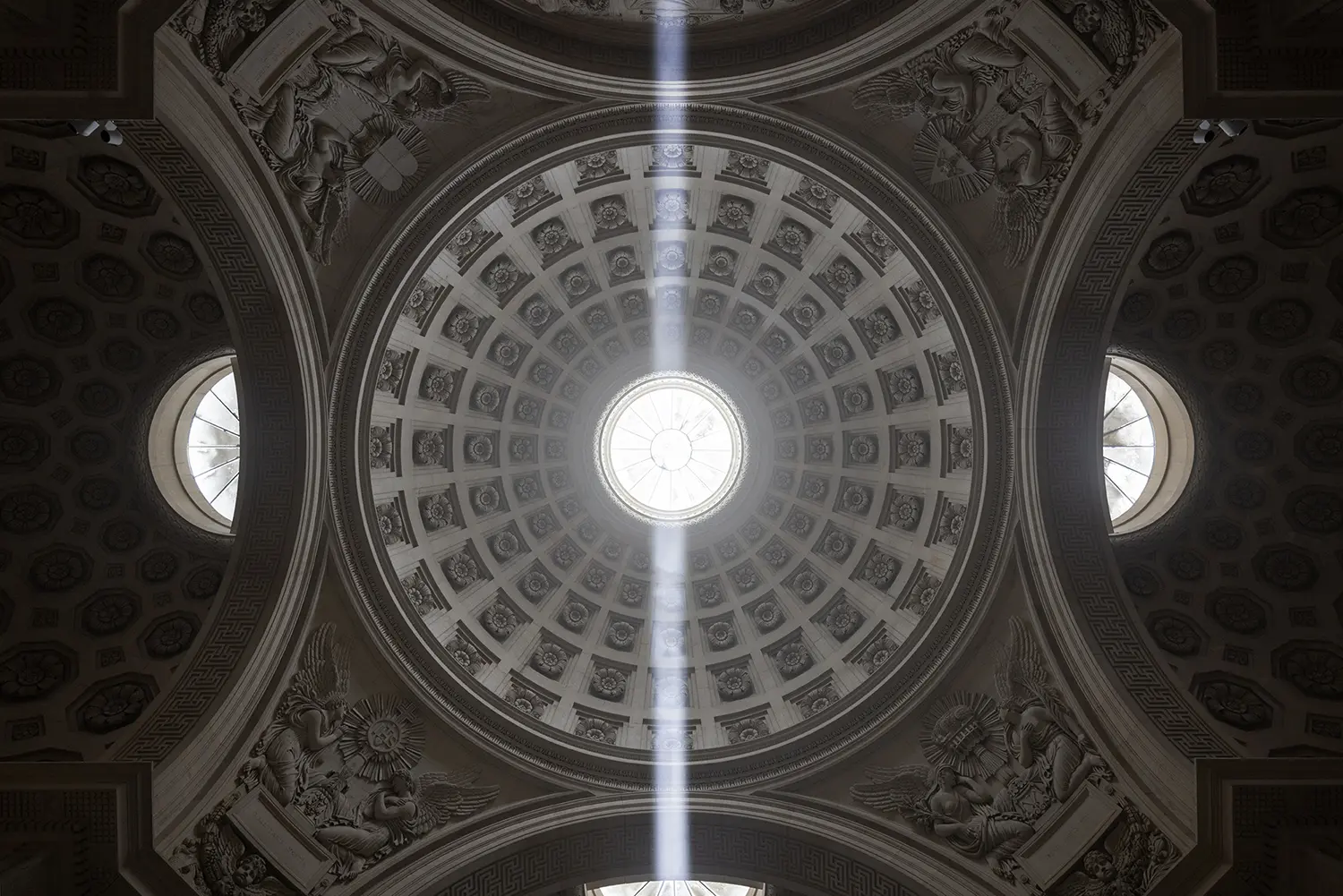
Sound extends the installation beyond the visual register. An original composition developed from magnetic field frequencies recorded by Ferro and subsequently reworked accompanies the light — not as an ambient backdrop but as a structural layer that expands the work’s spatial claims. The sound, derived from electromagnetic data rather than musical convention, produces a suspended atmosphere in which the experience of duration slows. Time and space appear to behave differently inside Threshold than outside it. This is the condition the work sets out to engineer.
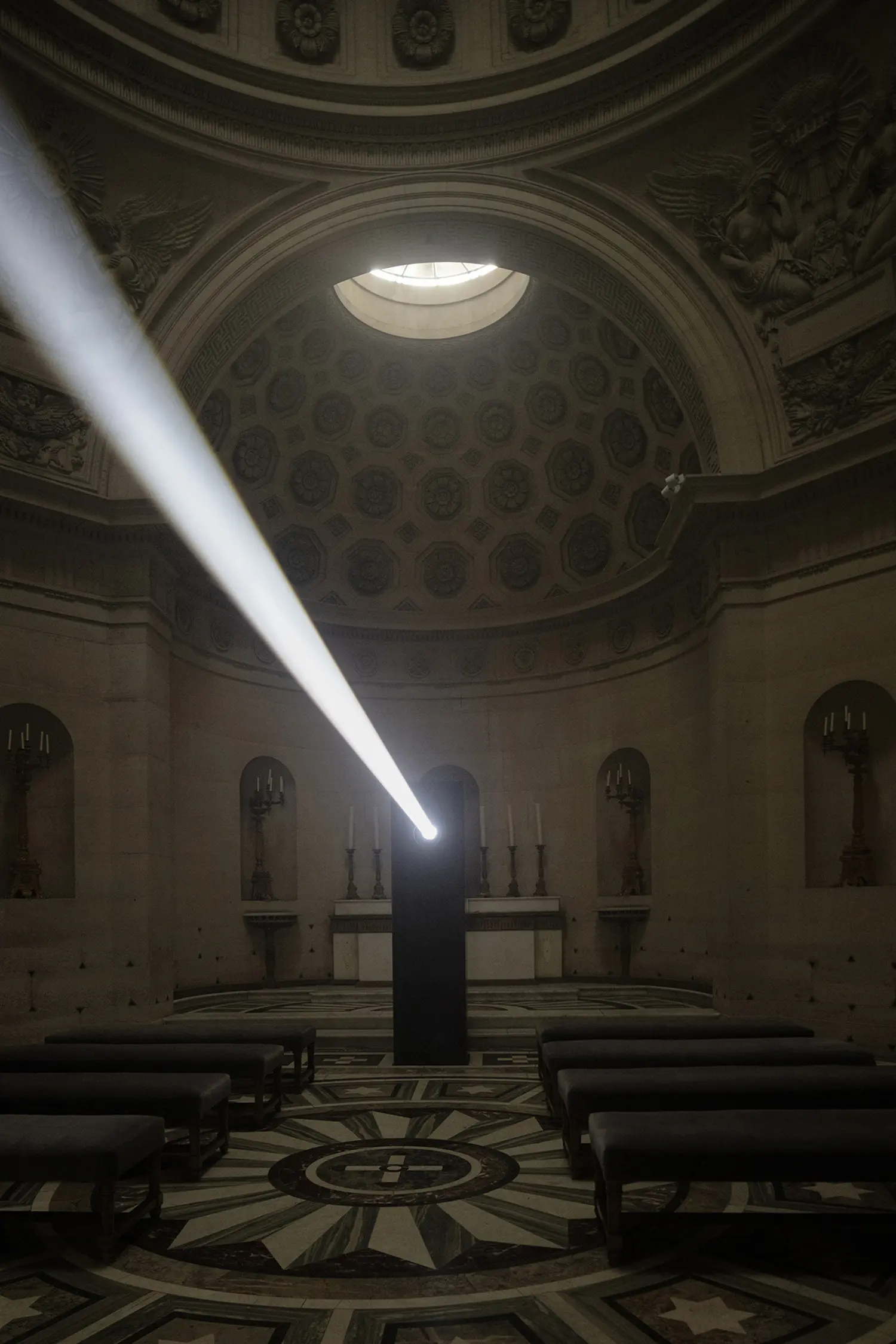
Visitor movement is written into the logic of the piece. Rather than presenting a fixed spectacle, the installation responds continuously to presence, duration, and viewpoint — each body passing through the chapel introduces subtle variations in the light’s behavior and the sound’s spatial distribution. The work is never the same twice. This is not interactivity in the contemporary digital sense but something closer to the older idea of the responsive environment: a space that records and registers human presence without translating it into data or spectacle.
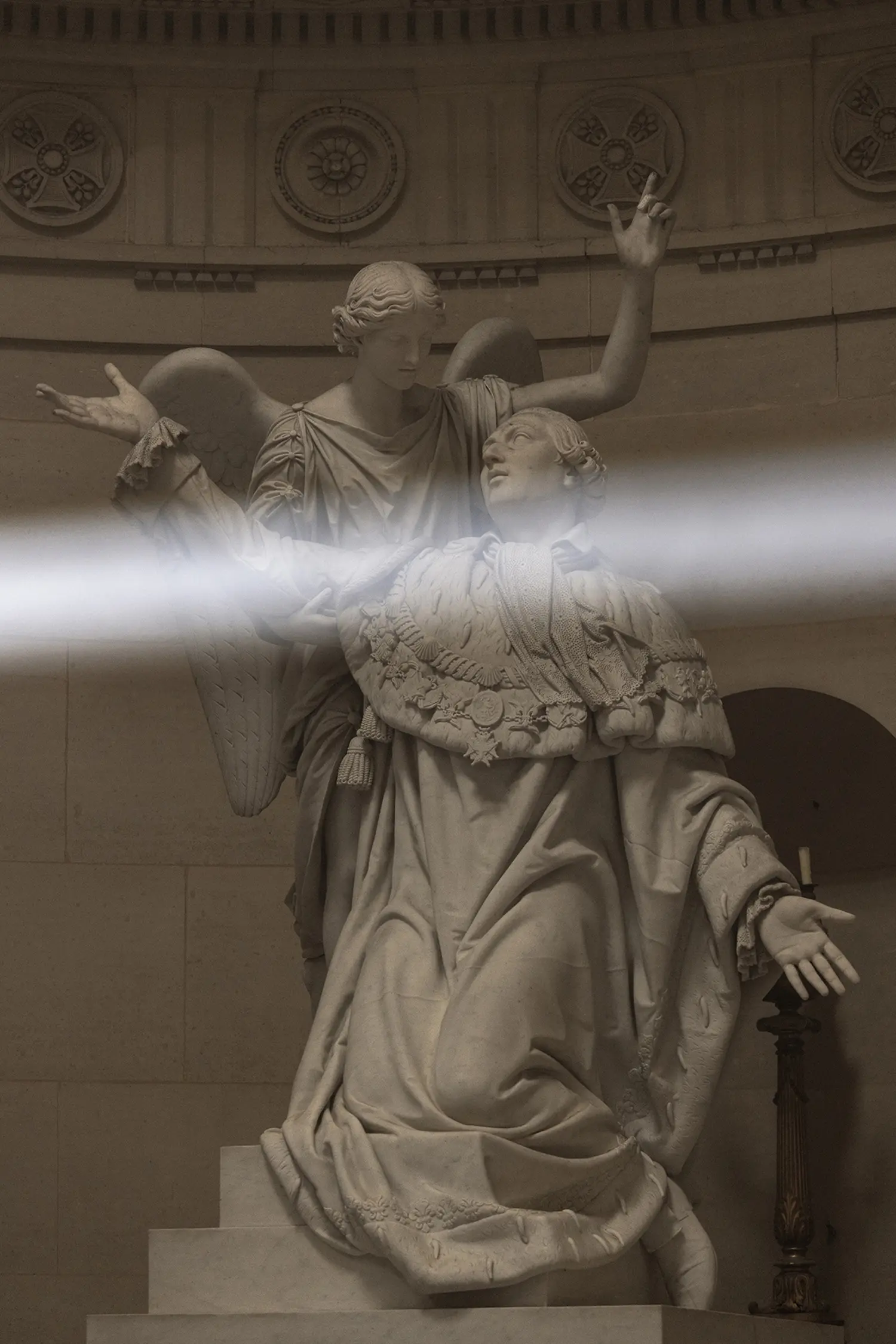
Ferro’s technical methodology distinguishes his practice from the broader field of immersive light art, which has expanded rapidly and, in many cases, flattened into entertainment. His research integrates custom-developed light and sound systems, hardware experimentation, and spatial acoustics — the technology remains invisible, subordinated entirely to the perceptual and emotional experience of the visitor. The sound frequencies sourced from magnetic field recordings are not chosen for aesthetic resemblance to anything familiar. They carry the particular quality of data that was never intended to be heard, rendered audible by an act of artistic translation.
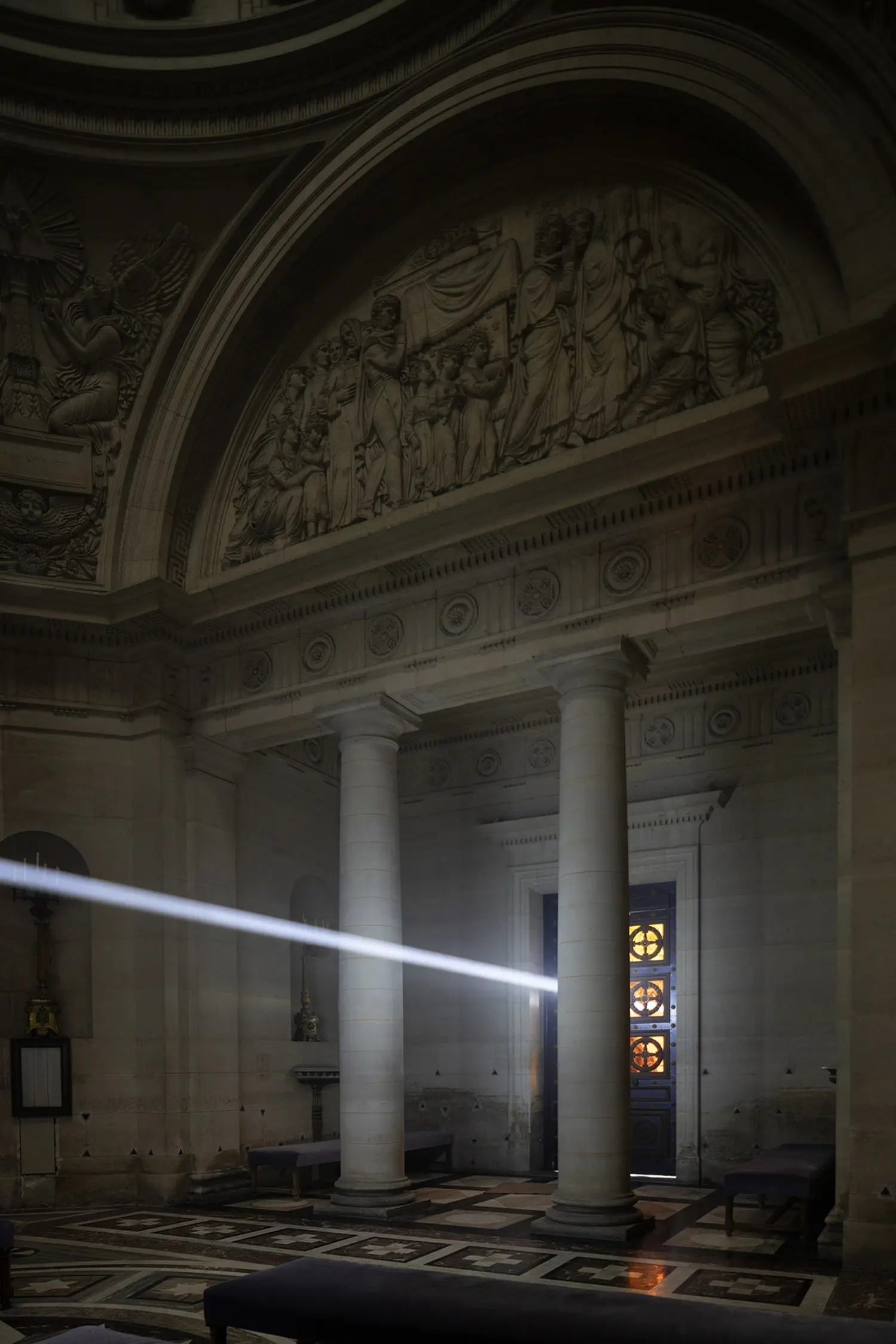
The Chapelle Expiatoire as a monument managed by the Centre des Monuments Nationaux places Threshold within a curatorial framework that rarely accommodates work this formally demanding. The commission reflects both the scale of Ferro’s established practice — which includes the first light art installation at the Giza Pyramids (Portal of Light, 2022) and a permanent installation near the Sanctuary of Vicoforte (Miracle, 2024) — and a broader institutional shift in how French cultural heritage sites are beginning to think about contemporary art in historic spaces: not as decoration applied to significance, but as a means of making that significance perceptible to audiences who arrive without the historical context to feel it directly.
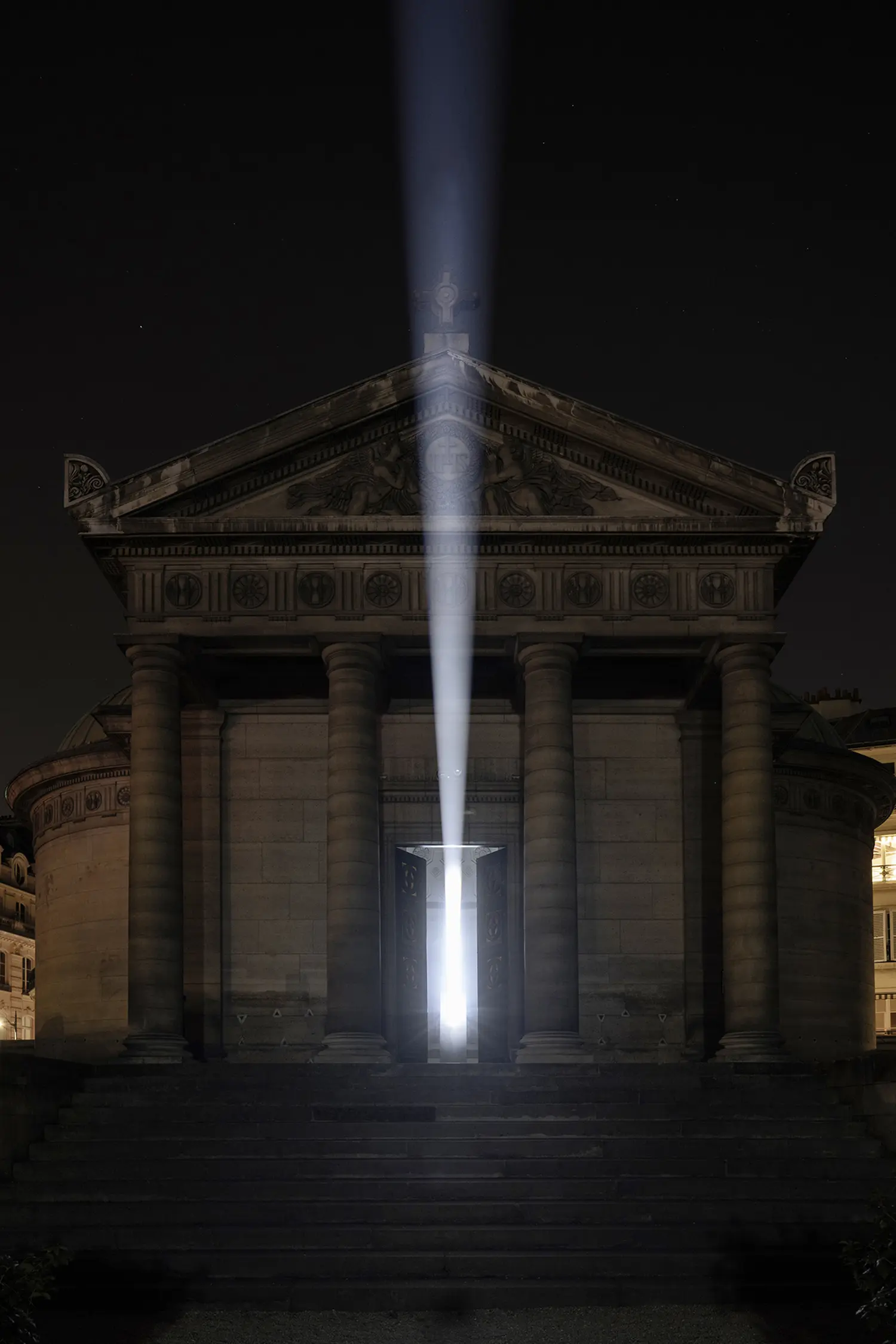
The immaterial as construction material is not a new position in contemporary art, but Ferro pursues it with an unusual degree of technical commitment. Light and sound are not metaphors in his practice — they are specified, engineered, and calibrated to produce exact perceptual outcomes. Threshold does not ask the visitor to project meaning onto an empty form. It constructs the conditions under which meaning becomes available: the right frequency, the right duration, the right relationship between a beam of light and a door that opens onto a garden in Paris on a June night.
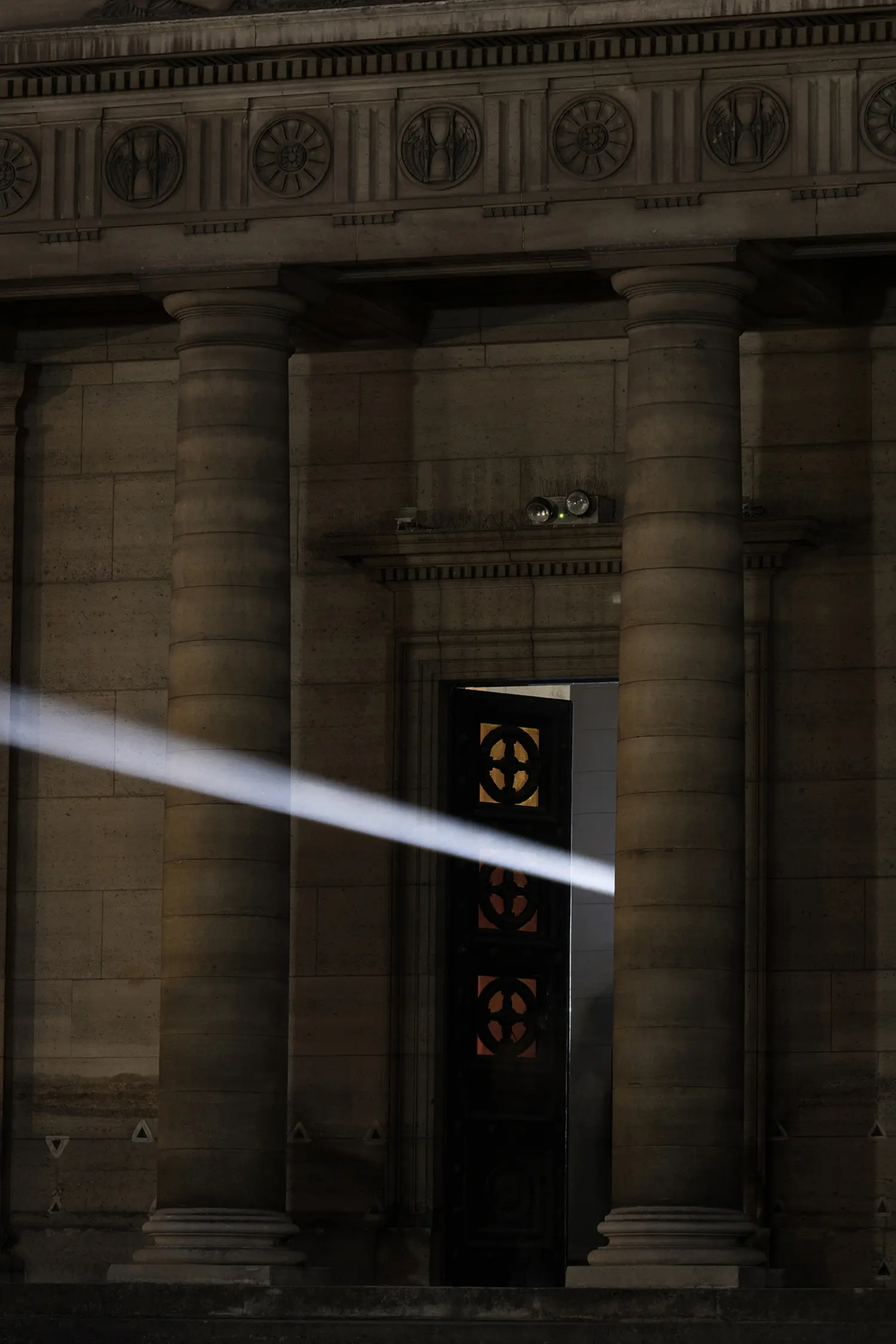
The work’s most durable claim is its smallest one. Not that light can transform architecture — that has been demonstrated many times — but that the transformation becomes most precise when the artwork and the building share the same operational variable. When the door of the Chapelle Expiatoire opens, both the monument and Threshold change state simultaneously. At that moment, the threshold between interior and exterior space is not a metaphor the work is illustrating. It is the exact site where the work occurs.
Threshold by Emilio Ferro | Where: Chapelle Expiatoire, 29 Rue Pasquier, 75008 Paris, France — When: 6 June 2026, Nuit Blanche