

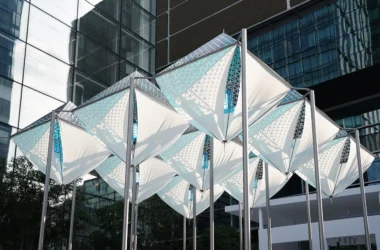

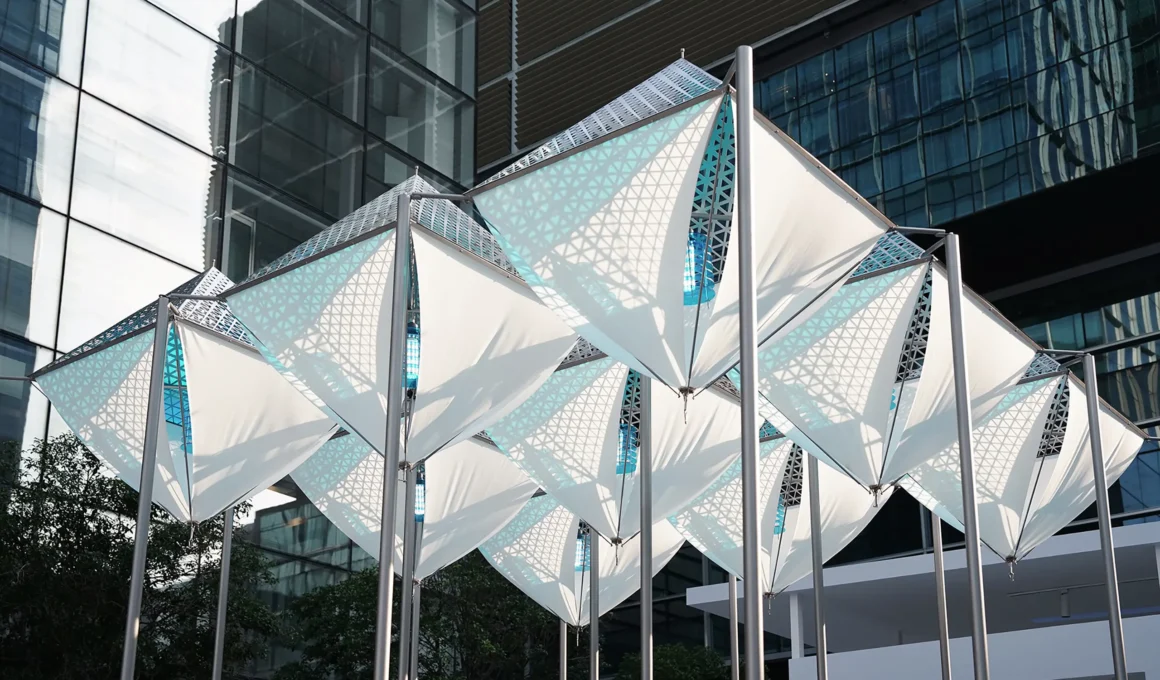
Dayuan Design‘s Glacier Project hangs nine geometric ice forms over a Shanghai plaza, and pulling the components beneath them makes the stable shapes contract, fold and distort. Presented under the theme Resonance of the Extremes with the ocean-conservation nonprofit N.O.C., the outdoor installation lifts a fragment of polar terrain into the middle of the city. The gesture asked of each passerby is minor; the proposition behind it is not — the gap between watching a glacier retreat and setting it in motion is narrower than it appears.
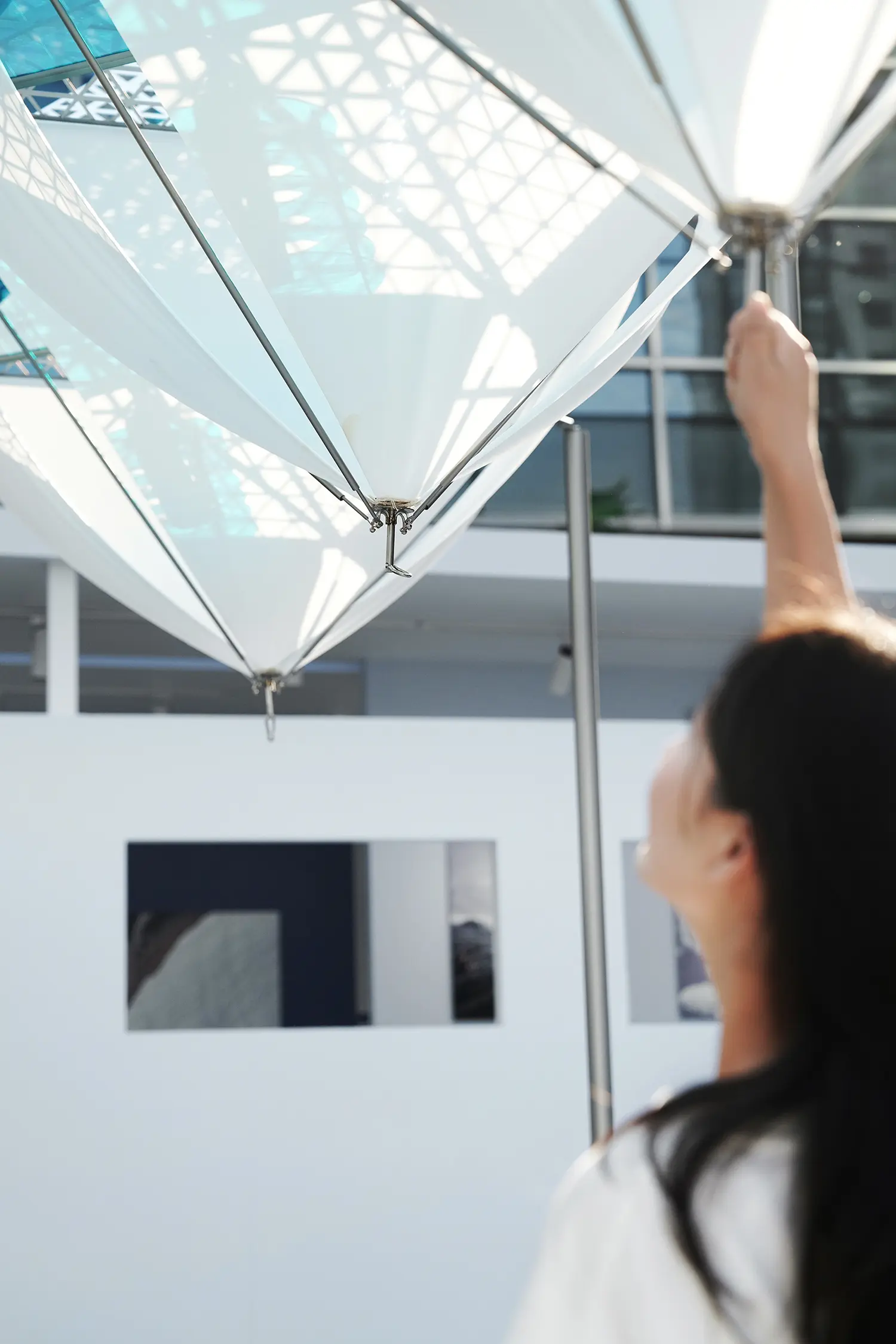
Derived from a hidden mass, the nine volumes take their geometry from the split between what sits above an iceberg’s waterline and what stays submerged, where the visible tip is only a partial outline and the greater bulk remains concealed. Repetition across the array reframes the reading from a single object to a connected system, presenting these suspended geometric ice forms as a field rather than a sculpture. It joins a lineage of suspended volumes staged in Chinese public space, though here the reference is glacial rather than atmospheric.
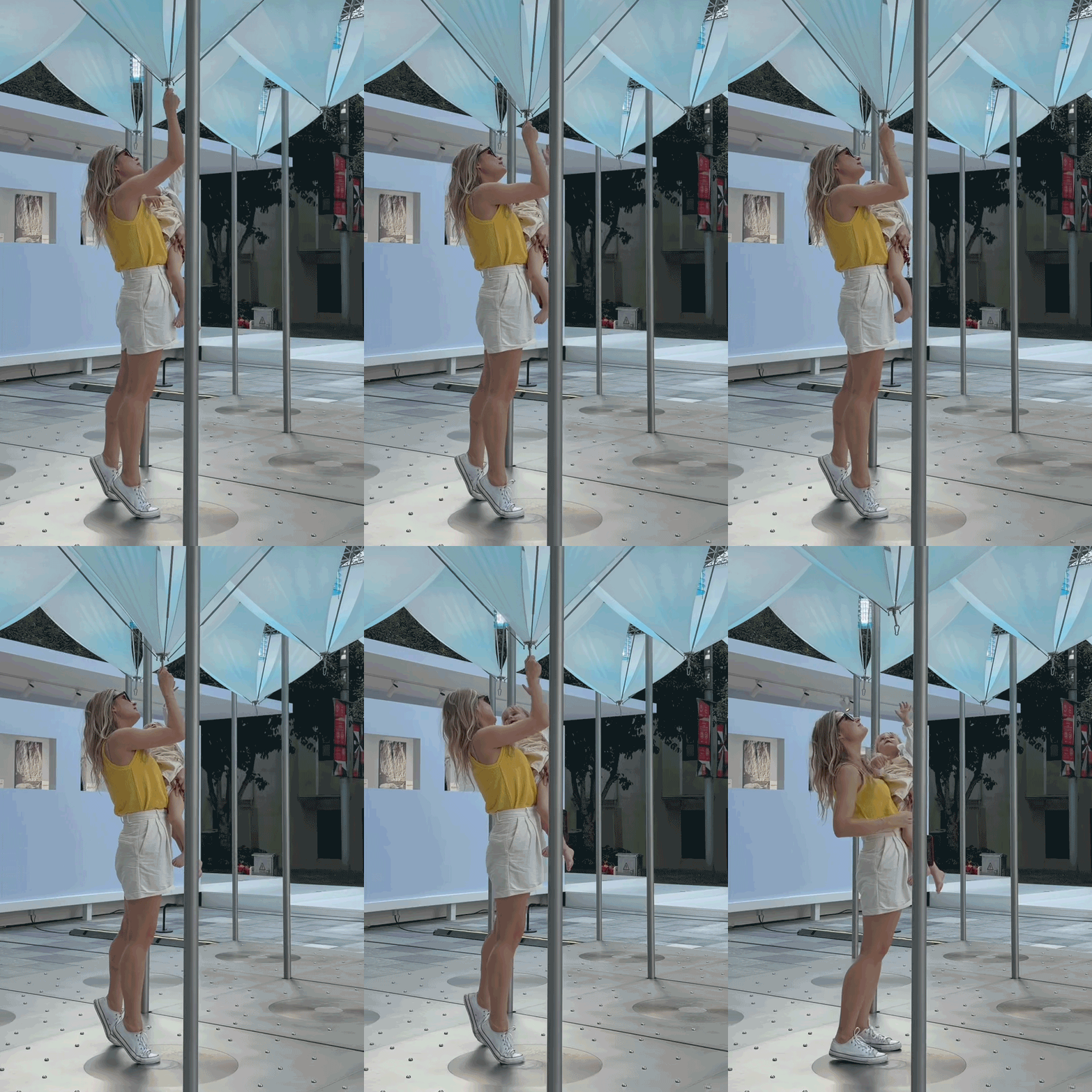
Reaching in and pulling turns observation into cause: a pull makes the apparently complete geometry overhead contract, fold and distort. Rather than a screen or a data interface, the piece relies on direct mechanical feedback to make the effect of human action on natural systems physically legible. Even a slight movement produces a chain of structural responses, which is the entire point of an interactive climate installation built around touch instead of information.
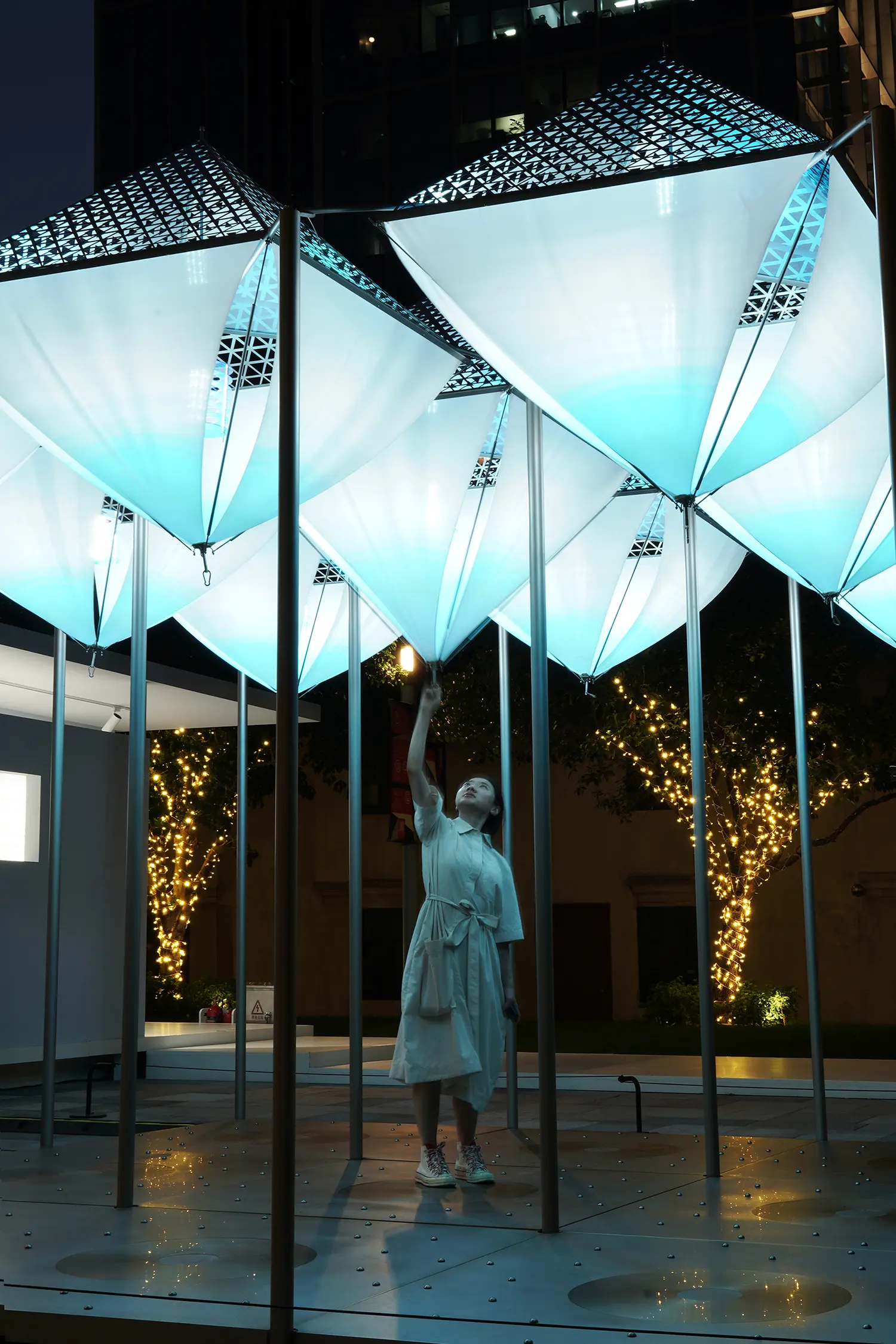
Built to come apart, the structure follows Dayuan Design’s take on sustainable exhibition design — modular, demountable and made for transport and reuse. Its principal components are recycled metal and offcuts of discarded waterproof fabric, while a lightweight frame carries the suspended volumes and mirrored stainless steel with spherical lighting adds reflection and tension. The engineering is deliberately unglamorous, closer to a kit of parts than a monument.
Triangular perforations across the mesh borrow from the pores, fissures and retreating edges left by glacial melt. The openings enlarge from top to bottom, admitting more light and shifting each form from apparent solidity toward thinness and fragility, while white membranes hold the image of suspended ice and the mesh throws moving geometric shadows. The result never settles: it changes with daylight, air currents and the movement of people around it.
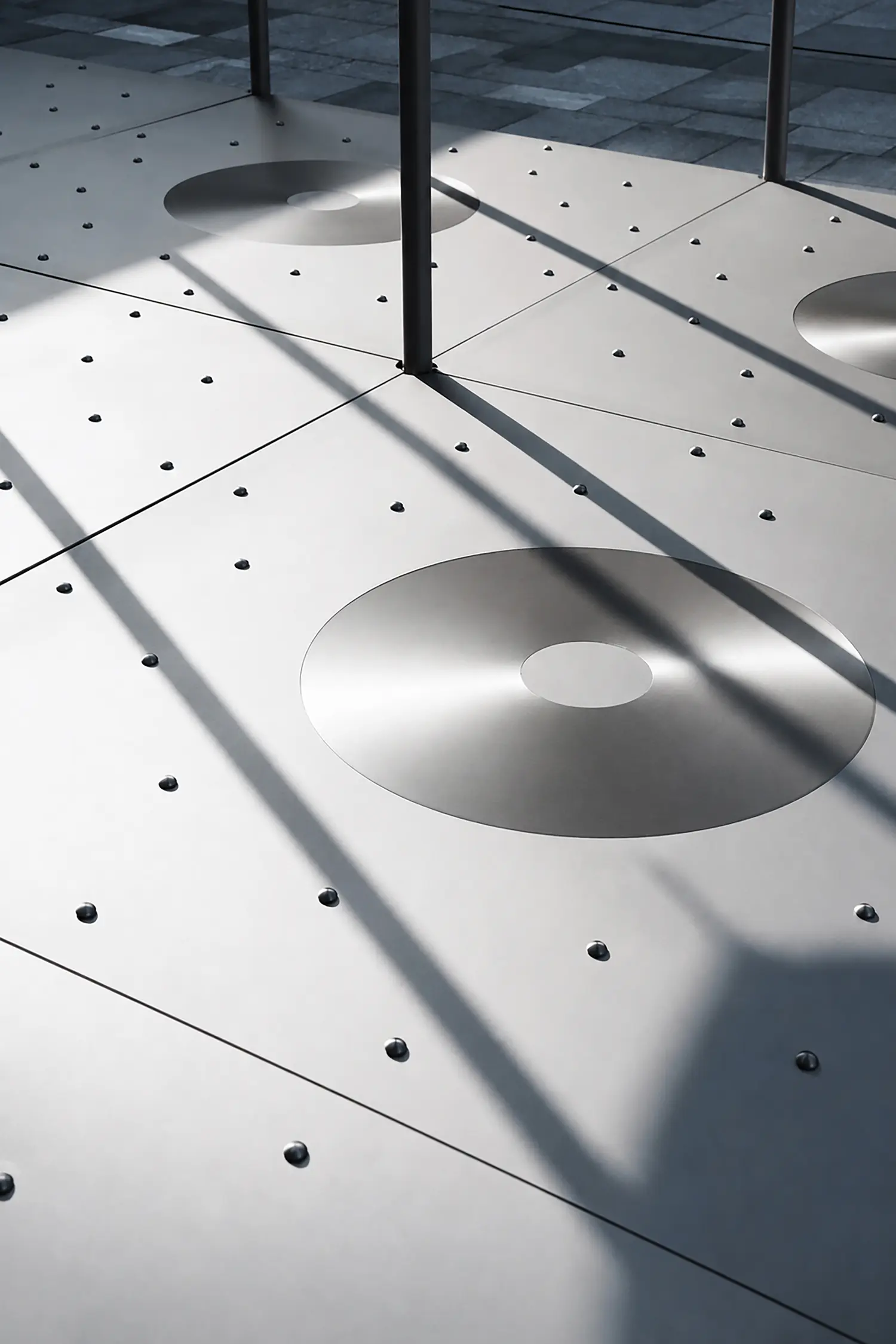
Because it stands outdoors, rain is folded into the sensory system rather than kept out. Water is channelled through openings at the top and falls along the structure, floor perforations drain it, and droplets striking the metal produce a light, crisp sound; in dry weather the ground mirrors the sky, in rain the rhythm resets. The move recalls artists who treat atmospheric phenomena as raw material, pulling weather into the work instead of protecting the work from it.
Scaled to a tabletop, a companion object called Flowing Glacier carries the same subject into daily life through backflow incense: once lit, the smoke descends through a translucent glacial form, moving like cold air into a valley. Its downward drift makes time visible and cannot be reversed or paused, echoing a melt that, once underway, does not readily restore itself. The glacial element is made in liuli, a traditional Chinese glassmaking craft listed as intangible cultural heritage, whose fire-born clarity sits in pointed contrast to the coldness it represents.
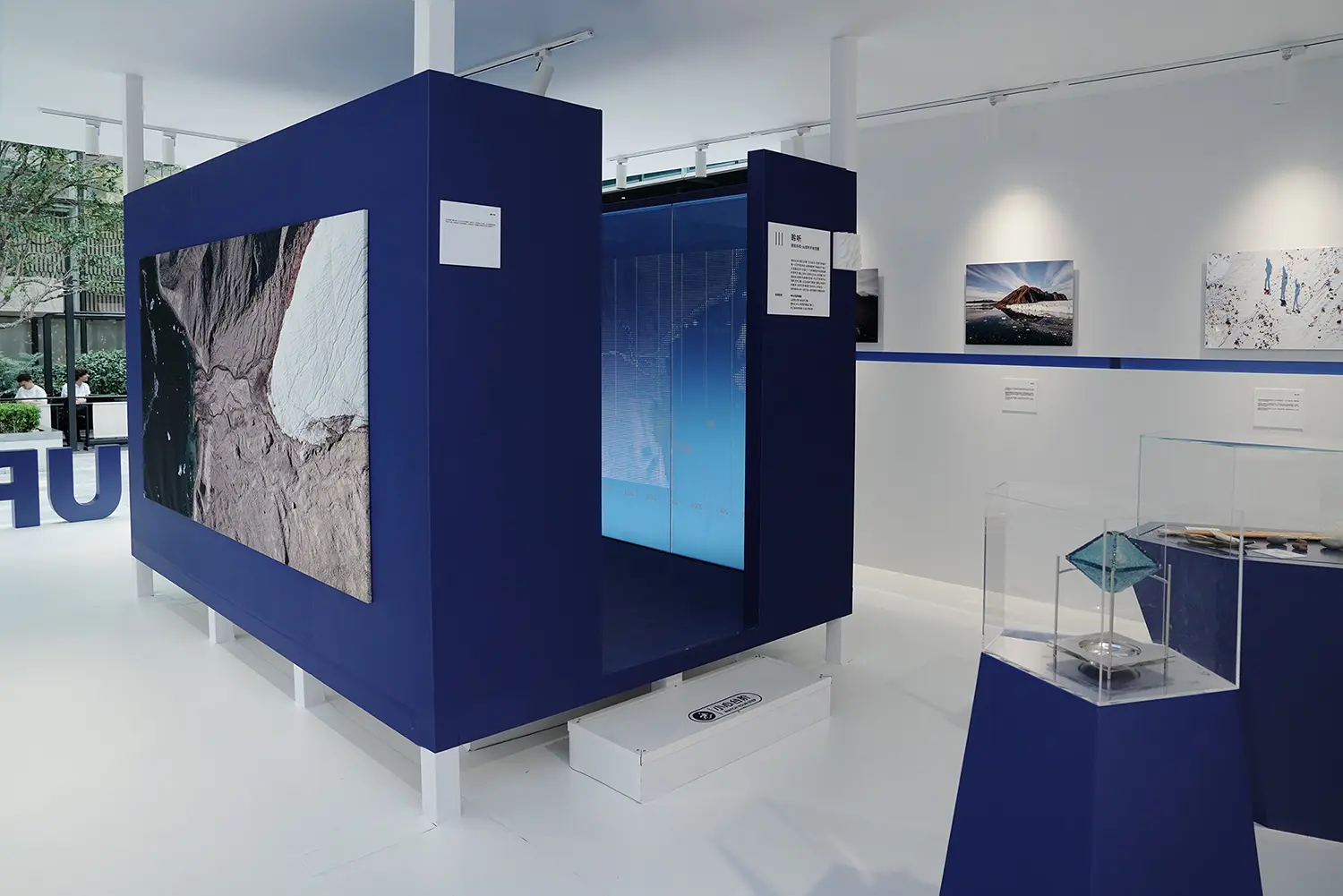
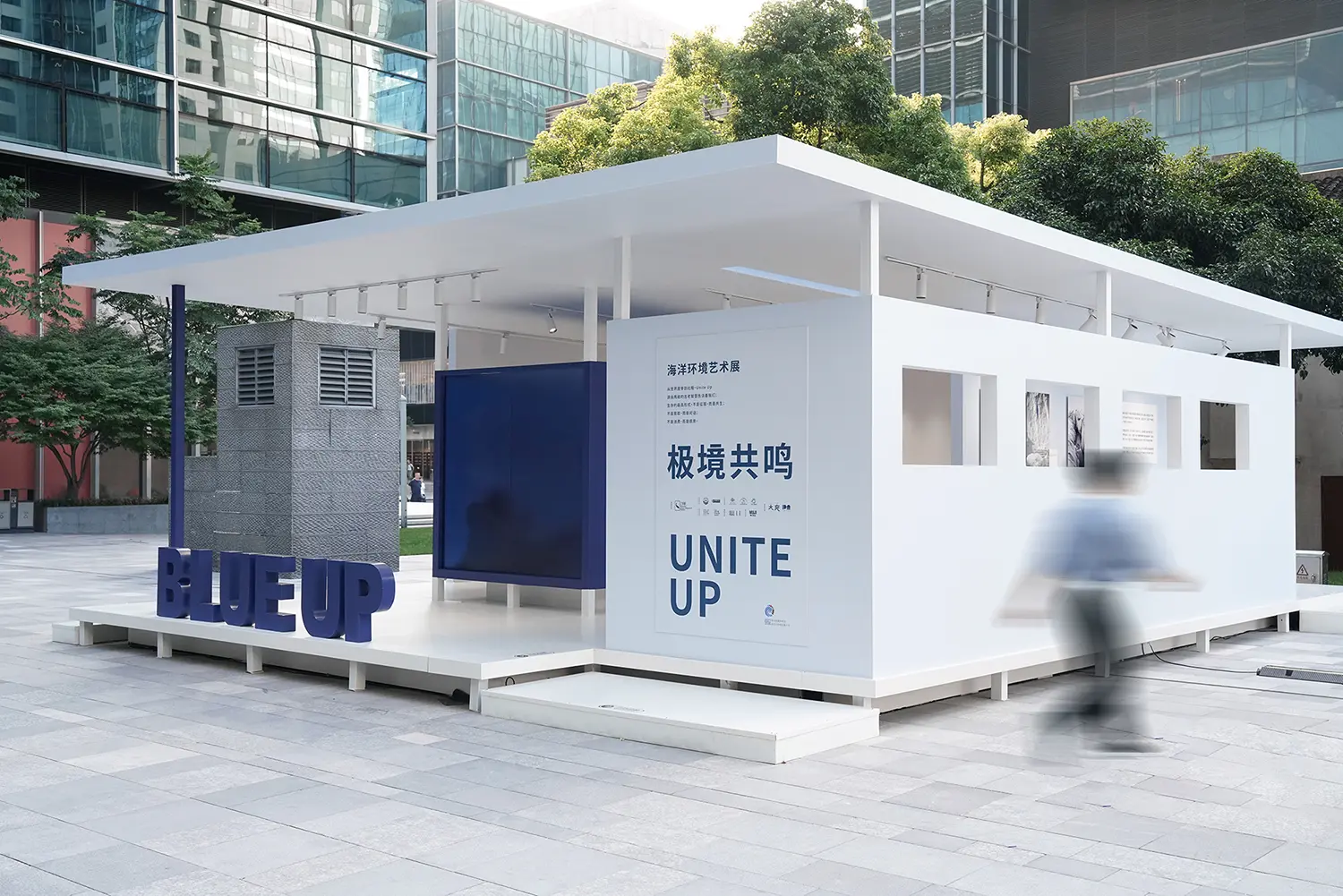
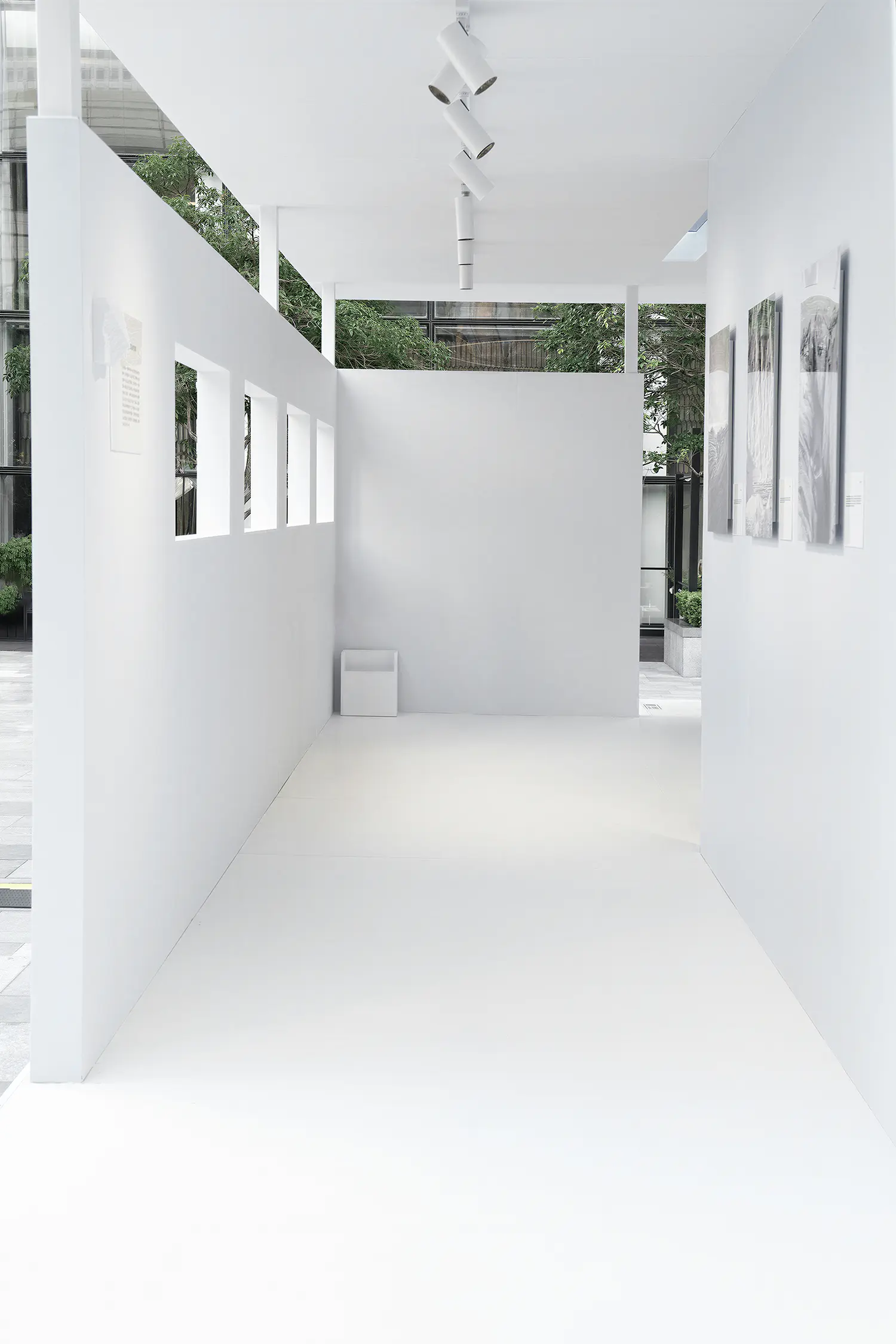
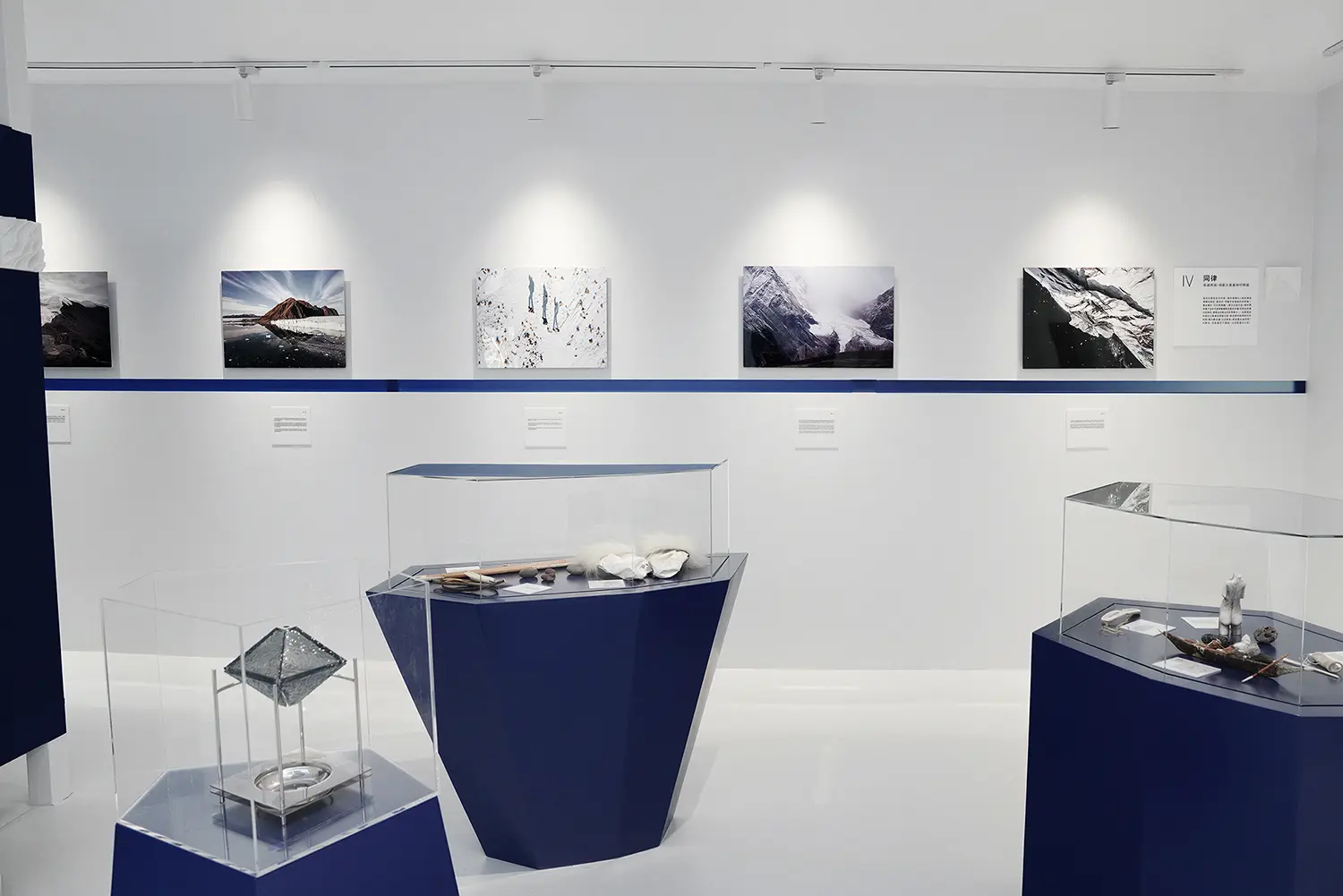
Behind the outdoor forms, a white volume works as the narrative container for the wider environmental art exhibition, organized as a one-way route through prologue, film, artefacts, a central display and a sound chamber before returning visitors to the street. Four chapters — Encounter, Remains, Listening and Resonance — move from distant observation toward sensory contact, with deep-blue volumes and horizontal lines standing in for sea, glacial strata and cold light.
For all its recycled, demountable rigor, the project’s real achievement is rhetorical rather than material: it works because a stranger can feel implicated in ten seconds, and that emotional shortcut — not the perforated mesh or the liuli — is the thing most climate exhibitions still fail to build.
Glacier Project by Dayuan Design | Where: Jing’an Kerry Centre, Shanghai