


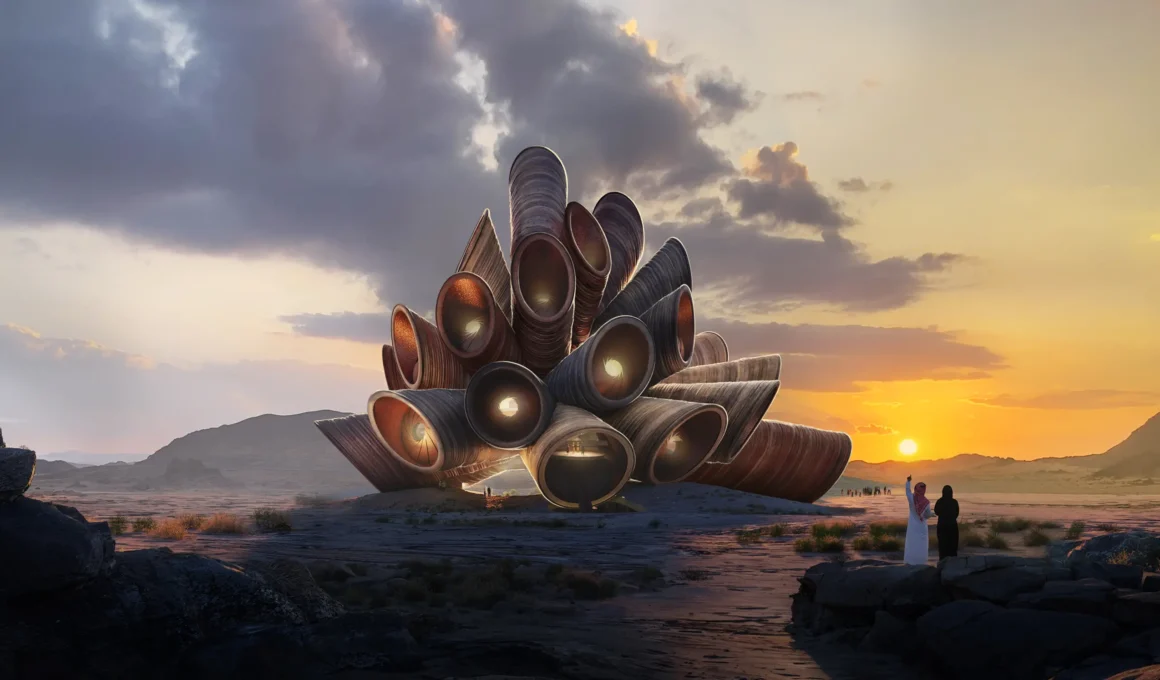
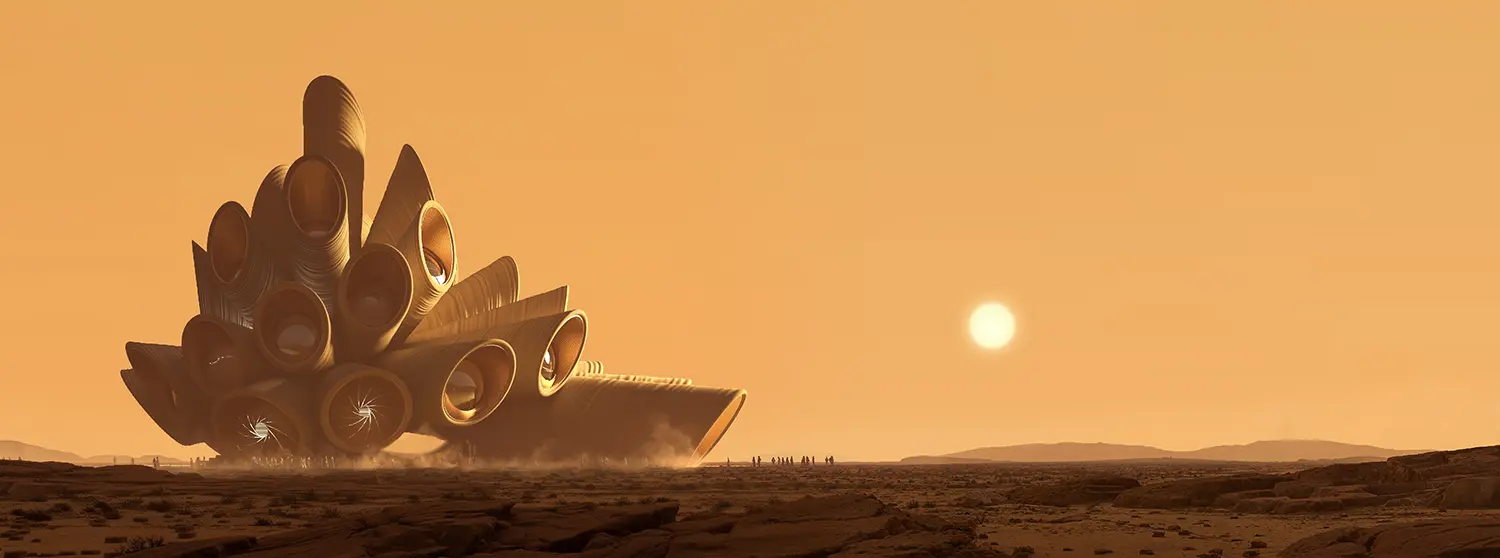
Heatherwick Studio‘s AlUla Manara, selected by the Royal Commission for AlUla following an international design competition, is not an observatory — it is the first building in the history of architectural astronomy that must function as two entirely different structures depending on the time of day. During daylight hours, the tubular forms that define the visitor centre act as shading devices, managing solar gain in one of the most extreme desert climates on Earth. After dark, those same tubes become the instrument through which the building preserves the dark-sky conditions that justify its existence. The spiral geometry that references galaxies, planetary rings, and natural Fibonacci patterns is, at the structural level, the only formal solution that resolves both problems simultaneously.
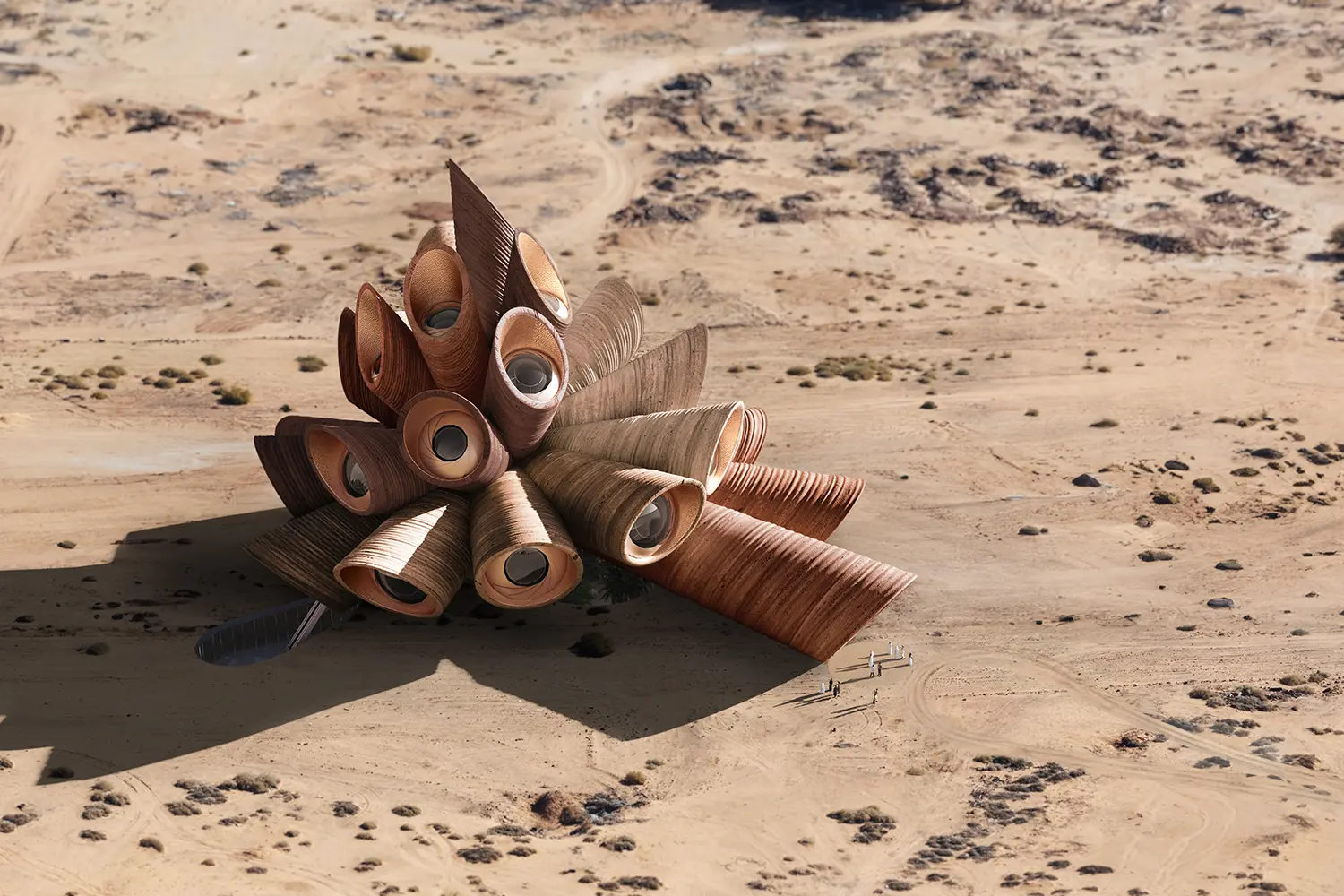
The site is the project’s most consequential design decision. Located in the remote deserts of north-west Saudi Arabia near the ancient city of AlUla — a UNESCO World Heritage Site — the area has recently been designated one of the first Dark Sky Parks in the region. This is not incidental context. It is a planning constraint of the highest order: any building placed here must actively protect the atmospheric conditions that make the location scientifically valuable. AlUla Manara cannot negotiate a compromise. The dark sky is the asset. The building either protects it or destroys the reason for its own existence.
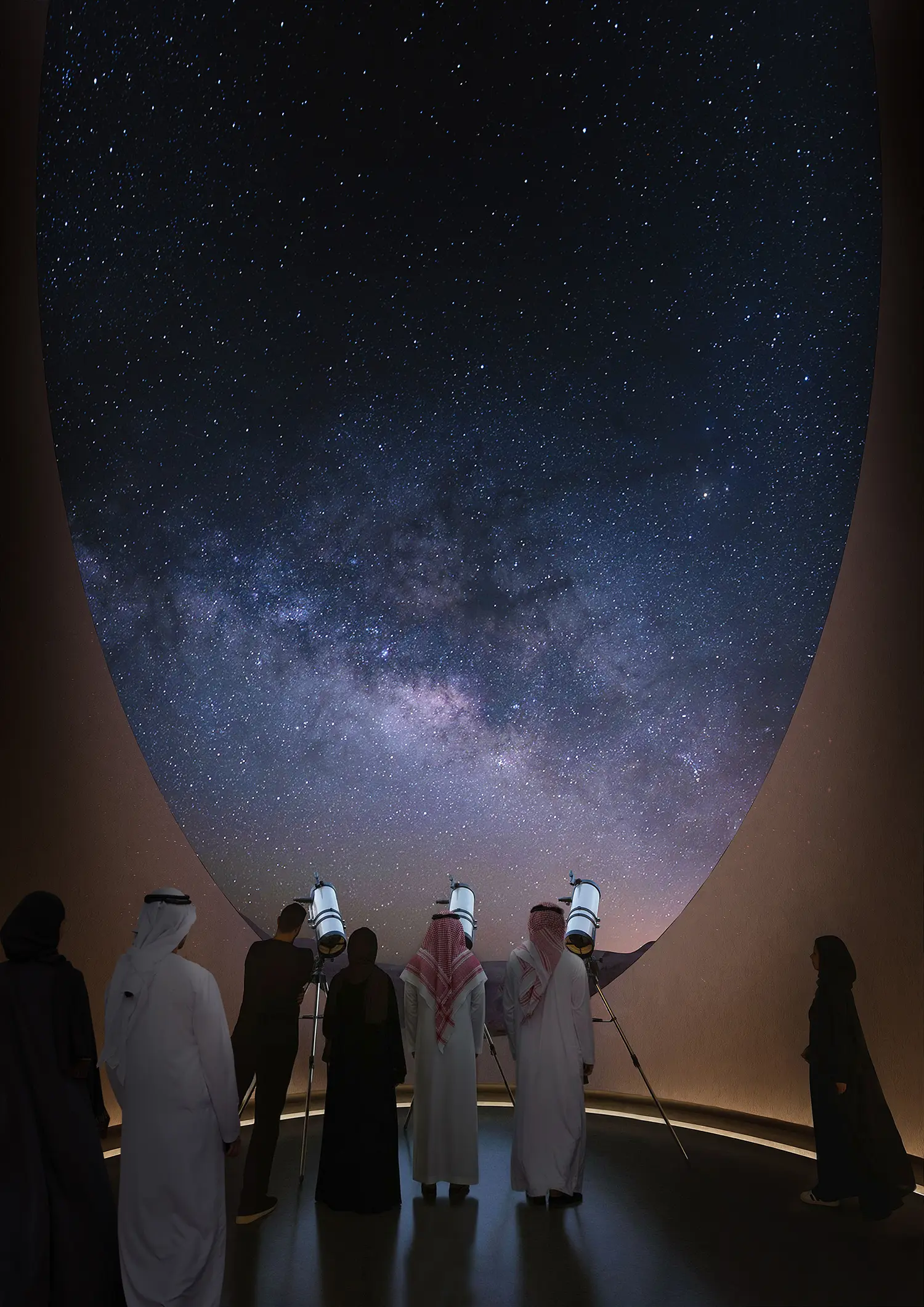
The tubular forms are doing more environmental work than the renders suggest. Each tube in the cluster contains embedded shading devices that respond to varying light conditions — managing direct sunlight during the day while operable windows respond to desert weather, improving energy efficiency and protecting the structure from the elements. At night, the same geometry that shelters the interior from solar radiation becomes the frame through which stargazers orient themselves to the sky. Stuart Wood, Executive Partner at Heatherwick Studio, described the ambition precisely: “Space observatories are often remote, sterile places — technical outposts that feel distant from the public. We saw an opportunity to dissolve those barriers and create a place where visitors can step inside the wonder of the cosmos.” The studio’s recent work — from the Urban Reef in Rotterdam to the Daegyo Apartments in Seoul — has consistently pursued form derived from specific site conditions rather than imposed upon them.
The program inside AlUla Manara is more complex than a standard visitor attraction. The building will contain exhibition spaces with immersive displays, a planetarium, a restaurant, a rooftop observation deck, and — unusually — active research facilities operating in real time, with visitors offered a behind-the-scenes view of live science. This is the project’s most ambitious programmatic claim: a building that is simultaneously a museum, a research institution, and a public engagement space, operating concurrently. The wider masterplan extends further still — on-site accommodation, a stargazing lodge, remote observation pods, connections to nearby hiking trails, and several new world-class telescopes built close to the centre, creating a scientific infrastructure that positions AlUla Manara as a genuine research destination rather than a popularised version of one.
The formal reference to spiral geometries is more precise than it initially reads. Three interlocking telescope-like formations reach upward from a base clad in textured stone cladding referencing AlUla’s sandstone landscape. The choice to root a cosmologically-themed building in the geology immediately beneath it is the difference between a building that belongs to its site and one that has been placed on it. Wood frames it as a dialogue: “Our design draws from the dramatic spiralling geometries that shape both the solar system above us and the natural world around us — three interlocking telescope-like formations reach skywards while remaining rooted in the desert landscape, embodying a dialogue between earth and universe.”
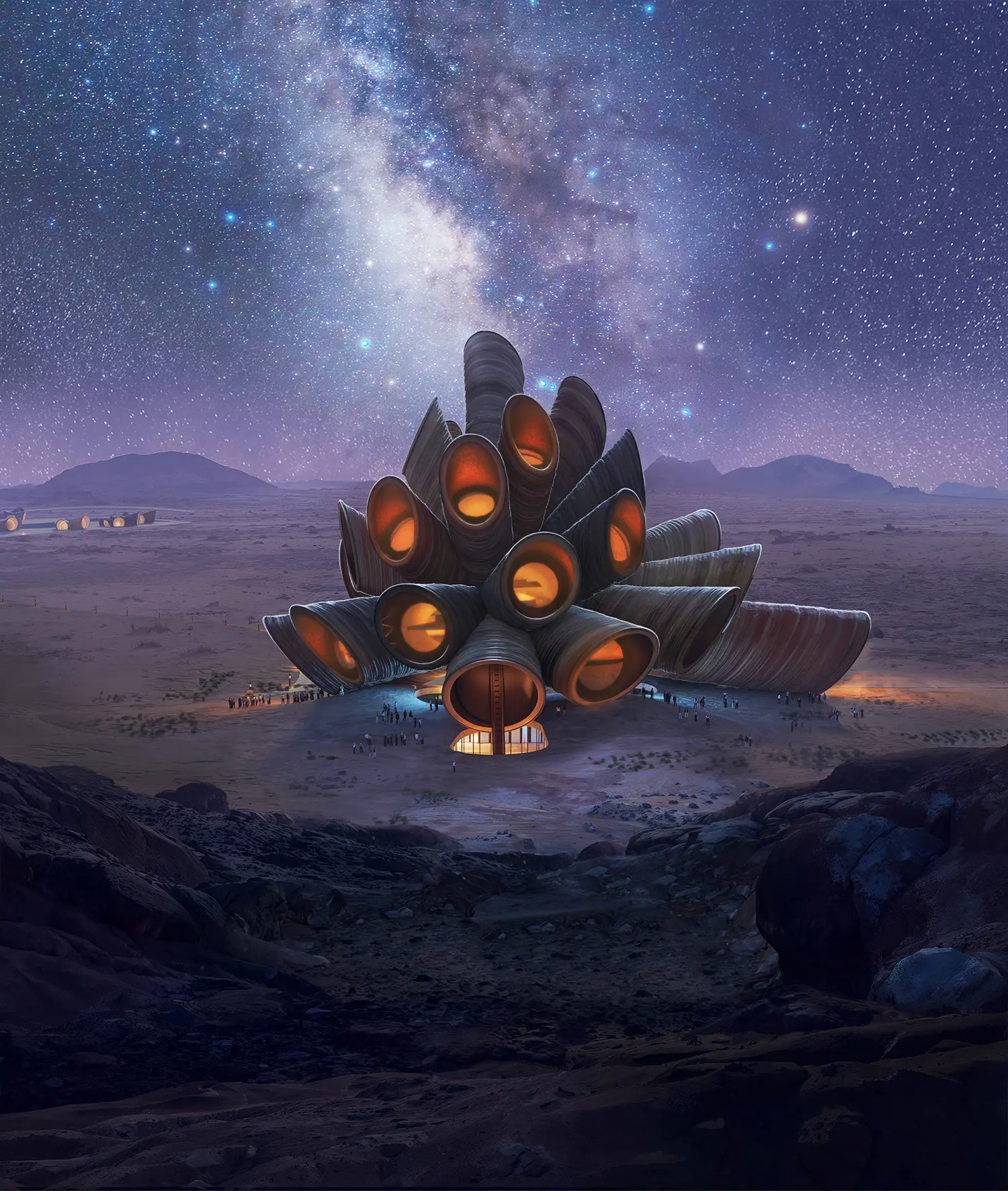
The question AlUla Manara will have to answer is whether the building’s formal drama serves the astrotourismmission or competes with it. Heatherwick Studio’s most successful projects — Little Island in New York, Zeitz MOCAA in Cape Town, Coal Drops Yard in London — have resolved this tension by making the architecture inseparable from the experience it enables. At AlUla, the experience is the Saudi Arabia dark sky itself, unchanged by any human intervention. The building’s role is to frame it, protect it, and make it accessible. Whether three interlocking spiral tubes clad in sandstone-textured stone can perform that act of framing without overwhelming what they frame is the only question the renders cannot yet answer.
AlUla Manara by Heatherwick Studio | Location: AlUla, north-west Saudi Arabia — Status: Design revealed, competition winner — Key materials: textured stone cladding, tubular steel structure, integrated shading devices