



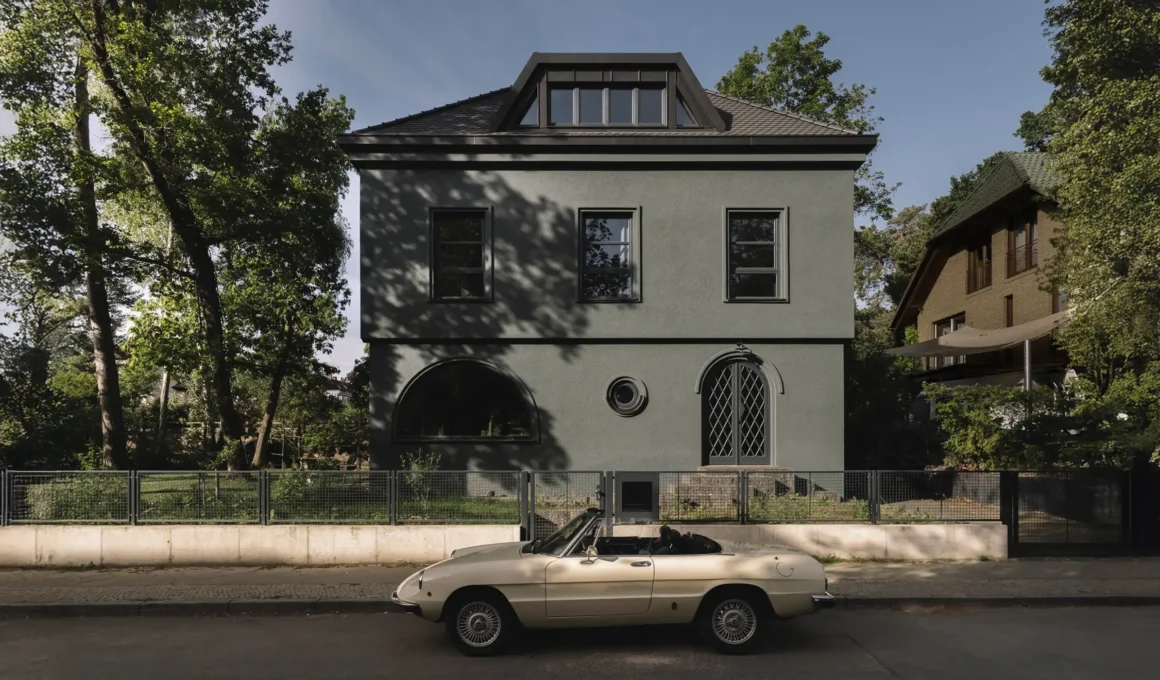
Atelier ST has completed the Greenkamp House, a new German residential building in Berlin‘s historic Eichkamp estate, using a deeply hued facade and a traditional form to quietly integrate the structure into the protected, wooded neighbourhood. The design carefully avoids attention, instead opting for a respectful dialogue with the context—an area originally master-planned by legendary architect Bruno Taut in the 1920s as a forest estate. The home sits on one of the last undeveloped plots, demanding a sensitive contemporary architectural language that honors the area’s distinct, almost village-like character.
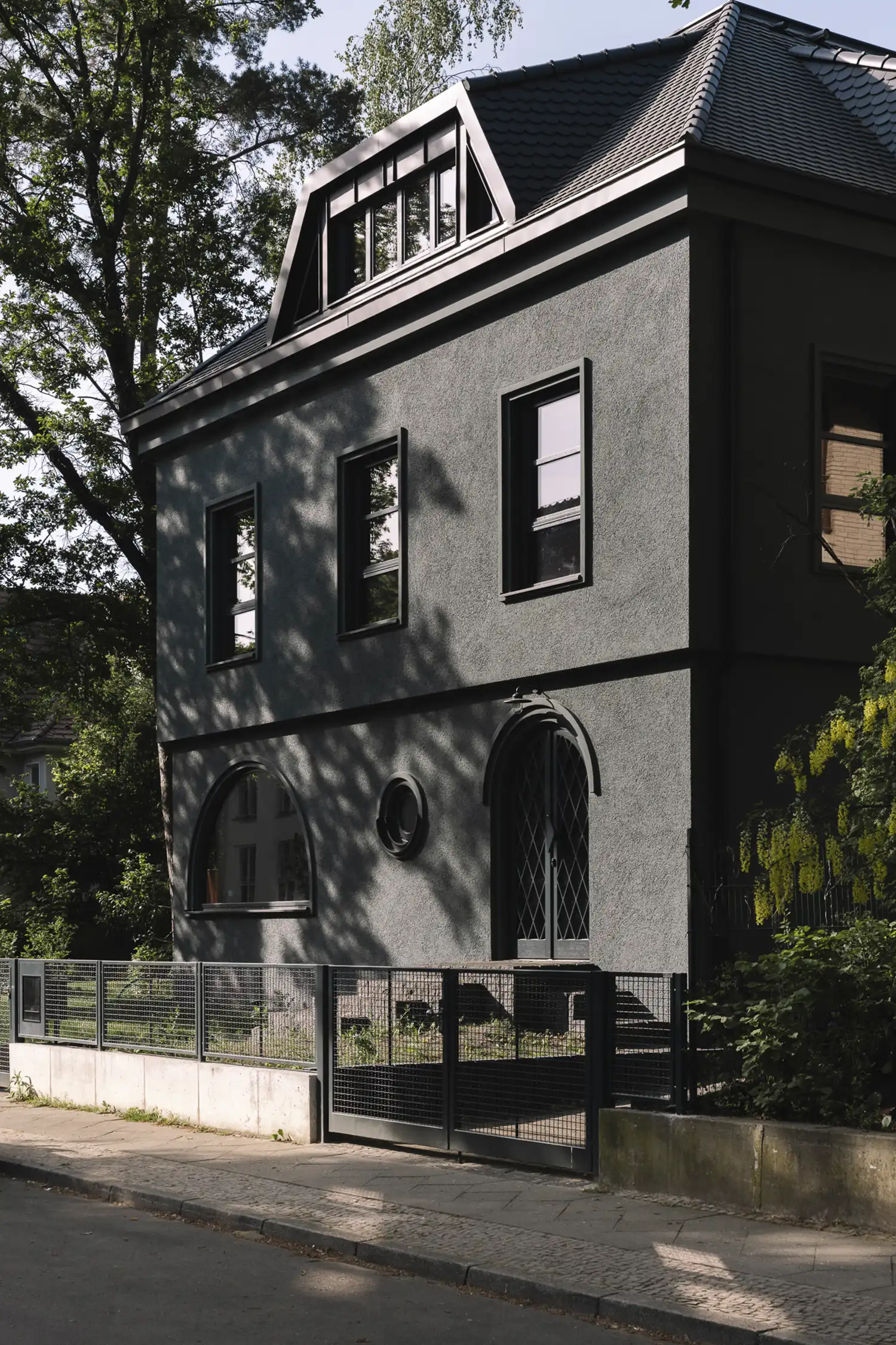
The architecture studio’s core concept was to acknowledge the Eichkamp Estate’s historical identity while providing a modern dwelling for a family of six. They achieved this by choosing a compact, near-square footprint capped by a classic tent roof, a familiar proportion in the area. Crucially, subtle cantilevers on the upper storeys add a sculptural depth to the form. This seemingly simple composition ensures the Greenkamp House develops an independent yet understated presence, positioned deliberately between being a private retreat and a communal neighbour in the evolved urban setting.
The exterior is defined by a monolithic coating of dark green mineral lime plaster. This rich, textural finish is designed to visually absorb the building into the dense surrounding canopy of old deciduous trees, functioning as a sophisticated form of architectural camouflage. The roof is covered with pre-patinated dark ceramic tiles, reinforcing the undirected silhouette and echoing the typical roof shapes found in the immediate vicinity. Adding a refined touch, the window openings—featuring circular, semi-circular, and tall, thin rectangular shapes—are a playful, deliberate nod to the Art Deco elements popular when the original estate was constructed, subtly connecting the new building to its past.
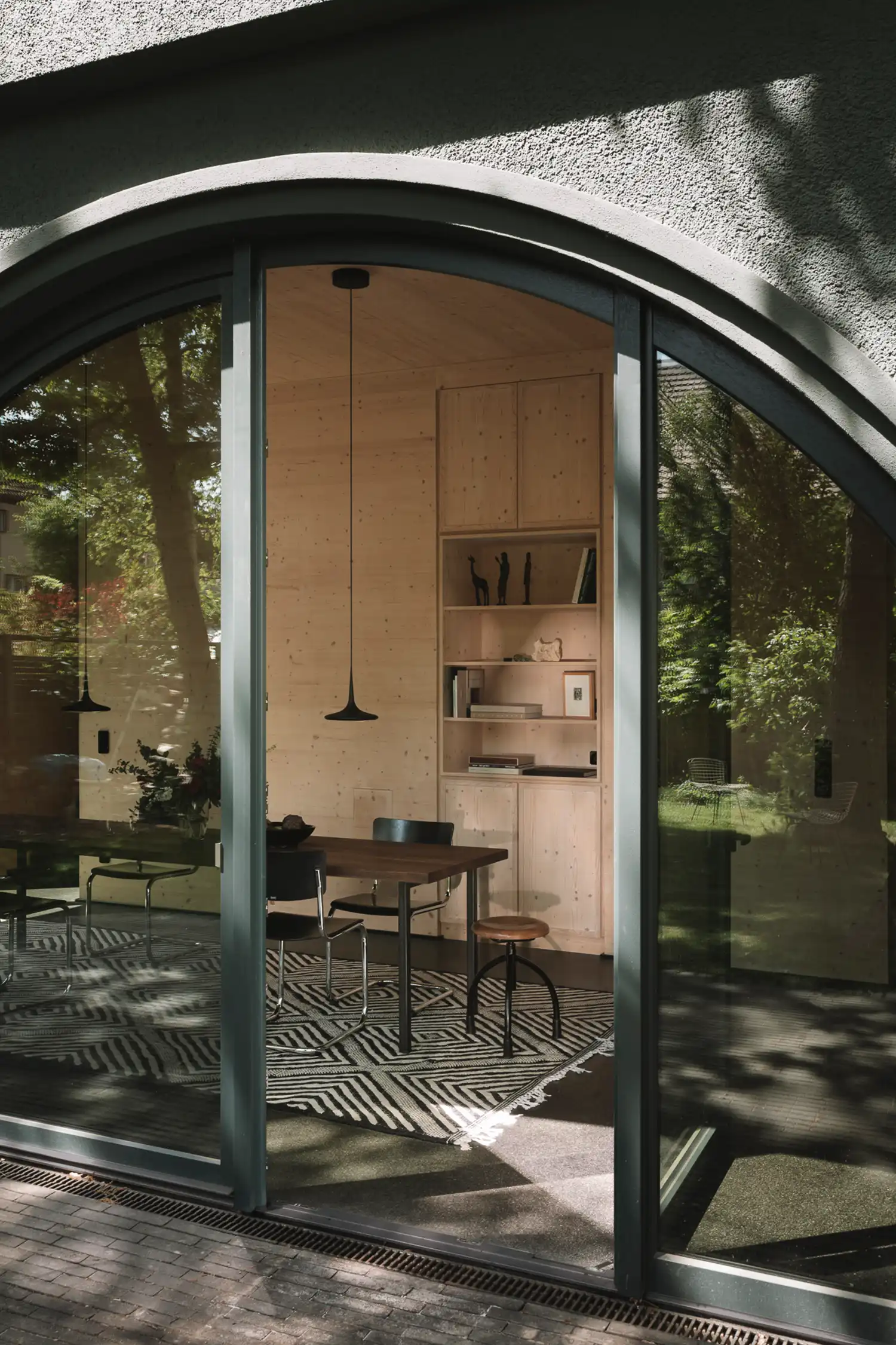
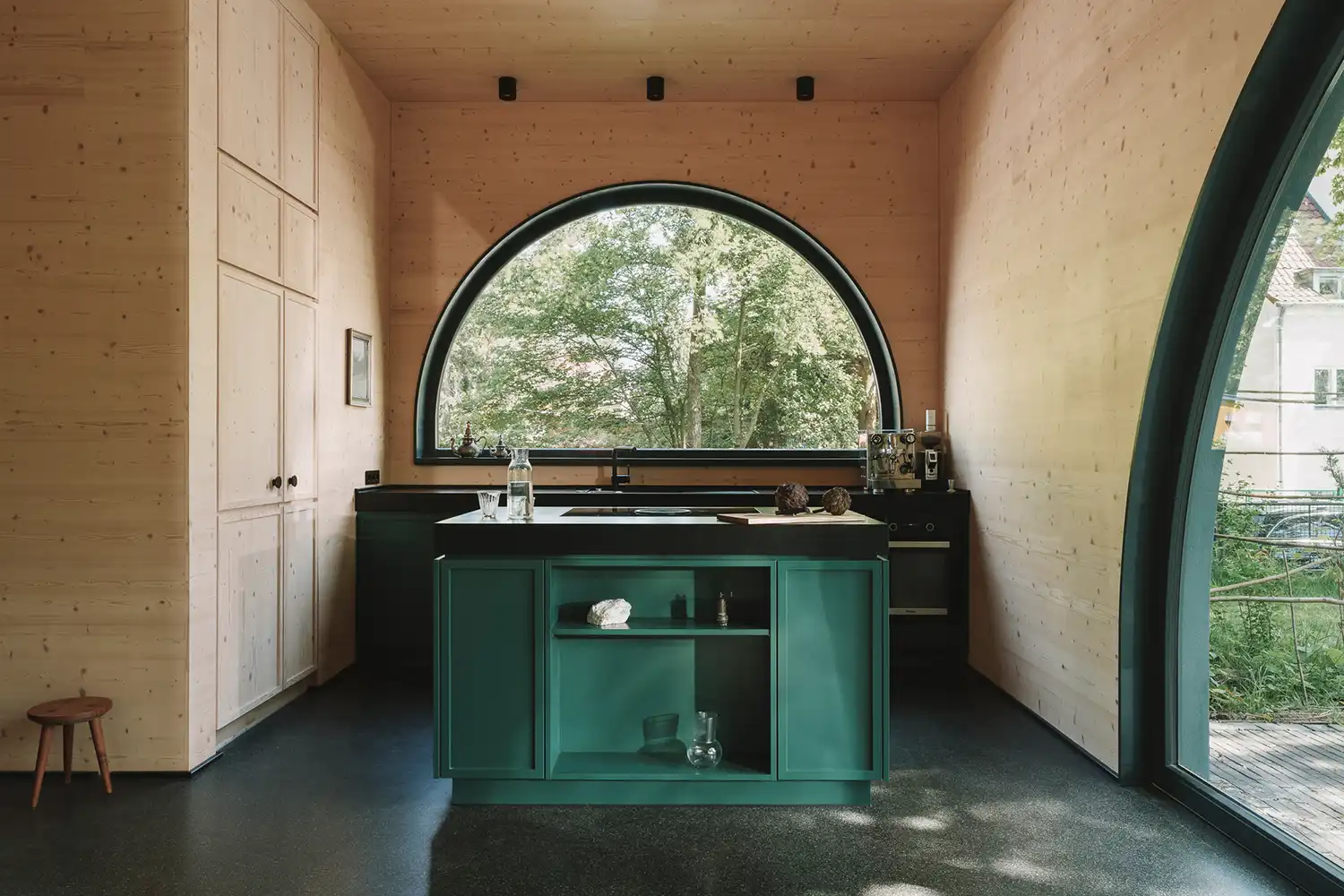
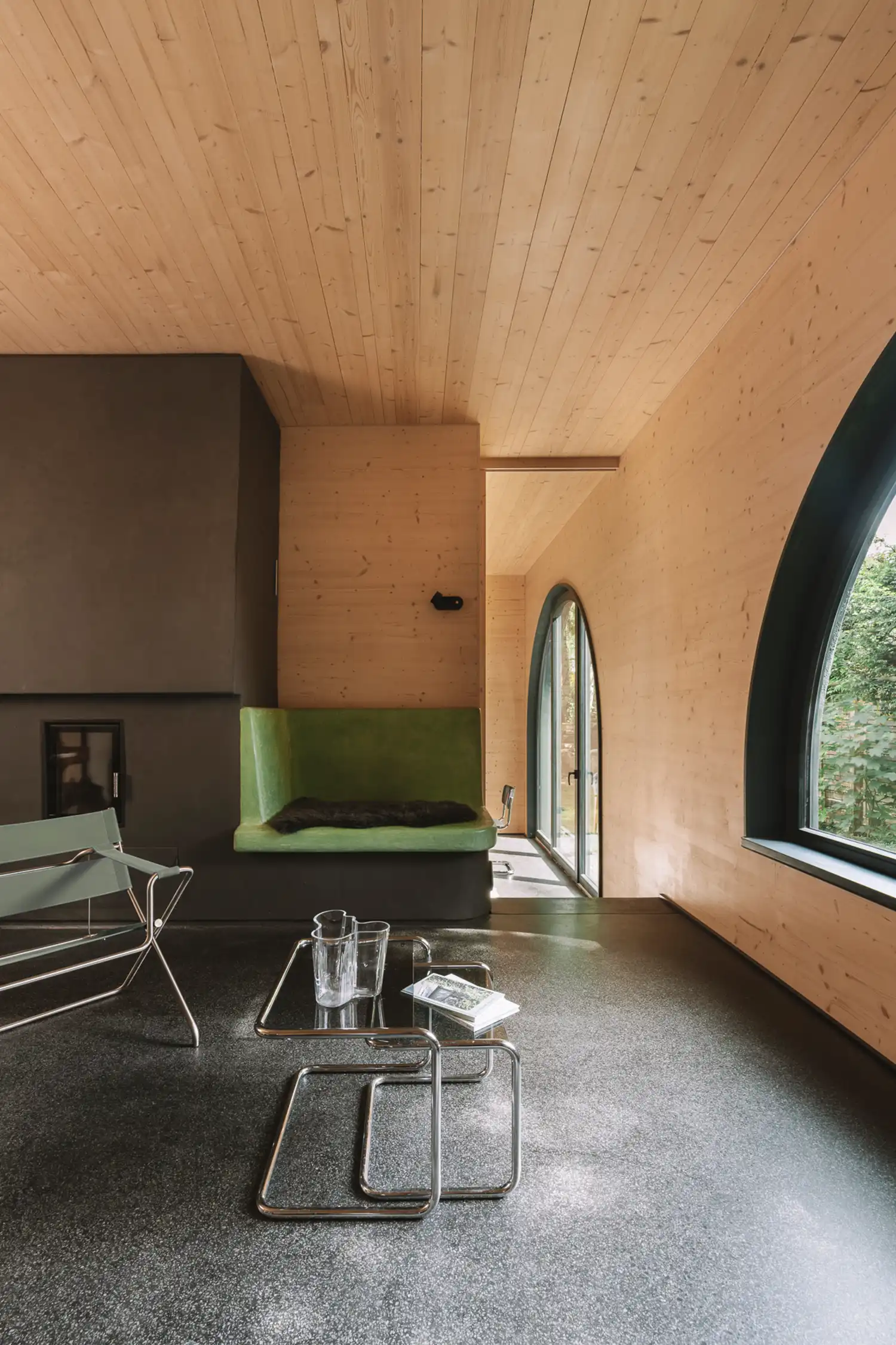
Entering the house provides a significant architectural contrast. Despite the weighty appearance of the external plasterwork, the interior reveals a full wooden shrine. The entire structure above the partial basement is a pure Timber Construction, featuring walls, ceilings, and integrated furniture crafted from wood, a testament to sustainable design. This dedication to the material provides warmth and texture, countered only by the sleek, dark plane of the black mastic asphalt flooring underfoot. The entryway, a light-filled foyer with semi-circular glazed double doors, sets a geometric theme that continues throughout the home.
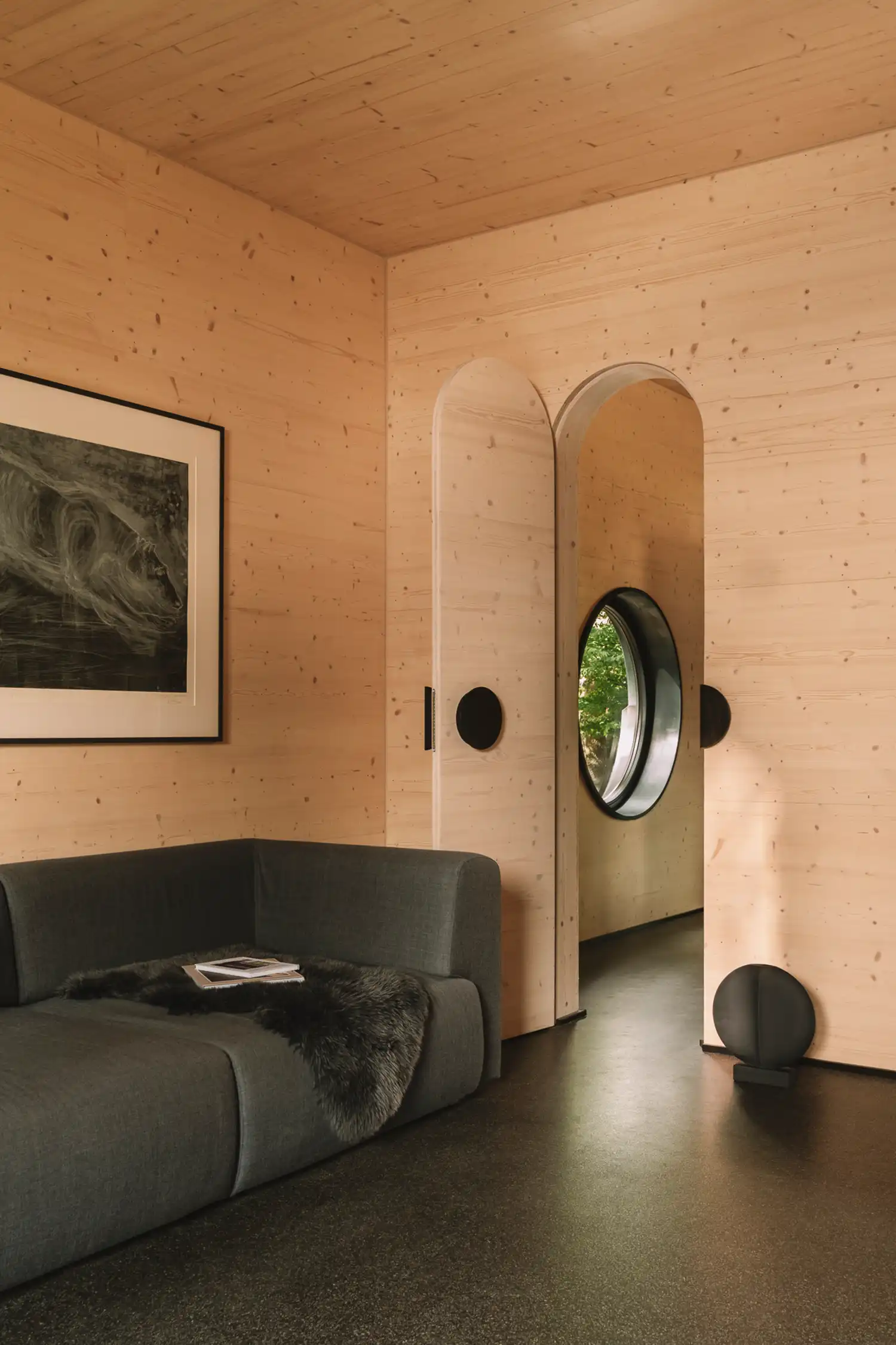
The Interior Design is characterized by fluidity, structured through subtle shifts in elevation and carefully curated visual axes. The heart of the home is the kitchen and dining area, situated a half-floor up and bathed in light from generous, semi-circular windows that blur the boundary between inside and out. Adjacent, the elevated living room functions as an intimate ‘salle séparée’—a sheltered zone for reading or conversation. This retreat is anchored by a bespoke wood-burning stove with a green tadelak seating surround, a water-fuelled unit that acts as both a cozy feature and the building’s primary heat source.
Flexibility and light define the upper levels, which house bedrooms and work areas, all offering views towards the garden and treetops. The circulation is dynamic, with single-flight staircases and air spaces creating an unexpectedly complex internal volume within the straightforward external shell. Details like interior doors with semi-circular arches, finished in black-stained oak, continue the geometric motifs established at the entrance. The Greenkamp House ultimately demonstrates how a compact, materially honest structure can be a thoughtful, high-quality addition to a historically sensitive site in Germany, providing a complex domestic experience through smart Contemporary Architecture.