



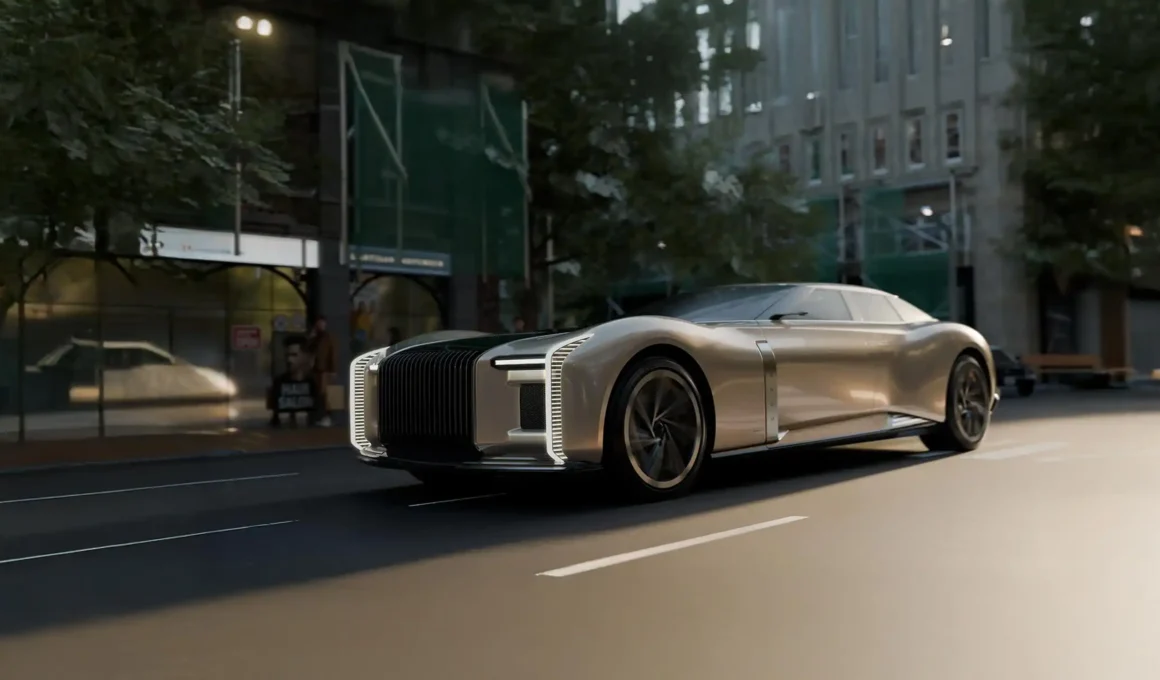
In the landscape of contemporary automotive design, where efficiency and aerodynamic homogeneity often dictate form, the Italian boutique manufacturer Aznom Automotive has consistently chosen a path of provocative rebellion. Based in Monza, a city synonymous with speed and precision, the firm has moved beyond its previous headline-grabbing Palladium to unveil a vision that challenges the very scale of modern luxury. The Aznom L’Epoque is not merely a vehicle; it is a nearly eight-meter-long architectural statement, a deliberate pivot away from the ubiquity of the SUV toward the ceremonial grandeur of the early twentieth century.
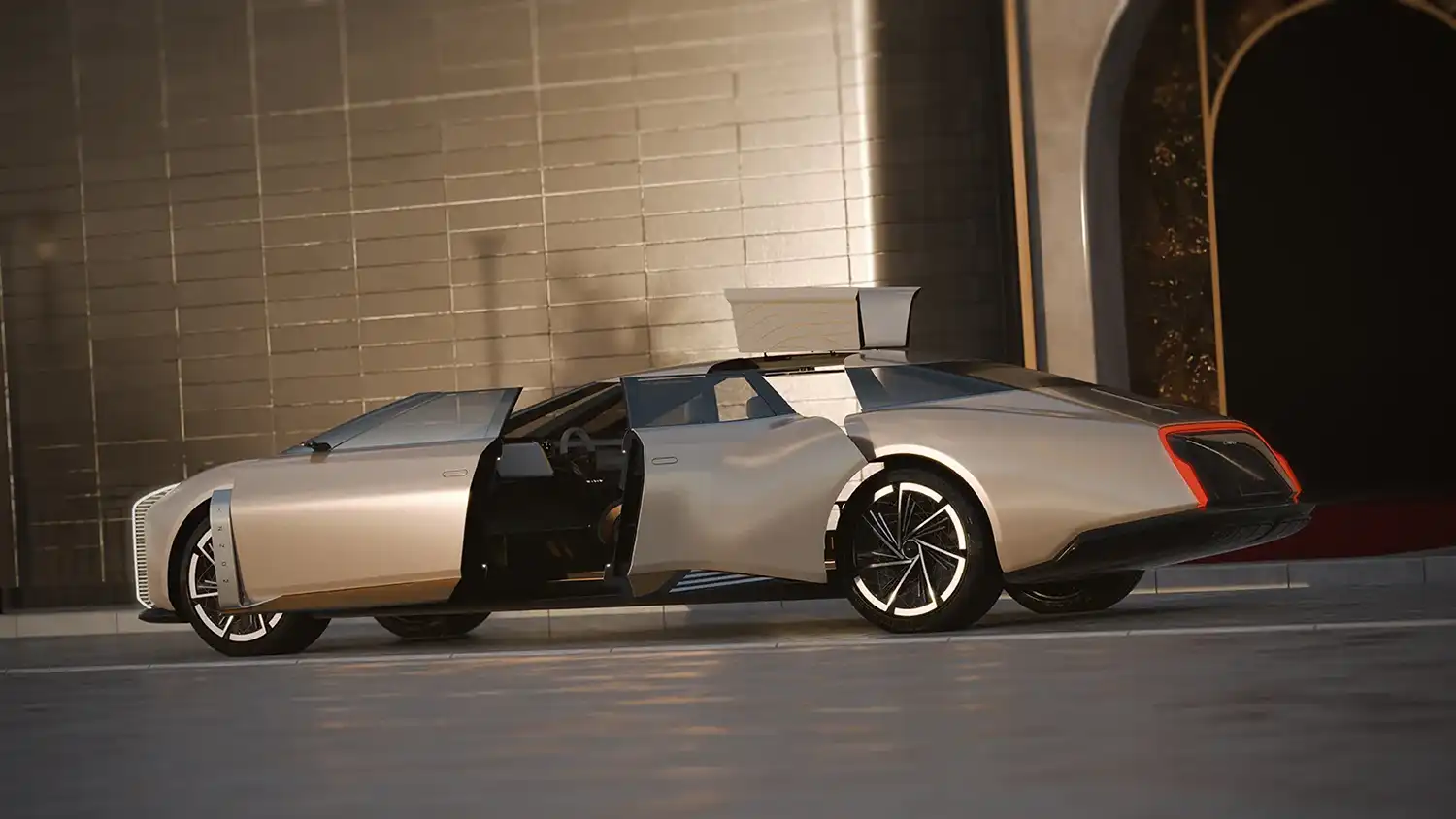
A cinematic revival of prewar elegance serves as the conceptual anchor for this project, developed in collaboration with the Turin-based design studio Camal. The L’Epoque rejects the utilitarian minimalism of the digital age in favor of a theatricality once reserved for the grand touring carriages of European royalty. Measuring a staggering 7.92 meters, the concept possesses a physical gravity that demands a reconsideration of urban space. By utilizing a traditional body-on-frame chassis rather than a modern unibody, the designers have prioritized a rigid, monumental platform capable of supporting its massive proportions and the heavy technical hardware required to move such a structure through Italy and beyond.
The synthesis of nautical grace and modern authority defines the exterior aesthetic, where the sweeping, elongated profile of a luxury yacht meets a formidable, upright front fascia. This stylistic tension—reminiscent of the formal language seen in contemporary Rolls-Royce models—is punctuated by an elaborate ingress sequence. The front doors slide forward along the body while the rear coach doors swing open to reveal a cabin that feels more like a private sanctuary than a cockpit. As sections of the roof lift upward to facilitate entry, the act of boarding becomes a choreographed performance, bridging the gap between historical automotive romance and futuristic engineering.
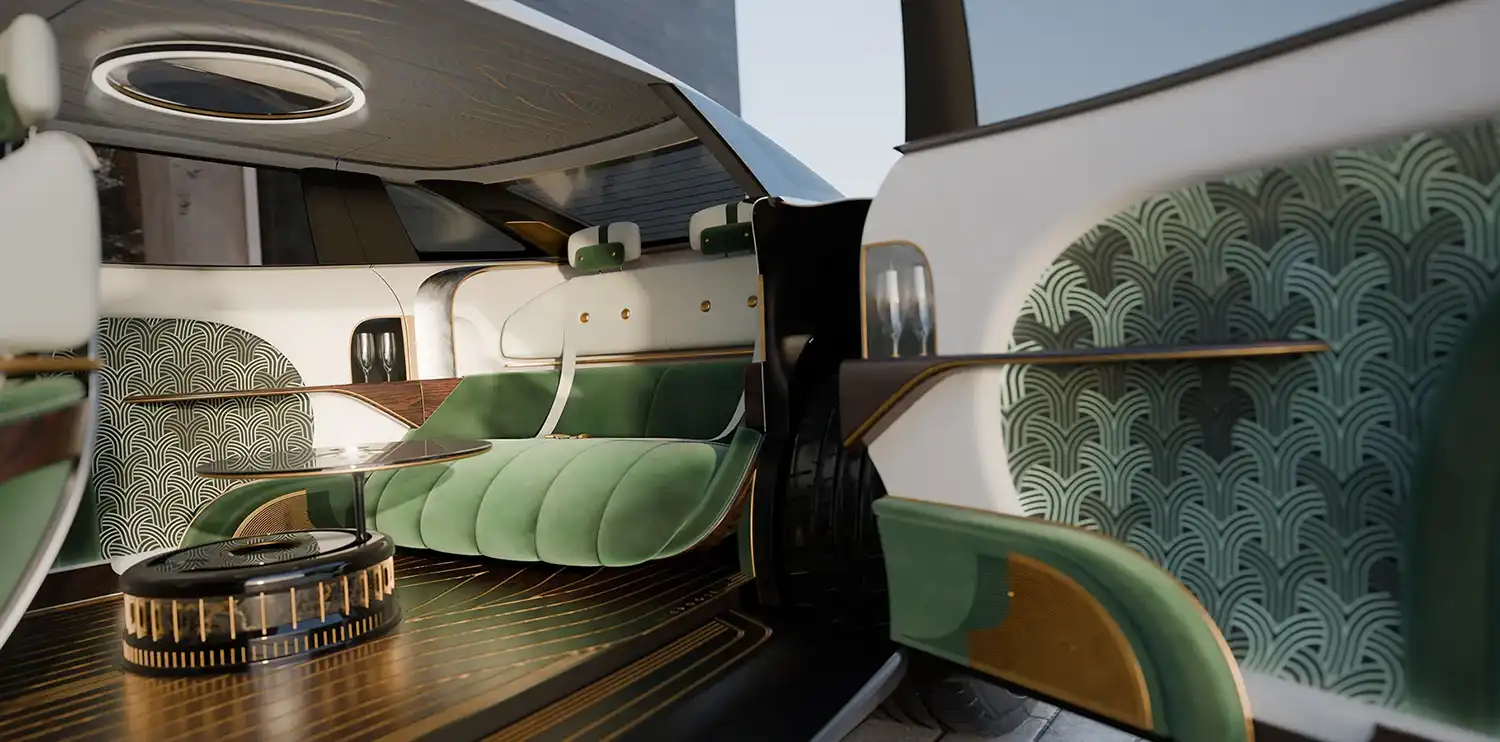
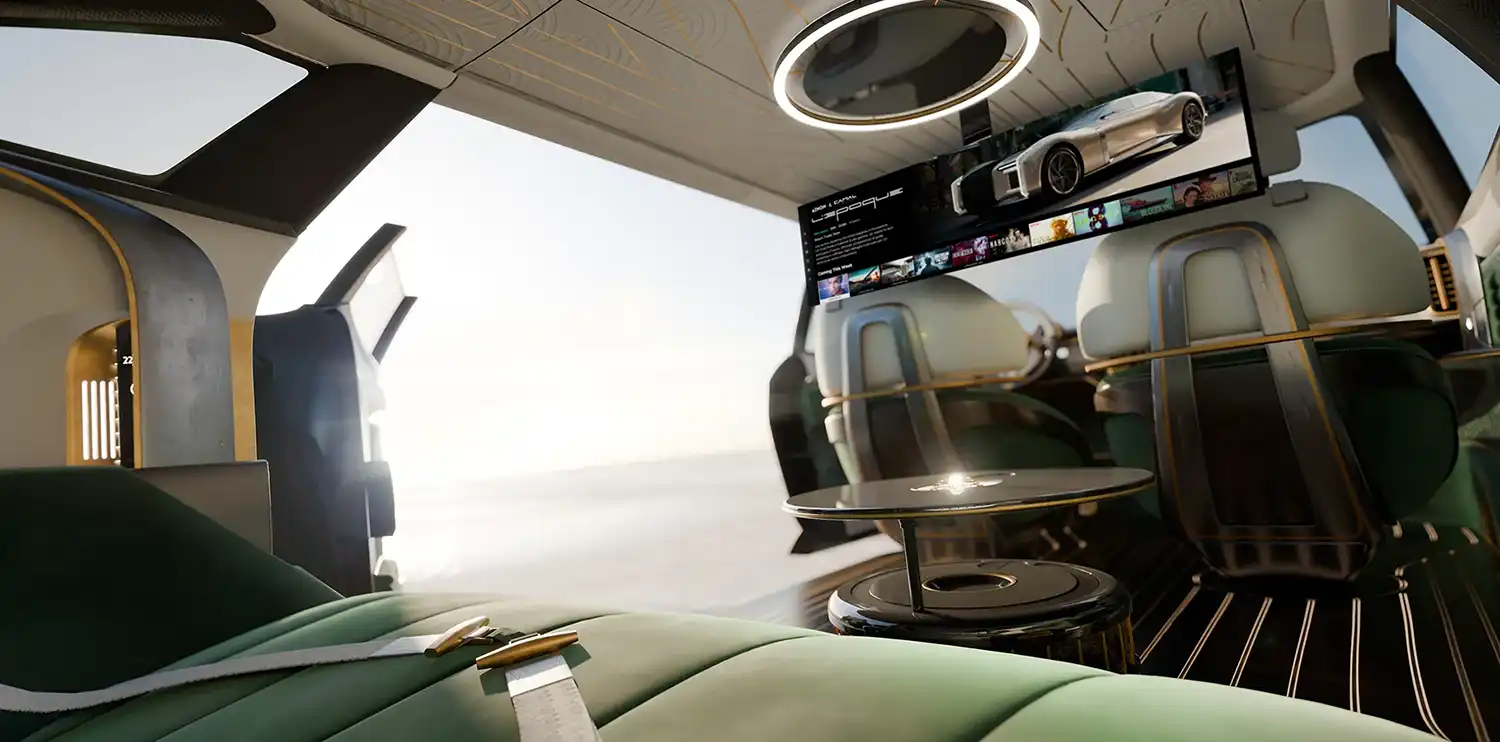
An interior reimagined as a private salon replaces the conventional passenger compartment with a curated living environment. Inside the L’Epoque, the layout abandons the standard “car seat” in favor of plush furniture upholstered in velour and encased in rich wood trim. The 2+2+2 seating configuration is centered around a rotating pedestal table, transforming the interior into a mobile boardroom or a refined lounge for the Monza elite. The sensory experience is intentionally analog in feel but digital in execution; while champagne holders are integrated into the door panels and natural materials dominate the tactile surfaces, a large overhead multimedia display and a sophisticated AI voice recognition system manage the atmosphere without the intrusion of glowing touchscreens.
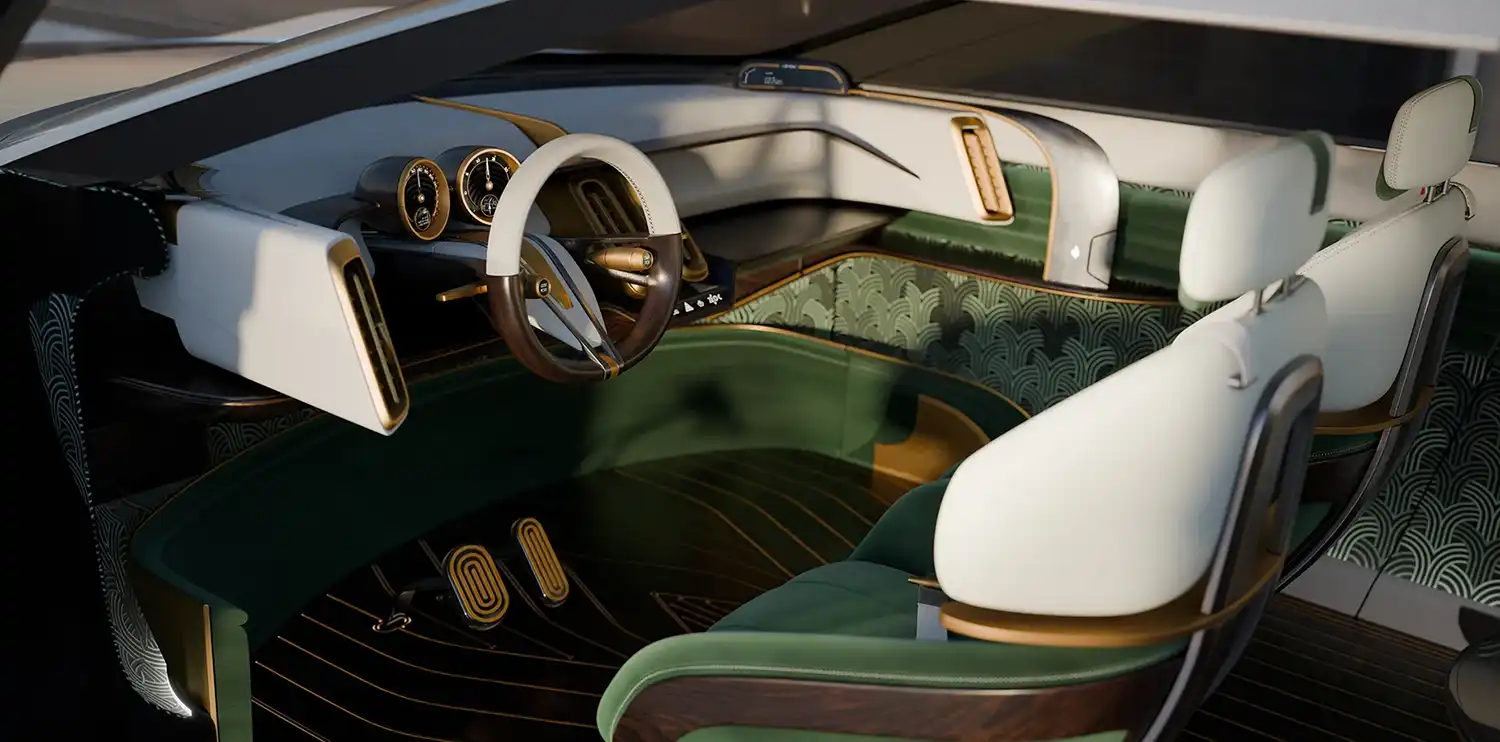
Minimalism meets high-output electrification within the driver’s quarters, where the dashboard maintains a neoclassical restraint. Two large hybrid analog-digital gauges provide essential information, while the proprietary voice interface allows the driver to remain focused on the road. Beneath this vintage-inspired skin lies a formidable series plug-in hybrid powertrain. A gasoline V6 engine serves exclusively as a generator to charge a 100 kWh battery pack, powering four independent electric motors—one at each wheel. This configuration delivers a combined 1,000 horsepower, ensuring that the vehicle’s movement is as silent and effortless as its presence is commanding.
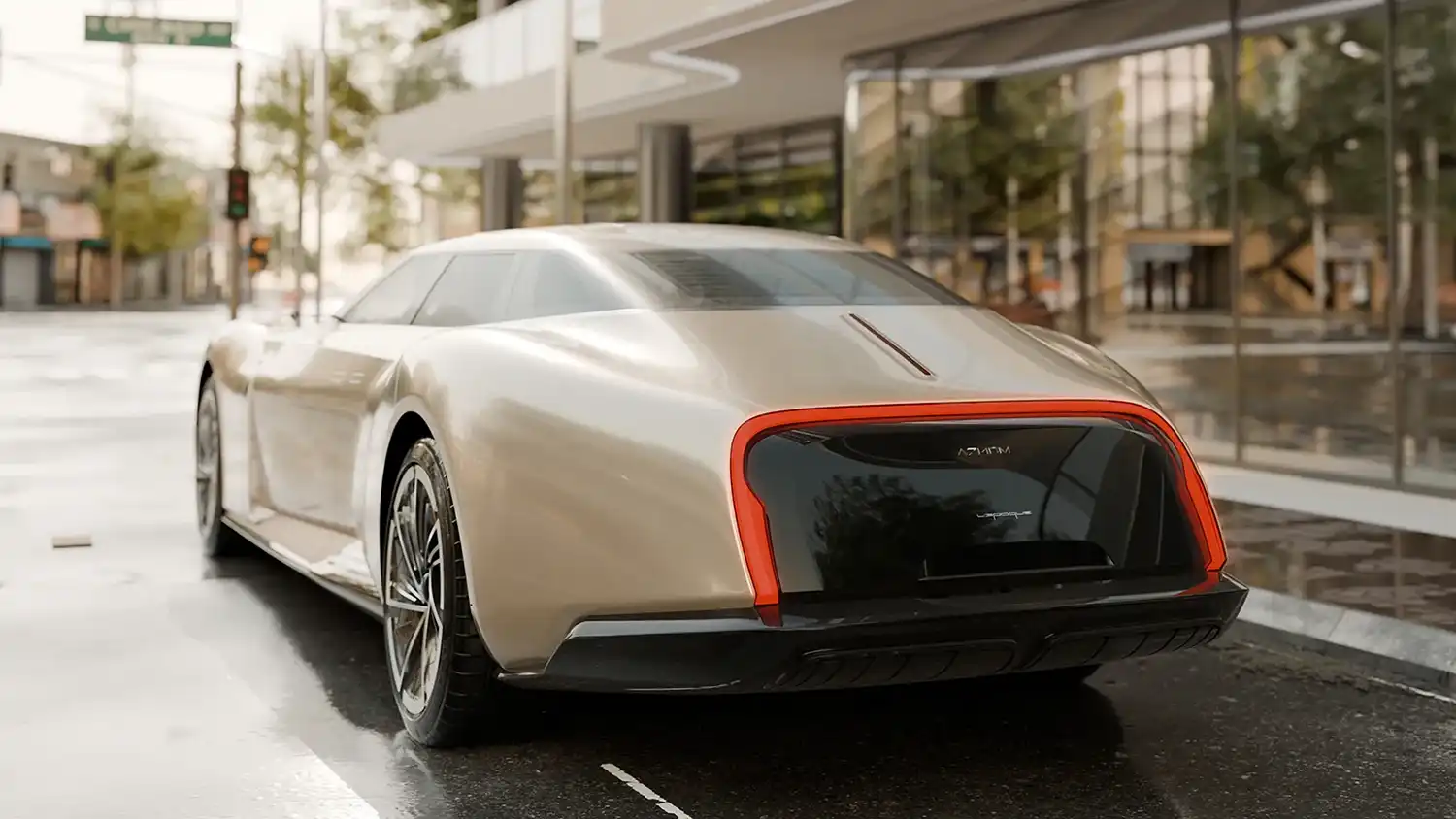
Bespoke craftsmanship for a new era of excess ensures that while the L’Epoque currently exists as a digital vision, its path to reality is paved by Aznom’s history of low-volume production. In an industry increasingly defined by algorithmic optimization, this concept stands as an unapologetic celebration of the “one-of-one” philosophy. It is an exploration of what happens when the constraints of mass production are removed, allowing for a vehicle that functions as a piece of mobile architecture. For the discerning collector in Europe or the Middle East, the L’Epoque represents the pinnacle of bespoke transportation—a vehicle that doesn’t just navigate the world, but fundamentally alters the context of wherever it arrives.