



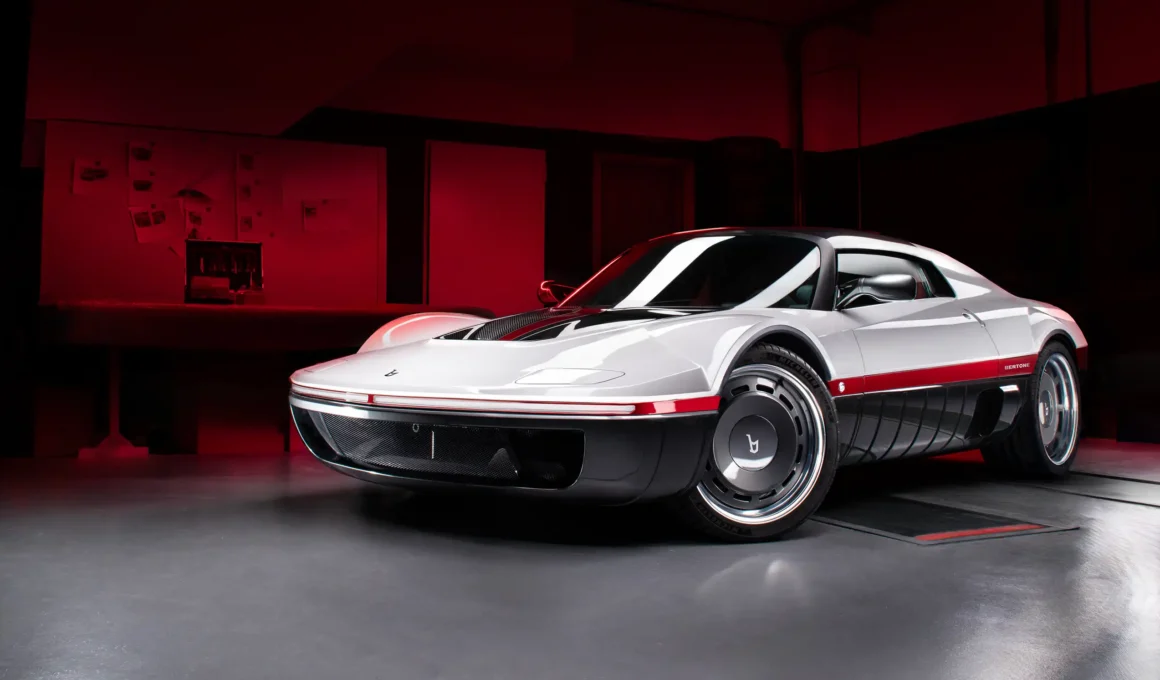
The resurgence of Bertone under its new coachbuilding chapter marks a significant pivot from pure design consultancy to a high-performance manufacturer. With the unveiling of the new Runabout, the legendary Italian firm is not merely referencing its archives but is actively re-engineering the “wedge” era for a contemporary audience. Debuting at the Ultimate Supercar Garage in Paris alongside the original 1969 concept, the 2026 Runabout serves as a bridge between the radical futurism of the 20th century and the precision-driven demands of modern collectors.

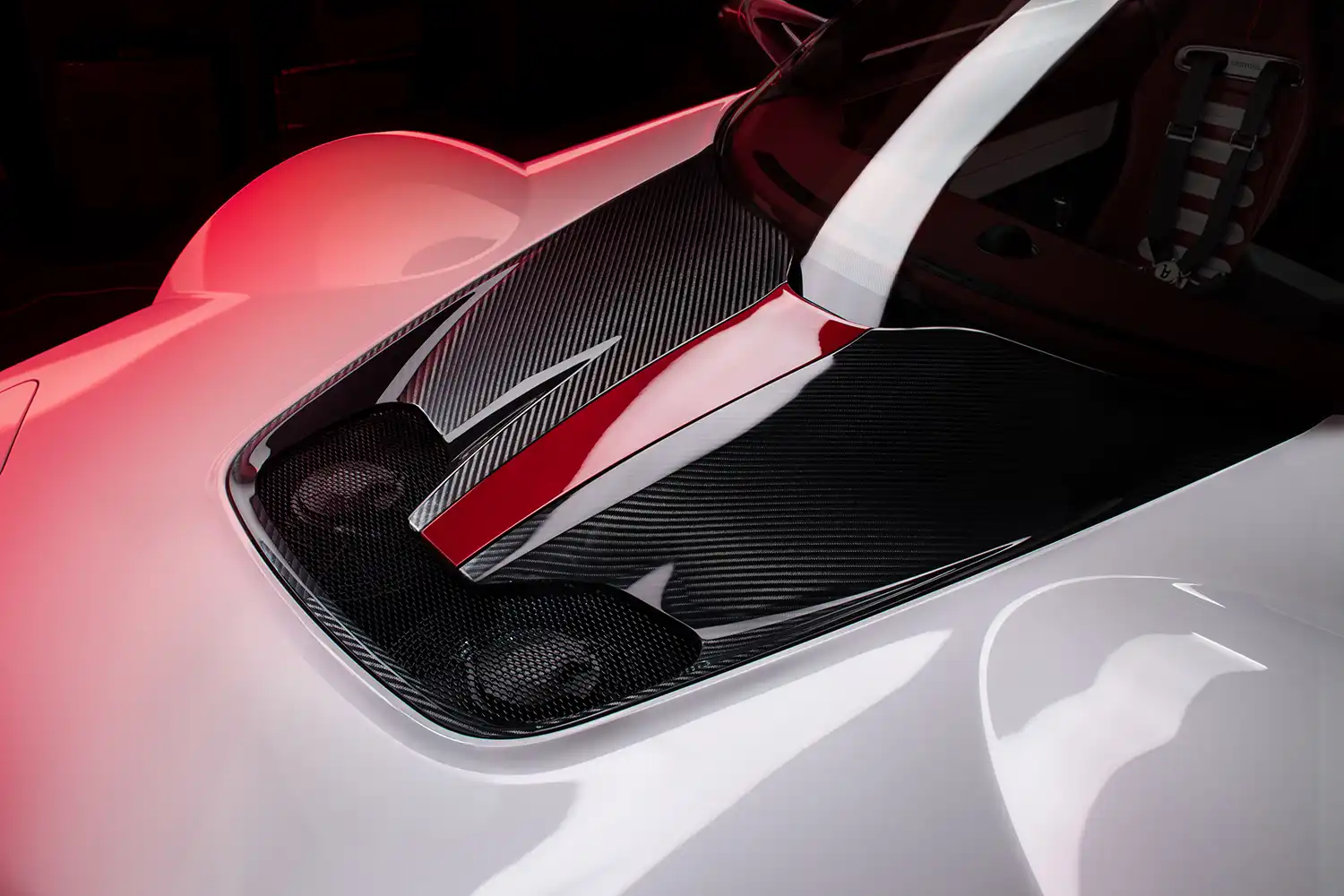
A sculptural manifesto of neo-retro modernity, the vehicle is defined by two singular, uncompromising gestures: the forward-leaning wedge line and the coda tronca (truncated tail). This architectural discipline avoids the cluttered aesthetics of modern supercars, favoring a “clean, modern surface language” that honors Nuccio Bertone’s original vision of aesthetic liberation. Available in both Barchetta and Targa body styles, the car explores the emotional resonance of open-air driving. While the Barchetta offers an elemental, exposed experience, the Targa introduces a removable carbon roof that maintains the purity of the silhouette while providing a layer of functional versatility.
The interior architecture is a masterstroke of maritime-inspired reduction, designed to feel like a sculpted, hull-like tub that integrates the driver low within the machine. Eschewing the industry’s current obsession with digital screens, the dashboard is a continuous horizontal element featuring a single digital tachometer and a central nautical compass. This “analog richness” is reinforced by a sculptural gated manual shifter and exposed mechanical controls, ensuring that the tactile connection between the driver and the road remains the primary focus.

Beneath the hand-built carbon fiber bodywork lies a sophisticated powertrain engineered for “mechanical intimacy” rather than raw, digitized speed. The heart of the Runabout is a mid-mounted 3.5-liter supercharged V6, delivering 475 hp through a six-speed manual gearbox. With a curb weight of just 1,057 kg and a lightweight bonded aluminum chassis, the car achieves a weight-to-power ratio of 2.45kg/hp. This focus on lightness and balance, rather than just horsepower, reflects a meticulous engineering process that prioritizes agility and driver feedback.

Produced in a strictly limited series of 25 units, the Runabout starts at €390,000, offering a bespoke configuration journey where each owner collaborates directly with the Centro Stile in Turin. This level of personalization underscores Bertone’s new identity as an “artistic institution” that blends the Ricci family’s industrial capabilities with the artisanal heritage of Italian coachbuilding. By integrating design, engineering, and prototyping under one roof on the French Riviera, the brand ensures that every line and surface serves a functional purpose.

This dialogue between heritage and innovation is part of a broader movement within the automotive landscape, where iconic silhouettes are being reimagined through advanced materials. Much like the Runabout’s use of carbon fiber to elevate a classic wedge form, we have recently seen how the carbon fibre Lotus Esprit restomod by Encor employs similar lightweight technologies to honor the past while refining performance. For Bertone, the Runabout is not a nostalgic retreat, but a clear signal of intent: a future where the car remains a moving art manifesto.