




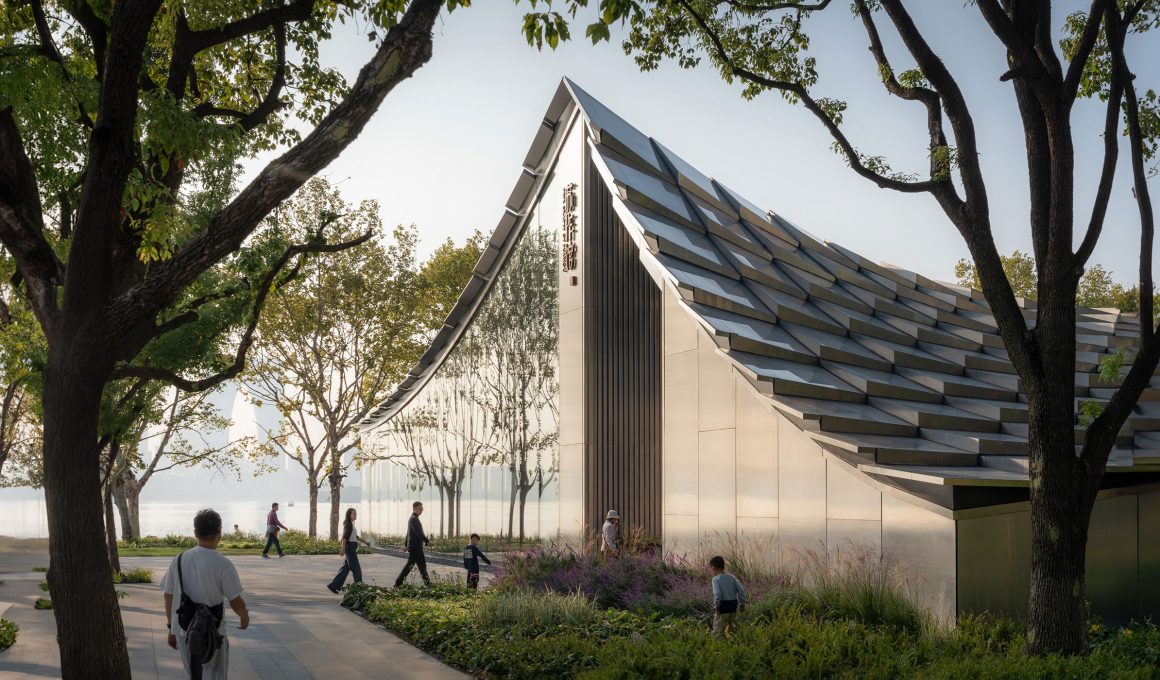
The hum of Suzhou’s Jinji Lake trail just got a little softer, a little more serene, thanks to the newly unveiled Jinji Lake Pavilion. Designed by Bjarke Ingels Group (BIG) and Arts Group, this isn’t just another building; it’s a carefully crafted experience, a quiet embrace of nature and community. Stepping away from the monumental, BIG has delivered a space that feels both intimate and expansive, a demonstration of the power of thoughtful design.
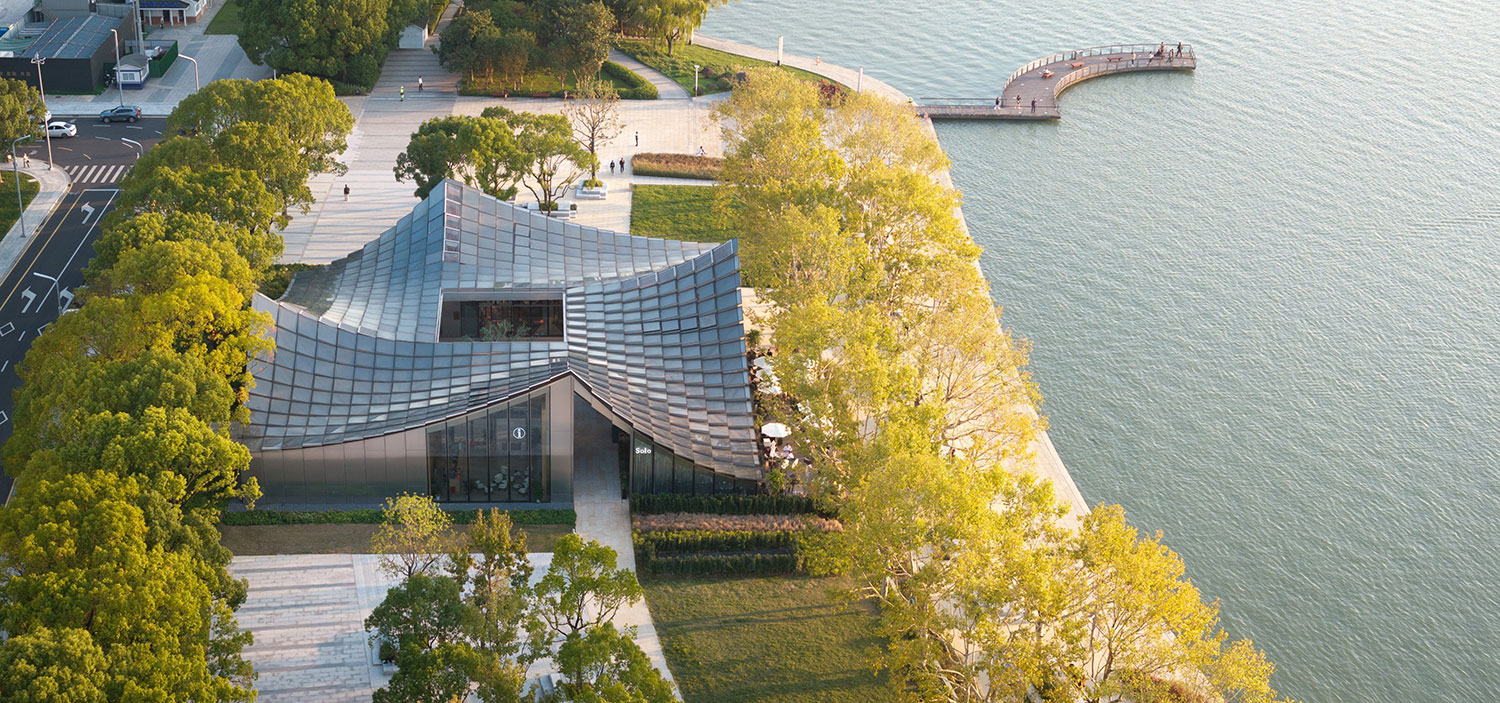
Imagine strolling along the lake, the dappled sunlight filtering through the ancient camphor trees. Suddenly, you’re drawn to a structure that seems to grow organically from the landscape. It’s the Jinji Lake Pavilion, its most striking feature a pixelated roof that mimics the very leaves overhead. As Catherine Huang, Partner at BIG, eloquently put it, the pavilion is “envisioned as an extension of the surrounding canopy of foliage.” This isn’t just poetic phrasing; it’s a reality you can feel.
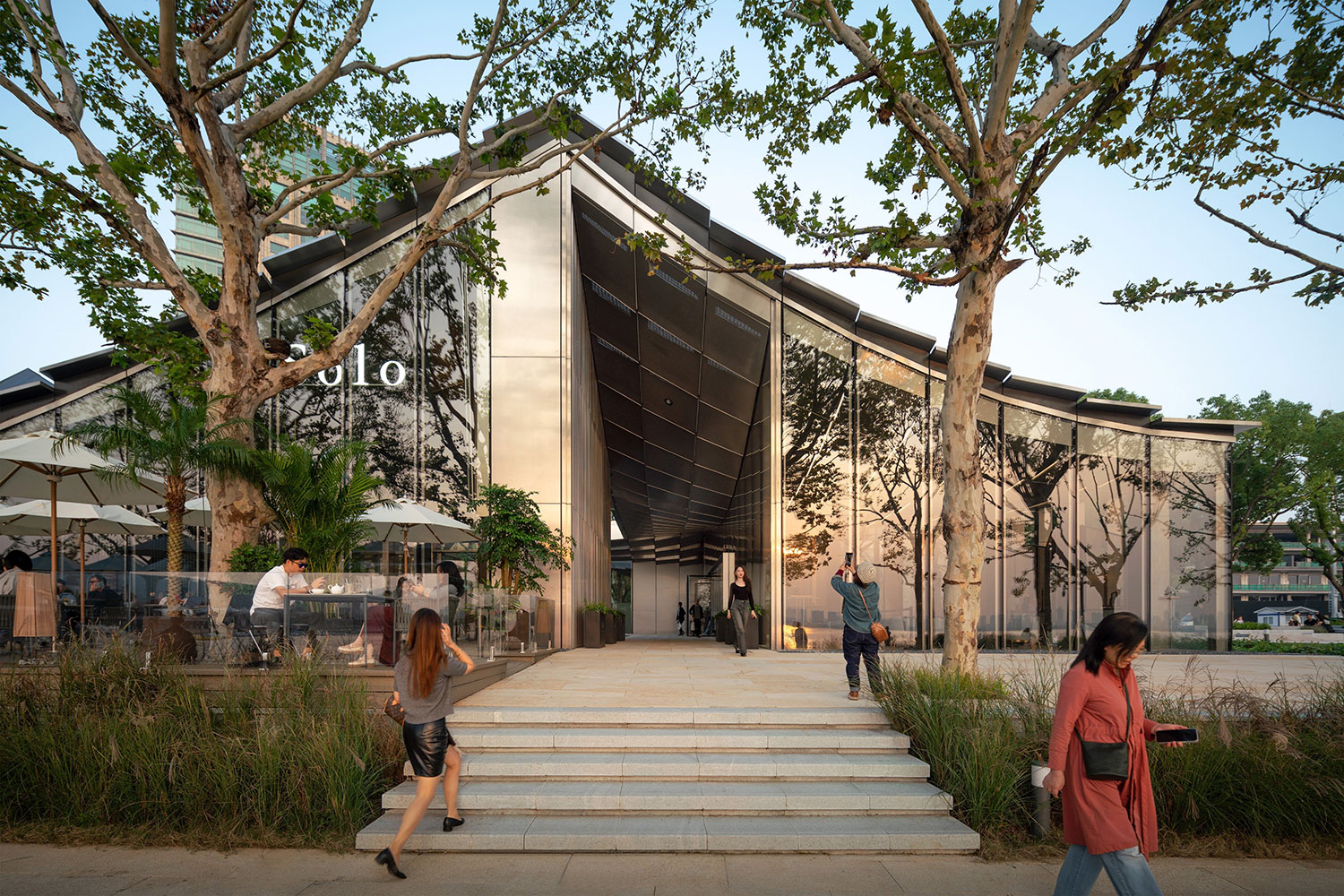
The pavilion is essentially four distinct buildings, seamlessly interwoven to form a central courtyard, a modern take on the traditional Chinese courtyard typology. This central space, anchored by a solitary tree, offers a moment of quiet reflection, a pause in the rhythm of the bustling lakeside. From here, visitors can explore the pavilion’s diverse offerings: a cozy coffee shop, a curated boutique, a refined restaurant, and a welcoming visitor center. Each space, bathed in natural light thanks to generous glass facades, feels connected to the surrounding park.
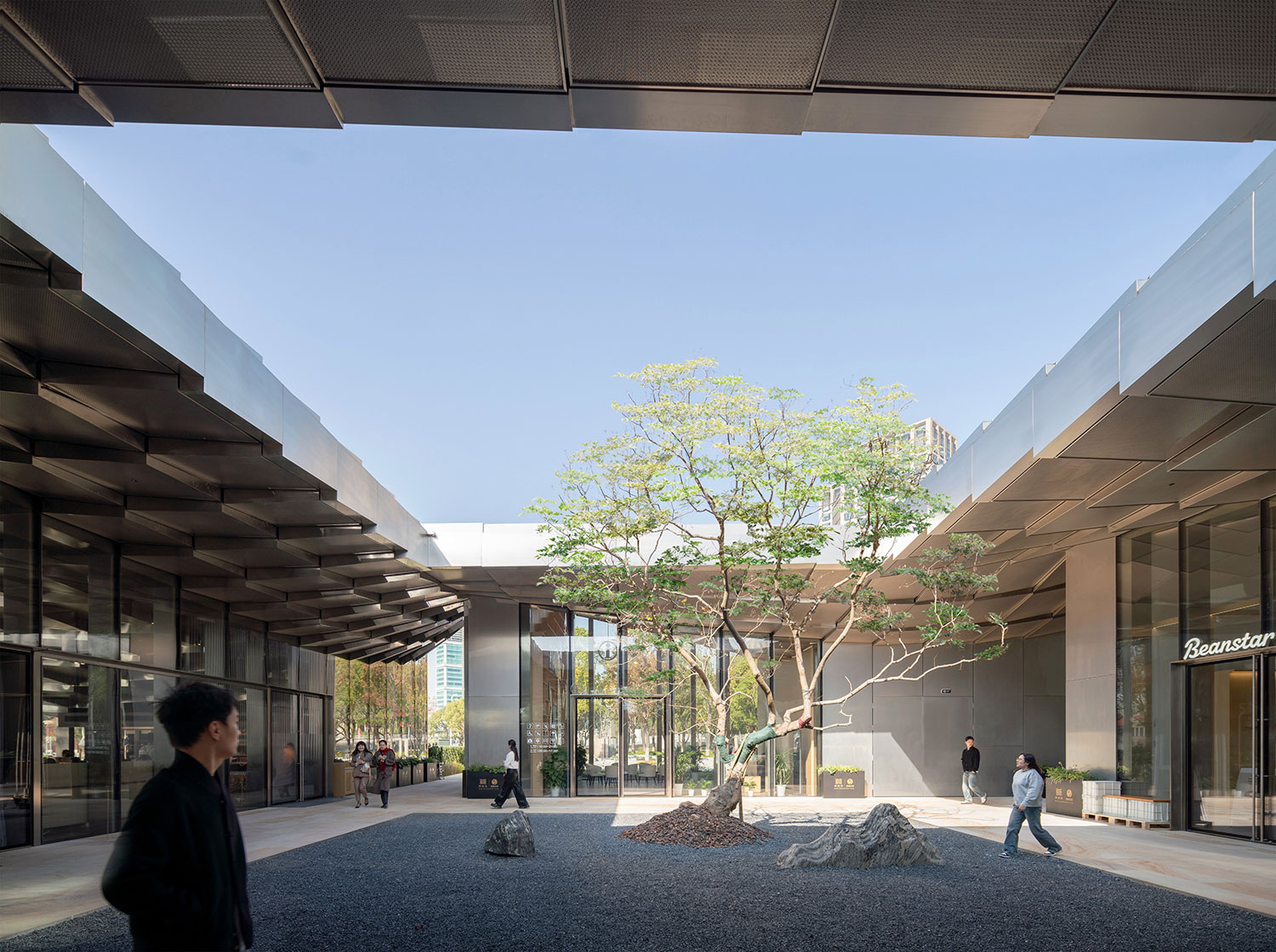
But it’s the roof, that mesmerizing pixelated canopy, that truly steals the show. The perforated plates, designed for optimal thermal performance, cast intricate shadows, a living artwork that changes with the sun’s journey across the sky. This isn’t just about aesthetics; it’s about creating a comfortable, engaging environment. The polished steel surfaces of the building reflect the light and greenery, blurring the lines between architecture and nature.
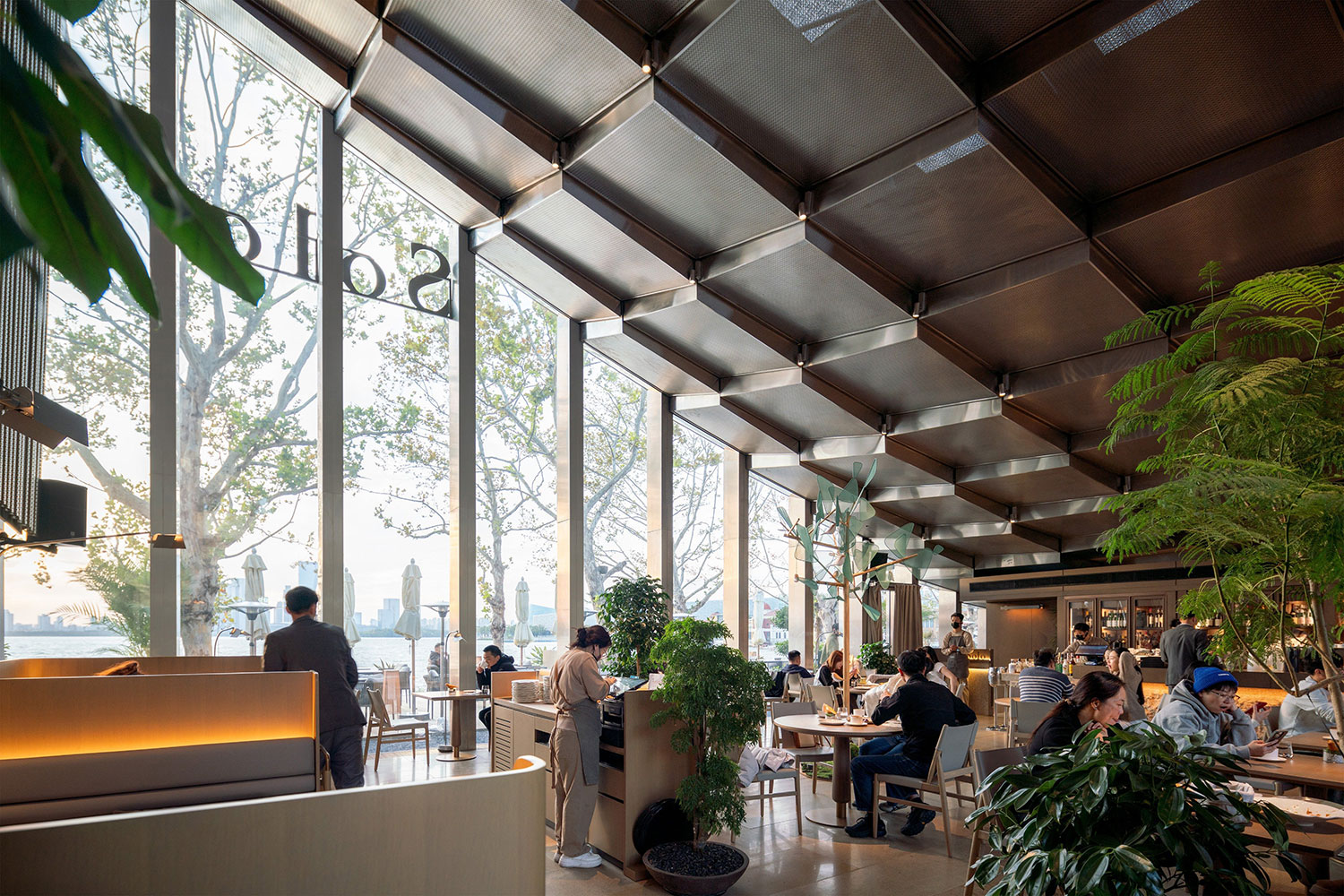
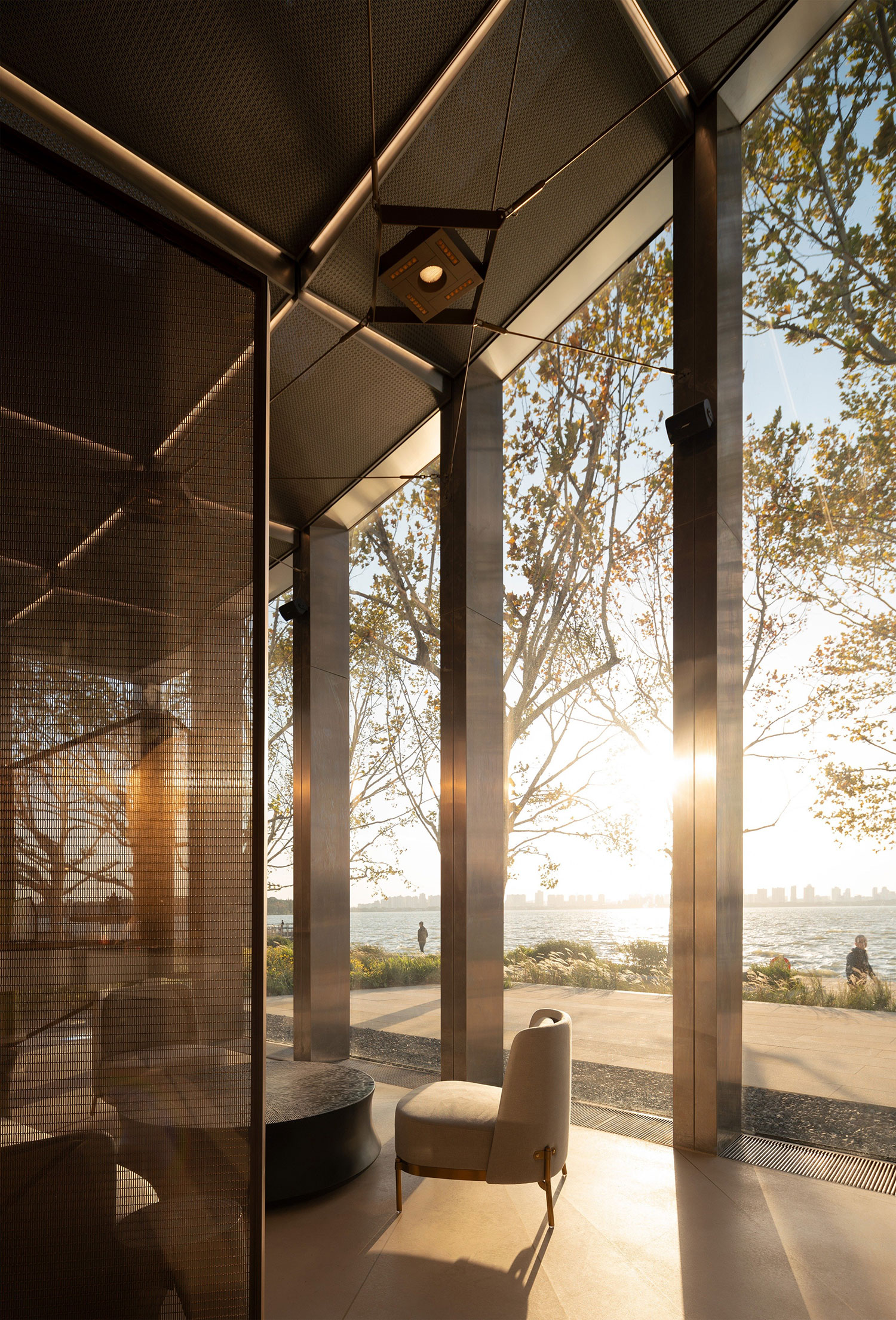
Stepping inside, the interplay of light and shadow continues. The roof’s double-layered shading elements, integrated into the glass and ceiling, filter daylight, creating a soft, ethereal atmosphere. It’s a clever design that both protects from harsh sunlight and invites glimpses of the sky above. The double-height entrances, created by lifting the roof on each side, further enhance the sense of openness and welcome.
This pavilion marks a significant milestone for BIG, their first completed project in Suzhou. And with their newly opened Shanghai studio, designed to support this project and the forthcoming Suzhou Museum of Contemporary Art, it’s clear they’re deepening their commitment to the region. The Jinji Lake Pavilion isn’t just a building; it’s an ode to BIG’s ability to create spaces that are both functional and deeply evocative, spaces that invite us to connect with nature and with each other. It’s a tranquil leaf, gently fallen by the lake, offering a moment of peace in the heart of Suzhou.