




The architecture and design world is constantly seeking structures that redefine functionality while pushing the boundaries of aesthetics and sustainability. The new Bloomberg Student Center at Johns Hopkins University in Baltimore, USA, is a prime example of this innovative spirit. Conceived by the globally renowned firm BIG Architects (Bjarke Ingels Group) and interior design specialists Rockwell Group, this 150,000-square-foot facility is envisioned not merely as a building, but as a central social engagement hub—a Student Hub—that radically transforms the heart of the Homewood Campus. The innovative concept likens the structure to a village, where a central “living room” is surrounded by a collection of tailored spaces, intentionally drawing all facets of the university community together.
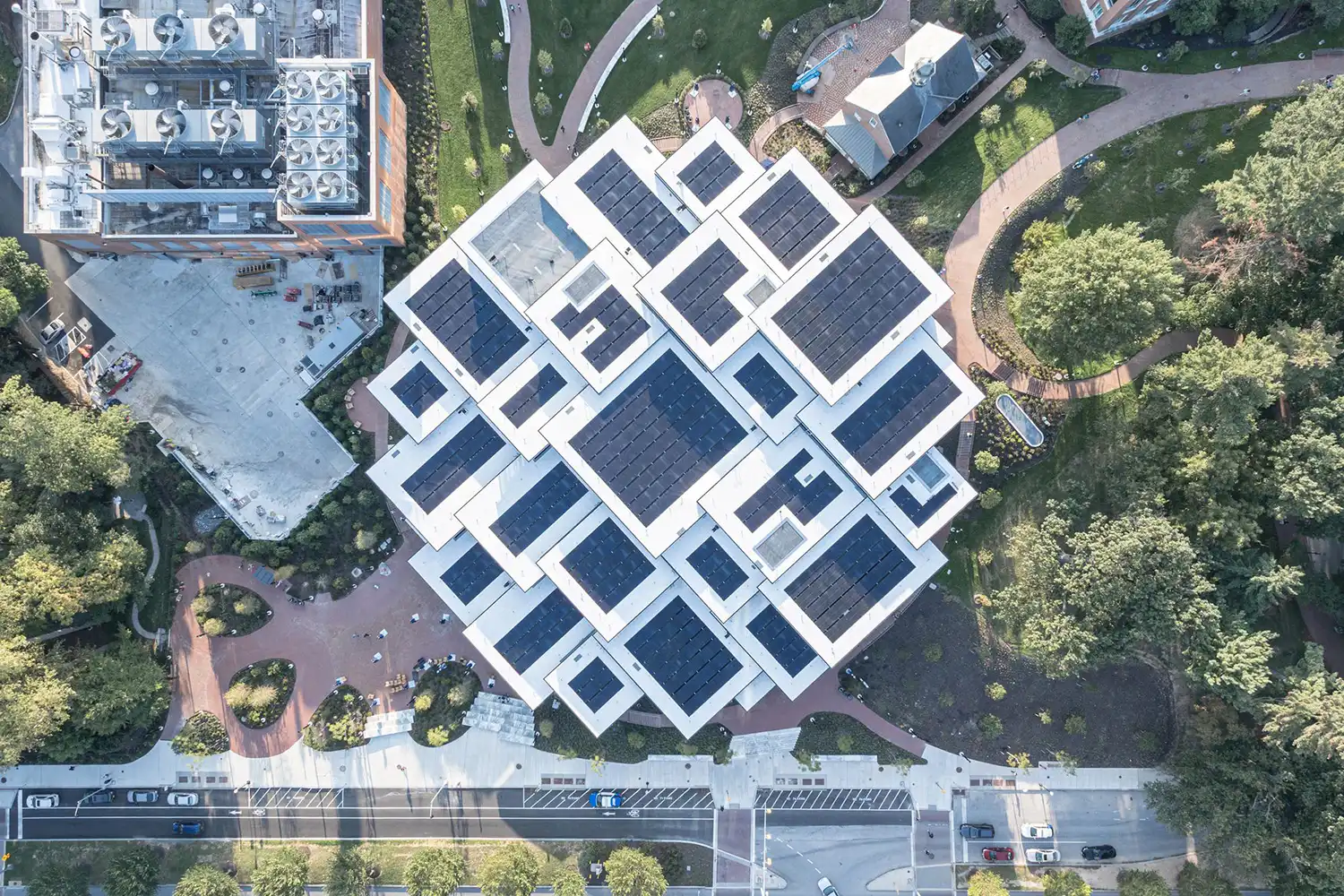
Architecturally, the structure is a masterwork of modern composition. The design is characterized by a cluster of 29 mass timber volumes that appear to ascend the site’s natural 30-foot slope. This distinctive appearance of cascading volumes is achieved through stacked, rectangular blocks enclosed in a transparent glass façade, creating visual dynamism and openness. Crucially, the choice of an exposed mass timber structure—including acoustic dowel-laminated timber (ADLT) ceilings, beams, and columns—is a deliberate move that not only provides a warm, tactile aesthetic but also signals a major commitment to advanced, environmentally conscious construction methods.
The project is deeply rooted in principles of environmental stewardship, aiming for a rigorous LEED Platinum certification. The technological heart of this goal lies in its roofscape: the flat, cantilevered roofs of the cascading pavilions are topped with nearly 1,000 photovoltaic panels, designed to generate approximately half of the building’s electricity needs. This focus on sustainable design is further reinforced by practical measures, including double-glazed windows to minimize heat loss, radiant floor heating, and the installation of a 20,000-gallon underground cistern to harvest rainwater.

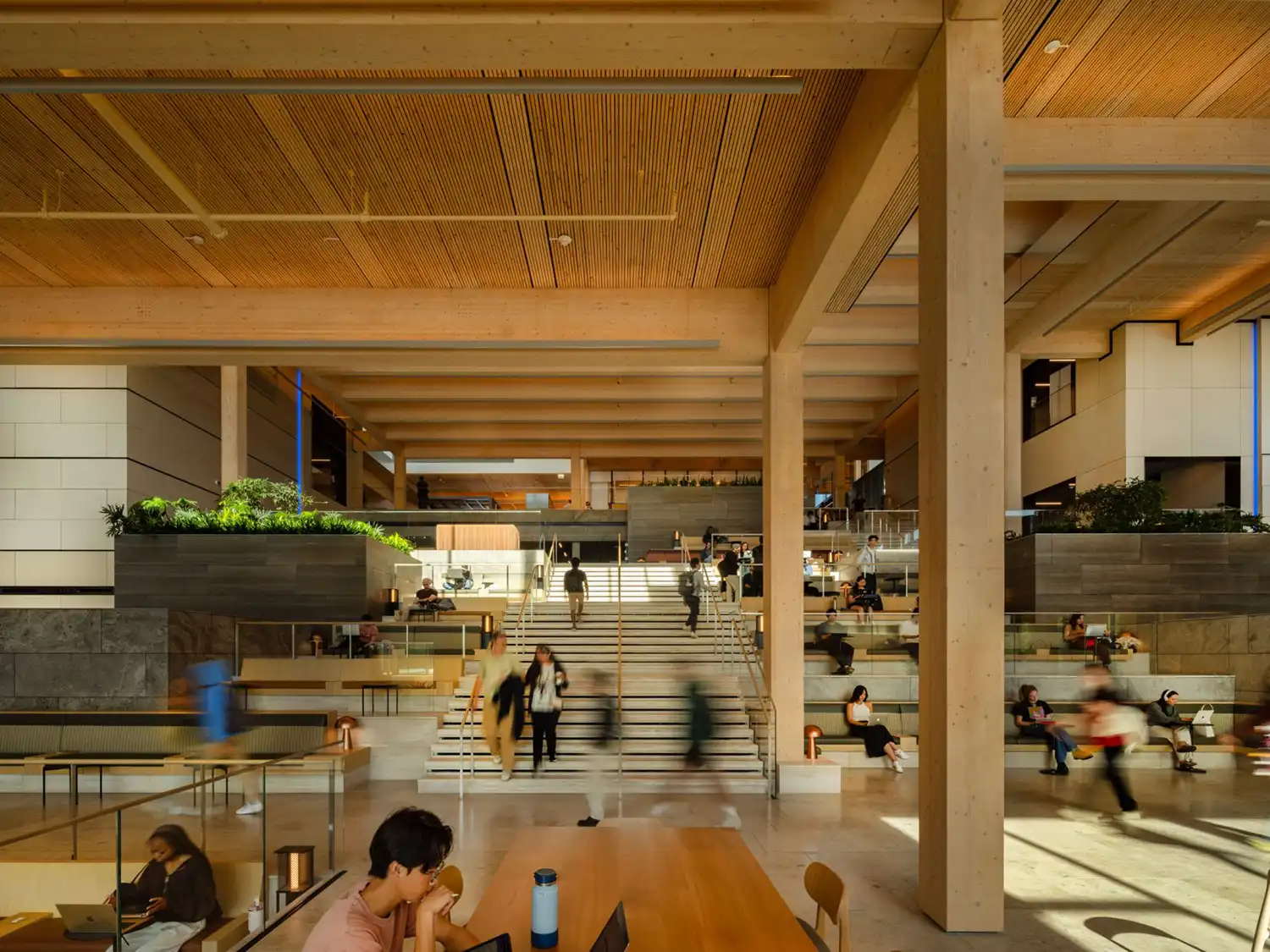
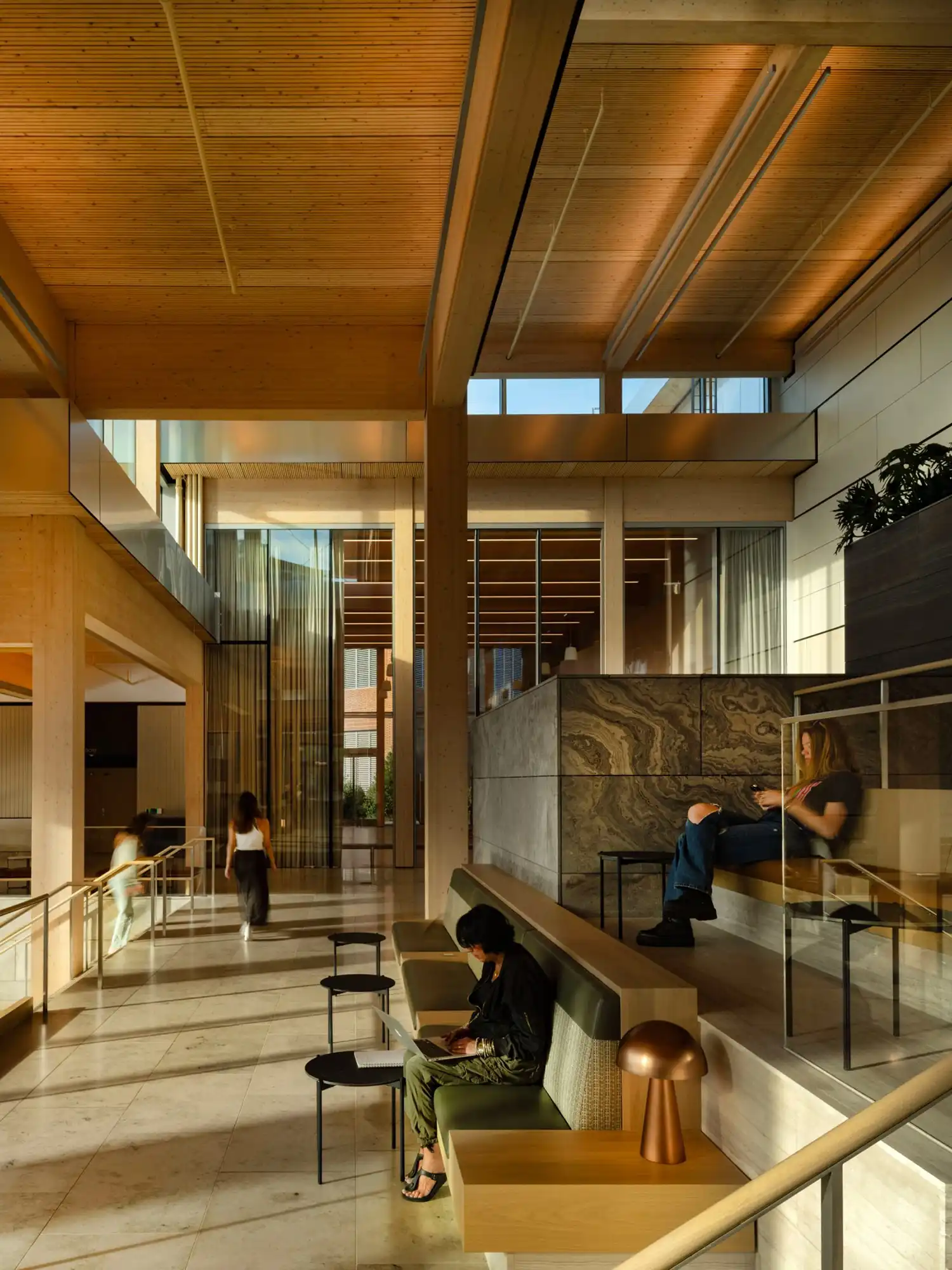
Inside, the building’s layout mirrors the external complexity, centered around a multi-level atrium that varies in height, acting as the circulatory core of the “village.” Rockwell Group’s interior palette complements the exposed mass timber structure, utilizing natural materials like limestone and white oak millwork to create a sense of cohesion and warmth across the diverse programmatic areas. The main entrances flow into this central space, immediately welcoming students into a dynamic, multi-sensory environment.
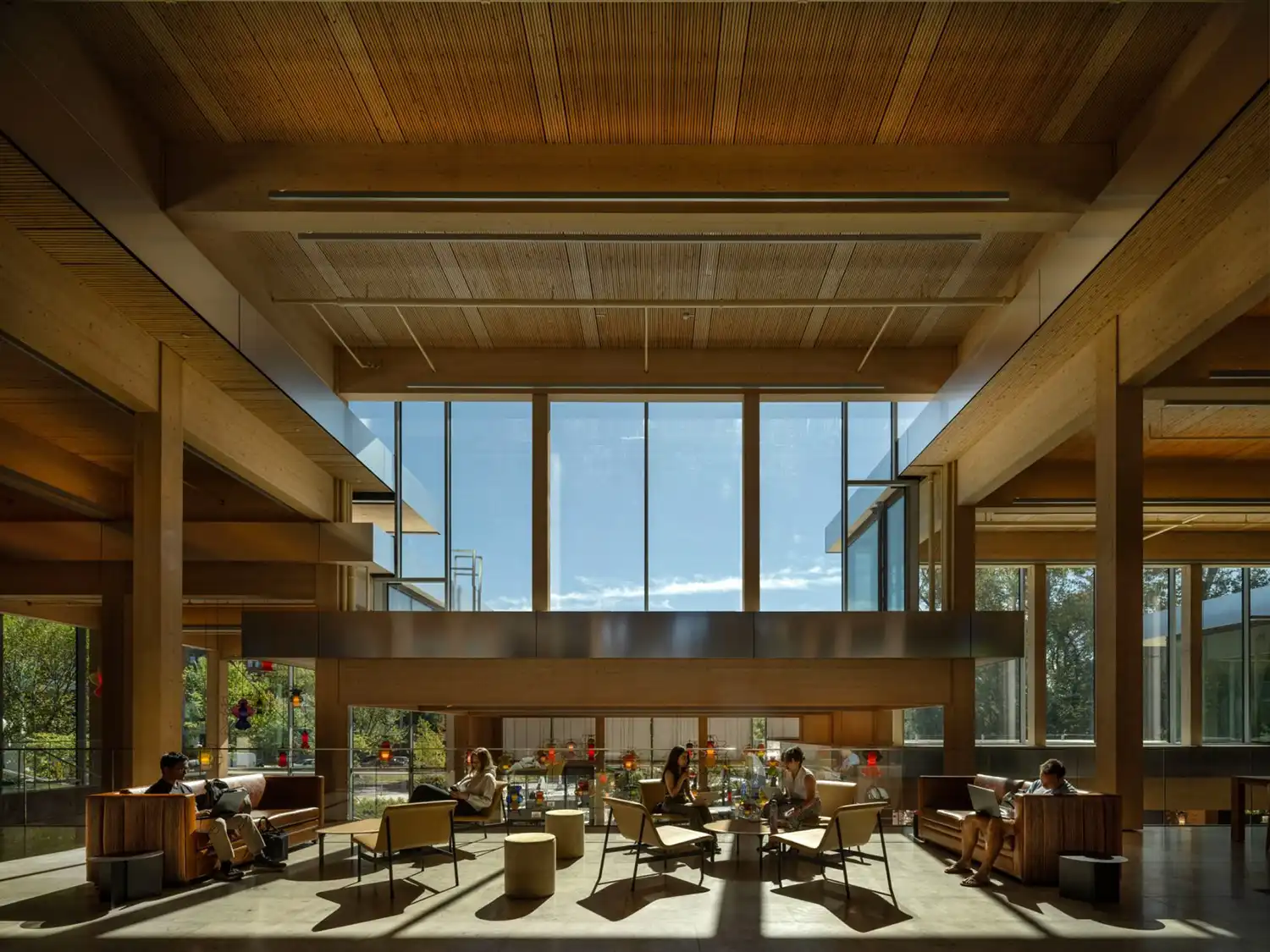
This Student Hub provides an extensive range of dedicated facilities. At the lowest level, the main entrance opens to a vibrant food hall, café, and restaurant, while a grand staircase ascends through the atrium, lined with dedicated lounge areas for informal study and social interaction. Clustered around the central space, within their individual timber pavilions, are a 250-seat performance theatre, dance studios, club meeting rooms, and spaces dedicated to student services and collaboration, ensuring every need of the Johns Hopkins University community is met.
Beyond its walls, the Bloomberg Student Center actively engages with the urban environment. The project included transforming the surrounding landscape to create vital outdoor spaces. A large central plaza, situated at the building’s lowest point along the North Charles Street corridor, is designed to host a rotating schedule of pop-up exhibits, live performances, vendors, and food trucks. This seamless blend of architectural excellence, cutting-edge mass timber construction, and urban integration confirms the Bloomberg Student Center as a definitive, forward-thinking model for 21st-century campus life.