



The architecture of the afterlife has long served as a canvas for humanity’s most profound existential inquiries. In Coimbra, Portugal, Comoco Arquitectos has navigated this delicate threshold between the telluric and the ethereal, delivering a family tomb that transcends the mere function of a funerary monument. Located within the S. Martinho do Bispo cemetery, the structure operates as a vessel for memory, translating the heavy silence of bereavement into a tangible, rhythmic dialogue between light and stone. It is a project that understands that to build for the dead is, fundamentally, to provide a sanctuary of contemplation for the living.

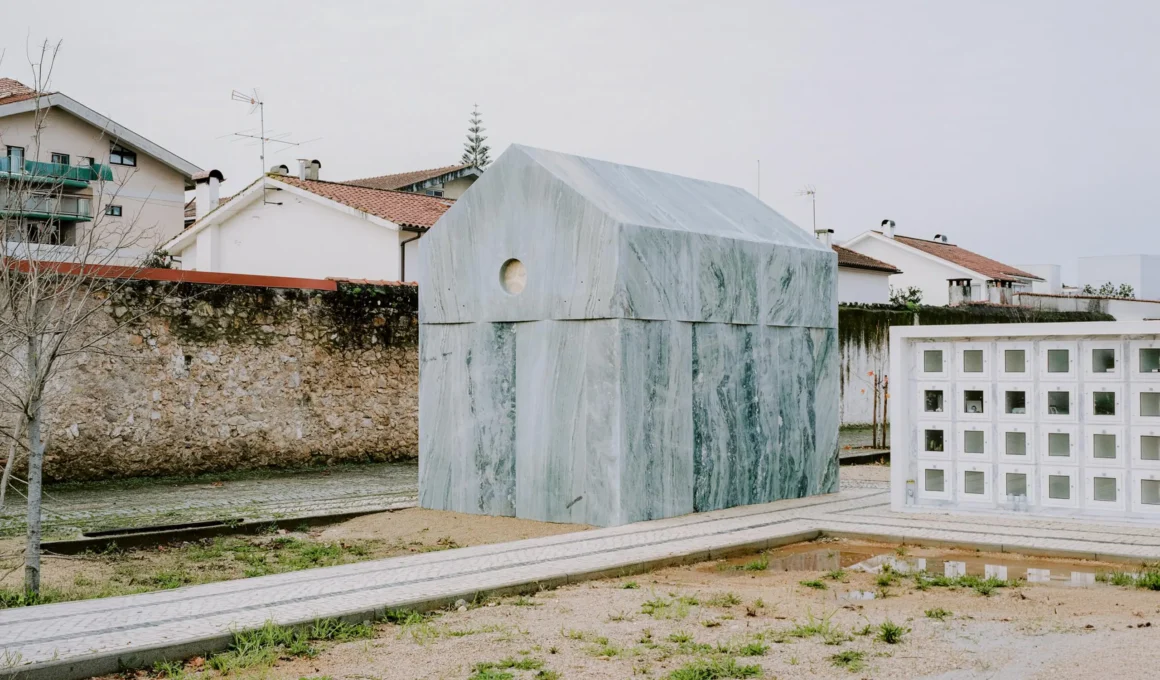
A conceptual vision grounded in archetypes guides the project’s formal language. Positioned on a prominent corner plot, the tomb asserts a restrained, classical character that feels both contemporary and ancient. The architects opted for an axial composition, leaning into the power of precise volumetry to create a sense of permanence. By stripping away superfluous ornamentation, the building becomes a pure geometric expression of the transition between life and death. This is not a structure that seeks to shout; rather, it anchors itself to the earth, acting as a quiet mediator between the physical ground and the open sky.

The technical execution of the stone tectonics reveals a rigorous commitment to material integrity. The primary skin of the tomb is crafted from Verde Viana marble, a choice that dictates the entire structural logic of the building. Eschewing traditional cladding, the architects developed a construction system where individual blocks are carved and joined through intricate interlocking joints and notches. This methodology ensures structural stability while defining the formal rhythm of the exterior. Each cut in the stone is calculated, following a strict metric that transforms the heavy mass of the marble into a sophisticated puzzle of light and shadow.

Sensory experience and atmospheric shifts play a vital role in how the space is perceived over time. The Verde Viana marble possesses a chameleonic quality; its deep green hues and complex veining react dynamically to the elements. Under the harsh Portuguese sun, the surface appears solid and impenetrable, but during rainfall, the stone takes on a darker, more saturated intensity. This tactile evolution is contrasted by the warmth of golden-toned alabaster and a metallic door, materials that introduce a softer, more luminous counterpoint to the coolness of the marble.
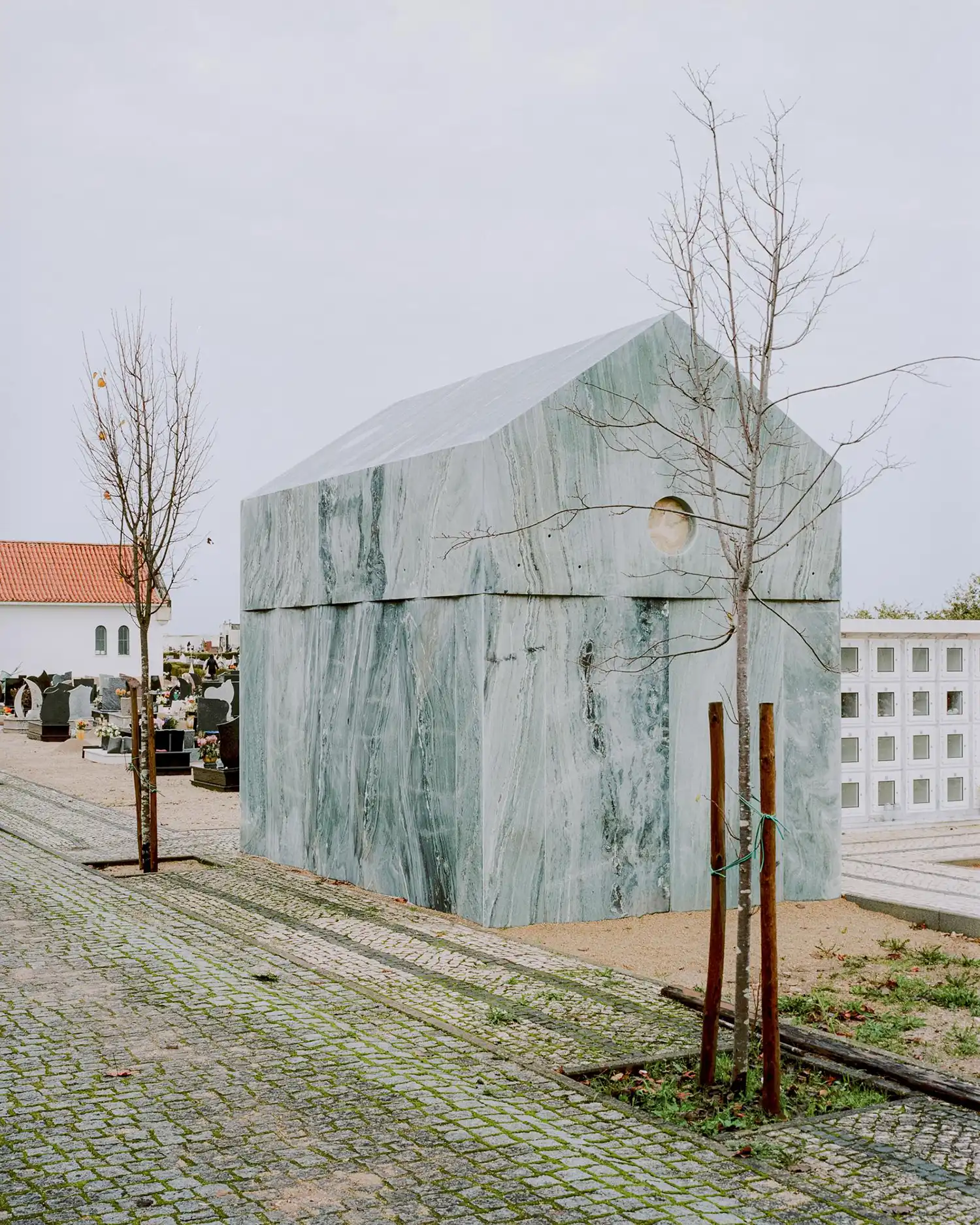
The orchestration of natural light further enhances the introspective nature of the interior. Circular openings are strategically positioned to reinforce the two structuring axes—the longitudinal and the vertical—drawing the eye toward the heavens while illuminating the space with a soft, diffused glow. These apertures are not merely windows but portals that regulate the emotional temperature of the interior. The rhythm of the exterior stone cuts is mirrored internally through subtle ventilation perforations, ensuring that the air remains as clear as the architectural intent, fostering an environment of absolute stillness.
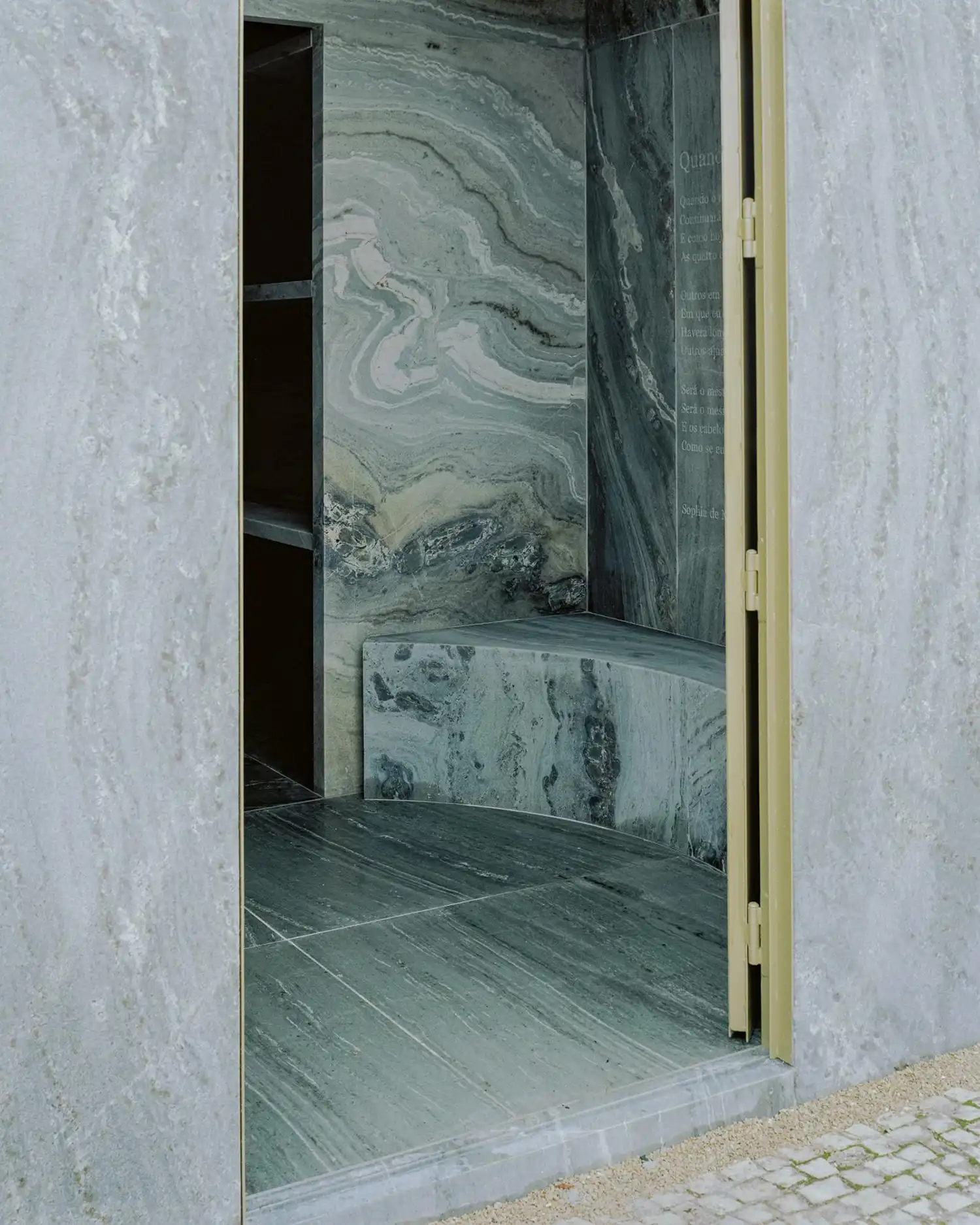
Literary integration and symbolic continuity provide the final, emotional layer to the design. At the request of the clients, the space incorporates two seminal poems: Quando by Sophia de Mello Breyner Andresen and Ithaca by Constantine Cavafy. These verses are not merely inscribed; they are constitutive elements of the spatial journey, inviting a meditative pace. Through this synthesis of monolithic stone, poetic narrative, and controlled light, Comoco Arquitectos has created a place of retreat that honors the passage of time without being consumed by it. The result is a quiet triumph of restraint, proving that even in the presence of death, architecture can affirm the enduring power of human memory.