



This comprehensive guide covers what designers actually need to know before sending out their first quote request, walking through how to identify the right kind of metalwork for the project, where to source it, what to put on drawings, and the common places projects go sideways.
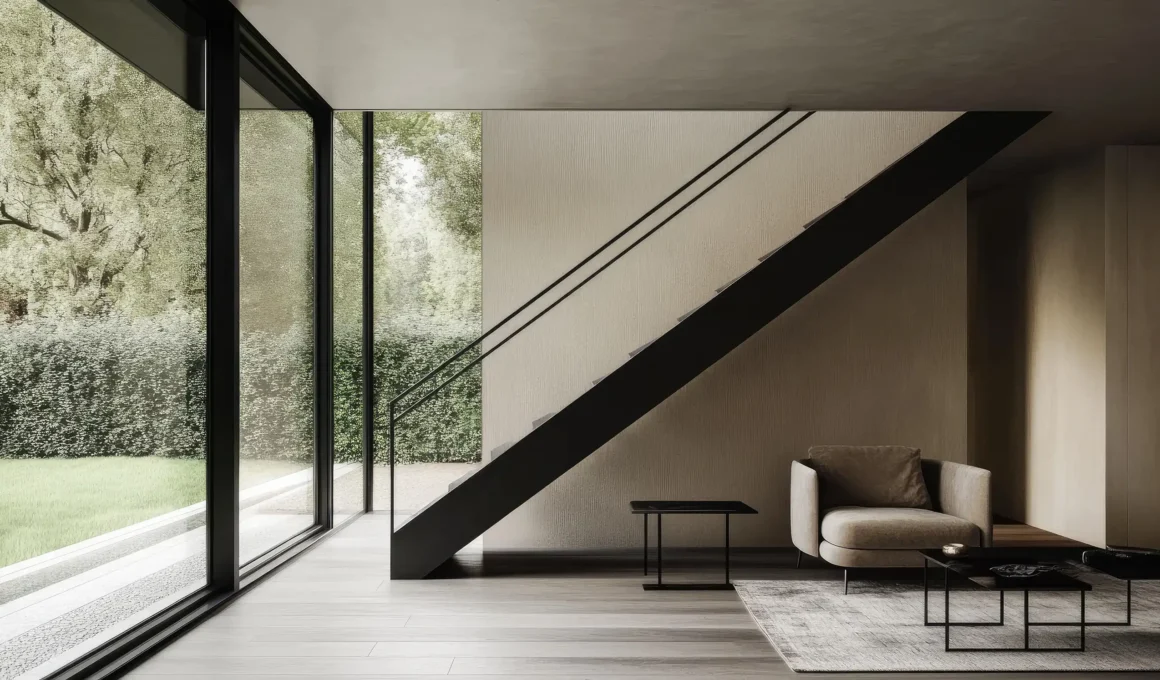
Most interior projects reach a point where the off-the-shelf options stop working. A client wants a brass screen with a custom pattern. A kitchen island calls for a specific steel base. A stairwell needs railings the catalogue simply doesn’t carry, the kind that ends up becoming the visual spine of a renovation rather than incidental hardware.The piece exists in the designer’s head and on a rendering, but the path from rendering to installed object is where many projects stall.
Custom metalwork is one of the trickier parts of interior design work. The supplier base is fragmented, lead times are unpredictable, and the difference between a fabricator who can execute your drawing and one who will quietly improvise is often invisible until the piece arrives.
Identify What Kind of Metalwork Your Piece Actually Needs
Custom metal work falls into a few rough categories, and the category determines which fabricators can quote it. Welded fabrication covers things like steel table bases, structural railings, and brackets where parts get cut and joined.
Sheet metal work handles panels, screens, and folded forms, often with laser-cut detailing, like the perforated aluminum panels Wutopia Lab used to slice space at the Zhongshu Bookstore in Suzhou. CNC machining produces the high-precision pieces with tight tolerances, complex profiles, or pocketed and milled features. Cast and forged work covers pieces with sculptural depth, like solid bronze handles or cast aluminum legs.
These categories matter because most fabricators specialize. A welding shop that handles structural railings is rarely the right place to order a brushed brass cabinet pull with a milled inlay. A CNC machining shop will produce that pull beautifully but doesn’t typically handle welded assemblies. Designers who send the same RFQ to every supplier on their list often get back wildly inconsistent quotes, which usually means most of those suppliers aren’t actually the right fit for the piece.
Where to Actually Source It
Once you’ve identified the type of metalwork, the next question is where to send the drawings. Designers generally have four options, each with real trade-offs.
Local welding and fabrication shops are the right choice for one-off structural pieces, larger weldments, and any work that requires site measurements or installation support. They’re also the easiest to manage when a piece needs revisions mid-build, because you can walk in and look at the work in progress.
Specialist workshops such as custom hardware foundries, architectural metalwork ateliers, and traditional blacksmiths handle high-craft pieces in which the maker’s skill is part of the value. These are slower and more expensive, but the finishes and detail justify the cost on signature pieces that anchor a space.
In-house production through a furniture designer’s own workshop is rare for interior designers to access, but worth knowing about. Some of the larger metalwork-heavy product lines (Tom Dixon, Roll & Hill, Apparatus) come from vertically integrated operations that don’t accept outside commissions, which is why those pieces have such consistent finish quality.
CNC machining platforms have become a real fourth option in recent years. These are online sourcing networks that connect designers with a vetted pool of CNC shops, often across multiple countries, and they handle quoting, quality control, and logistics in a single workflow.
For a designer who needs precise custom hardware, milled brackets, or complex-geometry pieces, a good CNC machining platform is often faster and more cost-competitive than calling around to local shops, especially for runs of more than a handful of units. The trade-off is less hand-holding and more upfront work on the fabrication drawing, since you’re not sitting across the table from the shop.
What to Specify on Your Drawings
The number one reason custom metal pieces come back wrong is incomplete drawings. Fabricators are professionals, but they’re not designers. If something isn’t specified, they will make a decision for you, and that decision will rarely match what you imagined.
A fabrication drawing should cover overall dimensions with tolerances (not just nominal sizes), material specifications, including alloy, gauge, and finish, and surface finish callouts such as brushed, polished, satin, mill finish, or powder-coated to a specific RAL code. It should also specify weld treatment (ground smooth, visible, or with a specified filler color), hardware decisions like countersunk versus surface-mounted and hidden versus exposed, and assembly notes for anything that ships flat-packed.
For CNC-machined pieces, the spec needs to be tighter. Tolerances should be called out in thousandths of an inch or hundredths of a millimeter where it matters. Surface finish should reference a specific Ra value rather than a descriptive term like “smooth.” The drawing should also indicate which surfaces are aesthetic (visible in the final install) versus functional (hidden or contacting other parts), because that distinction changes how the shop sets up the part on the machine and how much finishing labor they quote.
Materials and Finish Realities
Brass, bronze, blackened steel, and brushed stainless are having a moment in interior design, and recent installations like Clap Studio’s hammered metallic cladding for Homapal at CasaDecor 2026 are pushing this further, treating metal texture as the primary material conversation rather than a finish applied at the end. Most clients have an image in their head when they specify these materials. The reality is that each finish behaves differently in production and over time.
Unlacquered brass patinates visibly within months. Some clients love this and call it character, others call back asking why the handles look different from when they were installed. The decision needs to happen on the front end, with a clear conversation about lacquered versus raw, and a sample reviewed in the actual lighting of the install location.
Blackened steel is even more variable. Different fabricators use different blackening processes (hot blueing, cold blackening, chemical patination, paint that mimics blackened steel), and the results look distinct. The visual difference between a hand-rubbed cold blackening and a sprayed-on black oxide finish is significant up close, even though both will photograph similarly for marketing shots.
Brushed and satin finishes are less variable but still depend on the brush’s grit and direction. The spec should call out both. A 120-grit linear brushed finish on stainless looks different from a 240-grit non-directional brushed finish, even though both might be labeled “brushed stainless” on a generic spec sheet.
Timeline and Budget Realities
Most custom metal pieces take longer than designers expect. A welded steel table base from a local fabricator typically runs four to six weeks from approved drawing to delivery. Sheet metal screens and panels are often in stock for six to eight weeks. CNC-machined hardware varies enormously, anywhere from two weeks (online platform, simple part) to twelve weeks or more (specialty hardware foundry, complex finish). Cast and forged pieces are the slowest, often taking ten to sixteen weeks.
Budget-wise, custom metalwork is rarely cheap, but the cost varies more than designers initially expect. A custom brass cabinet pull might cost $40 in quantities of 50 from a CNC platform or $400 each from a hand-forged specialty maker. Both are legitimate price points and both have their place, but specifying without knowing the budget range means you’ll either over-source for the project or under-source and end up with disappointing samples.
The other budget reality is that revisions cost real money. Once a fabricator has cut material and started production, changing the dimensions or finish means starting over. Designers should review approval drawings and physical samples carefully before production starts, because a thirty-minute review at the front end saves weeks at the back end.
The Mistakes That Keep Showing Up
A few patterns repeat across projects.
The first is treating one fabricator’s quote as the market price. Custom metalwork quotes can vary three to five times for the same piece. Some of that variation is real, reflecting better finishes, tighter tolerances, or faster lead times, and some of it is just shop bandwidth and how busy a particular fabricator is that month. The fix is to get at least three quotes from different types of sources before deciding what the piece actually costs.
The second is not asking for samples or prototypes on signature pieces. A small fabrication sample (a single handle, a short section of railing) costs a hundred to three hundred dollars in most cases and prevents thousands in revisions later. When designers skip the sample to save time, they almost always lose more time downstream.
The third is underspecifying the finish, then being surprised when “brushed brass” arrives looking like satin gold-plated steel. The supplier delivered what was specified, which is to say not enough was specified.
The fourth is choosing a supplier based only on price. The cheapest quote is sometimes the right one, but more often it’s the shop that didn’t fully understand the drawing and is going to cut corners or come back with surprises mid-production. The supplier who asks the most clarifying questions about your drawing is usually the one to take seriously.
The Takeaway
Custom metal pieces are one of the most rewarding parts of interior design work. They’re also one of the most variable, because the gap between vision and execution depends almost entirely on the sourcing process.
A designer who spends an extra week thinking through the fabrication type, the right supplier for that type, the spec on the drawing, and the realities of the finish they’ve chosen will end up with pieces that match the rendering. A designer who treats custom metalwork as just another procurement line tends to end up with stories instead.