


Piano Piano Studio has reimagined a challenging, non-orthogonal floor plan in Valencia to create El Desfile de la Puri, a residence where a rhythmic burgundy spine and a seamless indoor-outdoor transition define the modern Mediterranean lifestyle.
Geometric liberation. When the team at Piano Piano Studio first stepped into the original dwelling, they encountered a structural puzzle: a narrow, elongated shell entirely devoid of right angles. Instead of fighting the site’s eccentricities, the architects developed a customized grid that aligns with the building’s natural inclinations. This strategic layout successfully carves out a highly organized night area while opening up a generous, light-filled day zone for the inhabitants, León and Carmen.
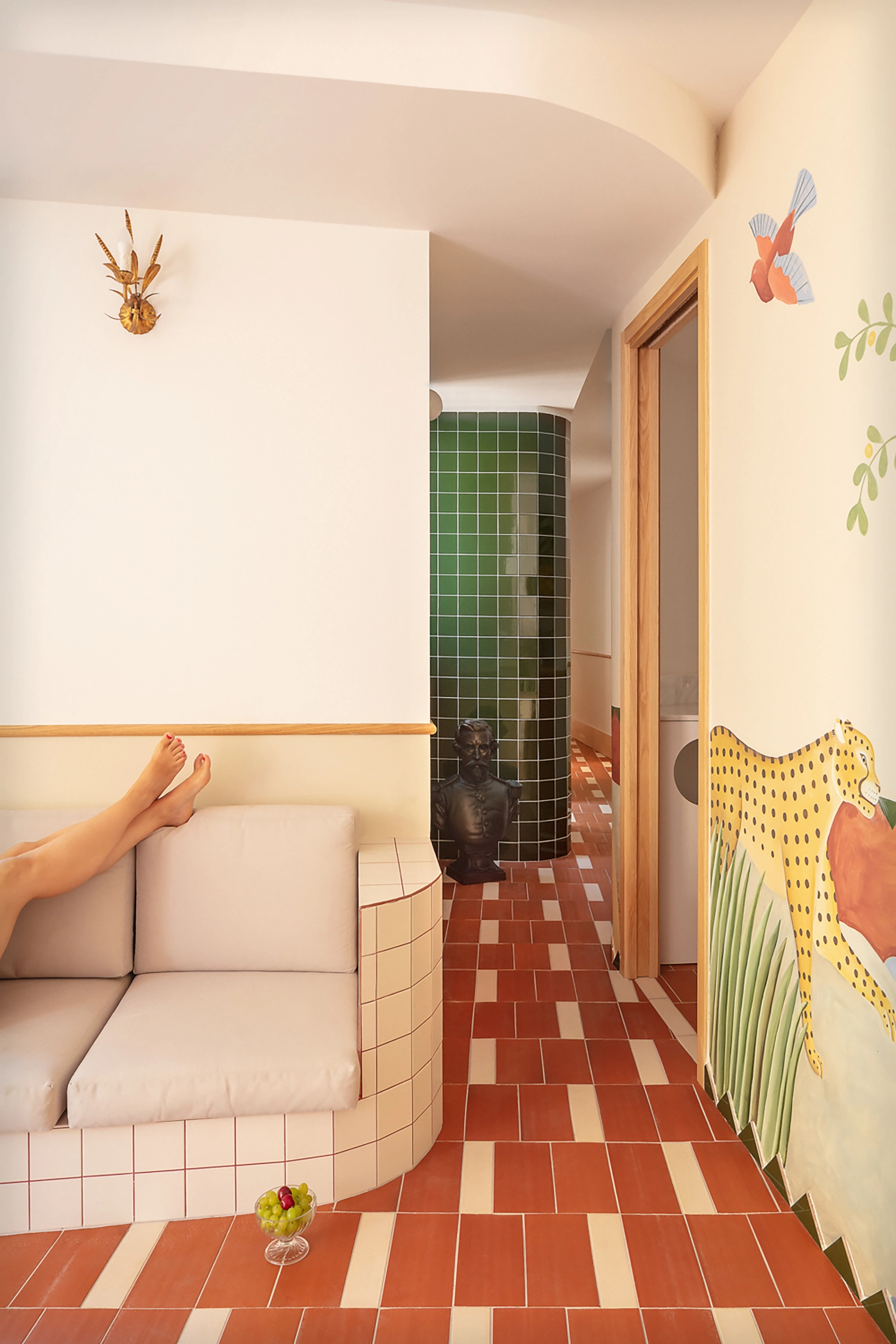
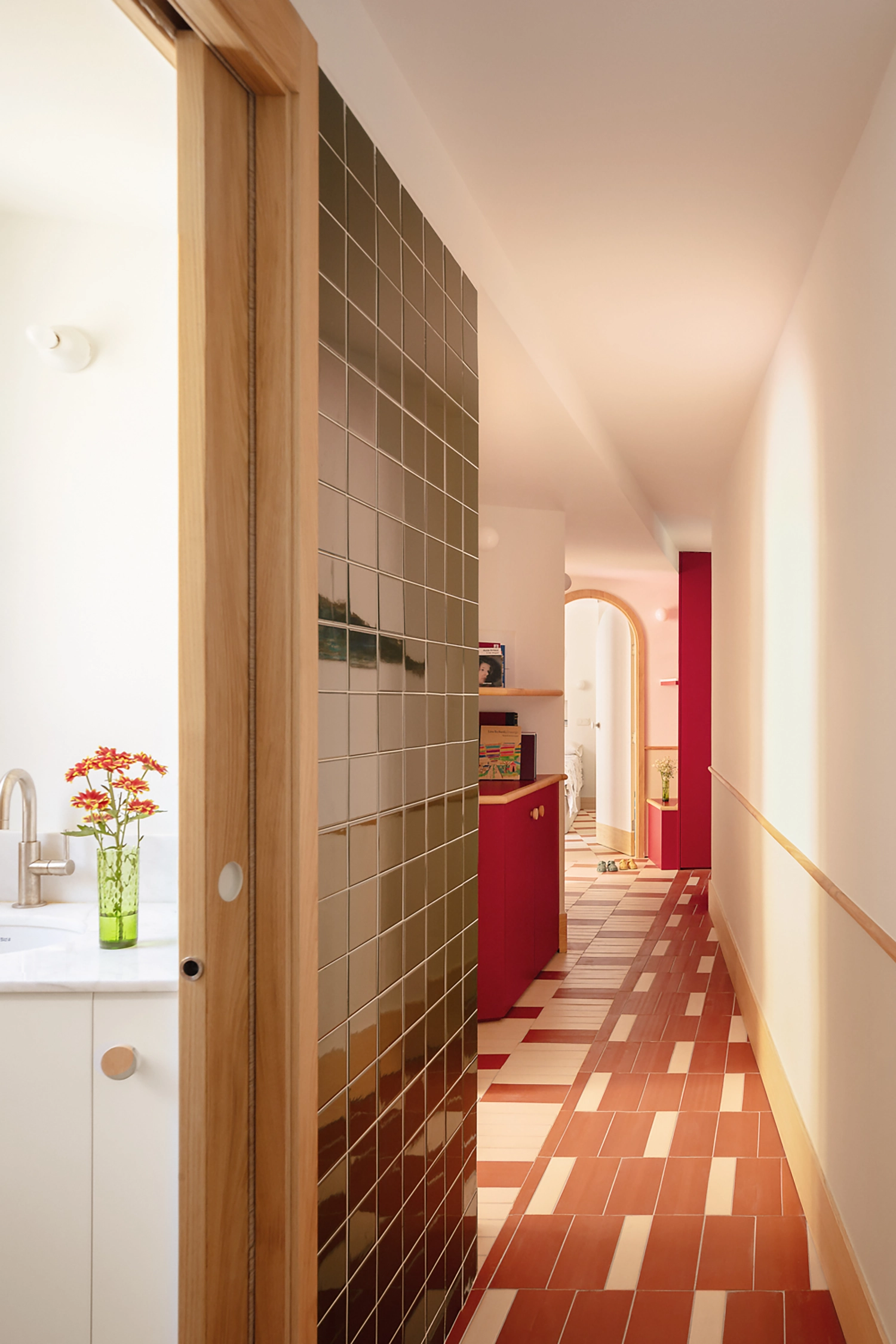
The domestic promenade. Central to the intervention is the “parade”—a hallway that sheds its reputation as a dark, functional necessity to become a vibrant architectural feature. By utilizing the consistent angles of the new grid, the studio transformed this transit space into a gallery-like walkway. It is no longer a mere route; it is a sensory journey integrated with natural light, integrated storage pockets, and curated reliefs that celebrate the act of moving through the home.
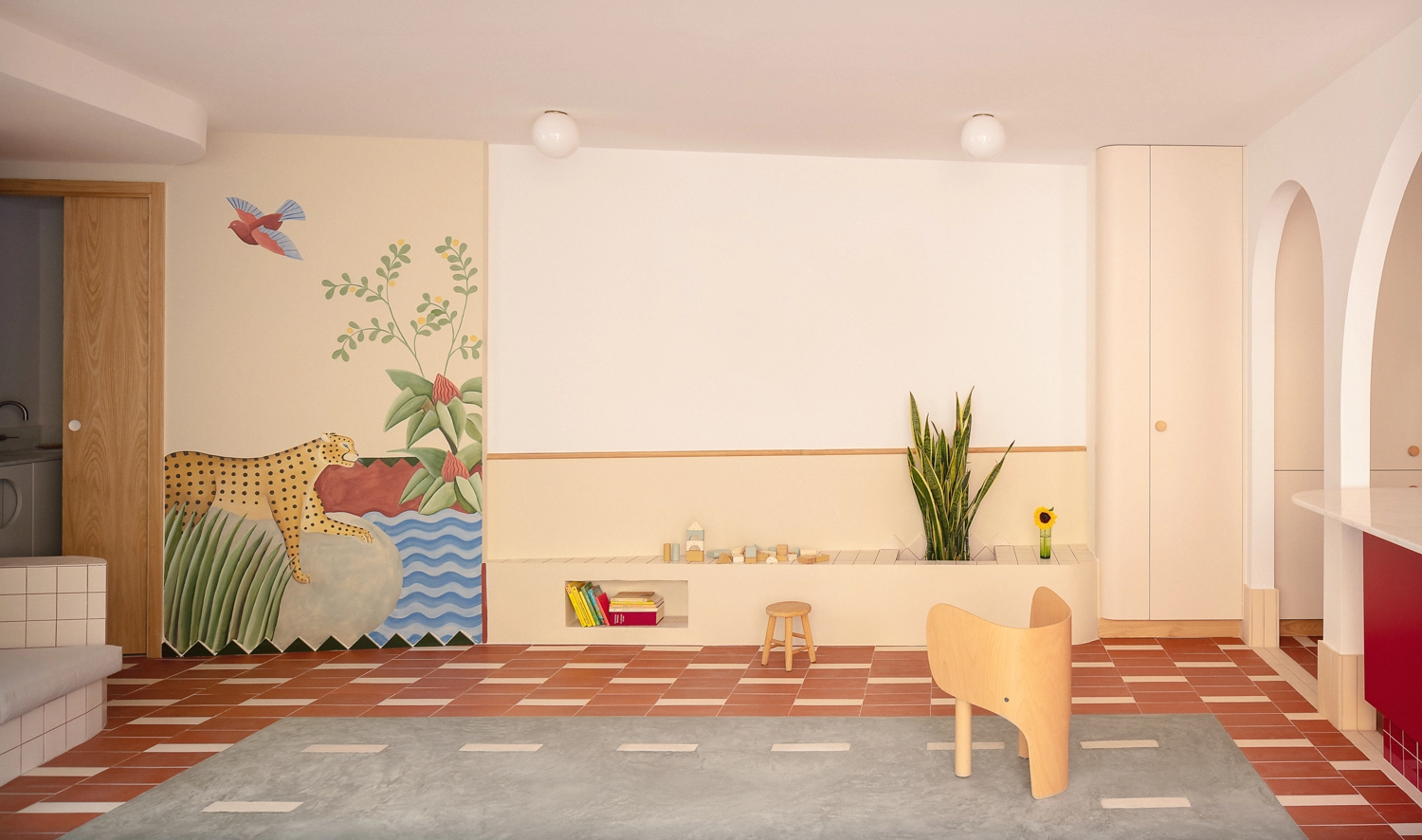
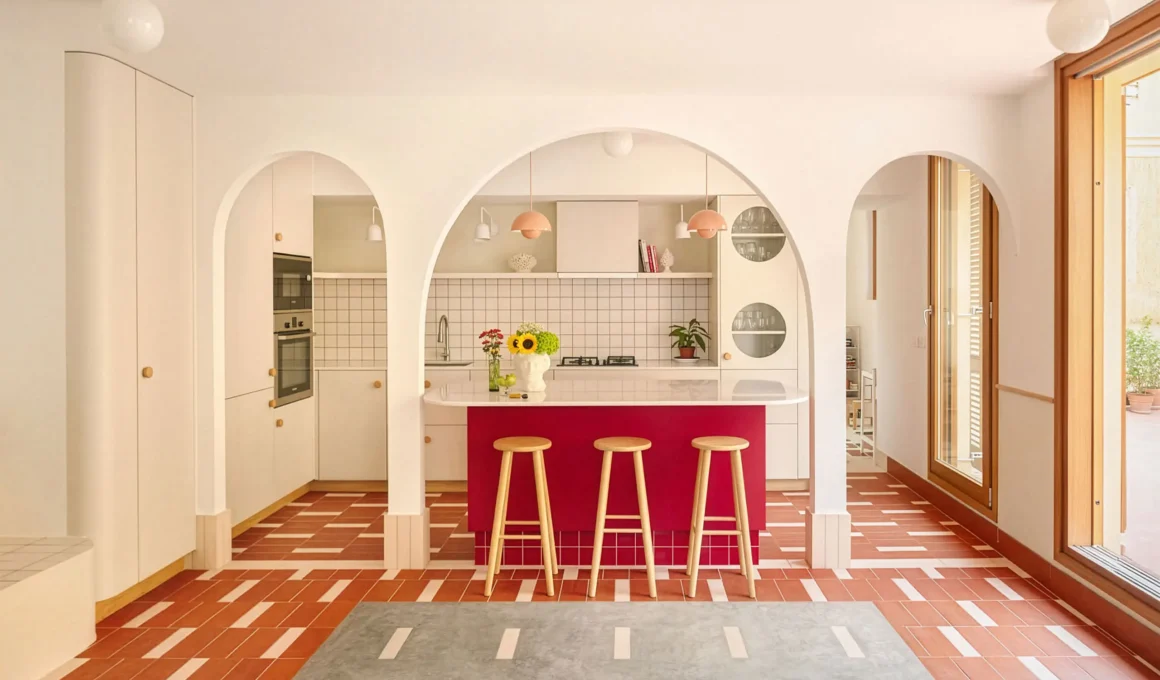
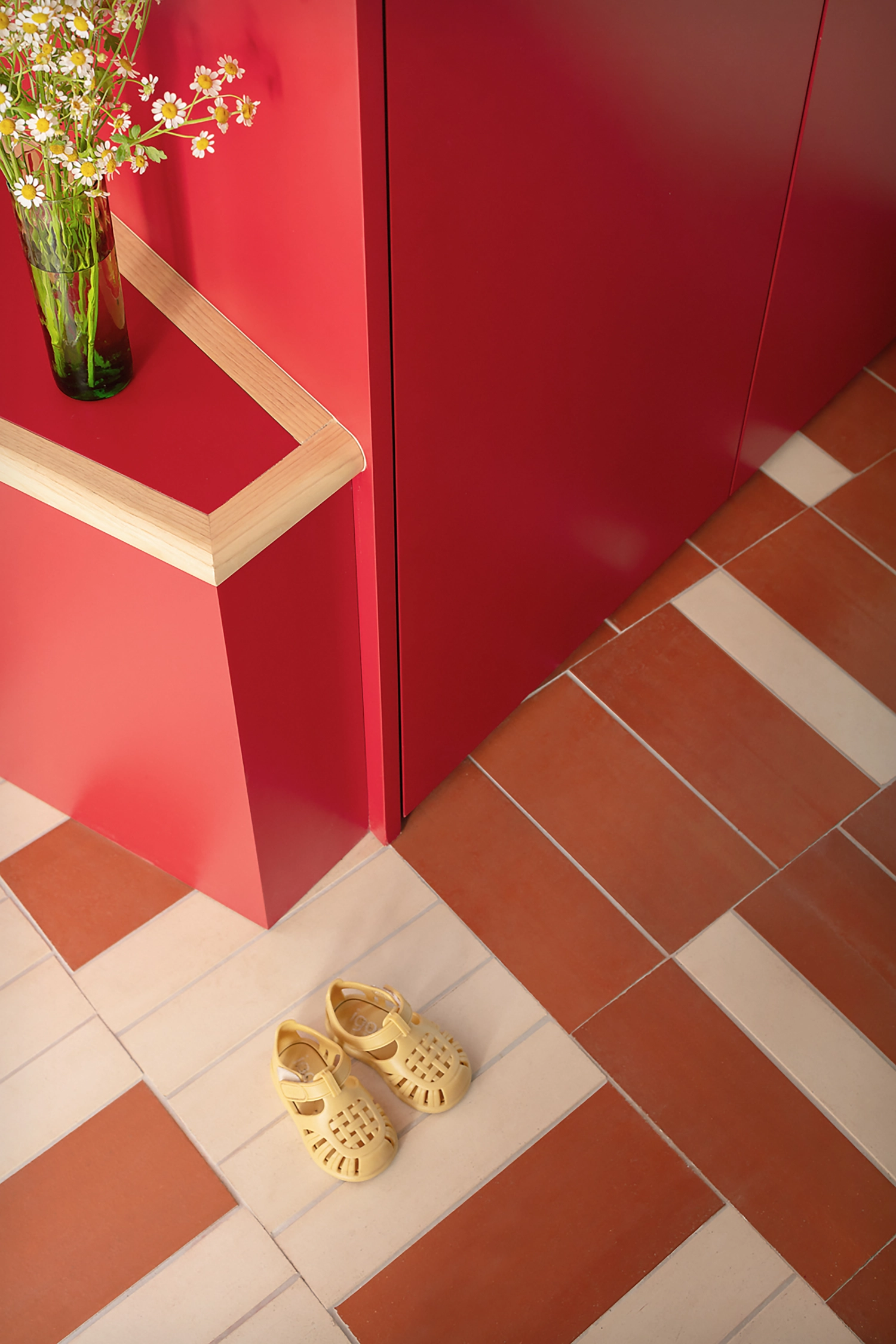
Blurring the boundaries. A primary objective of the renovation was to dismantle the timid relationship between the interior and the city’s climate. The new proposal turns the dwelling completely toward the exterior, ensuring the terrace is accessible from every single room. This fluid connection is physically manifested through the use of identical ceramic pieces for both interior and exterior paving, creating a visual “carpet” that extends the living space into the open air.
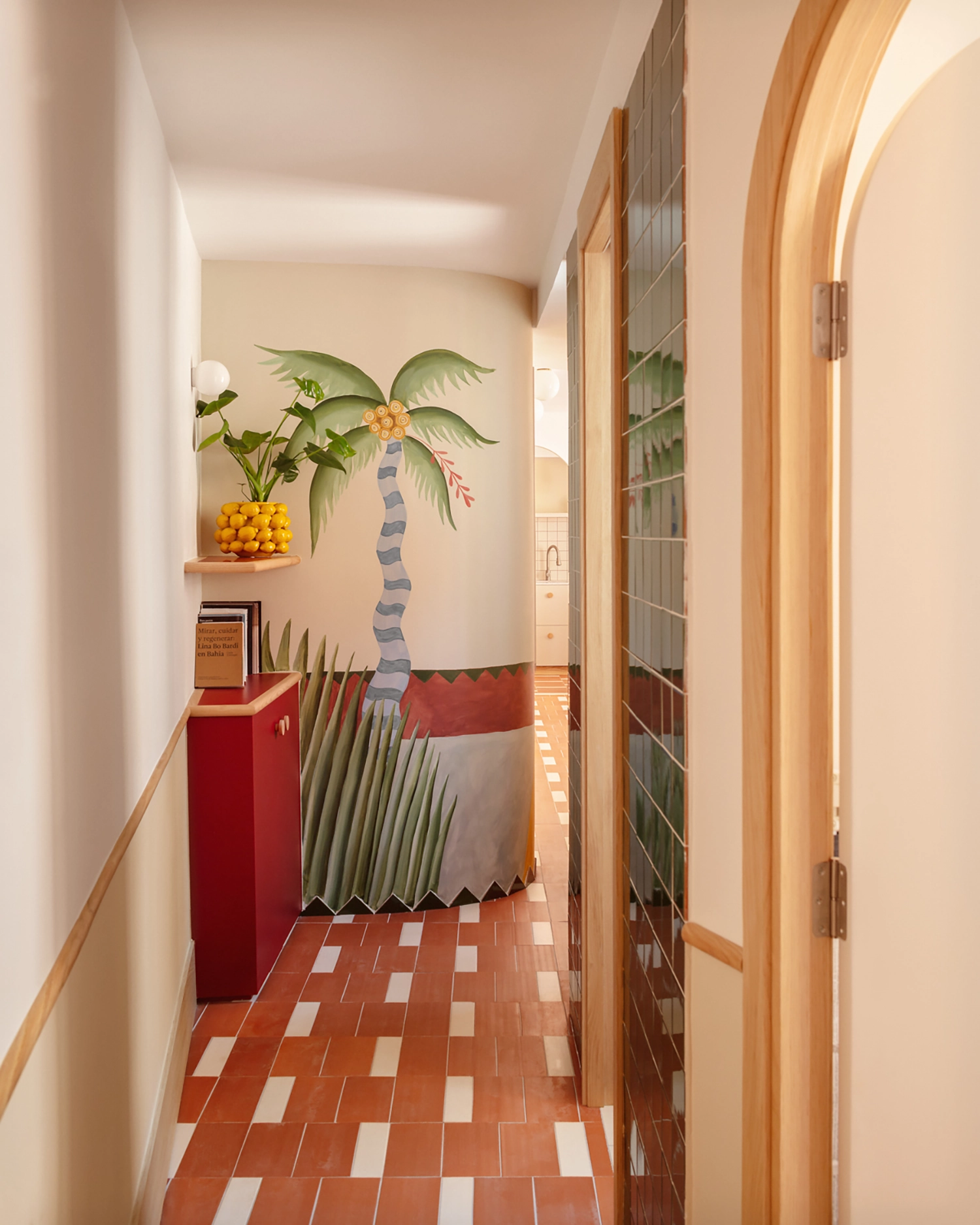
A pulse of burgundy. The aesthetic character of the home is driven by a deep, sophisticated burgundy hue—a specific request from the clients that serves as the project’s guiding thread. This bold color appears in splashes of bespoke furniture and cabinetry, accompanying the residents from the entrance to the central kitchen island. To anchor the warmth of the red tones, the architects introduced balancing elements of wood and green ceramics, creating a tactile and balanced environment.
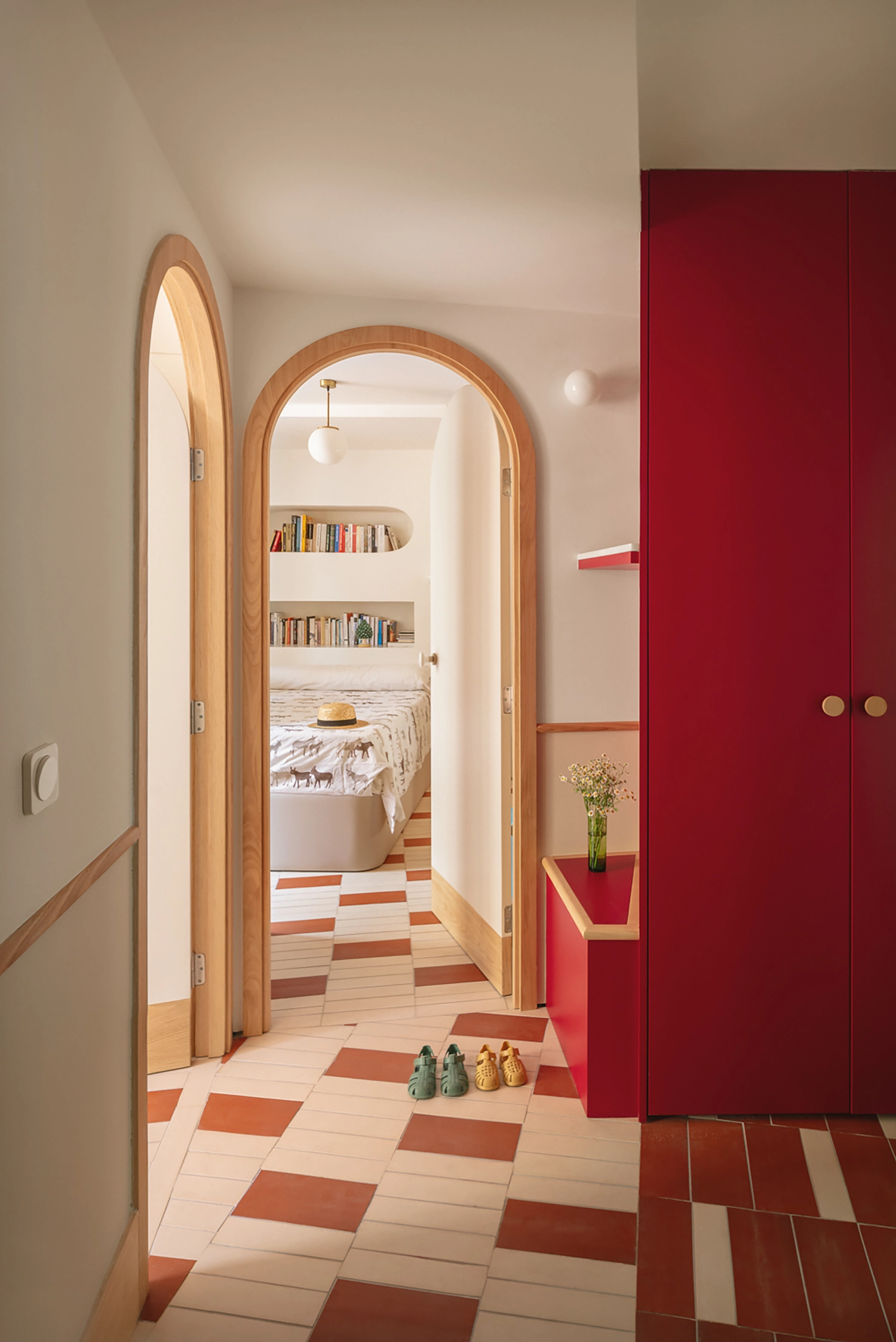
Sensory craftsmanship. Beyond the visual logic, the house is designed for the touch and the breeze. The choice of materials reflects a desire for a space that is “uninhibited and fresh,” where the terracotta textures and the play of light off the angled walls create a rhythmic domestic landscape. It is an intervention that prioritizes the human experience, ensuring that even the most functional corners contribute to a feeling of openness and calm.
Climatic harmony. By reconfiguring the “night zone,” the studio provided the necessary privacy without sacrificing the flow of air. The dwelling’s ability to “breathe” is a direct response to the local climate, encouraging a pleasant confusion between being inside or out. This commitment to outdoor living transforms the apartment from a rigid container into a ventilated, flexible stage for contemporary living.
Valencia’s residential evolution. This project belongs to a broader conversation happening across the city’s rooftops and historic blocks, where light and material honesty are being redefined. We see a similar warmth in the oak-centric elegance of Casa Zam 12 and a shared structural clarity in the Estels House in Albal. Much like the serene, light-filled Casa Chanchs, El Desfile de la Puri shows how an irregular footprint can be choreographed into a home of profound character and effortless flow.