


Nestled within a classic Melbourne suburban street, the Hedge and Arbour House, designed by Studio Bright, presents a compelling study in contrasts. The site itself is a mediator, split between the strict geometry of a typical residential block and the untamed swath of native bushland descending from a creek below. This unique position offered the architects a chance to critically address the often-uncomfortable adjacency of suburban sprawl to the Australian landscape, reimagining this juncture through humble and replicable design strategies.
The project’s most striking feature is its approach to the street elevation. Liberating the house from its conventional responsibility to present a formal facade, Studio Bright employed a tall, sculptural hedge as the primary boundary. A carved arch denotes the entry, setting the stage for a dwelling where spatial planning prioritises landscape relationships over street presence. This initial gesture informed the entire architectural language, leading to the insertion of layered elements that delineate space and mediate privacy through two key built mechanisms: a robust garden wall and a delicate arbour.
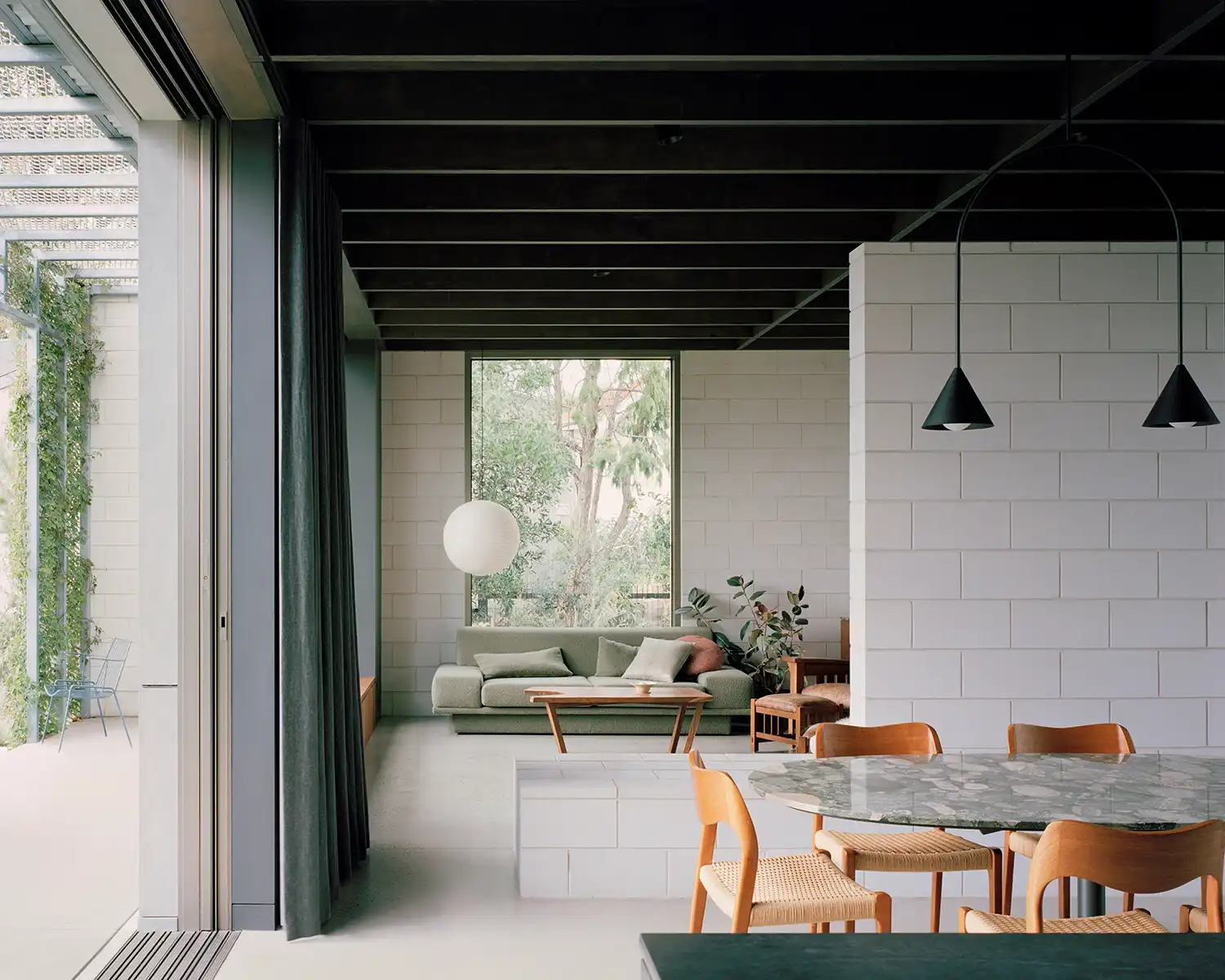
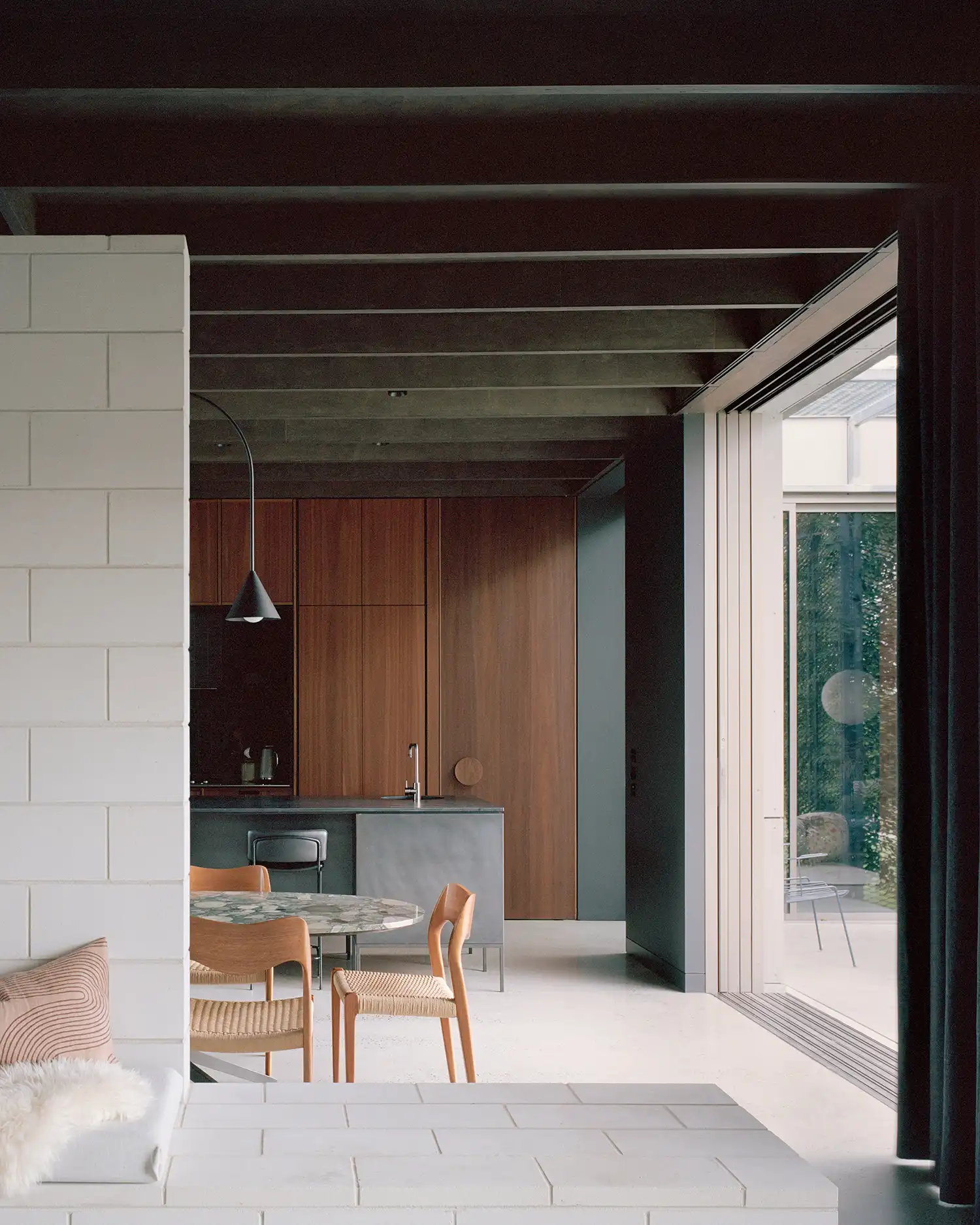
Much like the hedge itself, the solid-face blockwork walls define the transition as one moves across the site. The first garden threshold is contemplative and surprisingly protected, buffered from the street. These walls mediate the site’s topography, establishing a new level that captures the “in-between” spirit of the house—positioned below the street yet above the treetops. They create a direct gateway into the living spaces, framing the experience of the landscape and reinforcing the project’s focus on passive design and connection to nature.
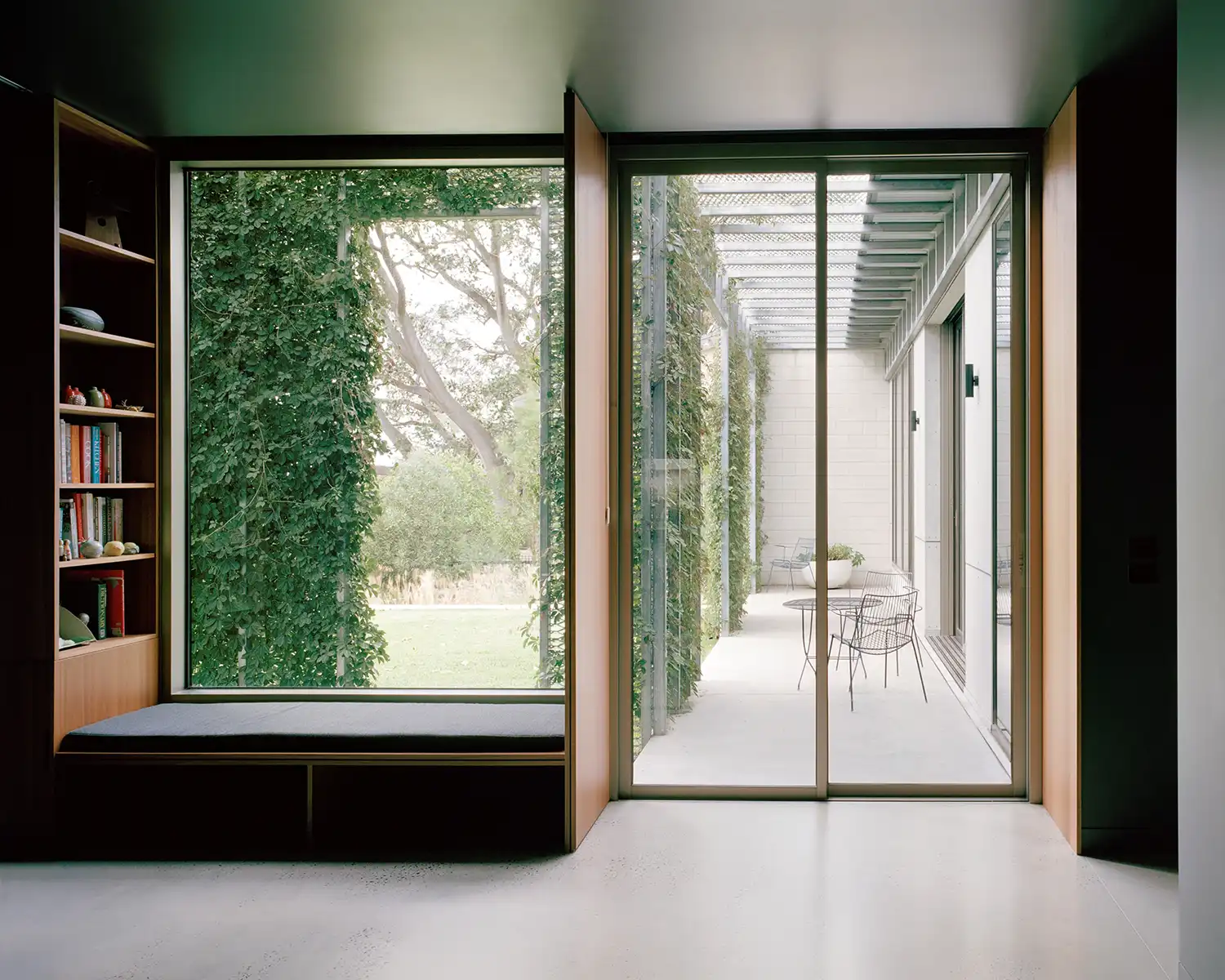
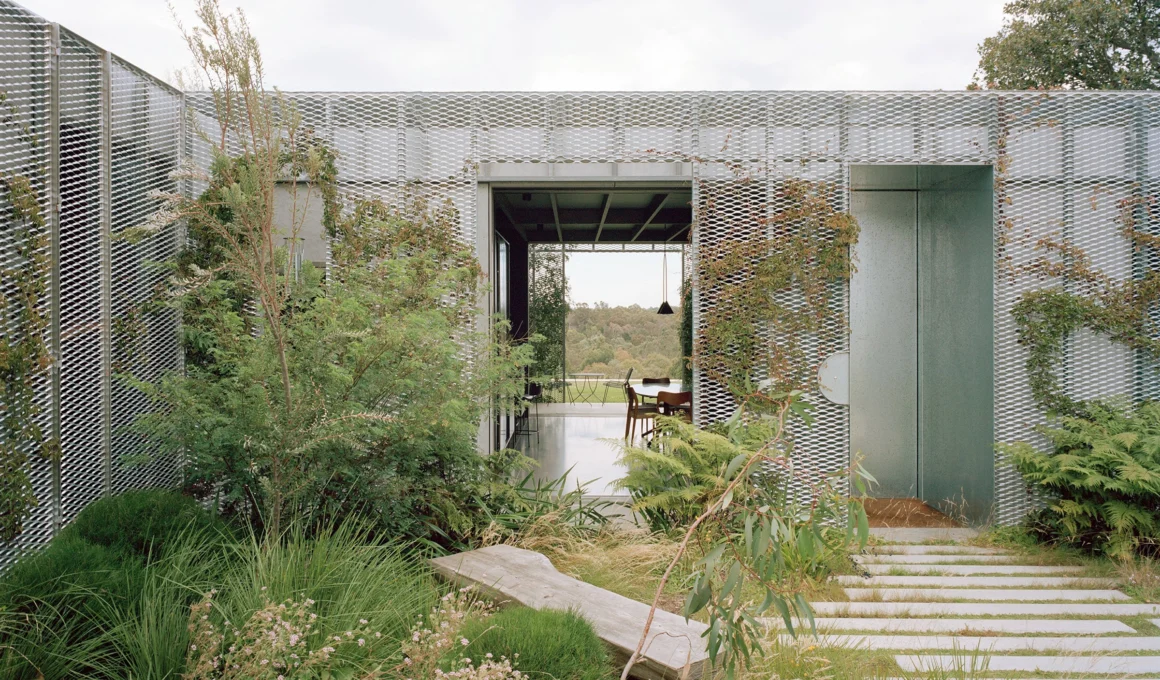
Encircling the building, a delicate screen forms the arbour, serving as a dynamic, living layer. As vines gradually entwine the structure, this final filter evolves into an embedded sun-shading strategy and a shield from harsh winds. This lightweight element provides a deliberate contrast to the solidity of the blockwork, and in effect, the building itself becomes a landscape condition, blurring the lines between the built and the natural environment in a profound way.
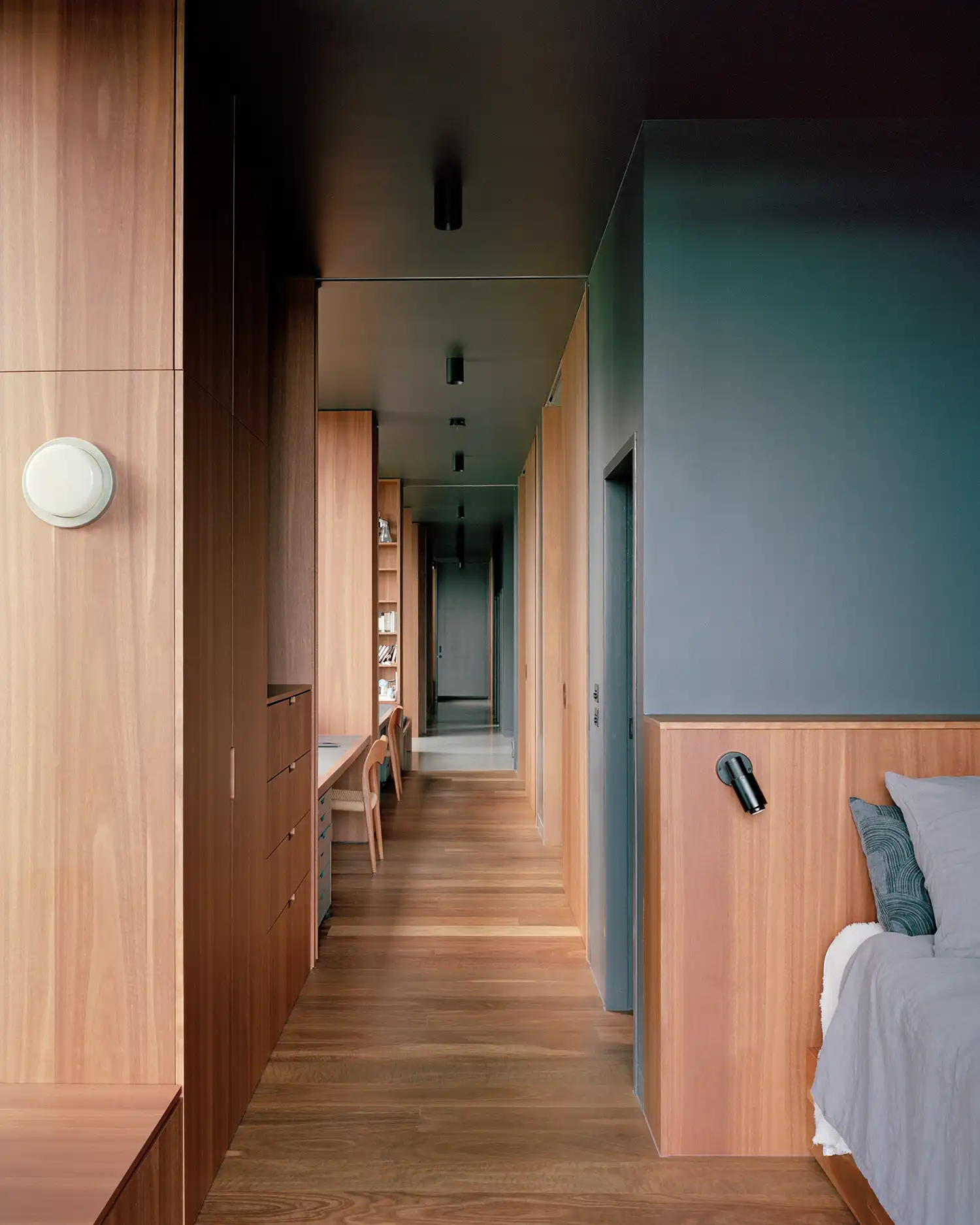
The strategic material selection throughout the home was guided by principles of robustness, economy, and minimal maintenance. To maximise northern light and shield against neighbouring properties, the main volume was positioned along the site’s southern edge. A central perpendicular element holds living spaces that spill into gardens on either side, enhancing the indoor-outdoor connection. These thoughtful passive design strategies, complemented by ceiling fans, effectively negate the need for mechanical air conditioning, prioritising environmental comfort.
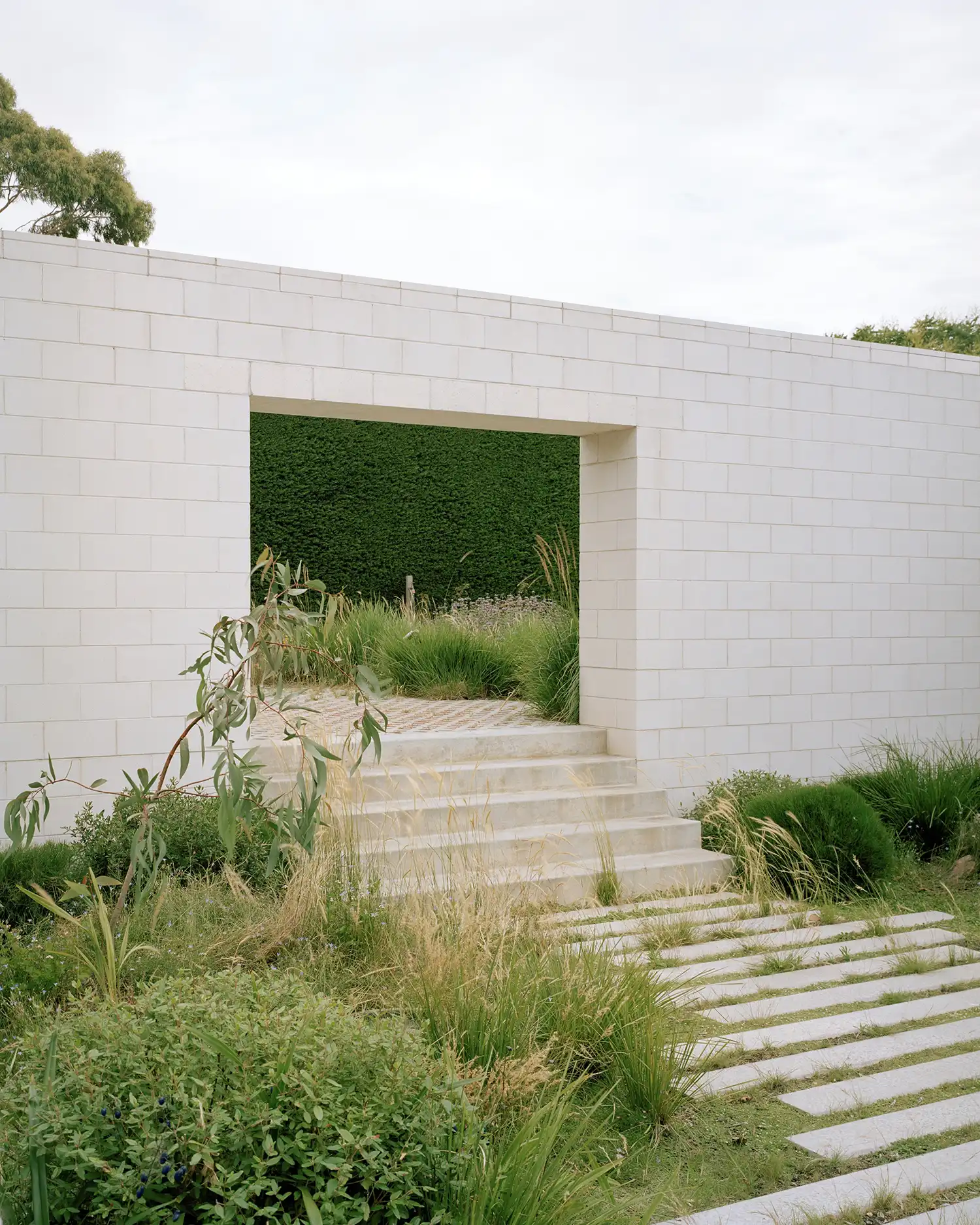
In close collaboration with landscape architect Sarah Hicks, planting selections were meticulously curated to acknowledge and disperse both suburban and wilderness characteristics. A soft, loose native garden welcomes visitors at the front, implanting a sense of wilderness, while a restrained homage to the traditional lawn on the western edge provides a viewing platform. Here, the landscape clad building drapes to meet the ground instead of cantilevering over it, a final gesture of deference and respect towards the wild parklands beyond.