

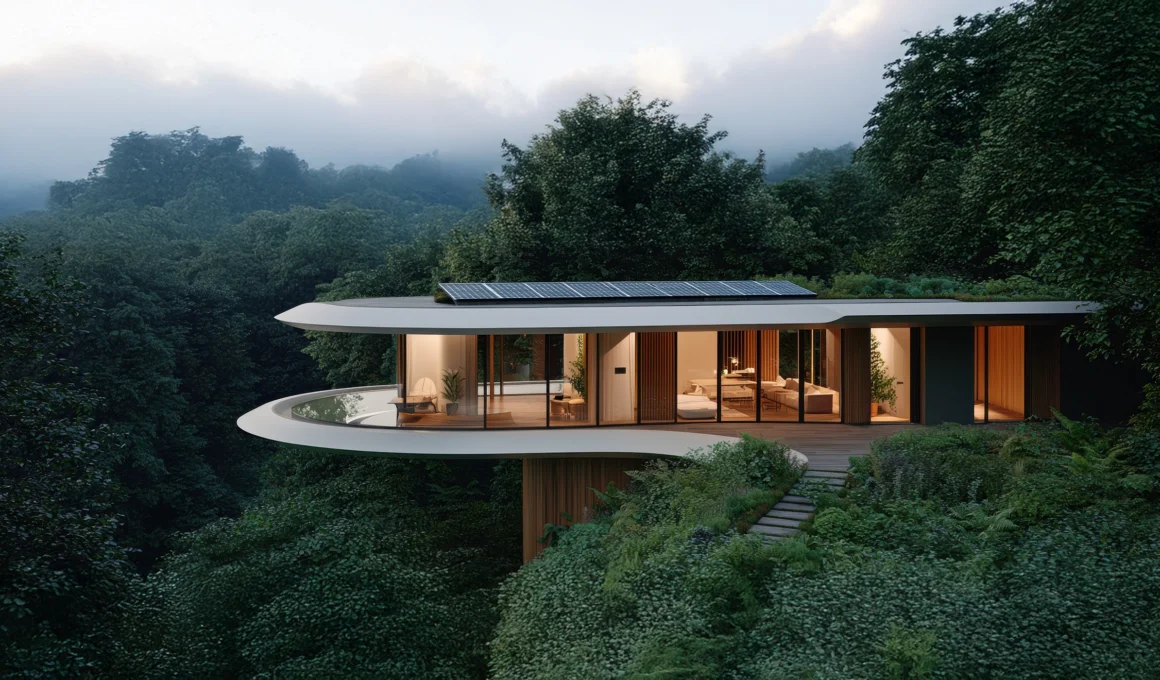
For architects, developers, and homeowners alike, the Passivhaus (Passive House) standard represents the pinnacle of sustainable building, promising a home that uses up to 90% less energy for heating and cooling compared to a conventional building. This superior performance comes with a persistent, crucial question: is a Passivhaus more expensive to build, and does the investment pay off? Decrypting the price tag of this ultra-efficient Passivhaus designis essential for anyone considering a sustainable project.
In a building landscape where energy efficiency is now a mandate, not a luxury, we break down the true cost of Passivhaus and explore how this rigorous standard is becoming the smart, long-term financial choice, directly competing with the build quality promoted by design leaders like Dezeen and Designboom.
The Passivhaus Premium: Understanding Upfront Costs
It’s widely accepted that a certified Passivhaus often requires a higher initial capital outlay. This is due to the non-negotiable requirement for high-quality, specialized components and meticulous craftsmanship.
On average, the extra cost—the Passivhaus Premium—is typically around 4% to 8% higher than a comparable structure built to standard building regulations. This premium is not applied to the entire structure but is concentrated on five key elements:
- Super Insulation: Investing in thicker, continuous layers of thermal insulation around the entire building envelope (walls, floor, and roof) to minimize heat loss.
- High-Performance Windows: Mandatory use of triple-glazed windows with insulated frames. These are critical, as standard windows can be a major weak point for thermal bridging.
- Airtightness Layer: Ensuring the entire building is virtually airtight. This requires painstaking attention to detail and specialized membranes, which is essential for maximizing the system’s efficiency.
- Mechanical Ventilation with Heat Recovery (MVHR): The core of the system. An MVHR unit continuously supplies fresh, filtered air while recovering up to 90% of the heat from the outgoing stale air.
- Thermal Bridge-Free Design: Eliminating points where heat can easily escape, such as where internal and external structures meet.
In essence: You’re not paying for extra size; you are paying for an extra layer of quality, durability, and performance that makes the building significantly more resilient.
The Long-Term Return: Why the Investment is Worth It
While the initial Passivhaus cost might be slightly higher, the financial and comfort benefits over the building’s lifespan deliver a compelling Return on Investment (ROI). The most significant benefit is the elimination of high energy costs: instead of paying decades of expensive utility bills—an ongoing, hidden cost in a conventional home—that money is invested into the building’s structural quality. This strategic move translates into immediate energy savings, with a reduction of up to 90% in heating and cooling expenses. Furthermore, the investment in specialized materials guarantees superior comfort and health thanks to constantly fresh, filtered air and silent, stable internal temperatures free of drafts and cold spots. Regarding property value, the certification and low running costs grant the home a higher resale value. Finally, the robust nature of the envelope ensures “Passive Survival”: the dwelling’s ability to maintain a comfortable temperature even during extended power outages, underscoring the superiority of the long-term investment.
Optimizing Your Build: Strategies to Achieve Cost-Effective Passivhaus
Achieving the Passivhaus standard doesn’t require an unlimited budget. Smart design choices can help mitigate the initial premium:
- Embrace Simplicity: The more complex the building shape (more corners, recesses, and protrusions), the harder and more expensive it is to insulate and seal. A simple, compact form (like a cube or rectangle) minimizes the external surface area, dramatically reducing costs.
- Design from Day One: Never try to apply the Passivhaus standard as a last-minute addition. Engage a Certified Passivhaus Designer at the very start to integrate the principles into the structure and orientation, preventing costly rework.
- Prioritize the Fabric: Focus your budget on the five key elements mentioned above. You can save money on complex finishes but never compromise on the insulation or airtightness layer.
While the initial cost of a Passivhaus might require a stretch, it represents a decisive shift from a disposable structure to a high-performance, future-proof asset. The elimination of high utility bills, coupled with the unparalleled comfort and robust quality, makes the Passivhaus investment the logical choice for modern, responsible design.