


The Iashvili Apartment in Tbilisi, designed by local practice Idaaf Architects, represents a meticulous restoration of a 20th-century residence within the historic Sololaki district, where the studio has harmonized the building’s diplomatic heritage with contemporary living through a sensitive revival of original textures and spatial clarity.
A legacy of shifting identities. Located in a structure that once served as the French Consulate, the apartment carries the weight of Tbilisi’s layered history. During the Soviet era, the building was partitioned into multiple dwellings, a common fate for the city’s grandest estates that often resulted in the loss of their cohesive internal logic. The intervention by Idaaf Architects began with a process of architectural archaeology, stripping away decades of secondary walls to reveal the high ceilings and generous proportions that define the historic Sololaki district.
Restoring the original rhythm. The conceptual vision focused on returning the home to its primary state while ensuring it met the demands of modern domesticity. Instead of mimicking the past, the designers chose to treat the historical restoration as a dialogue. Original floral-decorated balconies were preserved, offering framed views of the Mtatsminda mountain—a visual anchor that connects the interior experience to the rugged topography of Georgia’s capital.
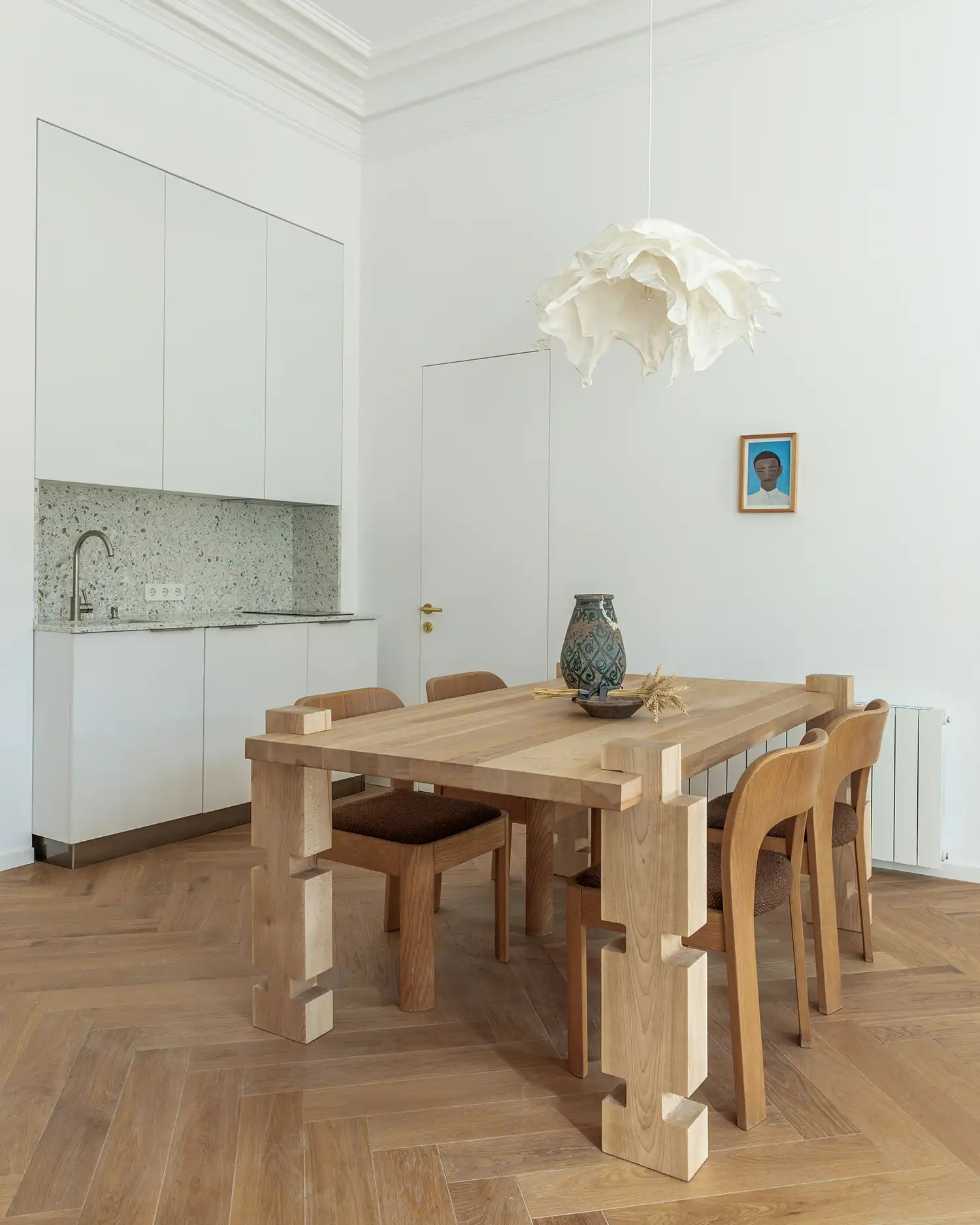
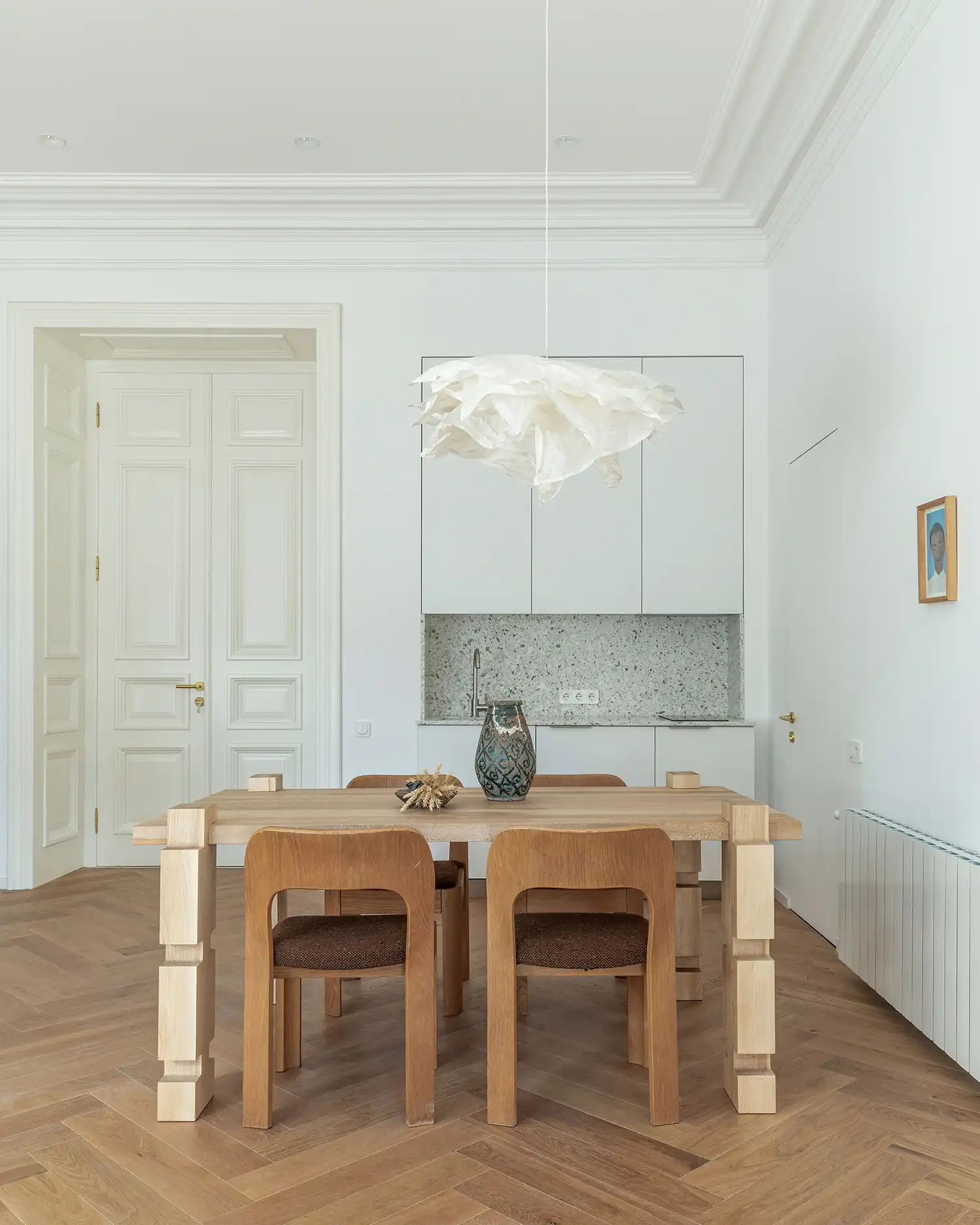
Materiality and light. To amplify the natural illumination typical of early 20th-century Georgian interiors, the studio opted for a palette of expansive white walls. This choice serves a dual purpose: it highlights the restored decorative ceiling cornices and allows the natural oak flooring to act as a warm, grounding element. By integrating wardrobes and kitchen cabinetry directly into the wall planes, the architects eliminated visual clutter, prioritizing the “sensory experience” of volume and light over decorative excess.
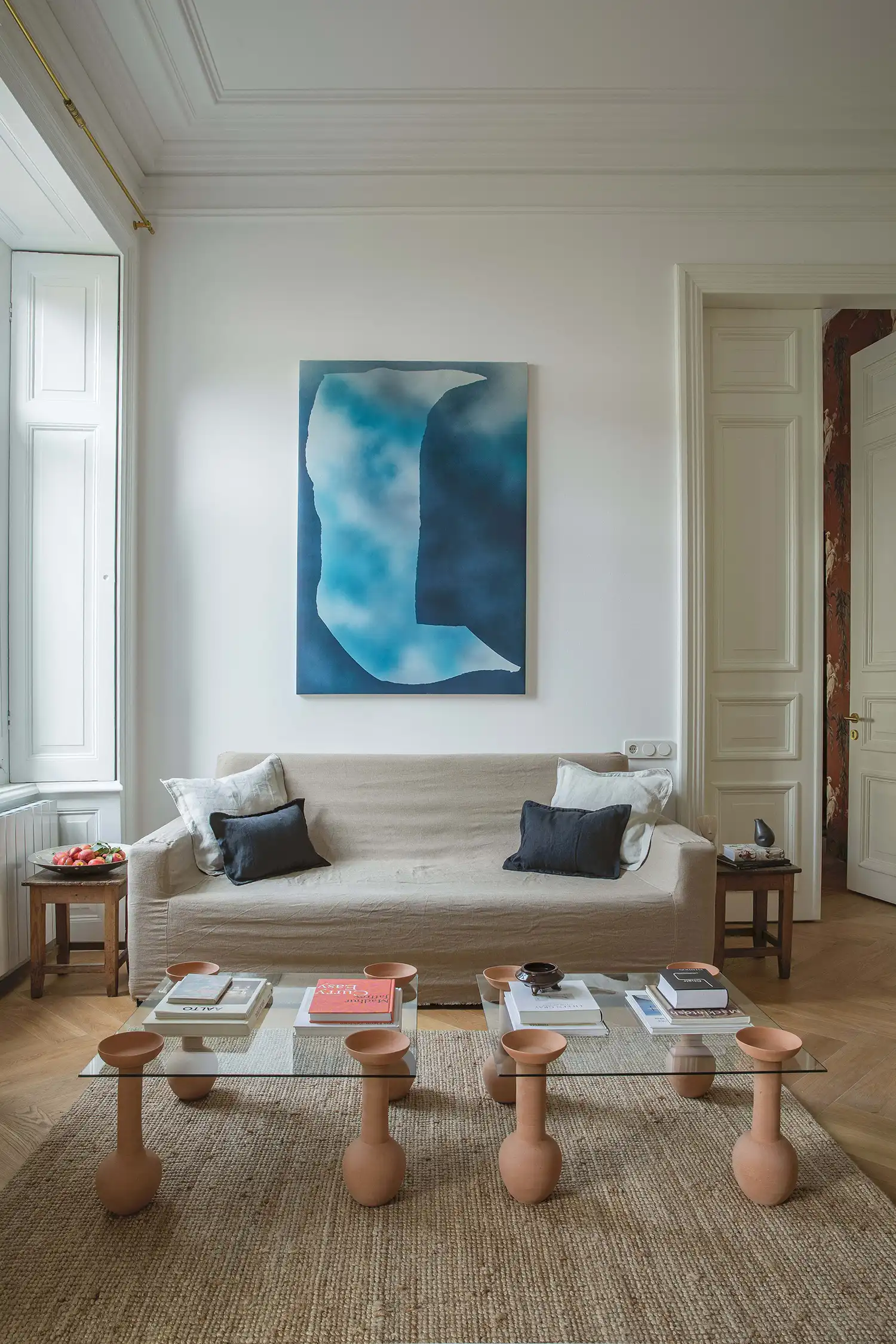
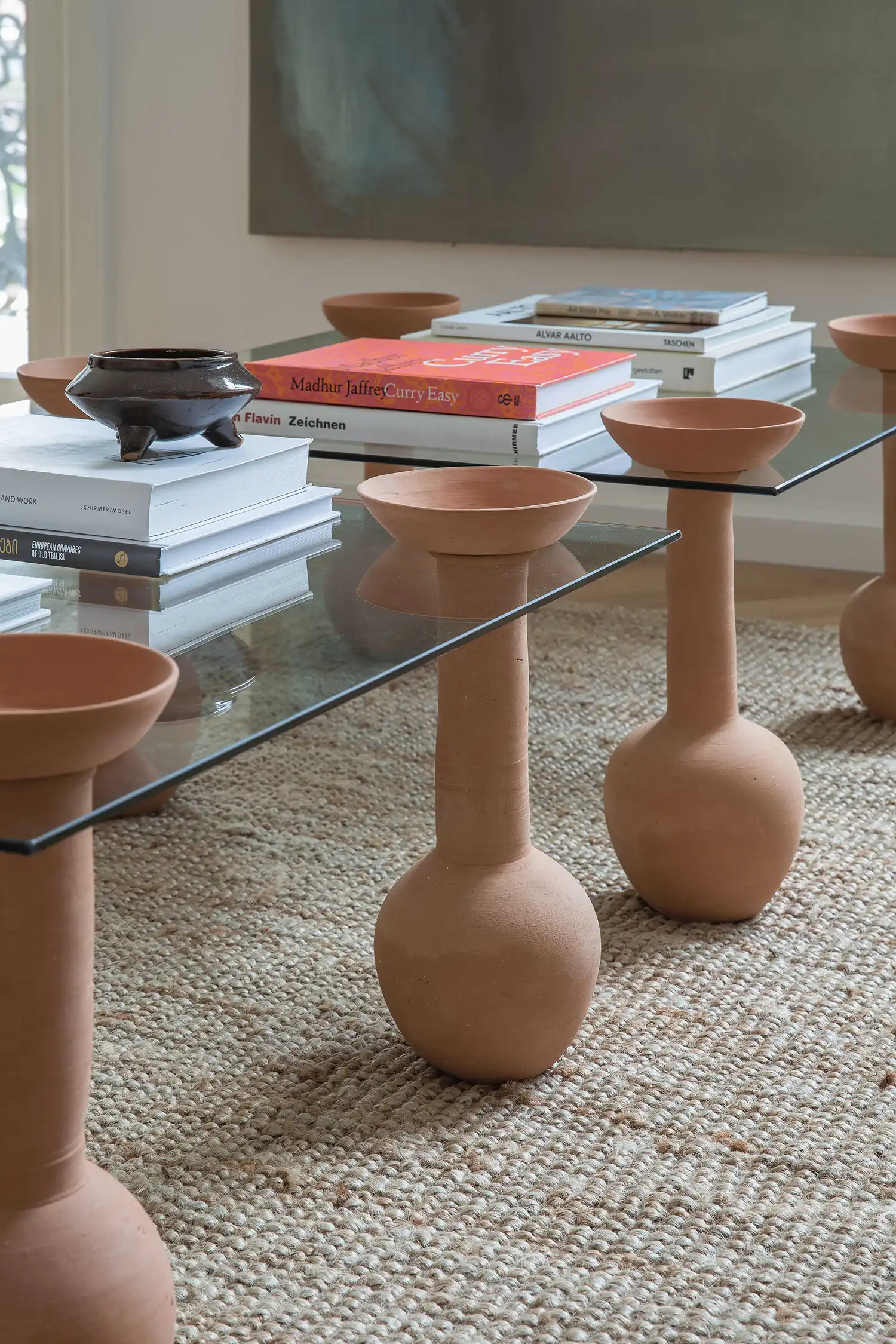
Fluidity in the social core. The main living area was reimagined as a singular, open-plan environment. Here, the kitchen, dining, and lounge areas coexist without rigid boundaries, encouraging shared experiences. This spatial fluidity is punctuated by bespoke furniture pieces, such as the ELEMENT Dining Table and PIALA Coffee Table, both designed by the studio to reflect a minimalist aesthetic that complements the apartment’s heritage without competing with its classical bones.
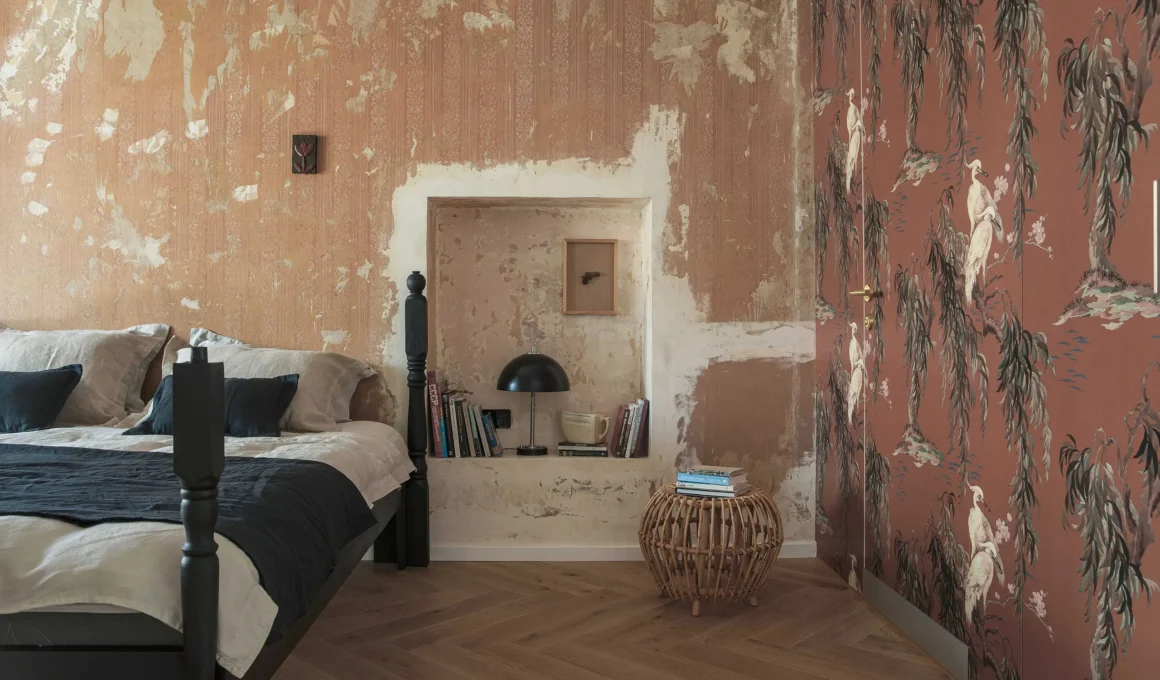
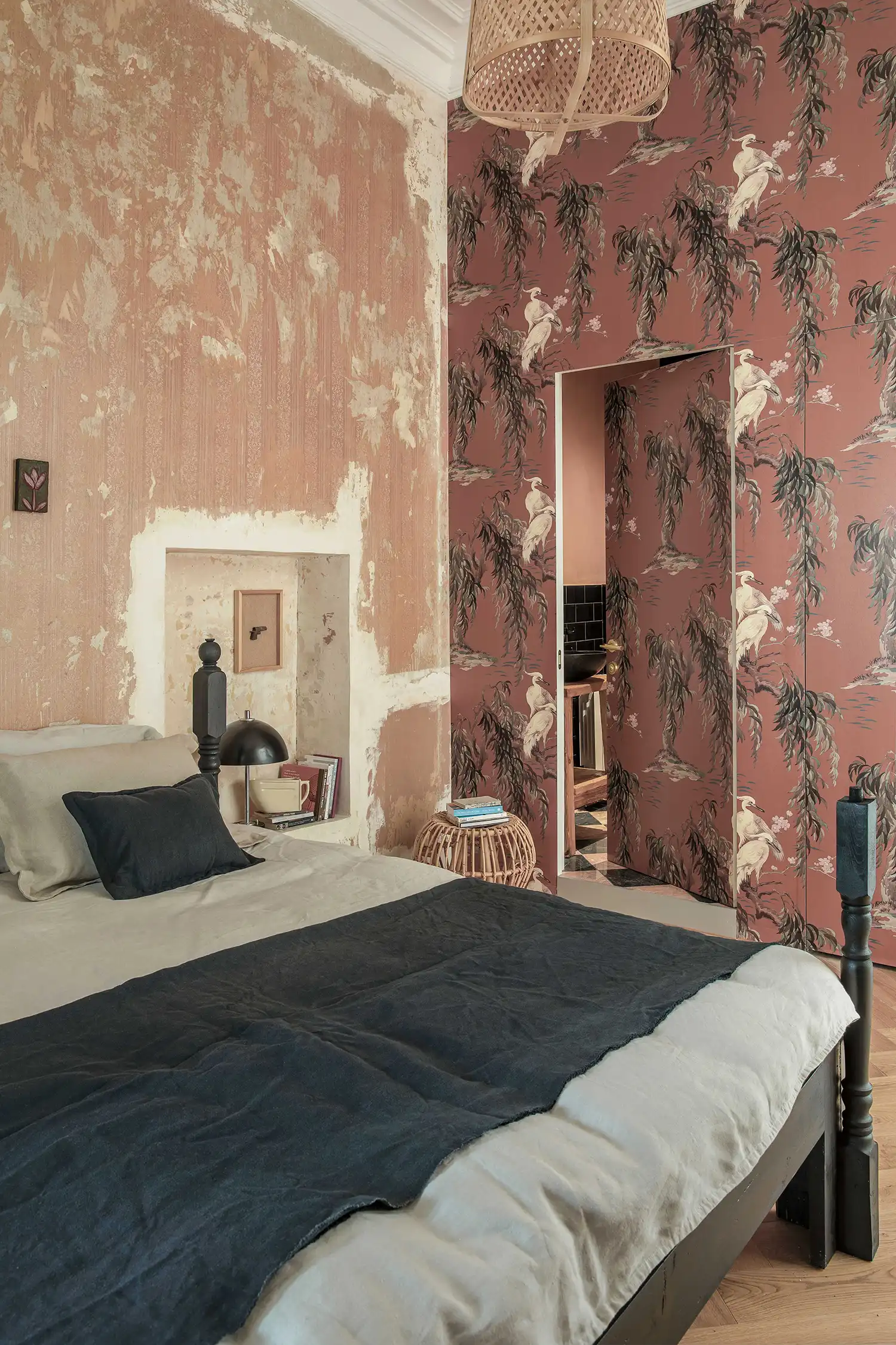
A departure into color. While the common areas favor a monastic white, the master bedroom offers a dramatic tonal shift inspired by the apartment’s hidden history. During the renovation, the team discovered fragments of faded, orange-textured wallpaper. Rather than discarding this discovery, they used it as a chromatic blueprint. This led to a bold collaboration with House of Hackney, whose wallpaper now masks the doors to the bathroom and wardrobe, creating a seamless, immersive environment of deep color and pattern.
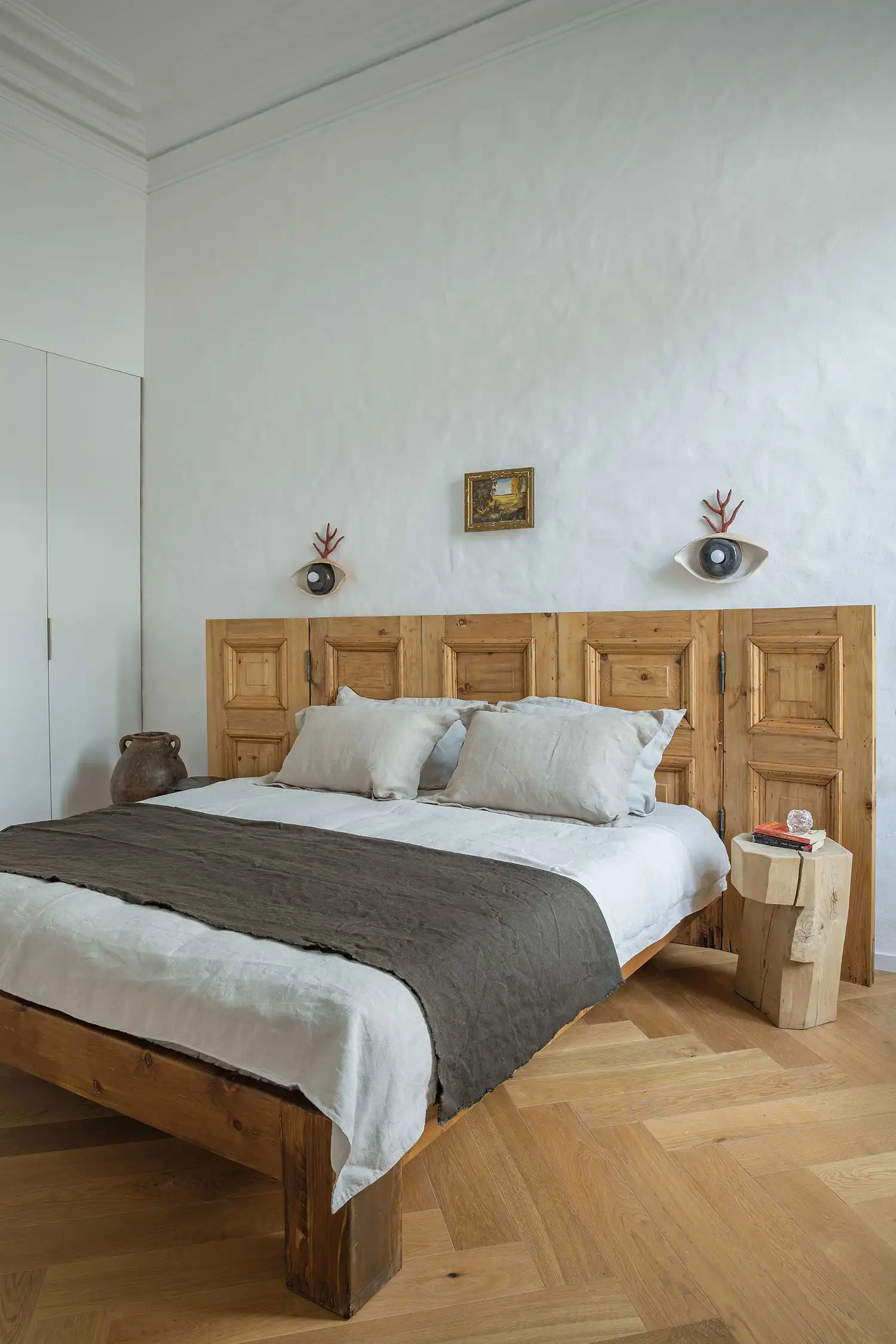
Cohesive private quarters. The ensuite bathroom continues this vibrant narrative, echoing the bedroom’s orange and black palette through the use of marble square tiles. This level of detail extends to the guest wing, where the DAL wall lamp—another in-house design—provides a soft, sculptural glow. Every modern addition, from the restored wooden shutters to the custom metalwork, feels like an intentional continuation of the building’s century-old character rather than an external imposition.
The evolution of Georgian interiors. This project highlights Idaaf Architects’ ability to navigate the complexities of Tbilisi’s built environment with a sophisticated, analytical eye. By balancing preservation with progress, they have created a space that feels both timeless and urgently contemporary. This approach to residential refurbishment mirrors the studio’s broader portfolio, including their work on the minimalist stone interior of Apartment 73A, which similarly explores the intersection of raw materiality and urban heritage.