



Located in a central, high-density district of Tbilisi, Apartment 73A by IDAAF Architects is a refined exercise in urban contrast, where the frenetic pace of Georgia’s capital is balanced by a monochromatic palette of basalt, micro-cement, and century-old timber.
The Urban Threshold. Perched within a high-rise surrounded by the relentless hum of business centers and hotels, the residence acts as a filter for the city below. The design team at IDAAF Architects recognized that the vibrant, often chaotic energy of Tbilisi required an interior response that didn’t just ignore the surroundings, but purposefully recontextualized them. Through a meticulous selection of tactile surfaces and muted tones, the apartment achieves a sense of stillness that feels earned rather than forced.

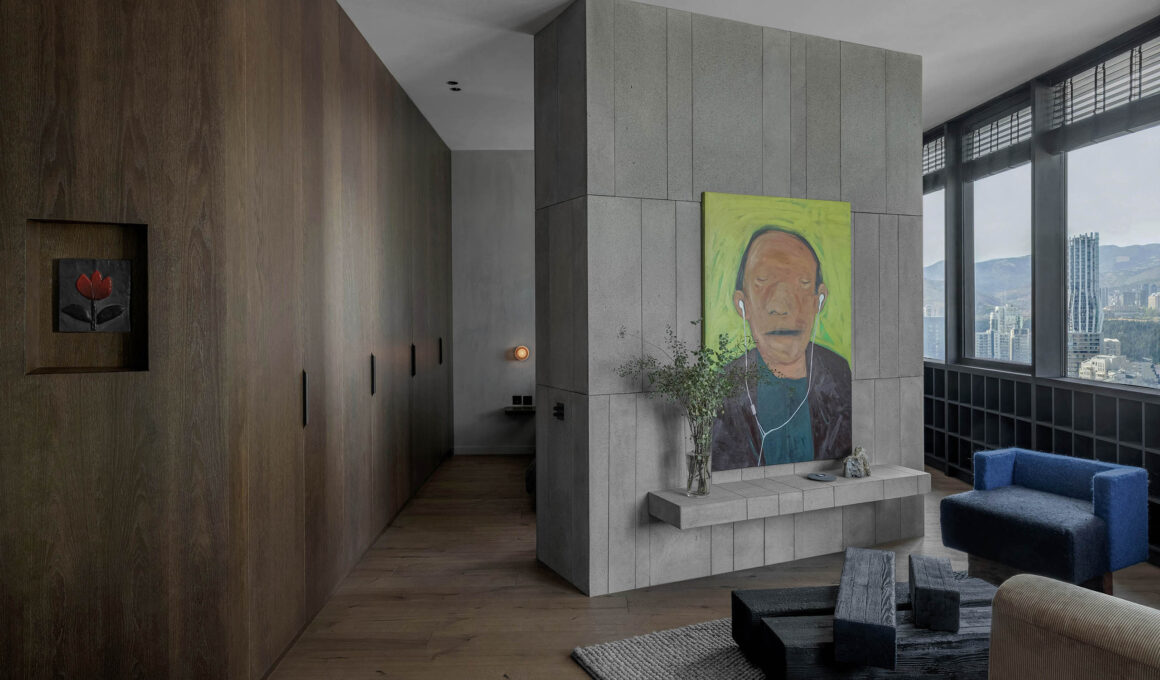
A Unified Narrative. The layout is defined by an open-plan philosophy, allowing the living, dining, and sleeping quarters to breathe as a single entity. To maintain this fluid logic, the architects utilized dark wooden paneling to conceal storage and service areas, effectively stripping away the “awkward shapes” often found in modern high-rise floor plans. This architectural sleight of hand ensures that the visual field remains uncluttered, focusing the occupant’s attention on the panoramic views provided by expansive stained-glass windows.

Material Weight. In the heart of the home, a structural column—usually an aesthetic hindrance—is transformed into a pivotal design element. Clad in Georgian basalt stone, its neutral, stony presence serves as a soft boundary between the social areas and the bedroom. This use of local stone is echoed in the kitchen’s marble island, which introduces organic veining into an otherwise disciplined environment, grounding the minimalist interior with a heavy, geological permanence.

Custom Craftsmanship. Much of the furniture within Apartment 73A was conceived specifically for this project, bridging the gap between product design and spatial planning. The Element Dining Table, crafted from a massive, 100-year-old oak, serves as a rugged centerpiece that contrasts with the precision of the micro-cement walls. Nearby, the charred texture of the Coffee Table 73A adds a layer of artisanal depth, reflecting a bespoke approach to living that favors quality over quantity.

The Private Quarters. Transitioning into the more intimate zones, the material palette remains consistent but shifts in intensity. In the bedroom, the Aguri side table, made of solid walnut, provides a warm counterpoint to the cooler grey tones. The bathroom continues the theme of monochromatic minimalism, where the seamless application of micro-cement is interrupted only by the glossy, artisanal texture of black Zellige tiles by Cle, creating a play of light and shadow that feels both ancient and contemporary.

Sensory Curation. Lighting and art play a fundamental role in softening the apartment’s industrial edges. A curated selection of fixtures from &Tradition and Hay provides focused, warm illumination, while the expressive paintings of Georgian artist Maka Batiashvili inject a necessary human pulse into the space. As the sun sets over the northwest of the city, the interior transforms; the grey walls catch the orange hue of the horizon, blurring the line between the private interior and the vast Georgian sky.

Contemporary Living. This project exemplifies a growing trend in Eastern European residential design, where the focus has shifted toward high-end materiality and a rejection of unnecessary ornament. This philosophy of “less but better” and the intelligent use of local textures is similarly explored in the Rather Two apartment Bucharest renovation, which shares a commitment to spatial clarity and the removal of “awkward shapes” in urban dwellings. For those interested in how organic textures and natural light can redefine luxury in a high-density context, the Lumen Residence Block722 organic luxury Athens duplex offers another compelling look at balancing raw materials with modern sophistication.