



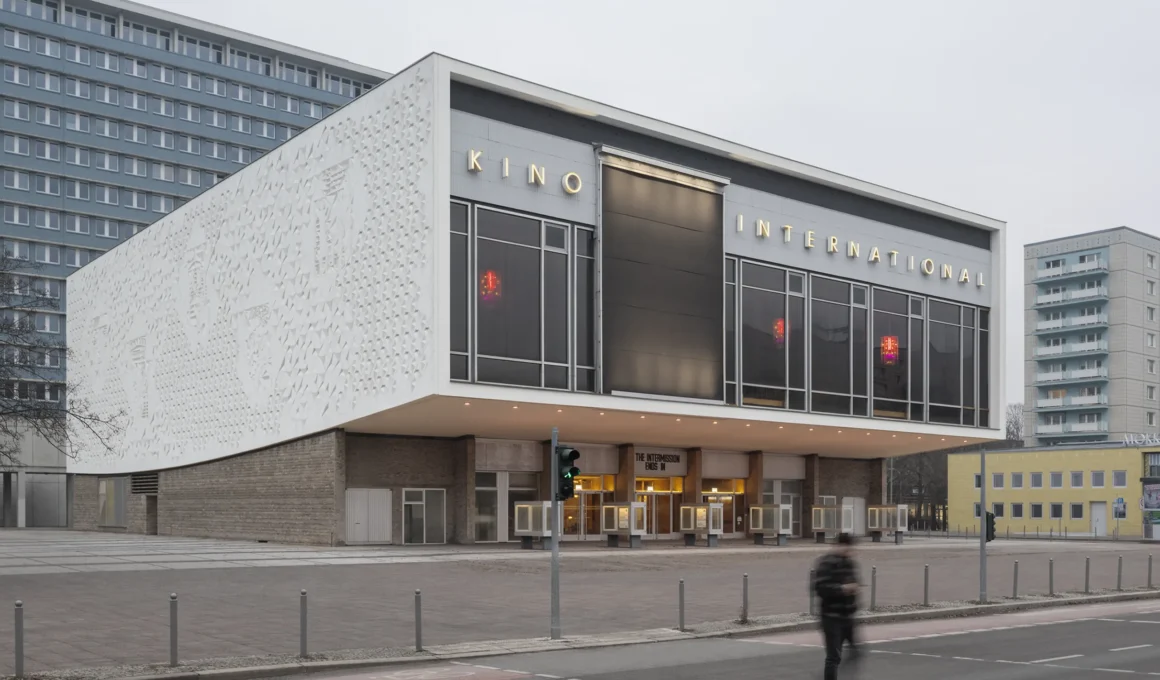
The silhouette of Karl-Marx-Allee has regained its most luminous protagonist. Following an 18-month hiatus, the Kino International in Berlin is set to reopen its doors on February 26, 2026, marking the return of a structure that is less a cinema and more a living manifesto of European post-war modernism. This restoration, led by local firm Dickmann Richter Architekten, manages a delicate paradox: the building feels entirely untouched by time, yet it has been systematically re-engineered to meet the rigorous technological and environmental demands of the 21st century.
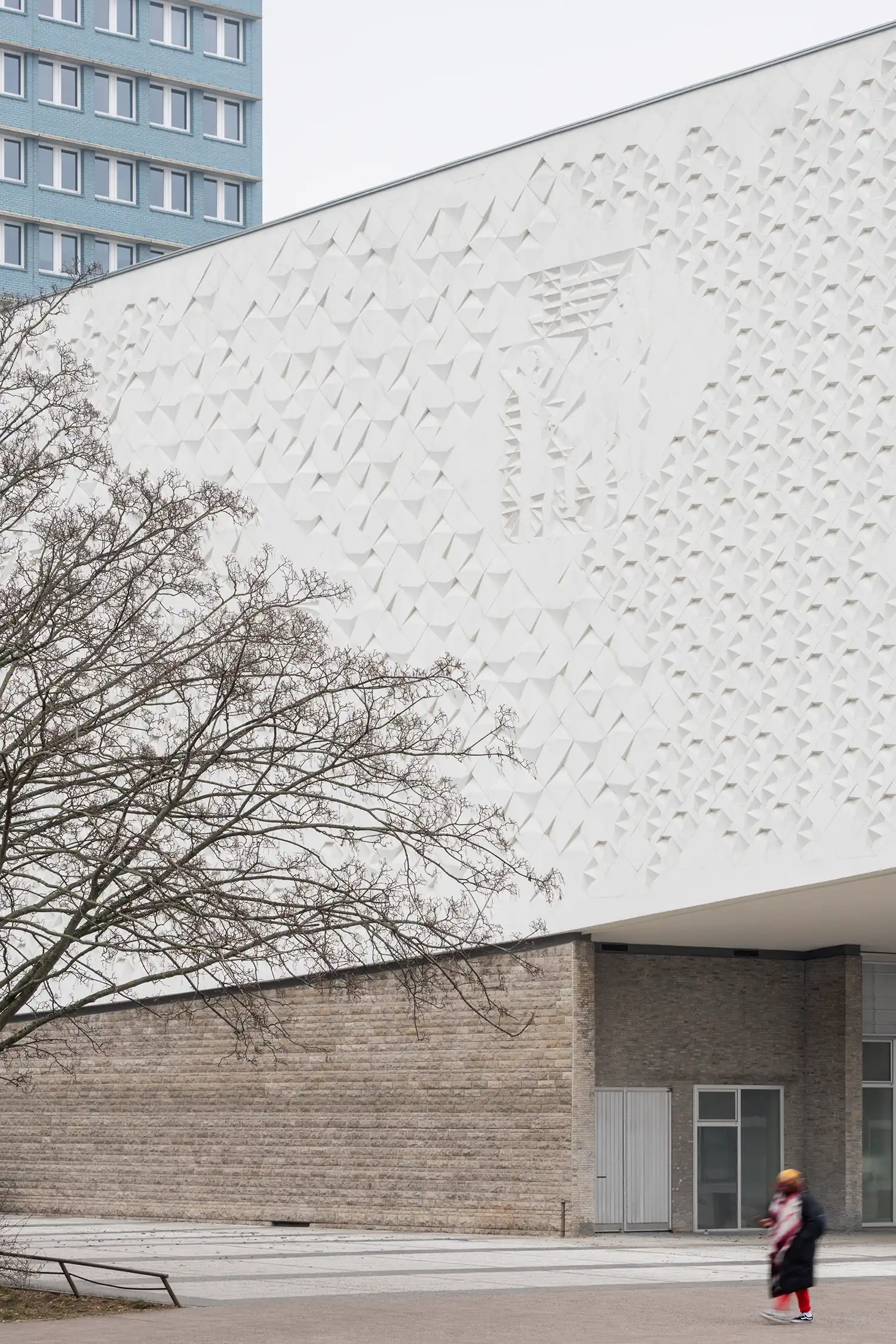
A heritage defined by transparency and rhythm remains the core of the building’s soul. Originally designed by Josef Kaiser and completed in 1963, the cinema served as the premier cultural stage of former East Berlin. Its architecture—characterized by a cantilevered upper floor and a vast glass facade—was intended to symbolize a departure from the heavy monumentalism of the early socialist era toward a more international, light-filled modernism. The refurbishment honors this “clear formal language,” treating the spatial sequence from the expansive foyers to the legendary Panorama Bar as a singular, choreographed experience of light and materiality.
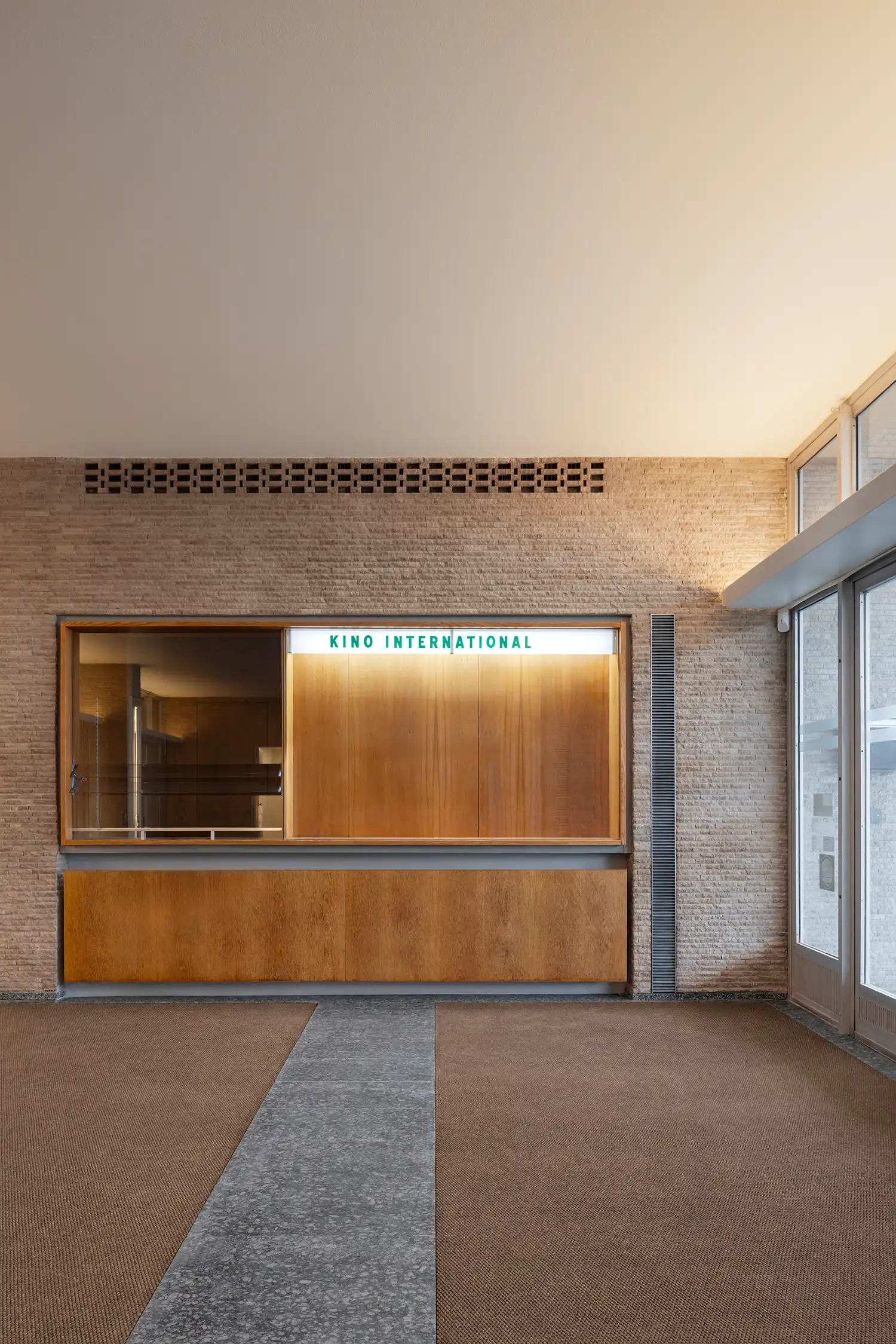
The technical metamorphosis occurred largely behind the scenes, adhering to a principle of “maximum restraint in appearance.” To bring a 1960s icon up to modern standards, Dickmann Richter Architekten performed a surgical upgrade of the entire infrastructure. Every system, from the ventilation and heating to the electrical grid, was replaced. In a feat of heritage-compliant engineering, the original wall and ceiling surfaces were carefully opened to integrate these new technologies and then meticulously restored. This invisible modernization has resulted in a staggering 70 percent reduction in energy demand, proving that mid-century landmarks can indeed participate in the contemporary sustainability discourse without losing their aesthetic integrity.
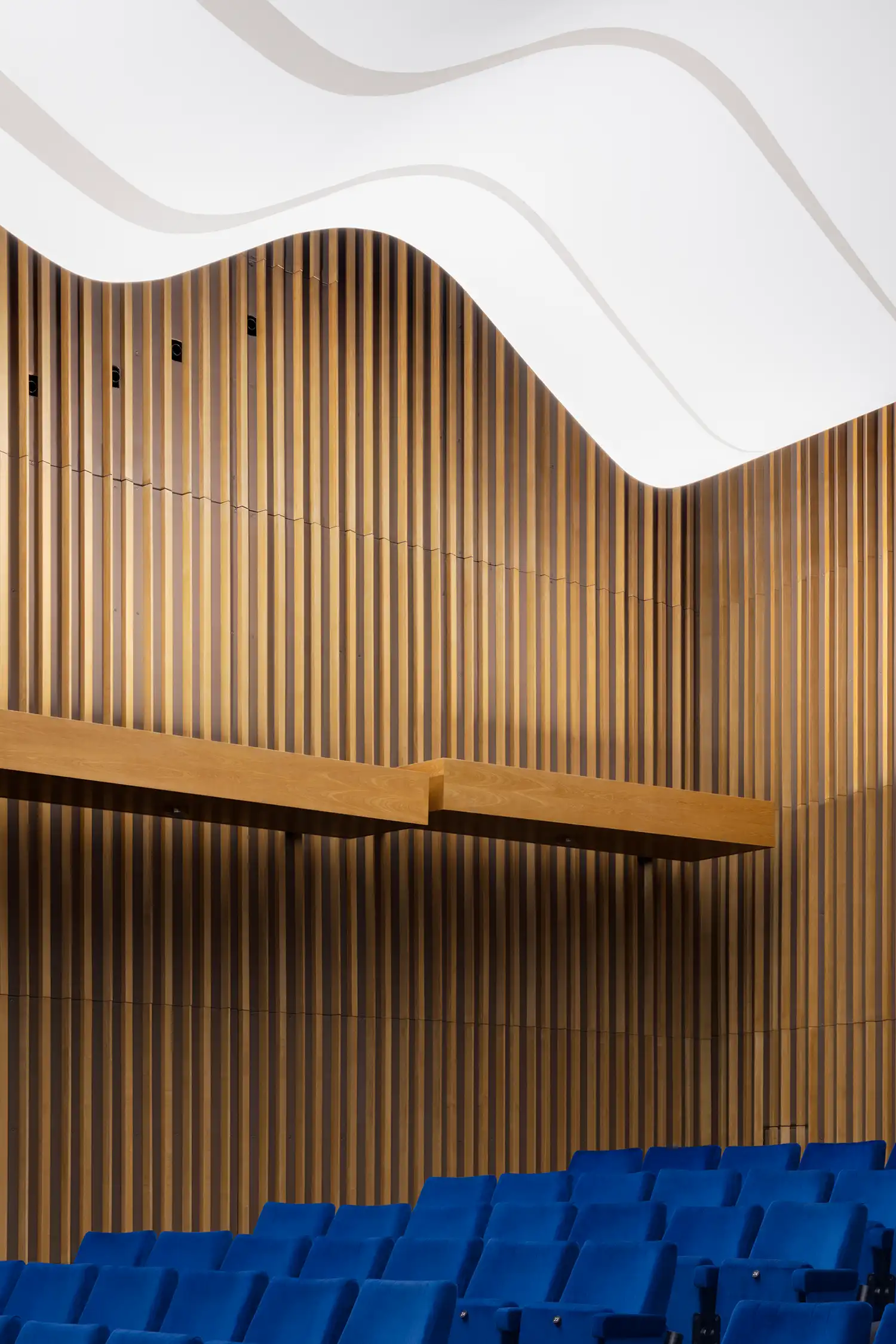
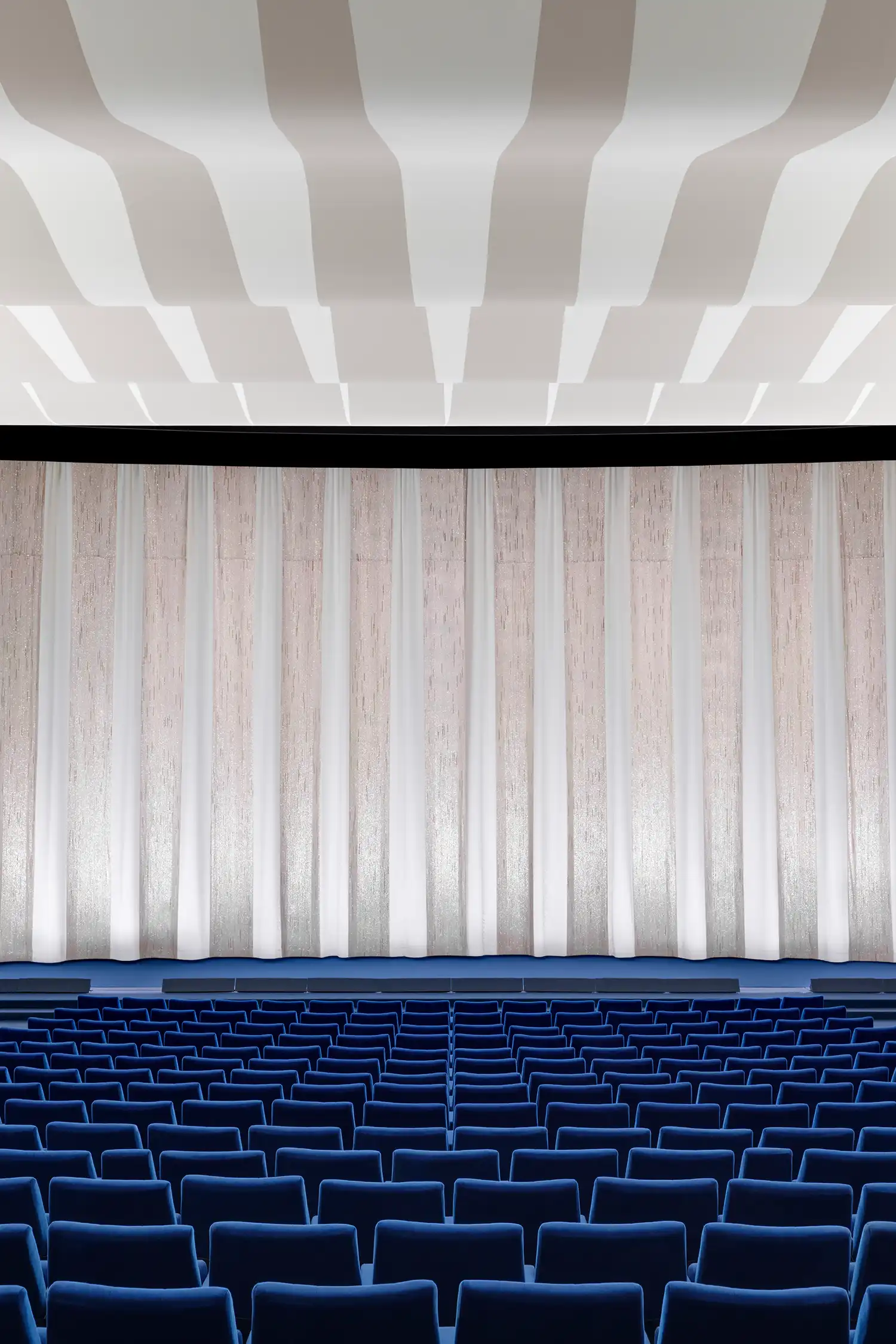
Sensory restoration and cinematic craft take center stage within the main auditorium. The experience of the space is defined by a renewed acoustic clarity, achieved through the installation of over 1,000 square meters of new insulation hidden behind historic coverings. The tactile quality of the interior has been preserved through the refurbishment of seven kilometers of wooden slats in cherry, elm, and ash. Most evocative, however, is the restoration of the silver premiere curtain. Adorned with 40 million sequins, the curtain remains a glittering threshold between reality and film, now illuminated by a state-of-the-art Christie 4K laser projector and a Dolby 7.1 sound system.
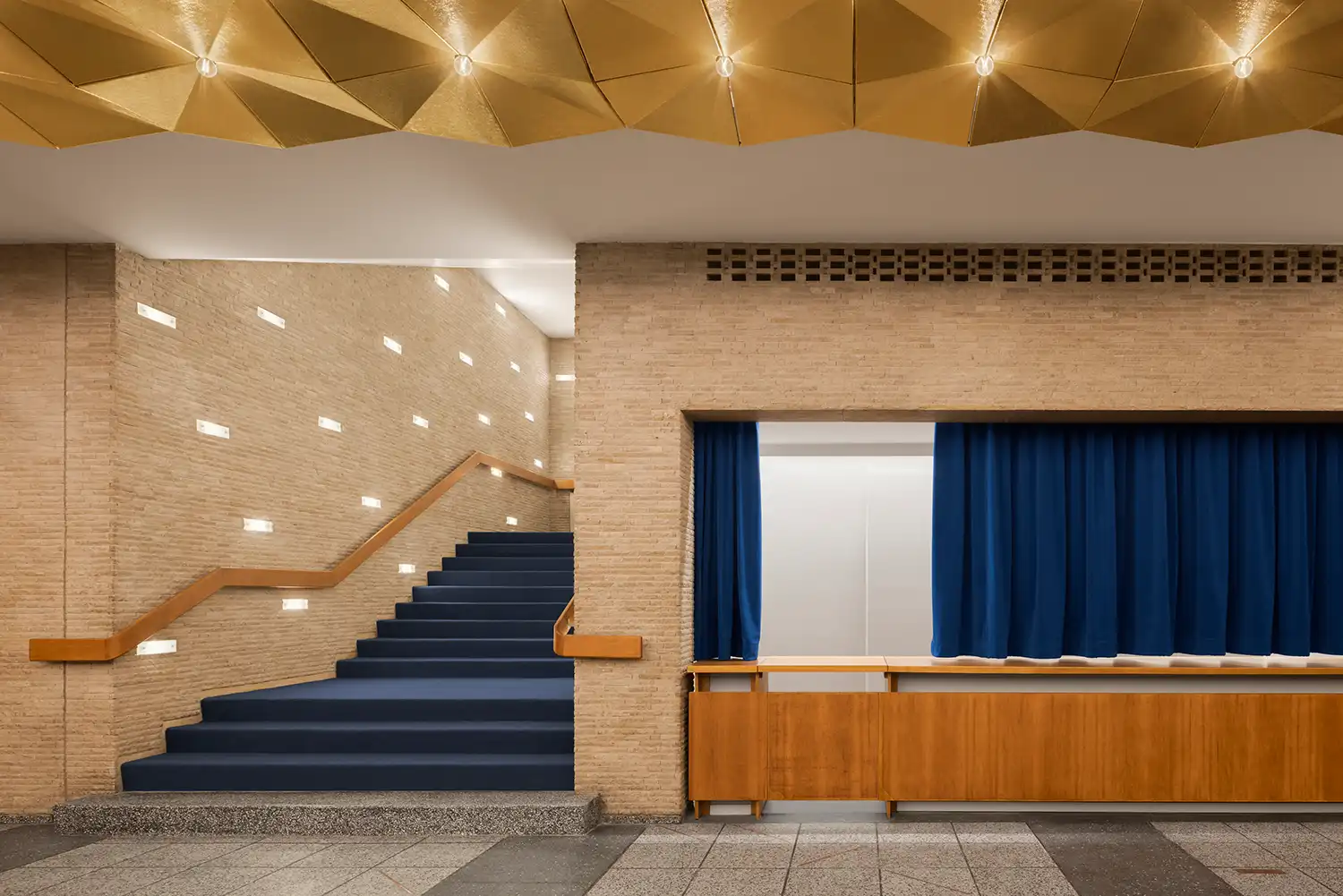
The cinema as an urban social anchor extends beyond the screen. By reducing the seating capacity to 506, the architects have prioritized the “human scale,” increasing row spacing to enhance physical comfort. The Panorama Bar, with its panoramic views over the Berlin cityscape, has been reinstated as a vital meeting point for the creative community. It is a space where the boundary between the cinematic world and the street life of Karl-Marx-Allee dissolves, reaffirming the building’s original purpose as a multifunctional cultural hub rather than a mere commercial venue.
A global dialogue on cultural preservation is reflected in this reopening, as cities worldwide grapple with how to modernize their aging cinematic treasures. This sensitive approach to 20th-century heritage draws parallels to other significant European interventions, such as when Bach Arquitectes reimagined the Reina Sofia Cinema in Madrid, similarly balancing historical memory with contemporary functionality. As the Kino International prepares for its official gala on March 3, 2026, it stands as a testament to the idea that the most sustainable way to build the future is to thoughtfully inhabit the masterpieces of our past.