



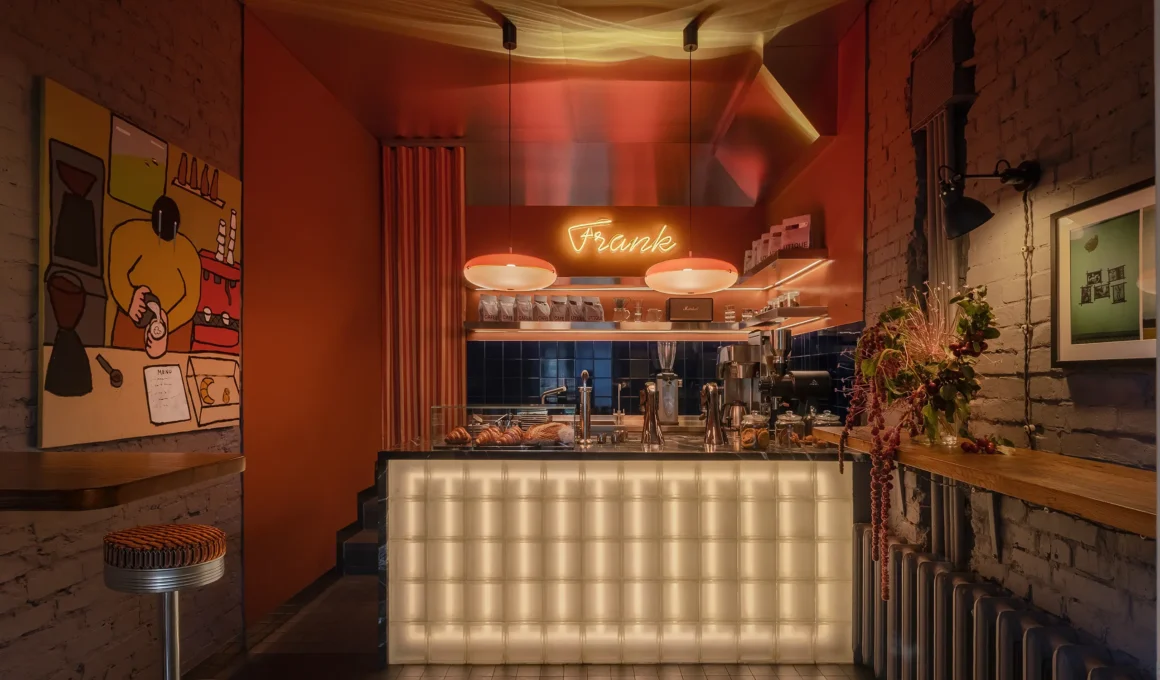
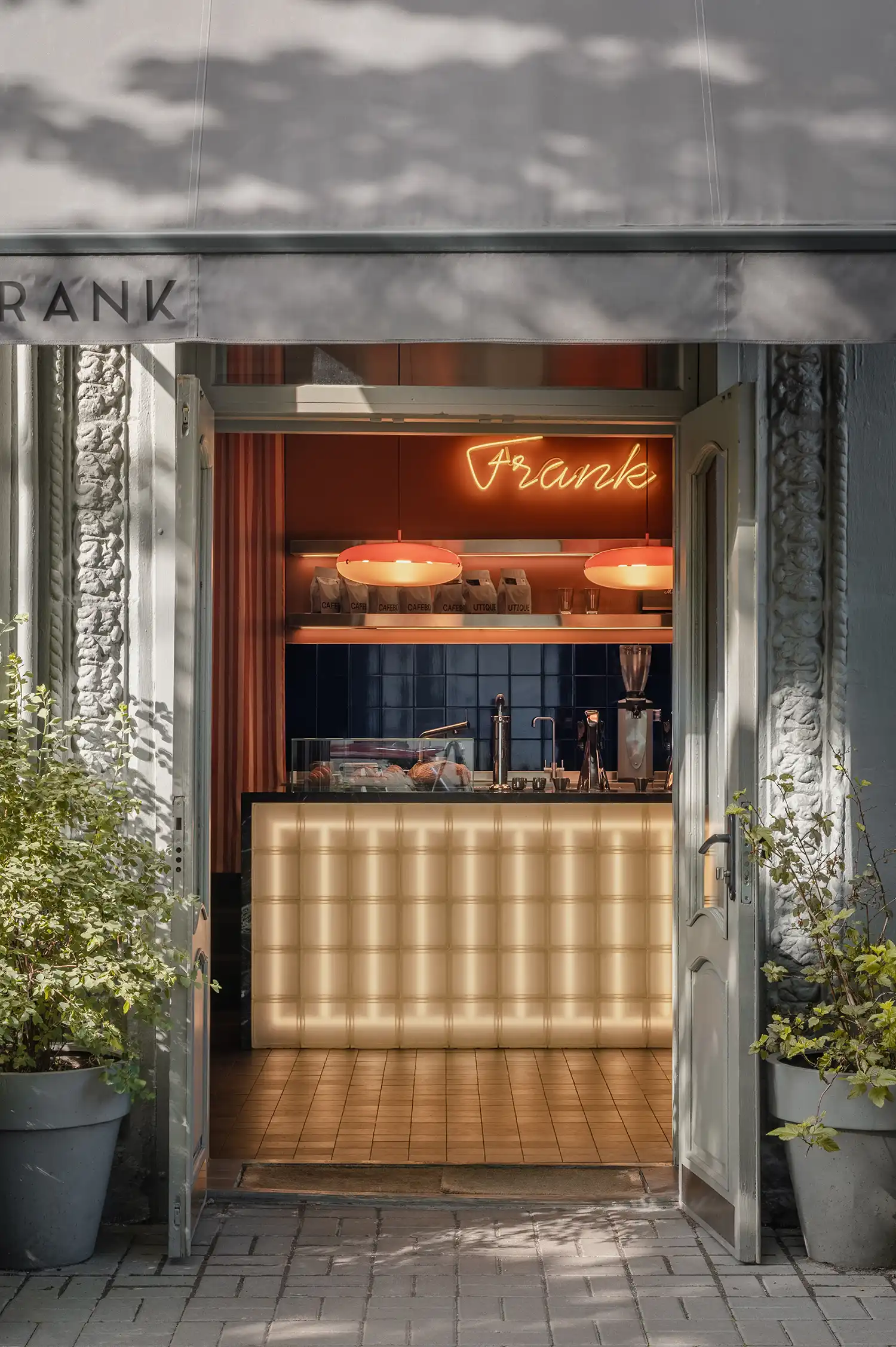
Frank is a reimagined 19-square-meter coffee institution in Kyiv, where designer Yana Molodykh has infused a time-honored local ritual with the faded elegance of a Milanese bar to create a space that feels both familiar and refreshingly cinematic.
A Narrative of Continuity. For nearly a decade, Frank has served as a cornerstone of its neighborhood, a place where the morning espresso is less of a caffeine fix and more of a stabilizing anchor in a rapidly shifting world. When the owner—a former footballer and dedicated animal rescue advocate—decided it was time for a refresh, the challenge was delicate: how to evolve without erasing the “happy and magical” memories held within the existing walls. The resulting interior embraces a “shabby chic” aesthetic, purposefully avoiding the sterile polish of a new build in favor of a layered, lived-in character that resonates with regular patrons.
The Gio Ponti Vision. The conceptual heart of the project stems from a whimsical historical prompt: What if the legendary Gio Ponti visited Kyiv today? Molodykh envisioned the master of Italian modernism wandering through the nearby circular covered market by Alla Anishchenko, finding kinship in its geometric rigor. This transatlantic dialogue is physically manifested in the choice of lighting fixtures, specifically the Luna pendant lights by Ponti, which hang as glowing orbs of mid-century sophistication against the textured backdrop of the Ukrainian capital.
Material Alchemy and Reflection. In a space of just 19 square meters, material choices must perform double duty as both functional surfaces and spatial expanders. The introduction of stainless steel on the ceiling and cornices has fundamentally altered the perception of volume, reflecting light in a way that prompted returning customers to ask if the walls had been moved. During the renovation, the removal of the protective film from these steel elements revealed a shimmering, aurora-like effect that brings a dynamic, liquid quality to the compact footprint.
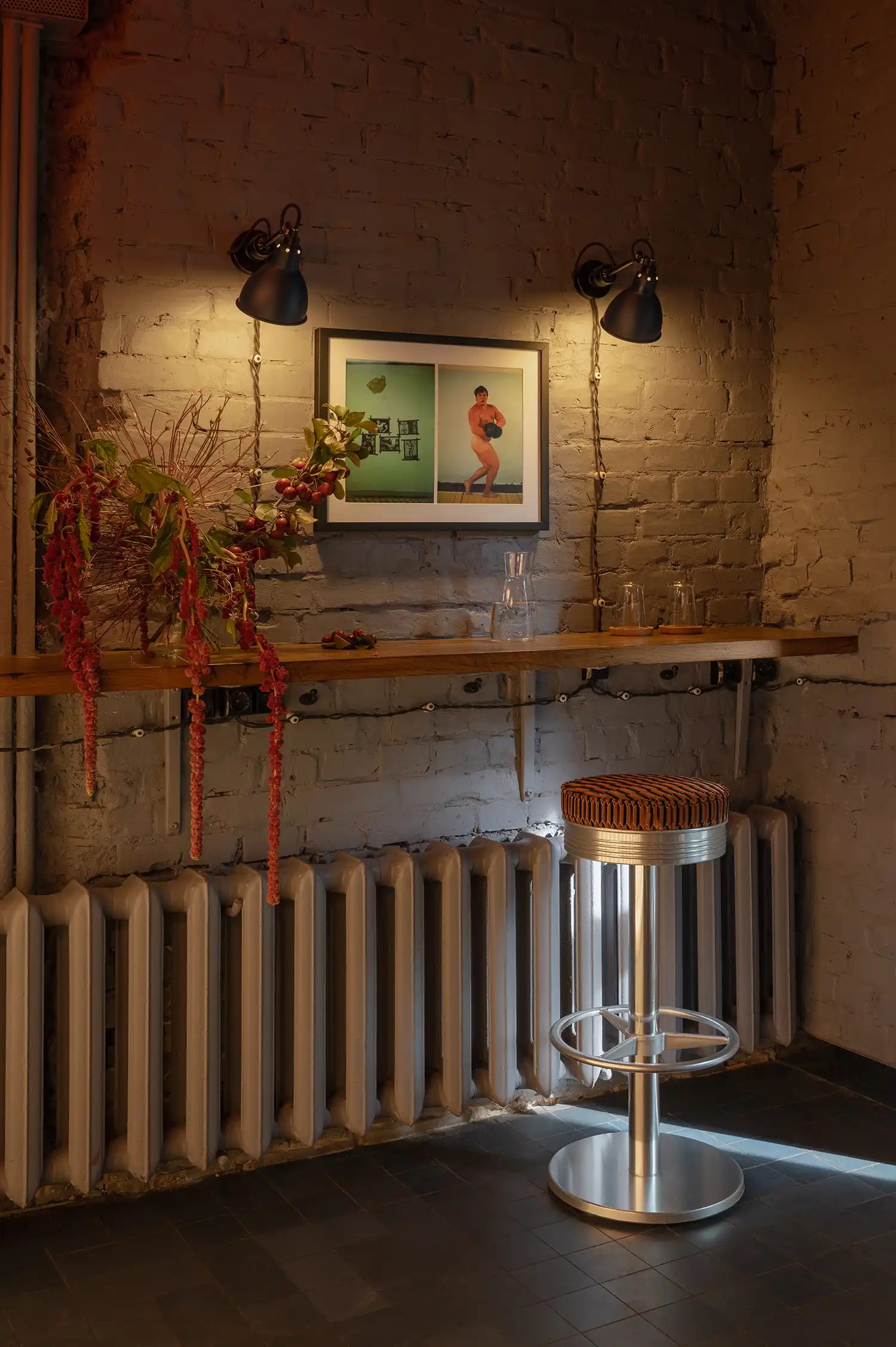
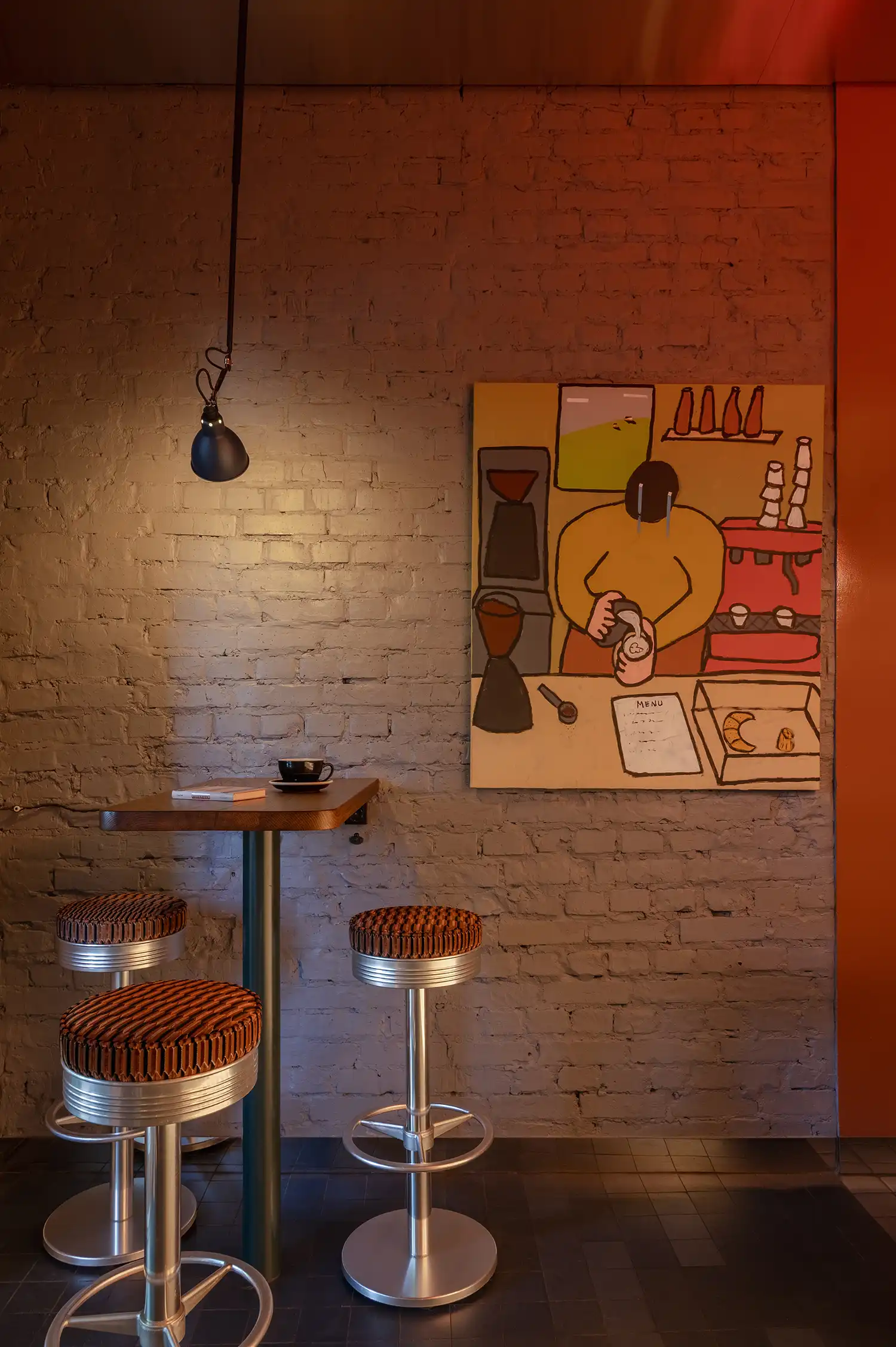
Strategic Color Blocking. The interior is defined by a sophisticated tension between the “work” and “rest” zones. The barista station is highlighted in a high-gloss berry red, protected by coats of lacquer to amplify its radiance and energy. In contrast, the visitor areas lean into a more contemplative mood, featuring exposed brickwork painted in a matte smoky blue. This palette, combined with French Argile paint, ensures that while the service area hums with professional intensity, the seating remains a quiet pocket of calm for those enjoying beans from local roasters like Cafeboutique.
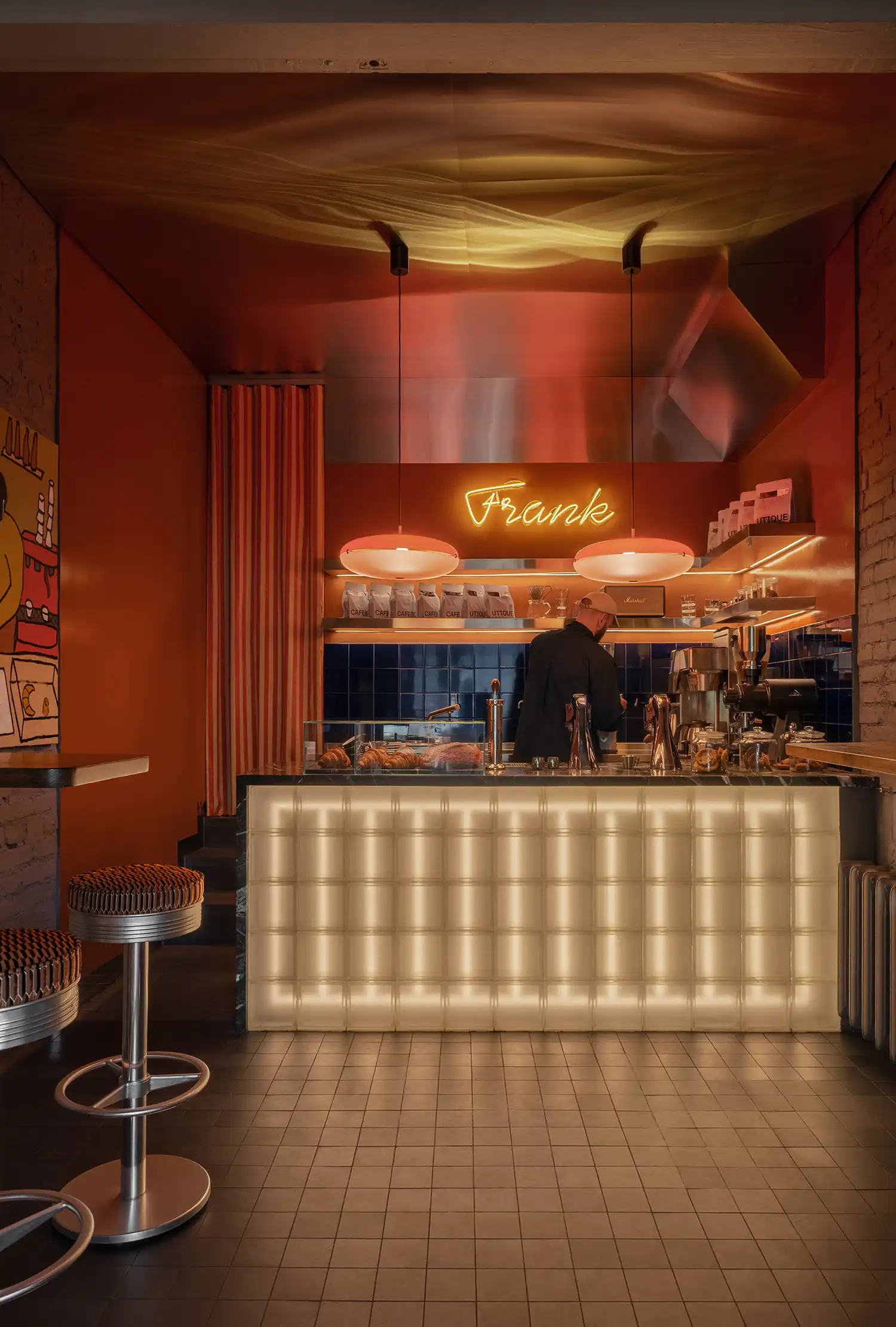
Curated Details and Texture. Every object within the cafe carries a story, from the vintage metal bar stools upholstered in Misia Paris fabric to the striped C&C Milano textiles brought back from Italy in a suitcase. The walls are adorned with photography by Sergey Melnichenko and art by Zorom Helo, adding a layer of contemporary Ukrainian culture to the mix. These elements are balanced by the preservation of original glass blocks and wooden countertops, a decision made specifically to honor the requests of loyal customers who feared losing the “soul” of their favorite modern cafe designs.
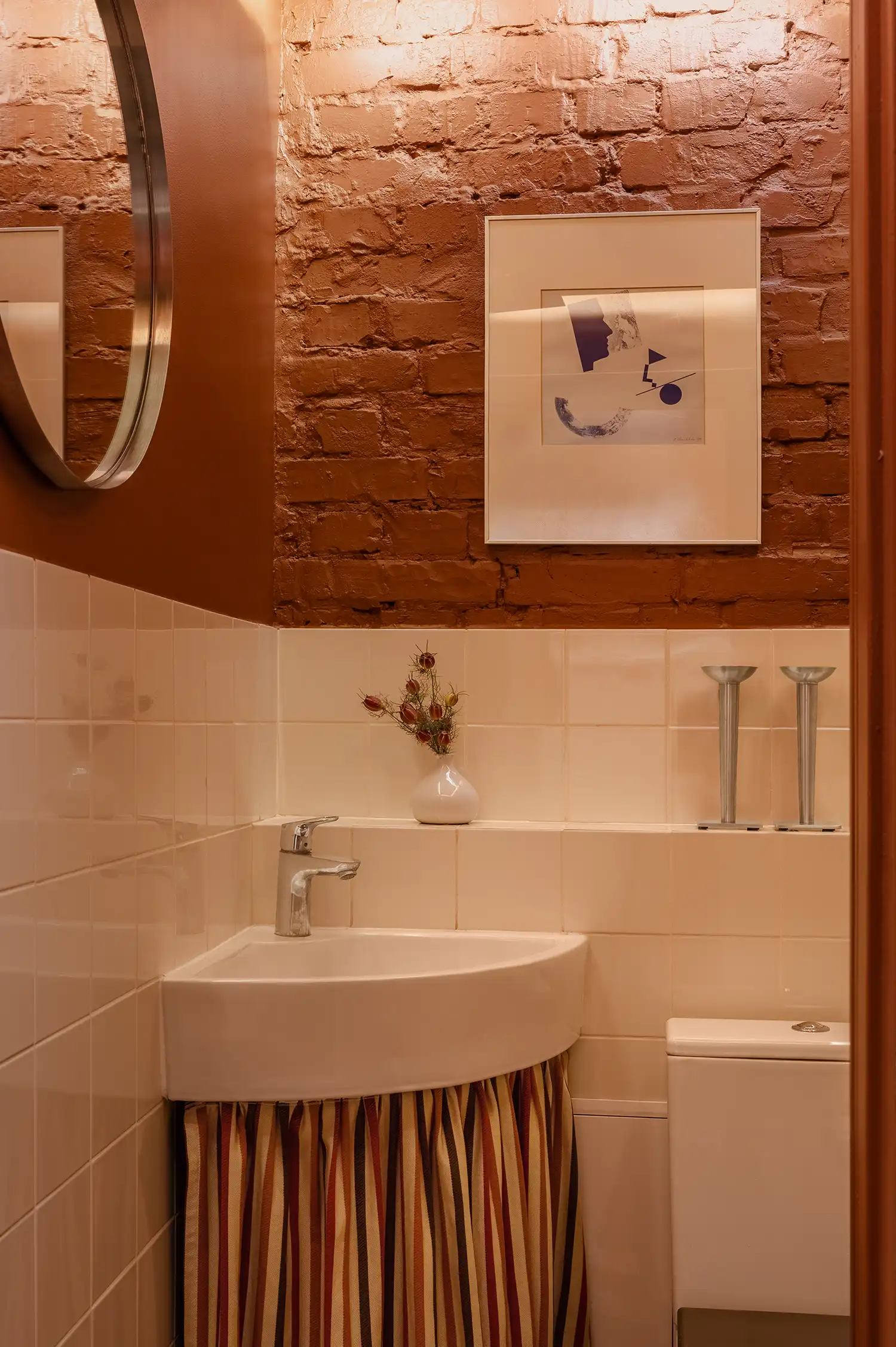
Technical Precision in Small Scales. Despite the poetic atmosphere, the cafe remains a high-performance machine. The stone countertops were precision-cut to integrate the owner’s professional coffee equipment, ensuring a seamless workflow for the baristas. Even the bathroom received a thoughtful touch; while keeping the original plumbing to maintain a sense of history, a custom fabric “skirt” was added to hide utility items, proving that no detail is too small when crafting a cohesive narrative.
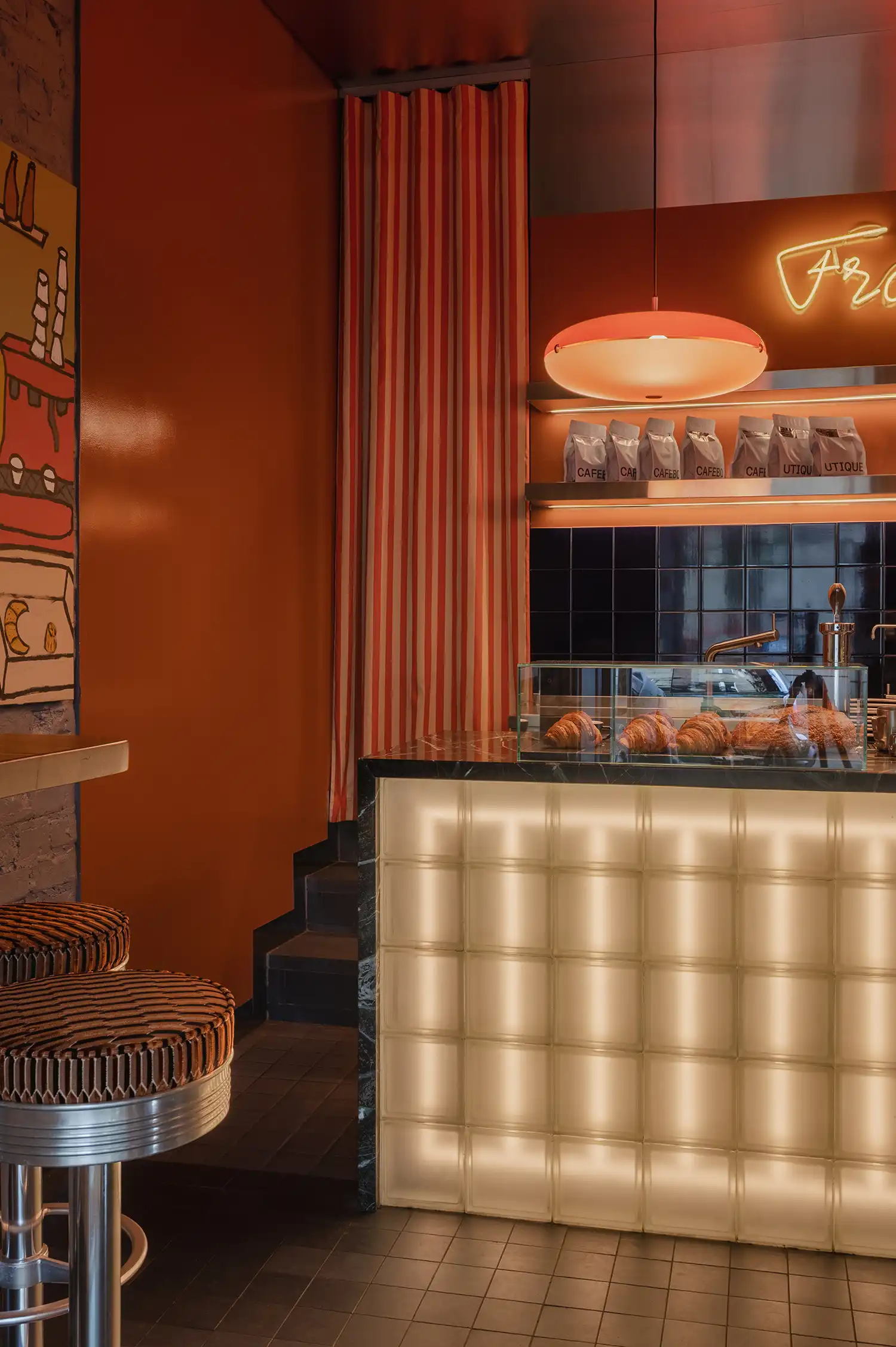
A Foundation of Stability. The success of the project lies in its restraint. By choosing to “leave things as people are used to them”—such as the iconic glass blocks—Molodykh has created a bridge between the pre-war past and a hopeful future. The space doesn’t scream for attention; instead, it whispers a story of resilience and refined taste. It stands as a testament to the idea that in times of stress, there is immense value in the rituals we keep and the spaces that hold them, now bolstered by a sophisticated palette that would make even a Milanese local feel at home.