


LAYER, the London-based experience design agency founded by Benjamin Hubert, has designed Node and Loft for Daily Objects — a family of charging products built on a single, arguable premise: that the objects we plug in every day deserve the same considered presence as the objects we display. The collection comprises the Node modular wireless charging ecosystem and the Loft charging station, two products that share a visual language of arched silhouettes, tactile materials, and a recurring circular motif. They are not attempting to disappear into the domestic environment. They are attempting to belong to it.
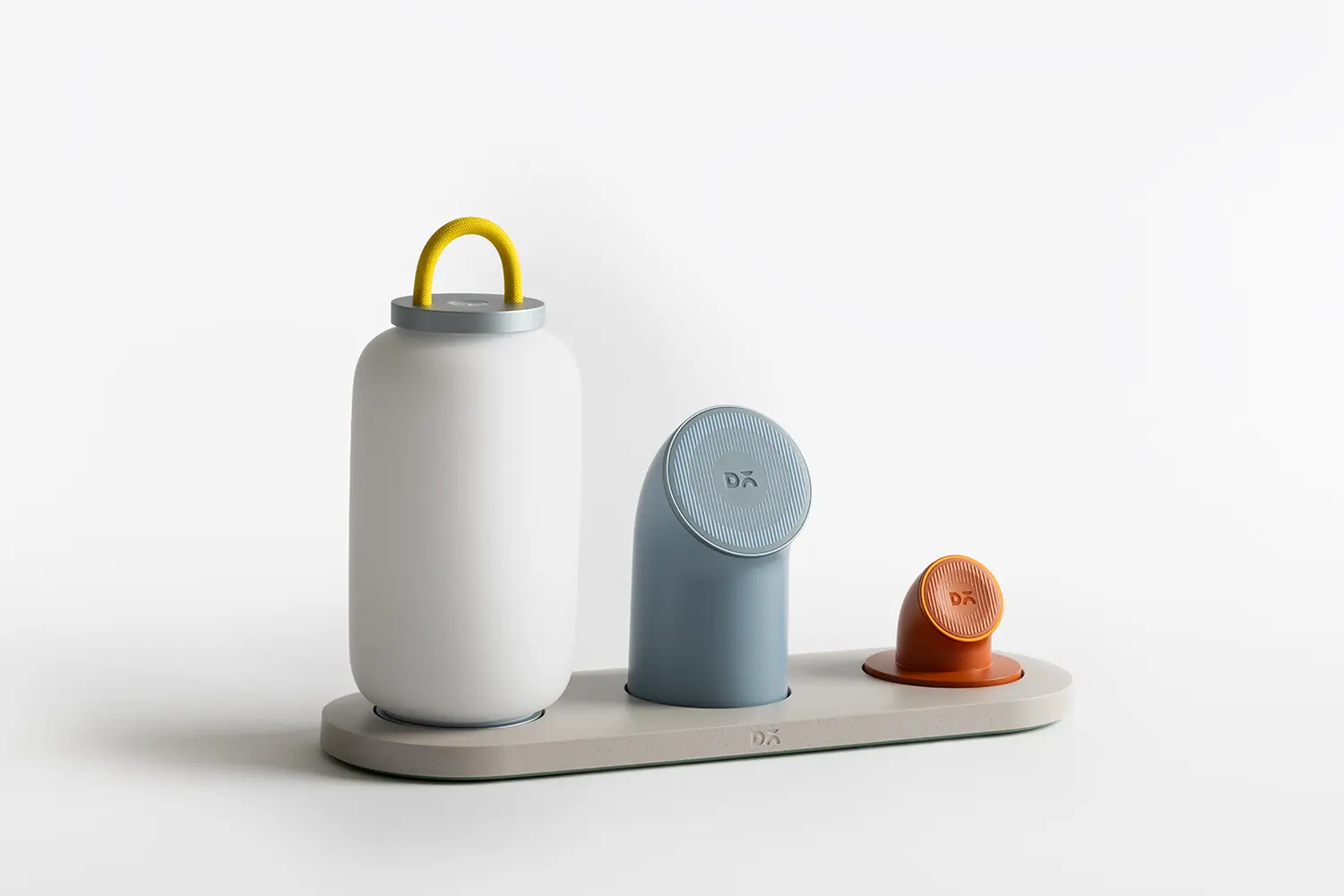
The charging category has a visibility problem. Power strips, cable clusters, and charging pucks are consistently treated as infrastructure — necessary, tolerated, tucked away. Node and Loft make the opposite argument: that a product handled multiple times a day, placed on a desk or bedside table, occupying permanent real estate in a room, should be worth looking at. “Charging your tech is one of the most repeated interactions in daily life, yet the products that enable it are often treated as background objects,” said Benjamin Hubert. The collection is LAYER’s experience design approach applied to a category that has never received it.

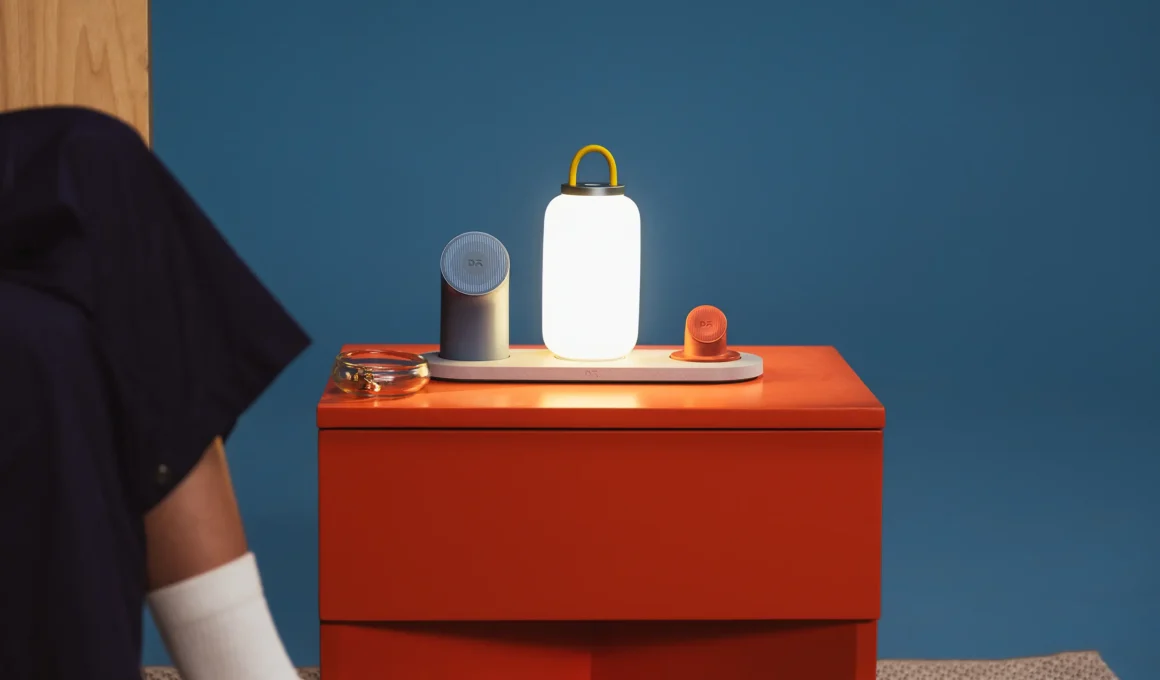
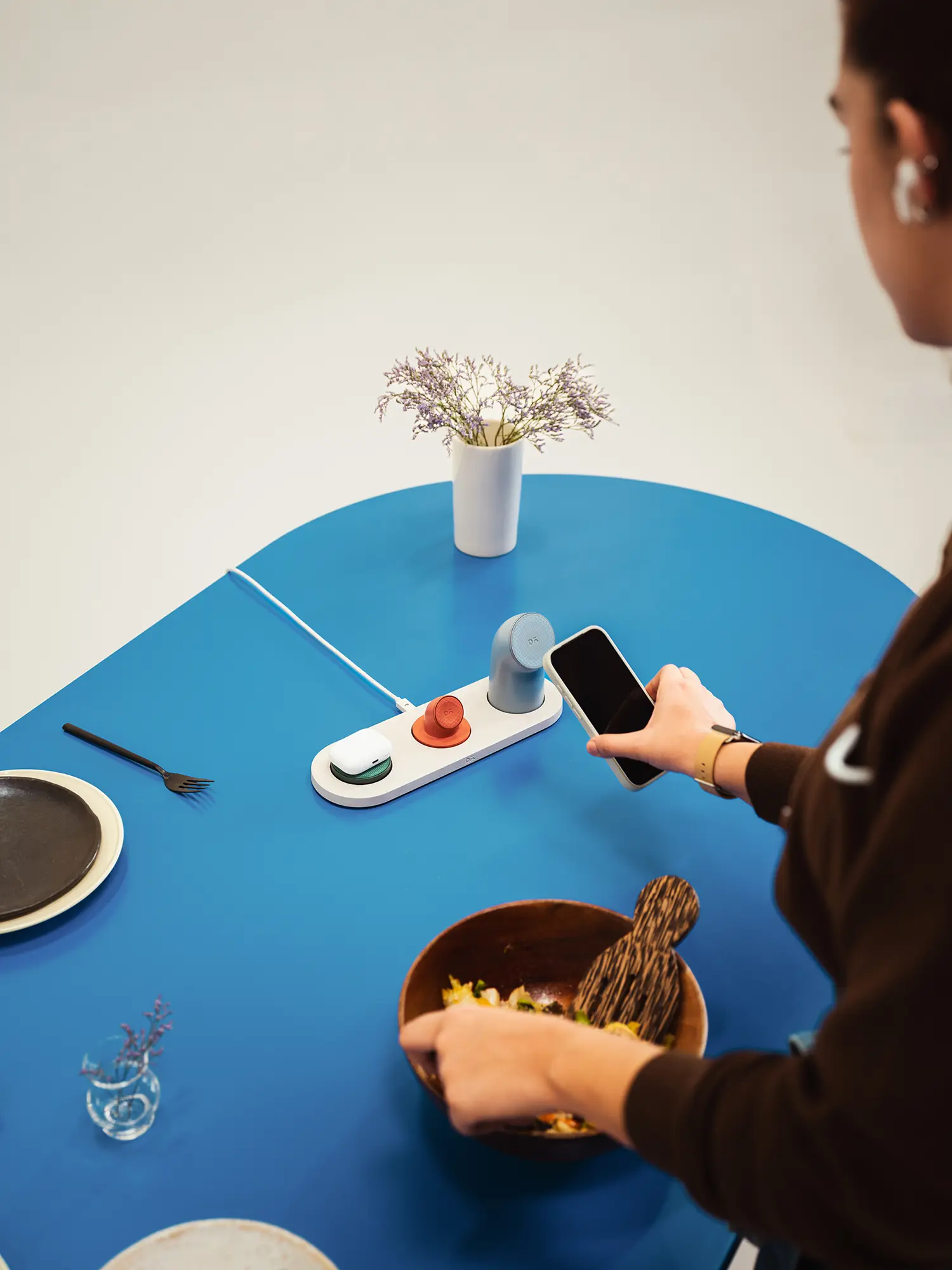
Node is built around modularity as its primary design logic. A single-wire base accepts four interchangeable modules — a Qi2.2-certified wireless charging phone stand, Wireless Charging Disk, Apple Watch Charging Stand, and Portable Lamp — each dockable or deployable independently. The Wireless Charging Phone Stand delivers 25W fast wireless charging with a built-in 7800mAh battery, meaning it detaches from the base and moves from desk to bedside without losing function. The system configures as a 2-in-1 or 3-in-1 dock depending on need — a structure that accommodates both the minimal and the maximal user without requiring a separate product line.
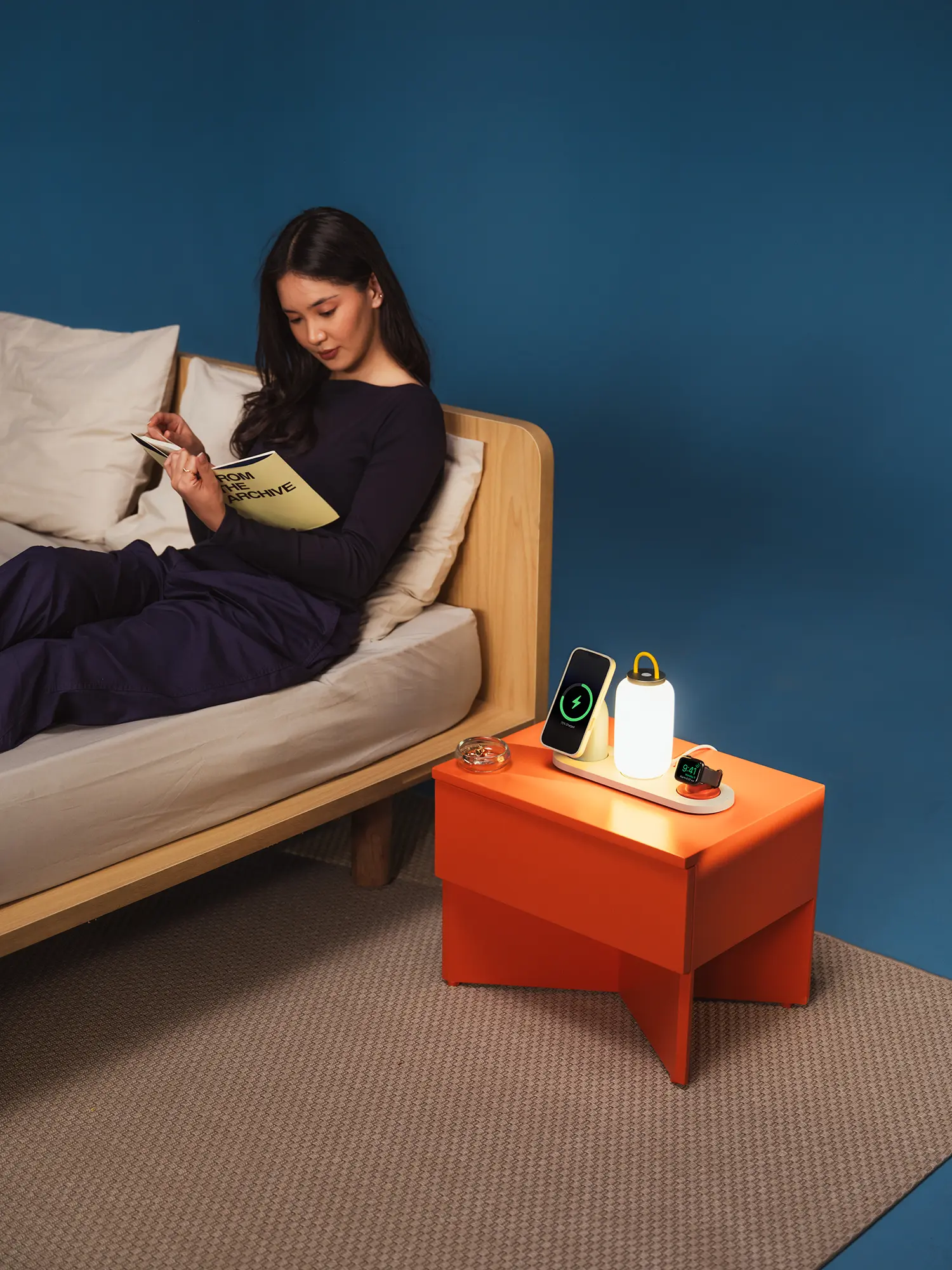
The Portable Lamp extends the ecosystem beyond device charging, and in doing so clarifies what Node is actually trying to be. With a glass diffuser and aluminium detailing, three dimming modes, and up to eight hours of battery life, the lamp is a fully resolved domestic object that happens to dock into a charging base. The arched handle — a recurring formal gesture across the collection — ties it to the wider visual language while giving it the kind of physical character that makes a product identifiable at a glance. It is the module that most legibly signals LAYER’s ambition: not a charging station with a lamp attached, but a modular domestic product ecosystem where power is one function among several.
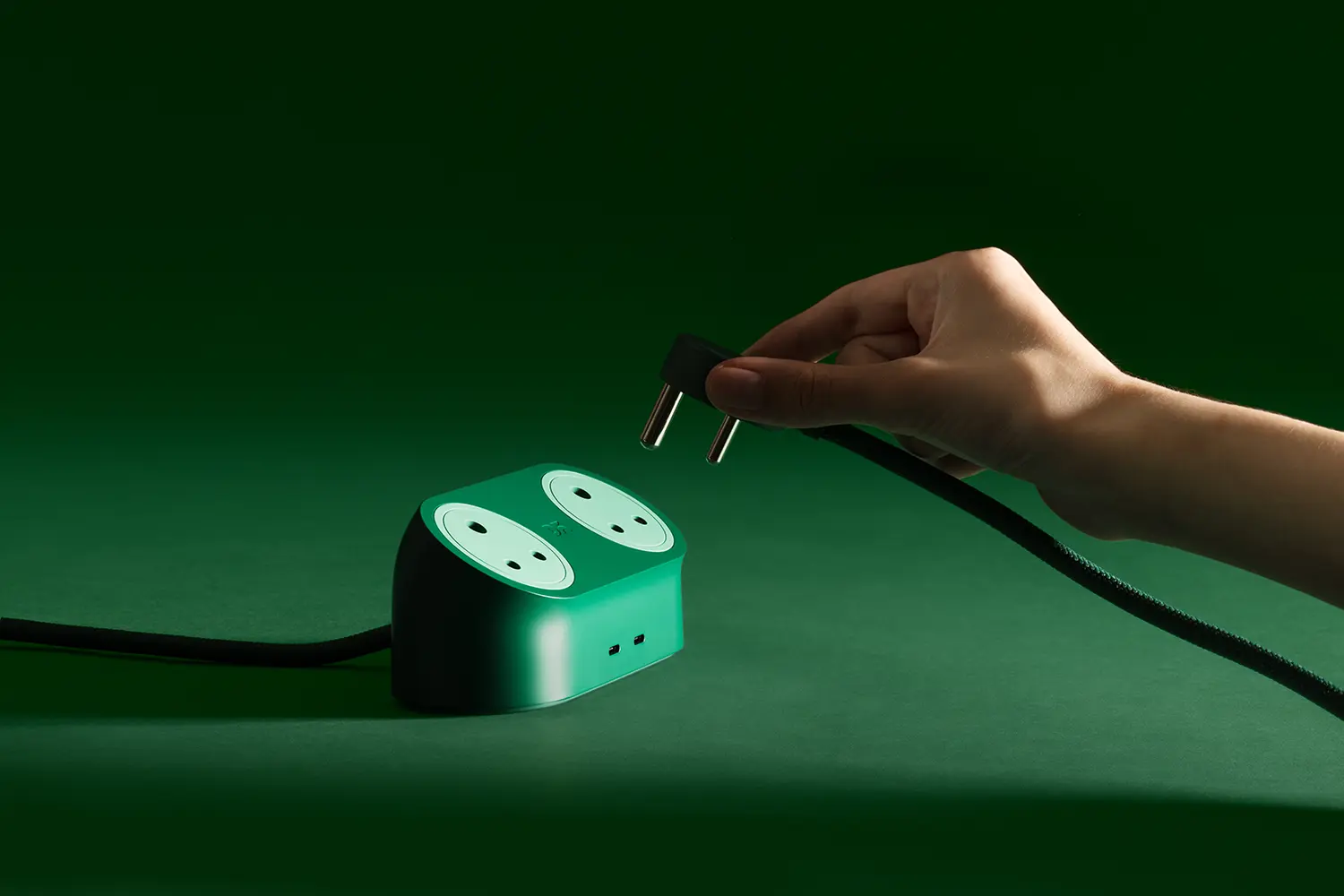
Loft addresses the desk with a different problem in mind. Where Node is modular and migratory, Loft is fixed and consolidating — a compact sculptural desktop charging station that brings mains power and USB-C fast charging into a single object. Two mains ports handle laptops, tablets, and phones; two USB-C ports supplement them. Angled, forward-facing ports allow one-hand plug-in without repositioning the unit. A 1.5m braided nylon cord, integrated cable loop, and silicone base manage the peripheral chaos that usually surrounds this category. The soft arched form lifts the unit off the desk surface both physically and perceptually — it reads as an object placed there intentionally, not deposited.
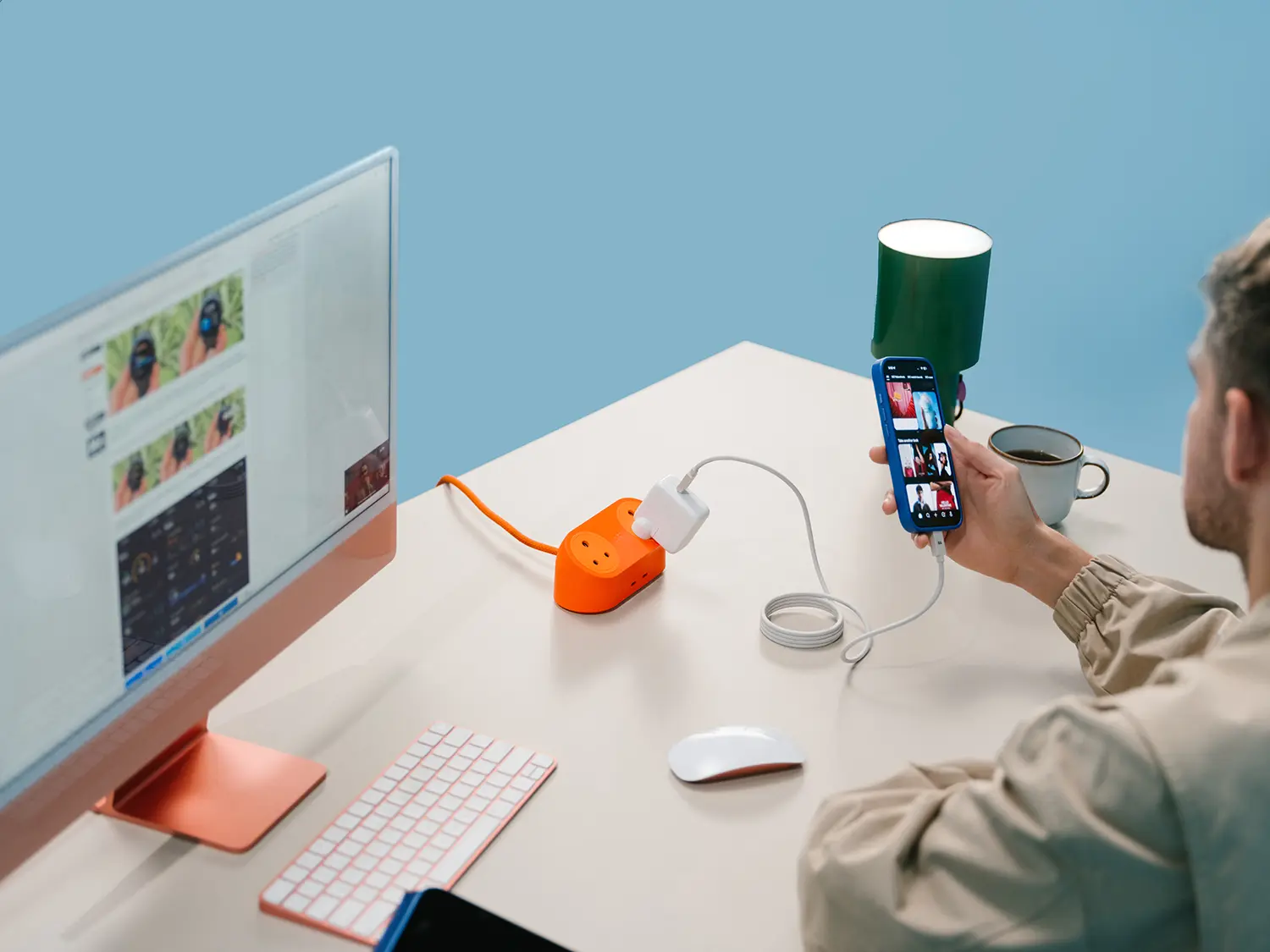
Color is doing specific work here. Loft comes in Charcoal, Clay, Forest, and Mandarin — a palette that signals design-led tech accessories positioning without tipping into the saturated consumer-electronics register. These are colors that coexist with furniture, ceramics, and textiles rather than competing with them. Node follows a similar logic with its muted blue-grey and terracotta modules against a concrete-toned base. The chromatic restraint determines whether a product reads as tech or as object, and LAYER has clearly chosen the latter — consistent with the studio’s broader trajectory in their work with Earth Rated and the Mazzu camping mattress, where functional objects are redesigned as category-defining ones.
Daily Objects, the Indian lifestyle brand for whom this collection was developed, gains more than a product line — it gains a visual language. Node and Loft are described as part of a wider identity system, which means the formal decisions made here — the arch, the circle, the tactile material palette — are intended to propagate across future releases. Benjamin Hubert and LAYER have effectively designed the grammar before writing the sentences, operating at the brand level rather than the SKU level, giving the collection a coherence that individual product commissions rarely achieve.

What Node and Loft ultimately propose is that the design-led wireless charging ecosystem category does not yet have a definitive object — and that the gap is not technical but cultural. MagSafe and Qi have solved the functional problem; what remains is whether charging accessories for home and desk can accrue the same quiet desirability as a well-chosen lamp or a considered piece of tableware. Node and Loft are a credible answer, though whether Daily Objects can distribute that answer at the scale required to shift the category’s visual culture is a question product design alone cannot resolve.