

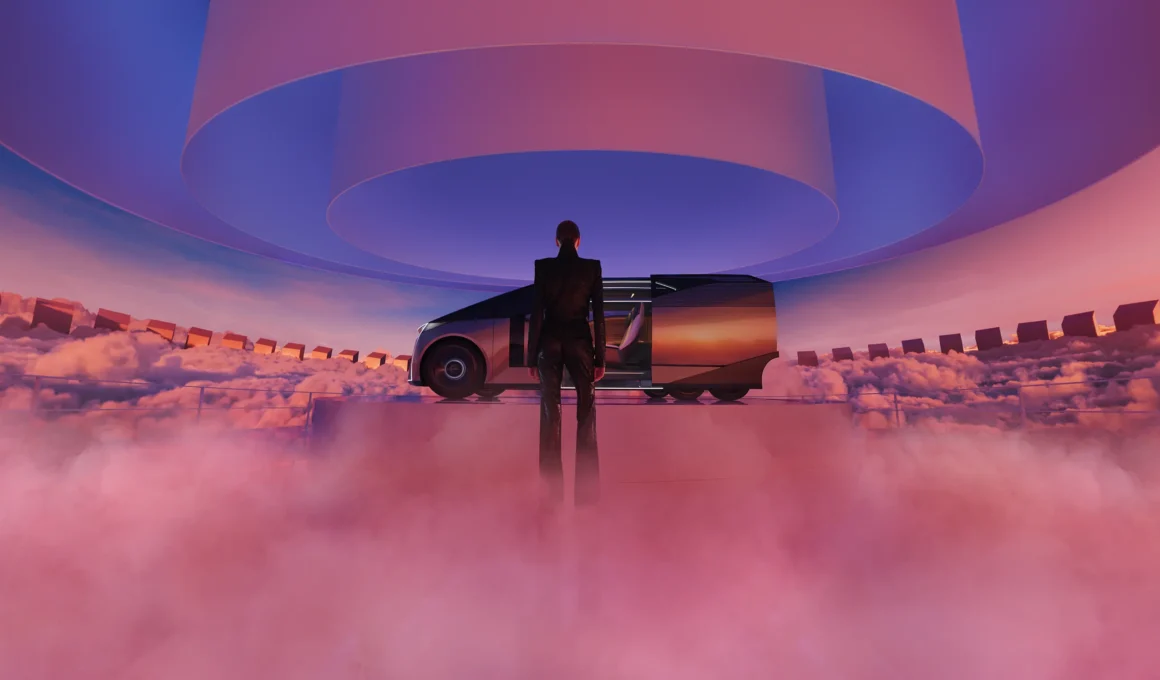
At the 2026 Milan Design Week, Lexus transforms the industrial expanse of Superstudio Più into a multisensory laboratory with “SPACE,” a flagship installation and collaborative showcase that redefines the luxury vehicle as a curated interior environment rather than a mere mode of transport.
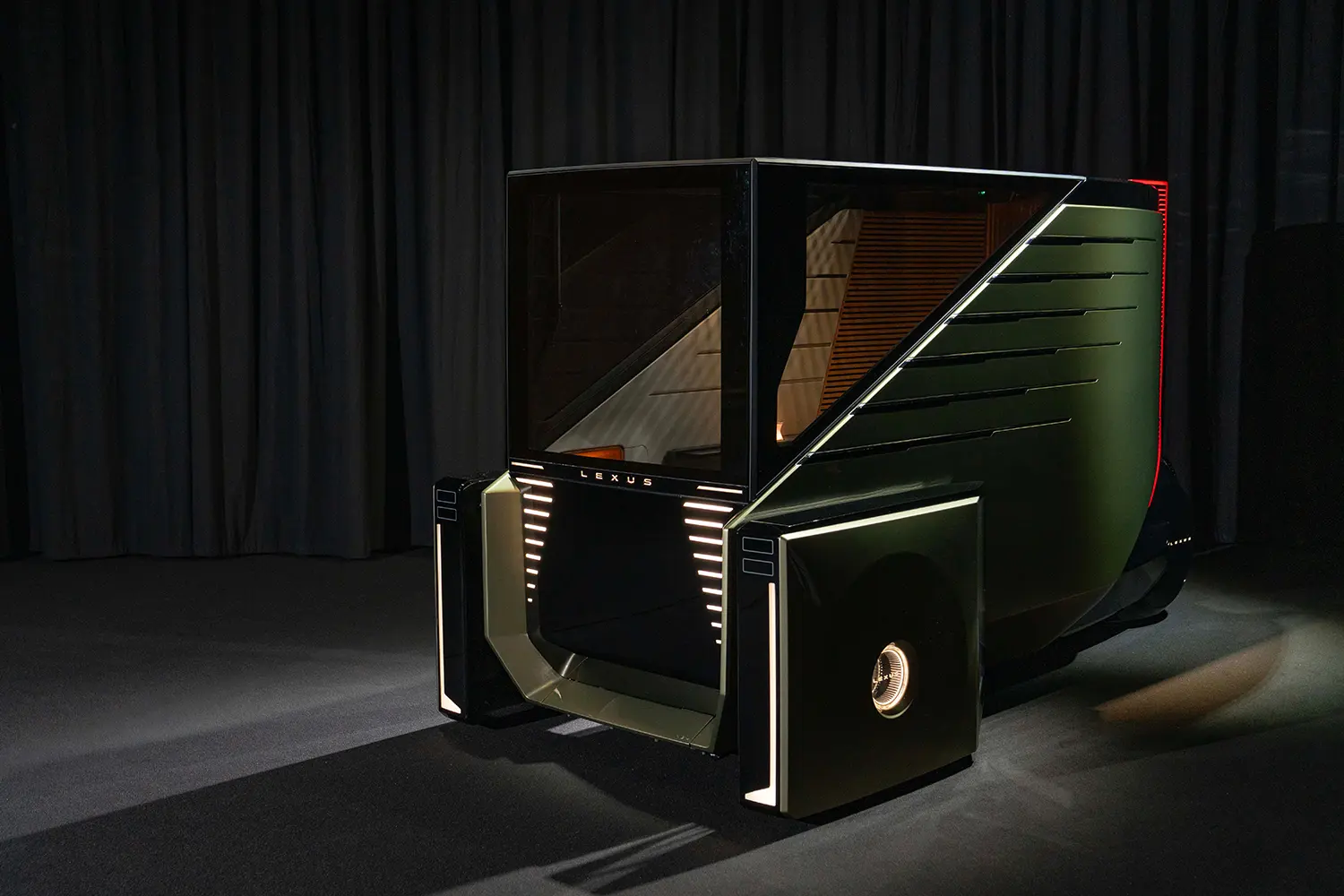
A Shift in Mobility Consciousness. The core of the exhibition centers on a profound semiotic shift: the “S” in the Lexus LS Concept no longer denotes “Sedan” but “Space.” This evolution reflects a growing industry sentiment that the value of future mobility lies in the quality of the interior atmosphere and the freedom it affords the passenger. Rather than focusing on exterior aerodynamics alone, the installation invites visitors to occupy a vision where land, sea, and air travel coalesce into a seamless, experiential journey.

The Immersive Core of SPACE. Upon entering the main hall, visitors are enveloped in a 360-degree digital ecosystem. Light and sound synchronize to simulate a world where movement is fluid and boundaryless. This is not a static display of automotive hardware, but a kinetic sculpture of data and light. The sensory experience suggests that the future cockpit is a platform for human enrichment, using immersive technology to turn transit time into a period of personal expansion and cognitive restoration.
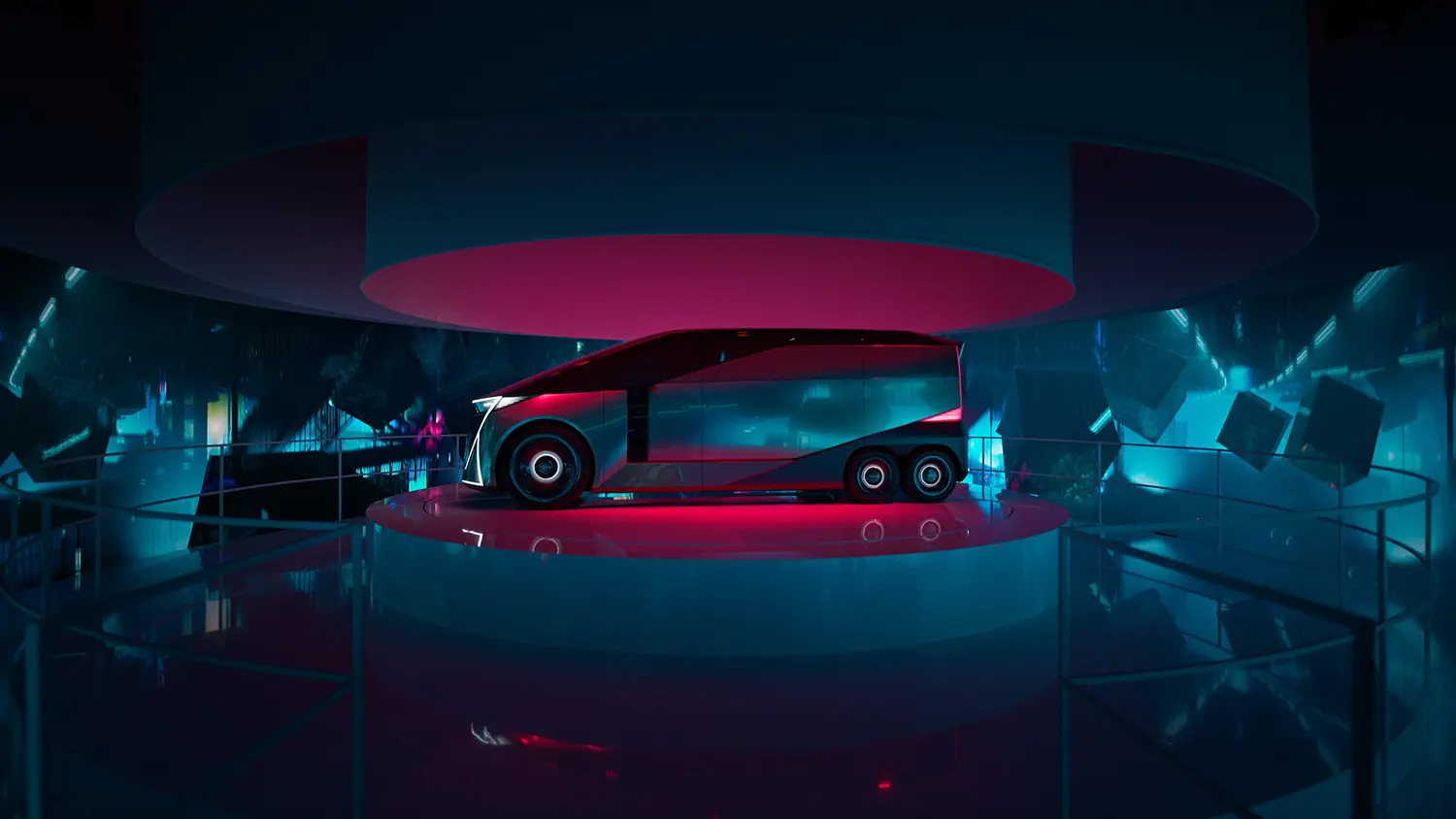
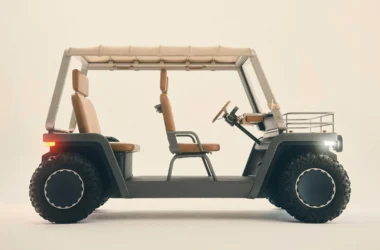
Urban Proportions and Personal Volume. This exploration of interiority is a natural progression from the brand’s recent experiments in compact luxury, such as the Lexus LS Micro Concept, which challenged how premium experiences could be distilled into smaller, urban footprints. While the Micro Concept focused on the efficiency of the “urban cell,” the “SPACE” installation at Superstudio Più expands this logic into a holistic ecosystem, proving that the luxury of space is defined by perception and light rather than raw square footage.
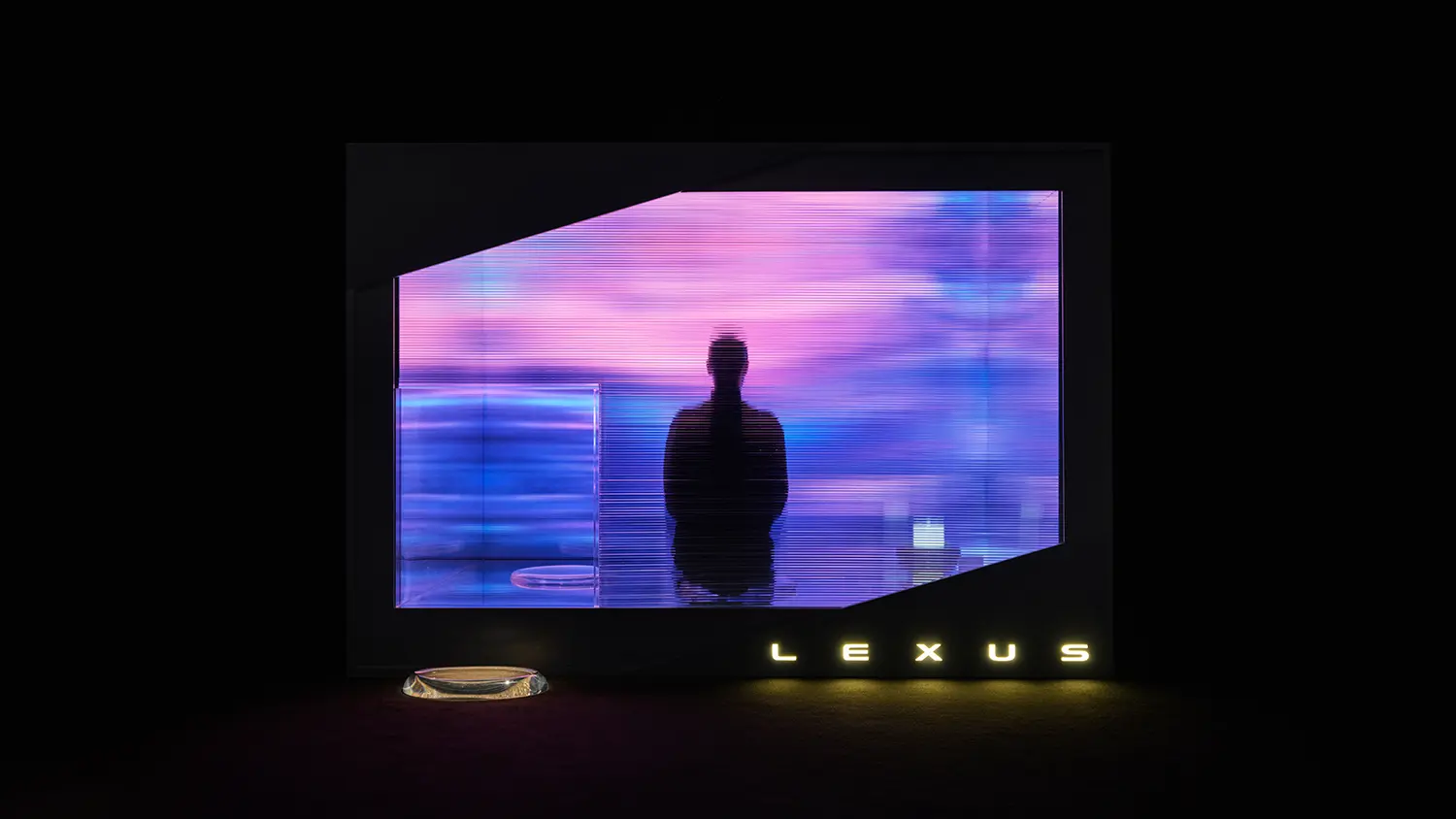
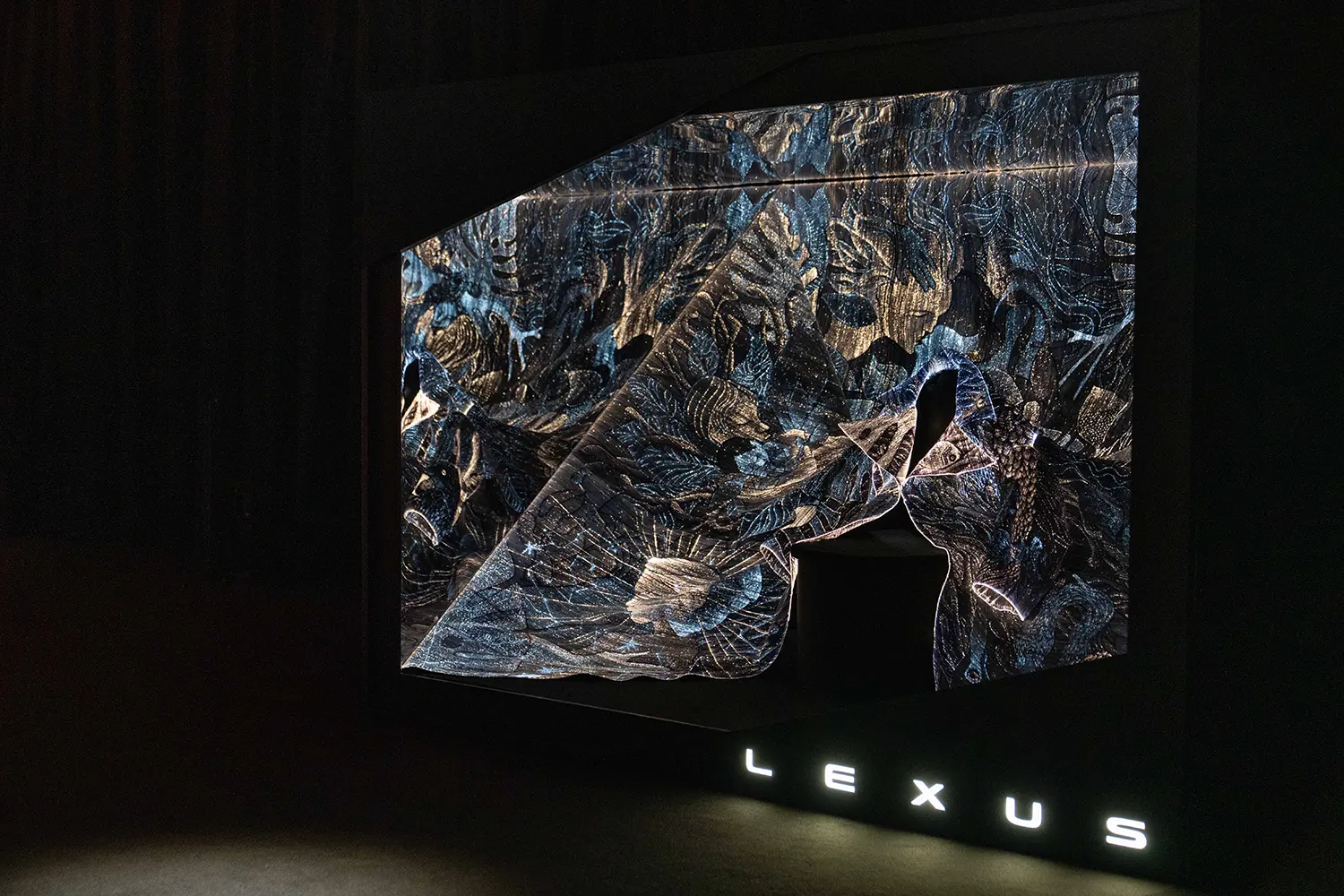
Cultural Echoes in Visible Invisible. In the “Discover Together” section, Kyotaro Hayashi and Yumi Kurotani translate the omotenashi spirit of Japanese hospitality into a contemporary light installation. Inspired by the traditional tearoom, the work utilizes a nijiri-guchi—a low entrance—to force a physical reset of the visitor’s perspective. Inside, the shifting luminosity mimics the passage of seasons, creating a “miniature universe” that emphasizes the emotional weight of invisible transitions over physical structures.
A Transition of the Senses. Within this tearoom interpretation, the use of moving images and soft gradients of light acts as a surrogate for the traditional garden view. The space is designed to transcend status and race, inviting visitors to interact as equals in a scaled-down, intimate environment. By manipulating the passage of time through visual cues, the installation suggests that mobility can offer moments of profound spiritual connection, even in the most transient of spaces.
The Body as Architecture. Guardini Ciuffreda Studio pushes the boundaries of personal volume with “WEARABLE SPACE.” Here, the boundary between fashion and the built environment dissolves through a coat embedded with fiber optics. As the wearer moves, light radiates outward, suggesting that the human body is not merely an occupant of a room but a generator of it. This interactive materiality positions the individual at the center of their own environmental narrative, blending sartorial craft with high-tech luminescence.
Sartorial Innovation Meets Light. The garment acts as a threshold between intimacy and the surrounding environment, where innovation amplifies rather than replaces traditional craftsmanship. This piece explores the concept that personal space is dynamic and portable, moving with the user like a sensitive skin. It redefines the “interior” as something generated by human gesture, further blurring the lines between what we wear and the spatial volumes we inhabit.
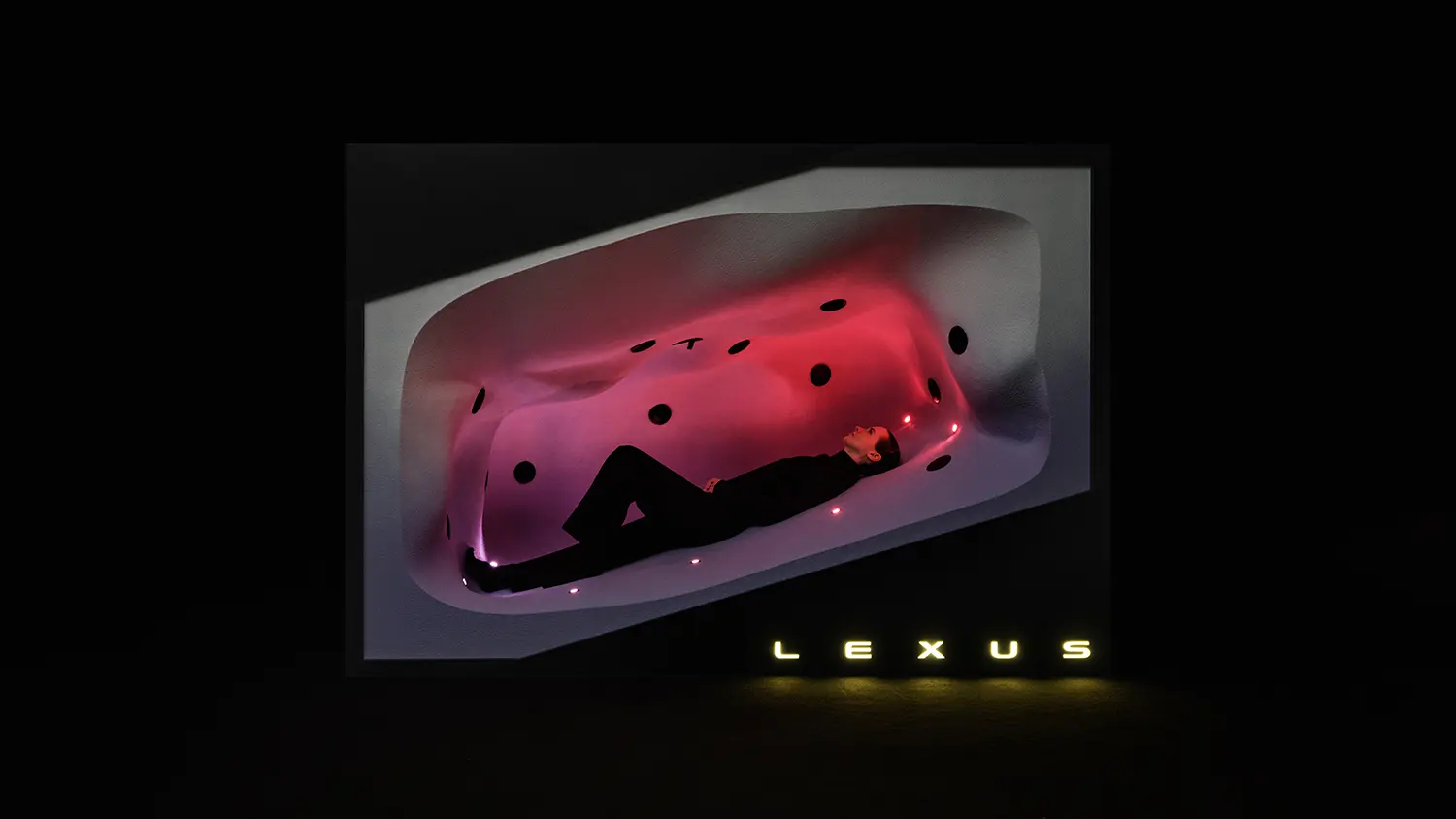
Bio-Responsive Reflection. Moving toward a more introspective tempo, Random Studio’s contribution explores the vehicle as a vessel for stillness. Visitors enter a cocoon-like pod—a tactile interpretation of a rear-seat cabin—where a thermal sensing system monitors their breathing. This physiological data triggers a responsive choreography of ambient tones and soft light. It is an exercise in bio-feedback, transforming the concept of a “moving pod” into a responsive skin that encourages a state of deep meditative calm.
Intimacy and Digital Empathy. This “Moving Sanctuary” reimagines the chauffeur-driven experience as an opportunity for internal reflection rather than external observation. The padded, cocoon-like geometry provides a sensory bufferagainst the chaos of the city. By translating biological rhythms into light, the installation creates a loop of digital empathy, where the machine adjusts its atmosphere to match the internal state of the passenger, fostering a unique sense of psychological safety.
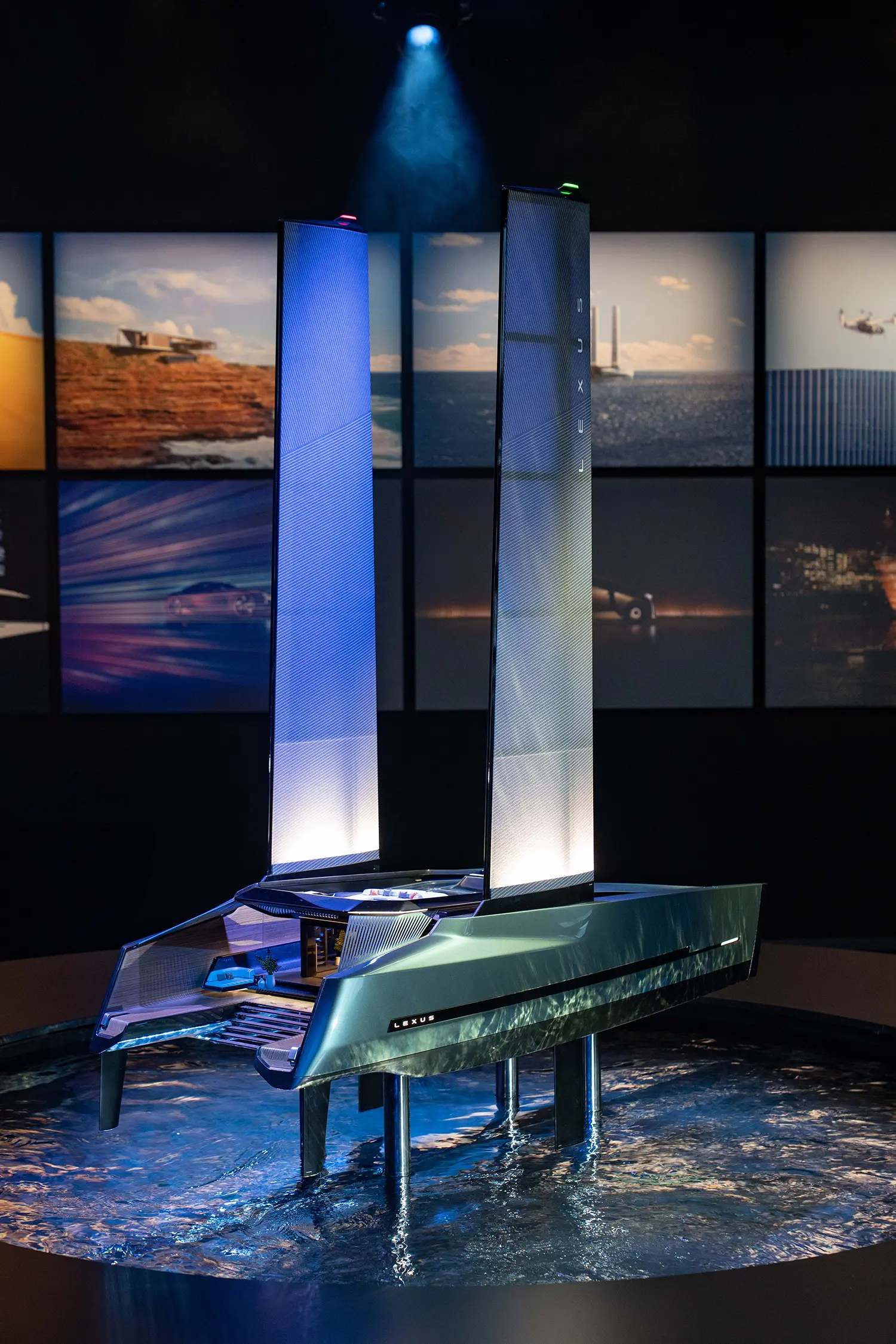
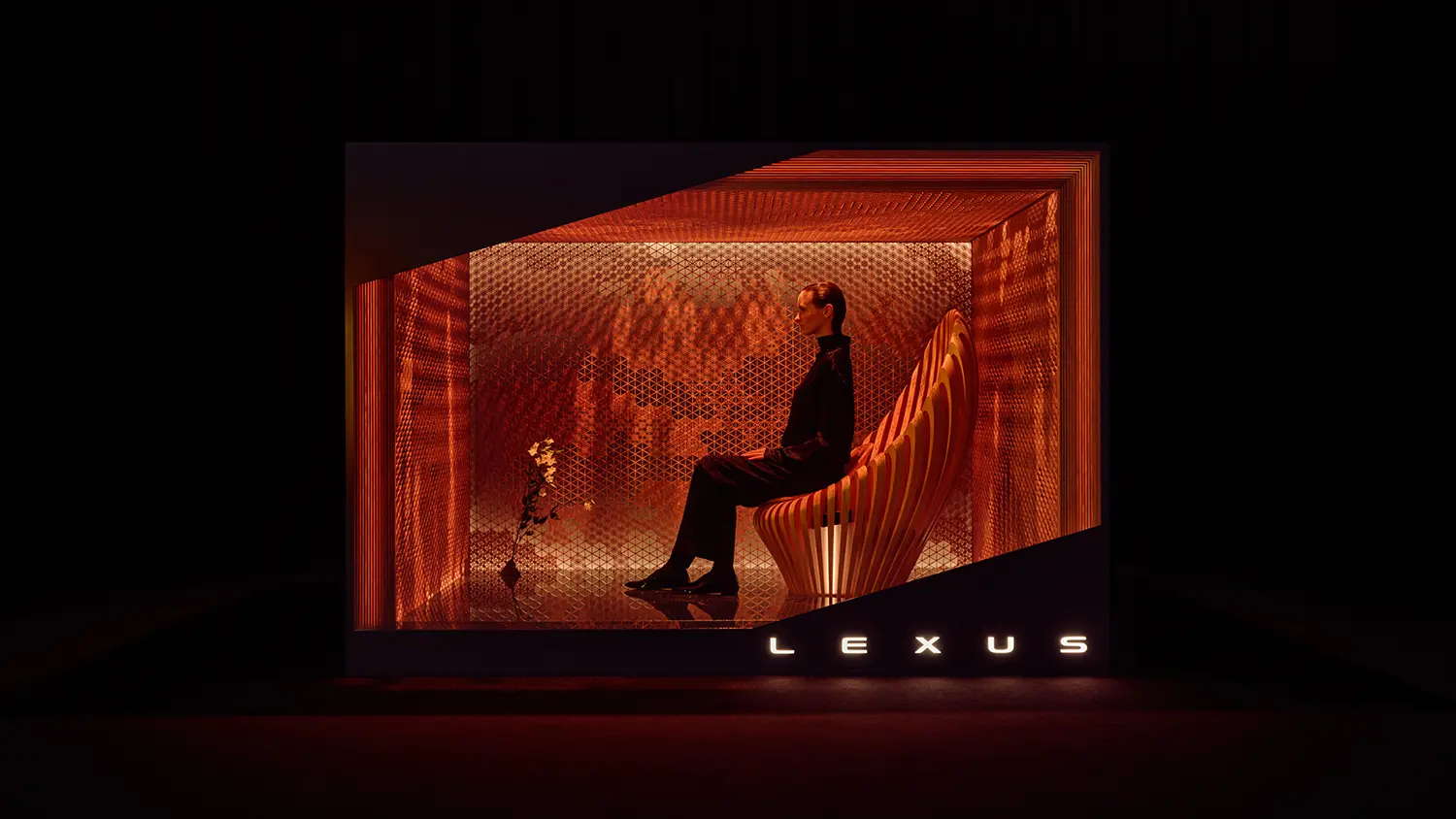
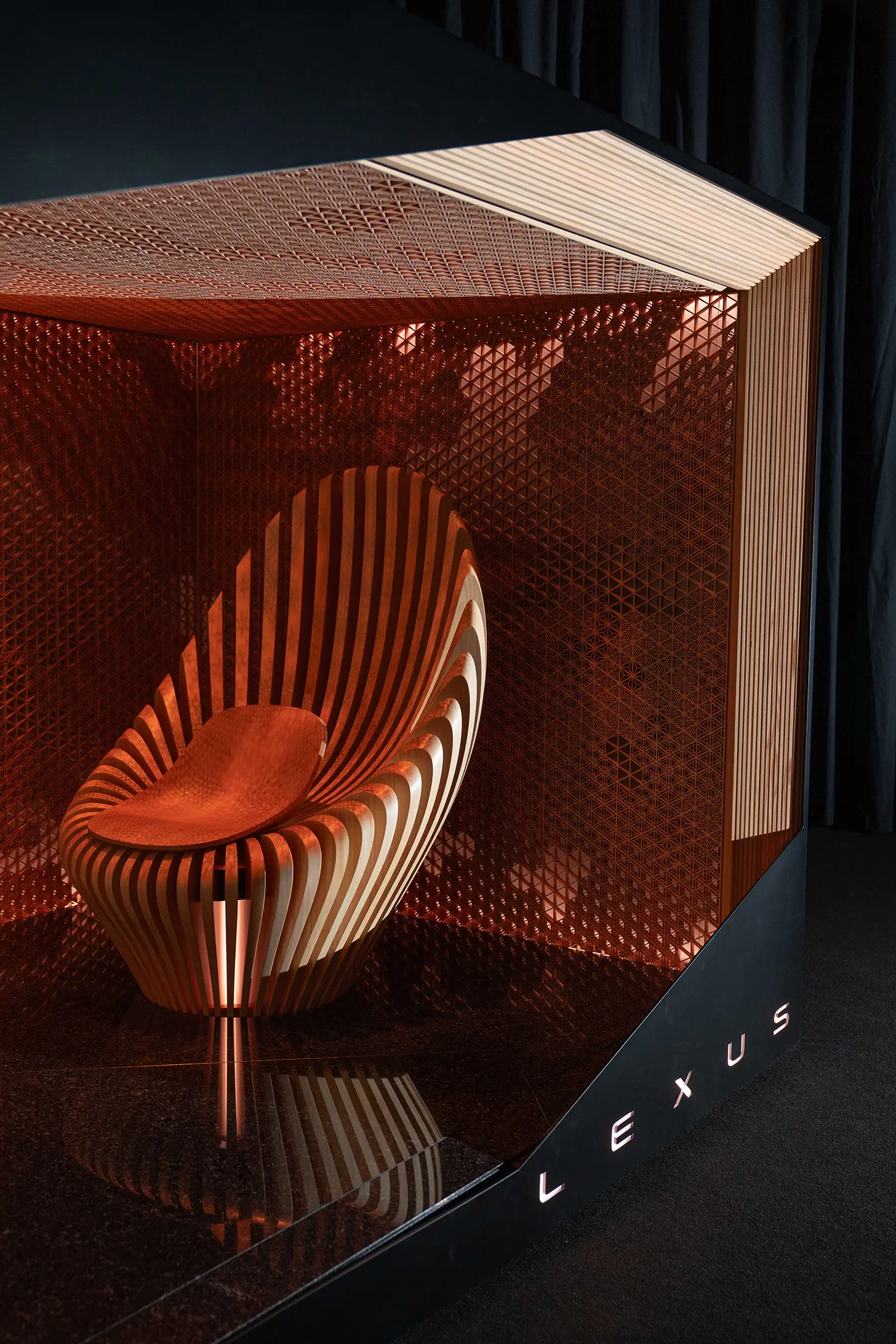
Cosmic Craftsmanship. The final dialogue, “The Crafted Cosmos,” bridges the gap between the microscopic and the infinite. Japanese master artisans worked alongside in-house creators to apply precision finishes—some refined to within 0.1 mm—to a large-scale installation. By illuminating these handcrafted details, the work reveals a galaxy of textures. It serves as a reminder that even in a future dominated by digital interfaces, the tactile soul of a brand remains rooted in the physical mastery of materials.
Contextual Industry Narratives. Lexus’s presence in the Tortona district serves as a strategic counterpoint to other automotive explorations this year, such as Skoda’s collaboration with Ulises Studio at Palazzo Senato. While others focus on the surrealist integration of vehicles into historic courtyards, Lexus has opted for a human-centric exploration of the void. They are essentially asking what remains when the engine and the wheels become secondary to the lived experience of the passenger.
SPACE by Lexus | Where: Superstudio Più, Via Tortona 27, Milan – When: April 21 – 26, 2026 | 10 AM – 8 PM