

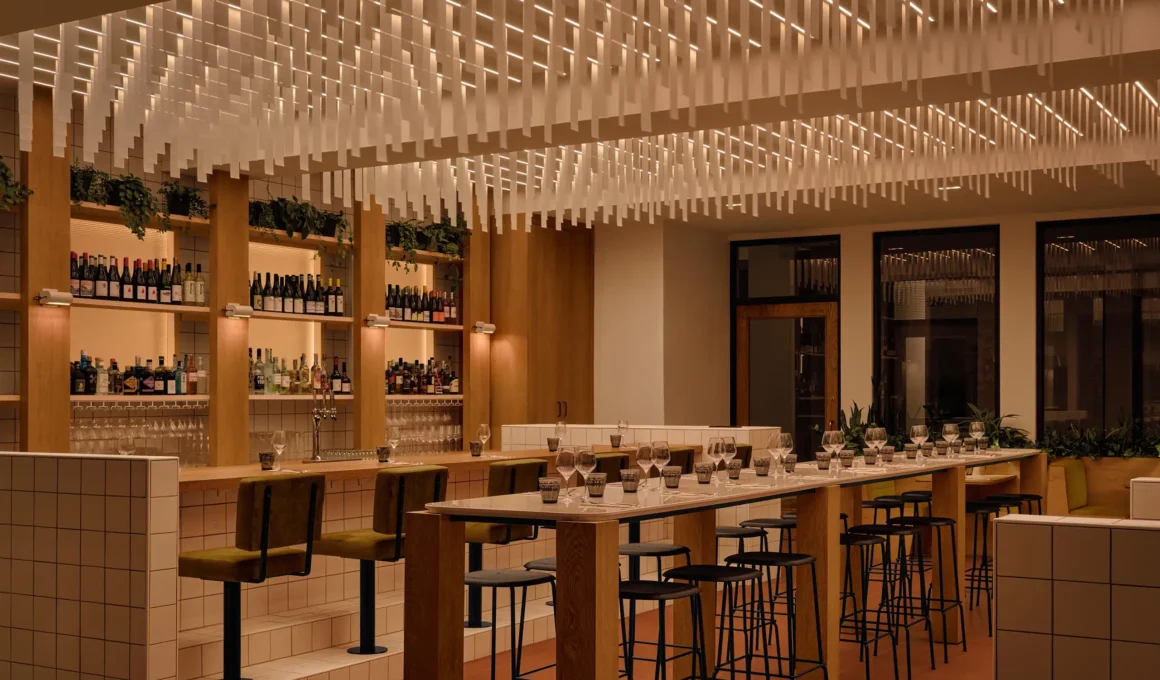
In the evolving landscape of the modern workplace, the boundary between the formal office and the communal “third space” continues to dissolve. At 1111 Saint-Charles Street West in Longueuil, Canada, the Montreal-based firm blanchette archi.design has navigated this shift with surgical precision. Their latest intervention, the Bistro Siège Social and Café Social, serves as a sophisticated extension of a postmodern lobby, reclaiming the ground floor not merely as a transitional corridor, but as a destination that anchors the building’s corporate identity within the vibrant pulse of the neighborhood.
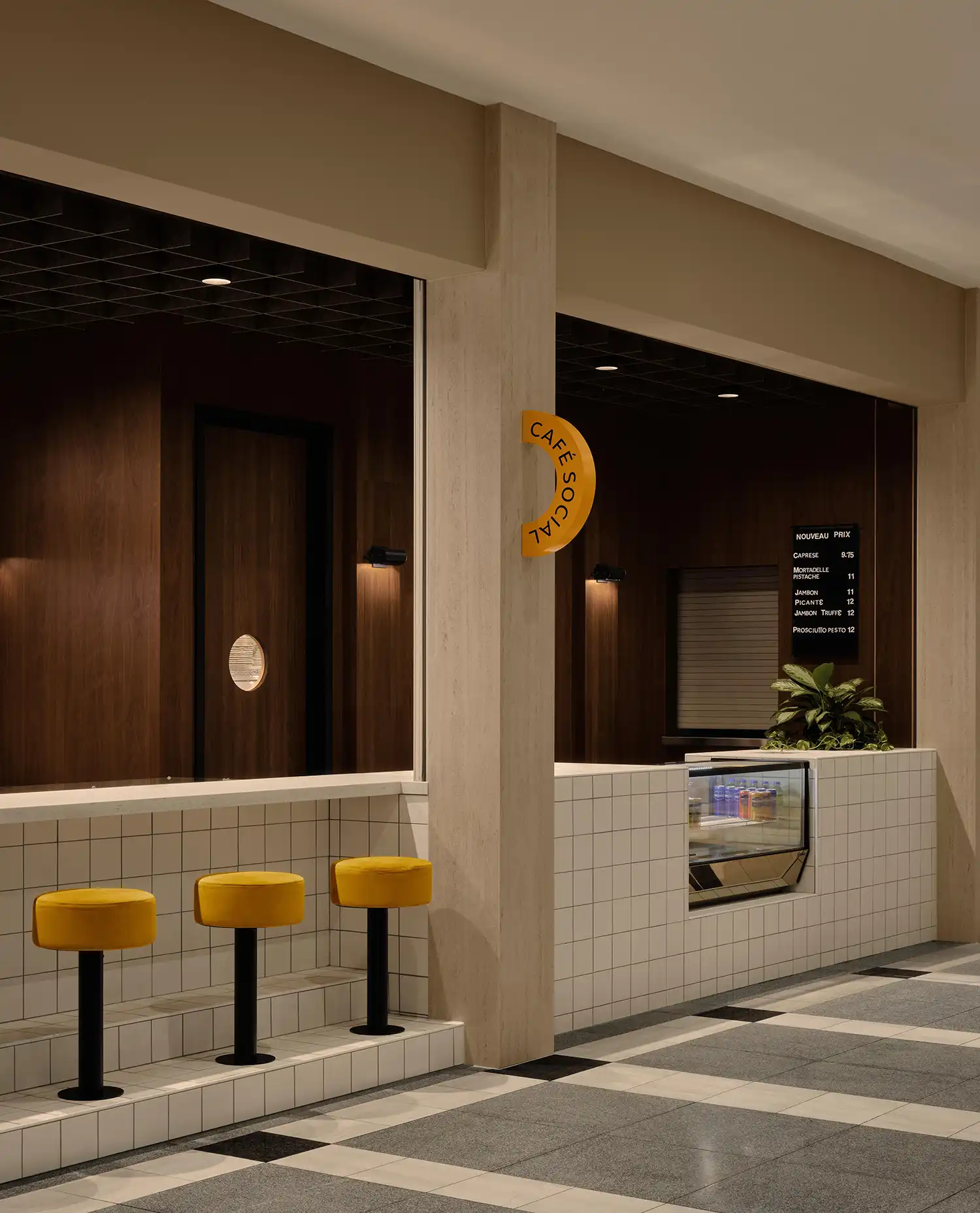
A dialogue with architectural heritage defines the conceptual backbone of the project. Rather than erasing the rigid, rationalist codes of the building’s 1960s and 70s origins, the designers have opted to reinterpret them. The space functions as a hybrid ecosystem—a cross-pollination of a Parisian-style bistro and a contemporary social hub. Much like the tactile minimalist approach seen at Zero Zero Belém in Lisbon, where materiality dictates the pace of the guest experience, the Bistro Siège Social and Café Social utilize a rigorous geometric language to create a sense of permanence and order, softened by human-centric warmth.
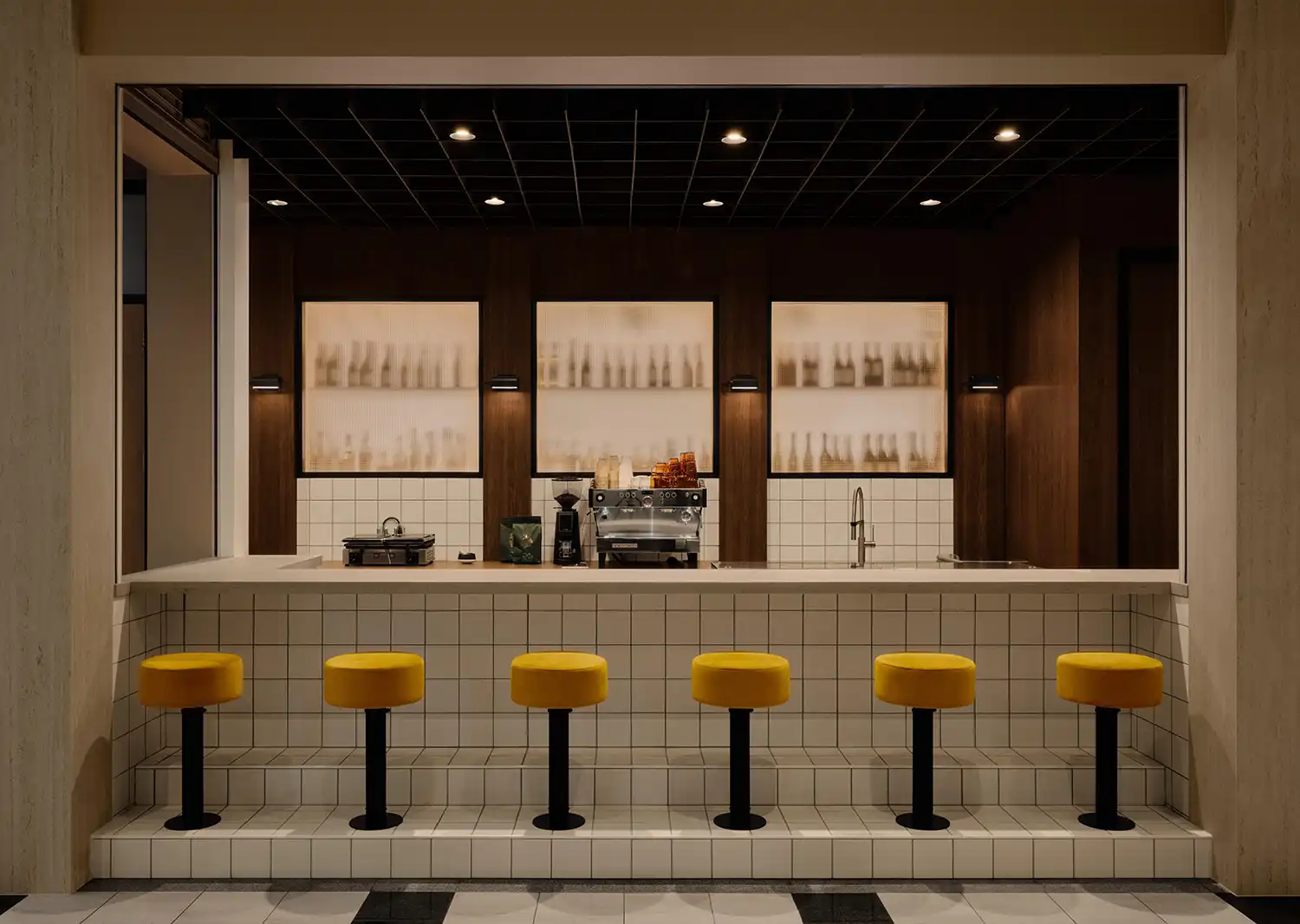
The material palette serves as a bridge between decades, centered on the repetitive use of matte-finish white ceramic tiles. This grid-like motif, inspired by the original lobby’s structural patterns, becomes a unifying skin that wraps around built-in furniture and vertical planes. To prevent the space from feeling clinical, a monumental walnut wall, punctured by strategic glass openings, acts as a diaphanous veil. It allows light to bleed between the high-energy Café Social and the more intimate Bistro Siège Social, ensuring that while the functions are distinct, the visual narrative remains unbroken.
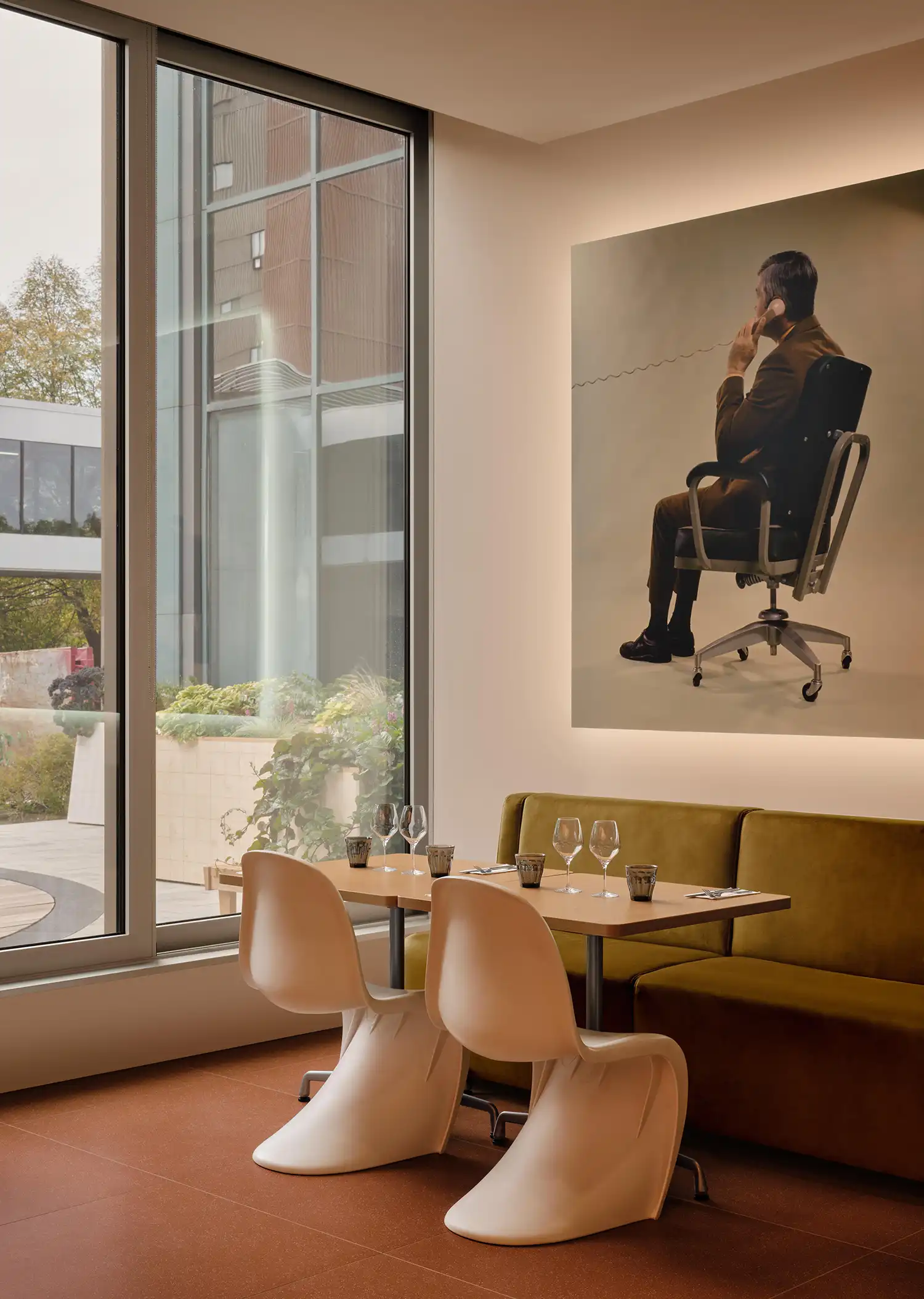
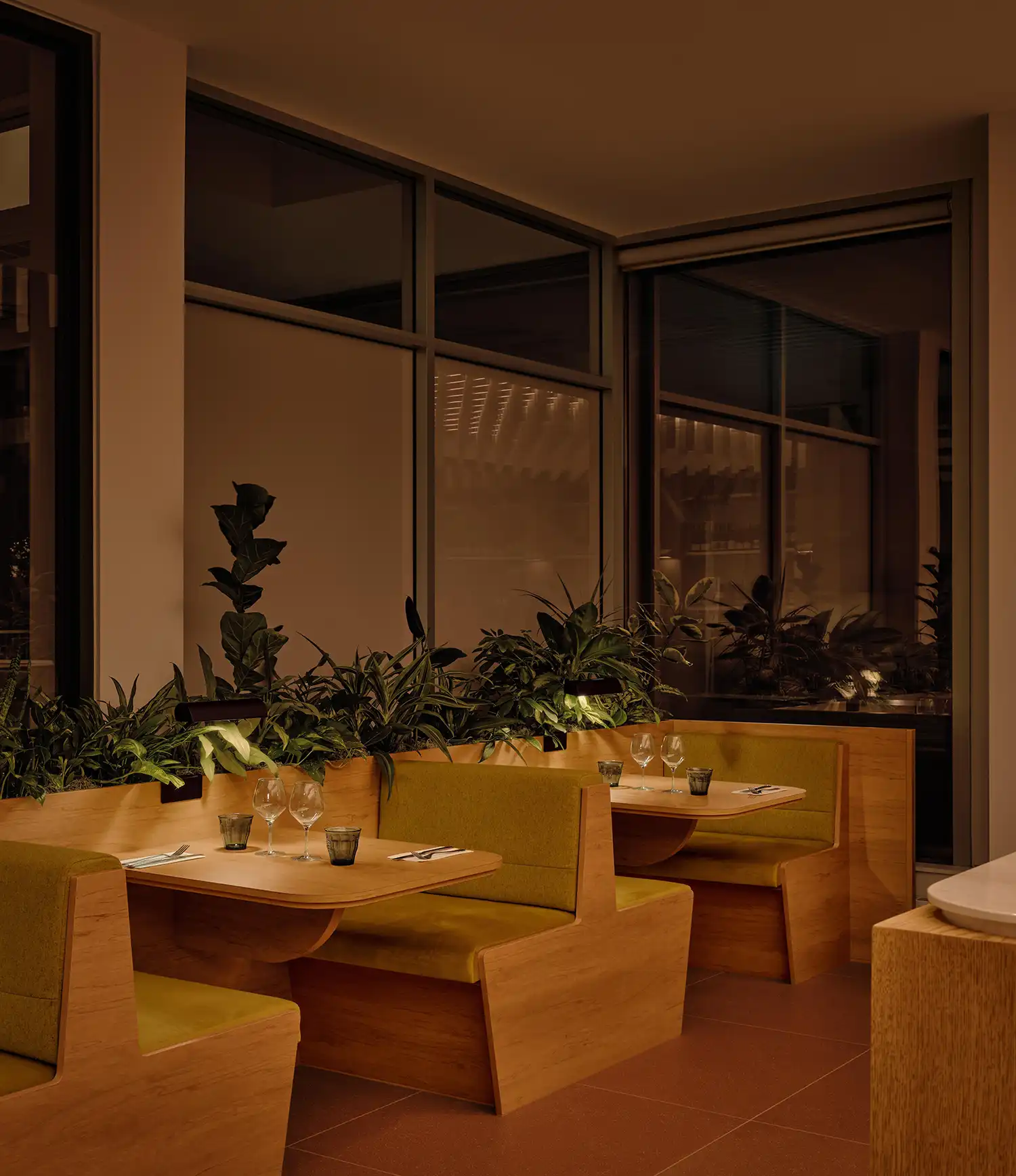
The sensory transition between the two “worlds” is marked by a deliberate shift in color and texture. In the Café Social, visitors are met with the earthy luxury of travertine and energetic mustard tones, creating an atmosphere conducive to morning rituals and brief encounters. Conversely, the Bistro Siège Social retreats into a more enveloping, nocturnal palette of terracotta, deep greens, and integrated lush vegetation. This focus on an immersive, moody environment evokes the same intimate listening bar culture found in Kuala Lumpur, where the design prioritizes a slow, contemplative tempo over the frantic pace of the typical workday.
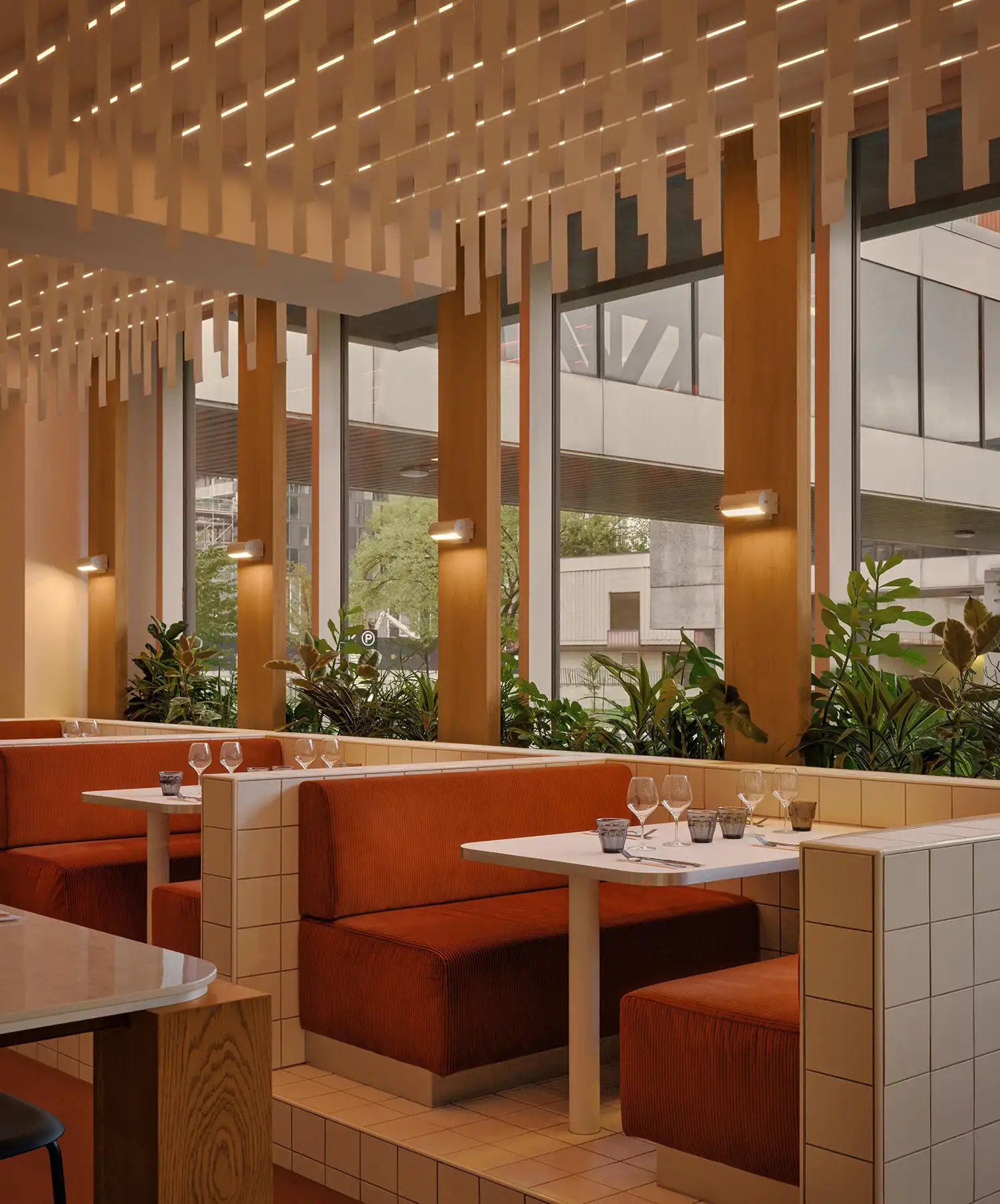
Technical lighting and rhythmic depth transform the ceiling into a functional piece of art. Taking cues from the vertical blinds ubiquitous in mid-century offices, blanchette archi.design installed a suspended ceiling system that introduces movement and acoustic comfort. A “dim-to-warm” lighting sequence allows the bistro to shed its daytime corporate skin as the sun sets, transitioning from a bright meeting spot into a glowing, atmospheric evening venue. This level of curated ambiance mirrors the sophisticated aesthetic of Season Patisserie in Taipei, where light and shadow are used to elevate the hospitality experience into something far more editorial.
Contributing to the urban revitalization of the region, the project transcends the needs of its primary tenant, Groupe Mercille. By opening the facade toward the terrace and the university community, the Bistro Siège Social and Café Social act as a catalyst for social density. It is an architectural rebuttal to the “siloed” office tower of the past, proving that through thoughtful reinterpretation, even the most codified corporate environments can become centers of community. The result is a space that feels both nostalgic and prophetic, providing a masterfully balanced template for the future of tertiary architecture in Canada.