



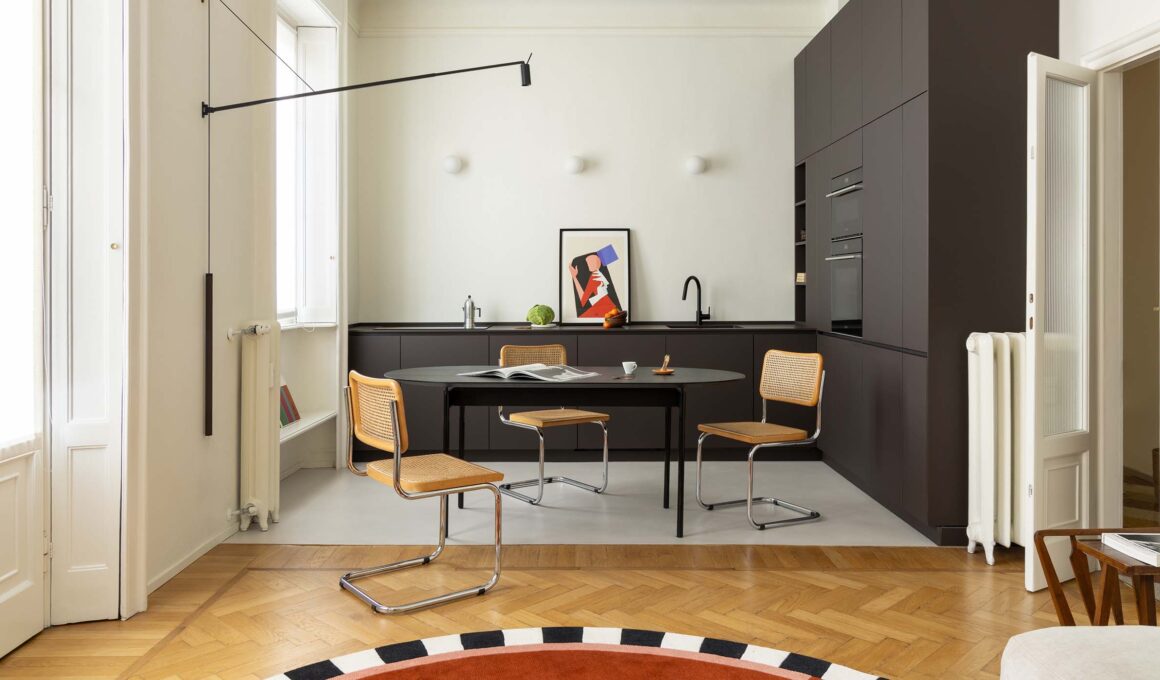
The Pale Apartment project by Atelierzero in Milan, Italy, stands as a compelling study in contemporary residential design, proving that a deep respect for historical architecture can coexist seamlessly with modern living requirements. Facing the common challenge of updating an early 20th-century dwelling for today’s fluid lifestyle, the design studio executed an intervention that is as sensitive as it is structurally smart. The renovation’s success lies in its careful preservation of the apartment’s genius loci while subtly reconfiguring the layout to enhance flow and functionality for the modern era.
The main spatial strategy was the creation of an expansive, luminous space for the public areas. This involved merging the formerly separate kitchen and living room into one single, fluid area, a move that perfectly aligns with contemporary desires for interconnected social hubs. Simultaneously, Atelierzero meticulously carved out a private core: a serene, intimate sequence comprising the master bedroom, a walk-in closet, and an en suite bathroom, ensuring a reserved sanctuary within the dynamic home. This dual focus—on both openness and intimacy—defines the project’s design intelligence.
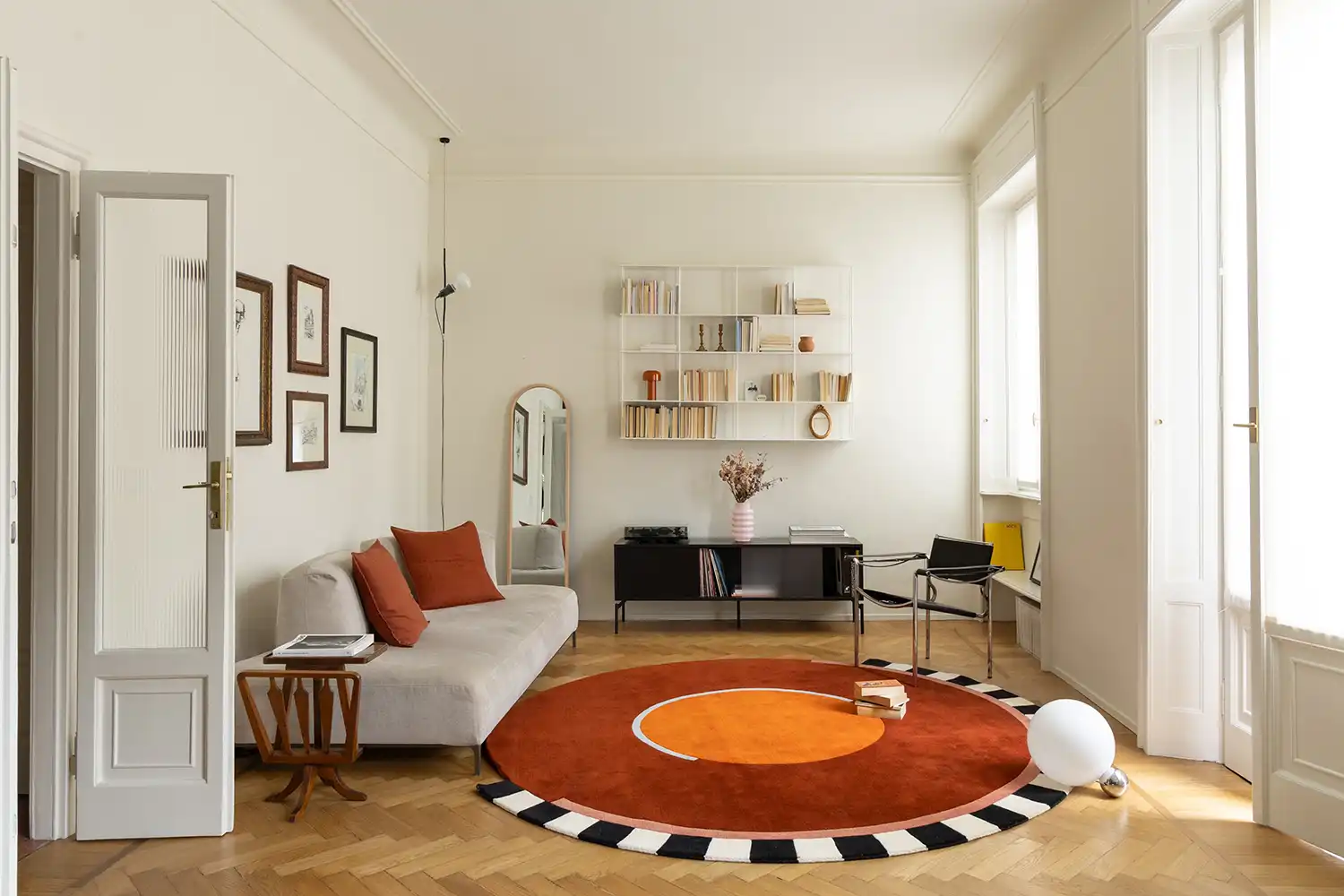
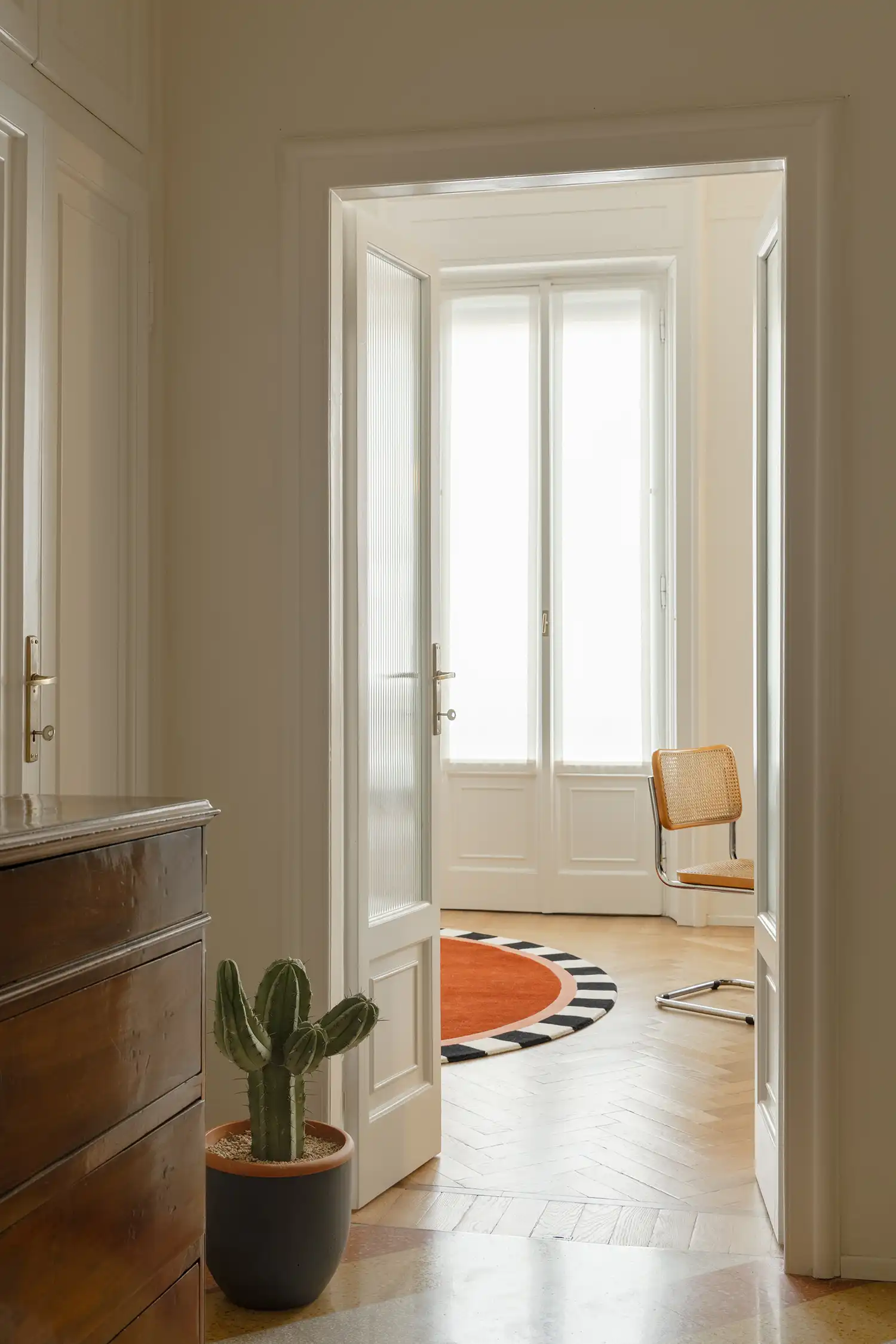
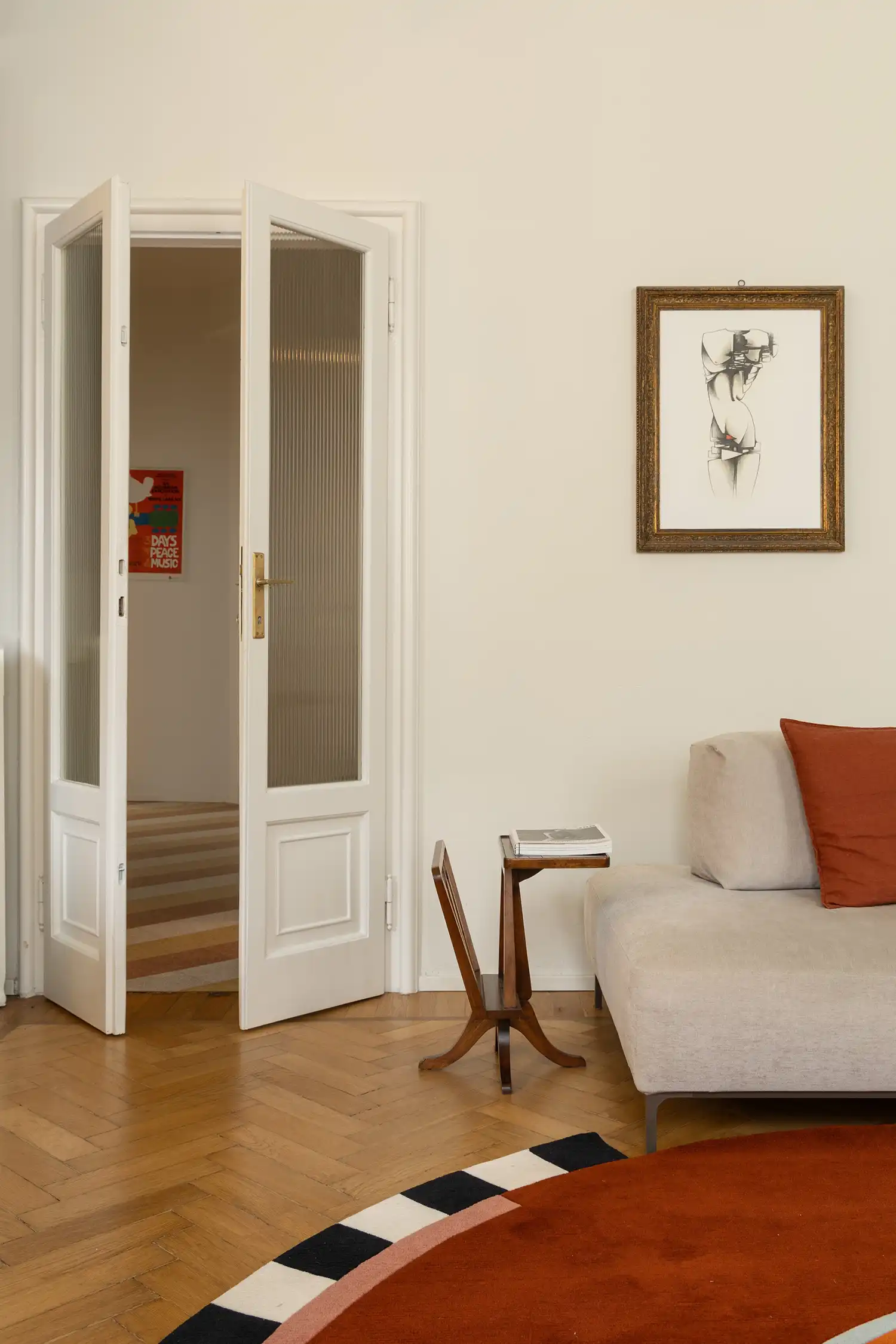
Crucially, the transformation avoided invasive structural changes, safeguarding the apartment’s genuine architectural heritage. The original early 20th-century design elements—like the exquisite molded doors, decorative cornices on walls and ceilings, wooden-framed French doors, and the elegant fascia and bindello parquet flooring—were not just preserved but celebrated. These details are the true treasures of the home, providing a rich, textured backdrop against which the new elements are expertly layered.
The undeniable highlight of the apartment, however, is the presence of two distinct spaces defined by vibrant, colored terrazzo tiles laid in refined geometric patterns. The foyer, acting as the home’s pulsating heart, serves as the main distribution hub from which all other rooms unfold, anchoring the design in a rich, material tradition. The second such space, a studio/bedroom, carries this colour and pattern through, establishing a clear visual link to the home’s past and adding an unexpected yet sophisticated graphic punch.
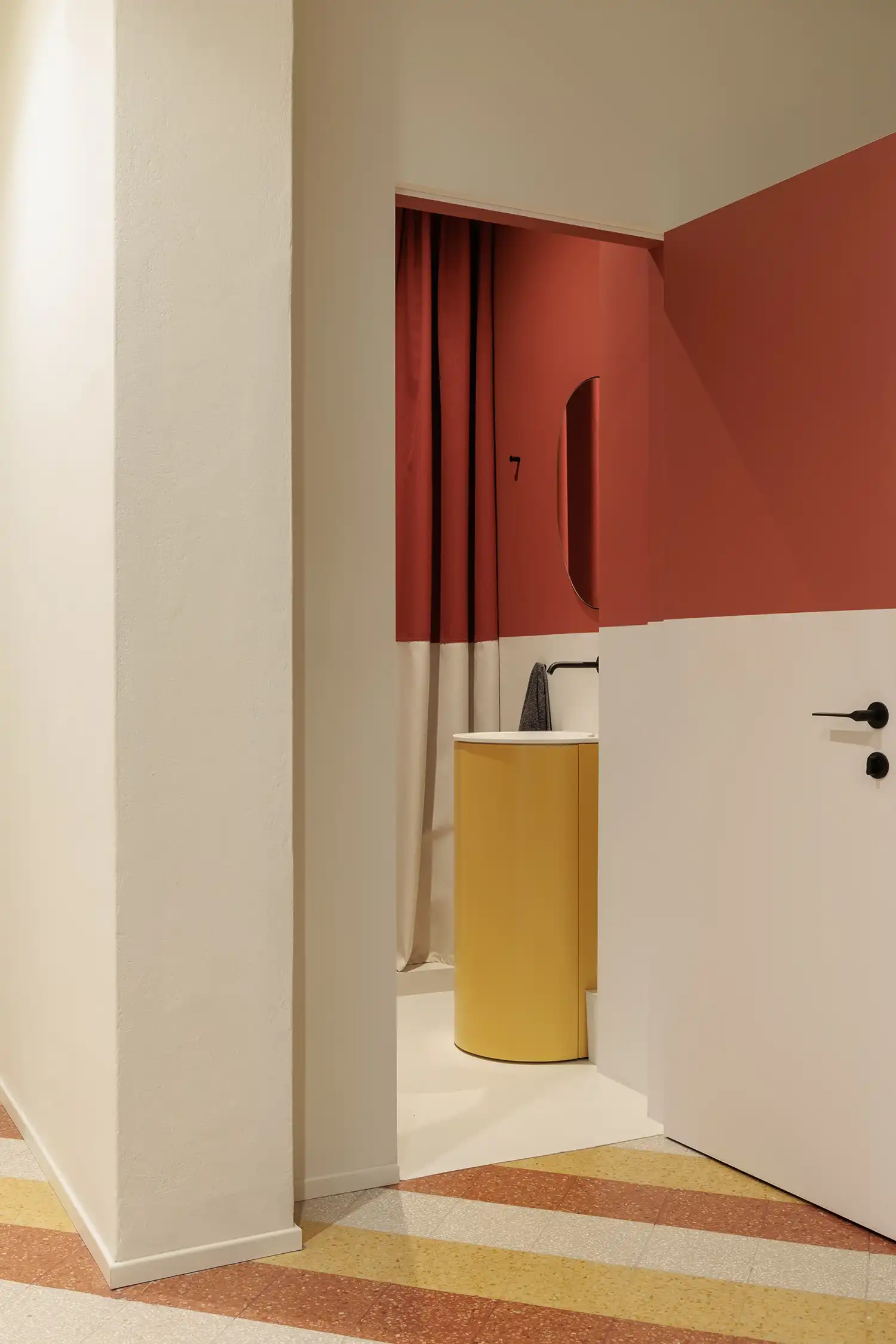
A meticulous approach was taken with the color palette and materials to ensure total aesthetic coherence with these pre-existing elements. In a sophisticated interplay of visual connections, the bathroom facing the foyer reinterprets the tones of the original terrazzo tiles in three elegant shades. This measured use of couleur prevents the already ornate setting from feeling visually overloaded, allowing the historic details to breathe and shine.
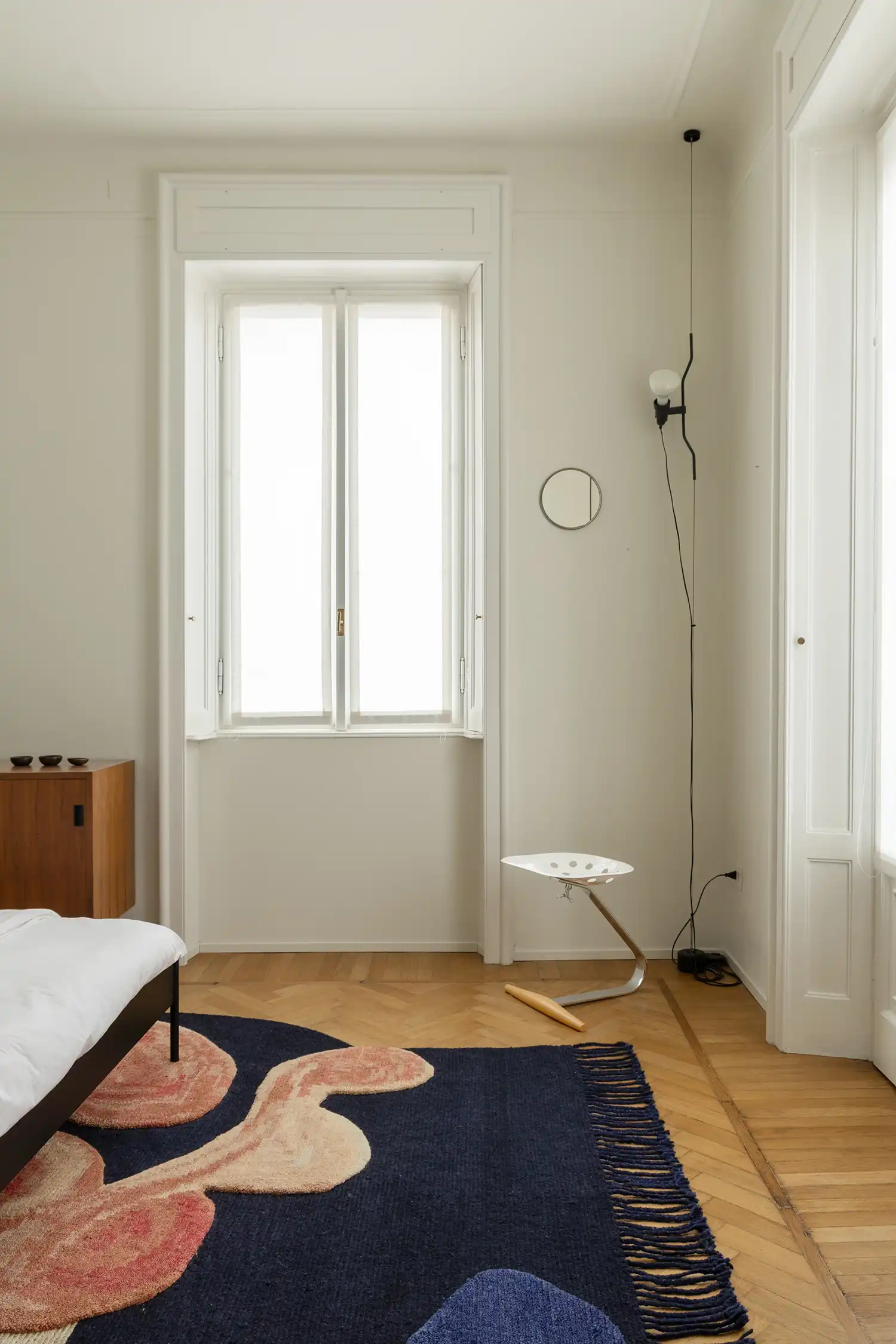
In contrast, all newly designed elements—from the custom-made furnishings and the resin flooring in the kitchen to the finishes of the en suite bathroom—are characterized by neutral and elegant tones. This deliberate restraint highlights the contrast between past and present without the need for jarring transitions, maintaining a careful visual balance. The result is a profound, non-verbal dialogue between old and new that unfolds naturally, yielding a home that is both sophisticated and immensely welcoming, a harmonious interplay of history and modernity perfectly tailored for the Milan of today.