


MVRDV has secured permission for their ambitious residential project, “The Island,” a 21-storey tower in Taichung, Taiwan, designed to radically integrate nature into dense urban fabric. Rejecting the rigid rectilinear forms typical of modern high-rises, the Dutch architecture studio has enveloped the building in an organic, flowing skin of greenery and custom ceramic tiles, effectively turning the structure into a dramatic vertical landscape. The design is a direct response to local regulations that incentivise developers to maximise outdoor space and planting, creating a highly liveable environment within a busy commercial district.
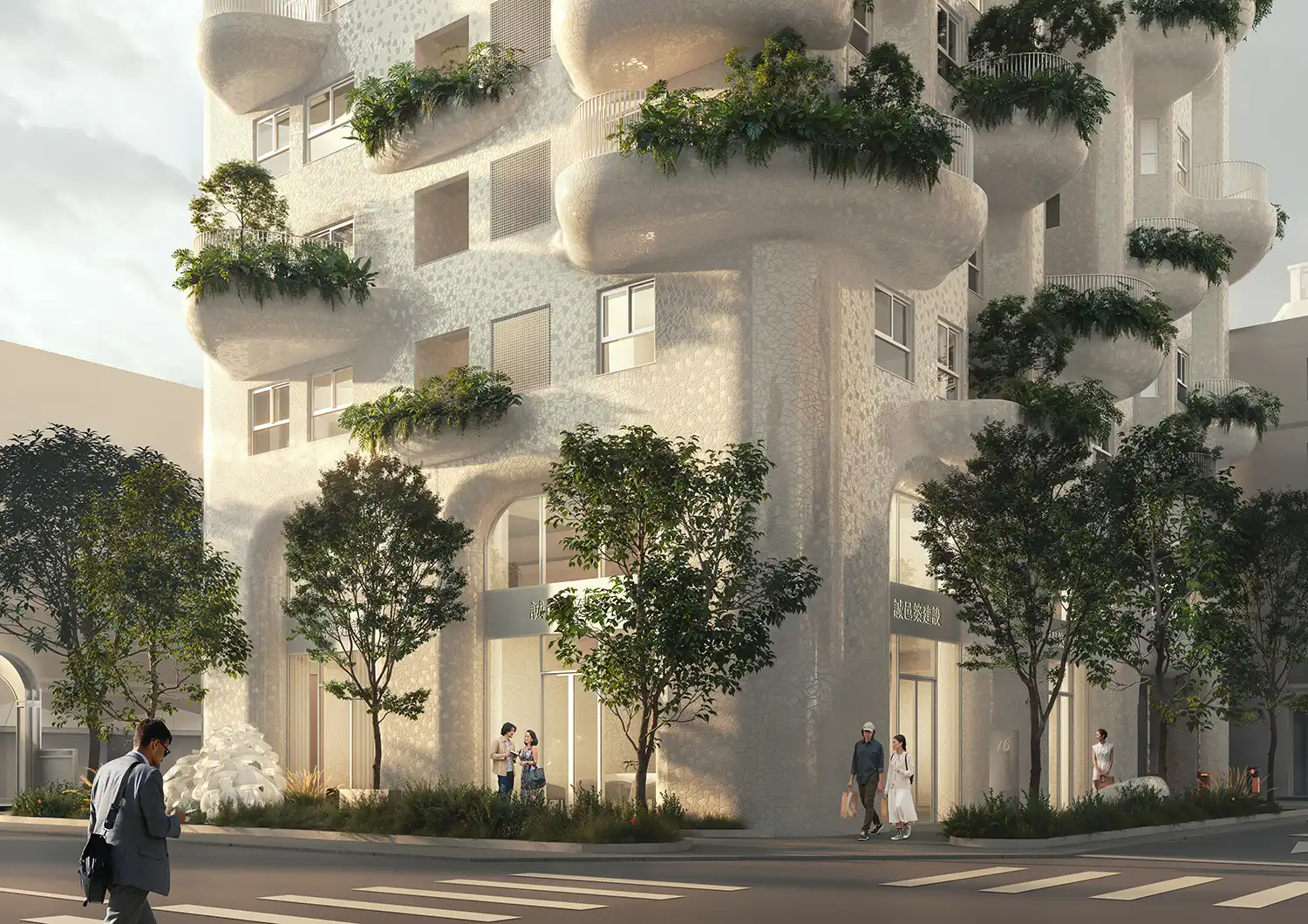
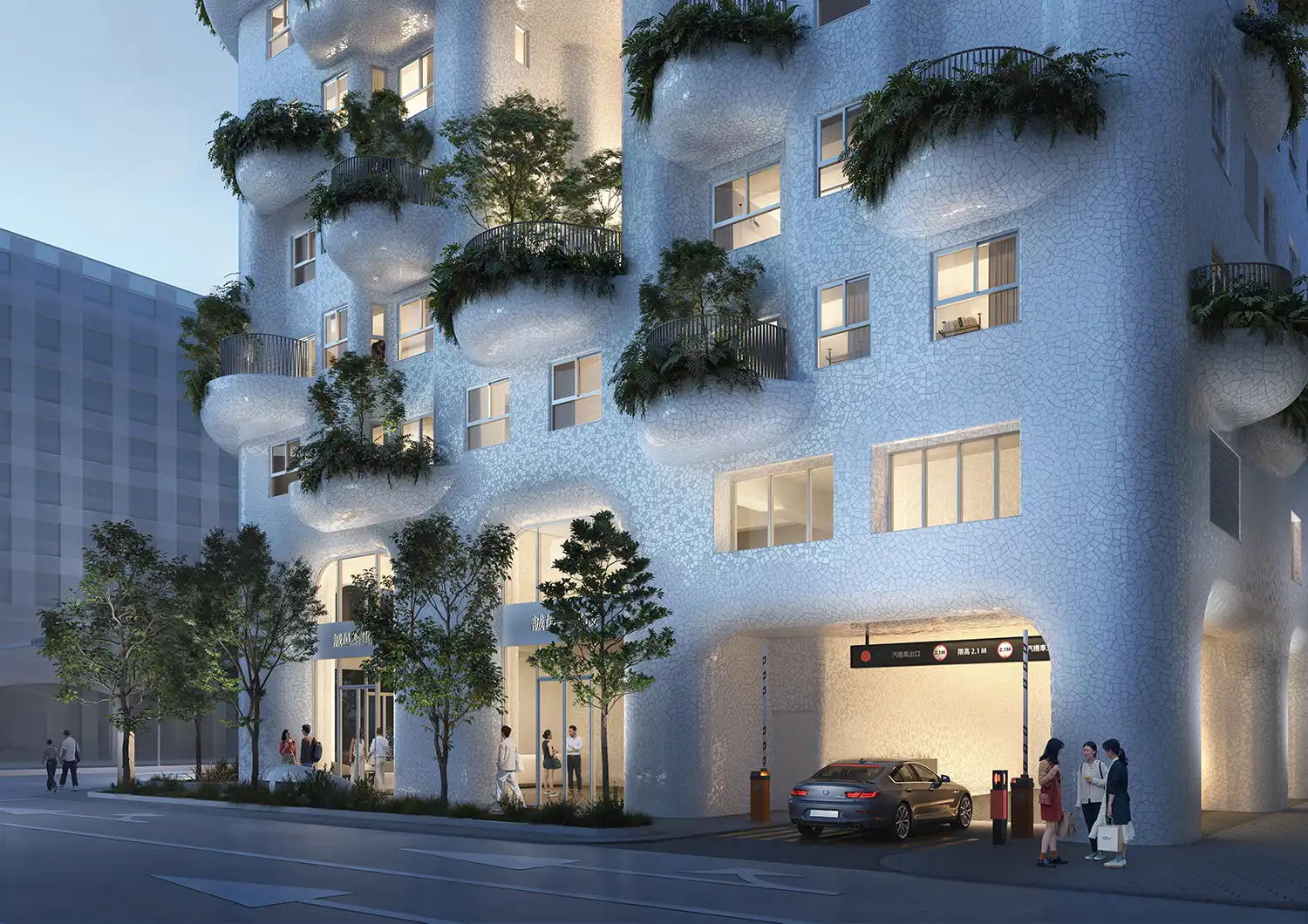
The character of the tower emerges from its curvaceous shell, despite the standard and efficient layout of the 76 apartments within. The numerous balconies, planters, and soft-edged openings define an organic expression that deliberately contrasts with its surroundings. Jacob van Rijs, founding partner at MVRDV, notes that the tower “brings a soft touch in a city full of boxes,” likening its integration of greenery to an extension of a single, natural system. This approach echoes the studio’s broader research into sustainable urbanism, particularly in Asia.
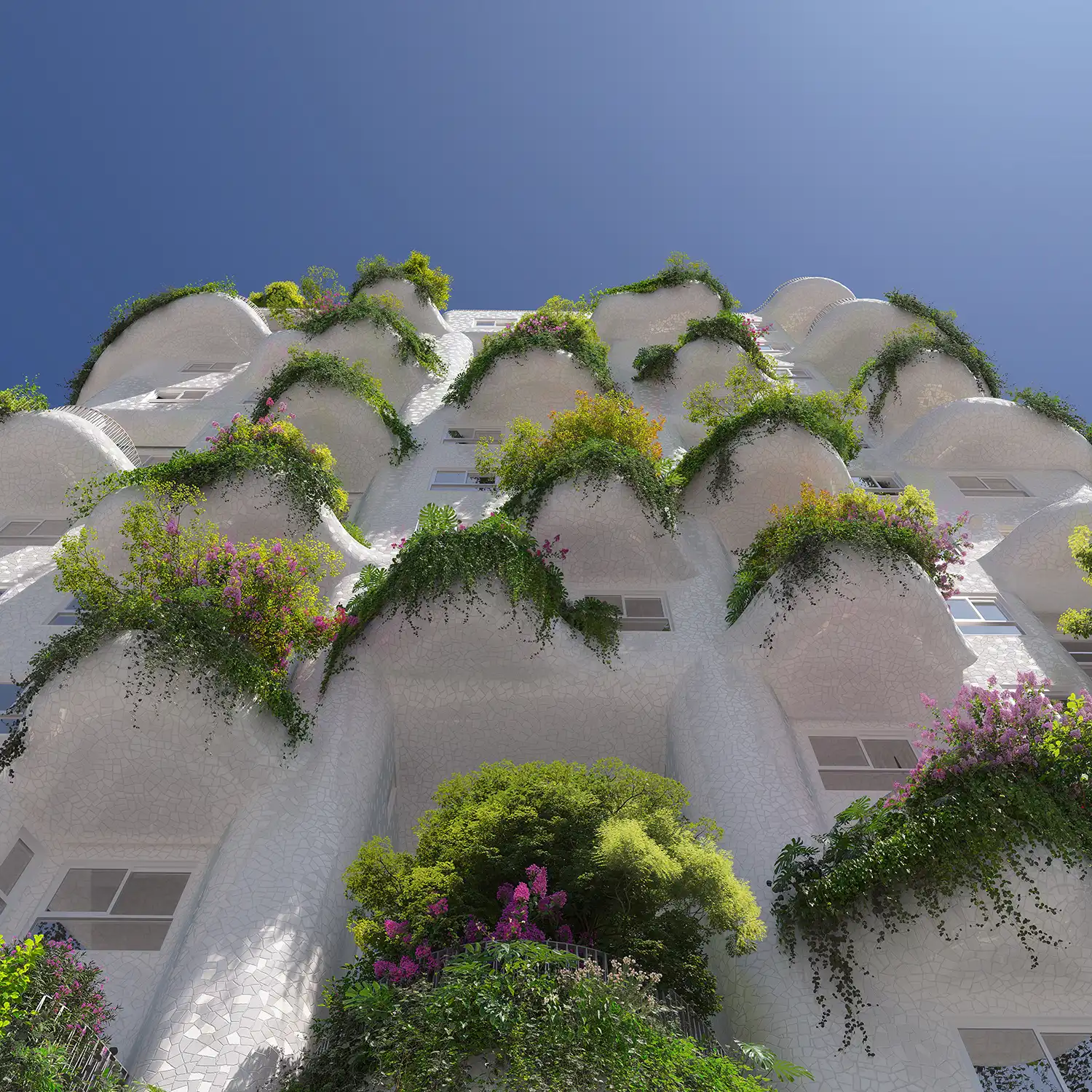
Key to the building’s aesthetic is a bespoke façade finished in an irregular mosaic of white ceramic tiling, a technique explicitly inspired by the work of Catalan master, Antoni Gaudí. This unconventional skin allows the surface to smoothly adapt to every curve and fold of the structure. The use of various shades of white, with larger tiles on flat areas and a finer, more granular pattern for the tighter corners, ensures both a visually rich and low-maintenance finish. It’s a bold move that elevates a straightforward residential tower into a sculptural piece of architectural art.
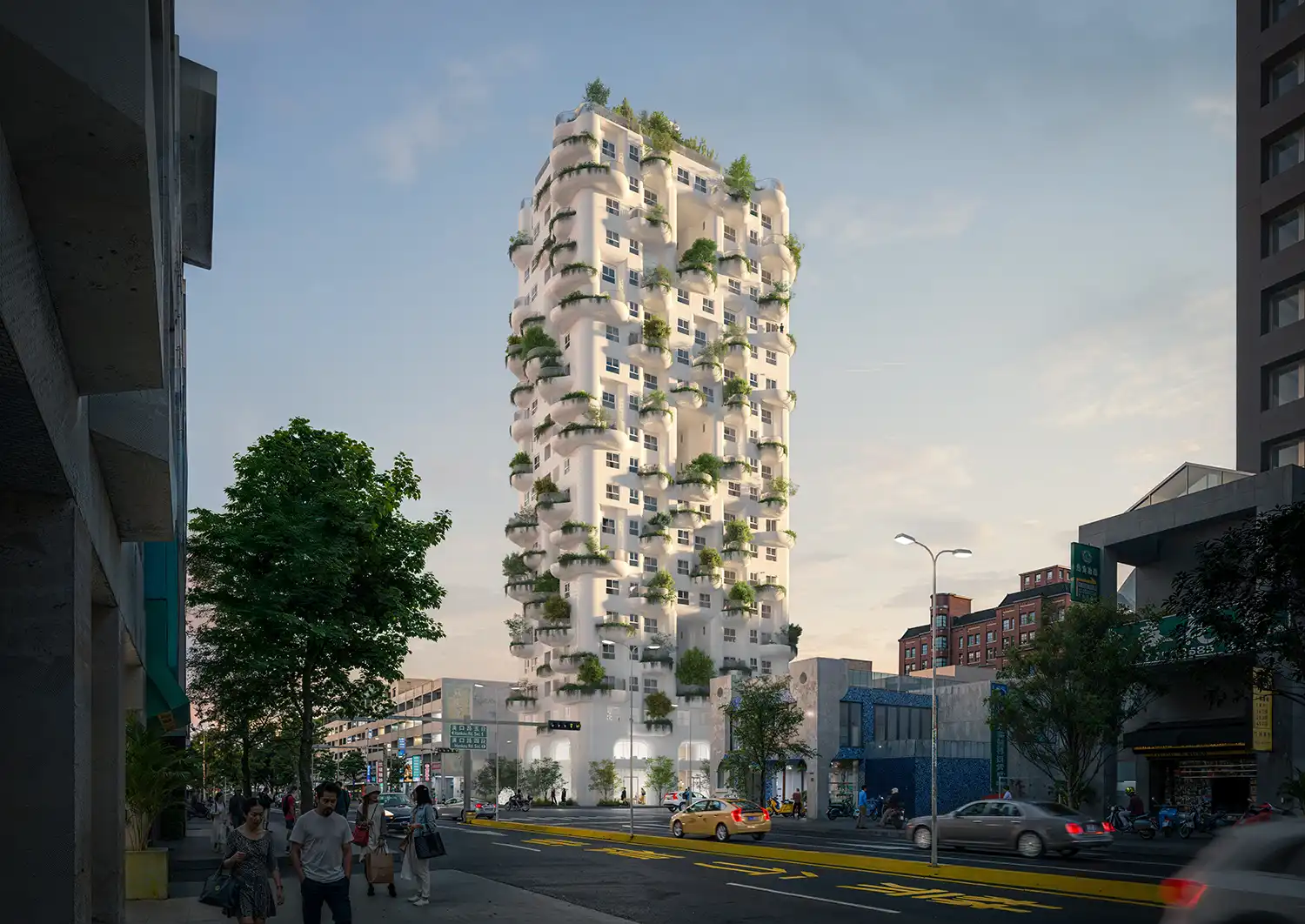
Beyond private living spaces, The Island heavily prioritises communal space and shared amenities—a design choice aimed at attracting middle-class residents and young couples. The tower features commercial spaces on the lower two floors, complemented by shared facilities including a communal dining room, lounge, and karaoke area. Distributed across the 21 floors are five dramatic, three-storey communal balconies, each carving a huge indent into the façade to dramatically increase the sense of spaciousness and communal living.
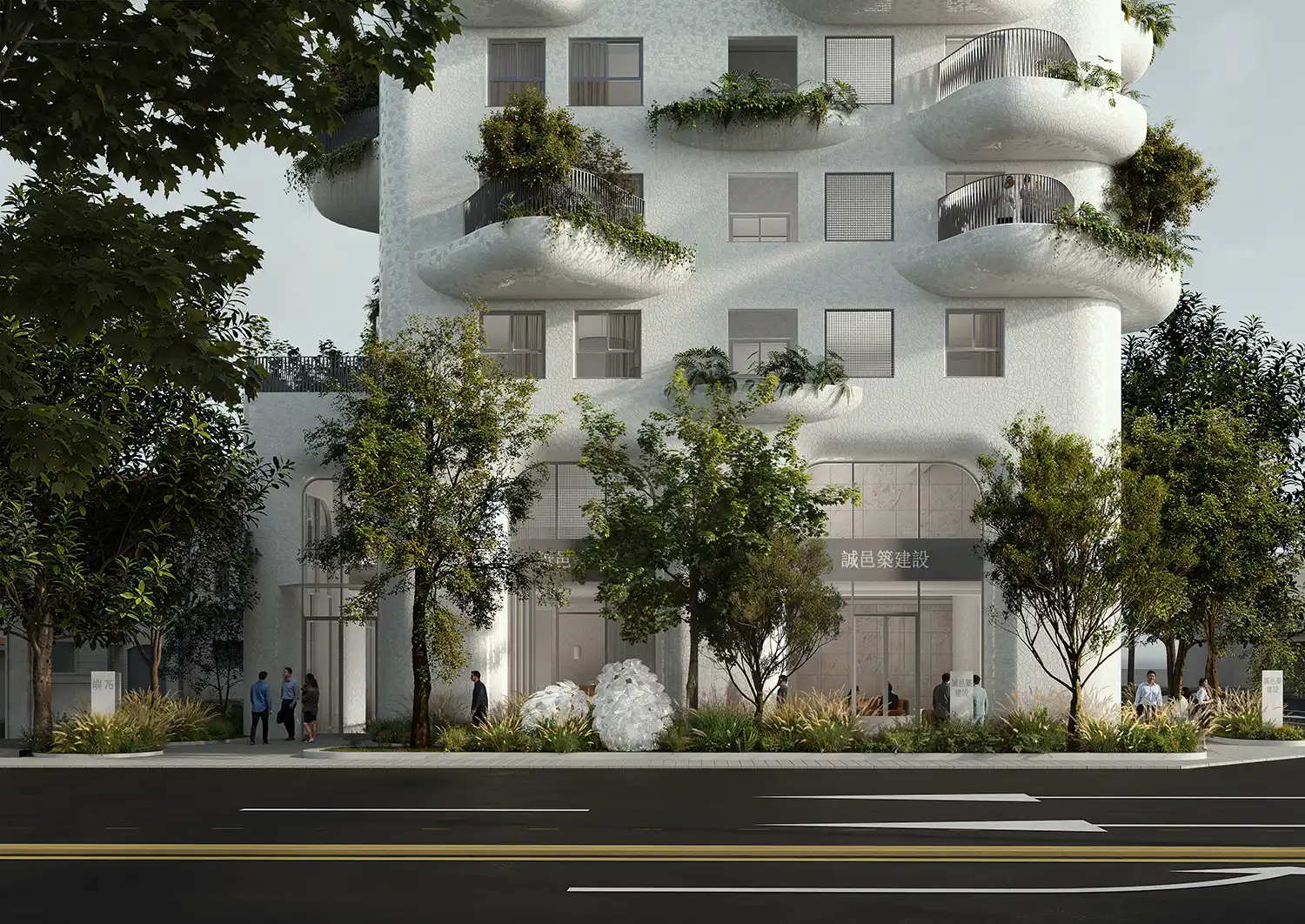
The commitment to green design is integral, creating a dense, multi-layered vertical garden. In addition to street-level planting, the design incorporates 104 private balconies and 38 standalone façade planters. The selection of plantsfocuses on showcasing the rich biodiversity native to the Taichung province, transforming the high-rise into an accessible, micro-ecosystem. The roof is crowned with a shared garden terrace, serving as another major communal outdoor space for residents.
In a move addressing sustainability and circularity, MVRDV plans to repurpose materials from the existing structure on the site. The current 13-storey commercial building must be demolished due to updated earthquake regulations. Instead of wastefully discarding the materials, the project will save the stone from the old walls and floors for reuse as a finished floor surface in the new tower. This focus on material reclamation ensures that The Island is not just a landmark for green living, but a model for responsible, future-focused construction in a rapidly evolving Asian city.