




In the undulating hills of Heraklion, Crete, where olive trees etch a timeless pattern across the landscape, Mykonos Architects have conceived the N’arrow House, a dwelling that doesn’t merely occupy the land, but emerges from it. This project, honored with the Grail Award for Unbuilt Project of the Year, is a tribute to the transformative power of architectural constraints and the profound beauty of respectful integration.
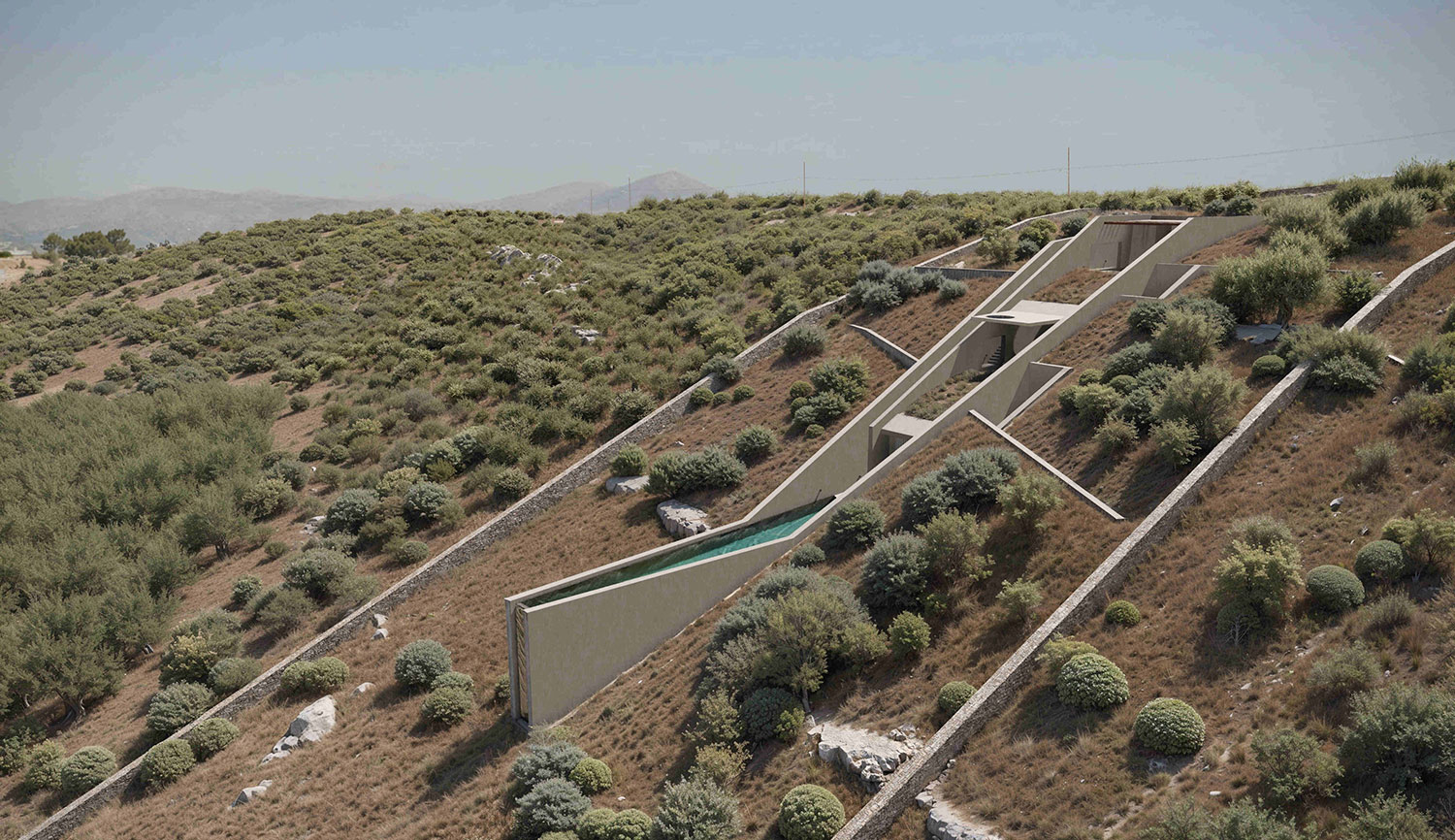
The narrative of the N’arrow House begins with a challenge: a 15-meter boundary setback mandated by local regulations. What could have been a restrictive imposition became, in the hands of Mykonos Architects, the very genesis of the design. Combined with the site’s elongated, narrow plot, this regulation birthed a slender, wedge-shaped form that gracefully settles into the hillside, a testament to the principle of “restriction as inspiration.”
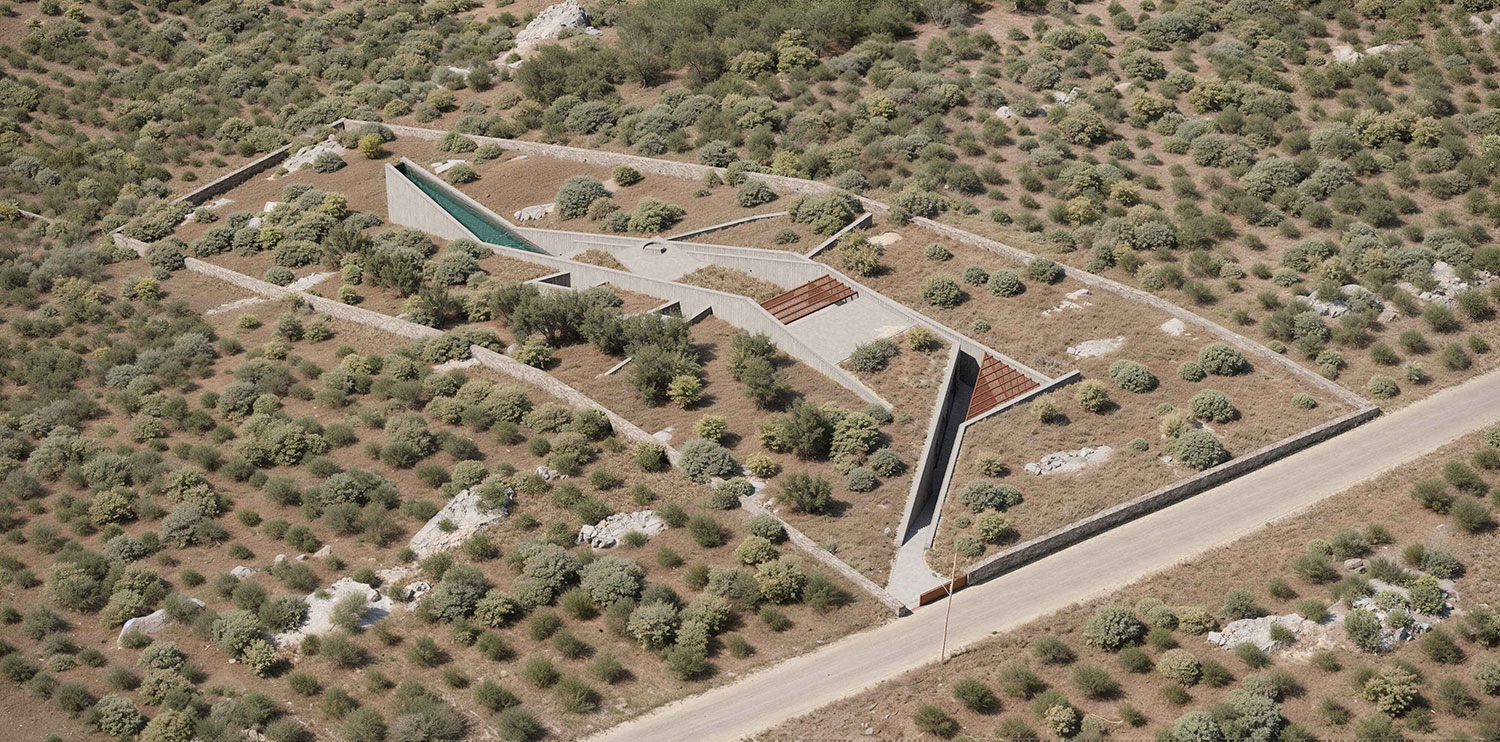
Rather than imposing a foreign object upon the Cretan terrain, the architects sought to create a structure that felt organically rooted. The house, essentially a linear volume, appears to sink into the slope, aligning itself with the natural contours of the land. This approach transforms the act of entering the home into a descent, a metaphorical journey into the heart of the earth. A staircase, beginning at the highest point of the structure, guides visitors down, past the living spaces, and further into the hillside towards the sleeping quarters. This journey culminates at the pool, a striking element that extends outward, marking the end of the architectural “gesture” and offering a serene focal point.
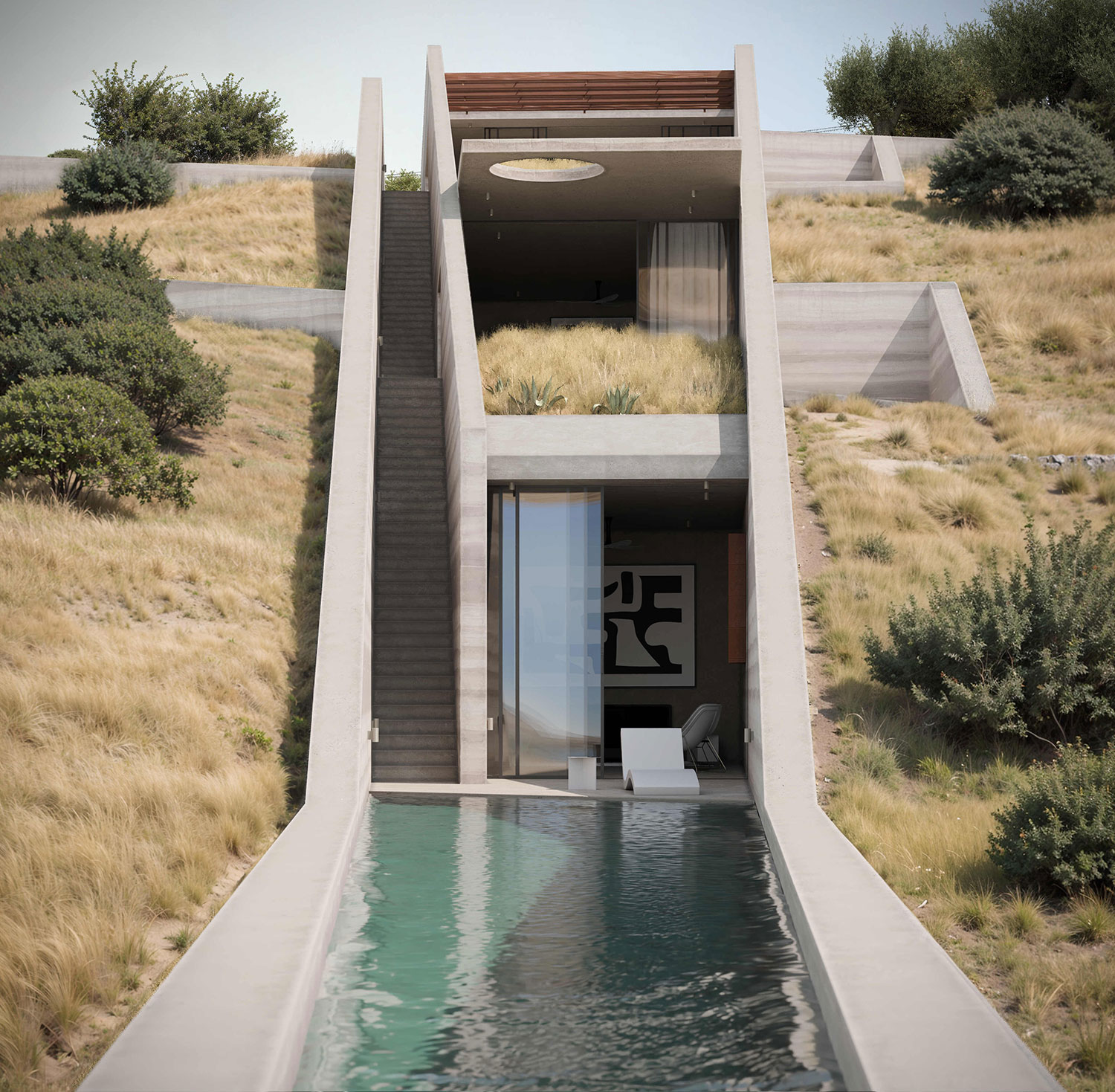
The N’arrow House is defined by three robust walls, each playing a crucial role in shaping the experience of the space. Two of these walls house the primary circulation, the staircases that weave through the levels, while the third encloses the private living areas. This clear articulation of movement and habitation creates a sense of clarity and purpose within the elongated form.

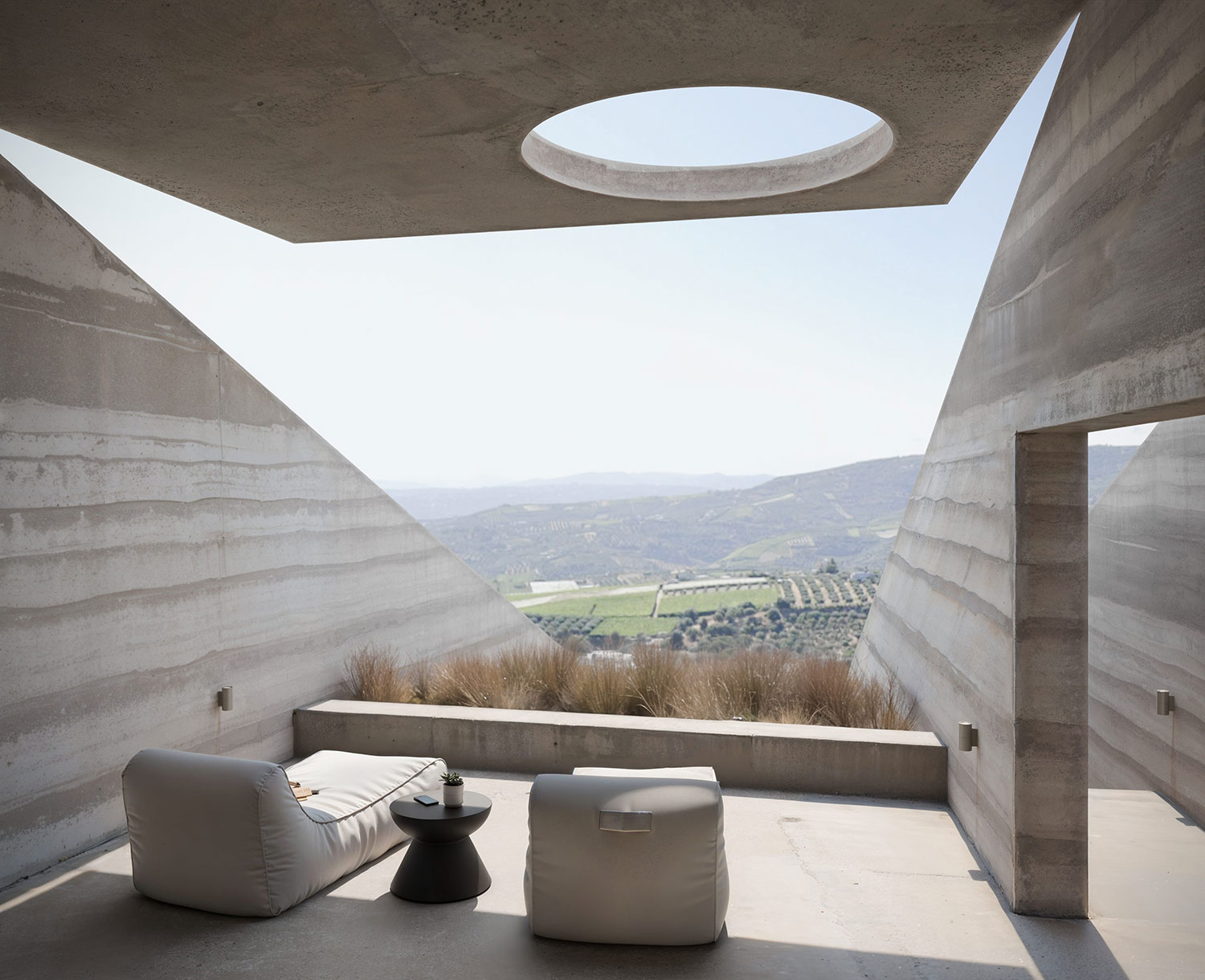
A defining feature of the design is its commitment to blurring the boundaries between interior and exterior. Each room, across all three levels, opens generously to the landscape. Expansive openings act as frames, capturing breathtaking vistas of the olive tree-covered hills. Shading elements carefully modulate sunlight, ensuring comfortable outdoor spaces. Inside, carefully placed sun shafts pierce the “cave spaces,” infusing them with natural light and ventilation, creating a sense of connection to the sky above.
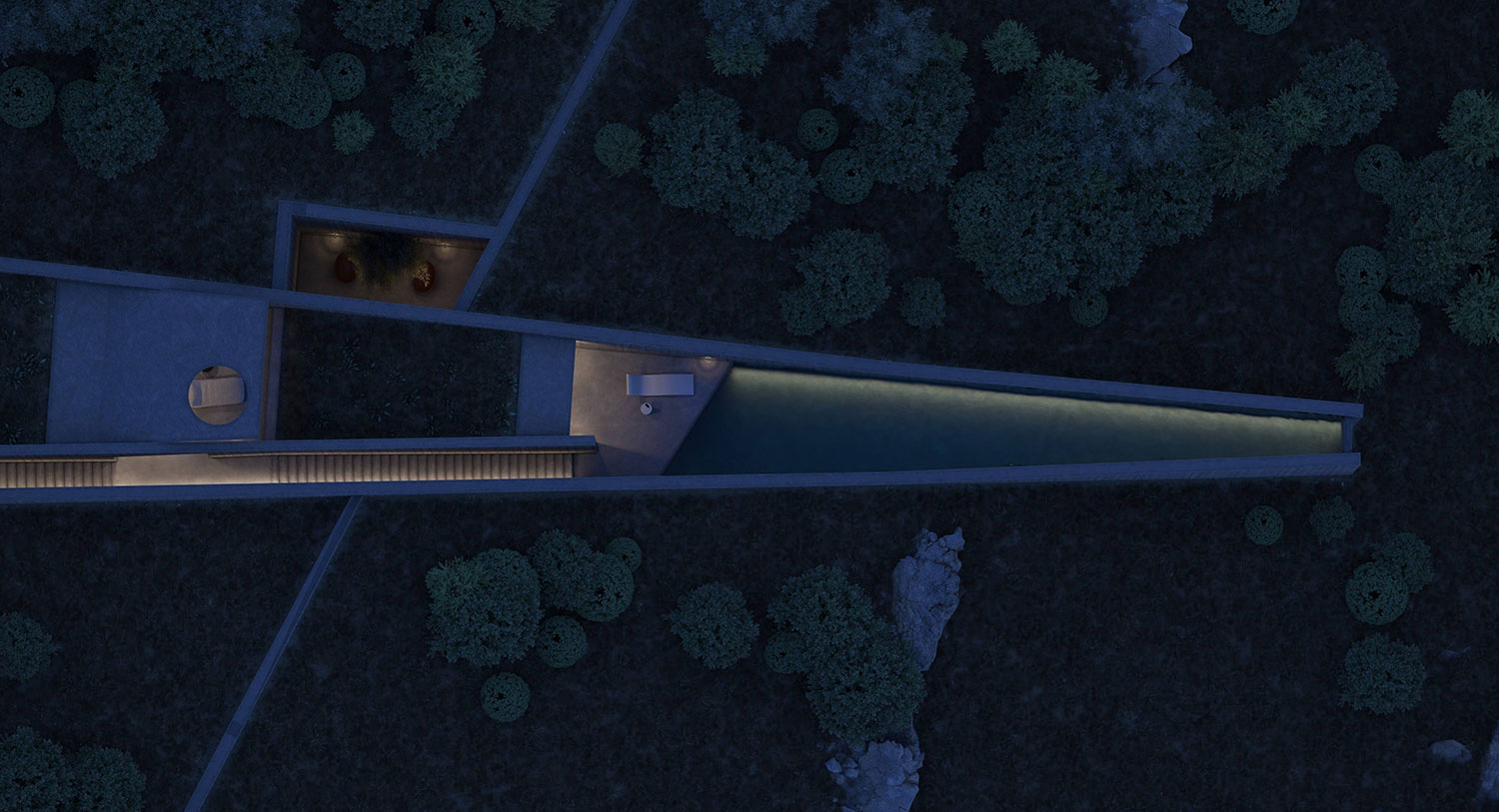
The material palette of the N’arrow House is as thoughtfully considered as its form. Rammed earth, chosen for its sustainable qualities and harmonious integration with the environment, dominates the building’s fabric. Sourced from compacted natural soils, this low-energy material minimizes environmental impact and, with its earthy tones, seamlessly blends with the hillside. Its inherent thermal mass naturally regulates indoor temperatures, reducing the need for artificial climate control. This choice not only underscores the project’s commitment to sustainability but also reinforces the sense of the house being an organic extension of the land.
The N’arrow House is more than just a dwelling; it is an architectural dialogue with the Cretan landscape. It demonstrates how constraints can be transformed into opportunities, and how a building can be both a shelter and a respectful gesture towards the environment. Mykonos Architects have crafted a space where light, earth, and architecture converge, creating a sanctuary that is both deeply rooted and profoundly inspiring.