

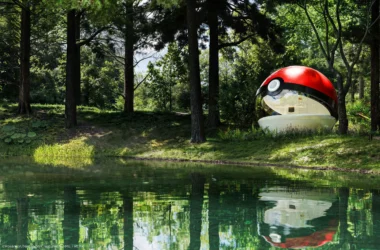
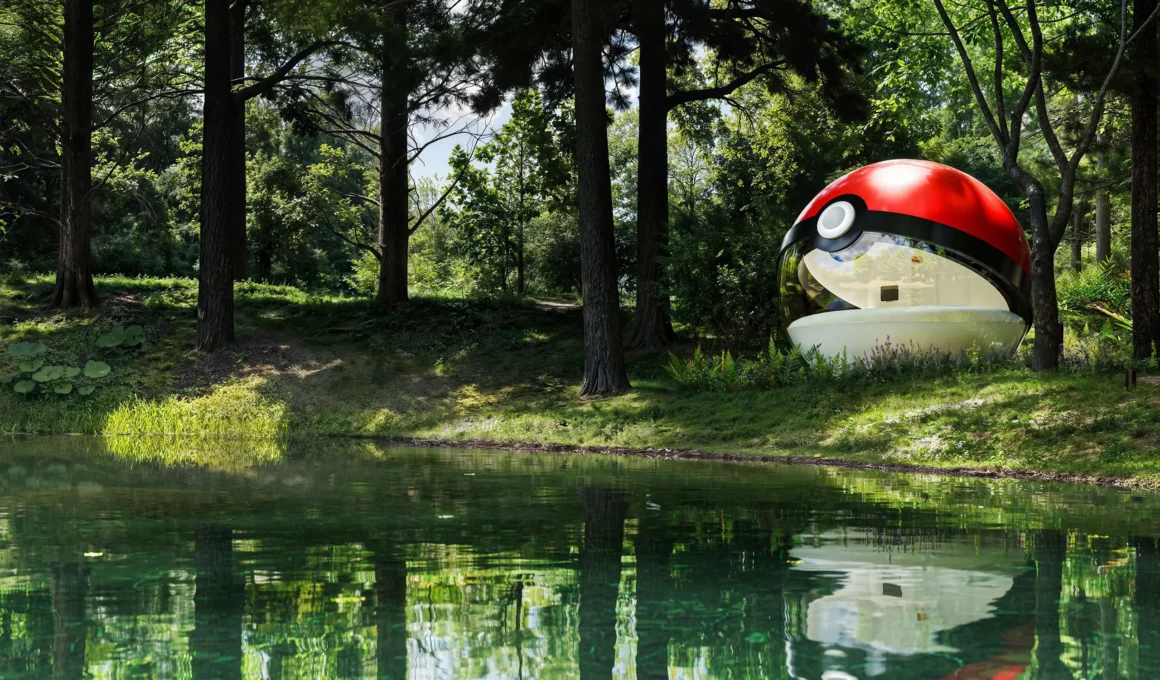
At 3 m (9.8 ft) across, the Poké Ball-Themed Hotel that Tokyo-based hospitality company Not A Hotel is opening beside a lake in Hokkaido is small enough to be designed as a single object, with its shell, door and bed all bent to the same curve. Developed with Pokémon Sleep, The Pokémon Company’s sleep-tracking game app, the one-room structure in Tomakomai recreates the franchise’s red-and-white capture device at the scale of a sleeping guest. The design asks to be read as much as a product as a piece of architecture.
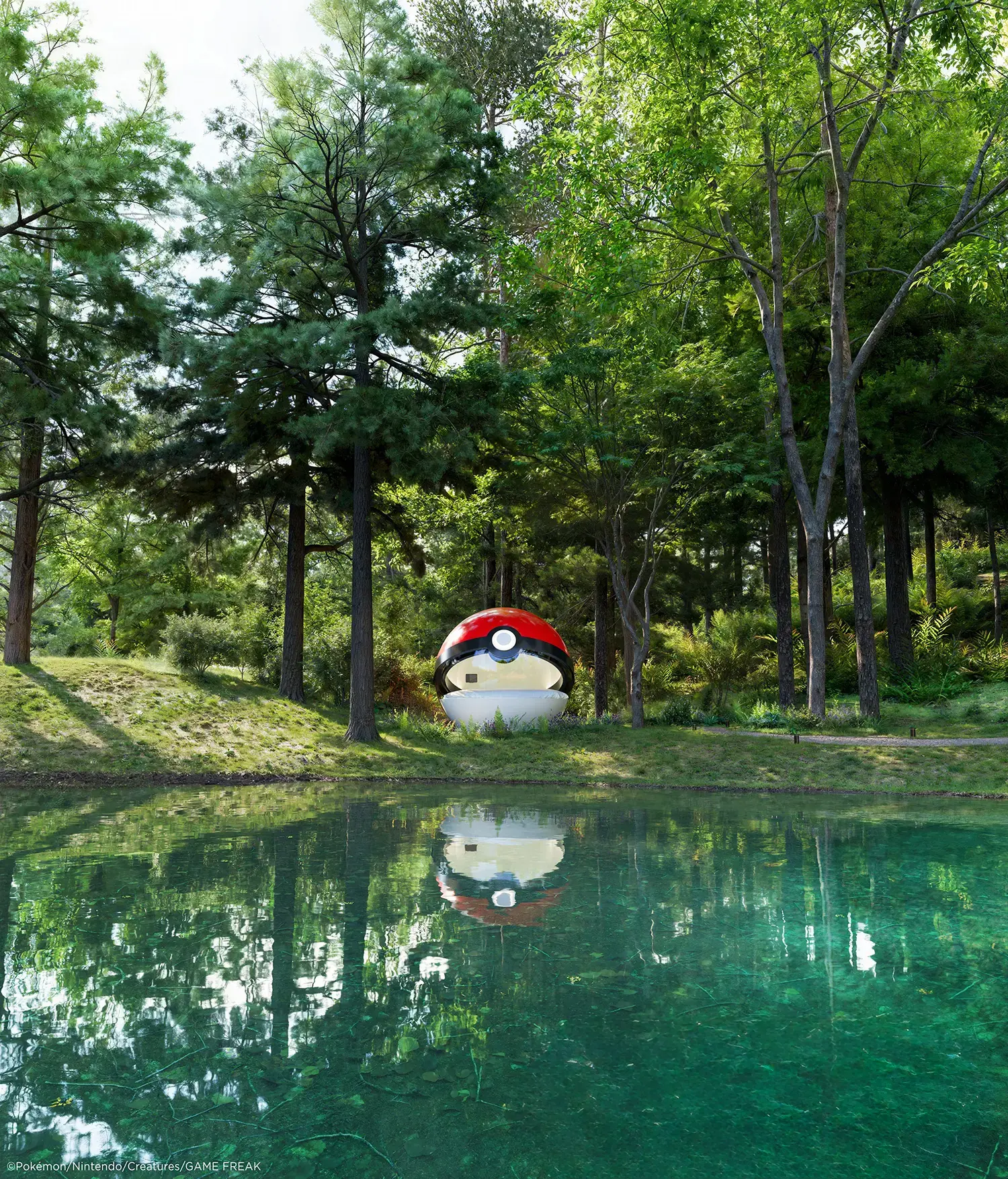
An in-house design unit was responsible for the project: NOT A HOTEL ARCHITECTS, the team the company describes as rebuilding ways of living with architecture at the center, rather than one of the outside names it has worked with, such as BIG on its Setouchi villas. The Pokémon Sleep collaboration marks the 30th anniversary of Pokémon and the third anniversary of the app, and follows other pop culture partnerships like JAPA VALLEY with Pharrell Williams and NIGO. Rather than dressing an existing room in themed decoration, the brief asked the architects to make the franchise’s most recognizable object inhabitable for one night.
Two acrylic hemispheres form the shell in the design, each molded from formwork at the full 3 m diameter, with a curved acrylic window that renderings show giving the closed volume the appearance of a ball caught mid-opening. The acrylic sphere leaves no flat wall to hang anything on and no corner to fill, so every element inside has to be drawn around the geometry rather than placed against it. “Architecture, yet at the same time one giant product,” Not A Hotel said.
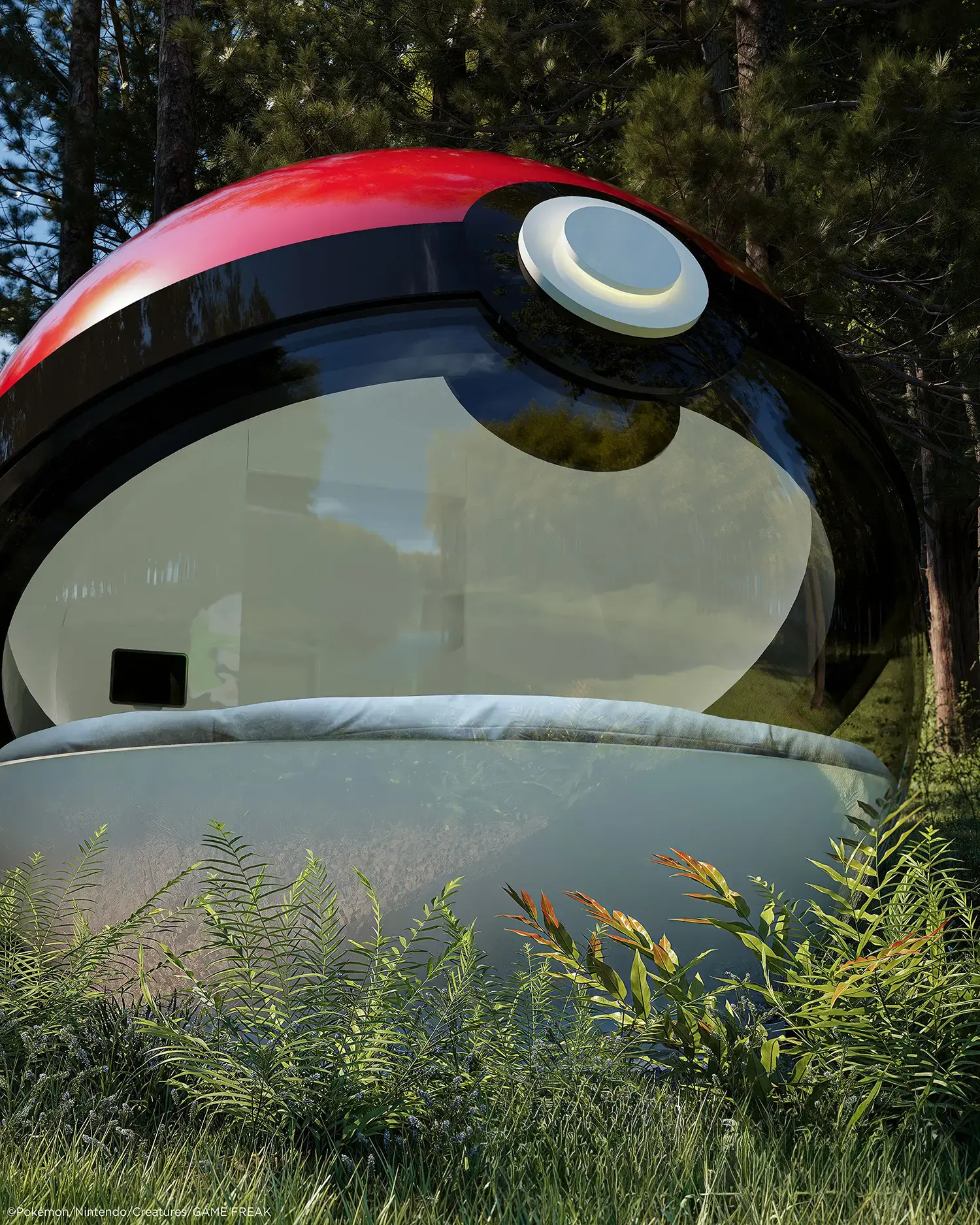
Following the curve inward, the architects organized the interior around a circular bed space and a sliding door designed to close flush against the sphere’s curvature. In a spherical guest room of this size, the door is not an opening cut into a wall but a section of the shell itself, moving along the same arc it belongs to. The detailing is where the project concentrates its effort, since a gap or misalignment would break the object before it failed the building.
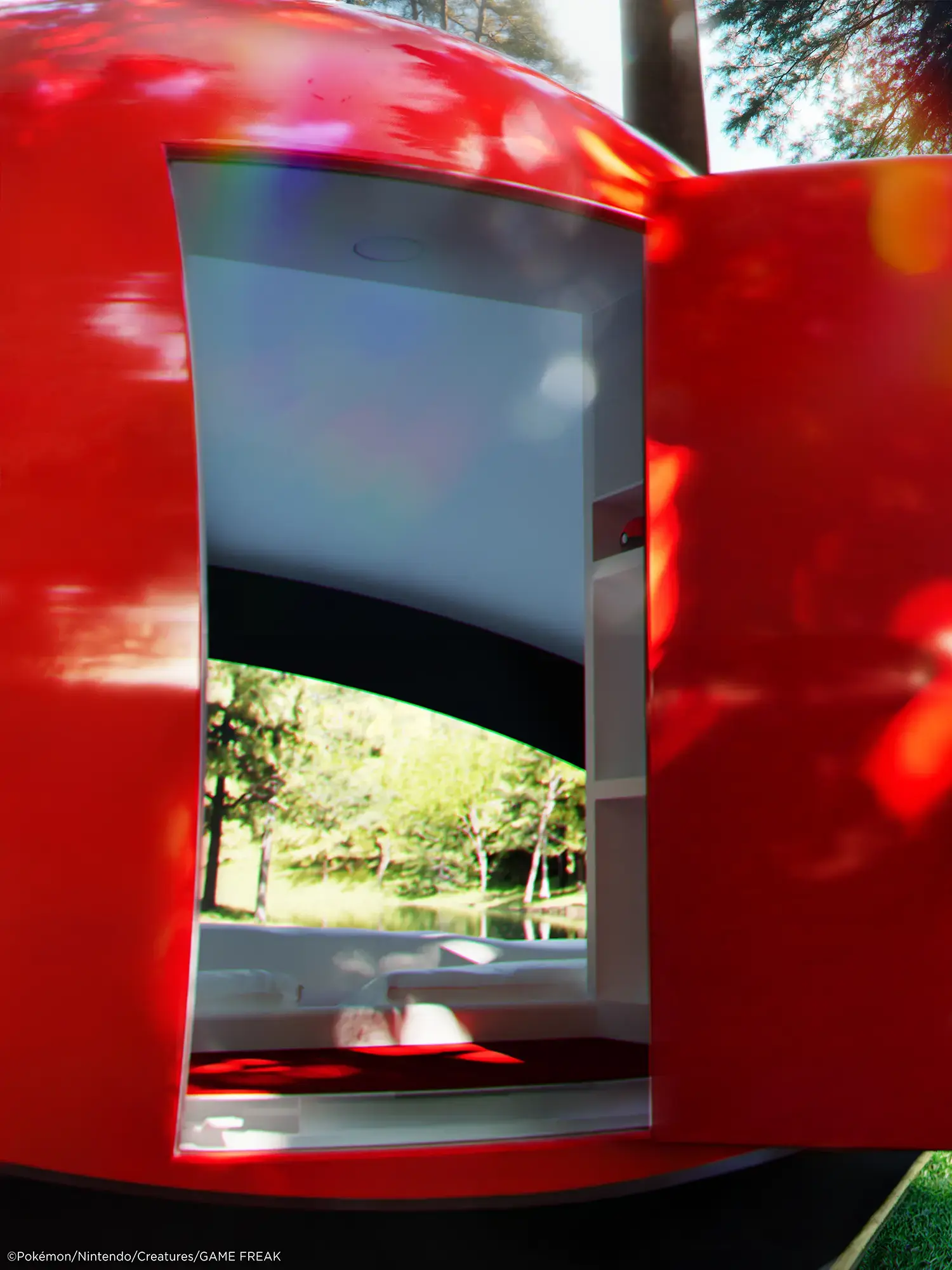
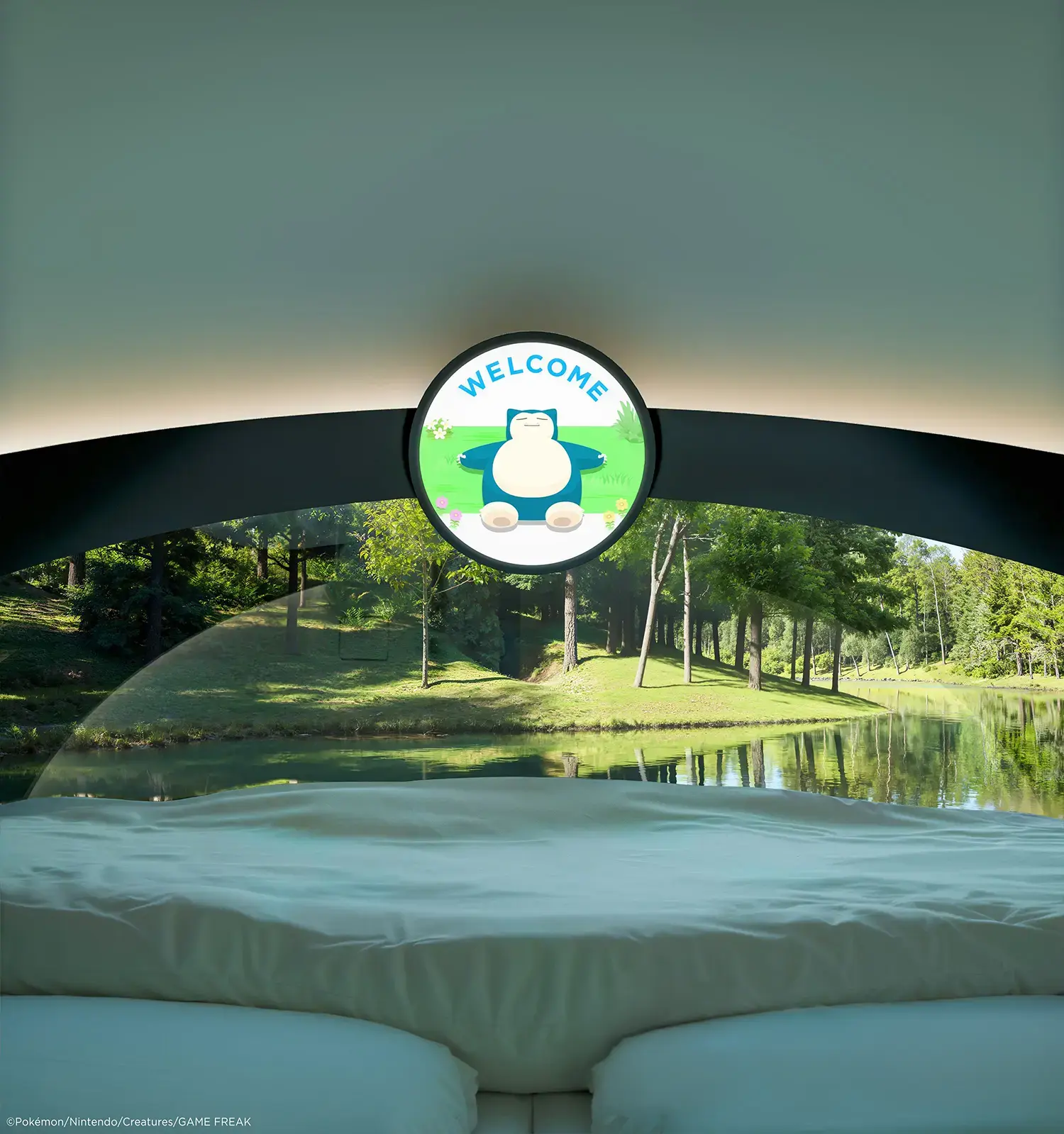
A mattress cut to the sphere is planned to fill most of the floor. The circular mattress is a custom piece by Japanese sleep brand NELL, built with 2,350 pocket coils and shaped to match the geometry of the shell. Air conditioning and lighting complete the equipment of a space the company says was tuned throughout for better sleep, despite its compact footprint.
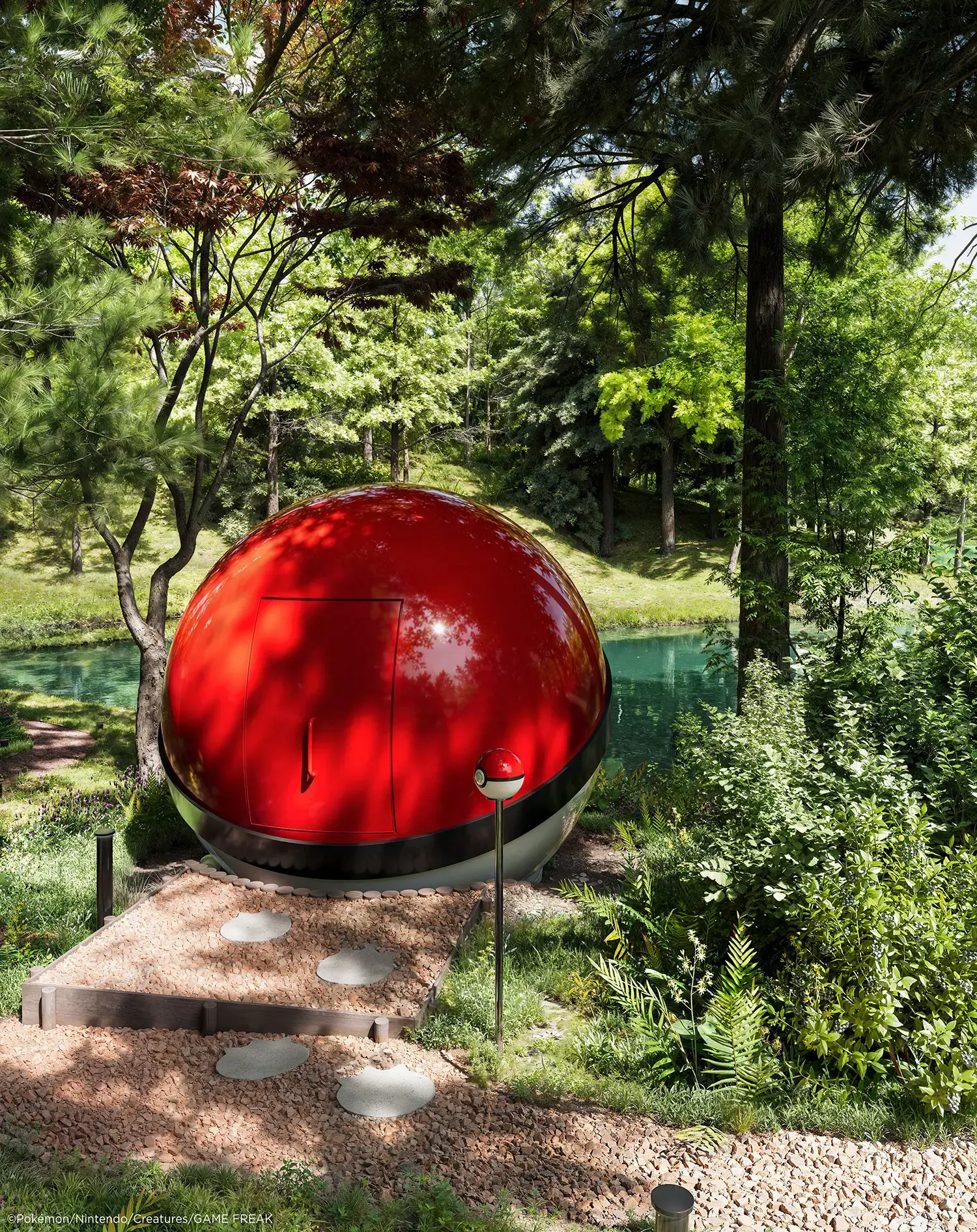
Waking to the lake is the other half of the plan. The curved window is designed to let guests lie in bed and look directly onto the landscape of Tomakomai, Hokkaido, falling asleep in the quiet of the forest and waking with the view laid across the acrylic. When the collaboration was first announced, Not A Hotel described the idea as “a place where people, too, can find restful sleep and calm,” extending to humans the comfort a Poké Ball offers the creatures inside it.
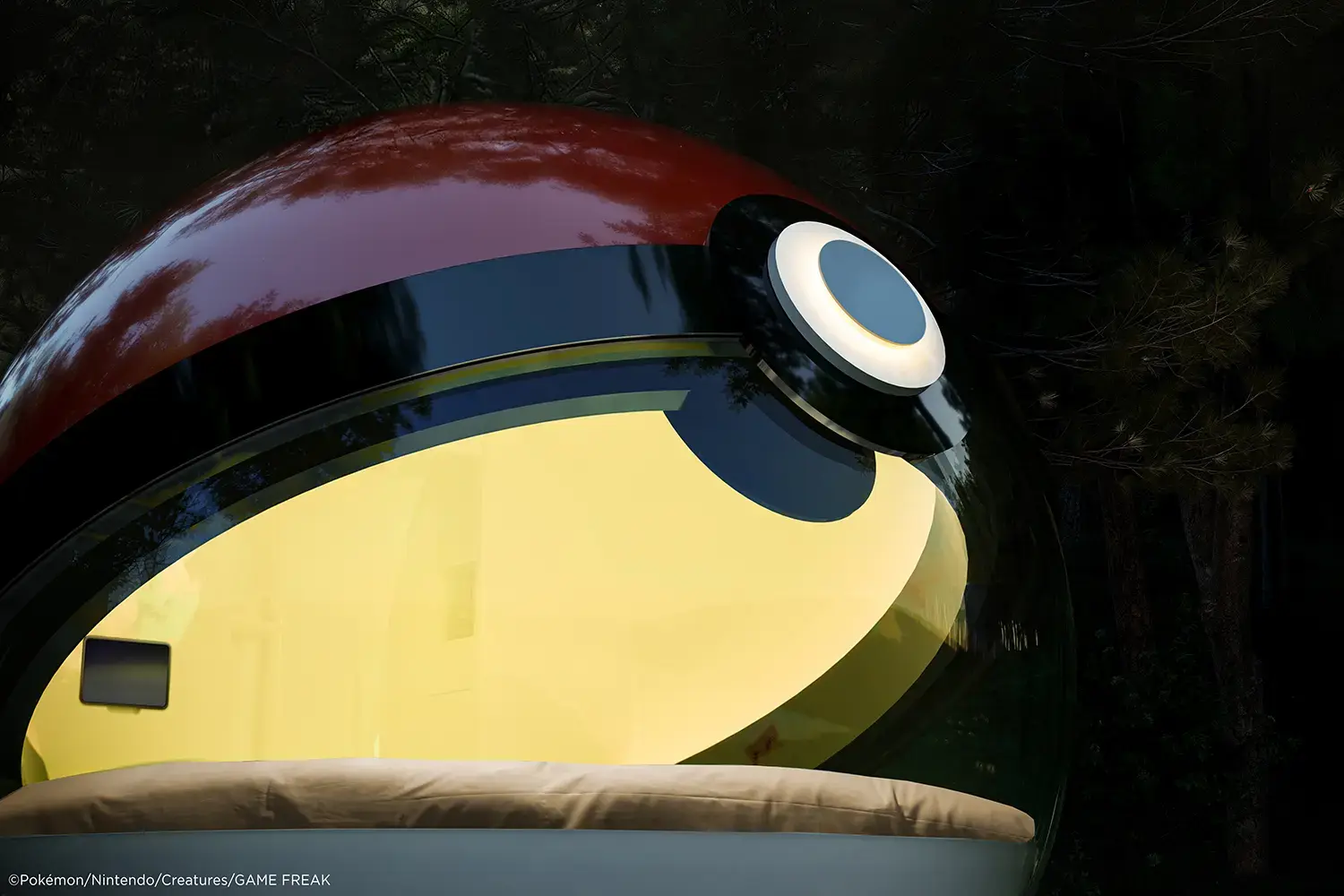
Lighting chosen by character will come from a system developed by the company’s own smart home team. Guests select a favorite Pokémon on an iPad inside the room, and when the lights go out, the space shifts to an effect built around that character. The feature ties the Pokémon-themed hotel room back to the app that commissioned it, which turns nightly sleep into a collection game.
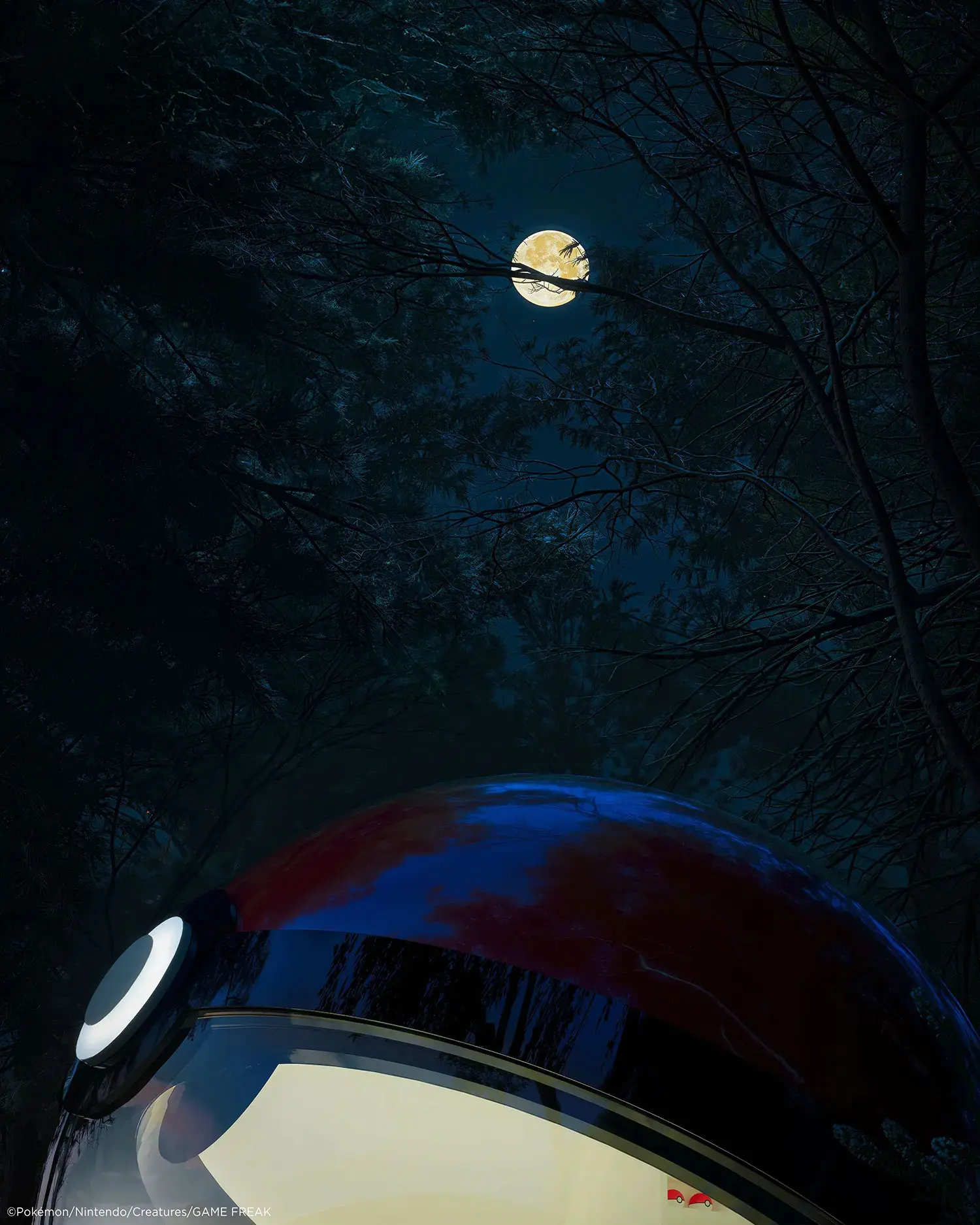
Access by lottery only keeps the sphere out of reach for almost everyone. Stays are offered free to 10 pairs of Pokémon Sleep users selected through a campaign on X, with applications open from September 15 to 30, covering one night with dinner and breakfast, while travel to New Chitose Airport remains at the winners’ expense. The Poké Ball hotel in Japan will not be open to the public, and Not A Hotel has asked anyone else, including visitors hoping only to take photographs, not to come to the site.
Beside the sphere, a separate washroom is planned for everything the 3 m shell cannot hold. Its walls are set to be tiled in the colors of Snorlax, the Pokémon best known for sleeping through almost anything.
Poké Ball-Themed Hotel by NOT A HOTEL ARCHITECTS | Location: Tomakomai, Hokkaido, Japan — Year: 2026 — Key materials: acrylic