


The Hrebenky apartment in Prague, Czech Republic, is a three-storey residential intervention by the studio OOOOX that boldly uses exposed concrete structures and custom-designed “black boxes” to establish a highly unconventional interior aesthetic. Achieved through a close and timely collaboration with the client and a highly accommodating developer, the design subverts typical luxury conventions by foregrounding raw structure and high-tech integration.

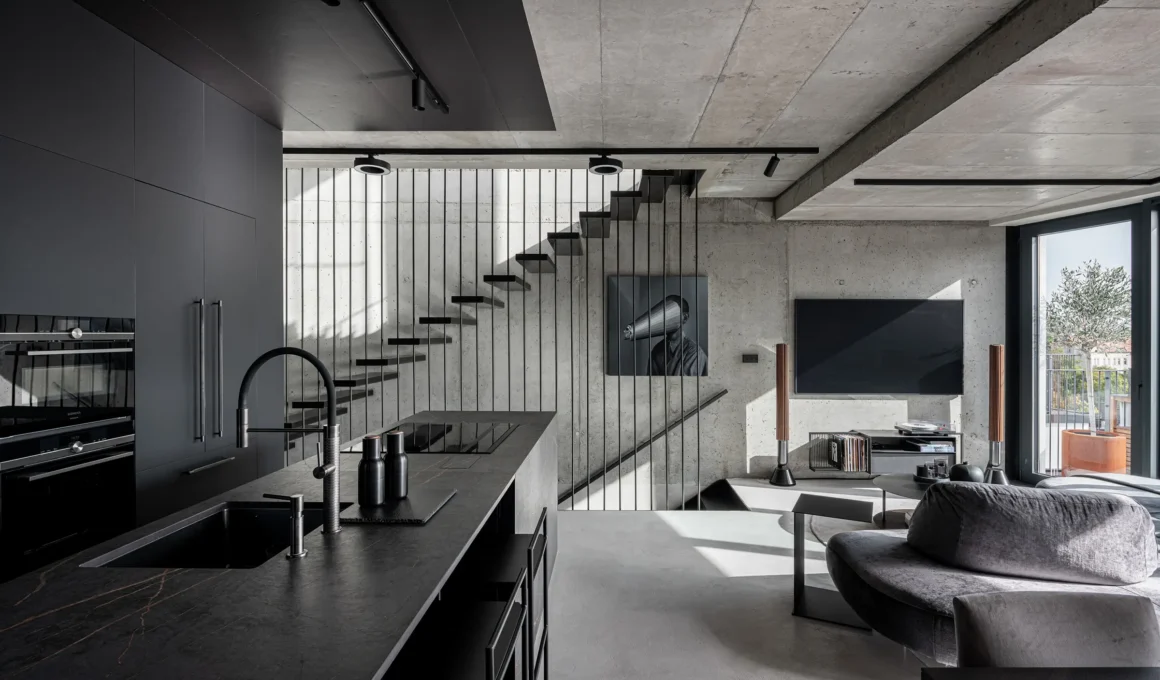
The starting point for the residence was the building’s own skeleton. Spanning all three levels, the existing exposed concrete structures were deliberately kept in place, becoming the visual and literal spine of the apartment. OOOOX secured the client’s approval to retain this raw concrete finish, creating a rough, tectonic envelope that gives the entire space its distinctive structure and dramatic contrast with the sleek, internal finishes.

Despite this visually raw approach, the apartment features sophisticated, integrated systems. The architects cleverly rearranged the structural plans to conceal the necessary infrastructure; concealed ventilation ducts, for example, were run through lower-floor false ceilings and vented seamlessly through the base of built-in joinery. Furthermore, the multi-level dwelling benefits from a custom-engineered laundry chute—a feature made possible only because the design was initiated before construction began. The entire home is also seamlessly linked by comprehensive smart home technology.

Dominating the central living space is a visually arresting suspended staircase. This complex element is a design highlight, featuring steps made from thin steel blades individually clad in rich, dark wooden cladding. The installation of this unconventional staircase required intricate and simultaneous coordination among three separate construction specialities, resulting in a striking design that appears to float between the heavy concrete columns.

Key functional zones on each of the three floors are defined by solid, dramatic ‘boxes’ finished entirely in black—a motif that provides a strong, unifying visual anchor. These black boxes form moody volumes that contain vital functions: a black-on-black kitchen finished with contrasting stone and wood cladding; the main bedroom, which integrates sophisticated storage and a built-in library headboard; and a dedicated study space.

The detailing extends to the wet areas, where the architects specified luxurious brass faucets to offset the dark, large-format tiling. This level of finish was only feasible thanks to the proactive cooperation of the building’s developer, who allowed the concealed plumbing mechanisms for these high-end fittings, including a dramatic ceiling-mounted faucet, to be installed during the initial construction phase, avoiding costly future demolition.

The majority of the residence’s furnishings, excluding only the primary sofa, are custom-made furniture designed specifically for the space. The dark wood elements, including the staircase wooden cladding and various cabinetry, were treated using the ammonia-fumed wood method to achieve a highly desired deep coloration that penetrates the timber, ensuring that scratches do not reveal a lighter substrate. This dark, textured material palette is complemented by bespoke steel and glass elements, such as minimal side tables and a striking bedroom wardrobe that uses glass cabinetry to display personal items.