



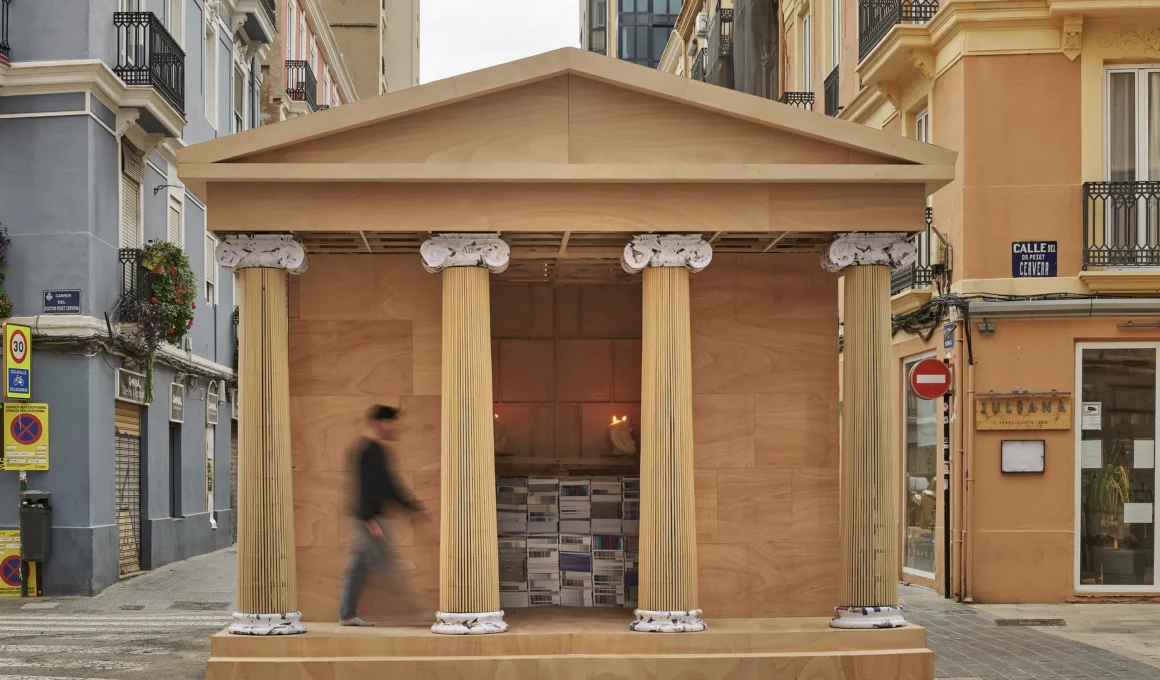
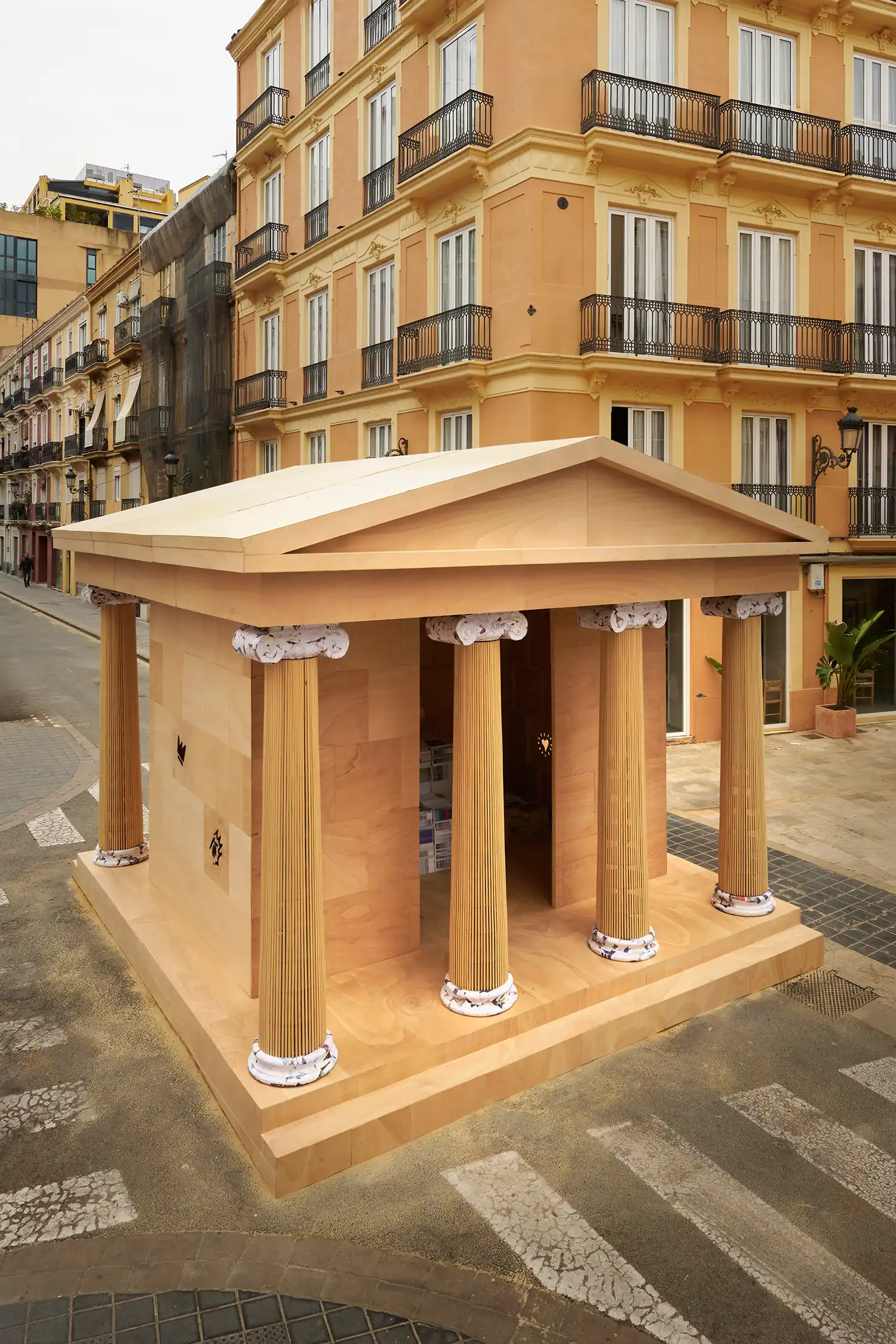
On the streets of Valencia, the artistic duo PichiAvo has erected a monumental Ionic temple in wood and paper that fuses classical myth with the energy of graffiti before ritually surrendering it to the flames of the Fallas festival.
A conceptual return to origins. The installation represents a significant shift within the Experimental Fallas category, moving away from the satirical caricatures usually associated with the UNESCO-listed festival toward a more cerebral, artistic inquiry. By referencing the Temple of Athena Nike in Athens, Juan Antonio (Pichi) and Álvaro (Avo) have translated their signature street-art aesthetic into a three-dimensional form. The structure served not merely as a monument but as a vessel for a ritual that bridges the gap between the ancient Mediterranean past and the ephemeral nature of modern urban expression.
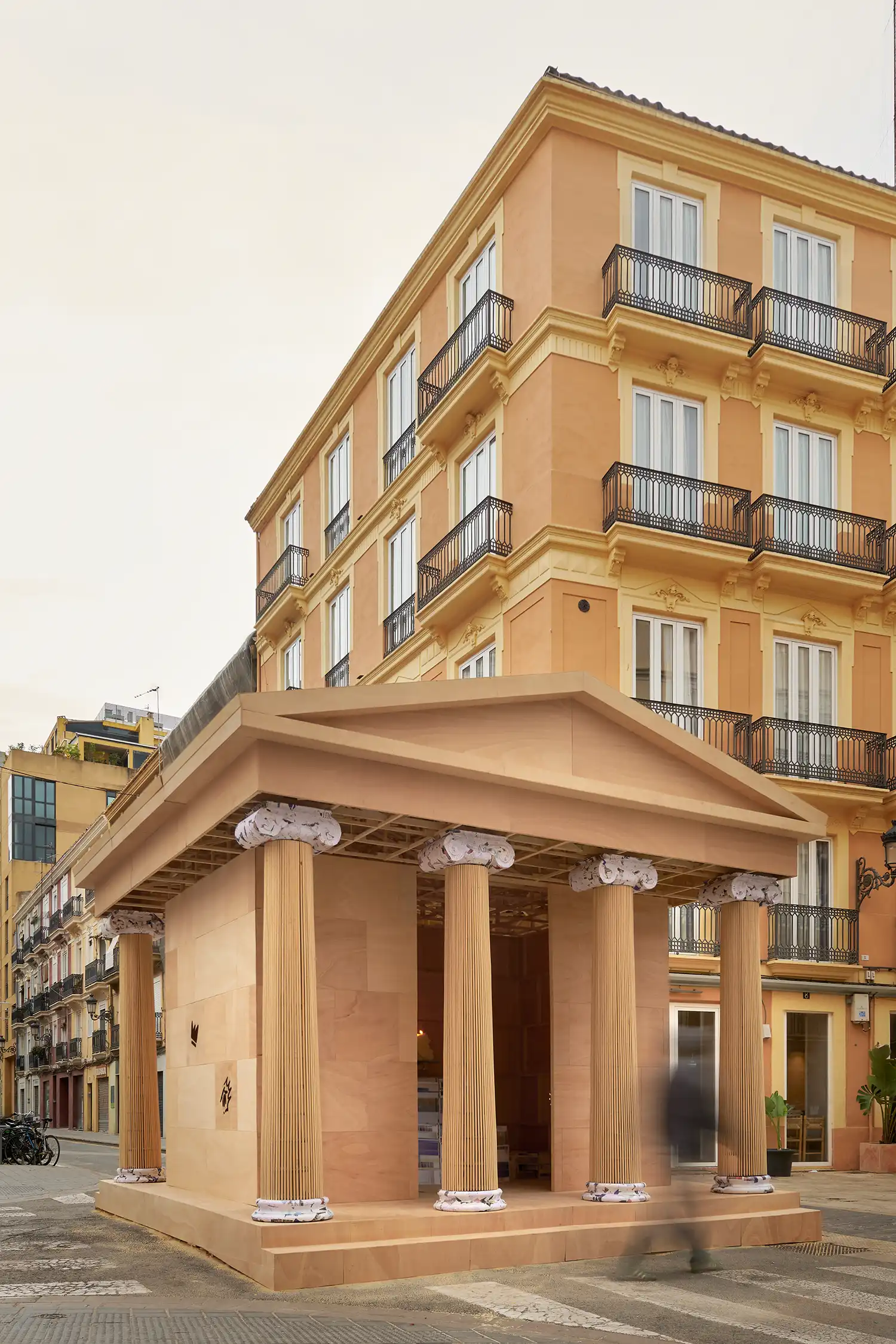
The materiality of the ephemeral. Eschewing the expanded polystyrene and industrial plastics common in contemporary monuments, the duo returned to traditional sustainable construction methods. Using only wood and surplus paper from their recent anthology, Our Odyssey, the temple was a tactile homage to the festival’s 18th-century roots, when carpenters burned leftover timber as a spring offering. This choice of materials granted the work an organic honesty, allowing the texture of the paper to catch the light and provide a porous surface for the layers of graffiti that would eventually define its skin.
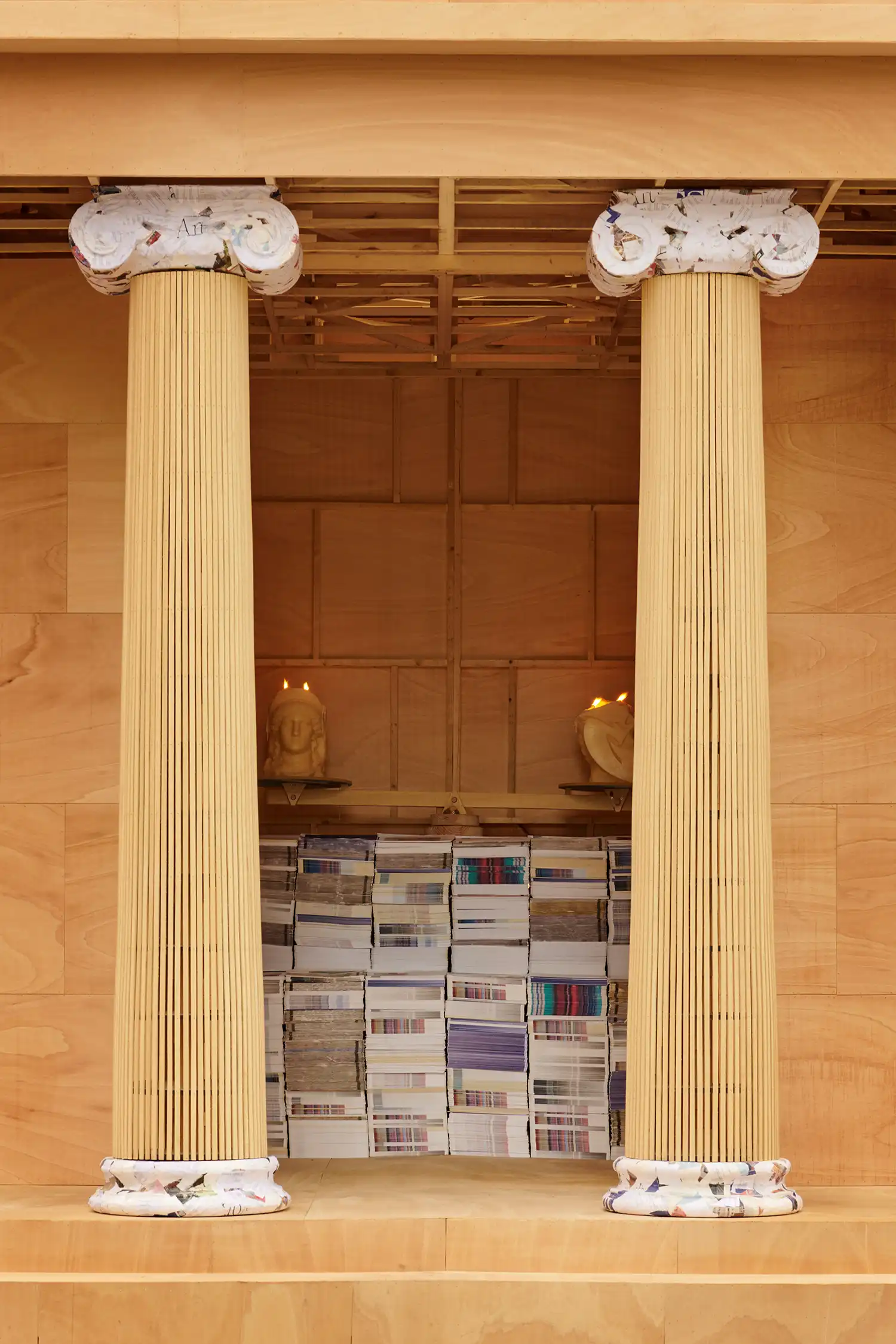
A balanced duality. Inside the cella of the temple, the narrative focus shifted to a singular, symbolic altar. A perfectly balanced scale held two sculptural wax candles—created in collaboration with the historic Barcelona brand Cerabella—representing the tension between Classical Art and Graffiti. This central motif encapsulated PichiAvo’s career-long dialogue: the idea that the rigid canons of the past and the rebellious strokes of the present are not oppositional forces, but two sides of the same creative impulse, held in a delicate, momentary equilibrium.
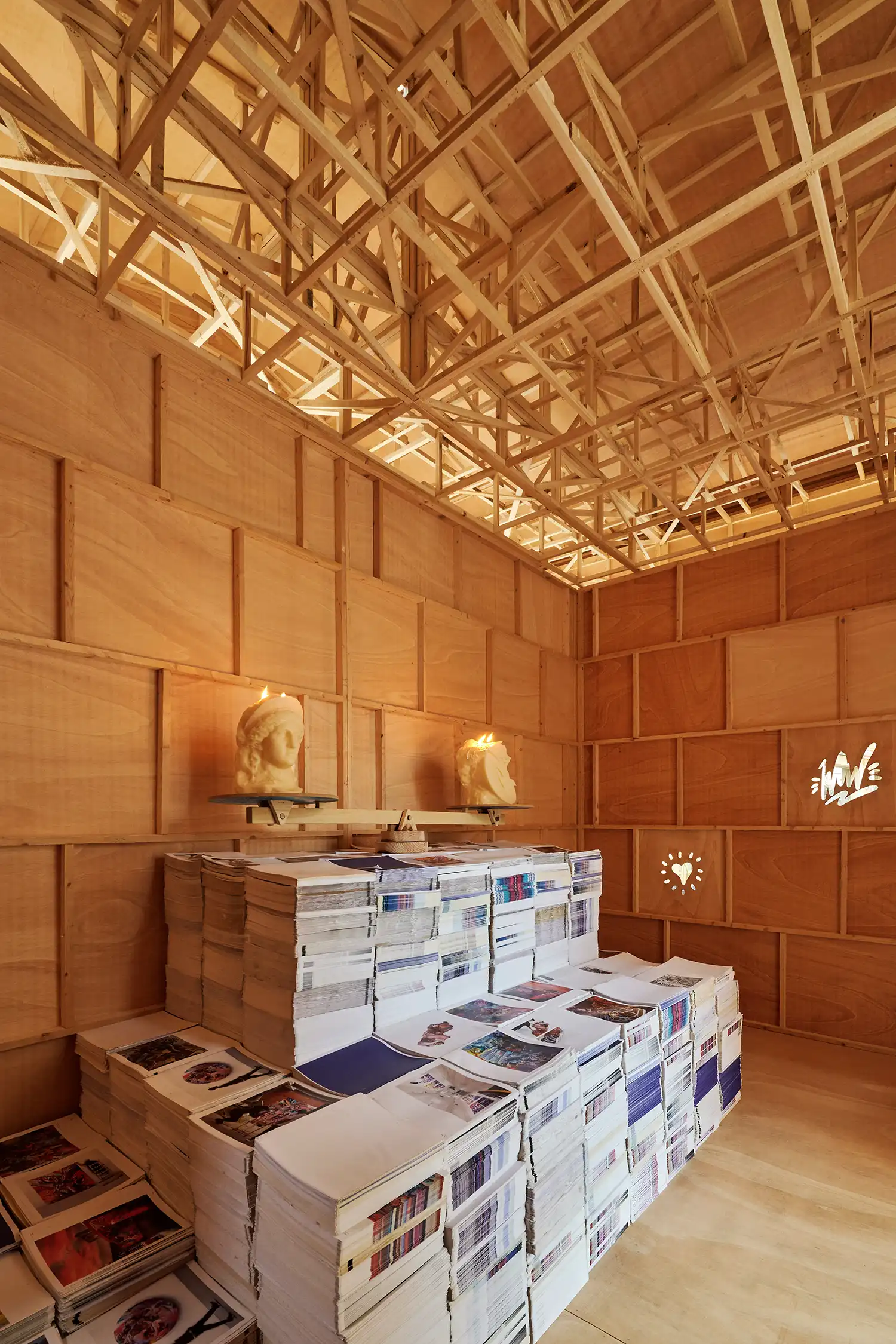
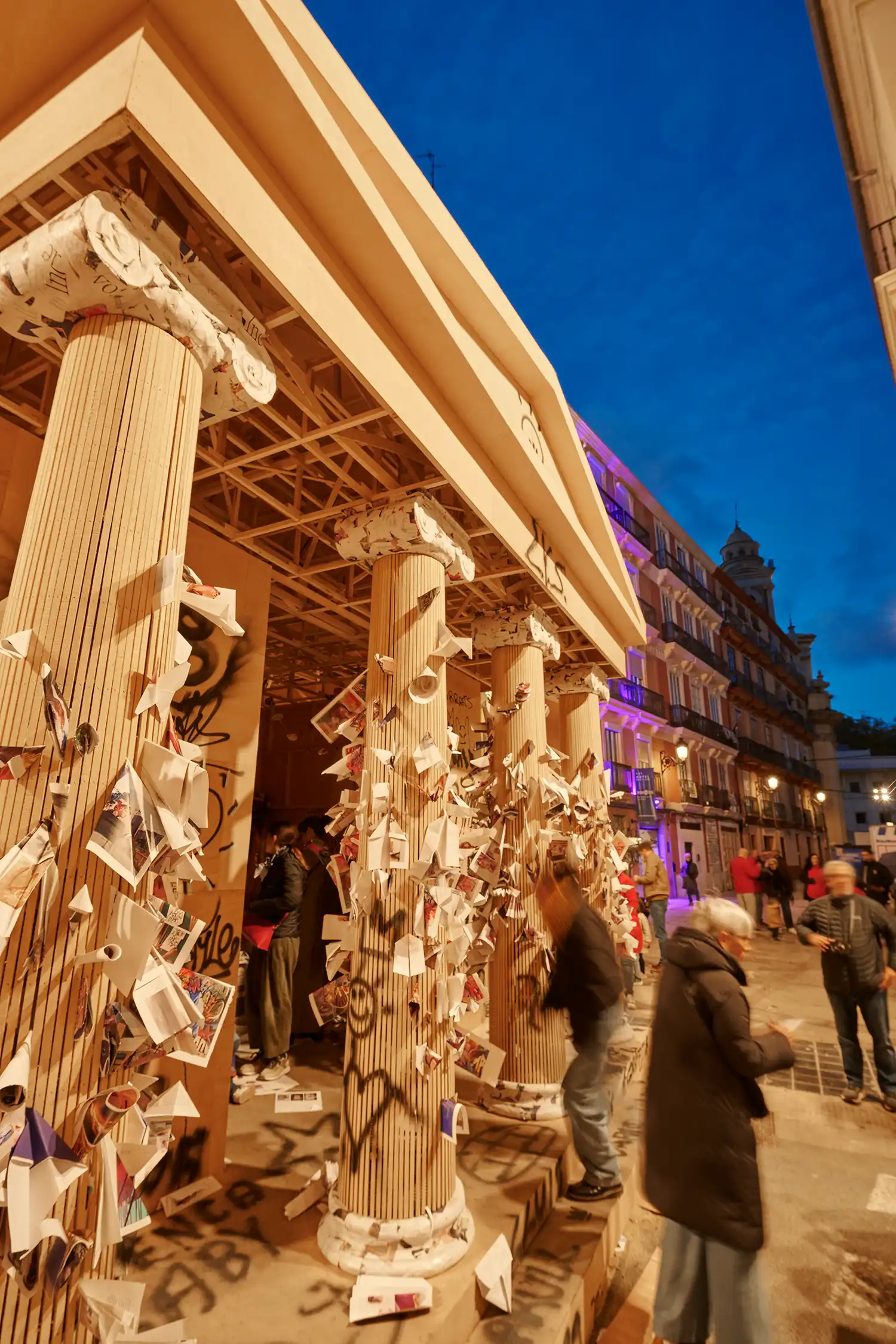
The living monument. Throughout the four days of the festival, the temple functioned as a participatory installation. Visitors were invited to leave their own offerings, using the same recycled paper that formed the structure’s bones. What began as floral tributes and notes evolved into a collective intervention, as the public began to inscribe wishes and reflections directly onto the columns. This transformation mirrored the evolution of a city wall, where the “clean” architecture is slowly reclaimed by the voices of the community, turning the temple into a living archive of Valencian sentiment.
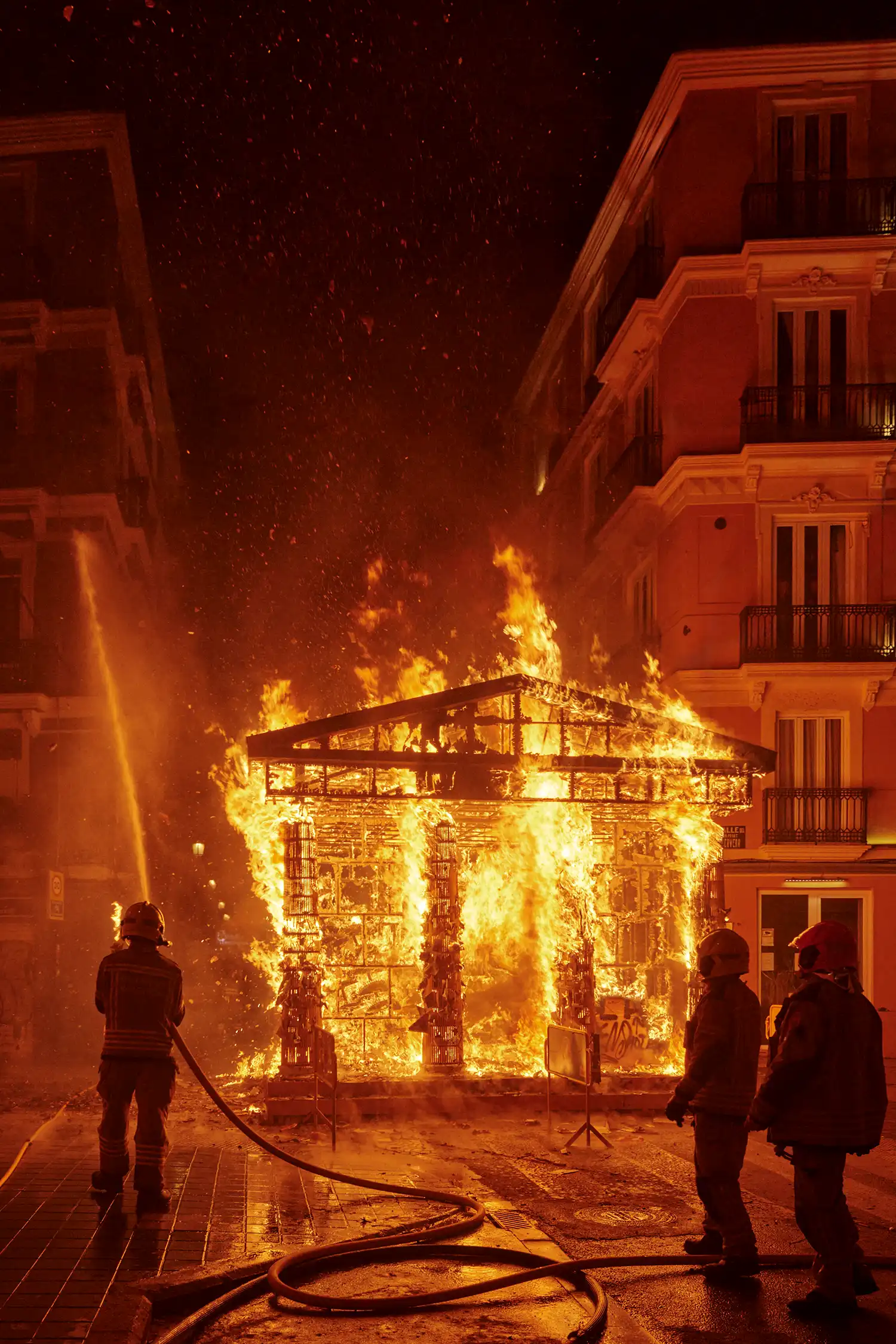
Ritual through fire. The lifecycle of “Per ofrenar” reached its inevitable conclusion on the night of March 19 during La Cremà. In a dramatic display of “auto-da-fé,” the wooden structure was consumed by fire, returning the meticulous craftsmanship of a year’s work to smoke and ash. This ritualistic destruction is central to the duo’s philosophy; it emphasizes that the value of the work lies in its experience and its social impact rather than its permanence. The project’s commitment to an ecological approach was recognized with the First Prize in the Sustainable Fallas category, proving that monumental scale does not require environmental cost.

A global shift toward timber. This Mediterranean intervention arrives at a time when the international design community is increasingly looking toward wood as a primary medium for temporary pavilions and emotional spaces. Whether it is the sustainable use of invasive species seen in the Aranyani Pavilion in New Delhi or the sculptural wooden wonders developed by MVRDV in Taiwan, there is a shared global movement toward material honesty and carbon-conscious construction.
The poetry of the temporary. PichiAvo’s temple shares a spiritual DNA with other recent explorations in timber, such as the water-focused Compluvium Pavilion in Normandy or the acoustic resonance of PPAA’s installation for Mextrópoli. Each of these structures utilizes wood to create a sensory experience that is grounded in its specific geography yet universal in its appeal. By burning their temple, PichiAvo has contributed a final, searing chapter to this narrative, reminding us that some of the most profound spatial experiences are those designed to disappear.
The legacy of the ash. As the embers of “Per ofrenar” cooled, the project left behind a blueprint for how traditional festivals can evolve through contemporary artistic intervention. By merging the precision of Greek proportions with the raw energy of the street, PichiAvo has demonstrated that the most powerful offerings are those that engage the public in a dialogue about history, sustainability, and the beauty of the fleeting moment. The temple is gone, but the shift it represents in the cultural landscape of Valencia remains.