

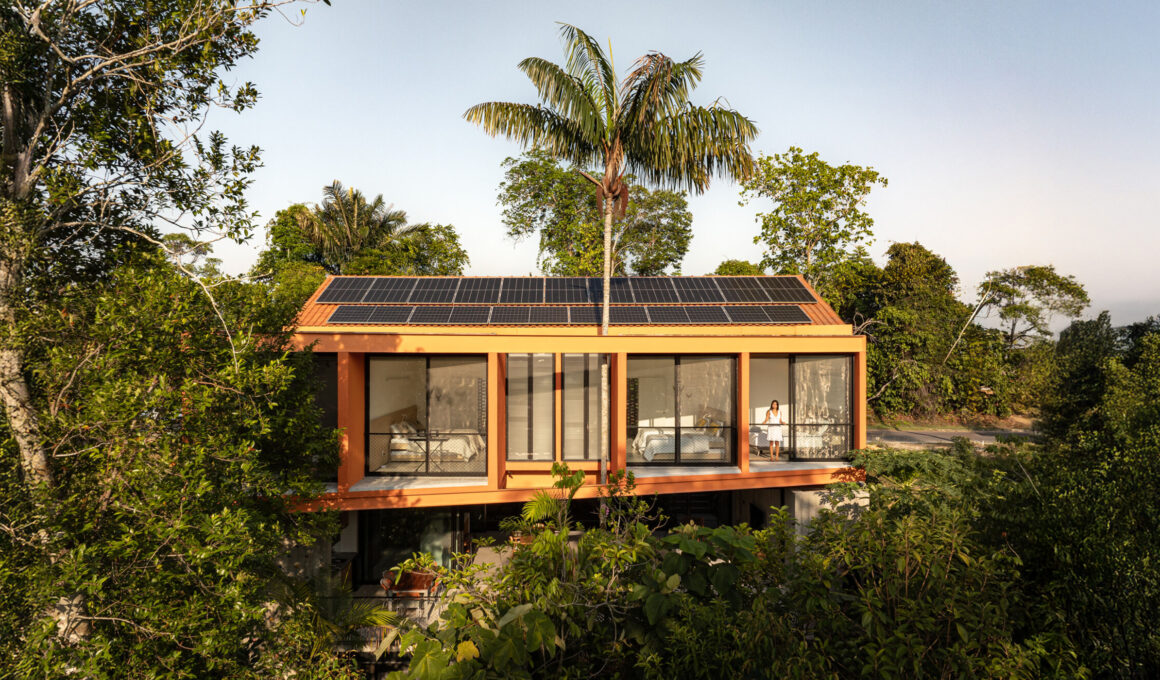
On the highest perch of a residential enclave in Manaus, Brazil, the Pupunha House emerges not just as a structure, but as a deliberate and immersive conversation with the surrounding Amazon rainforest. Designed by Laurent Troost Architectures, with a pioneering landscape vision by Hana Eto Gall Landscape, the core principle of this residence was revolutionary: to cede the spotlight to the garden, establishing it as the true protagonist of the home. This crucial dialogue softens the traditional rigid boundaries separating the built environment from the natural world.

Situated strategically adjacent to a permanent conservation area, the design by Laurent Troost had to be deeply respectful of its privileged yet fragile context. The resultant form is an essay in sensitive Tropical architecture, engineered to allow the home to seemingly float above the forest canopy. This elevated positioning honors the terrain while maximizing views and ensuring minimal disruption to the existing ecosystem, creating a lightweight yet impactful piece of residential design that respects its footprint.

The experience of approaching the Pupunha House is conceived as a deliberate sensorial experience. Visitors embark on a winding path entirely immersed in dense tropical vegetation. Large-scale foliage, meticulously managed natural shade, and rich textures work in concert to forge a fresh, humid microclimate. This carefully crafted journey prepares the senses, acting as a living transition zone that ensures the external environment is felt deeply before the architecture is even fully entered.

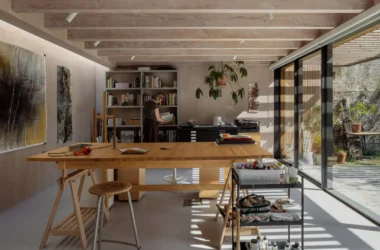
This green immersion does not halt at the facade. Inside, the architecture, complemented by interiors by Chris Coimbra, seamlessly guides greenery through the circulation routes. This calculated inclusion integrates nature into the fabric of everyday life, ensuring that even within the private spaces of the Pupunha House, the constant presence of the outside is felt. The strategic blurring of this boundary is central to the firm’s innovative approach to architecture and interior design.

The Hana Eto Gall Landscape implementation strategy is a masterclass in regional sustainable design. It involved the careful preservation of existing vegetation while introducing new species chosen for their ecological and aesthetic value. Prioritizing native and climate-adapted plants—such as Calatheas, Heliconias, banana trees, and various palms—enhances comfort, privacy, and, crucially, supports local biodiversity. Complementing this is a sophisticated automated irrigation system, ensuring the garden’s vitality while respecting the inherent demands of the equatorial climate.

Ultimately, the Pupunha House by Laurent Troost stands as a powerful model for contemporary Brazilian living. It is a home where advanced residential architecture meets the rugged, lush reality of the Amazon rainforest, proving that Tropical architecture can achieve high design standards while simultaneously nurturing its ecological surroundings. The success of this project lies in its humility—its willingness to elevate the landscape and let the garden truly define the space.