




Japanese automotive brand Suzuki has unveiled an updated iteration of its four-legged mobility concept, designed to navigate vertical urban obstacles like stairs using a modular quad-based architecture.Presented at the Japan Mobility Show in Tokyo, the Suzuki MOQBA 2 refines the robotic chassis system first introduced in 2023, offering a more versatile solution for last-mile transport in dense city environments where conventional wheels often fail.
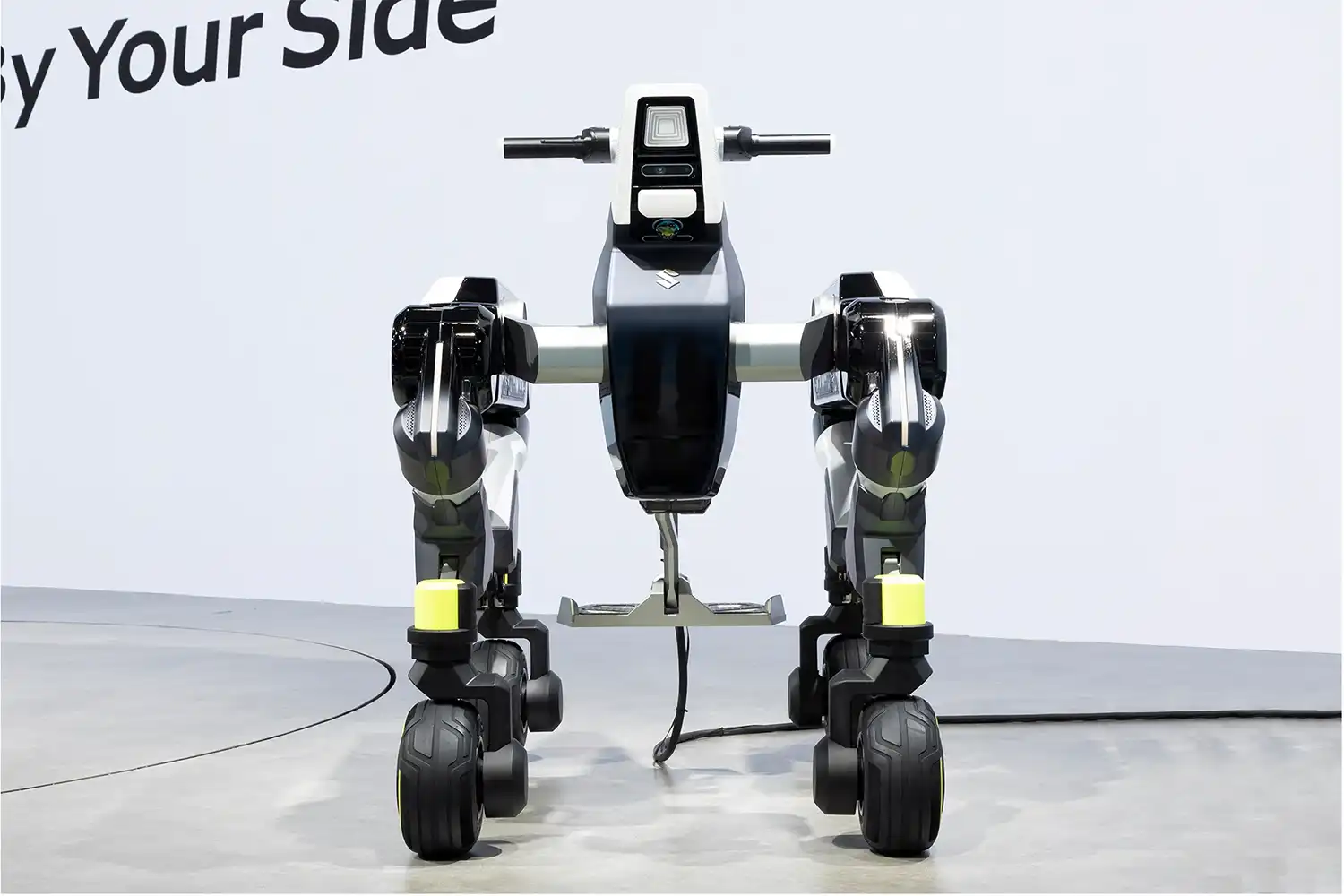
The vehicle distinguishes itself from standard electric scooters through its bio-mimetic design, which features four independent articulated legs terminating in motorised wheels. While the Suzuki MOQBA 2 operates as a smooth-rolling vehicle on flat asphalt, its “walking” capability allows it to articulate its limbs to step over debris, enter buildings without ramps, and maintain a level seat for the rider while ascending steep gradients. This dual-mode functionality addresses a critical gap in accessible design, targeting “transportation refugees” who are currently limited by the lack of barrier-free infrastructure in older metropolitan areas.
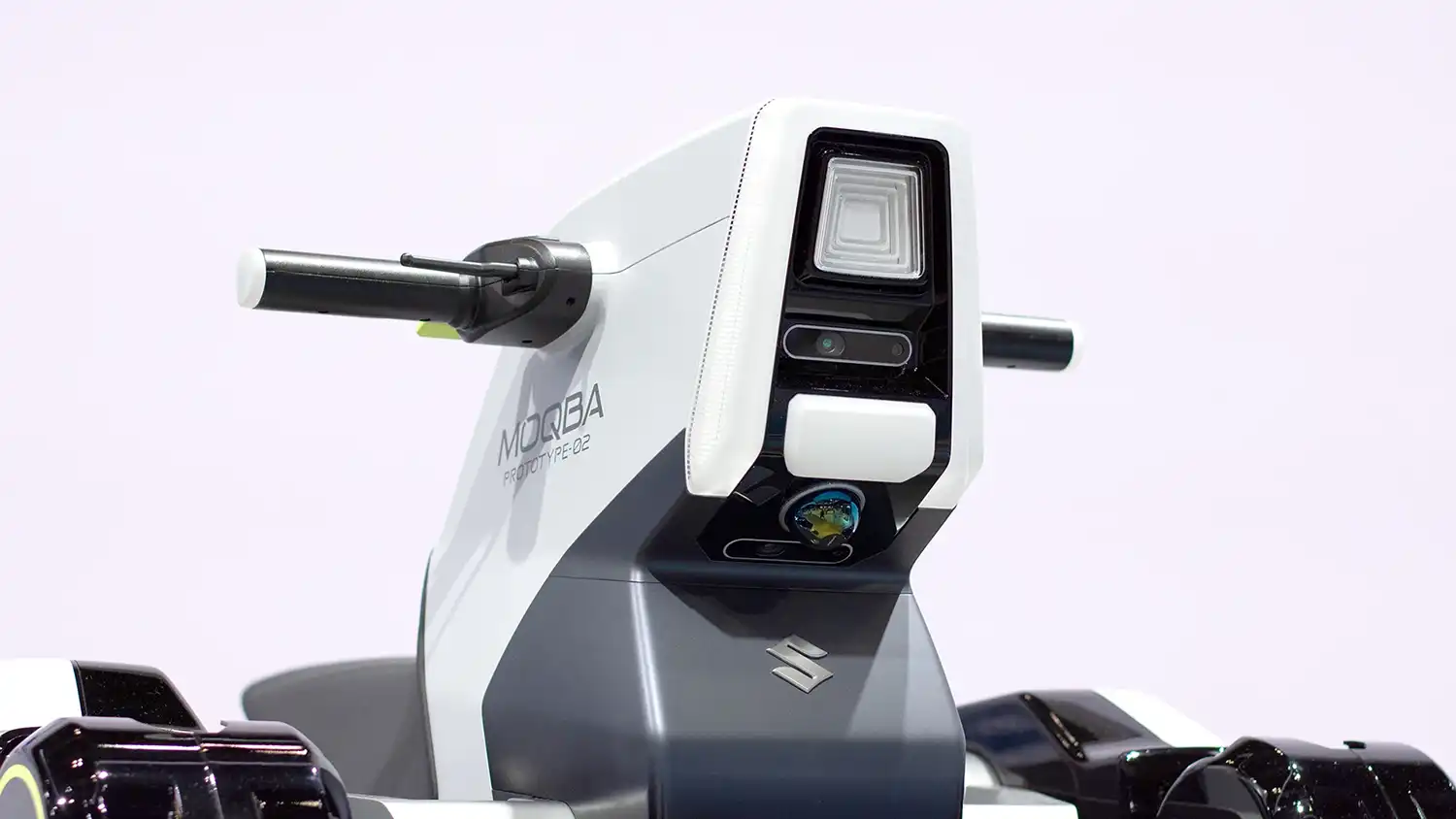
Central to the updated prototype is a new focus on material innovation and commercial viability. Developed in collaboration with chemical giant BASF, the Suzuki MOQBA 2 utilises advanced thermoplastic polyurethanes (TPU) and sustainable engineering plastics to reduce weight while maintaining the structural rigidity necessary for the quadruped mechanism. This material shift not only improves the vehicle’s energy efficiency—offering a reported range of 80 kilometres on a single charge—but also softens the visual impact of the machine, moving away from a purely industrial aesthetic towards a more consumer-friendly, product design language suitable for public spaces.
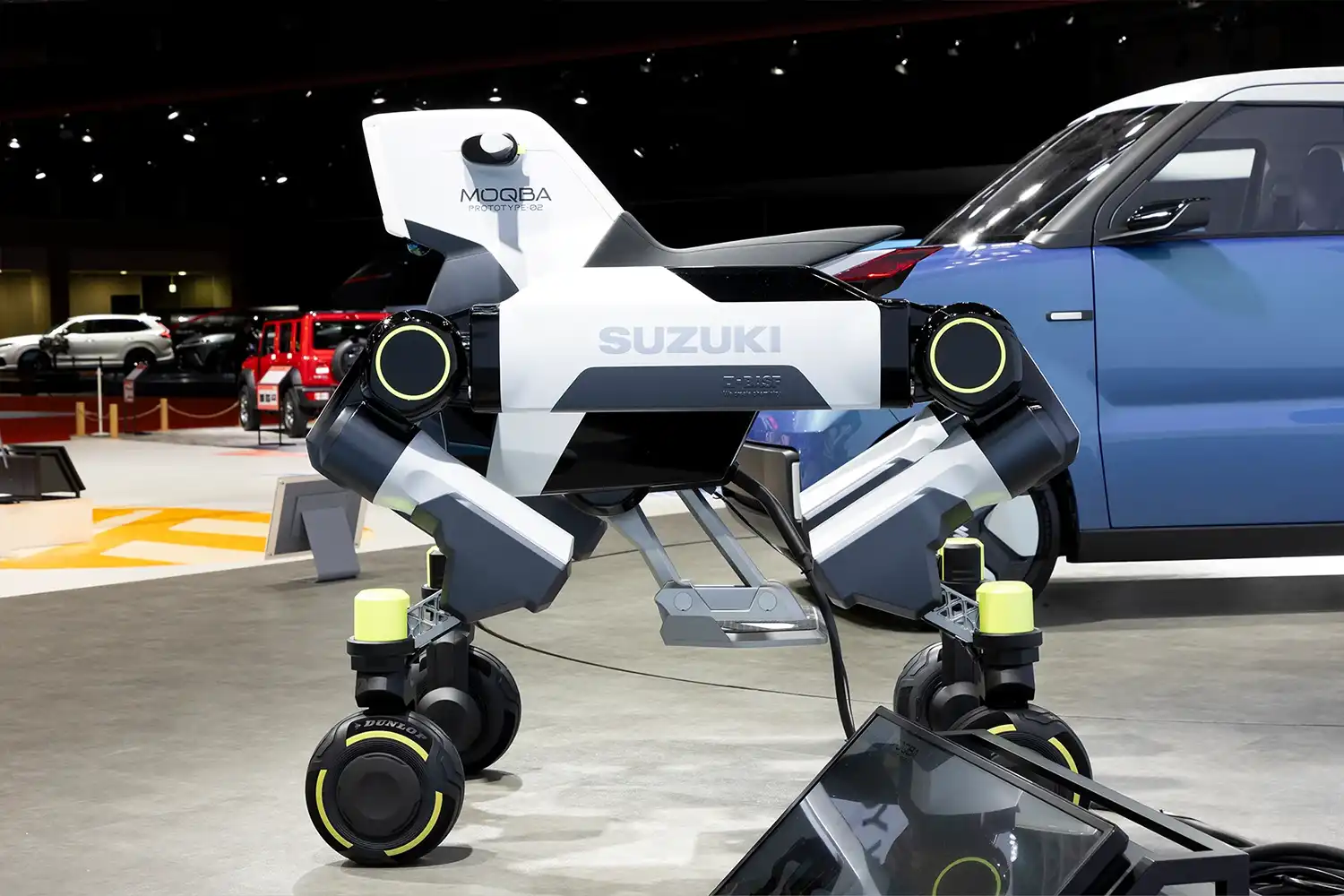
True to its name—Modular Quad Based Architecture—the system is not a singular vehicle but a foundational platform compatible with various functional attachments. At the Tokyo exhibition, Suzuki demonstrated three distinct configurations: a Chair Mode for personal mobility assistance, a “Standing” or motorcycle type for active commuting, and a utilitarian delivery robot specification. The latter replaces the passenger seat with a secure racking system, envisioning a future where autonomous quadrupeds can deliver heavy parcels directly to the doorsteps of walk-up apartments, bypassing the limitations of current delivery drones or wheeled bots.
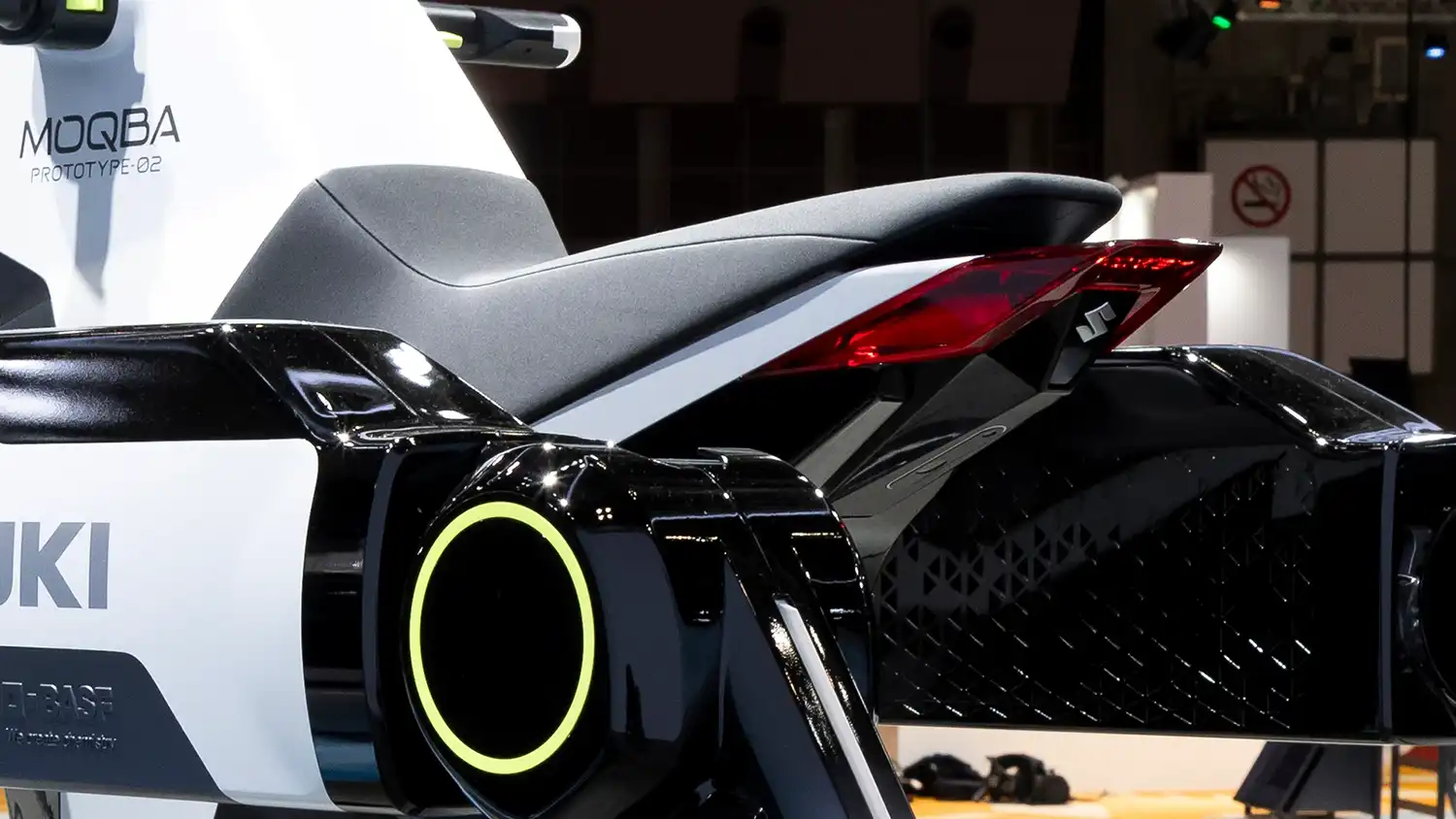
The concept also prioritises safety through an advanced self-balancing algorithm that actively adjusts the robot’s posture in real-time. This robotics technology ensures that the payload—whether a human passenger, a medical stretcher in emergency scenarios, or fragile cargo—remains perfectly horizontal regardless of the terrain beneath the wheels. By integrating this level of stability, Suzuki aims to position the MOQBA 2 as a legitimate alternative to retrofitting expensive elevators or ramps in aging urban infrastructure.
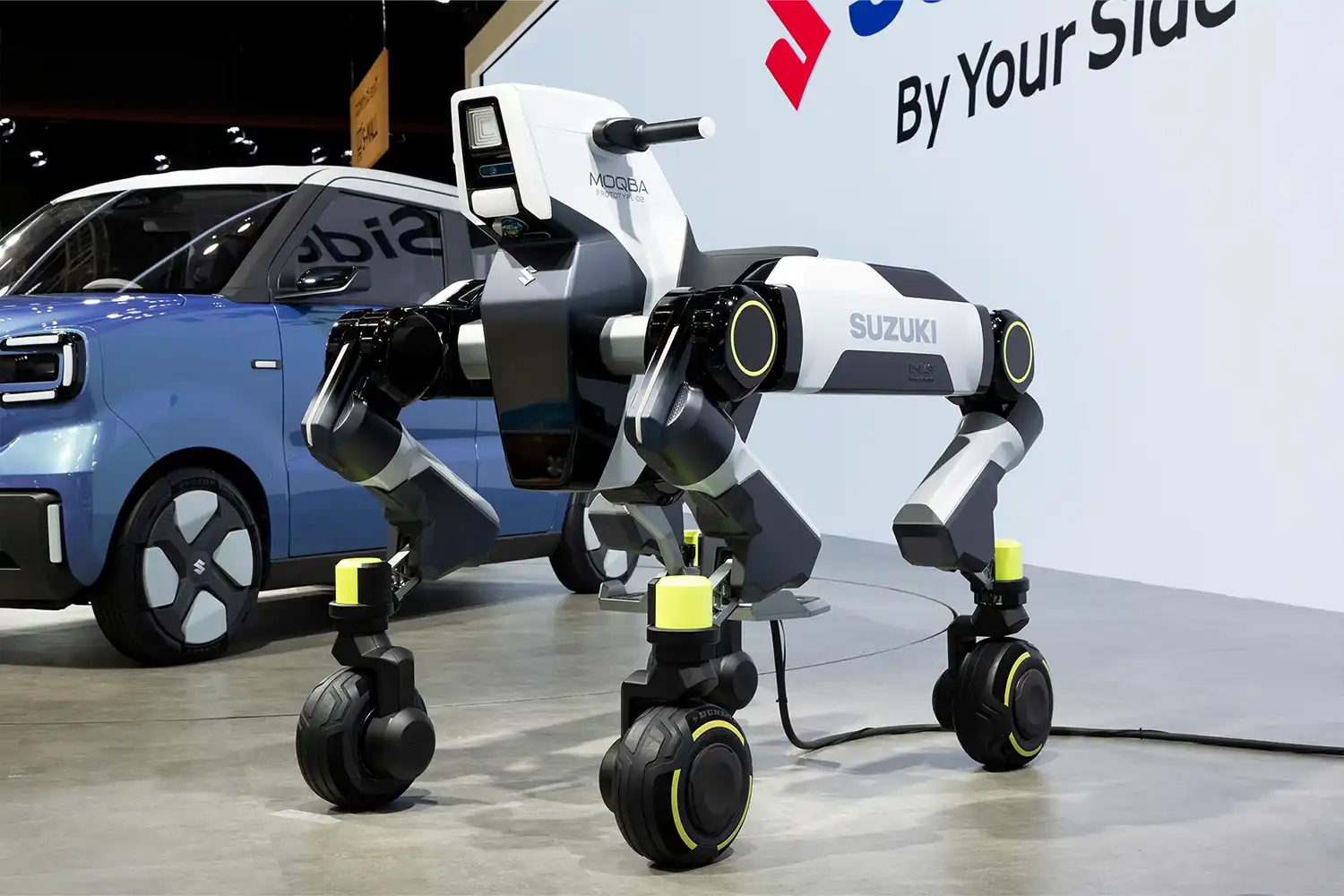
While still a concept, the Suzuki MOQBA 2 signals a broader shift in the automotive industry towards “new mobility” solutions that blur the line between vehicles and walking robots. By treating the city as a continuous, three-dimensional surface rather than a 2D plane of roads, Suzuki offers a glimpse into a future where personal mobility is no longer dictated by curb height. The project stands as a testament to how automotive engineering can pivot to address specific societal challenges, offering a technical workaround to the architectural rigidity of the modern built environment.