


The Newman stands as a sophisticated tribute to the bohemian spirit of Fitzrovia, where London-based studio Lind + Almond has meticulously woven the district’s literary and artistic heritage into a contemporary 81-room hotel that functions as a social anchor for both the local community and the modern nomad.
A conceptual bridge to the past. The project is rooted in the idea of “Fitzrovian” identity—a character defined not by grand monuments, but by the intellectual outsiders and creative mavericks who frequented the area’s storied pubs and salons. Rather than imposing a generic luxury aesthetic, Lind + Almond opted for a narrative-driven approach that feels grounded and enduring. The result is an environment that prioritizes a contextual narrative over fleeting trends, ensuring the building feels like a long-standing institution rather than a new arrival.
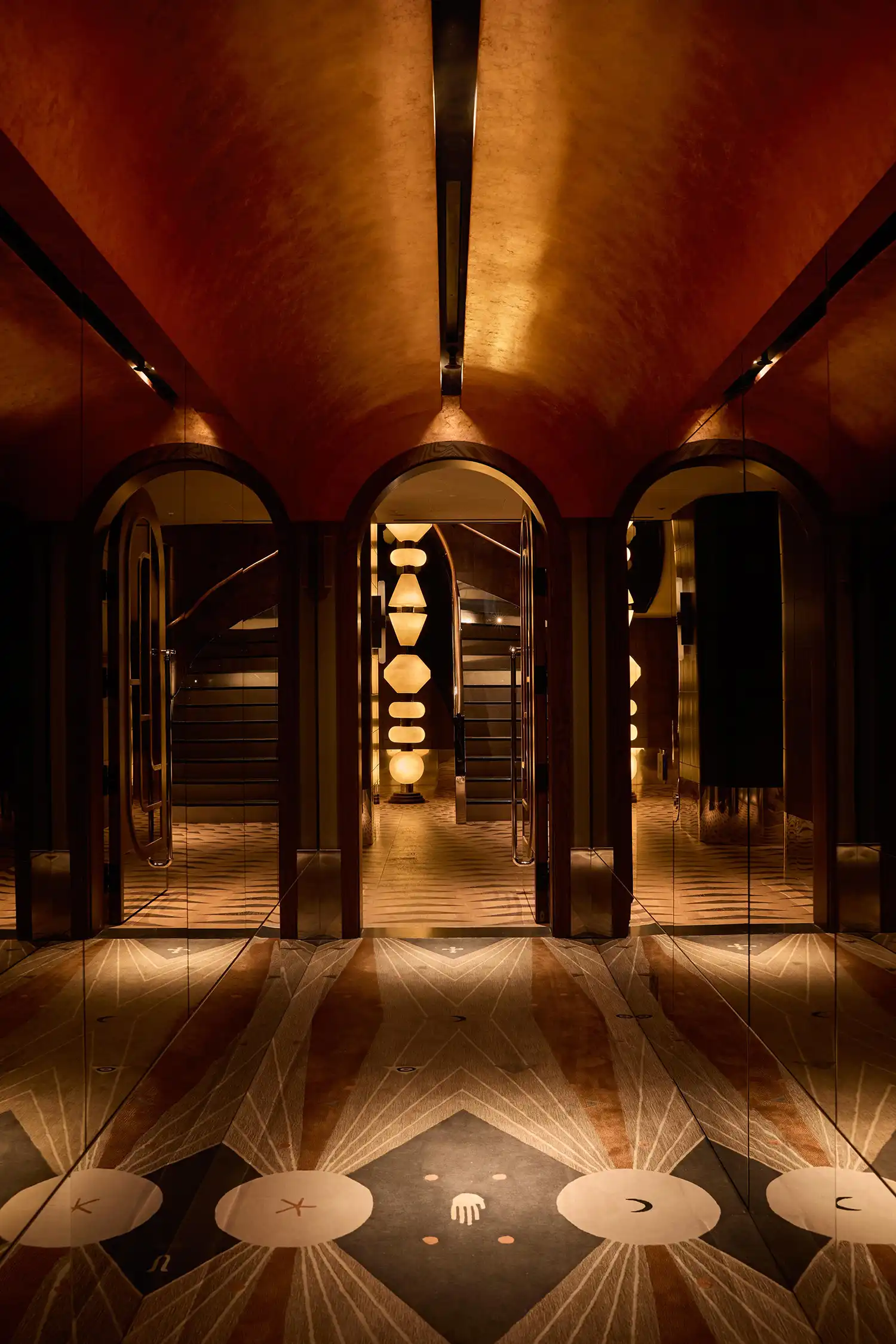
Materiality and the sensory arrival. Upon entering, the transition from the bustling London streets to the interior is softened by an atmosphere of quiet refinement. The reception area utilizes rich burr wood panelling to create a tactile, warm enclosure that immediately grounds the visitor. This choice of timber provides a sensory depth, offering a scent and texture that suggests longevity. It is a space designed for pause, moving away from the high-velocity check-in experiences of larger chains toward a more intimate, residential scale.
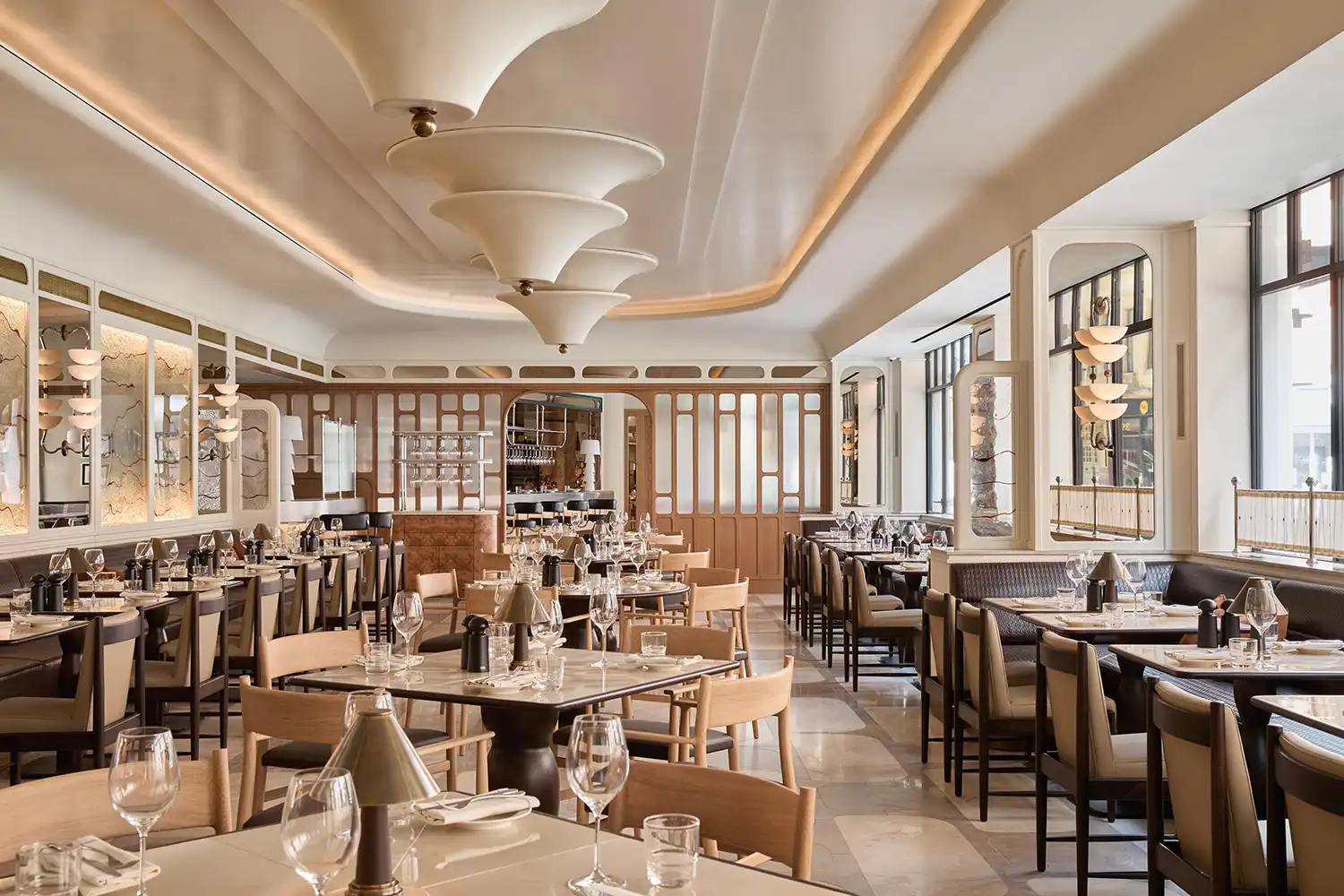
The pulse of the ground floor. At street level, the Angelica Brasserie acts as the hotel’s public heart, mirroring the neighborhood’s tradition of social dining. The layout encourages a seamless flow between breakfast meetings and late-night supper, with an aesthetic that balances refined elegance and effortless ease. The furniture and lighting are curated to foster conversation, echoing the historic exchange of ideas that once defined this specific pocket of London.
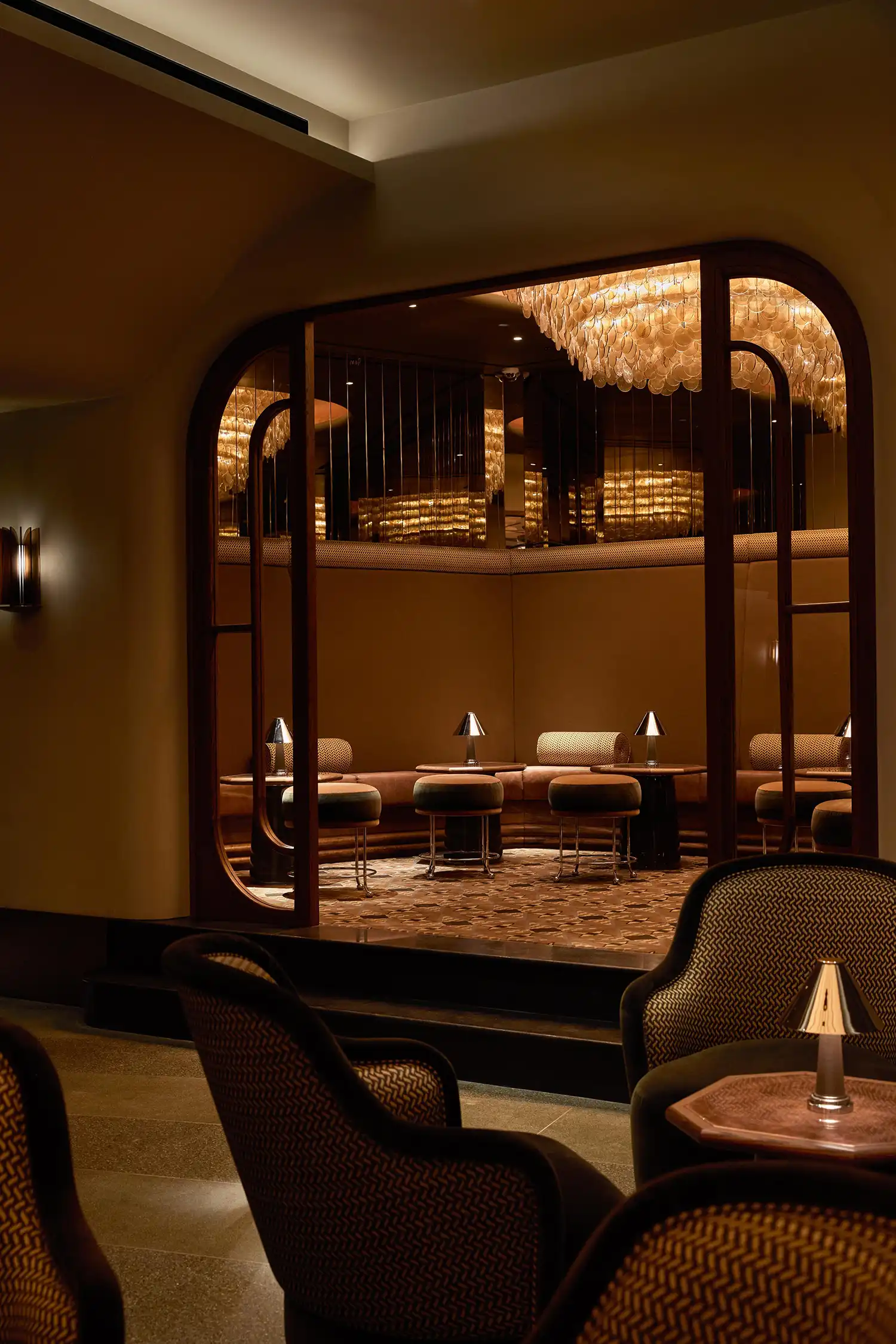
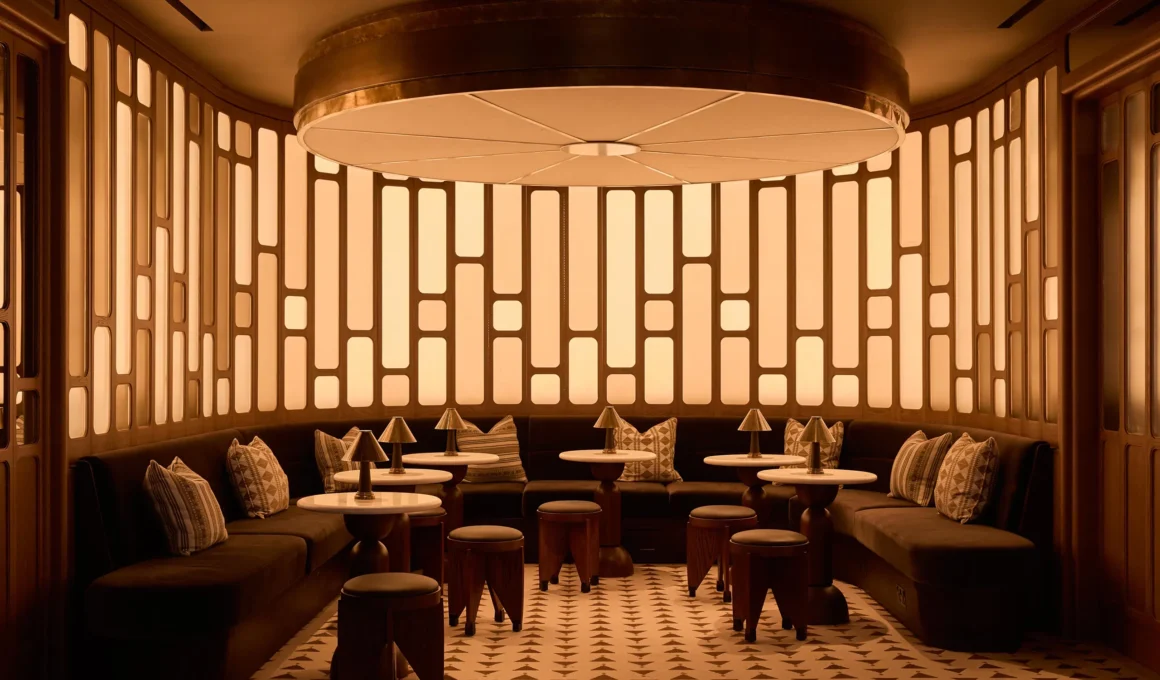
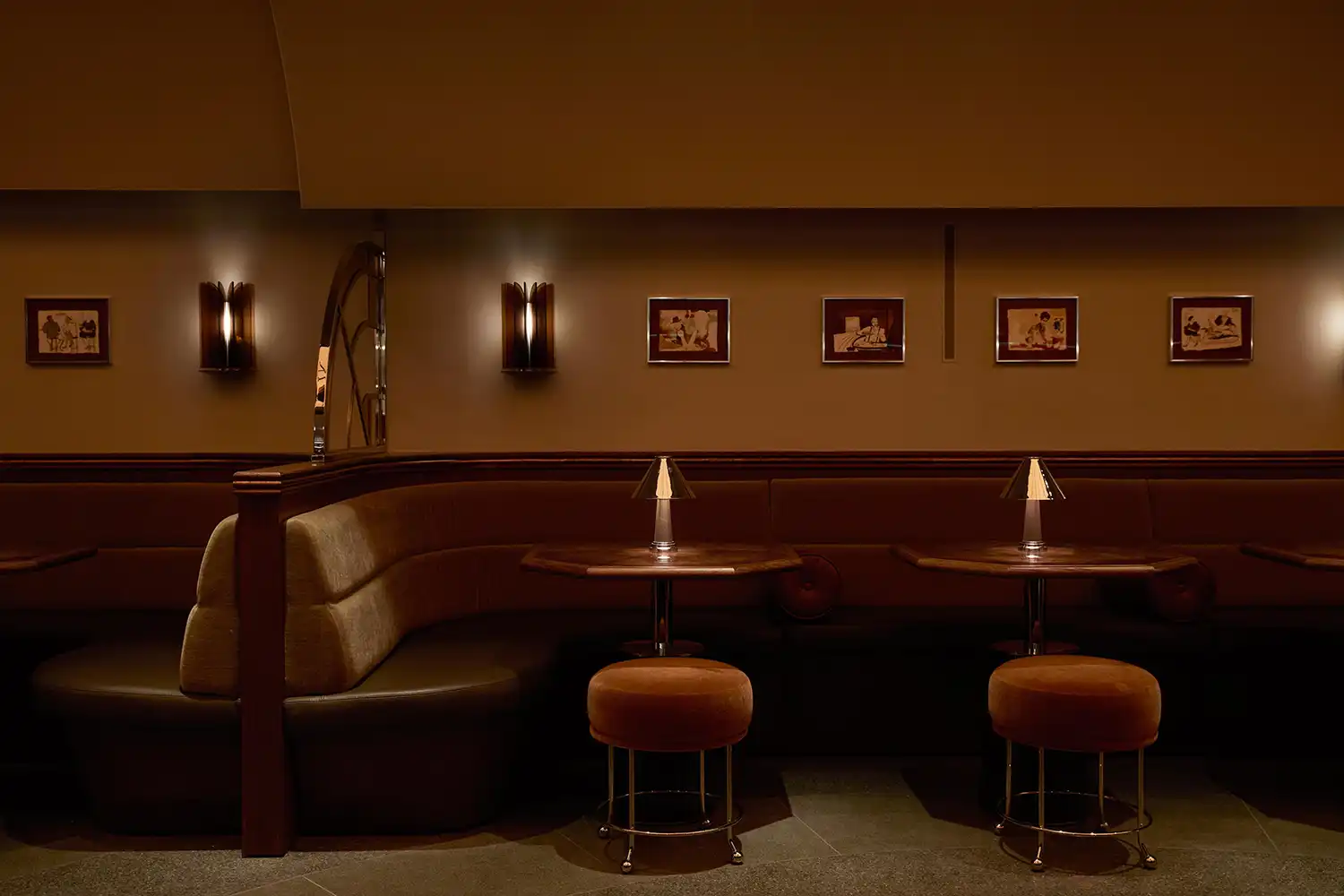
Subterranean avant-garde expressions. Descending into the Gambit Bar, the tone shifts toward the eclectic. Here, the studio has fragmented Art Deco influences and reassembled them through a lens of avant-garde abstraction. It is a nod to the “mystics and dandies” of Fitzrovia’s history. The lighting is moodier, and the palette more saturated, celebrating the area’s idiosyncrasies. This space captures the “spirited character” mentioned by co-founder Richy Almond, providing a playful contrast to the more restrained public areas upstairs.
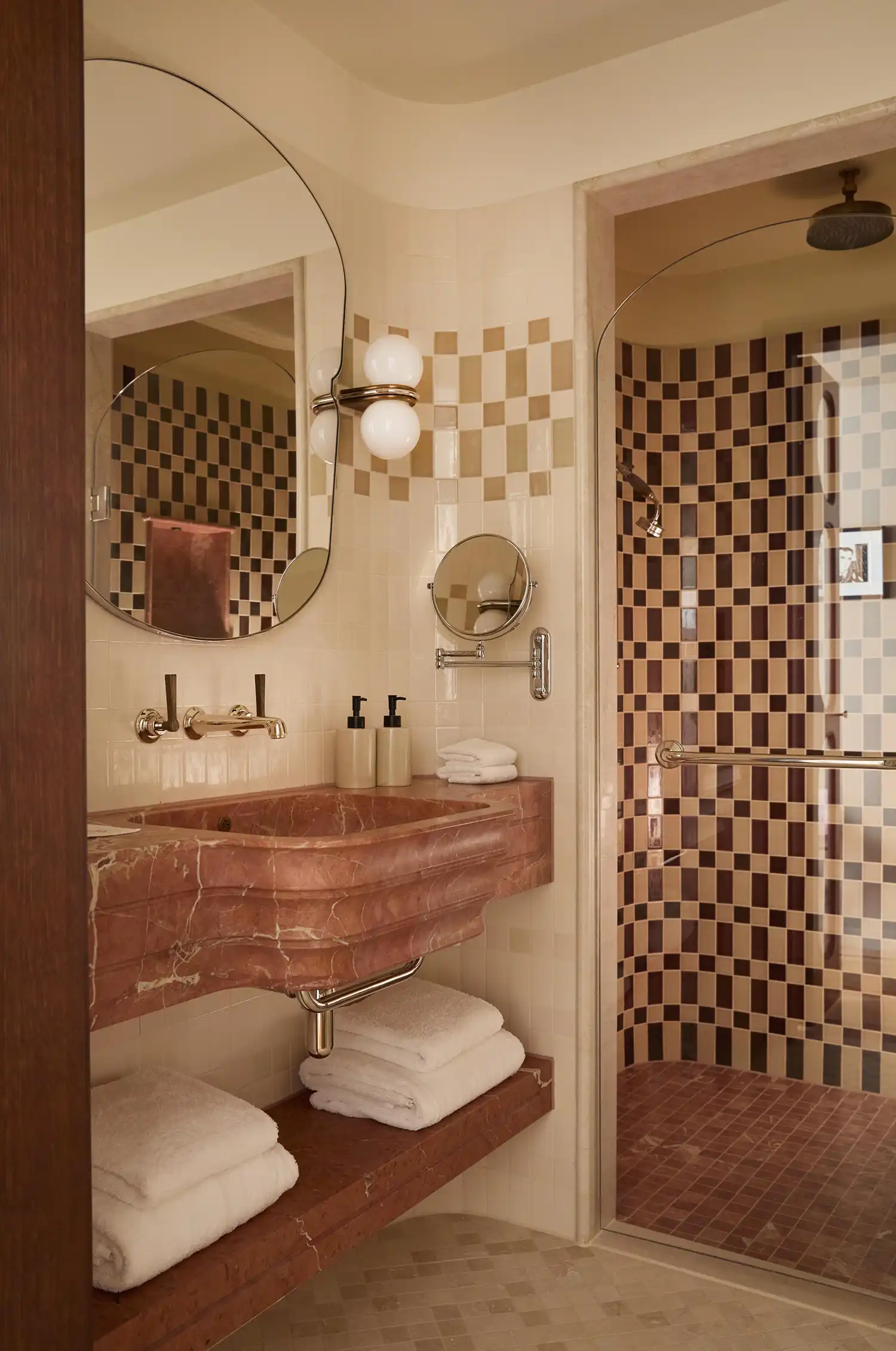
Geometric echoes in the private quarters. The guest rooms draw specific inspiration from Nancy Cunard, a bohemian icon of the district. The palette is a sophisticated mix of burnt red, petrol blue, and chocolate leather, referencing the architectural vernacular of Old England. In the en-suite bathrooms, the logic becomes more graphic; bespoke tiling arrangements reinterpret the glazed brick façades of the Victorian era. These rhythmic surfaces and metal finishes introduce a subtle eccentricity, ensuring that even the most functional spaces have a distinct point of view.
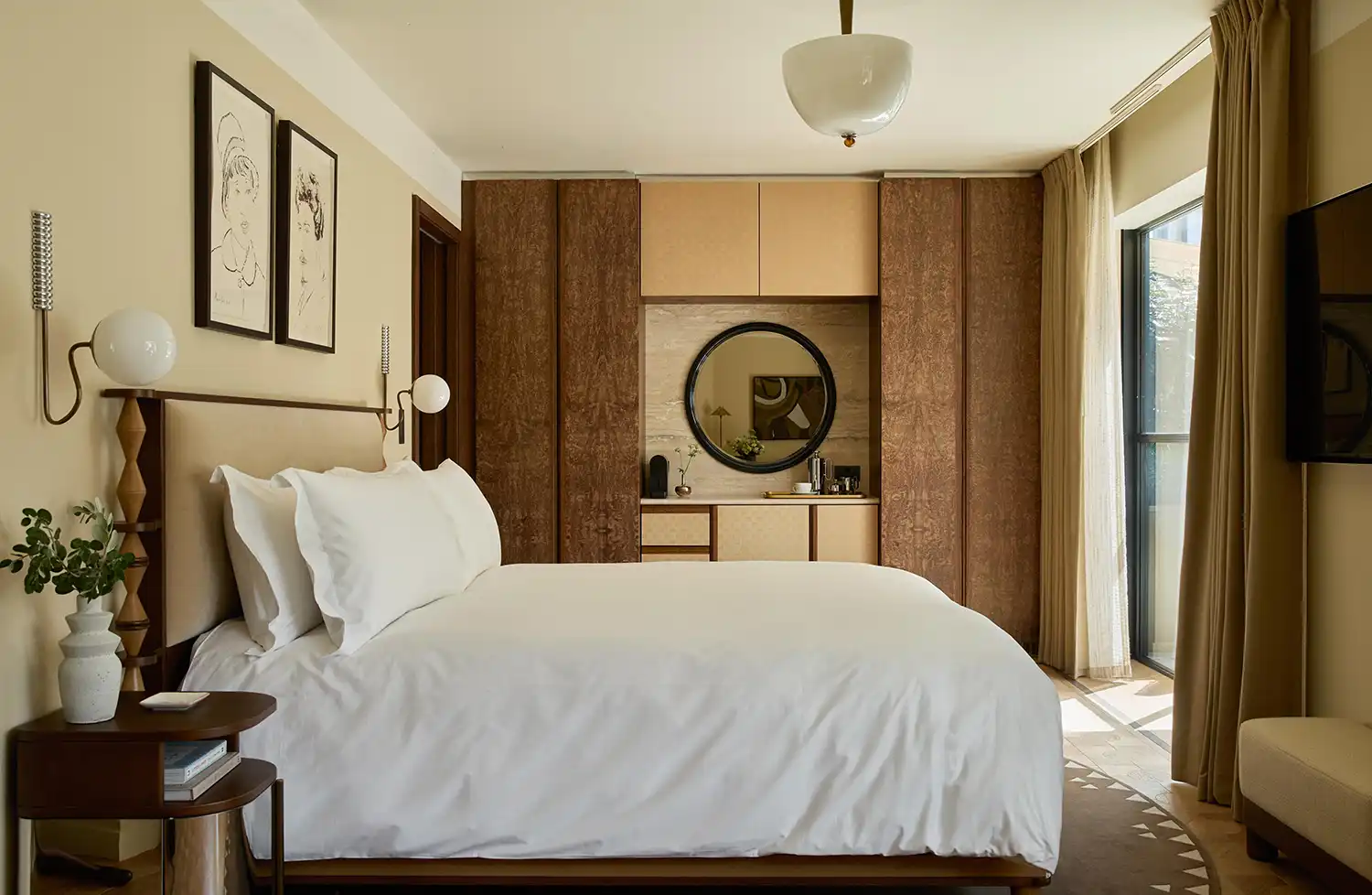
Artistry in the details. Creativity is embedded into the very geometry of the rooms. Sweeping curves in the joinery and furniture reference the fluid pen strokes of the illustrators and writers who once populated the local drinking dens. The walls also serve as a rotating gallery for the next generation of local artists, bridging the gap between historical inspiration and contemporary production. This commitment to the local creative economy reinforces the hotel’s mission to be “of” its location rather than just “in” it.
Refined heights and industry benchmarks. Crowning the building is the Penthouse Suite, featuring an expansive terrace that offers a panoramic perspective of the London skyline. It serves as a layered, quiet retreat that avoids the clichés of “ultra-luxury” in favor of thoughtful warmth. As we look toward the evolution of urban hospitality, projects like The Newman represent the gold standard for site-specific storytelling. For those seeking more inspiration on properties that successfully blend heritage with modern innovation, our curated list of the best design hotels 2025 highlights how the industry is pivoting toward this more authentic, human-centric model.