



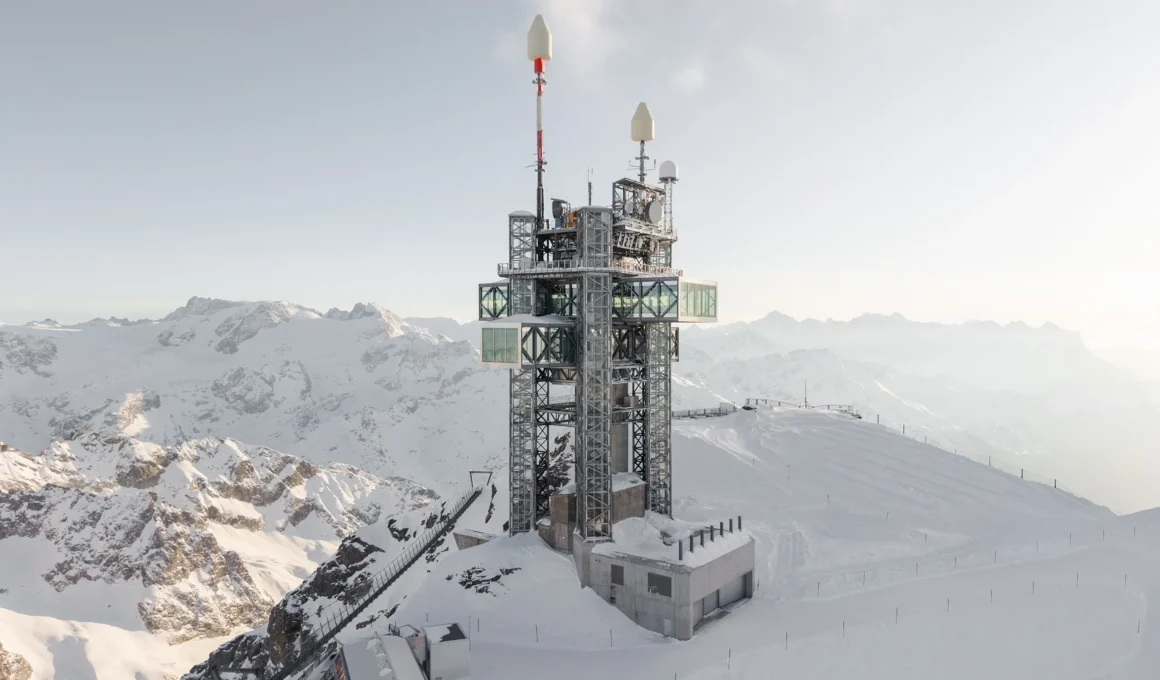
When Herzog & de Meuron was commissioned in 2017 to reimagine the summit infrastructure of Mount Titlis in Engelberg, Switzerland, the firm’s most consequential decision was not what to build — it was what to keep. The 1980s Swiss Army antenna tower, a telecommunications relic anchored deep into the limestone at over 3,000 metres above sea level, was retained as the structural spine of what is now the TITLIS Tower: a 76-metre-high landmark that opened in early June 2026 as the first completed element of a CHF 150 million masterplan. In an era when architectural ambition is routinely equated with clean-slate construction, the Basel firm’s refusal to demolish what already existed is the project’s most precise — and least discussed — argument.
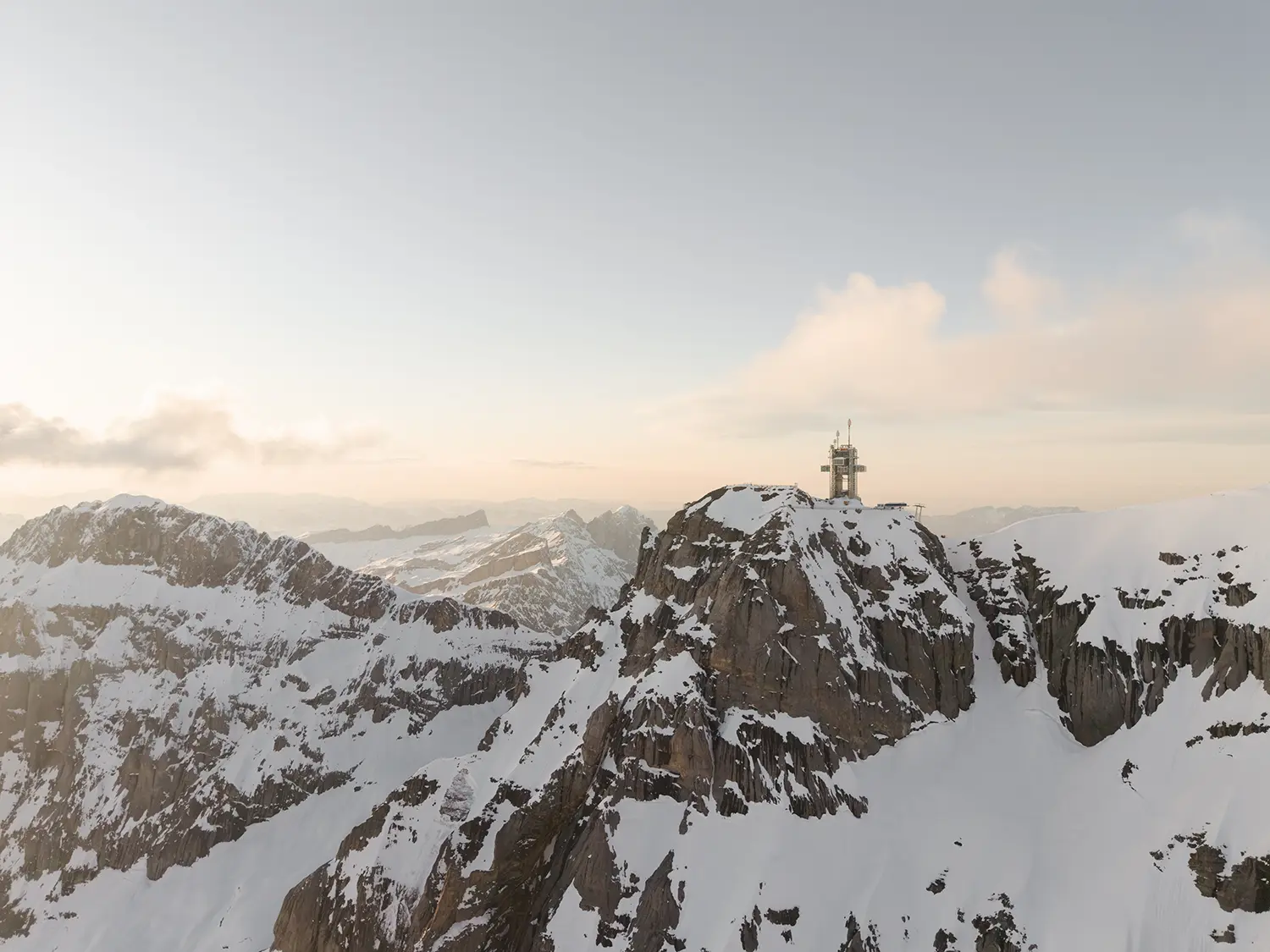
The decision to retain was not sentimental. An independent structural assessment of the existing mountain station concluded that it could not be adequately converted to resolve the fundamental problems of circulation, orientation, and capacity that had accumulated through decades of organic addition. That building is being demolished and replaced. The antenna tower passed the same assessment on different terms: its concrete base, anchored deep into stable rock, provided a foundation that would have been extraordinarily difficult to replicate at altitude. Its filigree steel framework, built to withstand extreme alpine conditions, remained structurally sound. The underground tunnel connecting tower to mountain station — built in the same mid-1980s construction campaign — provided a weather-protected circulation route that no new building could have delivered more efficiently. Herzog & de Meuron’s starting point, as their project description notes, was precisely this: “the resource-conscious development of the existing structures.” Retention was the project’s first and most load-bearing design decision.
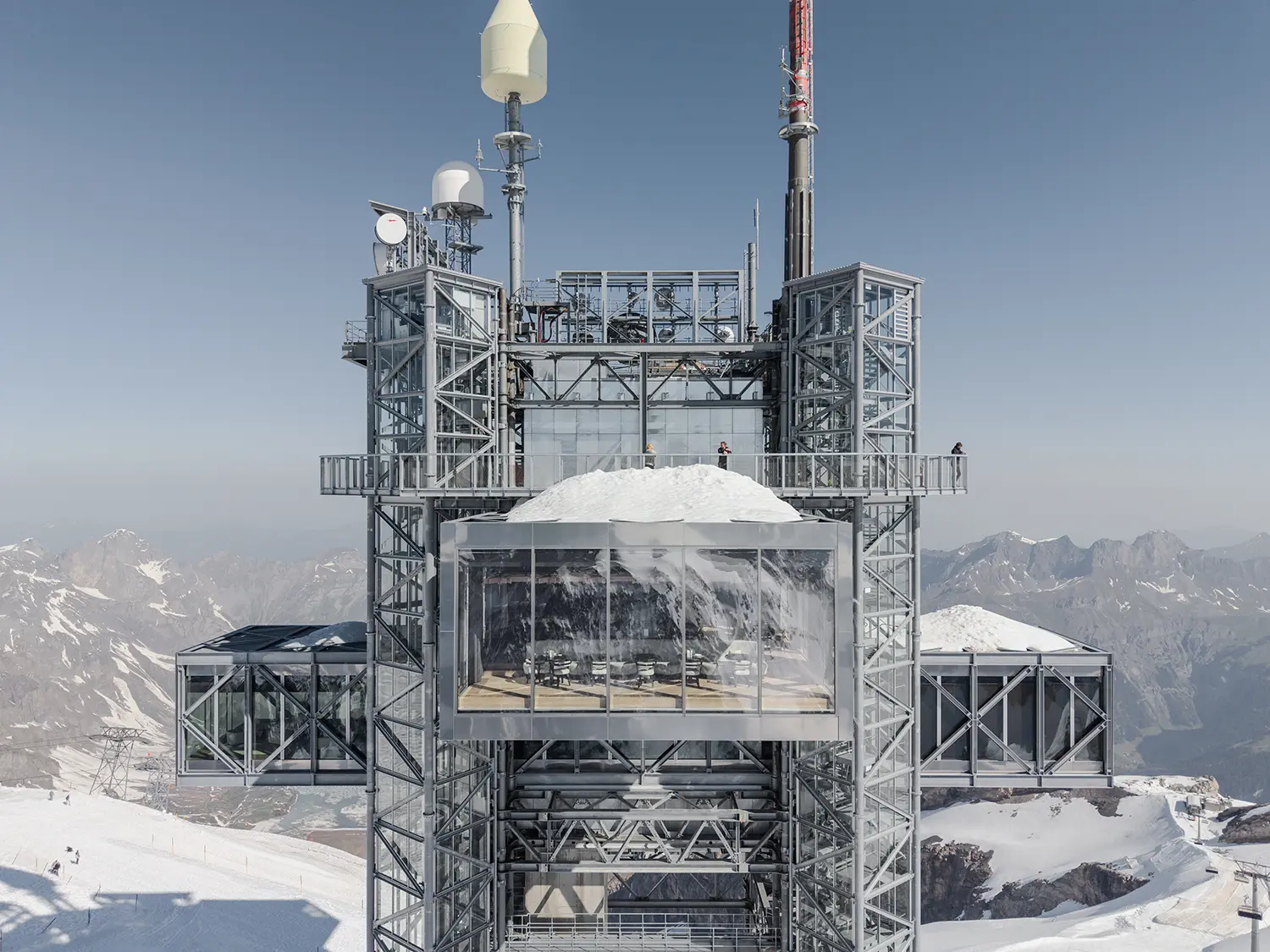
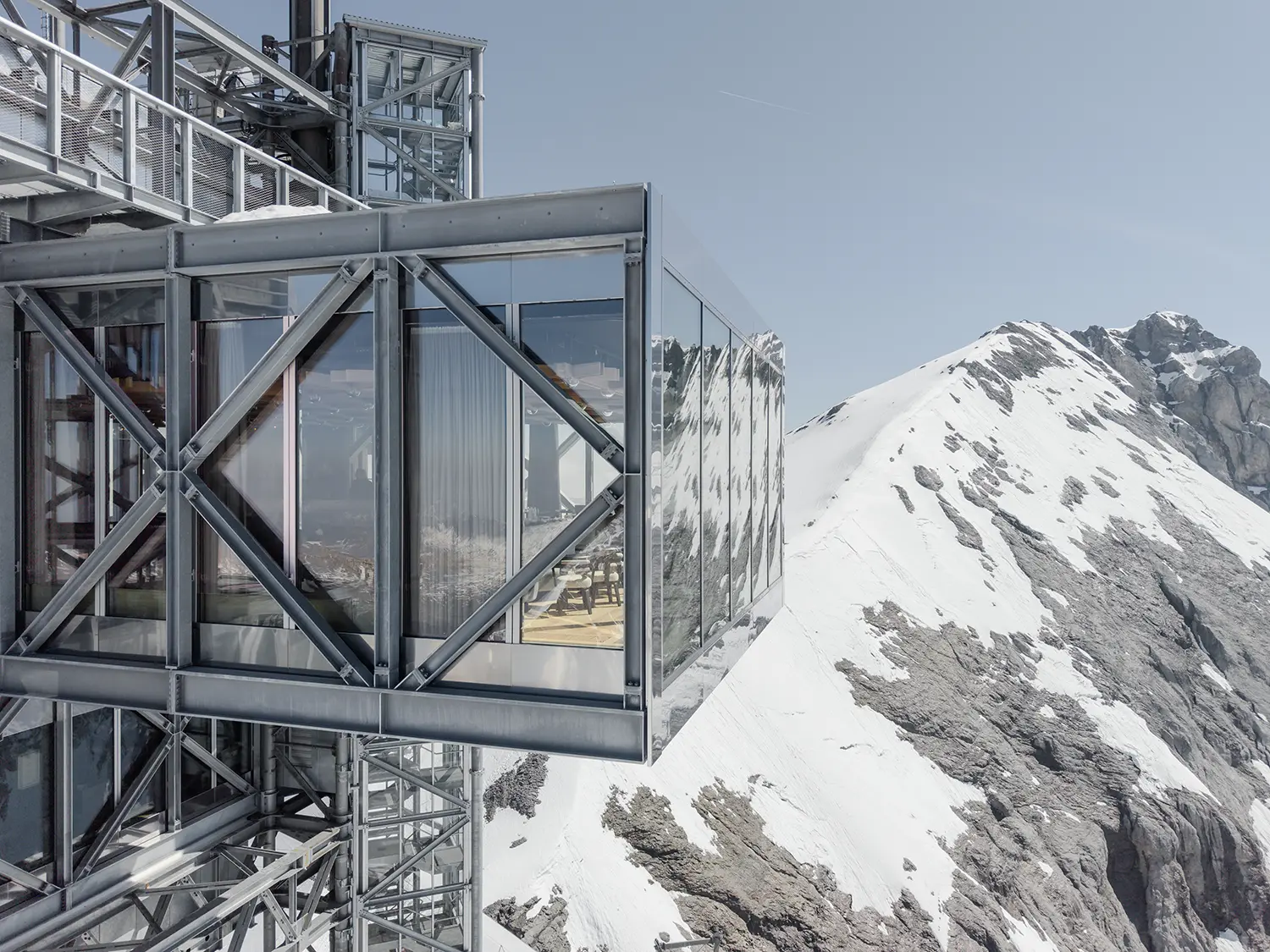
What the architects added is legible as extension, not replacement. Two fully glazed horizontal volumes — the lower housing a retail area, the upper a 120-seat restaurant — extend in far-reaching cantilevers from the existing tower structure, overlapping in a cross-shaped arrangement that the project’s communication material has framed as a reference to the Swiss cross. The reference is charming and not inaccurate, but it is also structurally determined rather than symbolically intended: the cross configuration is the natural result of cantilevering two volumes in perpendicular directions from a central tower. The form follows from the constraints of the existing structure and the ambition of the views, not from a desire to embed national symbolism at 3,020 metres. Four vertical circulation towers — two containing lifts, two serving as escape stairs — complement the existing steel columns at each corner, leading visitors from the enlarged concrete base all the way to the publicly accessible viewing platform at the top, the Horizon Deck.
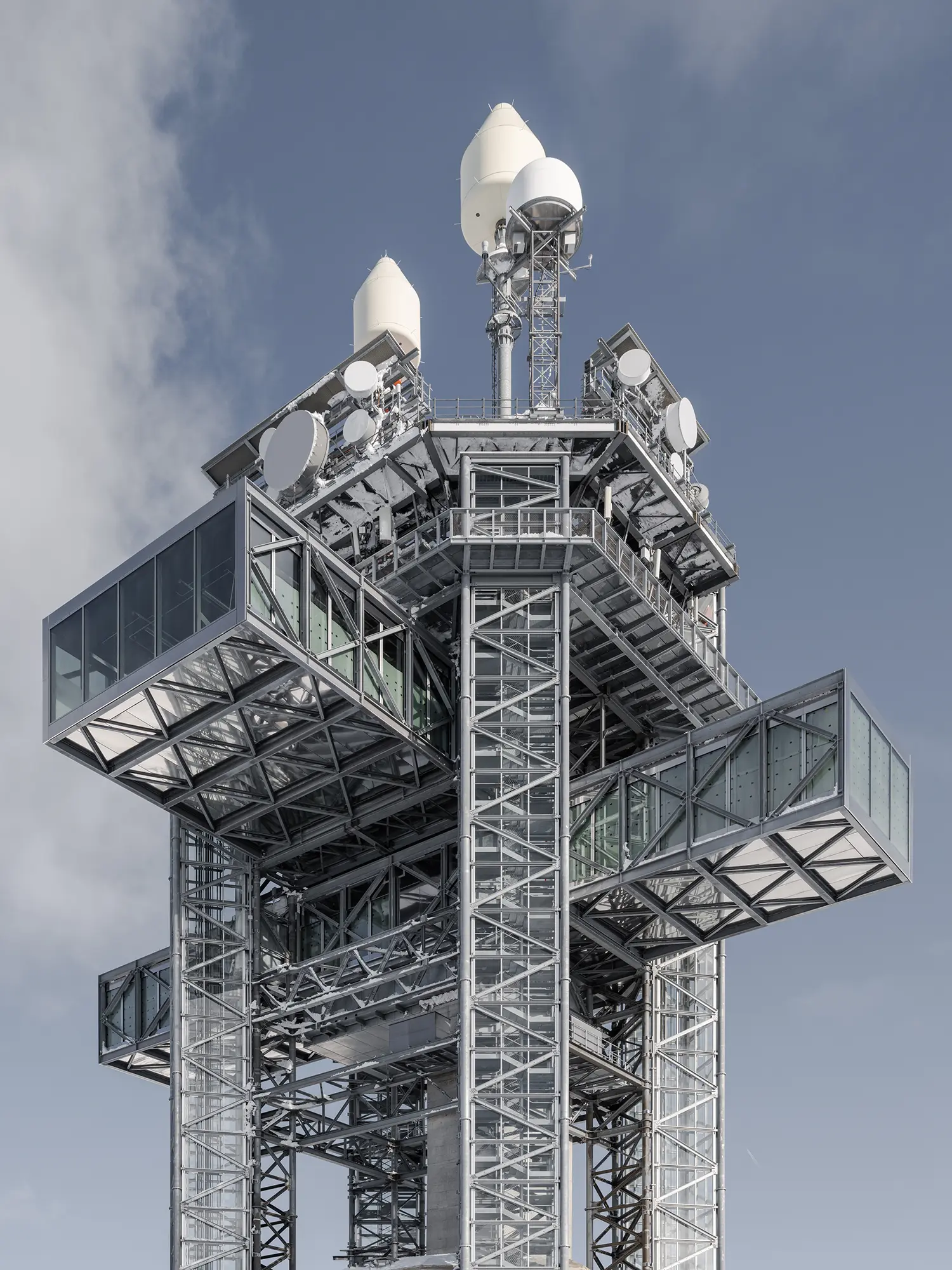
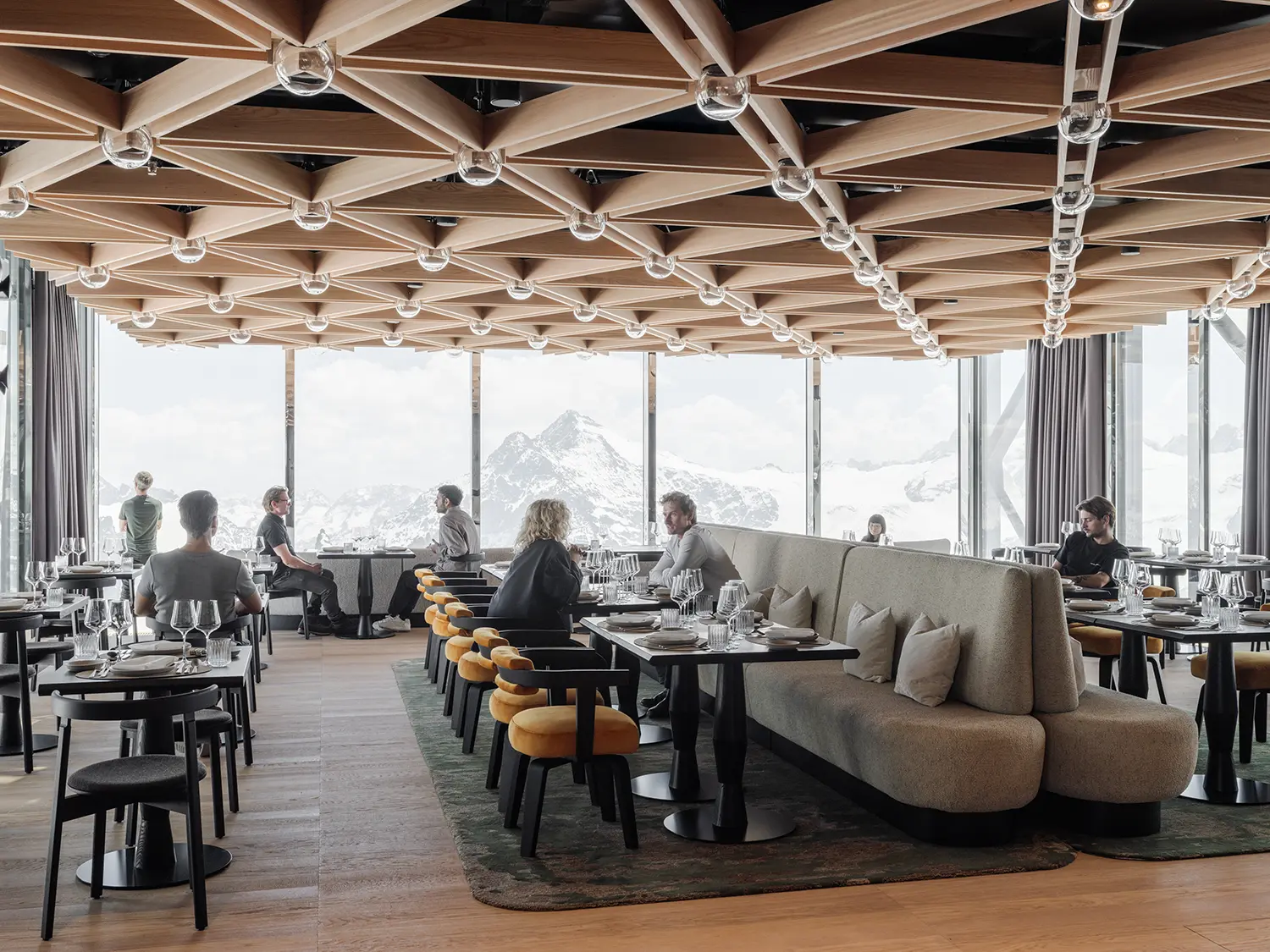
The material logic of the tower follows directly from site and structure. Galvanized steel, stainless steel, concrete, and glass define the external and internal character of the new volumes — not as a stylistic choice, but as a response to the extreme climatic conditions of the site and the raw materiality already established by the existing framework. Inside the new volumes, existing structures and traces are deliberately retained and made visible, complemented by what the architects describe as “precise insertions.” The restaurant interior is the project’s single deliberate departure from this logic: entirely lined in wood, it creates a warm, sheltering atmosphere that functions as a thermal and sensory contrast to everything surrounding it. At 3,020 metres, where the dominant conditions are cold, exposure, and the visual overwhelm of the alpine panorama, enclosure and warmth are not decorative decisions — they are architectural ones.
The underground Rock Passage reframes what arrival means at this altitude. Built in the same mid-1980s campaign as the original tower and retained without replacement, the tunnel connects the mountain station to the tower through a direct, weather-protected route carved into the rock. Herzog & de Meuron’s intervention here is a reflective steel band that guides visitors through the raw tunnel into a cavern-like hall at its end, where two large-format LED screens embedded into the steel surface provide orientation and information about the surrounding landscape. The contrast between the raw rock of the tunnel walls and the reflective precision of the steel insert is one of the project’s sharpest material moments — and it was only possible because the tunnel already existed. “Building at 3,000 metres requires peak performance every single day,” said Norbert Patt, CEO of Titlis Cableways, speaking to the logistics of construction at altitude while tourism operations continued uninterrupted throughout the build. The Rock Passage is the part of the project where the collaboration between what existed and what was added is most viscerally present.
The sustainability argument of the TITLIS Tower is more interesting than its press materials suggest. The project documentation notes that energy consumption across all buildings will be significantly reduced through intelligent building technology, and that following completion of the new mountain station by 2029, CO₂ emissions will fall by approximately 95% — from 280 tonnes per year to just 12 tonnes. These figures are cited in the context of the completed masterplan, not the tower alone. But the more structurally honest sustainability claim is the one that doesn’t appear in the factsheet: the decision to retain the antenna tower, the tunnel, and the concrete base rather than demolish and rebuild represents an embodied carbon saving that no solar panel or heat recovery system can match. “For us, sustainability is not an add-on — it is an integral part of the entire architecture and infrastructure,” said Patrick Zwyssig, member of the Board of Directors of Titlis Cableways. At the level of the tower, that statement is architecturally true in a way that precedes any building technology choice.
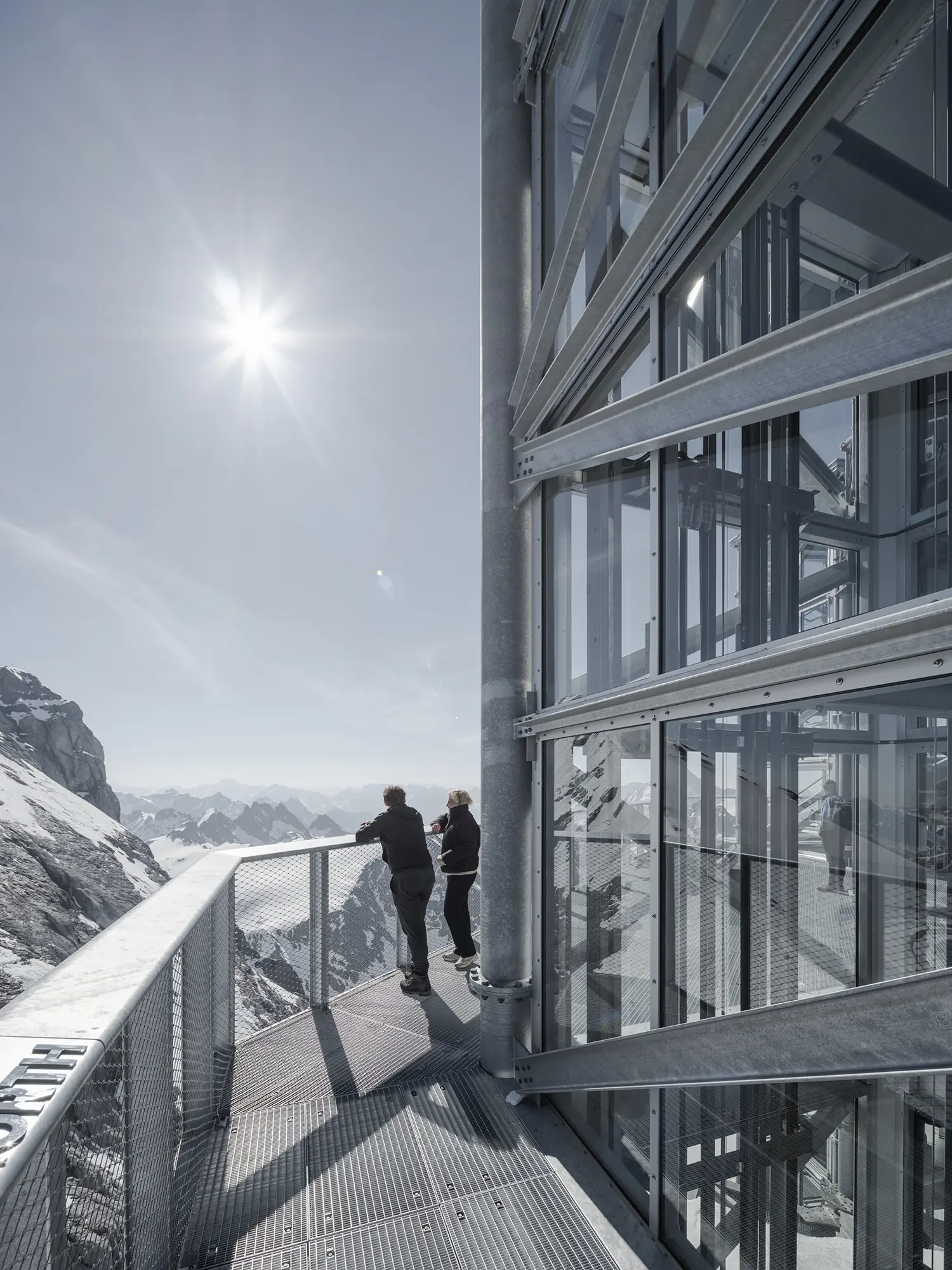
The Horizon Deck at 54 metres makes explicit what the project’s program obscures. Below it, the tower houses a Rolex Boutique — the world’s highest, according to the project’s communication — a Joseph’s Restaurant named after Josef Kuster, who first skied Mount Titlis in 1904, and the retail area of the lower cantilevered volume. The programmatic mix of luxury retail, casual fine dining, and a panoramic observation deck is the commercial logic of contemporary alpine tourism distilled into a single vertical sequence. It is also what the project must do to justify its CHF 150 million investment across the full masterplan. Herzog & de Meuron has navigated this tension before — between the demands of commercial program and the demands of architectural integrity — and at Titlis the resolution is in the structural decision that precedes all program: the tower was kept, and everything that follows is organized around what was already there.
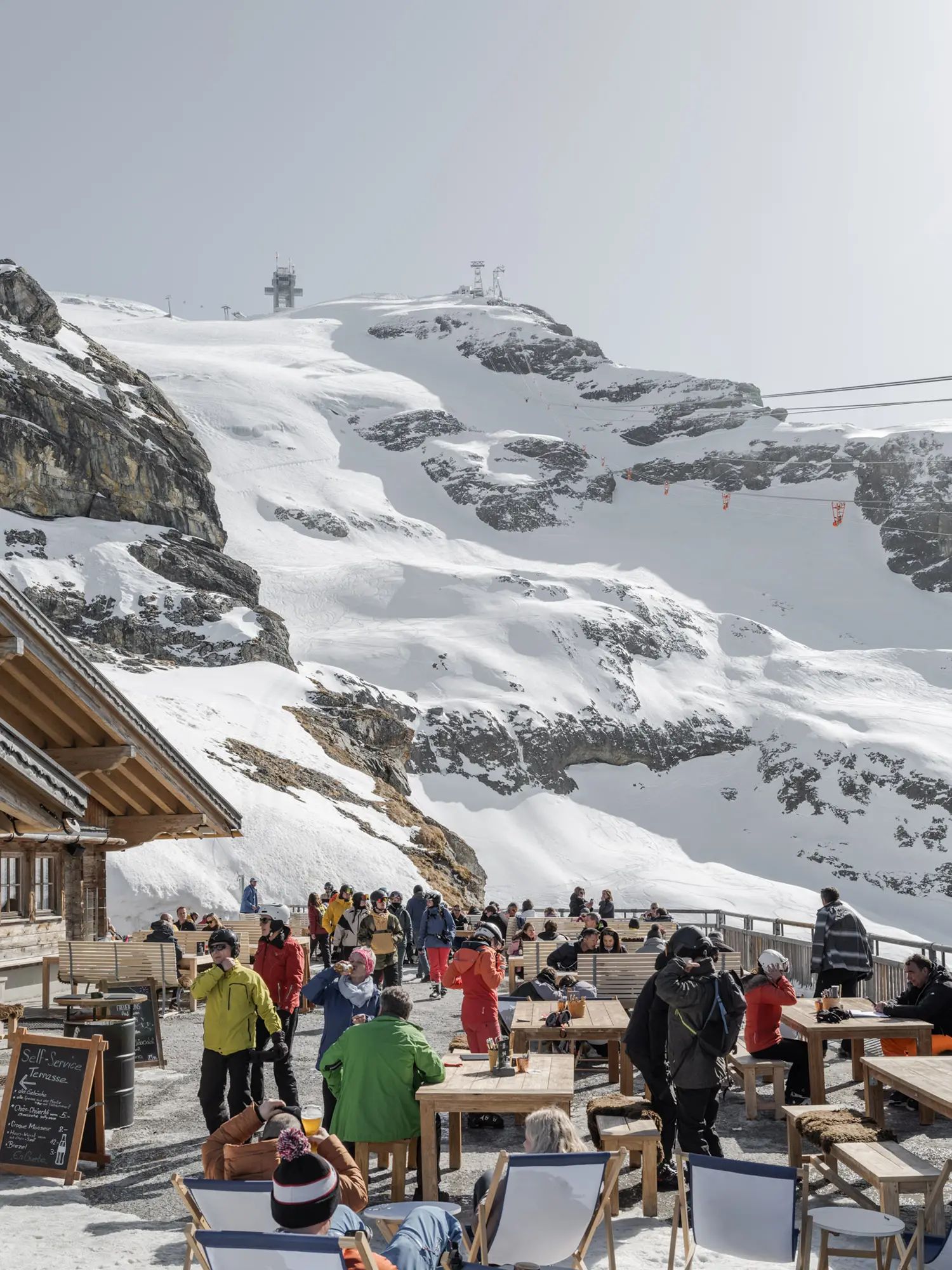
The second phase of the TITLIS project — a new mountain station designed to emerge from the rock face like a crystal — is scheduled for completion in 2029, and it will be a replacement, not a transformation. The antenna tower survived the structural assessment; the mountain station did not. When the full project is complete, the distinction between what was retained and what was rebuilt will be the project’s clearest architectural statement: that the decision to keep is not a failure of ambition, but the most precise form of it. At 3,020 metres, where every material decision carries an additional cost and every structural element must earn its place against extreme conditions, Herzog & de Meuron’s most rigorous move was the one that required the least new concrete.
TITLIS Tower by Herzog & de Meuron | Location: Mount Titlis, Engelberg, Switzerland — Year: 2026 — Key materials: galvanized steel, stainless steel, concrete, glass, wood (restaurant interior)