



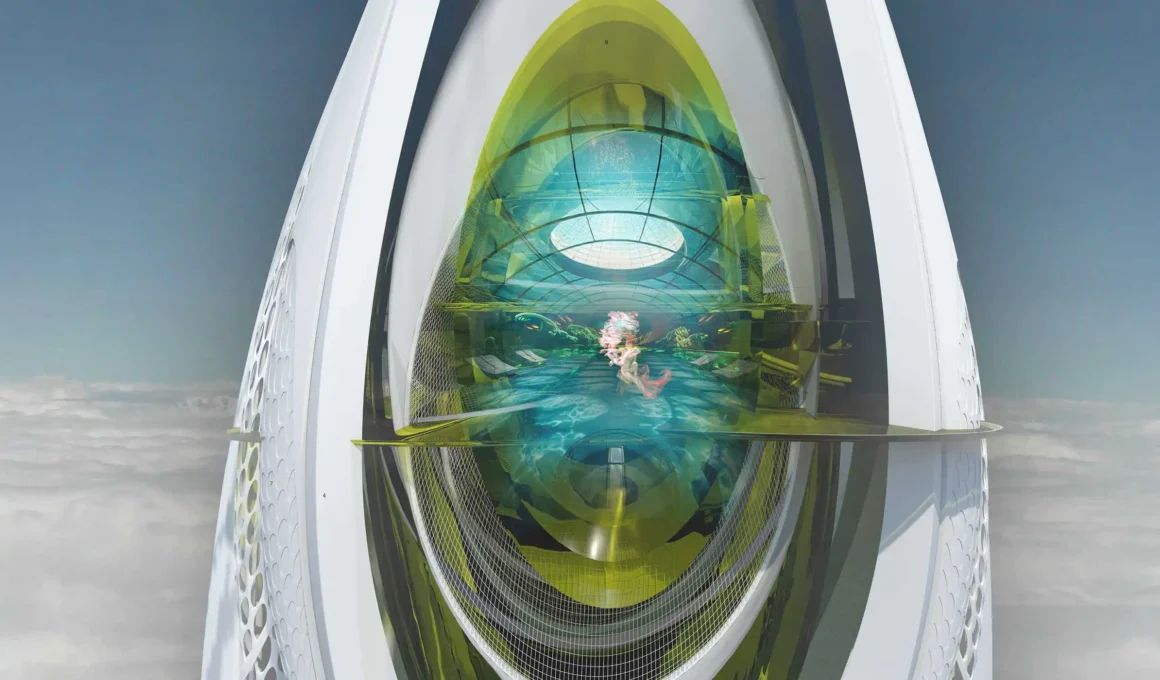
Imagine waking to the serene expanse of the open Pacific, knowing your hotel could safely plunge beneath the waves should a tsunami threaten. This is the radical vision behind the Tsunami Submersible Emergency Hotel, a groundbreaking concept by Margot Krasojević Architecture, poised to transform sustainable tourism and pioneer disaster-resilient architecture in one of Earth’s most challenging environments. Located approximately fifty miles from Taiwan and 150 miles from China’s eastern volcanic arc, this audacious project offers access to previously uncharted, breathtaking oceanic vistas while embodying a profound technological response to natural threats.
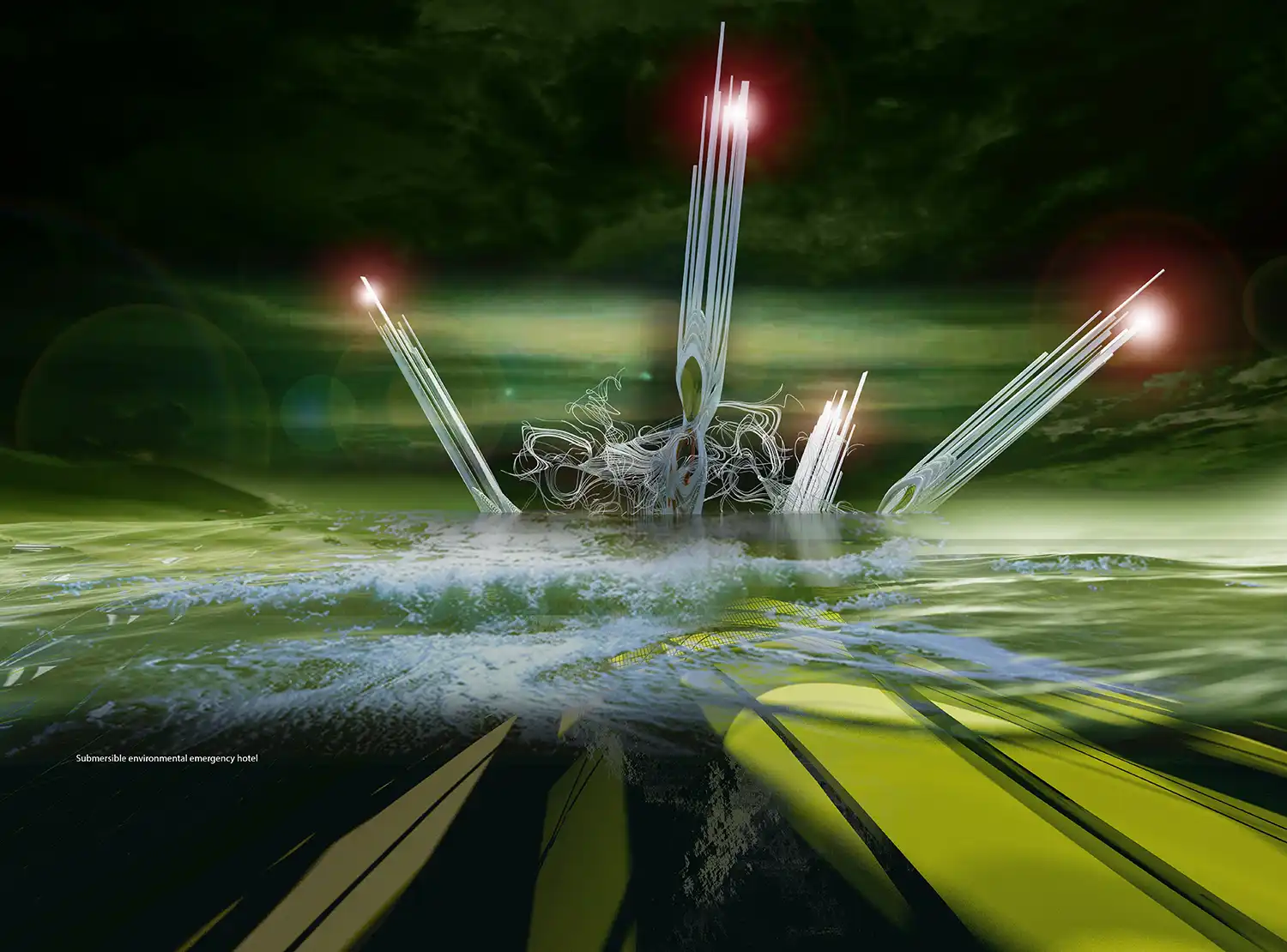
Inspired by the fluid dynamics of floating pontoons, the serene buoyancy of sleeping humpback whales, the robust engineering of submersible vessels, and the deep-sea stability of tension leg oil rig platforms, Krasojević’s design is a masterclass in bio-mimicry and marine engineering. Its core innovation lies in its ability to submerge rapidly to avoid the devastating impact of a tsunami. When sensors detect an imminent threat, a sophisticated sequence activates: inflatable facades, functioning like massive structural life jackets, strategically deflate. Simultaneously, ballast tanks flood, mimicking submarine operations, and powerful motors retract the tethers anchoring the structure to the seabed. The entire hotel complex gracefully sinks to a safe depth, where the tsunami’s energy is vastly diminished – wave height and destructive force are significantly lower far offshore compared to the amplified danger near coastlines.
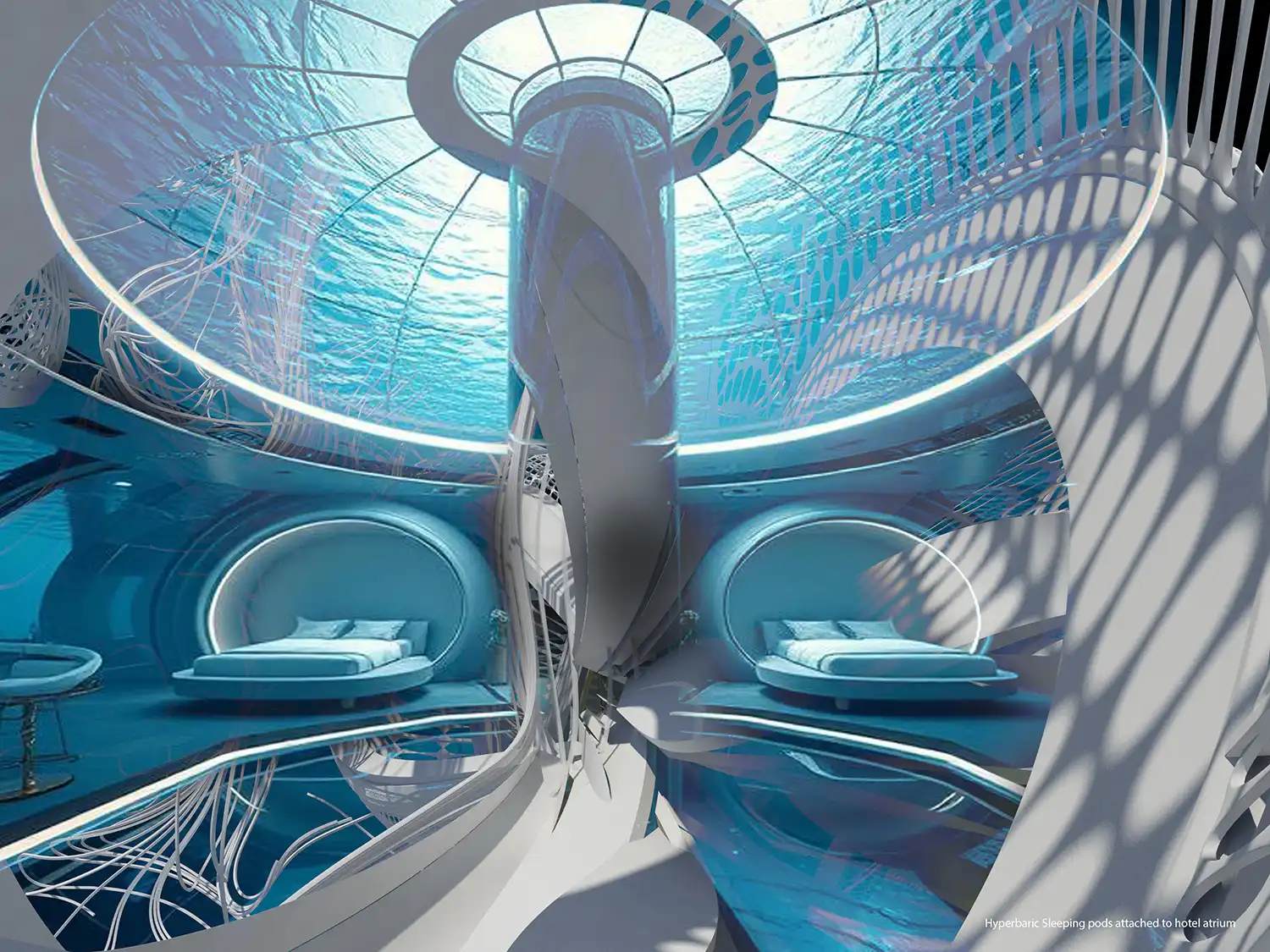
The hotel comprises three main vertical structures, their form optimised for buoyancy control and stability. Reinforced acrylic pods form the inhabitable spaces, protected by the dynamic inflatable facade system. Crucially, each guest pod incorporates a hyperbaric chamber, essential for managing the dramatic pressure changes experienced during submersion and resurfacing, ensuring guest safety and comfort. Resembling the arms of a giant squid, an array of masts extends from the structures. These masts support the hotel’s revolutionary energy source: photonic turbines. This renewable energy technology represents a significant leap forward. Employing fiber-optic sensors embedded within the turbine blades, the system continuously monitors strain, temperature, and vibrations in real-time. This data enables unparalleled predictive maintenance, optimises performance for maximum energy efficiency, and significantly extends the turbines’ lifespan, providing clean, reliable power far out at sea.
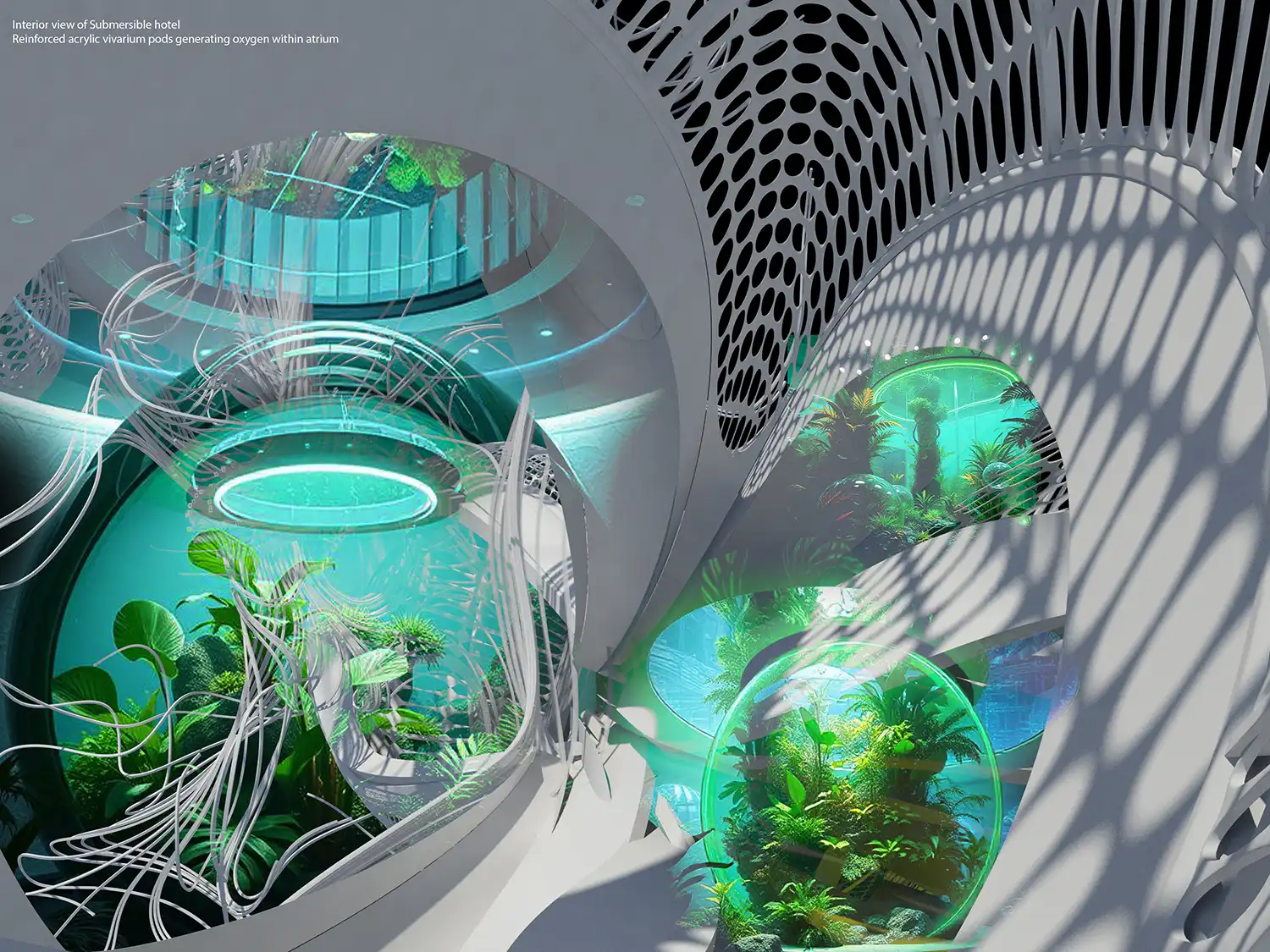
Beyond its primary function as an emergency shelter, the Tsunami Submersible Hotel presents a compelling model for sustainable tourism. By situating unique hospitality experiences in deep ocean locations, away from overcrowded coastal resorts, it directly addresses the critical issue of over-tourism. It caters explicitly to adventurous travellers seeking unexplored frontiers and challenging environments, offering the beauty of the open ocean without contributing to the degradation of sensitive coastal ecosystems. The structure itself creates a “fixed cruise ship” effect, bobbing gently with the wave motion.
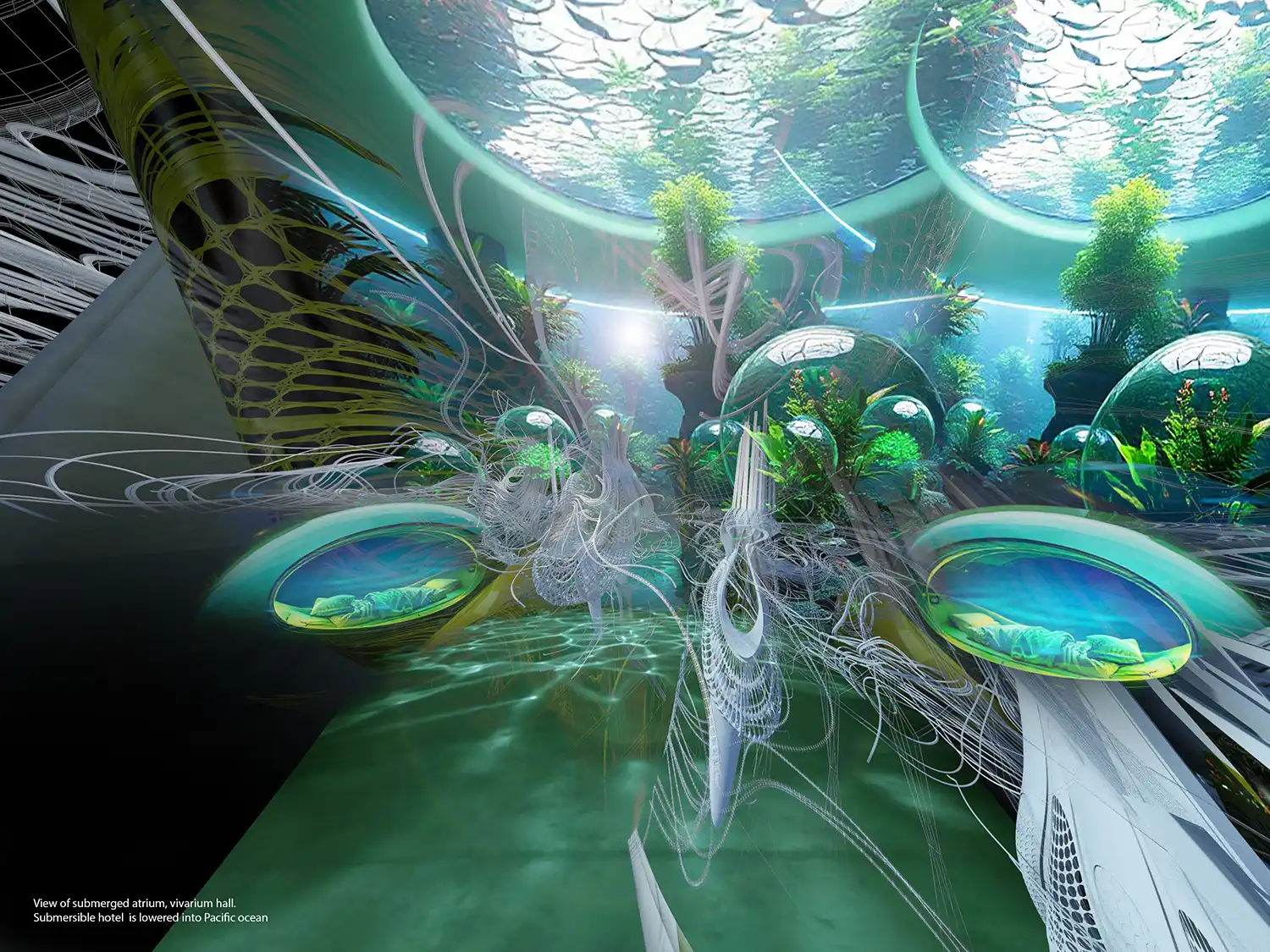
Margot Krasojević’s visionary project is far more than a futuristic hotel; it’s a vital prototype. It demonstrates how marine engineering principles – addressing rising sea levels, floods, and extreme weather events – must urgently inform resilient architecture. The Tsunami Submersible Emergency Hotel stands as a powerful testament to human ingenuity, offering not just refuge from disaster, but a bold, sustainable, and awe-inspiring way to inhabit our planet’s magnificent, untamed oceans. It challenges us to rethink where and how we build, proving that submersible architecture could be key to our future on a changing planet.