


The article covers the most impactful residential buildings in the United Arab Emirates and the influence of construction, architecture, and urban planning on the way people live. Landmark buildings in Dubai and Abu Dhabiare discussed (such as Sharafi Development’s Marea Residences in Dubai Islands), and the article uses Abu Dhabi’s upcoming residential development offerings, 59% of which are villas, per Knight Frank’s report, to explain the recent Abu Dhabi developments.
The Emirates’ urban lives continue to change, and these residences are a vital part of that transition.
Architectural Marvels of Dubai
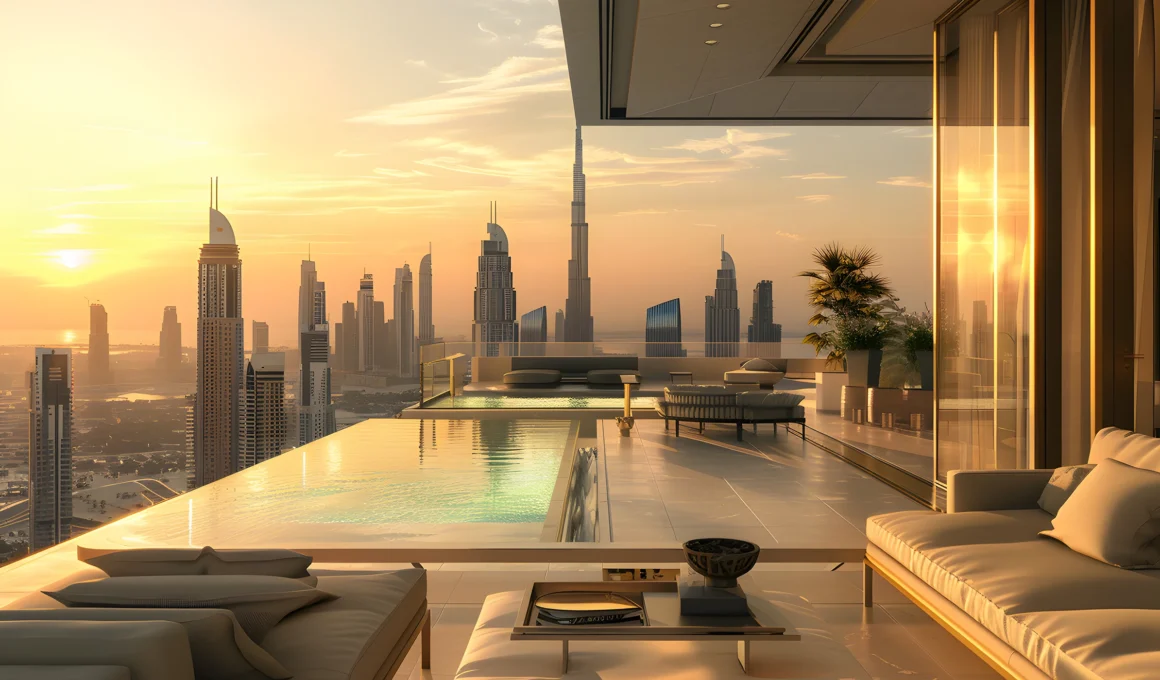
The city’s confidence in its architecture is visible in the residential and mixed-use buildings under construction that alter Dubai’s skyline. 305 One Za’abeel, with its 304 and 241-meter twin towers, is a prime example. Between the towers is The Link, a skybridge of 230 meters that, hanging 100 meters above the ground, is the world’s longest cantilevered building, extending over 67 meters from its main anchorage.
The bridge is one of the heavy structural lifts in the region, with its supported floor having to contain 8,500 tonnes of steel. Project engineering reports published in Q4 2024 confirm that over 110 synchronized jacks, lifting in block movements, were used to pound steel into a complex, lift the steel into the region’s largest bridge, and lift the large bridge with less than 0.3% concussive fire.
Amenities include dining spaces, an infinity pool, along with observation decks, making this development more than just a residence. The towers also have offices and hospitality suites, and their residential sections partake in Dubai’s ever more popular vertical luxury living. Architectural dare, livability and amenity space balance are all in keeping with the city’s love of spectacle with the glass curtain wall, linear cuts and startling geometry.
Luxury Living on Dubai Islands
A more gentle, coastal design has emerged on the Dubai Islands, where Marea Residences displays another architectural attitude. The project, by Sharafi Development, which has roots stretching back to 1924, also takes the sea as inspiration. The facade has a wave-like curvature, while the balconies that extend outwards of the wall provide a frame to the views of the sea. This different fluidity contrasts with the shapes in the skylines of the central Dubai towers.
Marea Residences has limited stock on their one-bedroom apartments, two-bedroom apartments, and penthouses. The interiors feature natural components, glass walls, and other finishes that produce a tranquil coastal look. Upper units have private roof terraces and jacuzzis. The building also has an infinity pool, a gym geared towards wellness, landscaped areas and concierge services.
The project market’s premium offering not only has relevance but also shows how to encapsulate the built form of a waterfront site without including any overtly excessive ornamentation.
Contemporary Design in Abu Dhabi
Abu Dhabi’s contrasting architectural pulse has to do with their primary design. In the city, this leans toward tall sculptural forms with paired, detailed architecture. The Etihad Towers, designed by a global architecture firm, is a composition of glass, curves and symmetry across five interlinked, sculptural towers.
Three of the towers, with glass and curved symmetry, are residential units that make the most of the region’s sweeping views of the Gulf. The interiors, designed to foster a connection to the natural environment, are laid out to promote spaciousness with generous sight lines, and the careful use of glass in the partitions that also create a connection to the exterior.
Located further into the town, Saadiyat Island exhibits a distinctive philosophy in modern residential design, emphasizing mid-rise and low-rise structures in a unique layout. These buildings utilize techniques concerning controlled geometry and natural ventilation, as well as a balance of privacy and openness.
Modern interpretations of simple, traditional Arabian design elements, like screened windows, shaded courtyards, and textured façades, can be found throughout the structures. This balanced design philosophy achieves cultural sustainability while maintaining modern standards of comfort.
Waterfront Villas and Serene Landscapes
Saadiyat Island is also home to one of the UAE’s greatest advances in villa-oriented planning. A 2023 study by Knight Frank projected 33,700 residential units to be under construction in Abu Dhabi by 2027, with 59 per cent of those units projected to be villas. This figure reflects a sustained demand for low-rise, large residential units.
Saadiyat Beach Villas is among the developments with three principal architectural styles to select from: Arabic, Mediterranean, and modern. Each of these styles is characterized by minimalist design and an emphasis on natural building materials like limestone, wood, and textured plaster.
A sense of calm is cultivated by the abundance of internal natural light and design elements, with the installation of internal voids in the roof to allow natural light to flood the interiors. Outdoor living space is augmented by roof decks, while heat-reducing walkways provide visual integration with the exterior. The design strategy fosters the development of residential areas that are in harmony with the coast.