




WOJR transforms a forgotten foundation into the House of Horns, an ethereal Los Altos Hills residence harmonizing with California’s Santa Cruz Mountains foothills. Overlooking the San Francisco Bay, this contemporary California residence embraces the ruin of an abandoned ‘Spanish Style’ structure, forging a radical synthesis of old and new. The design acts not as imposition but as instrument—tuned to capture the rhythms of fog, light, and seasons defining this Bay Area landscape.

The project’s titular “horns” originate conceptually as architectural instruments, not literal forms. WOJR envisioned the house as an assemblage calibrated to channel daylight cycles and seasonal shifts. The first act was restorative: re-burying the lower level to resurrect the original hillside topography. This critical move created two distinct realms—one soaring toward the sky, the other rooted in the earth.
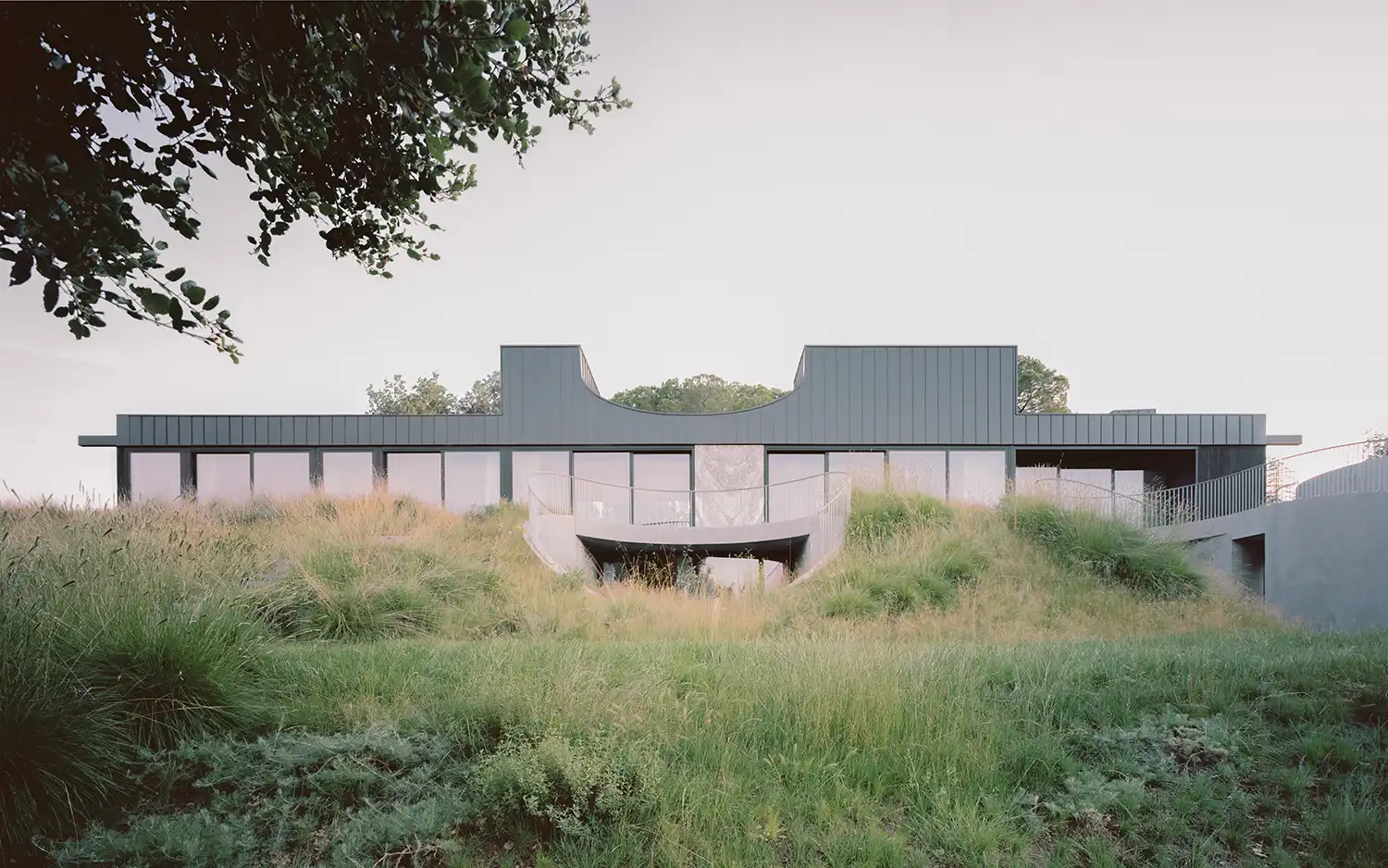
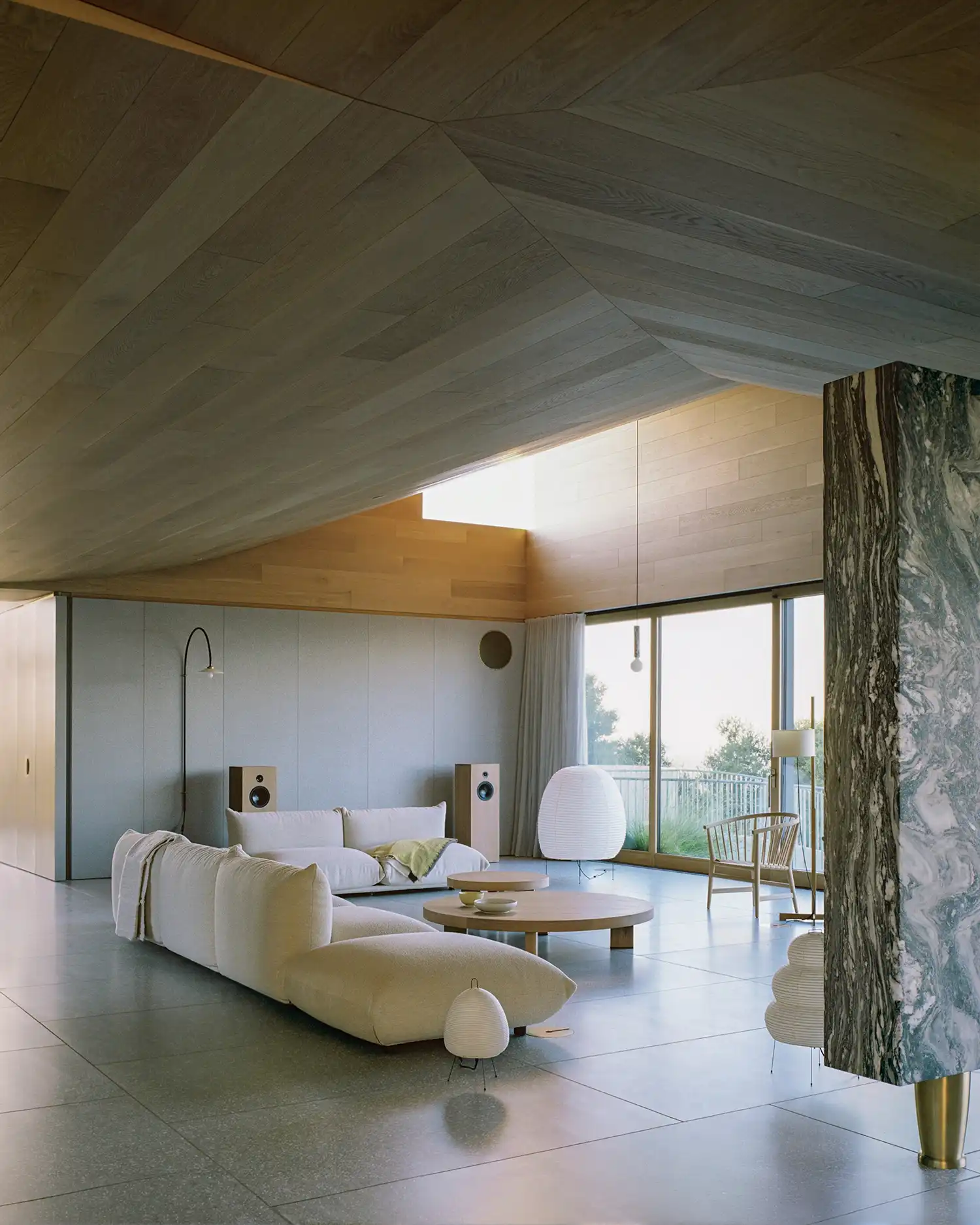
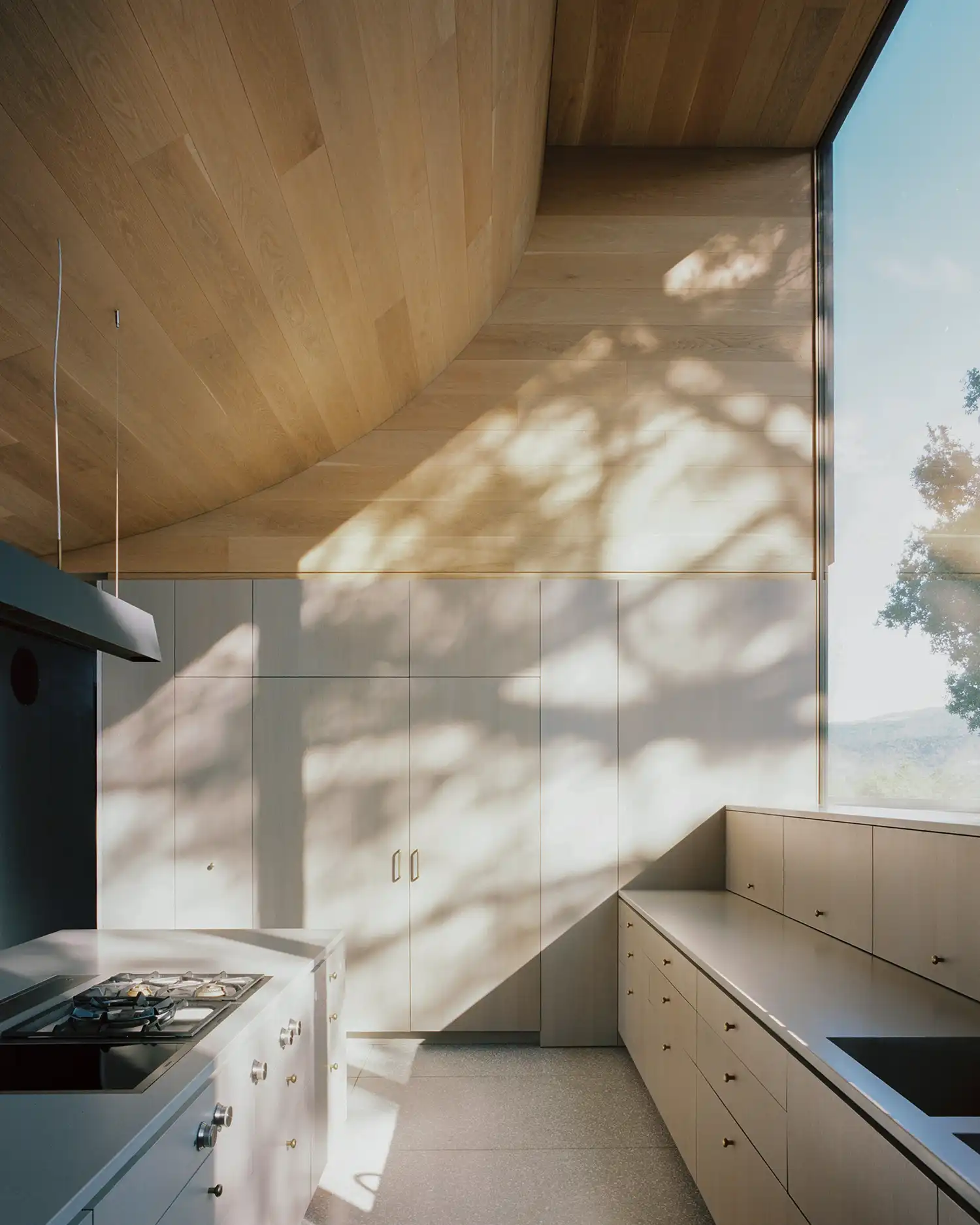
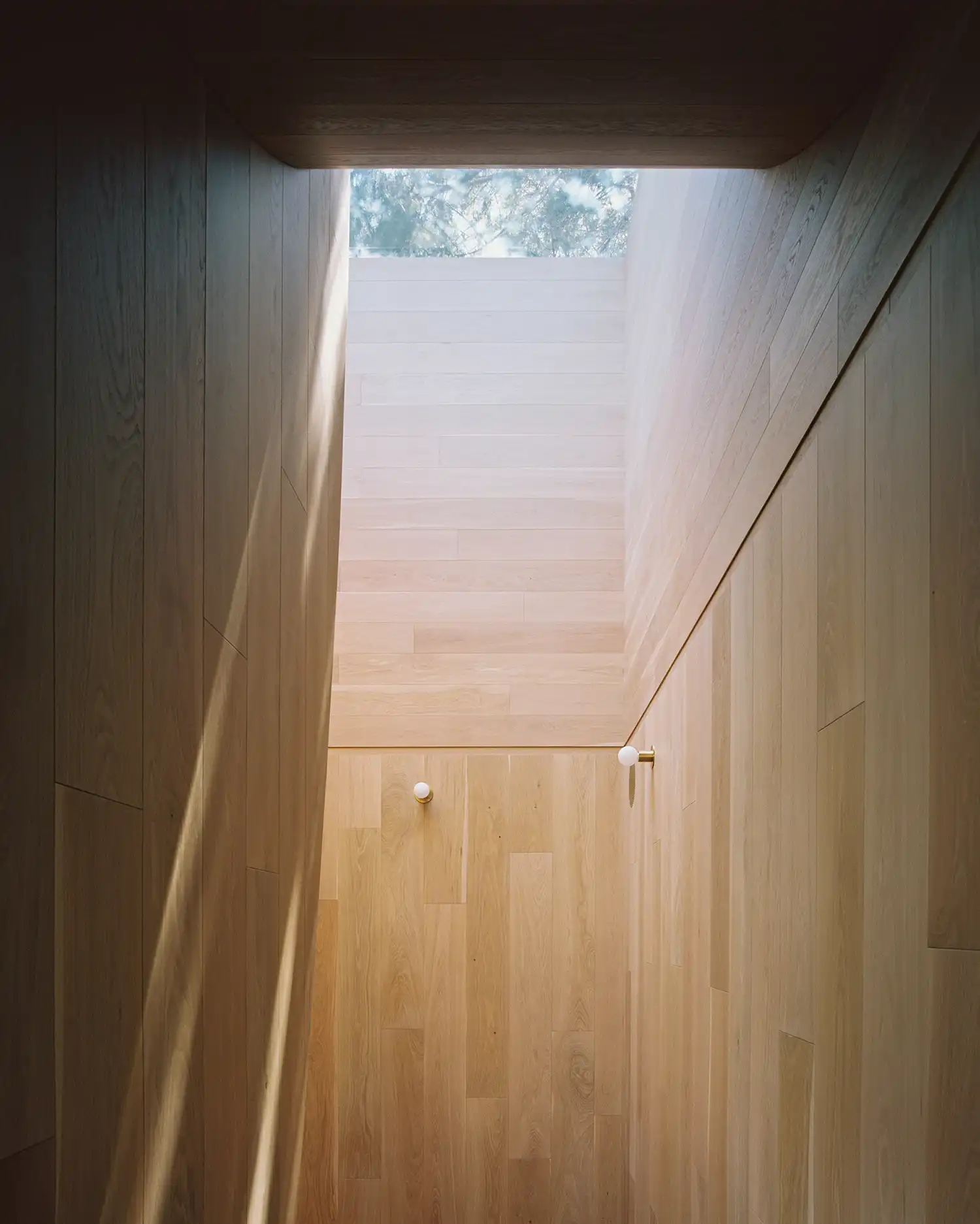
Above ground, the home manifests as a single-story dwelling with its perimeter gently meeting the terrain. Within, a unified volume unfolds for living, dining, and cooking, crowned by dramatic inverted elliptical vaults. These sculptural ceilings extend toward the edges, pierced by strategically oriented skylights and clerestories that funnel shifting light. Central to this luminous space stands a monolithic Danby marble fireplace, its Vermont-quarried stone hand-carved into a subtle spatial anchor.
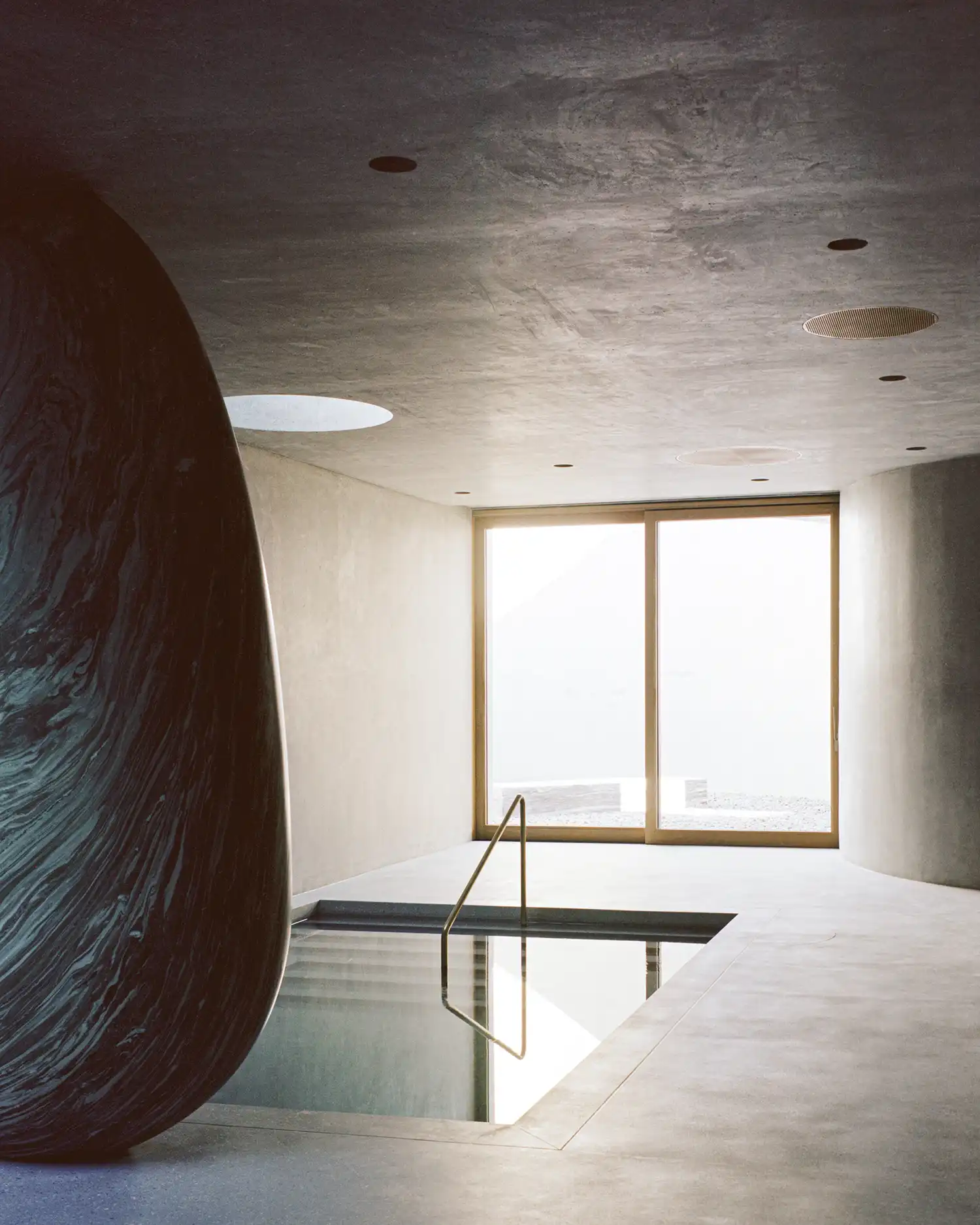
Below lies a subterranean counterpoint: a sequence of intimate chambers carved into the hillside. The innermost sanctuary is a cave-like bathing chamber, centered around a rugged ovoid stone column hewn from solid rock. Sunken courtyards mediate connections to the exterior, framing curated views to the wild meadow beyond while preserving privacy.
Outside, the landscape architecture performs in concert with the structure. The hillside regenerates as a low-water native California meadow, densely planted with indigenous grasses, perennials, scrub, and heritage live oaks. This sustainable landscape design evolves textures and tones seasonally—a living canvas that deepens the sensory experience.
Together, architecture and terrain form a synthetic whole—a single environmental instrumentprecisely tuned to its context. The native meadow’s careful calibration interacts with the home’s apertures, capturing coastal fog patterns, summer grasses, and winter rains. Every element conspires to heighten awareness of place.
The House of Horns redefines architectural resilience, proving inherited fragments can resonate anew through visionary adaptive reuse. By enfolding disruption into coherence, WOJR crafts not just a dwelling but a profound dialogue between memory and innovation—West Coast modernism reborn as a meditation on earth, sky, and time.