


The essence of the Wood Residence lies in the calibrated tension between Westmount’s historic rigor and a new visual narrative established by Vives St-Laurent. Through an intervention that prioritizes the restoration of original volumes and the integration of exceptional tactile materials, this Montreal home is transformed into a sequence of fluid spaces where natural light becomes the primary tool for connecting architectural memory with the requirements of contemporary living.
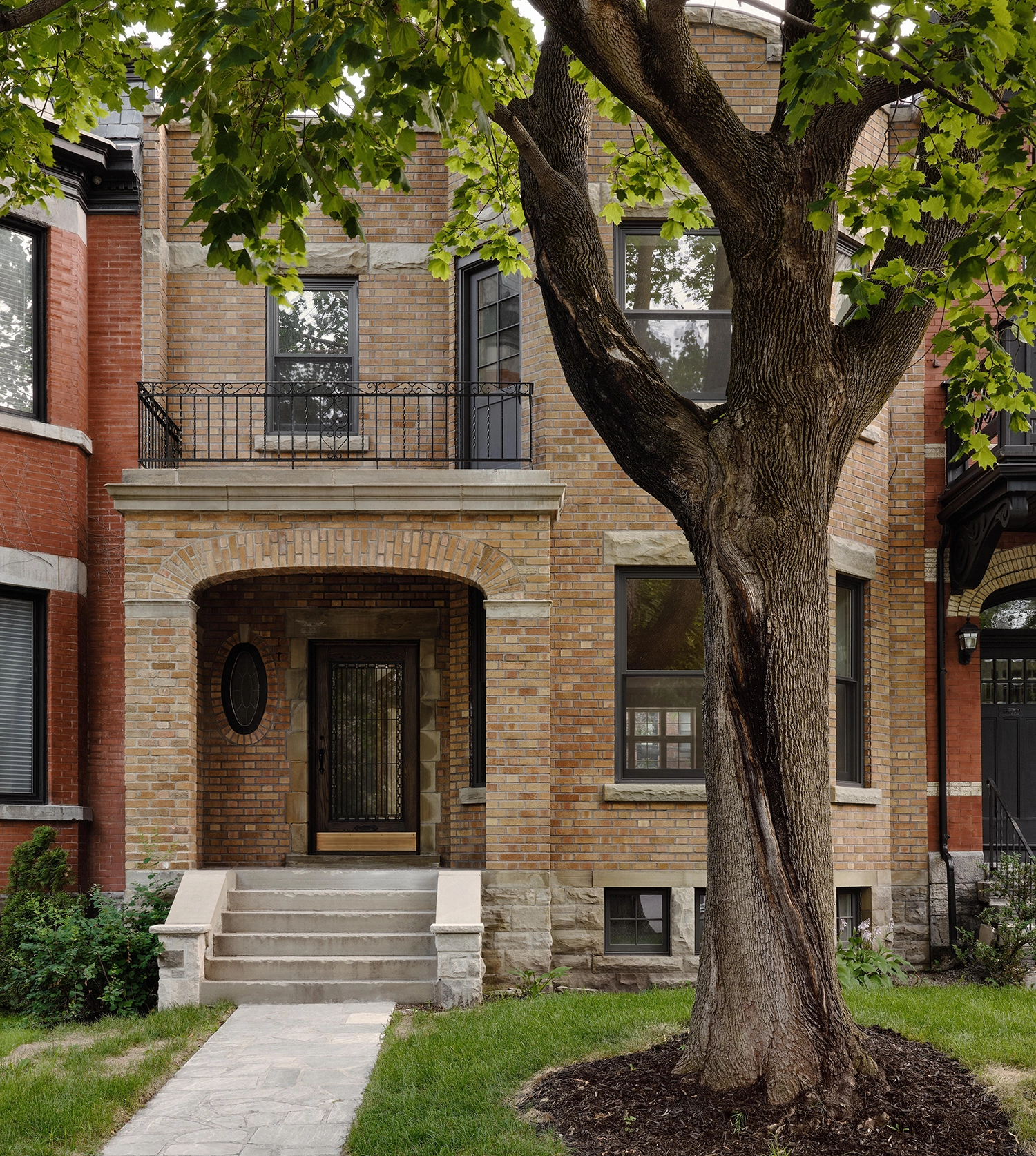
A rhythmic entry sequence greets visitors immediately upon crossing the threshold, where a checkerboard pattern of Alpi Verde and Bianco Carrara marble establishes a dialogue between European classical aesthetics and Canadian residential tradition. This graphic foundation is echoed in the bespoke entryway furniture, which mirrors the curved profile of the home’s iconic oval facade window. This intentional formal mirroring ensures that the transition from the exterior to the interior feels like a curated sensory experience rather than a structural detachment.
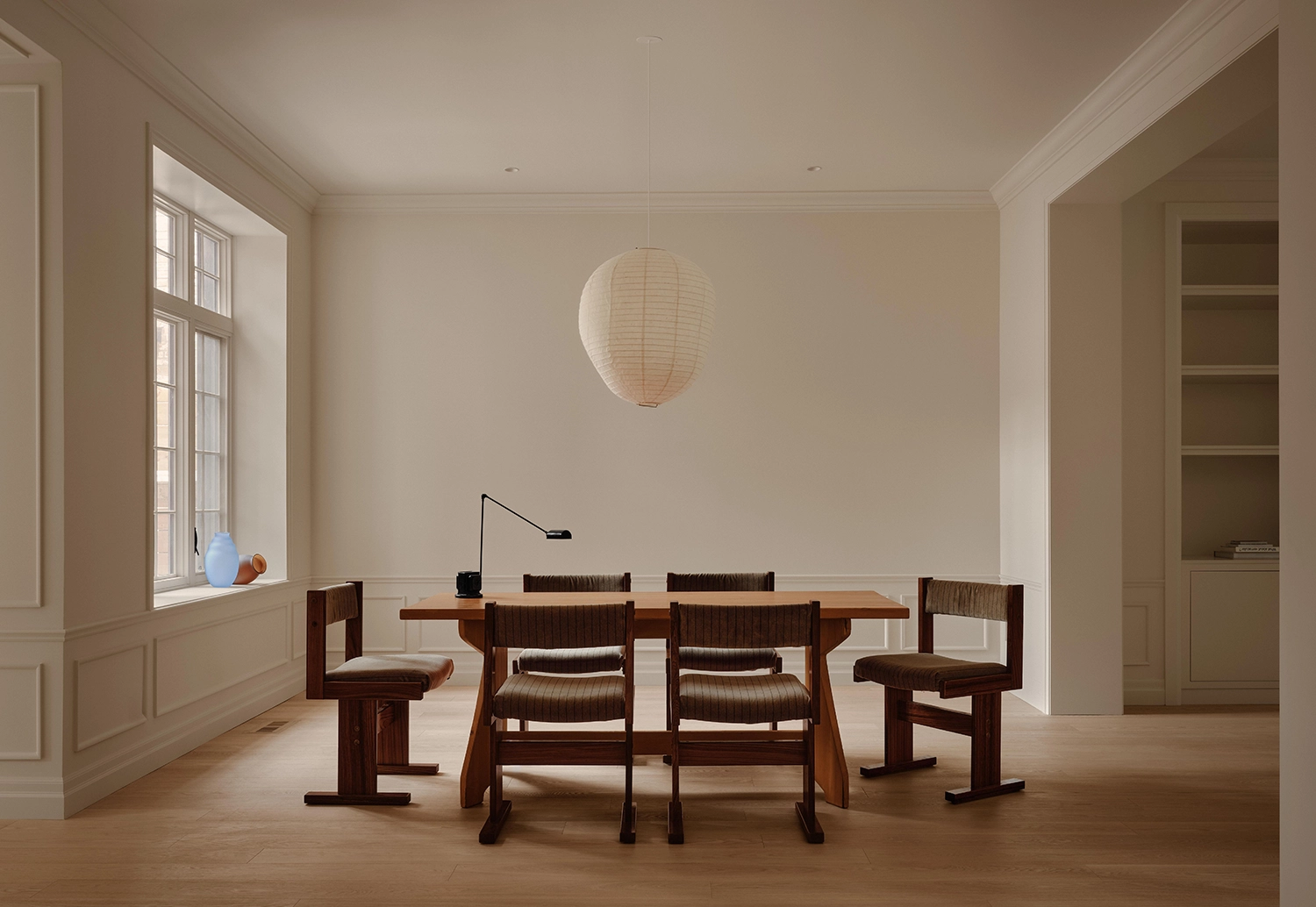
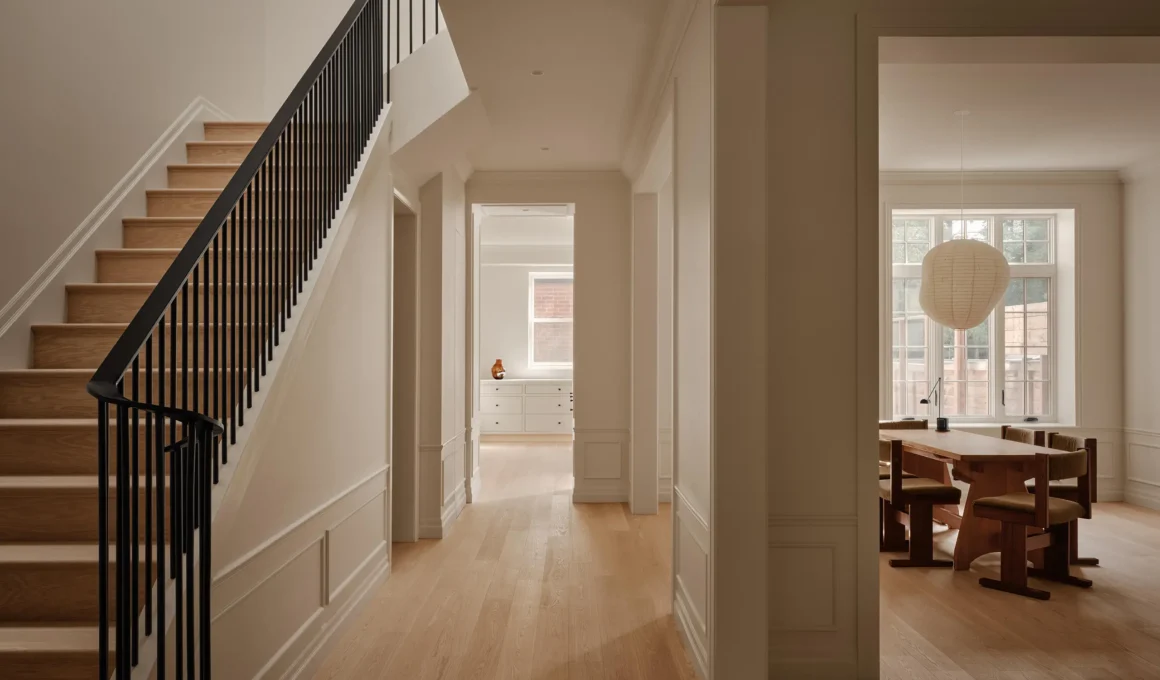
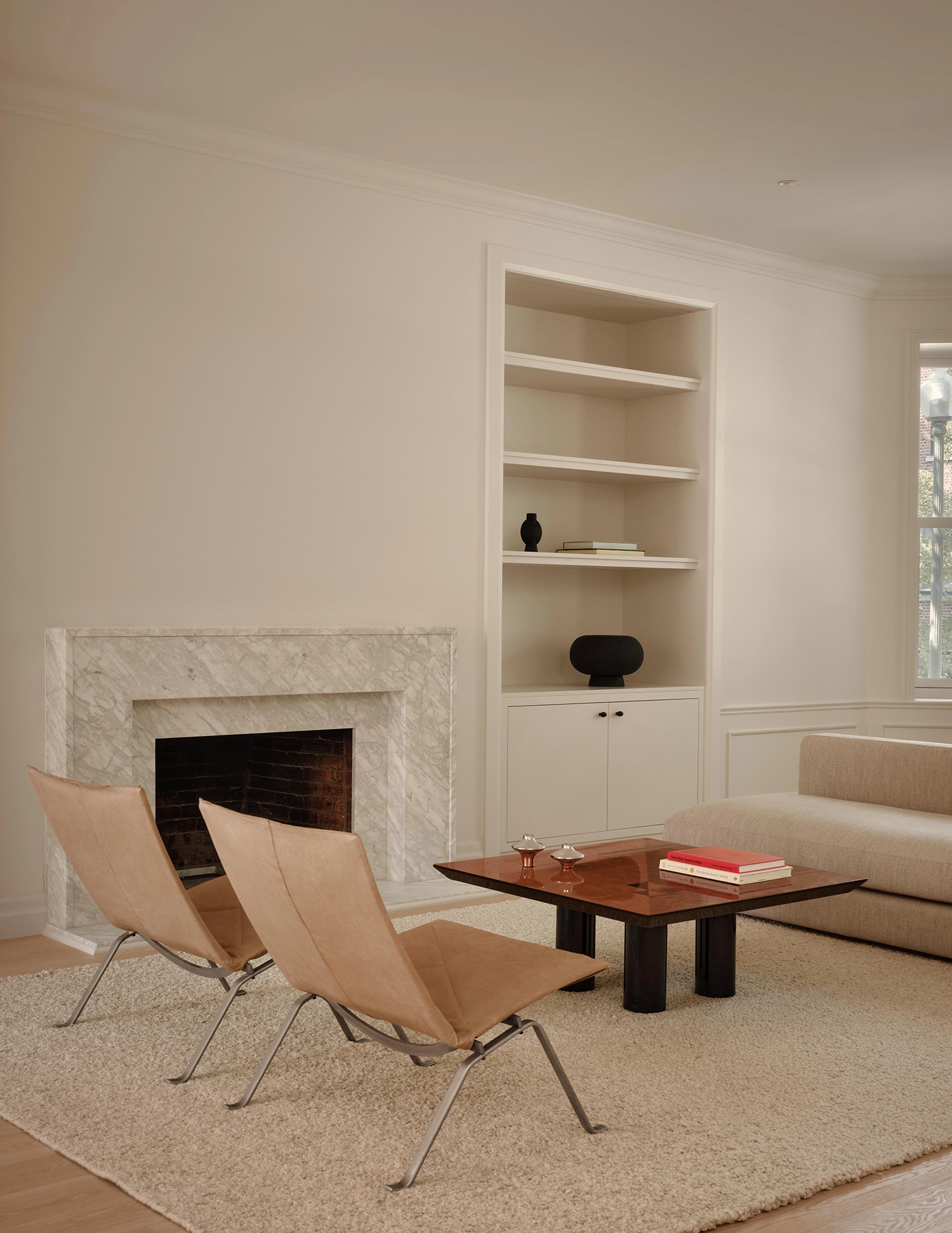
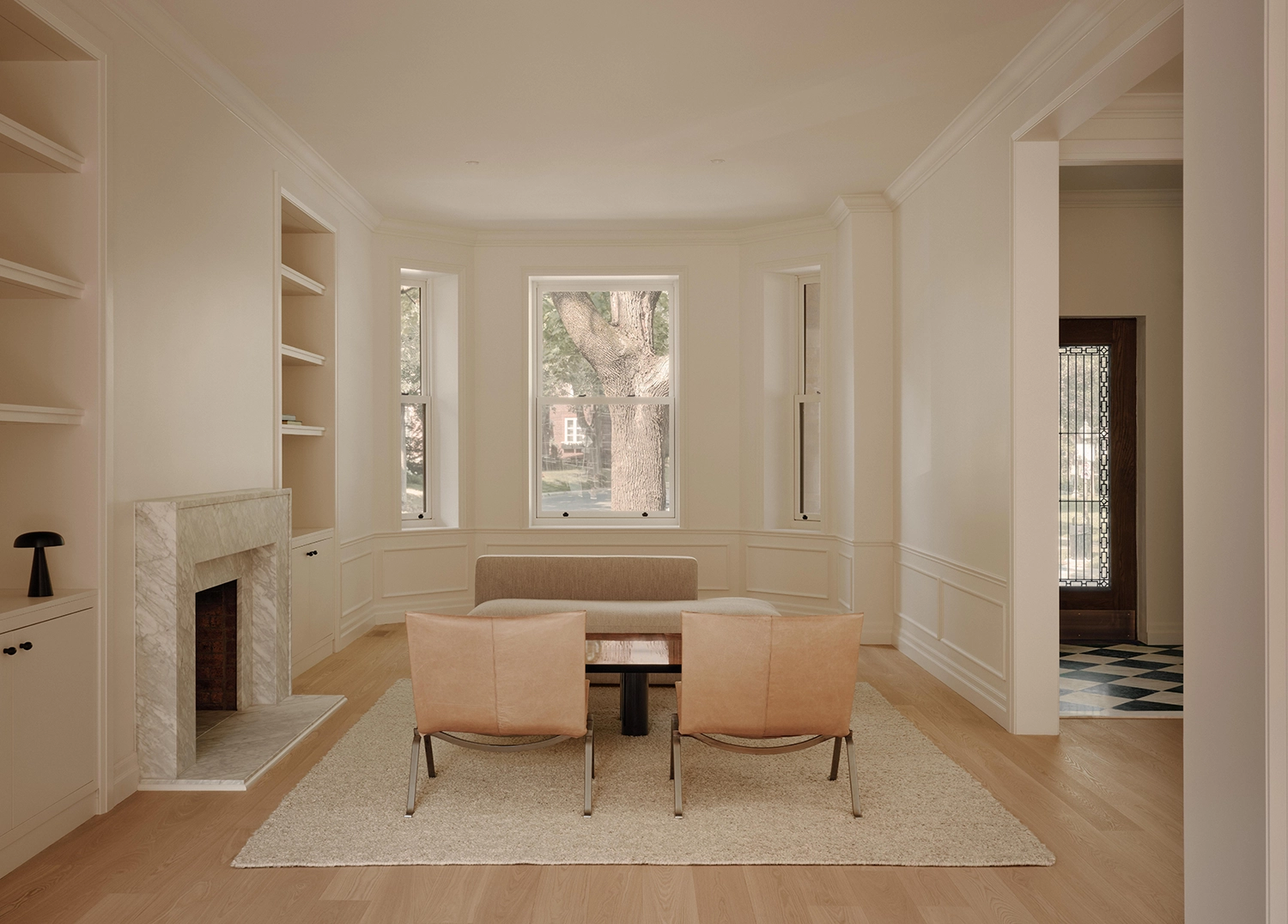
Light and materiality define the primary living quarters, where the original floor plan has been meticulously preserved to respect the home’s historical soul. The introduction of pale white oak flooring serves as a neutral canvas, amplifying the natural light streaming through the expansive bay windows. In the living area, custom-built bookshelves frame the fireplace, drawing the eye toward the natural stone mantel. This intervention elevates the hearth as a focal point while maintaining a minimalist atmosphere that avoids clutter, allowing the view of the front garden to remain part of the interior composition.
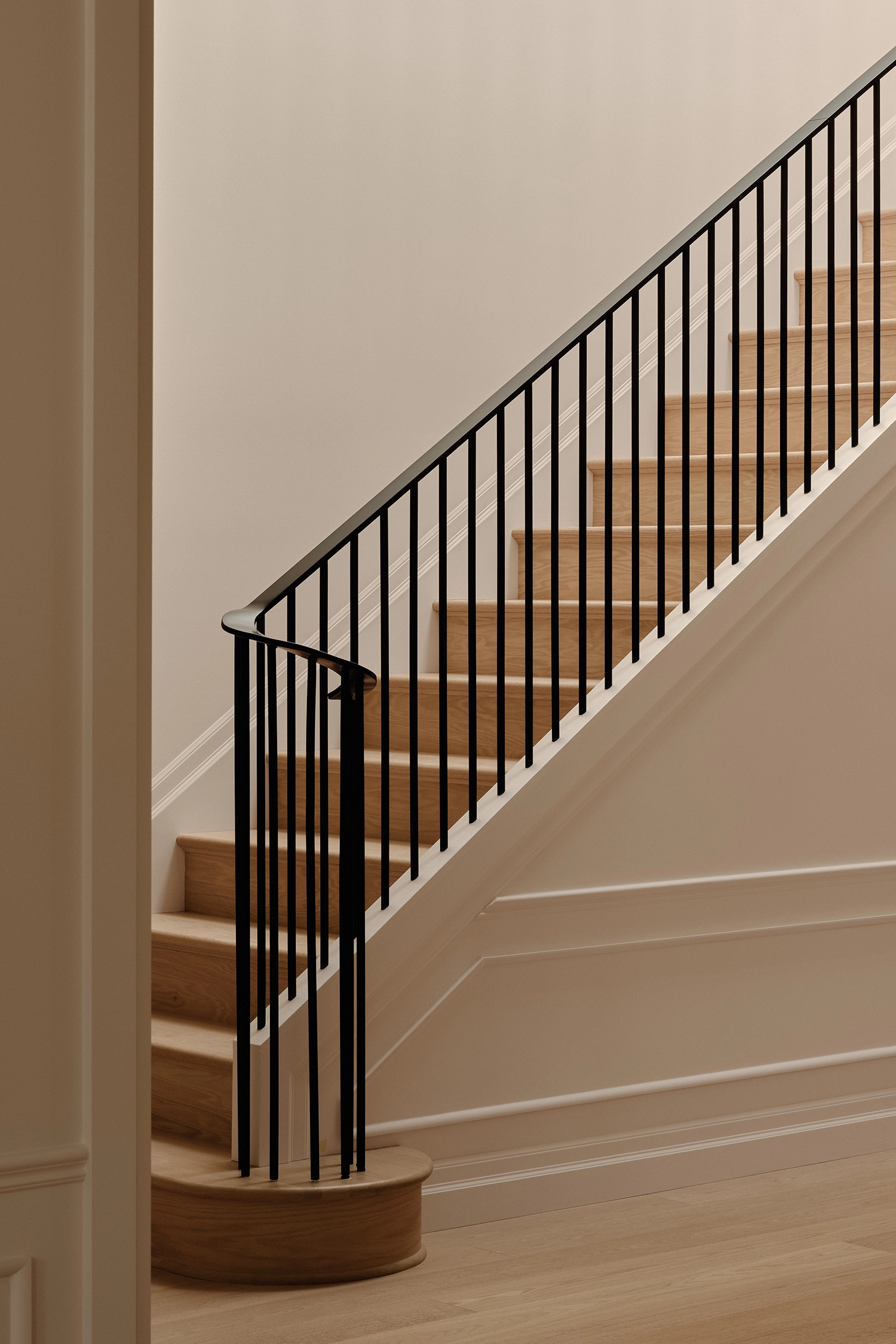
The sculptural staircase acts as a structural bridge between the home’s past and its future. Faced with a banister in poor condition, the designers opted for a sophisticated redesign that incorporates intricate moldings to match the existing wall treatments. A painted steel handrail, subtly recessed into the stringer, provides a moment of technical precision. This detail exemplifies the collaboration between craftsmanship and modern engineering, ensuring the vertical circulation feels like a continuous piece of joinery.
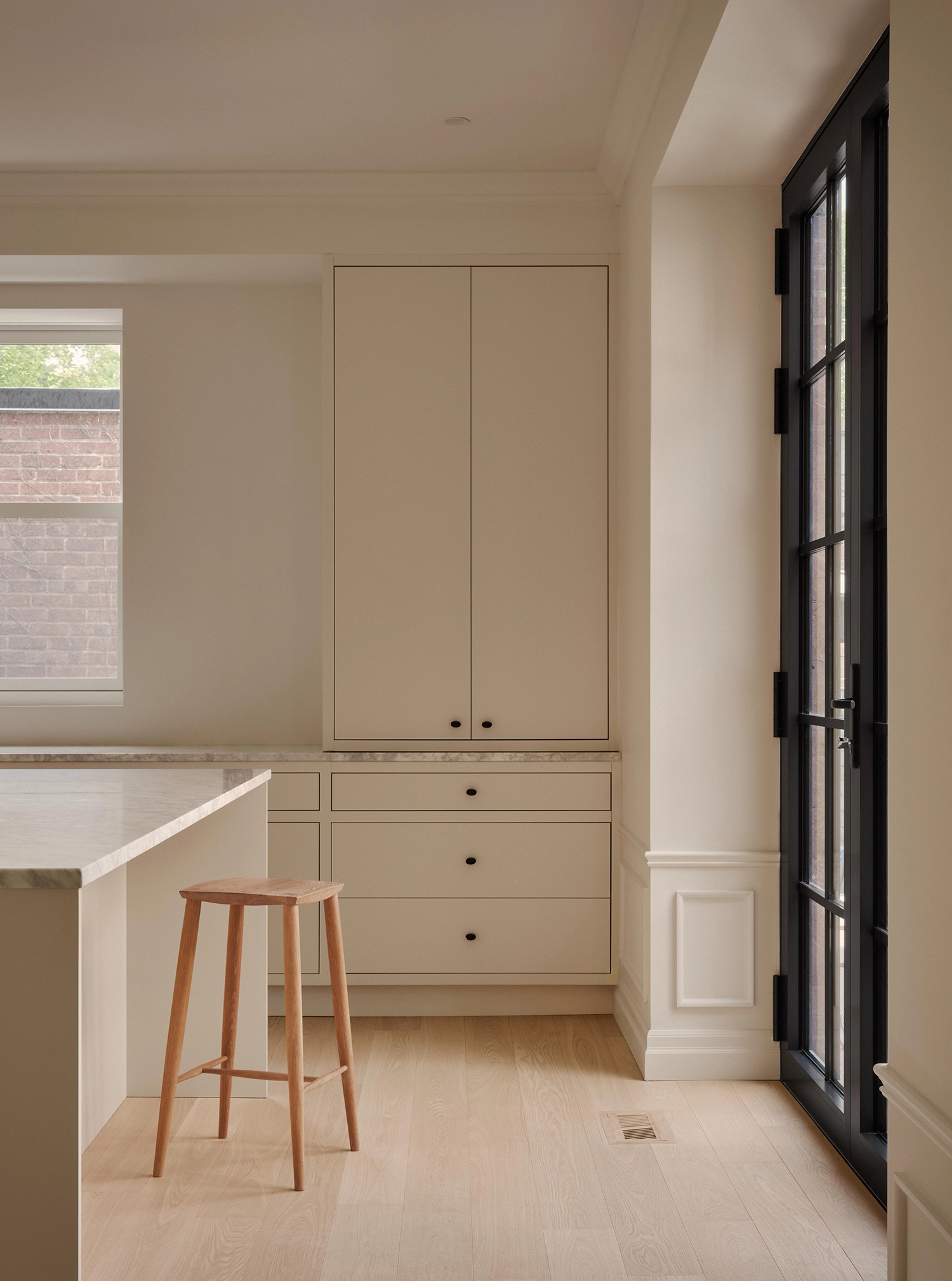
Functional elegance in the kitchen is achieved through a strategic repositioning of openings and a refined material palette. Positioned at the rear of the property, the kitchen now opens onto the terrace via an anthracite French door, creating a dark-framed portal that contrasts with the bright interior. The workspace is anchored by a monolithic marble countertop and a central island, transforming the kitchen into a social hub. Here, the choice of stone is not merely decorative but functional, offering a cool, durable surface suited to contemporary living.
Hidden transitions and clever volumes are integrated throughout the plan, most notably in the powder room discreetly tucked beneath the stairs. Accessible via a hidden door that aligns perfectly with the wall’s decorative moldings, the small space reveals a solid block marble sink. This “jewel-box” approach to secondary spaces demonstrates a commitment to quality that extends beyond the main entertaining rooms, ensuring that every corner of the residence has been considered with the same level of detail.
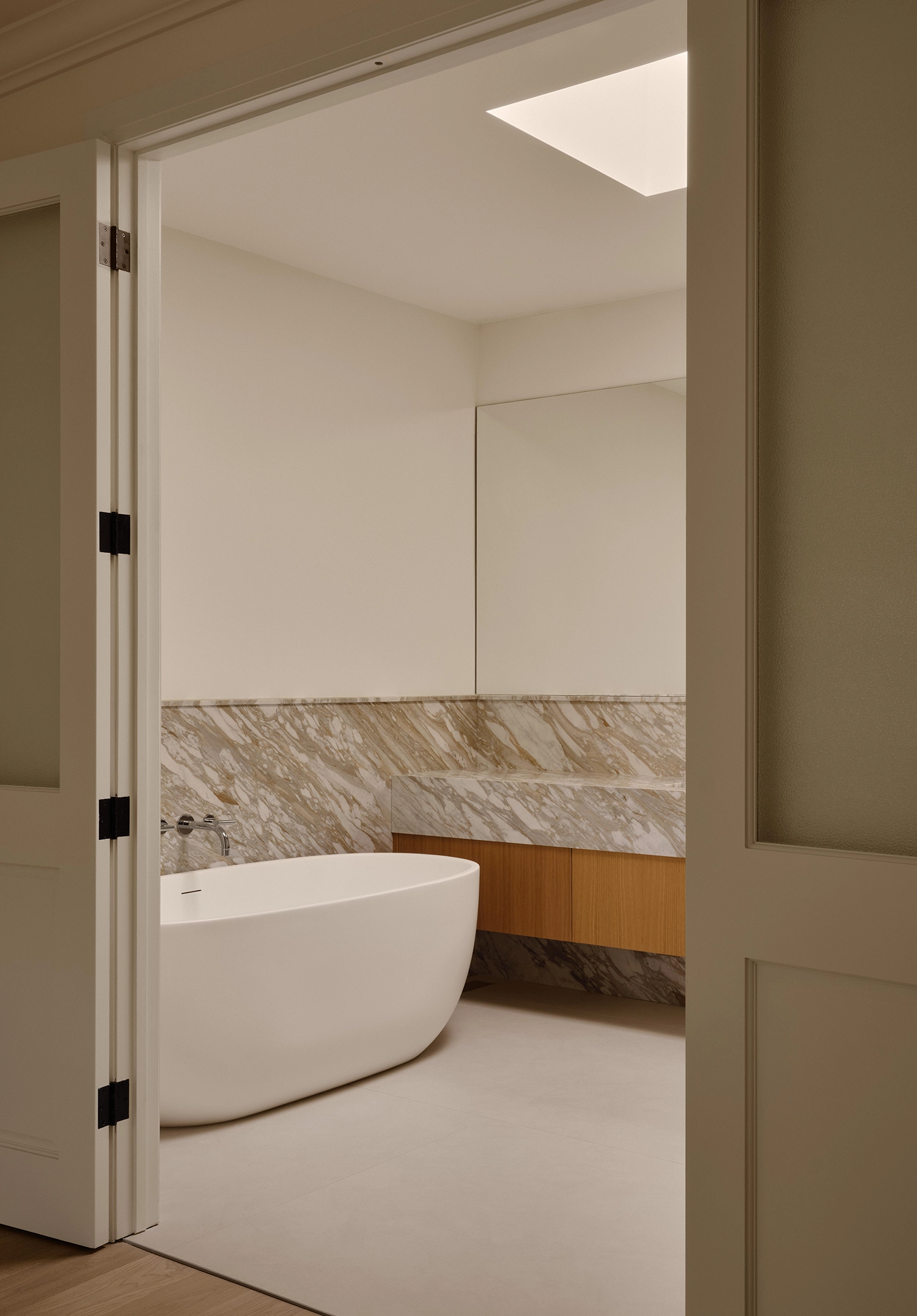
The private quarters on the upper level prioritize a “boutique hotel” atmosphere, particularly within the primary suite. To enhance the sense of scale, the ensuite bathroom features two textured glass French doors, which filter light while maintaining acoustic and visual privacy. A wall-to-wall vanity with a thick countertop provides a sense of permanence, contrasting with the airy, walk-in shower. This level of the home moves away from the more formal heritage references of the ground floor toward a restorative environment focused on personal wellness.
Heritage and contemporary synergy serve as the guiding principles of this renovation. Rather than stripping the house of its identity, Vives St-Laurent redesigned and added moldings to ensure visual continuity. The result is a space where the modifications blend seamlessly into the building’s skeleton. The project demonstrates that the most successful interventions in historic neighborhoods are those that honor the site’s proportions while introducing a sophisticated, neutral aesthetic that allows the original craftsmanship to breathe.
Regional context and evolution become evident when viewing this project alongside other recent interventions in Montreal. The Wood Residence shares a clear design DNA with the De l’Épée Residence by Michael Godmer, which similarly explores the tension between historic Victorian shells and minimalist interiors. This trend of “sensitive modernization” is further evidenced in the Lilac House by Assemblage Studio, where transparency and light are used to revitalize aging structures. Even in more compact typologies, such as the Shoebox CHB by Alexandre Bernier, there is a clear movement across the city toward celebrating raw materials and volume, illustrating a broader Montreal movement that favors quiet luxury over overt ornamentation.